


 Chat with AI
Exam 1: Medicine

Exam 1: Medicine2 k Questions
Exam 2: Pediatric723 Questions
Exam 3: Psychiatry336 Questions
Exam 4: Surgery563 Questions
Exam 5: Obstetrics & Gynecology469 Questions
Select questions type


A 37-year-old primigravida at 14 weeks gestation comes to the office for an initial prenatal visit. She has had some nausea but no vomiting, abdominal pain, or vaginal bleeding. The patient has type 2 diabetes mellitus and hypertension. She used to drink 1 or 2 glasses of wine a night but quit a year ago in anticipation of becoming pregnant. Temperature is 37.5 C (99.5 F), blood pressure is 138/88 mm Hg, pulse is 85/min, and respirations are 14/min. BMI is 36 kg/m2. On examination, the sclerae are anicteric. Cardiopulmonary examination is normal. The abdomen is nontender, and the liver edge is palpated 3 cm below the right costal margin. Laboratory results are as follows: 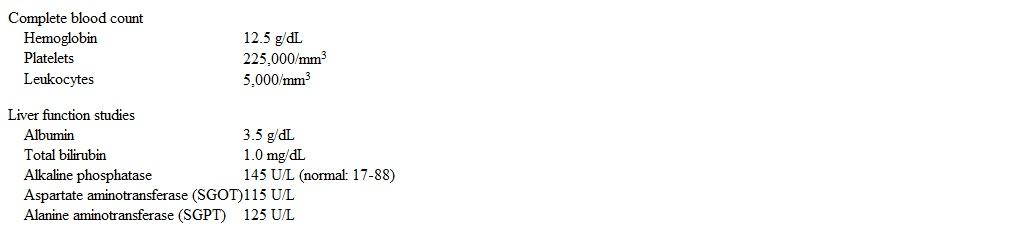 A right upper quadrant ultrasound reveals a hyperechoic-appearing liver, several gallstones without gallbladder wall thickening, and a normal-appearing common bile duct. Which of the following is the most likely cause of this patient's abnormal liver studies?
 (Multiple Choice)
4.9/5  (80)
(80) A 52-year-old man comes to the office due to right leg and left hand weakness. Over the past several days, the patient has had difficulty lifting his right foot when walking, and yesterday, he could not straighten his left wrist or the fingers of his left hand. The patient has also not been feeling well over the past month and reports malaise, intermittent fever, and abdominal pain. He has had an unintentional 2.2 kg (5 lb) weight loss during this period. The patient has no known chronic medical conditions and has not seen a physician for many years. He takes no medications. Temperature is 37.2 C (99 F), blood pressure is 152/90 mm Hg, and pulse is 80/min. Physical examination shows weakness of left wrist and finger extension and right ankle dorsiflexion. There is sensory loss over the dorsum of the left hand and right foot. The abdomen is soft and nontender with no organomegaly. Skin examination findings are shown in the exhibit. 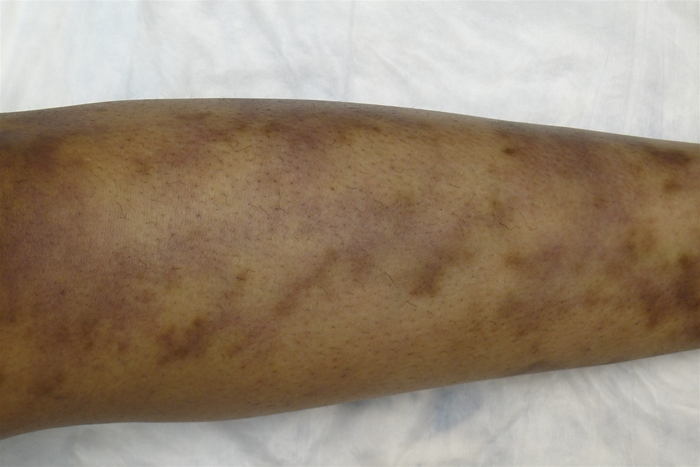 Laboratory results are as follows:
 Which of the following is the most likely diagnosis?
Laboratory results are as follows: Which of the following is the most likely diagnosis? (Multiple Choice)
4.9/5 (91)
(91) A 46-year-old man comes to the emergency department with chest pain and shortness of breath over the last 10 hours. The pain is sharp and does not radiate. He says that taking shallow breaths helps to avoid the pain. He considers himself healthy and has never had symptoms like this before. The patient takes over-the-counter antacids for frequent heartburn. He has a 25-pack-year smoking history, but does not use alcohol or illicit drugs. His father died at age 47 from a heart attack. He works as a long-haul truck driver. His temperature is 36.7 C (98 F), blood pressure is 110/70 mm Hg, pulse is 110/min, and respirations are 31/min. The patient's BMI is 29 kg/m2. Electrocardiogram (ECG) shows sinus tachycardia. Chest x-ray is shown: 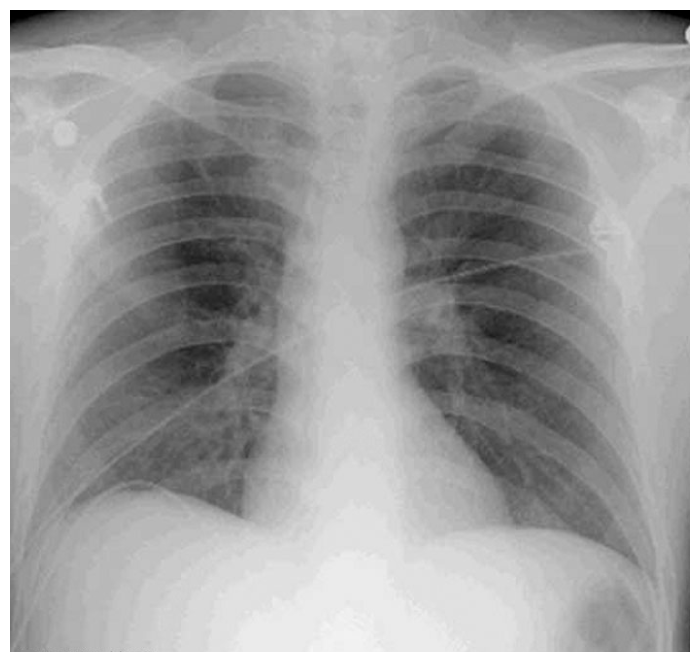 What is the most likely diagnosis in this patient?
 (Multiple Choice)
4.9/5 (70)
(70) A 65-year-old man comes to the emergency department due to lower extremity swelling and a 9.1-kg (20.1-lb) weight gain over the last month. He also reports some shortness of breath at night. The patient has a history of hypertension and coronary artery disease and underwent coronary artery bypass graft surgery 10 years ago. The patient does not smoke or use recreational drugs. Temperature is 36.7 C (98.1 F), blood pressure is 140/92 mm Hg, pulse is 98/min, and respirations are 18/min. Examination shows jugular venous distension. Breath sounds are decreased at the bilateral bases. The point of maximal impulse is laterally displaced. S1 and S2 are normal, and a II/VI holosystolic murmur is present at the apex. There is 3+ pretibial edema bilaterally. Laboratory results are as follows: 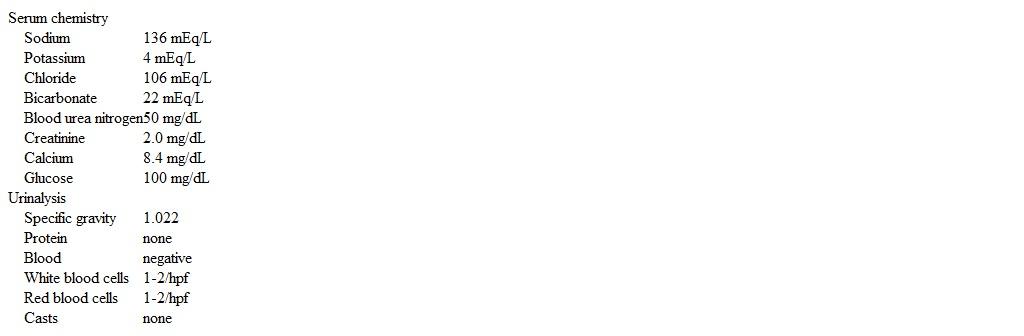 Chest x-ray reveals an enlarged cardiac silhouette and pulmonary vascular congestion. The patient is treated with intravenous furosemide for 4 days, with a return to his baseline weight and resolution of his edema. Serum chemistry shows an improvement in creatinine to 1.1 mg/dL. Which of the following is the most likely mechanism for this improvement in renal function?
 (Multiple Choice)
4.7/5 (92)
(92) A 42-year-old man comes to the office due to a 2-day history of a rash on his lower back. The symptoms began with itching and burning pain, followed by the eruption of small, red papules. He has not had similar symptoms in the past. The patient's medical history is significant for rheumatoid arthritis, which is currently being treated with infliximab. He does not use tobacco, alcohol, or illicit drugs. Vital signs are normal. On physical examination, there is an erythematous rash, as shown in the image below. 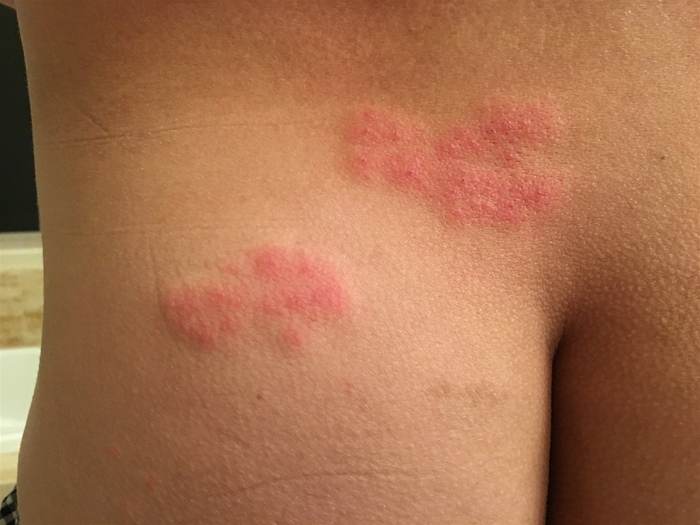 Which of the following is the best treatment for this patient's condition?
 (Multiple Choice)
4.7/5 (77)
(77) A 26-year-old woman comes to the emergency department due to weakness and numbness in both arms and legs that has progressively worsened over the last 3 days. The patient has no fevers, headache, dizziness, chest pain, shortness of breath, or abdominal pain. She reports no trauma or recent procedures. The patient has no medical conditions and takes no medications. She does not use tobacco, alcohol, or illicit drugs. Temperature is 37 C (98.6 F), blood pressure is 130/82 mm Hg, pulse is 88/min, and respirations are 20/min. On examination, the patient has 4/5 strength in both upper and lower extremities. Sensation is decreased below the neck. MRI shows increased T2 signal in the cervical spinal cord without any mass lesions or compression. Intravenous administration of which of the following is the best next step in management?
(Multiple Choice)
4.7/5 (73)
(73) A 22-year-old college student comes to the clinic due to a solitary penile lesion. Three days ago, he noticed a small red papule, and it has been enlarging. The patient has been sexually active with 1 female partner over the preceding 6 months and consistently uses condoms. He has had no prior sexually transmitted infections but does get occasional shallow, tender ulcers along his inner lip once or twice a year. Temperature is 36.7 C (98.1 F). There is a nontender, nonexudative, 2-cm circular ulcer at the dorsal base of the penile shaft. Palpation reveals nontender enlargement of the inguinal lymph nodes measuring 2.5 cm on the left and 2 cm on the right. The rest of the examination is unremarkable. Which of the following is the most appropriate management for this patient's penile lesion?
(Multiple Choice)
4.8/5 (83)
(83) A 42-year-old woman comes to the office due to left lower jaw pain for the past 10 days. The patient describes brief attacks of severe, stabbing pain that shoots from near her left ear down along her jawline. The pain often occurs while chewing food and lasts several seconds, and she has had no episodes while asleep. The patient has no prior medical history other than postpartum depression after the birth of her second child 6 years ago. She has had no trauma or recent surgery. Vital signs are within normal limits. The patient has no facial rash or tenderness, but during the examination, she develops another episode of pain when the left cheek is lightly touched. Ear, nose, and oral cavity examination is normal. Which of the following is the most appropriate pharmacotherapy for this patient?
(Multiple Choice)
4.8/5 (98)
(98) A 55-year-old man comes to the clinic for follow-up of hypertension. The patient was diagnosed with hypertension 3 months ago after an episode of transient vision loss in his right eye. He has occasional headaches and general fatigue but otherwise feels well. His current medications include aspirin, lisinopril, and low-dose hydrochlorothiazide. His blood pressure is 157/95 mm Hg and pulse is 69/min. BMI is 26 kg/m2. Cardiac examination shows a fourth heart sound on auscultation. There are no bruits in the carotids or abdomen. Pulses are 2+ in all extremities. Laboratory results are as follows: 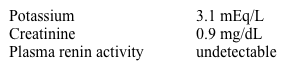 Which of the following best explains this patient's laboratory findings?
 (Multiple Choice)
4.9/5 (83)
(83) A 74-year-old man is brought to the emergency department after he was found unconscious in a hot sauna at his home. The family is unsure how long he has been there, but he was not seen for at least 3 hours. The patient was in his usual state of health until this incident. His medical history is significant for hypertension. The patient usually drinks 2 or 3 glasses of whiskey every night but has been drinking more for the last 3 months, since his wife's death. Temperature is 41 C (106 F), blood pressure is 90/60 mm Hg, pulse is 130/min and regular, and respirations are 22/min. BMI is 43 kg/m2. The patient appears restless and not oriented. His pupils are 4 mm, symmetric, and reactive to light. Lung examination shows rales at both lung bases. The patient's abdomen is soft and nontender, and normal bowel sounds are present. There is no neck stiffness. His skin is warm. Reflexes are 1+ in the upper and lower extremities. Muscle tone and bulk is decreased. His initial laboratory results are as follows:  Which of the following is the most likely cause of the patient's current condition?
 (Multiple Choice)
4.8/5 (72)
(72) A 58-year-old man, who has not seen a physician in 10 years, comes to the office to establish care. He reports dry itchy skin over his legs and increased leg discomfort at the end of the day. He also has had steady weight gain of about 9 kg (20 lb) over the last 5 years. The patient has no history of chronic medical conditions and takes no medications. He has smoked a pack of cigarettes a day for 30 years but is trying to quit because his brother was recently diagnosed with lung cancer. Blood pressure is 150/84 mm Hg, pulse is 80/min, respirations are 16/min, and pulse oximetry is 98% on room air. BMI is 34 kg/m2. Neck examination shows no jugular venous distention and a normal thyroid gland. Cardiopulmonary examination reveals normal heart sounds and mild end-expiratory wheezing. The lower extremities are warm to the touch below the knees bilaterally and have weakly palpable peripheral pulses. Intertrigo is present in inguinal creases. Skin findings are shown in the image below. 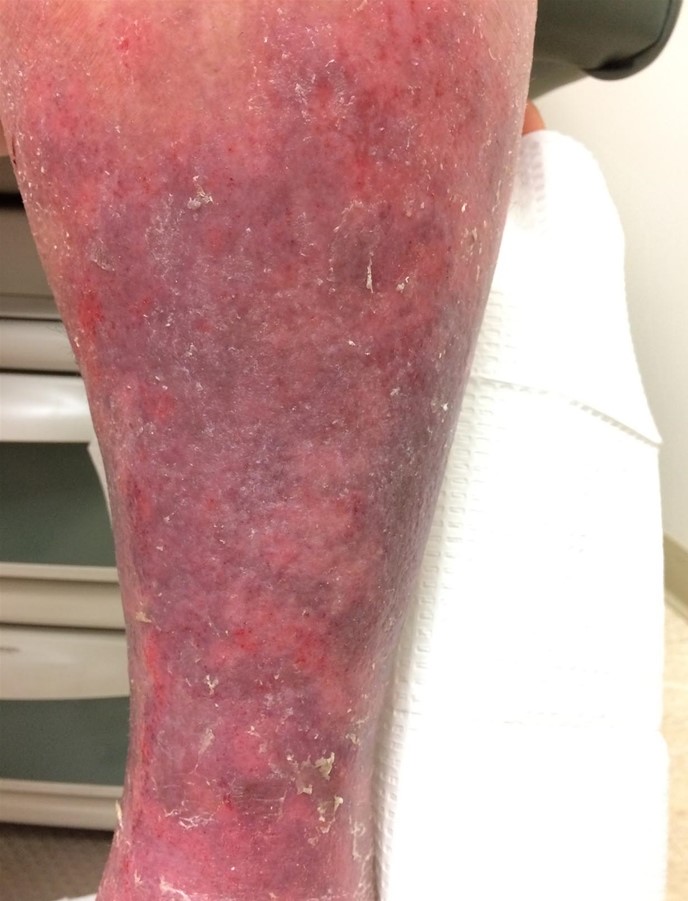 Which of the following is most likely to identify the cause of this patient's skin condition?
 (Multiple Choice)
4.8/5 (96)
(96) A 66-year-old woman comes to the office due to rough, dry, and scaly skin. She has had these symptoms intermittently for most of her life, but they worsen during the winter and have become progressively worse in the last several years. The patient has associated mild itching but no erythema or exudates. She has attempted to treat her symptoms with topical emollients but has been unable to eliminate the problem. Medical history is unremarkable, and the patient does not smoke or drink alcohol. Vital signs are normal. An image of the patient's skin is shown below. 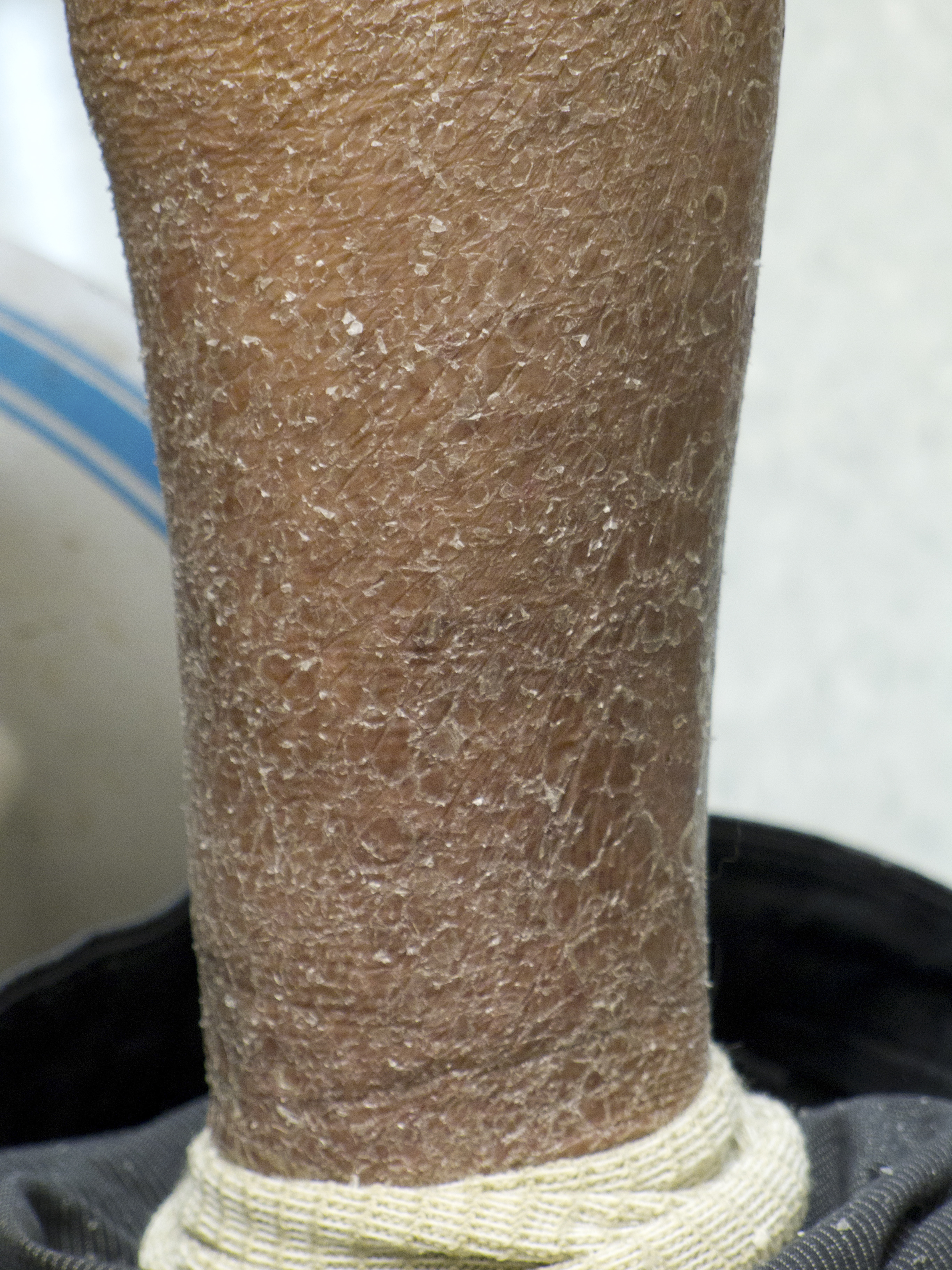 Examination of the hands reveal increased major and minor lines in the palms. Which of the following is the most likely diagnosis?
 (Multiple Choice)
4.9/5 (86)
(86) A 51-year-old woman comes to the clinic due to 6 months of fatigue and low back pain radiating to the buttocks. She also has persistent muscle pain in her arms and shoulders that worsens acutely after exercise. Physical examination shows normal muscle strength. Her joints are not swollen, but palpation over the outer upper quadrants of the buttocks, mid trapezius, and medial aspect of the knees elicits tenderness. C-reactive protein level is 3 mg/L (reference value <8 mg/L). Which of the following is the most likely diagnosis?
(Multiple Choice)
4.8/5 (88)
(88) A 43-year-old woman comes to the office due to intense generalized pruritus for the past 4 months. She has used several over-the-counter products, including emollients and antihistamines, but did not get any relief and "finally decided to see a doctor." The patient has also felt extremely fatigued and frequently takes naps during the daytime. She feels refreshed after waking up and has no dyspnea or nighttime sleep problems. The patient does not use tobacco or alcohol. Vital signs are normal. Physical examination is notable for skin excoriations and mild hepatomegaly. Eye examination findings are shown in the exhibit. 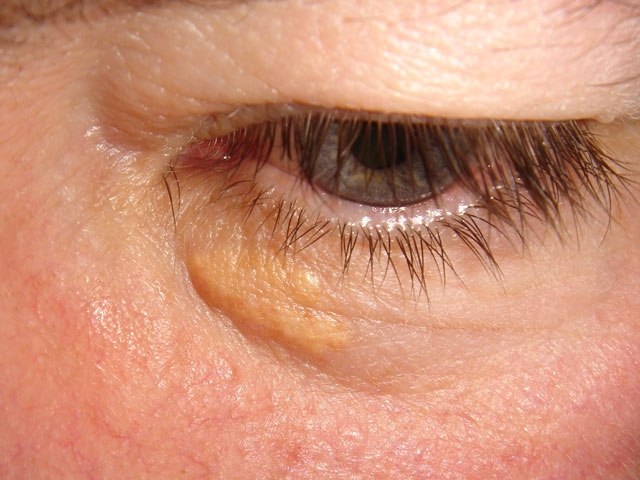 Laboratory testing shows total bilirubin is 1.6 mg/dL and antimitochondrial antibody is positive. With her disease progression, this patient is at greatest risk for developing which of the following conditions?
 (Multiple Choice)
4.8/5 (74)
(74) A 65-year-old man comes to the office due to right upper extremity pain after falling on his right outstretched hand 2 days ago. The patient has mild abrasions over his wrist and elbow with full range of motion and no tenderness over these joints. He has severe pain when he tries to lift his arm above shoulder level or when he pulls or pushes with his right arm. He has been unable to sleep the last 2 nights due to pain and is unable to lie on the affected side. The patient has a 40-pack-year smoking history. His father died of multiple myeloma. Vital signs are normal. Examination shows limited active abduction and external rotation of the humerus; however, passive motion is comparable to the contralateral side. Palpation of the right shoulder, collarbone, and neck reveal no step-off deformities or point tenderness. Radial pulse, extremity sensation, muscle tone, and bulk are normal. Which of the following would most likely confirm the diagnosis in this patient?
(Multiple Choice)
4.8/5 (83)
(83) A 60-year-old woman comes to the office due to progressive fatigue over the past 6 months. She has no weight loss, joint pain, hematochezia, vomiting, dyspnea, cold intolerance, anxiety, or depression. Medical history is significant for hyperlipidemia, for which the patient has been taking simvastatin for 5 years. Family history is unremarkable. She does not use tobacco, alcohol, or illicit drugs. Temperature is 37.6 C (99.7 F), blood pressure is 142/80 mm Hg, pulse is 80/min, and respirations are 12/min. Sclera are anicteric and mucosal membranes are moist. Heart and lung sounds are unremarkable. The abdomen is nontender and nondistended. Hepatomegaly is present. Skin and musculoskeletal examinations are unremarkable. Laboratory results are as follows: 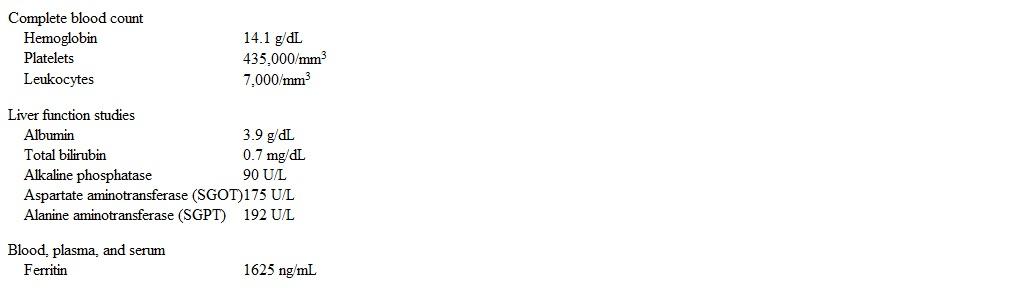 Serology for viral hepatitis is negative. Right upper quadrant ultrasound reveals an enlarged liver with normal echotexture and no evidence of cirrhosis. This patient would most benefit from which of the following?
 (Multiple Choice)
5.0/5 (88)
(88) In a selected study of bronchogenic cancer, it was found that in people smoking 1 pack per day (PPD) of cigarettes, the relative risk (RR) was 2.4. For those smoking 2 PPD, the RR was 3.0. For those smoking 3 PPD, the RR was 4.1. The corresponding p-values for these RRs were all <0.05 with no overlap in the corresponding confidence intervals. Which of the following statements is true regarding these findings?
(Multiple Choice)
4.7/5 (82)
(82) A 45-year-old woman is brought to the emergency department by ambulance after a neighbor found her in an obtunded state and with an empty bottle of medication next to her. The patient had a tonic-clonic seizure en route to the hospital. Medical history is significant for major depression and chronic back pain. Temperature is 38.3 C (100.9 F), blood pressure is 90/70 mm Hg, pulse is 120/min, and respirations are 16/min. The patient responds to painful stimuli. Bilateral pupils are 8 mm. The skin is warm and flushed. The lungs are clear to auscultation. The abdomen is soft and nontender. Bowel sounds are decreased. There is no neck stiffness. ECG shows QRS duration of 130 msec, increased from a month ago. Which of the following is the most appropriate next step in management of this patient?
(Multiple Choice)
4.8/5 (93)
(93) A 62-year-old man comes to the office for evaluation of a lump in his neck. The patient first noticed the lump under the right side of his jaw about 4 months ago when he cut himself while shaving. The lump is slowly getting larger. He has also had occasional deep-seated right ear pain. The patient has had no fevers, chills, cough, or shortness of breath. He has had no change in his diet and no weight loss. Medical history is significant for hypertension and type 2 diabetes mellitus. The patient smokes 2 packs of cigarettes daily and uses alcohol occasionally. Physical examination shows a firm, nontender, right-sided submandibular mass that is 3 cm in diameter. Ear examination is normal. There are no abnormal skin lesions. Oral cavity examination shows poor dentition and no mucosal lesions. The tonsils are small and soft with no lesions. Chest examination is unremarkable. The abdomen is soft and nontender with no hepatosplenomegaly. There is no other lymphadenopathy. Complete blood count is within normal limits. Which of the following is the most likely cause of this patient's condition?
(Multiple Choice)
4.8/5 (89)
(89) A 78-year-old man comes to the office due to a 6-month history of progressive bilateral buttock pain that radiates to his thighs and calves. The pain is worse with ambulation but improves with leaning on a cane or sitting; the patient has had to limit his activity as he is unable to walk more than 2-3 blocks. He has no pain at night and no problems with bowel or bladder function. Over-the-counter ibuprofen has provided moderate relief. The patient has a history of coronary artery bypass grafting 6 years earlier for 3-vessel coronary artery disease. His other medical conditions include type 2 diabetes mellitus, hypertension, and hypercholesterolemia. Physical examination shows normal strength, reflexes, and sensation in his legs. A straight leg raise test does not reproduce the pain. Ankle-brachial index is 1.1 on the right and 1.2 on the left (normal 0.9-1.3). Hemoglobin A1c is 8%. Which of the following is most likely responsible for this patient's current condition?
(Multiple Choice)
4.8/5 (74)
(74) Showing 141 - 160 of 1702
 Prev
- 1
- ...
- 2
- ...
- 3
- ...
- 4
- ...
- 5
- ...
- 6
- ...
- 7
- ...
- 8
- ...
- 9
- ...
- 10
- ...
- 11
- ...
- 12
- ...
- 13
- ...
- 14
- ...
- 15
- ...
- 16
- ...
- 17
- ...
- 18
- ...
- 19
- ...
- 20
- ...
- 21
- ...
- 22
- ...
- 23
- ...
- 24
- ...
- 25
- ...
- 26
- ...
- 27
- ...
- 28
- ...
- 29
- ...
- 30
- ...
- 31
- ...
- 32
- ...
- 33
- ...
- 34
- ...
- 35
- ...
- 36
- ...
- 37
- ...
- 38
- ...
- 39
- ...
- 40
- ...
- 41
- ...
- 42
- ...
- 43
- ...
- 44
- ...
- 45
- ...
- 46
- ...
- 47
- ...
- 48
- ...
- 49
- ...
- 50
- ...
- 51
- ...
- 52
- ...
- 53
- ...
- 54
- ...
- 55
- ...
- 56
- ...
- 57
- ...
- 58
- ...
- 59
- ...
- 60
- ...
- 61
- ...
- 62
- ...
- 63
- ...
- 64
- ...
- 65
- ...
- 66
- ...
- 67
- ...
- 68
- ...
- 69
- ...
- 70
- ...
- 71
- ...
- 72
- ...
- 73
- ...
- 74
- ...
- 75
- ...
- 76
- ...
- 77
- ...
- 78
- ...
- 79
- ...
- 80
- ...
- 81
- ...
- 82
- ...
- 83
- ...
- 84
- ...
- 85
- ...
- 86
- ...
- Next

Filters
- Essay(0)
- Multiple Choice(0)
- Short Answer(0)
- True False(0)
- Matching(0)