


 Chat with AI
Exam 1: Medicine

Exam 1: Medicine2 k Questions
Exam 2: Pediatric723 Questions
Exam 3: Psychiatry336 Questions
Exam 4: Surgery563 Questions
Exam 5: Obstetrics & Gynecology469 Questions
Select questions type


A 56-year-old man comes to the emergency department with right leg swelling. He noticed the swelling yesterday and has not had injury to that leg or a recent fall. The patient has no chronic medical conditions and takes no medications. On review of systems, he endorses frequent nosebleeds and occasional gum bleeding, which began recently. He has also had persistent, nagging epigastric and back pain. The patient has lost 4.5 kg (10 lb) over the past 3 months despite no change in diet or activities. He has smoked a pack of cigarettes daily for 30 years. The patient does not use alcohol or illicit drugs. Temperature is 36.9 C (98.4 F), blood pressure is 110/80 mm Hg, pulse is 96/min, and respirations are 16/min. Chest examination is unremarkable. Mild epigastric tenderness is present. There is moderate, asymmetric right lower extremity edema. Peripheral pulses are full and symmetric. Further evaluation is most likely to reveal which of the following?
(Multiple Choice)
4.8/5  (83)
(83) A 68-year-old man comes to the emergency department due to progressively worsening shortness of breath for 2 days. He has had a week of low-grade fever, runny nose, and productive cough. The patient's other medical problems include coronary artery disease, hypertension, and hyperlipidemia. He was hospitalized a year ago for acute myocardial infarction and was treated with drug-eluting stent placement in the left anterior descending artery. The patient has a 40-pack-year smoking history and quit after the myocardial infarction. His temperature is 37.2 C (99 F), blood pressure is 140/90 mm Hg, pulse is 90/min, and respirations are 22/min. The patient appears to be in mild respiratory distress. He uses accessory respiratory muscles for breathing but can speak in full sentences. Neck veins are mildly distended, especially during expiration. Lung auscultation shows decreased breath sounds and bilateral wheezes. Heart sounds are distant. Plasma B-type natriuretic peptide level is 88 pg/mL (normal 0-100 pg/mL). Chest x-ray is shown below. 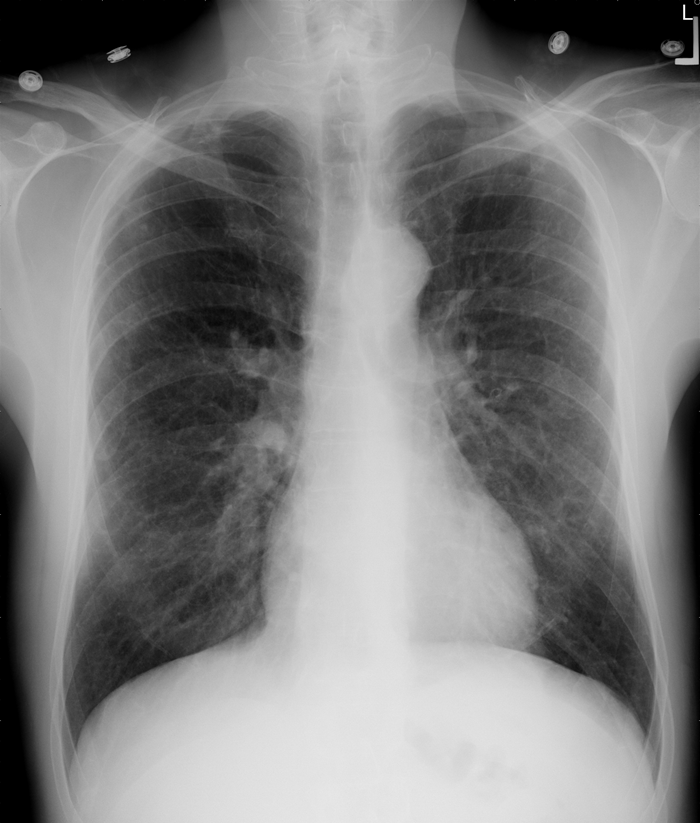 Which of the following is the most likely cause of this patient's presentation?
 (Multiple Choice)
4.8/5 (79)
(79) A 60-year-old man comes to the emergency department due to substernal chest discomfort over the past 3 hours. He has had no shortness of breath, lightheadedness, or palpitations, but he had an episode of profuse sweating when the discomfort started. The patient has a history of diet-controlled type 2 diabetes mellitus. ECG shows normal sinus rhythm with ST-segment depression in leads V4-V6. His initial troponin I level is 0.5 ng/mL (normal, <0.01 ng/mL), and a second level 6 hours later is 1.1 ng/mL. He is taken to the cardiac catheterization laboratory. Coronary angiogram shows near-total occlusion of the left circumflex artery, which is treated with an everolimus-eluting stent. The rest of the coronary vessels show mild, nonobstructive atherosclerosis. In addition to aspirin, beta blocker, statin, and an ACE inhibitor, which of the following should be part of this patient's medical regimen at discharge?
(Multiple Choice)
5.0/5 (79)
(79) A 40-year-old man comes to the office for an annual checkup. The patient has gained weight over the past year, which he attributes to a diet consisting primarily of processed food and red meat. He is otherwise asymptomatic and feels well. Medical history is significant for celiac disease, type 2 diabetes mellitus, hyperlipidemia, and a Wilms tumor treated 35 years ago with chemoradiation and surgical resection. Medications include insulin, aspirin, and simvastatin. There is no family history of colon cancer. Vital signs are normal. BMI is 48 kg/m2. Examination shows acanthosis nigricans but is otherwise normal. Which aspect of this patient's history warrants colon cancer screening earlier than what is typically recommended for the general population?
(Multiple Choice)
4.9/5 (71)
(71) A 3-year-old boy is brought to the hospital after being found in a storage shed struggling to breathe. His parents are unsure of what has happened and note that multiple chemicals are stored in the shed. Temperature is 36.6 C (98 F), blood pressure is 98/65 mm Hg, pulse is 58/min, and respirations are 40/min. Oxygen saturation is 86% on room air. On examination, the patient is lethargic; his body and clothes are soiled with vomit. The pupils are pinpoint bilaterally, and there is significant watering of the eyes. Auscultation of the lungs demonstrates widespread rhonchi with prolonged expiration. Muscle fasciculations are noted in the extremities. Following endotracheal intubation, which of the following is the most appropriate next step in management of this patient?
(Multiple Choice)
4.9/5 (83)
(83) A 66-year-old man comes to the clinic for a follow-up for hypertension. Two months ago during a routine office visit, his blood pressure was 165/95 mm Hg. The patient has since had 2 follow-up visits, both documenting high blood pressure. The patient states that he currently has no symptoms and has never been diagnosed with hypertension, but he does have type 2 diabetes mellitus and hyperlipidemia. He underwent a stent placement for peripheral vascular disease 2 years ago. The patient is a former cigarette smoker with a 25-pack-year history. Currently, his blood pressure is 162/93 mm Hg, and his pulse is 73/min and regular. BMI is 31 kg/m2. Physical examination is unremarkable. Serum creatinine is 0.8 mg/dL. CT angiography reveals 80% atherosclerotic narrowing of the right renal artery. In addition to antihyperlipidemic therapy, which of the following is the best next step in management of this patient?
(Multiple Choice)
4.9/5 (84)
(84) A 62-year-old man comes to the office for a follow-up visit. He recently had episodes of sweating, headache, tremor, and palpitation while working in his backyard; his wife has noticed that he seems confused during these episodes. Medical history is notable for long-standing type 2 diabetes mellitus treated with insulin glargine and glipizide, hypertension, peripheral vascular disease, and hyperlipidemia. The patient also has chronic kidney disease, and his renal function has declined significantly over the past 2 years despite optimal glycemic control. Which of the following is most likely responsible for this patient's symptoms?
(Multiple Choice)
4.8/5 (68)
(68) A 36-year-old man comes to the emergency department due to a 3-day history of abdominal pain and diarrhea. The patient returned yesterday from a 1-week vacation in Belize, where he often ate street food. At the end of his trip, he developed diarrhea with about 10 watery, nonbloody stools a day. Over the past 24 hours, the patient's urine output has decreased. He has felt nauseated but has been able to tolerate fluids without vomiting. The patient has taken no recent medications. Temperature is 37.5 C (99.5 F), blood pressure is 105/62 mm Hg, and pulse is 112/min. On examination, the mucous membranes and lips appear dry, and capillary refill is 3 seconds. The abdomen is mildly distended and tender to deep palpation periumbilically; bowel sounds are hyperactive. Stool occult blood is negative. Laboratory results are as follows: Which of the following is the most likely etiology of this patient's illness?
(Multiple Choice)
5.0/5 (77)
(77) A 46-year-old man comes to the office due to discomfort in his mouth. For the last several months, he has had a mild, but increasingly bothersome, burning sensation on the inside of his cheeks and back of his mouth. The symptoms are worse when the patient eats hot or spicy foods or speaks for extended periods. Examination findings are shown in the exhibit. 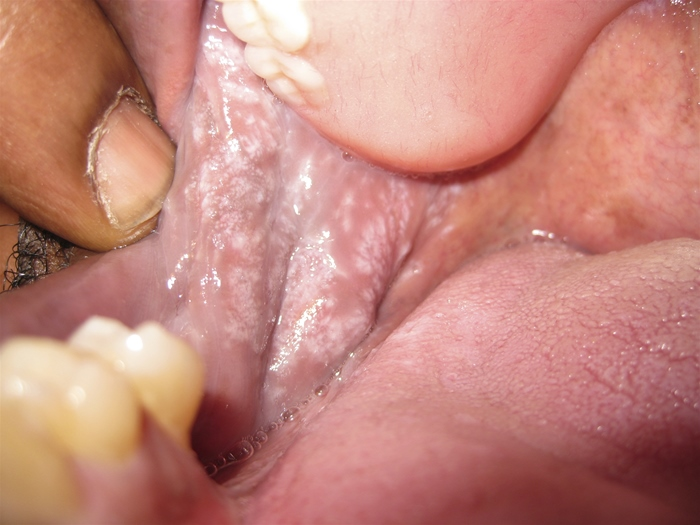 Which of the following is the most likely diagnosis?
 (Multiple Choice)
4.9/5 (93)
(93) An 18-year-old woman comes to the office due to constipation. For as long as she can remember, she has had hard, lumpy bowel movements that have been difficult to pass without straining. There are periods in which the patient goes several days without defecating, although other times she passes 2 or 3 stools a day. She also reports intermittent left lower quadrant abdominal cramps that usually improve after passing stool. The patient has had no fevers, night sweats, hematochezia, melena, vomiting, or unexpected weight loss. Family history is significant for breast cancer. She does not use tobacco, alcohol, or illicit drugs. Temperature is 37.6 C (99.7 F), blood pressure is 125/76 mm Hg, pulse is 85/min, and respirations are 12/min. The patient is not in acute distress. Heart and lung sounds are unremarkable. The abdomen is mildly tender to palpation in the left lower quadrant but without distension or guarding. Laboratory results are as follows:  Which of the following is the best next step in management of this patient?
 (Multiple Choice)
4.8/5 (77)
(77) A 35-year-old man is evaluated due to poor exercise tolerance and muscle weakness. He has no past medical history. Blood pressure is 175-185 mm Hg systolic and 105-115 mm Hg diastolic on repeat measurements, and pulse is 78-95/min. Laboratory results are as follows:  CT scan of the abdomen reveals a 3-cm mass in the left adrenal gland. Which of the following additional findings would be expected in this patient?
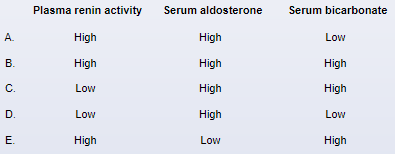
CT scan of the abdomen reveals a 3-cm mass in the left adrenal gland. Which of the following additional findings would be expected in this patient?
(Multiple Choice)
4.7/5 (71)
(71) A 10-year-old boy is brought to the emergency department due to sudden-onset nausea, abdominal cramps, and several episodes of vomiting over the last 2 hours. He has not had diarrhea. His mother notes that the patient's 6-year-old sister has similar symptoms. The children ate barbecued chicken with potato salad at a community lunch 4 hours before the symptoms began. They also swam in the community pool and played with a pet turtle. The patient has a history of upper respiratory infections and received antibiotics a month ago for acute otitis media. Temperature is 36.8 C (98.2 F), blood pressure is 112/70 mm Hg, and pulse is 88/min. Abdomen is soft and nontender. Which of the following is the most likely cause of this patient's symptoms?
(Multiple Choice)
4.8/5 (87)
(87) A 65-year-old man is brought to the emergency department due to high fevers and confusion. He has had 2 days of cough productive of greenish sputum. He has a history of well-controlled type 2 diabetes mellitus and was treated for bronchitis twice in the last 4 months. The patient received the influenza vaccine this year. He has smoked a pack of cigarettes daily for the past 27 years and drinks alcohol occasionally. Temperature is 38.4 C (101.2 F), blood pressure is 118/74 mm Hg, pulse is 98/min, and respirations are 24/min. His pulse oximetry reading is 92% on room air. The patient is obese. His anterior cervical lymph nodes are enlarged and nonpainful. His lungs are clear to auscultation except for scattered rales at the right lung base. Abdominal examination reveals a palpable liver edge and spleen tip. Chest-x ray shows a developing right lower lobe infiltrate. Laboratory studies are as follows: 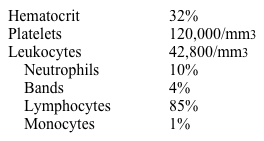 Blood cultures are sent to the laboratory; antibiotics and supportive care are initiated. What is the best next step in management of this patient?
 (Multiple Choice)
4.8/5 (88)
(88) A 40-year-old man is brought to the emergency department due to retrosternal and epigastric pain after ingesting an unknown amount of sodium hydroxide-based drain cleaner 45 minutes ago. He has a history of major depressive disorder and a prior suicide attempt. The patient has difficulty swallowing his saliva and is drooling. Temperature is 36.8 C (98.2 F), blood pressure is 120/70 mm Hg, pulse is 110/min, and respirations are 20/min. Examination shows oropharyngeal erythema and mild edema. The lungs are clear to auscultation. Abdominal examination shows tenderness at the epigastrium without rebound or guarding. Chest x-ray reveals no abnormalities. Intravenous normal saline infusion is initiated. Which of the following is the most appropriate next step in management of this patient?
(Multiple Choice)
4.9/5 (70)
(70) A 22-year-old man is brought to the emergency department after developing acute weakness, nausea, and vomiting. The patient is a farmer and was working in the fields when the symptoms began. Blood pressure is 100/62 mm Hg, pulse is 60/min, and respirations are 16/min. On physical examination, he is diaphoretic, and his clothes are soiled with vomit and feces. The pupils are 1 mm bilaterally. Lung auscultation reveals diffuse wheezing. Neurologic examination shows diffuse weakness, hyporeflexia, and muscle fasciculations. The patient is treated with the appropriate initial medication, which improves his wheezing, but he remains weak. Administration of which of the following medications is the most appropriate next step in management?
(Multiple Choice)
4.9/5 (86)
(86) A 35-year-old woman with no past medical history is hospitalized with severe shortness of breath. She also has swelling and tenderness of her right calf. CT angiogram of the chest shows pulmonary embolism. Compression ultrasonography is consistent with right femoral vein thrombosis. The patient is started on anticoagulation therapy. On the sixth day of hospitalization, she develops right arm pain. Physical examination shows a cold right upper extremity with no palpable peripheral pulse. Laboratory results are as follows:  Which of the following drugs was most likely used to treat this patient's deep venous thrombosis?
 (Multiple Choice)
4.8/5 (77)
(77) A 46-year-old man experiences syncope while getting out of bed. The patient has been feeling weak during the past several days and has had dyspnea and chest discomfort. He believes the symptoms are due to a respiratory infection 2 weeks ago, but he did not see a doctor at that time. Medical history includes hypertension that is controlled with lisinopril. Family history includes coronary artery disease. ECG rhythm strip is shown in the exhibit. 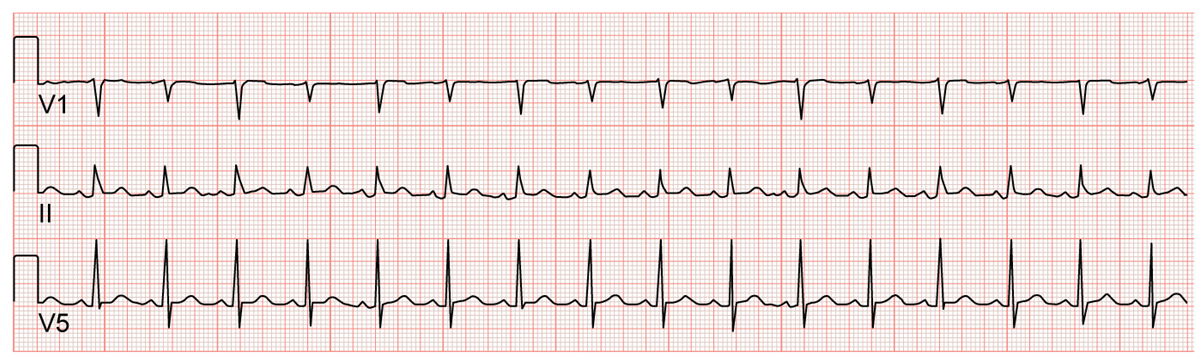 Which of the following is the most appropriate treatment for this patient?
 (Multiple Choice)
4.9/5 (81)
(81) A 60-year-old man comes to the office for a work disability evaluation. Since high school, the patient has worked in a factory manufacturing granite and quartz countertops. His main concern is dyspnea that has slowly worsened over the last 2 years. The patient has rheumatoid arthritis, for which he was prescribed methotrexate 5 years ago; he stopped taking it "some time ago" because his symptoms did not improve. He owns an African Grey parrot and smoked heavily in his 30s and 40s. Physical examination is notable for coarse inspiratory crackles and squawks that are loudest in the upper lung fields. Bilateral digital clubbing and moderate metacarpophalangeal subluxation are present. Pulmonary function tests demonstrate moderately reduced total lung capacity. CT scan of the chest is shown in the image below: 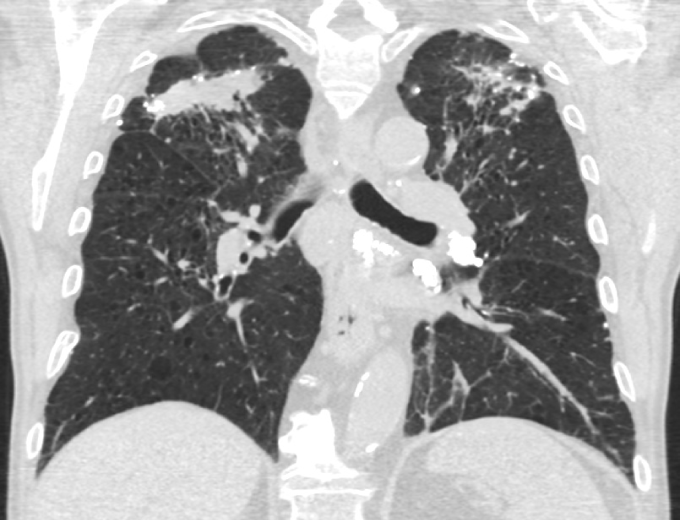 Which of the following factors best explains this patient's respiratory disease?
 (Multiple Choice)
4.7/5 (66)
(66) A 10-year-old boy is brought to the office due to an earache and droopy face. His mother reports that the patient has had right ear pain for the past 3 days without any fever or hearing loss. She instilled over-the-counter ear wax removal drops but there was no symptom relief. Today, she noticed that his face appeared lopsided when he smiled. The family recently immigrated to the United States, and the patient has had episodes of viral illnesses in the past. He takes no other medications. Temperature is 37 C (98.6 F). The patient has difficulty closing the right eye and has a right-sided facial droop. The pupils are normal, and there is no nystagmus. Right otoscopy shows crusted eruptions in the external auditory meatus. Which of the following is the most likely cause of this patient's current condition?
(Multiple Choice)
4.9/5 (70)
(70) A 32-year-old woman comes to the emergency department due to swelling of the left arm over the last 24 hours. The patient drinks alcohol 2-3 times a week and uses intravenous heroin daily. She has no other chronic medical problems and takes no medications. Temperature is 37.8 C (100 F), blood pressure is 105/62 mm Hg, pulse is 92/min, and respirations are 16/min. Chest auscultation reveals clear lung fields and normal first and second heart sounds. The abdomen is soft and nontender. Examination of the extremities shows several needle marks. The left arm is erythematous and swollen as well as warm and tender to the touch. There is no joint swelling, and range of motion is normal in all joints. The patient is started on intravenous clindamycin. The next morning the swelling and pain are improved, but the patient reports "feeling miserable." She has nasal congestion, nausea, and abdominal cramps in addition to multiple episodes of vomiting and loose stools. On repeat examination, the patient is restless and reports aching muscles and joints. Blood pressure is 132/88 mm Hg, pulse is 102/min and regular, and respirations are 16/min. Laboratory results from time of admission (0 hours) and 24 hours later are as follows:  Which of the following is the most appropriate next step in management of this patient?
 (Multiple Choice)
5.0/5 (82)
(82) Showing 1121 - 1140 of 1702
 Prev
- 1
- ...
- 2
- ...
- 3
- ...
- 4
- ...
- 5
- ...
- 6
- ...
- 7
- ...
- 8
- ...
- 9
- ...
- 10
- ...
- 11
- ...
- 12
- ...
- 13
- ...
- 14
- ...
- 15
- ...
- 16
- ...
- 17
- ...
- 18
- ...
- 19
- ...
- 20
- ...
- 21
- ...
- 22
- ...
- 23
- ...
- 24
- ...
- 25
- ...
- 26
- ...
- 27
- ...
- 28
- ...
- 29
- ...
- 30
- ...
- 31
- ...
- 32
- ...
- 33
- ...
- 34
- ...
- 35
- ...
- 36
- ...
- 37
- ...
- 38
- ...
- 39
- ...
- 40
- ...
- 41
- ...
- 42
- ...
- 43
- ...
- 44
- ...
- 45
- ...
- 46
- ...
- 47
- ...
- 48
- ...
- 49
- ...
- 50
- ...
- 51
- ...
- 52
- ...
- 53
- ...
- 54
- ...
- 55
- ...
- 56
- ...
- 57
- ...
- 58
- ...
- 59
- ...
- 60
- ...
- 61
- ...
- 62
- ...
- 63
- ...
- 64
- ...
- 65
- ...
- 66
- ...
- 67
- ...
- 68
- ...
- 69
- ...
- 70
- ...
- 71
- ...
- 72
- ...
- 73
- ...
- 74
- ...
- 75
- ...
- 76
- ...
- 77
- ...
- 78
- ...
- 79
- ...
- 80
- ...
- 81
- ...
- 82
- ...
- 83
- ...
- 84
- ...
- 85
- ...
- 86
- ...
- Next

Filters
- Essay(0)
- Multiple Choice(0)
- Short Answer(0)
- True False(0)
- Matching(0)