


 Chat with AI
Exam 1: Medicine

Exam 1: Medicine2 k Questions
Exam 2: Pediatric723 Questions
Exam 3: Psychiatry336 Questions
Exam 4: Surgery563 Questions
Exam 5: Obstetrics & Gynecology469 Questions
Select questions type


A 50-year-old man with a long history of chronic alcohol use disorder is hospitalized due to nausea, vomiting, and epigastric pain lasting for 2 days. The patient was previously admitted with an episode of alcohol-induced acute pancreatitis. Temperature is 37 C (98.6 F), blood pressure is 102/70 mm Hg, pulse is 106/min, and respirations are 16/min. BMI is 17.5 kg/m2. On physical examination, he appears cachectic. He is alert and oriented. The chest is clear to auscultation. There is epigastric tenderness without rebound. Bowel sounds are present. Neurologic examination is normal. Laboratory results are as follows:  The patient is given thiamine, folic acid, and a multivitamin replacement, followed by 5% dextrose and normal saline with potassium replacement. A few hours later, he reports extreme weakness in all extremities. Deep tendon reflexes are absent. What is the most appropriate next step in management?
 (Multiple Choice)
4.9/5  (80)
(80) A 60-year-old man undergoes a right lung biopsy for diagnosis of restrictive lung disease. Two hours after the procedure, he develops severe shortness of breath and chest pain. His other medical problems include hypertension, hyperlipidemia, pernicious anemia, and an inguinal hernia repair 10 years ago. The patient does not smoke and drinks alcohol only occasionally. Blood pressure is 70/40 mm Hg, pulse is 118/min, and respirations are 30/min. He is diaphoretic, and the skin is cold and clammy. Pupils are equal and reactive to light bilaterally. Intraarterial blood pressure monitoring is established, and pulmonary artery catheterization is performed. Initial measurements are as follows:  Which of the following is the most likely diagnosis in this patient?
 (Multiple Choice)
4.8/5 (84)
(84) A 62-year-old man comes to the office due to an abnormal chest x-ray. Two weeks ago, the patient was seen at an emergency department after a motor vehicle collision. Evaluation showed no significant trauma, but a chest x-ray revealed enlarged mediastinal lymph nodes. The patient has had no fever, cough, or dyspnea but has had nonpainful nodules in his axillae for the past several months. Medical history includes hypertension, for which he takes chlorthalidone. He is lifelong nonsmoker and drinks alcohol occasionally. Vital signs are within normal limits. Physical examination reveals clear lungs and normal heart sounds. Bilateral axillary and inguinal lymph nodes are enlarged and nontender. There is no rash or extremity edema. Blood cell counts and serum chemistry studies are within normal limits. A chest x-ray from a year ago also shows mediastinal lymphadenopathy. Which of the following is the most likely underlying cause of this patient's current condition?
(Multiple Choice)
4.7/5 (88)
(88) A 39-year-old woman, gravida 1 para 1, comes to the office with abnormal uterine bleeding. The patient underwent menarche at age 15 and had irregular menses that normalized with oral contraceptives. She used oral contraceptives until 4 years ago, when she became pregnant and had a cesarean delivery with tubal ligation. The patient's menstrual cycles after delivery occurred monthly with 4-5 days of moderate bleeding. However, over the last year, her menses have become increasingly irregular and now occur every 2-3 months, with heavier bleeding and passage of clots. She also has had difficulty concentrating at work due to increasing irritability and depressed mood. She has no headaches or hot flushes. Vital signs are normal. BMI is 26 kg/m2. Skin is cool and dry. Pelvic examination reveals a well-rugated vagina, mobile uterus, and small, nontender ovaries. The remainder of the physical examination is normal. Pregnancy test is negative. This patient's laboratory results would most likely reveal which of the following?
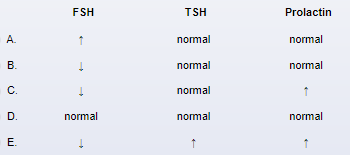
(Multiple Choice)
4.8/5 (71)
(71) A 52-year-old man comes to the clinic for follow-up. The patient has a history of diabetes mellitus type 2 and end-stage renal disease due to diabetic nephropathy. He underwent living donor kidney transplantation 5 months ago. The patient's immunosuppression regimen includes prednisone, tacrolimus, and mycophenolate sodium, and he also takes insulin. At his last clinic visit 3 months ago, he had good renal graft function with serum creatinine of 1.2 and trace proteinuria. In the interim, the patient has had no symptoms other than mild fatigue. Temperature is 37.3 C (99.1 F), blood pressure is 146/82 mm Hg, pulse is 78/min, and respirations are 12/min. Physical examination is unremarkable. Laboratory studies are as follows:  Urinalysis shows 1+ glucose and 2+ protein and is otherwise unremarkable. Biopsy of the transplanted kidney reveals heavy lymphocyte infiltration with vascular involvement and swelling of the intima. Which of the following is the most likely cause of this patient's renal dysfunction?
 (Multiple Choice)
4.9/5 (79)
(79) A 34-year-old man is brought to the emergency department with increasing shortness of breath and cough. The patient has a 10-year history of asthma and a hospitalization for exacerbation. His home medications include inhaled fluticasone and as-needed albuterol. The attack started 10 hours ago and did not respond to numerous albuterol inhalations at home. He does not use tobacco or illicit drugs. His temperature is 37 C (98.6 F), blood pressure is 120/70 mm Hg, pulse is 110/min, and respirations are 28/min. Pulse oximetry shows 88% on room air. The patient is using accessory muscles of respiration and speaks with difficulty. Lung auscultation indicates decreased breath sounds, prolonged expiration, and bilateral diffuse wheezing. Cardiac examination shows normal heart sounds and no murmurs. Arterial blood gas results on room air are as follows: 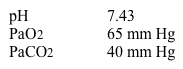 The chest x-ray reveals hyperinflated lungs. Which of the following findings is most concerning and indicates that the patient is getting worse?
 (Multiple Choice)
4.9/5 (88)
(88) A 65-year-old woman, who recently relocated after retiring, comes to the office to establish medical care. The patient has a history of hypertension, type 2 diabetes mellitus, hyperlipidemia, and osteoarthritis. She does not monitor blood pressure at home and reports "fair" glycemic control with oral antidiabetic medications. The patient does not use tobacco, alcohol, or illicit drugs, and formerly worked as a salesperson in a department store. Blood pressure is 138/76 mm Hg and pulse is 82/min. BMI is 34 kg/m2. Cardiopulmonary and abdominal examinations are unremarkable. Foot examination reveals her 3rd and 4th toes appear "claw shaped," with dorsiflexion of the proximal phalanges at the metatarsophalangeal joints and plantar flexion of the proximal and distal interphalangeal joints. Which of the following is the most likely cause of this patient's lower extremity findings?
(Multiple Choice)
4.7/5 (78)
(78) A 15-year-old boy is brought to the emergency department by his father, who found him unconscious on his bedroom floor. It was unclear exactly how long the boy had been unconscious, but his father last saw him walking upstairs 5 minutes before finding him. The father was able to rouse him quickly, but the patient continued to feel drowsy and experienced dizziness and headache. The father found no drugs or related paraphernalia, although the boy has come home drunk on several occasions. At the time of evaluation an hour later, the patient's symptoms have resolved and he denies any knowledge of why he lost consciousness. He has no history of cardiac problems and takes no medications. Mental status appears normal. Temperature is 36.7 C (98 F), blood pressure is 100/60 mm Hg, and pulse is 70/min. Examination shows a mild rash around the patient's mouth. Sensation is decreased in bilateral lower extremities. Liver function tests are slightly elevated. ECG is normal. Abuse of which of the following substances is the most likely cause of this patient's condition?
(Multiple Choice)
4.9/5 (70)
(70) A 27-year-old woman is brought to the emergency department by local paramedics. The patient was found unconscious at the scene of a house fire. On examination, she does not appear to have any burns. Black soot is present near the patient's nares and mouth. Her capillary refill time is 4 seconds. Blood pressure is 132/90 mm Hg, heart rate is 122/min and regular, and respirations are 24/min. Supplemental oxygen by a non-rebreather mask is administered. Laboratory results are as follows: 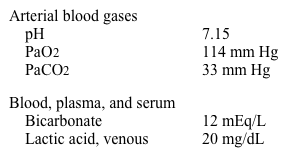 Which of the following should be empirically treated in this patient?
 (Multiple Choice)
4.9/5 (80)
(80) A 67-year-old woman is evaluated for painful skin lesions that have developed over the past 1-2 weeks. She has longstanding end-stage renal disease, due to diabetic nephropathy, for which she undergoes hemodialysis 3 times a week. Temperature is 37 C (98.6 F), blood pressure is 159/79 mm Hg, pulse is 97/min, and respirations are 16/min. Skin examination findings are shown in the exhibit.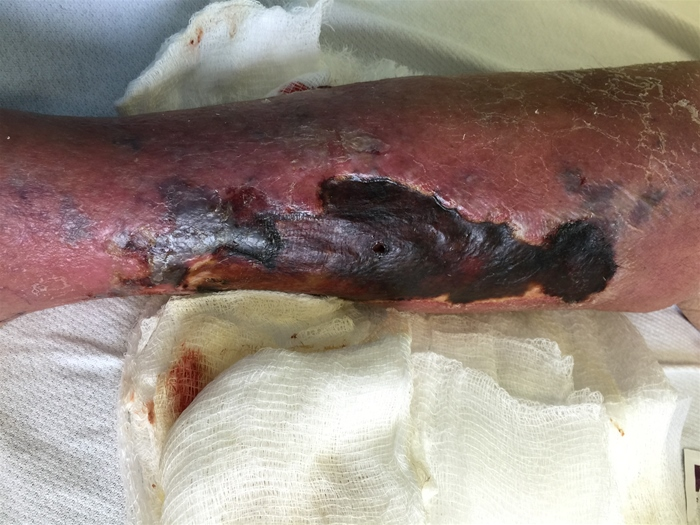 Laboratory results show elevated blood urea nitrogen, elevated serum creatinine, and normal serum calcium. Punch biopsy of a lesion shows calcification of the middle layer of the arterioles, subintimal fibrosis, and thrombotic occlusion without vasculitis. Which of the following is associated with an increased risk for the painful skin lesions seen in this patient?
 (Multiple Choice)
4.9/5 (86)
(86) A 49-year-old man comes to the office due to a 3-month history of fatigue. He also reports diffuse joint pain, finger swelling, and difficulty gripping objects with his right hand. The patient has poorly controlled hypertension despite compliance with medications, a low-salt diet, and regular exercise. Temperature is 36.7 C (98 F), blood pressure is 146/98 mm Hg, pulse is 90/min, and respirations are 14/min. On examination, facial features appear coarse and differ significantly from those on his driver's license photograph taken 3 years ago. The palms are sweaty and have a doughy feel. The skin is oily. Multiple skin tags are noted, particularly on the neck. Tapping the ventral aspect of the right wrist produces shooting pain on the lateral side of the right hand. Which of the following is the best next step in evaluating this patient?
(Multiple Choice)
4.9/5 (86)
(86) A 64-year-old man is assessed for discharge after being admitted 2 days ago for non-ST-segment elevation myocardial infarction. He underwent successful percutaneous coronary intervention to the right coronary artery on the day of admission and has since been symptom-free. The patient has a history of hypertension and was treated with lisinopril before admission. His father underwent coronary artery bypass grafting at age 65, and his sister has diabetes. The patient drinks a 6-pack of beer most nights and does not use tobacco or illicit drugs. Weight is 90 kg (198.4 lb) and height is 177.8 cm (5 ft 10 in). BMI is 28.5 kg/m2. Blood pressure is 142/89 mm Hg. His dentition is poor. The lungs are clear on auscultation, and there are no heart murmurs. A faint bruit is heard over the right carotid artery, but there are no periumbilical bruits. Lower extremity pulses are full and there is no peripheral edema. Fasting laboratory results are as follows: 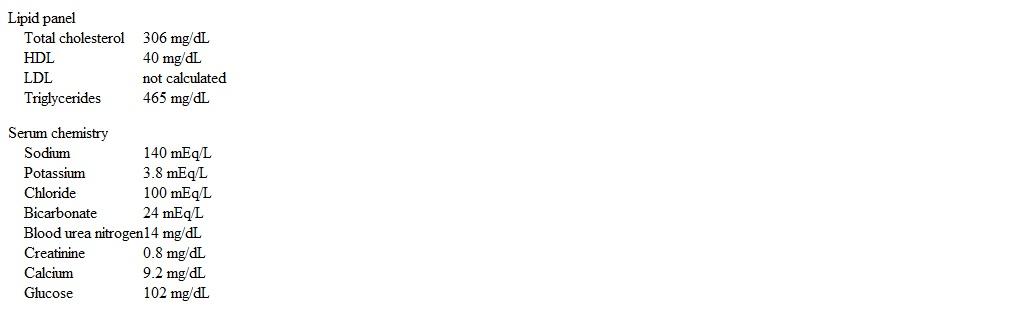 Thyroid function tests are normal. In addition to high-intensity statin therapy, which of the following is the best recommendation for management of this patient's lipid disorder?
 (Multiple Choice)
4.9/5 (63)
(63) A 64-year-old woman is hospitalized due to an acute anterior wall myocardial infarction. She presented with a 24-hour history of persistent midsternal burning chest pain and was found to have complete occlusion of the mid-left anterior descending artery. Successful percutaneous coronary intervention was performed with placement of a bare metal stent. The patient's past medical history is significant for uncontrolled type 2 diabetes mellitus, hypertension, hyperlipidemia, and active smoking. She has a strong family history of diabetes, stroke, and coronary artery disease. On the fourth day of hospitalization, the patient develops acute-onset shortness of breath and confusion. Blood pressure is 72/40 mm Hg and heart rate is 120/min with regular rhythm. Physical examination shows cold clammy extremities and diaphoresis. There is jugular venous distension with the patient in a semirecumbent position. Bibasilar crackles are present on chest auscultation. A harsh, loud holosystolic murmur is present at the left sternal border with a palpable thrill. The abdomen is soft with some tenderness in the right upper quadrant. ECG shows sinus tachycardia with deep T wave inversion in leads V1 to V5. Which of the following is the most likely cause of this patient's deterioration?
(Multiple Choice)
4.9/5 (80)
(80) A 34-year-old man comes to the emergency department due to difficulty swallowing and blurred vision that started last night. He also reports having mild shortness of breath that started today. The patient returned to his home in Connecticut yesterday from a 7-day Caribbean trip during which he snorkeled, ate locally cured fish, and hiked in a forest. He had a mild upper respiratory illness 2 weeks ago that spontaneously resolved; otherwise, he has no other medical problems. The patient does not use tobacco, alcohol, or illicit drugs. Temperature is 37 C (98.6 F), blood pressure is 115/70 mm Hg, and pulse is 88/min. His oral mucosa is dry and speech is slurred. Pupils are dilated and react sluggishly to light. Neck muscles are weak and he has difficulty holding his head up. Muscle strength is 1/5 in the bilateral upper limbs and 5/5 in the lower limbs. There are no sensory abnormalities. Which of the following is the most appropriate next step in management of this patient?
(Multiple Choice)
4.8/5 (73)
(73) A 34-year-old woman comes to the urgent care clinic due to a cough. Her symptoms began 5 days ago with nasal congestion, rhinorrhea, and subjective fever, followed 2 days later by a cough. The initial symptoms resolved, but the patient continues to have a lingering cough with clear sputum. Medical history is unremarkable; she takes no medications and has no medication allergies. Vital signs are normal. Examination of the ears, nose, and throat shows only mild pharyngeal erythema. Lung examination shows no crackles, dullness, or egophony. The patient states, "Every year I get these same symptoms, and every year my doctor tells me it's bronchitis. It goes away when she gives me azithromycin. She doesn't take my insurance anymore, so I'm hoping you can prescribe it for me." Which of the following is the most appropriate response to this patient's request?
(Multiple Choice)
4.8/5 (76)
(76) A 32-year-old man complains of right eye pain and discharge. His symptoms began acutely on awakening in the morning. He uses extended-wear contact lenses and has had difficulty removing the lenses for the last week. His past medical history is significant for obesity, chronic back pain, asthma, and acid reflux disease. On examination, thick, globular yellow discharge is present at the medial eye corner and on the lid margins. The cornea is edematous, hazy, and ulcerated and there is extensive scleral injection, as shown in the image. What is the most likely diagnosis in this patient? 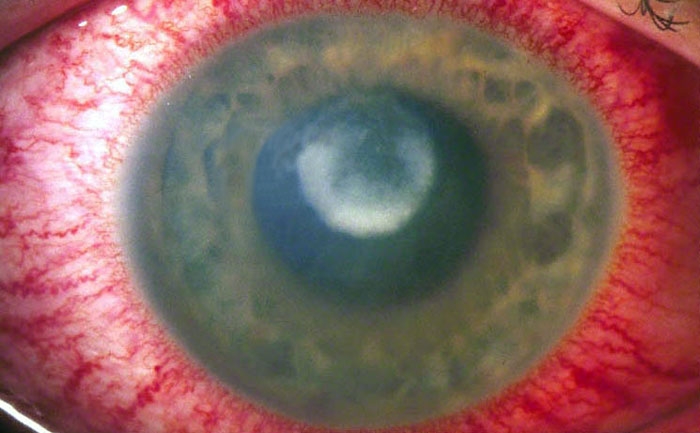
(Multiple Choice)
4.8/5 (86)
(86) A 38-year-old woman comes to the office with a 3-week history of weight loss, nausea, abdominal pain, and postural dizziness. She traveled to Thailand 6 months ago and has felt fatigued since then. Medical history is notable for moderate persistent asthma treated with an inhaled beta-2 agonist and inhaled corticosteroid. Over the last 2 years, the patient has had several asthma exacerbations requiring oral prednisone. She also has hypothyroidism treated with levothyroxine. The patient is married and is a stay-at-home mother. Blood pressure is 90/60 mm Hg and pulse is 96/min. Pharyngeal examination shows bilateral tonsillar enlargement. Skin examination shows increased pigmentation at the palmar creases and mucous membranes as well as a few patches of vitiligo. Initial laboratory testing shows mild hyponatremia and hyperkalemia with normal renal function. Complete blood count is normal, but differential shows moderate eosinophilia. Follow-up testing confirms a low 8 AM serum cortisol. Which of the following is the most likely cause of this patient's adrenal insufficiency?
(Multiple Choice)
4.8/5 (72)
(72) A 59-year-old man comes to the emergency department due to chest pain beginning 2 hours ago and profuse sweating 1 hour ago. He feels weak. Past medical history includes type 2 diabetes mellitus and hypercholesterolemia. The patient's medications include metformin, glipizide, and simvastatin. Blood pressure is 165/98 mm Hg in the right arm and 160/90 mm Hg in the left, pulse is 78/min, and oxygen saturation is 98% on room air. He appears mildly uncomfortable. Lungs are clear to auscultation. His ECG is shown in exhibit. 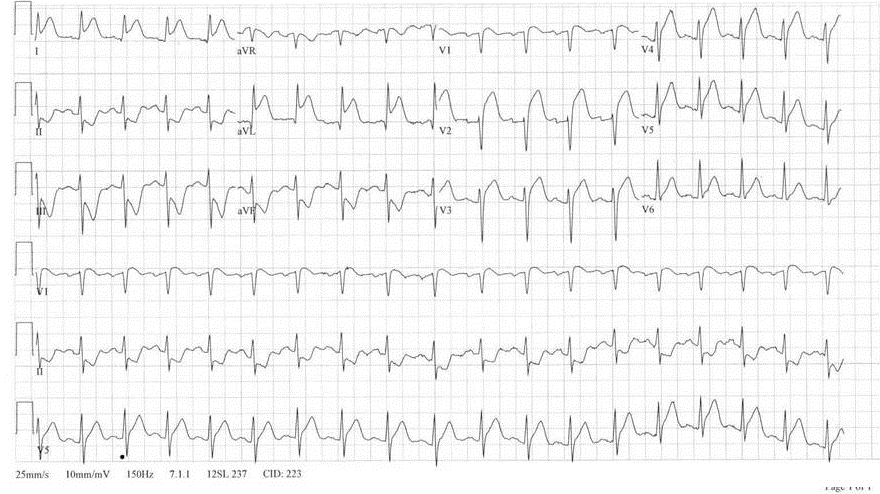 Which of the following is the best next step in management of this patient?
 (Multiple Choice)
4.9/5 (76)
(76) A 73-year-old man comes to the office due to 3 months of progressive urinary urgency, hesitancy, nocturia, and weak urinary stream. He has no fever, abdominal pain, hematuria, malaise, or weight loss. His only medication is lisinopril for essential hypertension. The patient has no history of diabetes mellitus or ischemic heart disease. He does not use tobacco, alcohol, or illicit drugs. Digital rectal examination reveals a smooth, firm, and enlarged prostate without induration or asymmetry. Neurological examination is normal. Urinalysis shows no proteinuria or hematuria. The patient's serum creatinine is 2.1 mg/dL, which is higher than his baseline creatinine of 1.2 mg/dL 4 months ago. Prostate-specific antigen is normal. Which of the following is the most appropriate next step in evaluation of this patient's acute kidney injury?
(Multiple Choice)
5.0/5 (78)
(78) A 58-year-old man comes to the office due to yellowish discoloration of the skin, anorexia, and unintentional weight loss of 6 kg (13.2 lb) over the past 3 months. He also reports dark urine and pale stools. The patient has had no fever, abdominal pain, constipation, or diarrhea. He has a history of hypertension and hyperlipidemia. The patient does not use tobacco, alcohol, or illicit drugs. Vital signs are within normal limits. BMI is 32 kg/m2. Scleral icterus is present. An enlarged, nontender gallbladder is palpated below the right costal margin. There is no ascites. Abdominal imaging in this patient is most likely to reveal which of the following findings?
(Multiple Choice)
4.8/5 (71)
(71) Showing 41 - 60 of 1702
 Prev
- 1
- ...
- 2
- ...
- 3
- ...
- 4
- ...
- 5
- ...
- 6
- ...
- 7
- ...
- 8
- ...
- 9
- ...
- 10
- ...
- 11
- ...
- 12
- ...
- 13
- ...
- 14
- ...
- 15
- ...
- 16
- ...
- 17
- ...
- 18
- ...
- 19
- ...
- 20
- ...
- 21
- ...
- 22
- ...
- 23
- ...
- 24
- ...
- 25
- ...
- 26
- ...
- 27
- ...
- 28
- ...
- 29
- ...
- 30
- ...
- 31
- ...
- 32
- ...
- 33
- ...
- 34
- ...
- 35
- ...
- 36
- ...
- 37
- ...
- 38
- ...
- 39
- ...
- 40
- ...
- 41
- ...
- 42
- ...
- 43
- ...
- 44
- ...
- 45
- ...
- 46
- ...
- 47
- ...
- 48
- ...
- 49
- ...
- 50
- ...
- 51
- ...
- 52
- ...
- 53
- ...
- 54
- ...
- 55
- ...
- 56
- ...
- 57
- ...
- 58
- ...
- 59
- ...
- 60
- ...
- 61
- ...
- 62
- ...
- 63
- ...
- 64
- ...
- 65
- ...
- 66
- ...
- 67
- ...
- 68
- ...
- 69
- ...
- 70
- ...
- 71
- ...
- 72
- ...
- 73
- ...
- 74
- ...
- 75
- ...
- 76
- ...
- 77
- ...
- 78
- ...
- 79
- ...
- 80
- ...
- 81
- ...
- 82
- ...
- 83
- ...
- 84
- ...
- 85
- ...
- 86
- ...
- Next

Filters
- Essay(0)
- Multiple Choice(0)
- Short Answer(0)
- True False(0)
- Matching(0)