


 Chat with AI
Exam 1: Medicine

Exam 1: Medicine2 k Questions
Exam 2: Pediatric723 Questions
Exam 3: Psychiatry336 Questions
Exam 4: Surgery563 Questions
Exam 5: Obstetrics & Gynecology469 Questions
Select questions type


A 20-year-old man is brought to the emergency department with a one-day history of fever, headache, and altered mental status. He has no history of medical illness. Cerebral spinal fluid analysis shows lymphocytic pleocytosis, elevated protein level, and normal glucose level. The patient is started on high-dose intravenous acyclovir. Two days later, his neurologic status improves. Polymerase chain reaction assay for herpes simplex virus DNA comes back positive. However, the patient complains of nausea and abdominal discomfort. He is afebrile, normotensive without orthostasis, and has normal oxygen saturation. The rest of the physical examination is unremarkable. Laboratory results are as follows: 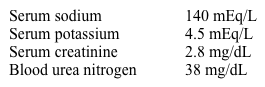 His admission creatinine level was 0.8 mg/dL. Which of the following is the most likely cause of acute kidney injury in this patient?
 (Multiple Choice)
4.8/5  (75)
(75) An 81-year-old woman comes to the emergency department due to shortness of breath that has worsened over the past hour. It is associated with nausea. The patient does not have chest pain. Medical history is significant for hypertension, hyperlipidemia, and type 2 diabetes mellitus. Temperature is 36.7 C (98 F), blood pressure is 92/64 mm Hg, pulse is 90/min, and respirations are 22/min. Oxygen saturation is 94% on room air. On examination, the patient is diaphoretic and appears to be in mild respiratory distress. Bilateral crackles are heard on lung auscultation. No heart murmurs are heard. An ECG is obtained and is shown in the exhibit. 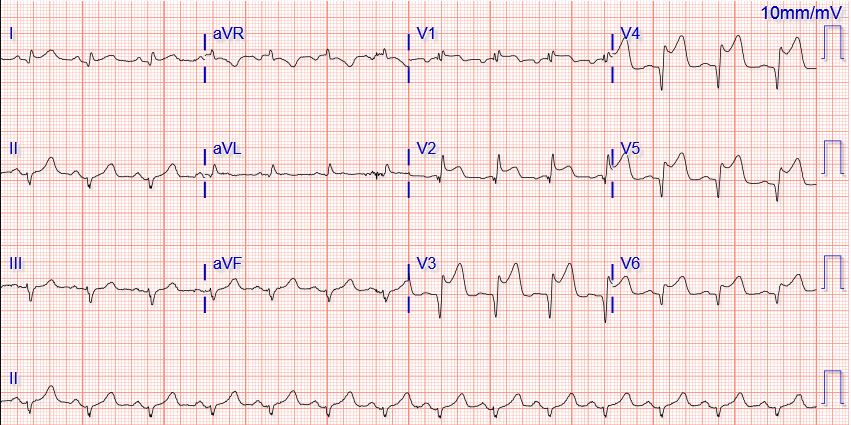 Blood samples are sent for testing. Intravenous furosemide is administered. Which of the following is the best next step in management?
 (Multiple Choice)
4.8/5 (101)
(101) A 56-year-old man comes to the office due to feeling "dizzy" over the past 2 weeks. The patient experiences a brief, severe spinning sensation when turning over in bed or looking up at objects on a high shelf. He has had no nausea, diaphoresis, chest pain, or tinnitus. Medical history is significant for long-standing hypertension and hypercholesterolemia. His father died of a stroke at age 62. On examination, a grade II/VI ejection murmur is heard at the left sternal border. Precordial palpation and carotid upstroke are normal. Which of the following is the most likely cause of this patient's symptoms?
(Multiple Choice)
4.9/5 (67)
(67) A 5-year-old boy is brought to the office due to left hip pain. The patient awoke this morning with a limp and says that his left hip hurts, especially with movement or walking. He played soccer outside yesterday with no known injury. Two weeks ago, he had had an upper respiratory infection that has since resolved. He has had no fever, vomiting, diarrhea, or other joint pain. His grandmother has rheumatoid arthritis treated with methotrexate. Temperature is 37.2 C (99 F), blood pressure is 100/65 mm Hg, and pulse is 92/min. Physical examination shows an interactive and talkative child who walks with a limp. The left hip is slightly abducted and externally rotated with mildly decreased range of motion. The patient is able to stand and bear weight on the left lower extremity. The remainder of the examination is normal. Bilateral hip x-ray is normal. Laboratory results are as follows.  Which of the following is the best next step in management of this patient?
 (Multiple Choice)
4.9/5 (89)
(89) A 67-year-old man comes to the emergency department due to lightheadedness and generalized weakness for the past 2 days. The patient has chronic stable angina with exertion. Over the past 2 days, he has also had occasional chest discomfort at rest. Medical history includes hypertension and asthma. The patient has no shortness of breath, cough, or peripheral edema. His only medications are aspirin and isosorbide dinitrate. Blood pressure is 105/66 mm Hg. ECG obtained in the emergency department is shown in the exhibit.  Which of the following is the best next step in management of this patient?
 (Multiple Choice)
4.9/5 (83)
(83) A 50-year-old man comes to the office for a routine physical. He has had no recent concerns and his review of systems is unremarkable. Five years ago, the patient underwent mechanical aortic valve replacement due to endocarditis. Since then, he has been taking warfarin for anticoagulation and has been compliant with the regimen. The patient is a lifelong nonsmoker. All his vaccinations are up to date. He is afebrile, blood pressure is 122/65 mm Hg, and pulse is 73/min and regular. On auscultation, a 2/6 diastolic murmur is heard at the left sternal border and is best appreciated with a breath-hold at expiration. The lungs are clear. Abdominal and extremity examinations are unremarkable. His last INR check 5 days ago was 2.9. Which of the following is the best next step in management of this patient?
(Multiple Choice)
4.8/5 (67)
(67) A cohort study was conducted to assess the relationship between high saturated fat consumption and the occurrence of colorectal carcinoma among women. A group of women aged 40-65 was selected. The baseline saturated fat consumption was calculated using a food questionnaire, and the cohort was followed for seven years for the development of colon cancer. The study showed that women with high baseline saturated fat consumption have four times the risk of colorectal cancer in a 7-year period, compared to women with low fat consumption (RR = 4.0, 95% CI = 1.5 - 6.5). According to the study results, what percent of colorectal carcinoma in women with high fat consumption could be attributed to their diet?
(Multiple Choice)
4.9/5 (75)
(75) A 55-year-old woman comes to the physician for an annual physical examination. She has no new complaints, except fatigue. She has an 8-year history of chronic low back pain; severe degenerative joint disease has been documented on MRI. She had an anterior wall myocardial infarction four years ago. Her current medications include naproxen, acetaminophen, oxycodone, aspirin, atenolol, and simvastatin. Her blood pressure is 130/80 mm Hg and pulse is 72/min. Laboratory studies show: 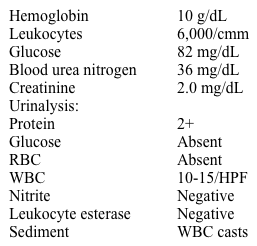 Serum protein electrophoresis is negative for monoclonal gammopathy. Two years ago, her BUN level was 22 mg/dL, and creatinine level was 1.6 mg/dL. Which of the following is the most likely pathology involved in this patient's renal failure?
 (Multiple Choice)
4.8/5 (85)
(85) A 40-year-old man comes to the office due to a month of progressively worsening burning and tingling sensations in the hands and feet. He works building outdoor fences but recently has had difficulty handling heavy tools. The patient has no medical issues and takes no medications. He does not use tobacco or alcohol. Blood pressure is 100/70 mm Hg, and pulse is 70/min. The skin over the neck has patchy areas of hyperpigmentation and hypopigmentation. Hyperkeratoses and scaling are present on the palms and soles. There is increased sensitivity to pinprick and light touch over the fingers and toes. Plantarflexion and dorsiflexion are weak at the ankle, and there is weakness of the interossei and wrist flexors and extensors. Upper and lower limb deep tendon reflexes are 1+. Laboratory results are as follows:  Which of the following is the most likely diagnosis for this patient?
 (Multiple Choice)
4.7/5 (92)
(92) A 33-year-old woman comes to the emergency department complaining of 2 days of urinary frequency, fever, and nausea. She has no other medical problems and takes no medications. She is sexually active with her husband, has had 2 uncomplicated pregnancies, and uses condoms for contraception. The patient has regular menstrual periods. Her temperature is 39 C (102 F), blood pressure is 112/60 mm Hg, pulse is 110/min, and respirations are 16/min. Examination shows left costovertebral angle tenderness but is otherwise unremarkable. Laboratory testing shows a white blood cell count of 17,000/µL with 8% bands. Urinalysis shows positive nitrite, many white blood cells, and >100 bacteria/hpf. A pregnancy test is negative. Appropriate cultures are obtained and the patient is started on empiric intravenous antibiotics. Which of the following is the most appropriate indication for CT scan of the abdomen and pelvis in this patient?
(Multiple Choice)
5.0/5 (81)
(81) A 60-year-old man is hospitalized with multiple generalized tonic-clonic seizures. The patient is a heavy alcohol user and has had previous hospitalizations for alcohol withdrawal and alcohol-related seizures. On the second day of hospitalization, temperature is 37.1 C (98.8 F), blood pressure is 155/92 mm Hg, pulse is 108/min, and respirations are 14/min. Examination shows no abnormalities. Laboratory studies are shown below: 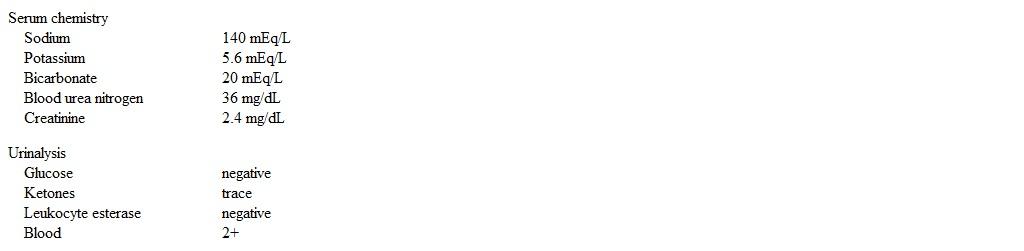 Urine microscopy shows white blood cells 2-5/hpf, red blood cells 0-1/hpf, and some epithelial cells. Which of the following is the most likely cause of this patient's renal dysfunction?
 (Multiple Choice)
4.9/5 (102)
(102) A 10-year-old boy is brought to the emergency department due to penile pain. Two hours earlier, he was practicing martial arts with his older brother when he was accidentally kicked directly in the groin. The patient had severe pain at the time of impact and continues to have moderate pain but no nausea or vomiting. Temperature is 36.7 C (98.1 F), blood pressure is 118/62 mm Hg, and pulse is 88/min. The pelvis is stable and nontender to downward pressure. The medial thighs and perineum appear normal. The dorsal aspect of the penis has moderate bruising and swelling. There is a small contusion on the left hemiscrotum. Bilateral testes are nontender to palpation, have normal contours, and retract with stroking of the medial thighs. The patient gives a urine sample, which is pinkish red. Which of the following is the best next step in management of this patient?
(Multiple Choice)
4.8/5 (66)
(66) A 28-year-old woman comes to the office due to increasing facial hair. The patient discontinued a combined estrogen/progestin oral contraceptive 6 months ago because she is trying to conceive. She has since noticed increasing hair on her upper lip and chin that she has tried removing, but it continues to grow back. The patient had regular menses while taking combined oral contraceptives but has not had a menstrual cycle since discontinuing them. She has no chronic medical conditions and has had no surgeries. The patient's only medication is a prenatal vitamin. Temperature is 36.7 C (98.1 F), blood pressure is 107/89 mm Hg, and pulse is 78/min. BMI is 21 kg/m2. Physical examination shows multiple inflamed pustules and scars in various stages of healing on the cheeks and forehead. There is dense, pigmented hair growth over the upper lip and chin. Pelvic examination shows normal-appearing external genitalia with no clitoromegaly. The uterus is small and mobile and the ovaries are not enlarged. Pelvic ultrasound is normal. Which of the following is the most likely diagnosis in this patient?
(Multiple Choice)
4.9/5 (83)
(83) A 56-year-old man comes to the office due to a yearlong history of skin lesions on the cheeks, forehead, and scalp. Except for their appearance, the lesions do not trouble the patient. Medical history includes androgenic alopecia and poorly controlled type 2 diabetes mellitus. Vital signs are normal. Findings on the left cheek are shown in the exhibit. 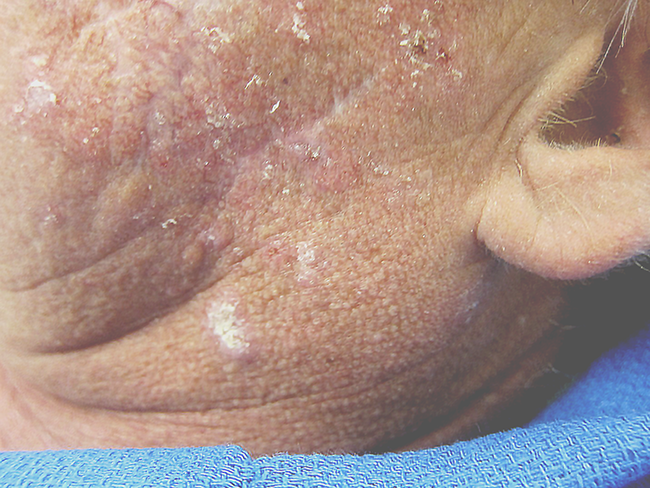 Similar lesions appear on the right cheek, forehead, and scalp. Which of the following is the most likely diagnosis in this patient?
 (Multiple Choice)
4.8/5 (76)
(76) A 54-year-old man comes to the office due to 2 days of fever, chills, and perineal pain. He also has had frequent urges to urinate and pain on micturition but no penile discharge or testicular pain. The patient is not sexually active. He has no chronic medical problems and takes no medications. Temperature is 37.8 C (100 F), blood pressure is 120/70 mm Hg, and pulse is 94/min. Physical examination shows a circumcised penis with no urethral discharge. The testes are normal. Rectal examination reveals an edematous, tense, and tender prostate. Laboratory results are as follows:  Dipstick urinalysis is positive for leukocyte esterase and nitrites. Which of the following is the most appropriate next step in management of this patient?
 (Multiple Choice)
4.7/5 (84)
(84) A 65-year-old female is admitted to the hospital with increasing shortness of breath, weight gain and lower extremity edema. She has a history of hypertension, nonischemic cardiomyopathy with an ejection fraction of 30%, and hyperlipidemia. Her home medications include oral aspirin, digoxin, furosemide, metoprolol, lisinopril and atorvastatin. She is started on intravenous furosemide. On day three of hospitalization telemetry reveals six beats of wide complex ventricular tachycardia. Physical examination now shows decreased leg edema and clear lungs. Which of the following is the most appropriate next step in the management of this patient's tachycardia?
(Multiple Choice)
4.9/5 (83)
(83) A 35-year-old woman is seen in the outpatient clinic due to palpitations. Over the past 6 months, she has noticed decreased exercise tolerance and episodes of her heart "racing in my chest." Temperature is 37.2 C (98.9 F) and blood pressure is 125/75 mm Hg. On examination, there is an early diastolic sound followed by a middiastolic murmur. The rest of the examination is unremarkable. ECG is shown in the exhibit.
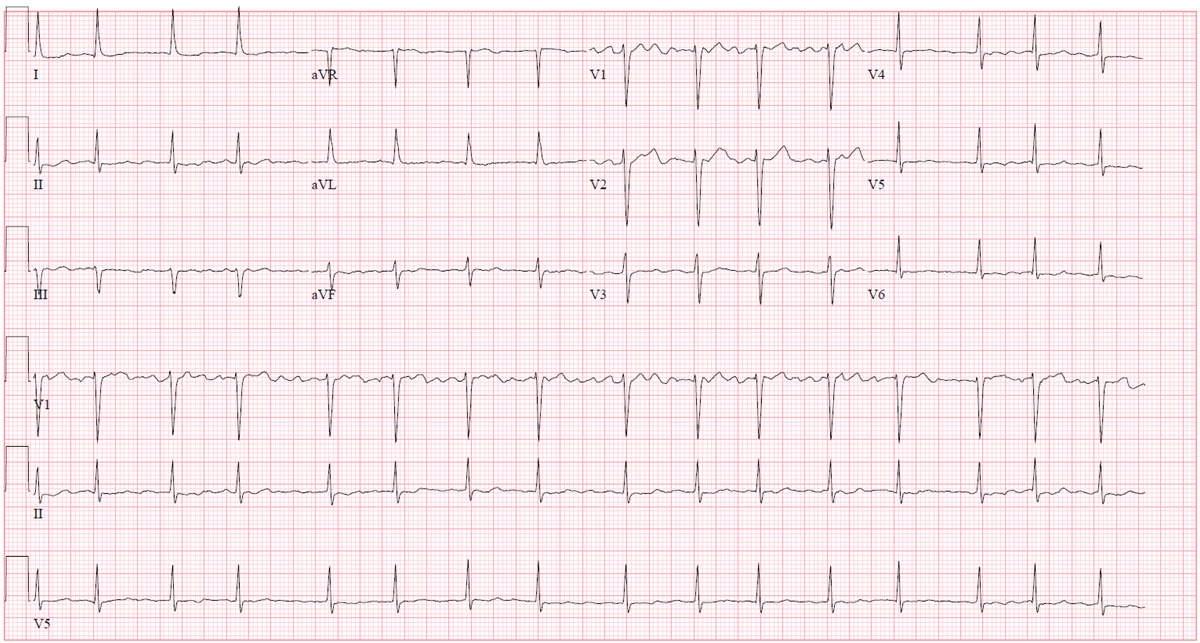 Which of the following is the most likely finding on echocardiography?
 (Multiple Choice)
4.9/5 (74)
(74) A 60-year-old man comes to the office for follow-up of hypertension and type 2 diabetes mellitus. The patient reports that his blood pressure is usually 110-130/70-85 mm Hg and his fasting glucose 85-95 mg/dL when he measures them at home. He has had no headaches, chest pain, or vision changes but reports increased urinary frequency and nocturia 2-3 times per night over the past 3 months. The patient has had no dysuria but says it takes him longer to finish urinating and he often urinates again within 1-2 hours. His current medications are metformin and lisinopril. Temperature is 37 C (98.6 F), blood pressure is 122/78 mm Hg, and pulse is 68/min. BMI is 23 kg/m2. Physical examination shows normal funduscopy findings, normal heart and lung sounds, and a soft and nontender abdomen with a palpable bladder. Rectal examination reveals a smooth, enlarged prostate with no induration. Today's and previous laboratory results are as follows:  Urine studies reveal no significant albuminuria, hematuria, or pyuria. Which of the following is the best next step in management of this patient?
 (Multiple Choice)
4.9/5 (80)
(80) A 53-year-old man comes to the office due to occasional red urine for the last 3 months. He states that his urine stream appears normal initially but turns red by the end of voiding. He has also noticed small clots in his urine. The patient has not had any fever, edema, flank pain, or weight loss. Medical history is significant for chronic back pain. He currently smokes a pack of cigarettes daily but does not use alcohol. His temperature is 37.5 C (99.5 F) and blood pressure is 140/90 mm Hg. Physical examination is within normal limits. Urinalysis is positive only for blood. Which of the following is the most likely cause of this patient's symptoms?
(Multiple Choice)
4.8/5 (92)
(92) A 26-year-old man comes to the office due to a week of fever, malaise, fatigue, and sore throat. The patient has no chronic medical conditions and takes no medications. He drinks 1 or 2 beers on the weekends but does not use tobacco or illicit drugs. The patient has had 3 male sexual partners over the past year and uses condoms inconsistently. Temperature is 38.3 C (101 F), blood pressure is 120/76 mm Hg, pulse is 75/min, and respirations are 14/min. Physical examination shows pharyngeal erythema, mild splenomegaly, and a morbilliform rash. No enlarged lymph nodes are present. Laboratory results are as follows: 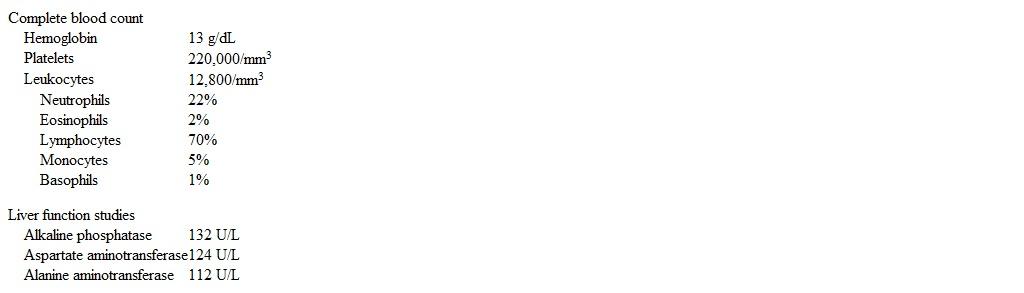 Peripheral blood smear is shown in the exhibit below. Heterophile antibody testing is negative. Which of the following is the most likely diagnosis?
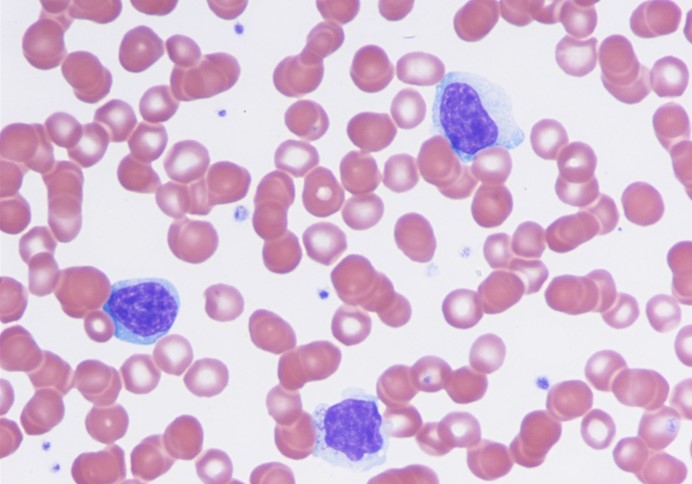
Peripheral blood smear is shown in the exhibit below. Heterophile antibody testing is negative. Which of the following is the most likely diagnosis?
(Multiple Choice)
4.8/5 (72)
(72) Showing 781 - 800 of 1702
 Prev
- 1
- ...
- 2
- ...
- 3
- ...
- 4
- ...
- 5
- ...
- 6
- ...
- 7
- ...
- 8
- ...
- 9
- ...
- 10
- ...
- 11
- ...
- 12
- ...
- 13
- ...
- 14
- ...
- 15
- ...
- 16
- ...
- 17
- ...
- 18
- ...
- 19
- ...
- 20
- ...
- 21
- ...
- 22
- ...
- 23
- ...
- 24
- ...
- 25
- ...
- 26
- ...
- 27
- ...
- 28
- ...
- 29
- ...
- 30
- ...
- 31
- ...
- 32
- ...
- 33
- ...
- 34
- ...
- 35
- ...
- 36
- ...
- 37
- ...
- 38
- ...
- 39
- ...
- 40
- ...
- 41
- ...
- 42
- ...
- 43
- ...
- 44
- ...
- 45
- ...
- 46
- ...
- 47
- ...
- 48
- ...
- 49
- ...
- 50
- ...
- 51
- ...
- 52
- ...
- 53
- ...
- 54
- ...
- 55
- ...
- 56
- ...
- 57
- ...
- 58
- ...
- 59
- ...
- 60
- ...
- 61
- ...
- 62
- ...
- 63
- ...
- 64
- ...
- 65
- ...
- 66
- ...
- 67
- ...
- 68
- ...
- 69
- ...
- 70
- ...
- 71
- ...
- 72
- ...
- 73
- ...
- 74
- ...
- 75
- ...
- 76
- ...
- 77
- ...
- 78
- ...
- 79
- ...
- 80
- ...
- 81
- ...
- 82
- ...
- 83
- ...
- 84
- ...
- 85
- ...
- 86
- ...
- Next

Filters
- Essay(0)
- Multiple Choice(0)
- Short Answer(0)
- True False(0)
- Matching(0)