


 Chat with AI
Exam 1: Medicine

Exam 1: Medicine2 k Questions
Exam 2: Pediatric723 Questions
Exam 3: Psychiatry336 Questions
Exam 4: Surgery563 Questions
Exam 5: Obstetrics & Gynecology469 Questions
Select questions type


A 35-year-old man is brought to the emergency department by his roommate, who says that he has been acting "weird" for the past 2 days. The patient has spent most of the time in his room and has not been eating much. He has no headaches, focal weakness, or sensory symptoms. His medical history is significant for untreated HIV and hepatitis C infections. Temperature is 37.9 C (100.2 F), blood pressure is 140/86 mm Hg, pulse is 96/min, and respirations are 16/min. Mild scleral icterus is present. The oropharynx is normal and there is no nuchal rigidity. Examination of the chest and abdomen are unremarkable. Neurologic examination reveals no focal deficits. Laboratory results are as follows: 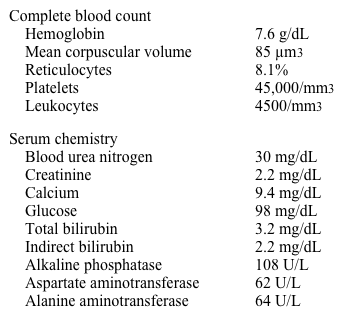 A CT scan of the head with and without contrast reveals no abnormalities. Which of the following is the most appropriate next step in the management of this patient?
 (Multiple Choice)
5.0/5  (91)
(91) A 70-year-old man comes to the emergency department due to severe left ear pain. The pain has progressively worsened over the past 2 weeks. It is especially severe at night and is exacerbated by chewing, so the patient has difficulty sleeping and eating. He has been unable to wear his hearing aid on the left side, so he is unsure whether his hearing has worsened. Medical history is significant for hypertension, coronary artery disease, and type 2 diabetes mellitus complicated by peripheral neuropathy. Temperature is 37.8 C (100 F), blood pressure is 140/90 mm Hg, and pulse is 98/min. On examination, the left external auditory canal is mildly edematous with purulent discharge and granulation tissue on the canal floor. The tympanic membrane is clear. Aside from hearing loss, cranial nerve examination is normal. Complete blood count is normal, and the erythrocyte sedimentation rate is 89 mm/hr. Which of the following is the best initial treatment for this patient?
(Multiple Choice)
4.8/5 (67)
(67) A 56-year-old man is being evaluated for increased fatigability. His past medical history is significant for severe aortic stenosis that required aortic valve replacement, diabetes mellitus, and osteoarthritis. Peripheral blood smear findings are shown on the slide below. 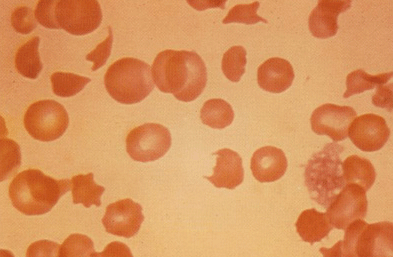 Which of the following laboratory findings is most likely to be seen in this patient?
 (Multiple Choice)
4.9/5 (82)
(82) A 34-year-old man comes to the emergency department due to headaches, fatigue, and fever. He developed intense chills with shivering, followed a few hours later by high-grade fevers and then profuse sweating. A few days ago, the patient experienced similar symptoms that seemed to resolve. He and his wife returned from a safari in Kenya 2 weeks ago. His wife had diarrhea during the trip but has had no symptoms since their return. The patient has no known medical problems and takes no medications. He lives in Seattle and works as a business consultant. He did not go to a travel clinic prior to this trip. The patient was vaccinated against yellow fever 5 years ago but has received no other vaccinations recently. While in Kenya, he wore long-sleeved clothing, used insect repellent, and did not drink unbottled water or eat uncooked food. His temperature is 38.9 C (102 F), blood pressure is 100/60 mm Hg, pulse is 114/min, and respirations are 18/min. Conjunctival pallor is present. There is no neck stiffness. The rest of his physical examination, including neurologic examination, is unremarkable. Laboratory results are as follows: 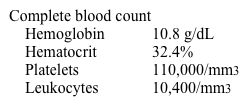 What is the most likely diagnosis in this patient?
 (Multiple Choice)
4.7/5 (82)
(82) An 83-year-old woman is brought to the emergency department from her nursing home due to poor appetite, fatigue, diarrhea, and confusion. The patient has a history of moderate dementia, hypertension, mild intermittent asthma, and bilateral knee osteoarthritis. She was recently hospitalized with pneumonia for which she was treated with broad-spectrum antibiotics. The patient was discharged to the nursing home in stable condition and had normal laboratory values 2 weeks ago. Since that time, she has had worsening diarrhea. The diarrhea is foul-smelling but does not contain any blood. She has mild abdominal discomfort. Temperature is 37.6 C (99.7 F), blood pressure is 96/54 mm Hg, pulse is 112/min, and respirations are 14/min. She has poor skin turgor. There is no peripheral edema. The patient's lungs are clear to auscultation. The abdomen is soft, but she has mild generalized tenderness without rebound or guarding. Laboratory results are as follows: 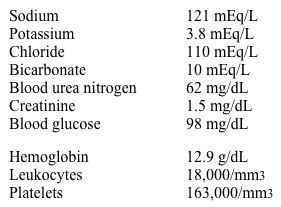 A stool specimen tests positive for Clostridium difficile toxin. Which of the following is most likely present in this patient?
 (Multiple Choice)
4.8/5 (76)
(76) A 62-year-old man is brought to the hospital due to altered mental status. He has had 4 days of headaches, fever, myalgia, and chills. Medical history is significant for hypertension and a transient ischemic attack. The patient takes aspirin, amlodipine, and simvastatin. He works as horse trainer on a farm in Texas. Temperature is 38.1 C (100.6 F), blood pressure is 108/68 mm Hg, and pulse is 98/min. On examination, the patient is drowsy. There is no neck stiffness. The lungs are clear to auscultation, and heart sounds are normal. No significant lymphadenopathy or hepatosplenomegaly is present. There is a petechial rash over the upper and lower extremities. Neurologic examination is nonfocal. Laboratory results are as follows:  What is the best next step in management?
 (Multiple Choice)
4.9/5 (74)
(74) A 60-year-old man comes to the office due to right-sided neck and shoulder pain. The pain worsens with neck movement and is associated with numbness in his forearm. Over the past 2 years, he has had several episodes of similar symptoms that improved with rest and ibuprofen. The patient has no history of neck or shoulder trauma. He smokes a pack of cigarettes daily and has used injection drugs in the past. Vital signs are within normal limits. Physical examination shows limited neck rotation and lateral bending. There is decreased pinprick sensation on the posterior aspect of the right forearm but no muscle weakness. Triceps reflex is normal. Left upper and bilateral lower extremity examination show no other abnormalities. A plain radiograph of the cervical spine is ordered. This patient's symptoms are most likely associated with which of the following radiographic findings?
(Multiple Choice)
4.8/5 (81)
(81) A 43-year-old man is being evaluated for erectile dysfunction, which has been progressive over the past year. He has no other symptoms except some fatigue that he attributes to his intense work schedule. The patient drinks 1-2 beers every day after work and has a 20-pack-year smoking history. He does not use recreational drugs or take over-the-counter medications. Vital signs are normal. BMI is 29 kg/m2. Skin examination shows brownish skin pigmentation, most pronounced over the face and both arms. The abdomen is soft and nontender without organomegaly. Cardiopulmonary examination shows no abnormalities, and there is no peripheral edema. Laboratory results are as follows: 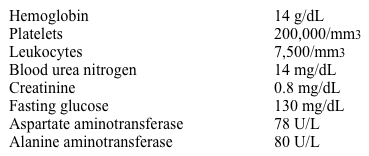 If untreated, this patient is at increased risk for developing which of the following complications?
 (Multiple Choice)
4.7/5 (84)
(84) A 32-year-old woman comes to the emergency department with progressive difficulty breathing over the past few days. The patient has nasal congestion, dry cough, and wheezing but no fever, chills, recent travel, or sick contacts. Medical history is significant for eczema and a family history of asthma. Temperature is 37 C (98.6 F), blood pressure is 138/78 mm Hg, pulse is 114/min, and respirations are 28/min. Oxygen saturation is 95% on room air. Nasal congestion is noted on examination. The ears and throat are normal, and heart sounds are normal without murmurs. The patient has mild scattered wheezing but does not appear to be in respiratory distress. Chest x-ray is shown in the exhibit. 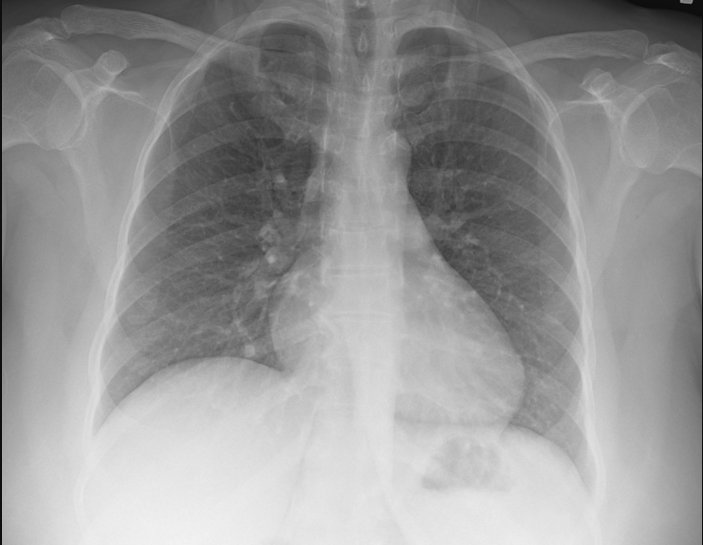 Which of the following is the most appropriate pharmacotherapy for this patient?
 (Multiple Choice)
4.9/5 (76)
(76) In recent years, more people have been diagnosed with leukemia in town A than in town B. Which of the following study designs would be best suited to determine whether the town location is related to the apparent difference in leukemia incidence in these 2 towns?
(Multiple Choice)
4.9/5 (69)
(69) A study was conducted to assess the association between L-tryptophan use and the development of Eosinophilia-Myalgia Syndrome (EMS). Patients with EMS were asked about the use of products containing L-tryptophan during the last 6 months. At the same time, people without EMS were randomly selected from the same population where the patients came from, and asked about their experience with L-tryptophan containing products within the last 6 months. The study showed that the use of L-tryptophan is significantly associated with EMS. Which of the following measures of association are the investigators most likely to report?
(Multiple Choice)
4.8/5 (76)
(76) A 58-year-old man comes to the emergency department with 3 days of fever, malaise, nonproductive cough, abdominal pain, diarrhea, and shortness of breath. He has a past medical history of hypertension, hypothyroidism, and coronary artery disease. The patient travels frequently within the United States and just returned from a week-long business conference. Yesterday, his abdominal pain worsened and he began to have diarrhea. His temperature is 38.9 C (102 F), blood pressure is 98/59 mm Hg, pulse is 75/min, and respirations are 29/min. The patient's pulse oximetry shows 94% on room air. He appears confused. Examination shows diffuse crackles over the left lung field. Chest x-ray reveals patchy infiltrates in the left lung without adenopathy. A sputum sample is obtained for smear and culture; the Gram stain shows many neutrophils but no organisms. Laboratory results are as follows: 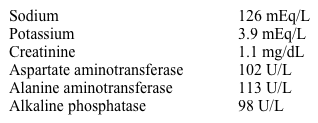 Which of the following tests is most likely to identify the cause of this patient's condition?
 (Multiple Choice)
4.9/5 (103)
(103) A 38-year-old woman comes to the office with cough and blood-tinged sputum. She developed malaise, nasal congestion, sore throat, and dry cough 10 days ago. Most of her symptoms improved, but the cough persisted and became productive of yellowish sputum. For the past 2 days, she has had several episodes of blood-tinged sputum. The patient has no chest pain except the discomfort from coughing. Her appetite is normal, and she has no weight loss. She feels anxious as she has never had blood in the sputum before. She is a nonsmoker, has no other medical problems, and denies international travel. Her vaccinations are up to date. The patient's temperature is 36.7 C (98 F), blood pressure is 132/80 mm Hg, pulse is 82/min, and respirations are 18/min. Pulse oximetry is 98% on room air. Her BMI is 29 kg/m2, and the oropharynx is clear. Scattered bilateral wheezes and crackles that clear with coughing are heard on chest auscultation. Chest x-ray reveals clear lung fields. Which of the following is the most appropriate next step in management of this patient?
(Multiple Choice)
4.8/5 (82)
(82) A 20-year-old college student is brought to the emergency department by his girlfriend after he ingested large amounts of acetaminophen in a suicide attempt. Two days ago, the girlfriend told the patient that she wanted to break up with him. He became distraught and took approximately 30 pills of 500-mg acetaminophen to end his life. This morning, the girlfriend discovered what he had done and brought him in to seek care. The patient reports nausea and mild abdominal pain. He has no history of previous suicide attempts or psychiatric illness. Temperature is 36.7 C (98 F), blood pressure is 114/68 mm Hg, and pulse is 94/min. Abdominal examination reveals mild tender hepatomegaly. Serum acetaminophen level is high, and the patient is hospitalized for N-acetylcysteine therapy. During the hospital stay, he becomes markedly confused and incoherent. Repeat examination shows scleral icterus and asterixis. Current laboratory results and those obtained at the time of admission are as follows:  Which of the following is the best next step in management of this patient?
 (Multiple Choice)
4.9/5 (64)
(64) A 35-year-old Caucasian male with aplastic anemia undergoes bone marrow transplantation. The donor is an HLA-matched sibling. Two weeks after the procedure, he develops a maculopapular pruritic rash that is predominantly found on his face, hands, and feet. He also complains of diarrhea. The stool is positive for occult blood. Liver function tests are abnormal. Which of the following is the most likely pathophysiologic mechanism of this patient's condition?
(Multiple Choice)
4.8/5 (70)
(70) A 68-year-old man comes to the office due to progressive dyspnea on exertion and nonproductive cough over the past year. The patient now has dyspnea after performing common household chores. He had asthma during childhood but otherwise had no respiratory symptoms until a year ago. He has hypertension and osteoarthritis. Medications include lisinopril and acetaminophen as needed. The patient has never smoked and drinks alcohol on social occasions. He travelled overseas extensively during his long career in the navy but has been retired for 8 years. He has 2 dogs. Temperature is 37 C (98.6 F), blood pressure is 143/76 mm Hg, pulse is 93/min, and respirations are 20/min. Oxygen saturation is 94% on ambient air. BMI is 27 kg/m2. Neck veins are flat. Lung auscultation reveals fine inspiratory crackles at the bases, and heart sounds are normal without murmur. The abdomen is nontender without hepatosplenomegaly. No extremity edema is present. Which of the following sets of findings are most likely to be observed on pulmonary function testing of this patient?
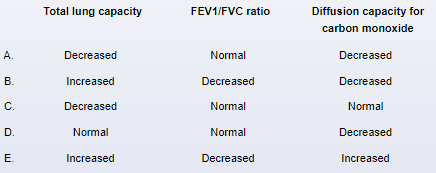
(Multiple Choice)
4.8/5 (90)
(90) A 16-year-old boy is brought to the office for evaluation of left thigh pain. The pain, which is dull and aching, has been present during most evenings for the last 2 months. Over the last month, the pain has worsened and is now interrupting his sleep but improves with ibuprofen. The patient has had no trauma, fever, or pain in other joints or extremities. He plays high school basketball and states the pain does not occur during or after practice or games. He has a history of moderate, persistent asthma for which he takes an inhaled corticosteroid daily and albuterol as needed; he has required a course of oral prednisone every 2-3 years since infancy. Vital signs are normal. The left lower extremity shows no redness or deformity. Mild tenderness is elicited with deep palpation of the left distal thigh. All extremities demonstrate normal muscle bulk and strength with full range of motion. Gait is normal. X-ray is shown in the exhibit. 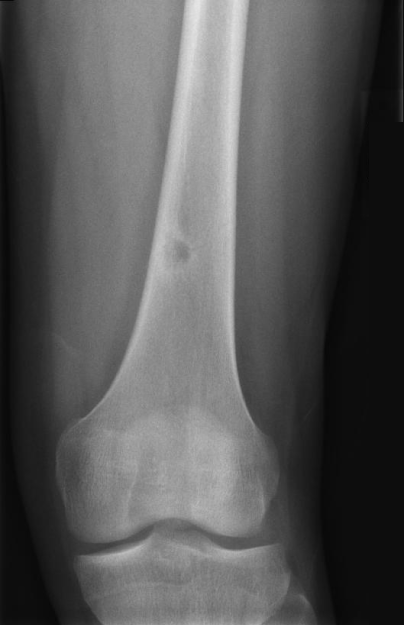 Which of the following is the most likely diagnosis in this patient?
 (Multiple Choice)
4.9/5 (70)
(70) An 8-year-old boy is brought to the office by his parents due to difficulty at school. The boy's teacher reported that he is disruptive to other students and his behavior has worsened over the course of the year. He has difficulty making friends due to his annoying behavior and has trouble sitting still and focusing. At home, the boy is active and affectionate but can easily become irritable, and he has trouble sharing toys with his younger siblings. His mother says, "Everything seems okay, and then suddenly he will start shouting and throwing his toys or occasionally hit his brothers. He routinely forgets to do his homework and chores despite my reminding him over and over, and he gets angry and argumentative when he is reprimanded." Medical history is insignificant. The patient sleeps and eats well. On examination, he is noted to be fidgety and interrupts the conversation with various questions and comments. In addition to psychosocial interventions, which of the following medications would be most effective for this patient?
(Multiple Choice)
4.9/5 (71)
(71) A healthy 24-year-old woman comes to the office due to pain behind her right heel for 5 days. The pain developed gradually and is burning in quality, worse with activity, and partially relieved with rest. There is no history of trauma. The patient has no fever, back pain, swelling, or rash. She eats a healthy diet and walks 2 miles every morning. She has no chronic medical problems. The patient's only medication is naproxen, which provides some relief. Her father has gout. Vital signs are within normal limits. BMI is 24 kg/m2. Examination shows tenderness 3 cm above the posterior calcaneus. There is no leg swelling, deformity or redness. Dorsiflexion and plantar flexion of the foot are intact. Which of the following is the most likely cause of this patient's leg pain?
(Multiple Choice)
4.9/5 (83)
(83) A 58-year-old woman comes to the office for her annual examination. The patient is feeling well. She reports 3 days of light vaginal spotting 2 months ago but has had no other episodes. The patient previously had not had a menstrual period for over a year. Her medical history includes symptomatic uterine fibroids, which were controlled with oral contraceptive pills until her early 50s. She has no other chronic medical conditions, and her only surgeries were 2 cesarean deliveries. The patient is current on her cervical cancer screening and has had no abnormal tests. Vital signs are normal, and BMI is 31 kg/m2. On speculum examination, there is no blood at the cervical os, and the cervix has no masses or areas of friability. The vagina appears pale and has minimal rugation. On bimanual examination, the uterus has multiple nontender masses consistent with fibroids. There are no areas of nodularity or palpable adnexal masses. Which of the following is the best next step in management of this patient?
(Multiple Choice)
4.9/5 (75)
(75) Showing 1621 - 1640 of 1702
 Prev
- 1
- ...
- 2
- ...
- 3
- ...
- 4
- ...
- 5
- ...
- 6
- ...
- 7
- ...
- 8
- ...
- 9
- ...
- 10
- ...
- 11
- ...
- 12
- ...
- 13
- ...
- 14
- ...
- 15
- ...
- 16
- ...
- 17
- ...
- 18
- ...
- 19
- ...
- 20
- ...
- 21
- ...
- 22
- ...
- 23
- ...
- 24
- ...
- 25
- ...
- 26
- ...
- 27
- ...
- 28
- ...
- 29
- ...
- 30
- ...
- 31
- ...
- 32
- ...
- 33
- ...
- 34
- ...
- 35
- ...
- 36
- ...
- 37
- ...
- 38
- ...
- 39
- ...
- 40
- ...
- 41
- ...
- 42
- ...
- 43
- ...
- 44
- ...
- 45
- ...
- 46
- ...
- 47
- ...
- 48
- ...
- 49
- ...
- 50
- ...
- 51
- ...
- 52
- ...
- 53
- ...
- 54
- ...
- 55
- ...
- 56
- ...
- 57
- ...
- 58
- ...
- 59
- ...
- 60
- ...
- 61
- ...
- 62
- ...
- 63
- ...
- 64
- ...
- 65
- ...
- 66
- ...
- 67
- ...
- 68
- ...
- 69
- ...
- 70
- ...
- 71
- ...
- 72
- ...
- 73
- ...
- 74
- ...
- 75
- ...
- 76
- ...
- 77
- ...
- 78
- ...
- 79
- ...
- 80
- ...
- 81
- ...
- 82
- ...
- 83
- ...
- 84
- ...
- 85
- ...
- 86
- ...
- Next

Filters
- Essay(0)
- Multiple Choice(0)
- Short Answer(0)
- True False(0)
- Matching(0)