


 Chat with AI
Exam 1: Medicine

Exam 1: Medicine2 k Questions
Exam 2: Pediatric723 Questions
Exam 3: Psychiatry336 Questions
Exam 4: Surgery563 Questions
Exam 5: Obstetrics & Gynecology469 Questions
Select questions type


A 48-year-old man comes to the office due to progressive exertional dyspnea. It has become especially bothersome over the past 2 months. He now becomes short of breath after climbing one flight of stairs. He has no known medical problems. He is not taking any medications and does not use tobacco or alcohol. Temperature is 37.2 C (98.9 F), blood pressure is 130/75 mm Hg, pulse is 78/min, and respirations are 14/min. Chest examination reveals a harsh systolic murmur that is best heard at the right second intercostal space with radiation along the carotid arteries. An S4 is heard at the apex. Based on these findings, what is the most likely cause of this patient's symptoms?
(Multiple Choice)
4.8/5  (93)
(93) A 46-year-old woman comes to the clinic due to left lower extremity swelling for the past 2 years. She has had several episodes of cellulitis involving the left leg. During the most recent episode 6 months ago, she underwent treatment with intravenous antibiotics that was complicated by a catheter-related axillary vein thrombosis requiring 3 months of anticoagulation therapy. Her medical history is also significant for diet-controlled type 2 diabetes mellitus. BMI is 34 kg/m2. Physical examination shows firm edema of the left lower extremity. There is no erythema or warmth. The examiner cannot lift the skin from the dorsum of the toes on the left foot but is able to do so with the toes on the right foot. Which of the following is the most likely cause of this patient's symptoms?
(Multiple Choice)
4.8/5 (60)
(60) A 74-year-old woman comes to the emergency department due to sudden onset of complete vision loss in her right eye. Her vision had been blurry for the past 24 hours and acutely worsened an hour ago. The patient has had no weakness or sensory changes in the extremities. Review of systems is positive for 2 months of generalized headaches. She has no nausea or vomiting but does have malaise and fatigue. Medical history is significant for type 2 diabetes mellitus, hypertension, hypercholesterolemia, and bilateral cataract surgeries. Temperature is 37.2 C (99 F), blood pressure is 156/86 mm Hg, and pulse is 78/min. Examination shows complete loss of vision in the right eye. The pupils are 4 mm bilaterally. Funduscopy shows a swollen pale disc with blurred margins. The lateral scalp is tender to palpation. Cardiopulmonary examination is normal. Motor and sensory examinations are normal. Which of the following is the most appropriate therapy for this patient?
(Multiple Choice)
4.8/5 (79)
(79) A 26-year-old woman comes to the office for evaluation of right knee pain. She is training for an upcoming marathon but is unable to run more than a mile without pain. The pain is sharp and most prominent at the lateral aspect of the knee; it is worse when descending stairs and better with ice and rest. There has been no recent trauma to the knee. Vital signs are within normal limits. On examination, the leg is soft with no effusion or redness around the knee. Knee ligament testing shows no instability and range of motion is full. There is no clicking or popping; however, there is an area of tenderness 2 cm proximal to the right lateral joint line. Which of the following is the most likely diagnosis in this patient?
(Multiple Choice)
4.8/5 (65)
(65) A 42-year-old man comes to the office due to progressive fatigue. For several years, the patient has had recurrent episodes of abdominal pain and diarrhea associated with bloody stools. Two years ago, he underwent a colonoscopy with biopsy, which demonstrated contiguous proctocolitis with pseudopolyps, mucosal ulcerations, and crypt abscesses. Oral 5-aminosalicylic acid and corticosteroid enemas controlled his symptoms, but he has had extreme fatigue for the past several months to where he feels drained by the end of the day. The patient has had no weight loss. Temperature is 37 C (98.6 F), blood pressure is 134/90 mm Hg, pulse is 74/min, and respirations are 15/min. Examination shows mild left lower quadrant tenderness on deep palpation. There is no hepatomegaly or splenomegaly. Laboratory results are as follows:  Which of the following is the most appropriate next step in management?
 (Multiple Choice)
4.8/5 (92)
(92) A 59-year-old man comes to the emergency department due to 2 hours of vague chest discomfort. The discomfort started suddenly while the patient was watching television. He has no other symptoms. Blood pressure is reported to be under control with hydrochlorothiazide. The patient has a 30-pack-year smoking history. Vital signs are within normal limits. Physical examination shows clear lungs and normal heart sounds but is otherwise unremarkable. ECG is normal. The first set of cardiac enzymes is within normal limits. Chest x-ray is shown in the image below. 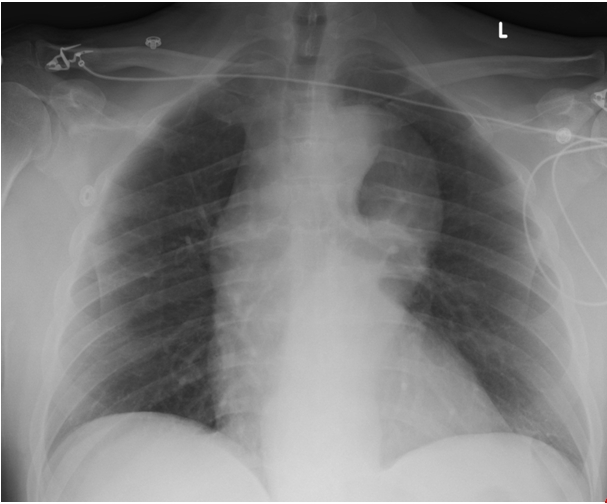 Which of the following is most likely contributing to the pathophysiology of this patient's condition?
 (Multiple Choice)
4.7/5 (82)
(82) A 74-year-old man comes to the office due to urinary frequency over the last 2 months. He wakes up to use the bathroom several times during the night. He also has had mild straining during urination. Over the last few weeks, he has had 2 episodes of bloody urine that cleared spontaneously. The patient had right knee replacement for severe osteoarthritis 7 years ago. His father died of colon cancer. He has a 30-pack-year smoking history but quit 15 years ago. Rectal examination shows an enlarged and smooth prostate with no nodules, and normal rectal sphincter tone. Serum creatinine is 0.8 mg/dL and prostate-specific antigen level is 3.8 ng/mL (normal <4 ng/mL). Urinalysis shows 0-1 white blood cells/hpf and 3-5 red blood cells/hpf, with no proteinuria, bacteriuria, casts, or dysmorphic red blood cells. Which of the following is the best next step in management of this patient?
(Multiple Choice)
4.8/5 (76)
(76) A 55-year-old woman comes to the physician with a 3-week history of low-grade fever, weight loss of 4.5 kg (10 lb), and malaise. She is known to have mitral valve prolapse but is otherwise healthy. She underwent a tooth extraction a month ago. The patient does not use tobacco, alcohol, or illicit drugs. Her temperature is 38.5 C (101.3 F), blood pressure is 145/76 mm Hg, pulse is 90/min, and respirations are 18/min. The chest is clear to auscultation and percussion. A 3/6 holosystolic murmur is present at the apex. Chest x-ray is normal. Urinalysis is unremarkable. Blood cultures are drawn and empiric antibiotics are started. Echocardiogram shows moderate mitral regurgitation with a 6-mm mobile mass attached to the mitral valve. Which of the following organisms is the most likely cause of this patient's condition?
(Multiple Choice)
4.9/5 (68)
(68) A 19-year-old man is brought to the emergency department after a hard fall during a skateboarding trick. The patient was attempting a board slide down a metal handrail when he lost his balance, striking his left flank against the rail. He did not hit his head or lose consciousness but felt short of breath for approximately a minute after the impact. The patient now has pain in the left midback. Blood pressure is 132/80 mm Hg and pulse is 106/min. Breath and heart sounds are normal. The abdomen is soft and nontender. The left flank is bruised and tender to palpation. Hematocrit is 44%. Urinalysis is normal. Which of the following is the best next step in management of this patient?
(Multiple Choice)
5.0/5 (87)
(87) A 58-year-old man with Burkitt lymphoma is admitted to the hospital for chemotherapy. Medical history includes hypertension, stable angina, and hyperlipidemia. Two days after starting chemotherapy, the patient reports nausea and generalized weakness. Laboratory results are as follows:  ECG shows peaked T waves. In addition to calcium gluconate, which of the following is the best initial therapy for this patient?
 (Multiple Choice)
4.9/5 (91)
(91) A 52-year-old man comes to the office due to an enlarging rash at the left ankle and upper back. The rash began 6 weeks ago and is associated with significant itching. The patient has tried topical antihistamines and calamine lotion without relief. Medical history is otherwise unremarkable. Temperature is 36.9 C (98.4 F), blood pressure is 135/82 mm Hg, pulse is 76/min, and respirations are 12/min. BMI is 25 kg/m2. Examination shows a rash at the ankle, as seen in the image below, and a similar rash is noted at the upper back. 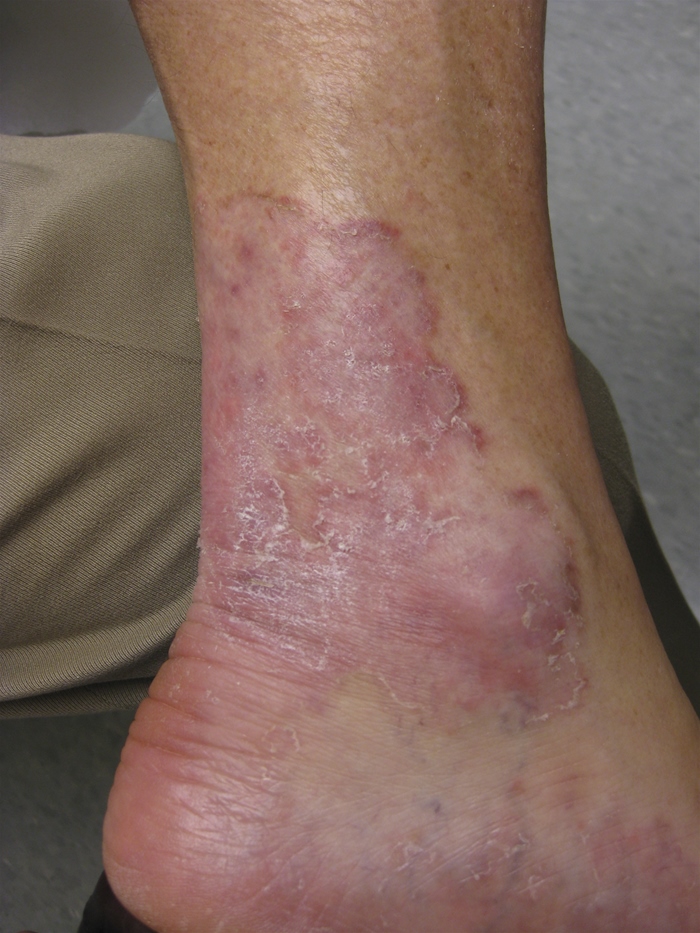 Which of the following is the most likely diagnosis in this patient?
 (Multiple Choice)
4.7/5 (86)
(86) A 58-year-old man is brought to the office by his sister due to behavioral symptoms. For the last several months, he has had changes in personality associated with increasingly bizarre behaviors. His mood has been very labile and he often says things that are nonsensical. The patient was diagnosed with HIV 25 years ago and is on antiretroviral therapy but frequently skips doses. He also has a history of hepatitis A and 2 episodes of gonorrhea. Temperature is 36.7 C (98.1 F), blood pressure is 138/86 mm Hg, and pulse is 90/min. Oral examination shows thrush. Cranial nerve examination, motor strength, and deep tendon reflexes are normal. The patient is alert and oriented to person, place, and time. Three-item recall is normal, but the patient is unable to count backwards from 100 by 7 or to spell "world" backward. When asked to explain the meaning of "don't count your chickens before they hatch," he laughs and says, "I guess you just shouldn't count too many chickens." Laboratory results are as follows: 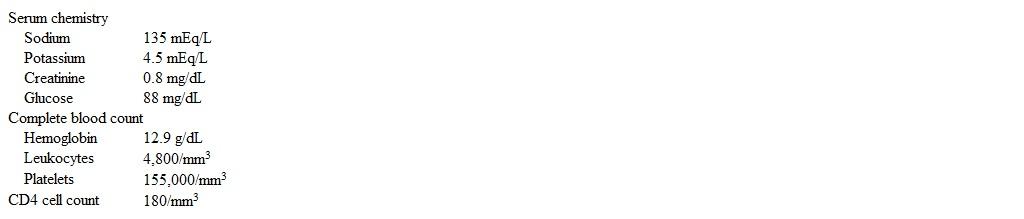 MRI of the brain reveals ventricular enlargement and an increase in intensity in the white matter diffusely. Which of the following is the most likely cause of this patient's symptoms?
 (Multiple Choice)
4.8/5 (89)
(89) A 47-year-old man develops sudden onset of mid-sternal chest pain and diaphoresis during a meeting in his office. While waiting for emergency medical personnel to arrive, he complains of dizziness and becomes unresponsive. His coworkers perform cardiopulmonary resuscitation and he regains consciousness after 60 seconds. The patient has a history of diet-controlled type 2 diabetes mellitus, hypertension, and hyperlipidemia. In the emergency department, his blood pressure is 142/88 mm Hg and pulse is 92/min. Electrocardiogram shows normal sinus rhythm, ventricular premature complexes, and a 3-mm ST-segment elevation in leads V1-V3. What is the most likely primary pathophysiologic mechanism responsible for this patient's syncopal episode?
(Multiple Choice)
4.8/5 (78)
(78) A 25-year-old African American man is admitted to the hospital due to sudden-onset back pain, dark urine, and a day of fatigue. Four days ago, the patient began taking trimethoprim-sulfamethoxazole for right arm cellulitis. Yesterday he was unable to go to work due to fatigue and weakness. Medical history is otherwise unremarkable. Physical examination shows conjunctival pallor and improving cellulitis. Laboratory results are as follows:  Peripheral smear shows bite cells. Glucose-6-phosphate dehydrogenase activity assay is sent on admission and returns within normal limits. Which of the following is the most likely cause of this patient's hemolysis?
 (Multiple Choice)
4.8/5 (84)
(84) A 38-year-old woman comes to the office for evaluation of pain and tingling in her hands. She works as a telemarketer for a local sales and marketing agency and has been having difficulty holding the phone. Review of systems is positive for frequent muscle aches in her arms and legs, constipation, lethargy, and difficulty concentrating at work. The patient has no other medical problems and takes no medication. She does not use tobacco, alcohol, or illicit drugs. Blood pressure is 130/80 mm Hg, pulse is 70/min, and respirations are 14/min. BMI is 32 kg/m2. On examination, there is numbness in the thumb, index, and middle fingers of both hands. Deep tendon reflexes are 1+ in all 4 extremities. The skin appears doughy and dry at both elbows. Mild edema is present in both ankles. Which of the following is most likely responsible for this patient's hand symptoms?
(Multiple Choice)
4.9/5 (75)
(75) A 53-year-old woman comes to the office due to progressive exertional dyspnea over the past several weeks. The patient's abdominal girth has also increased during this time, which has been associated with discomfort and early satiety. Medical history is significant for bacterial endocarditis due to intravenous drug use. Temperature is 36.7 C (98 F), blood pressure is 120/70 mm Hg, pulse is 85/min, and respirations are 18/min. Physical examination shows no jugular venous distension or hepatojugular reflux. Chest is clear to auscultation. The abdomen is distended and nontender. Both shifting dullness and a fluid wave are present. Hepatosplenomegaly is present. There is trace bilateral lower extremity edema. Which of the following best explains this patient's presentation?
(Multiple Choice)
4.8/5 (83)
(83) An unconscious 42-year-old man is brought to the emergency department by ambulance after sustaining a gunshot wound to the chest during an attempted robbery at a convenience store. He is bleeding profusely. The patient is minimally responsive to pain and is unable to provide any history. The ambulance record indicates that his initial blood pressure was 120/70 mm Hg, pulse was 95/min, and respirations were 16/min. The patient's current blood pressure is 70/40 mm Hg, pulse is 130/min, and respirations are 28/min. He has an open gunshot wound in the chest and an exit wound in the back. Intravenous fluids and vasopressors are started, and a blood transfusion is ordered. The patient's fiancé arrives and states that he should not receive a blood transfusion because he is a devout Jehovah's Witness. No evidence is found in the medical chart of advance directives or a living will documenting the patient's wishes, and examination of his belongings show no blood refusal card. Which of the following is the most appropriate next step in management of this patient?
(Multiple Choice)
5.0/5 (76)
(76) A 32-year-old man comes to the emergency department with a 3-day history of fever, cough, and weakness. Blood pressure is 120/80 mm Hg and pulse is 110/min. Physical examination shows multiple needle tracks on the patient's arms. ECG shows sinus tachycardia but is otherwise normal. Chest x-ray reveals scattered round lesions in the peripheral lung fields bilaterally. Which of the following accompanying findings is most likely present in this patient?
(Multiple Choice)
5.0/5 (68)
(68) A 69-year-old man undergoes coronary artery bypass grafting and aortic valve replacement surgery. He has a history of aortic stenosis, coronary artery disease, and hypertension. The surgery is uncomplicated, and the patient is extubated and transferred to the stepdown unit on postoperative day 2. That night, he experiences sudden onset of weakness, chest tightness, and shortness of breath. On examination, he appears in moderate distress. His blood pressure is 70/30 mm Hg, pulse is 148/min, and respirations are 26/min. Lung auscultation indicates bibasilar crackles. An ECG rhythm strip is shown in the exhibit. 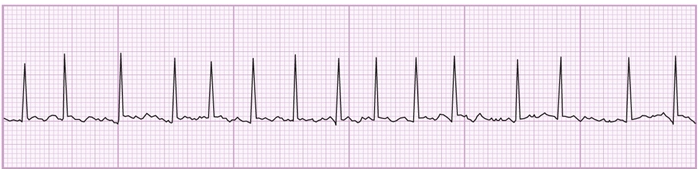 Which of the following is the best next step in management of this patient?
 (Multiple Choice)
4.8/5 (81)
(81) A 56-year-old woman is brought to the hospital from a local restaurant after suddenly becoming short of breath. Her pulmonary flow-volume loop is shown below. 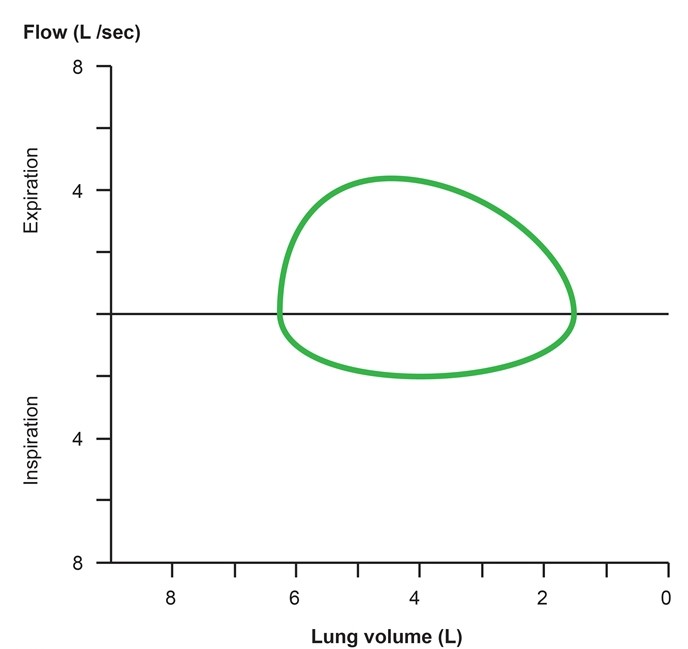 Which of the following is the most likely cause of her symptoms?
 (Multiple Choice)
4.9/5 (69)
(69) Showing 281 - 300 of 1702
 Prev
- 1
- ...
- 2
- ...
- 3
- ...
- 4
- ...
- 5
- ...
- 6
- ...
- 7
- ...
- 8
- ...
- 9
- ...
- 10
- ...
- 11
- ...
- 12
- ...
- 13
- ...
- 14
- ...
- 15
- ...
- 16
- ...
- 17
- ...
- 18
- ...
- 19
- ...
- 20
- ...
- 21
- ...
- 22
- ...
- 23
- ...
- 24
- ...
- 25
- ...
- 26
- ...
- 27
- ...
- 28
- ...
- 29
- ...
- 30
- ...
- 31
- ...
- 32
- ...
- 33
- ...
- 34
- ...
- 35
- ...
- 36
- ...
- 37
- ...
- 38
- ...
- 39
- ...
- 40
- ...
- 41
- ...
- 42
- ...
- 43
- ...
- 44
- ...
- 45
- ...
- 46
- ...
- 47
- ...
- 48
- ...
- 49
- ...
- 50
- ...
- 51
- ...
- 52
- ...
- 53
- ...
- 54
- ...
- 55
- ...
- 56
- ...
- 57
- ...
- 58
- ...
- 59
- ...
- 60
- ...
- 61
- ...
- 62
- ...
- 63
- ...
- 64
- ...
- 65
- ...
- 66
- ...
- 67
- ...
- 68
- ...
- 69
- ...
- 70
- ...
- 71
- ...
- 72
- ...
- 73
- ...
- 74
- ...
- 75
- ...
- 76
- ...
- 77
- ...
- 78
- ...
- 79
- ...
- 80
- ...
- 81
- ...
- 82
- ...
- 83
- ...
- 84
- ...
- 85
- ...
- 86
- ...
- Next

Filters
- Essay(0)
- Multiple Choice(0)
- Short Answer(0)
- True False(0)
- Matching(0)