


 Chat with AI
Exam 1: Medicine

Exam 1: Medicine2 k Questions
Exam 2: Pediatric723 Questions
Exam 3: Psychiatry336 Questions
Exam 4: Surgery563 Questions
Exam 5: Obstetrics & Gynecology469 Questions
Select questions type


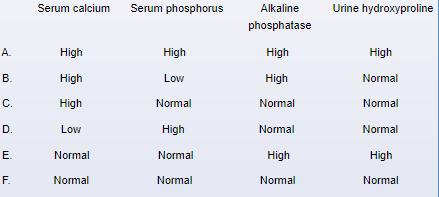
A 68-year-old woman comes to the office due to a 1-year history of right leg pain. The pain has a relatively constant severity and has not responded to over-the-counter medications. The patient has also experienced intermittent headaches over the last 6 months. Medical history is notable for hypertension, diet-controlled diabetes mellitus, and acute cholecystitis for which she underwent cholecystectomy 5 years ago. Her current medications include amlodipine and as-needed acetaminophen. The patient does not smoke, and she drinks 1 or 2 alcoholic beverages a night. Vital signs are normal. The hip and knee have normal range of motion with no gross deformity. X-ray of the skull reveals areas of bone resorption and sclerosis. X-ray of the leg reveals cortical thickening with mild bowing. Which of the following are the most likely findings on laboratory evaluation?
(Multiple Choice)
4.9/5  (85)
(85) A 48-year-old man comes to the emergency department due to 3 days of nausea and vomiting. For the past 4 weeks, the patient has also had increasingly severe headaches. He had a kidney transplant 2 years ago for glomerulonephritis and takes immunosuppressants. Temperature is 38.2 C (100.7 F), blood pressure is 140/90 mm Hg, and pulse is 70/min. The patient is awake but drowsy. Examination shows neck stiffness. Cranial nerves are intact. Muscle strength is normal, but deep tendon reflexes are brisk. CT scan of the head shows no other abnormalities. Results of cerebrospinal fluid analysis results are as follows:  Which of the following is the most likely cause of this patient's symptoms?
 (Multiple Choice)
5.0/5 (83)
(83) A 26-year-old woman comes to the office for a routine visit 6 months after the birth of her first child. Her pregnancy and vaginal delivery were uneventful and her infant is healthy; she breastfed for the first 5 months. The patient reports that during the first 2-3 months after childbirth she had excessive anxiety and worried frequently about her newborn daughter. She also felt unusually fatigued and irritable, which has worsened over the last several weeks. The patient has also experienced constipation, but her appetite is normal and she has gained 2.5 kg (5.5 lb) in the last 3 months. Blood pressure is 130/90 mm Hg and pulse is 60/min. Heart and lung sounds are normal. Mild bilateral lower extremity edema is present. Laboratory results are as follows:  Which of the following is the best next step in management of this patient?
 (Multiple Choice)
4.8/5 (72)
(72) A 35-year-old man comes to the office due to skin lesions on his knees for the past several months. The lesions began as small papules and gradually increased in size but are not painful or itchy. The patient attributes the symptoms to frequent kneeling for his work as a plumber. He tried several over-the-counter emollients but has had no relief and feels embarrassed to go out wearing shorts. The patient has no other medical conditions and does not use tobacco, alcohol, or illicit drugs. Vital signs are within normal limits. Knee examination reveals bilateral findings as shown below. The remainder of the examination shows no abnormalities. 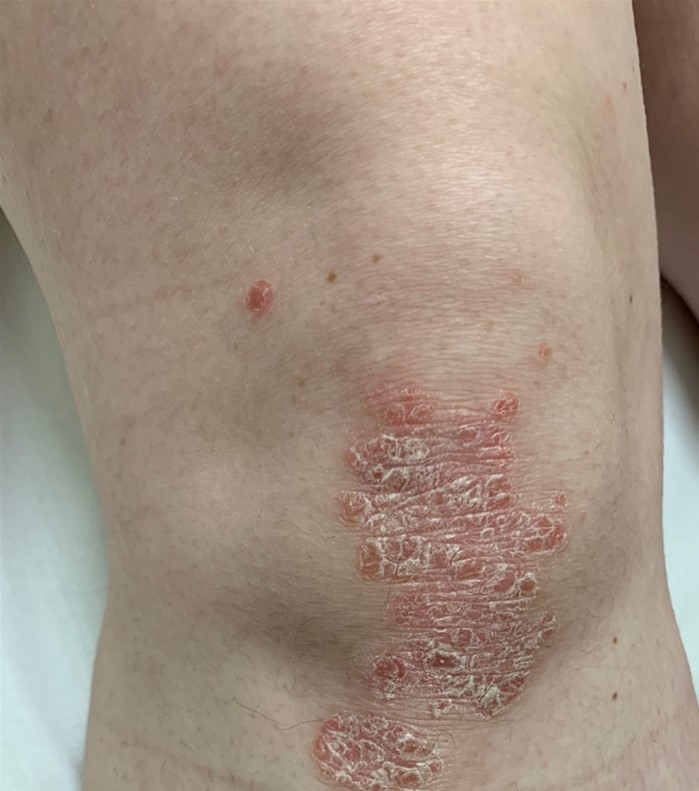 Which of the following is the most appropriate management for this patient's skin lesions?
 (Multiple Choice)
4.8/5 (77)
(77) A 56-year-old hospitalized man is evaluated for recurrent chest pain. The patient was admitted 3 days ago due to a 1-day history of precordial chest pain. Evaluation revealed acute myocardial infarction and a drug-eluting stent was placed in the left anterior descending artery. His symptoms had resolved after the procedure but today the patient experienced sharp chest pain radiating to his left shoulder. He could only get comfortable sitting up but has had no orthopnea or palpitation. Current medications include aspirin, prasugrel, metoprolol, and rosuvastatin. Temperature is 37.2 C (99 F), blood pressure is 112/70 mm Hg, and pulse is 101/min and regular. Physical examination shows no heart murmurs and the lungs are clear bilaterally. ECG shows sinus tachycardia and widespread PR-segment depression. Which of the following is the best next step in management of this patient?
(Multiple Choice)
4.9/5 (76)
(76) A 26-year-old man comes to the emergency department with a 4-day history of fever and chills. He has no chronic medical problems and takes no prescription medications. He drinks alcohol daily. Temperature is 38.3 C (101 F), blood pressure is 110/70 mm Hg, pulse is 95/min, and respirations are 14/min. Examination reveals clear lung fields and a pansystolic murmur at the lower sternal border that increases with inspiration. Multiple needle marks are present on both upper extremities. Laboratory evaluation shows leukocytosis and an elevated erythrocyte sedimentation rate. Chest x-ray reveals no airspace disease. Blood cultures are drawn and empiric antibiotics and supportive treatment are begun. An echocardiogram is ordered. A day later, the nurse reports an acute change in mentation. The patient had been conversing normally with a visitor shortly before the onset of somnolence. He is responsive only to noxious stimuli. Blood pressure is 95/65 mm Hg, pulse is 70/min, and respirations are 10/min. Pupils are equal and 1 mm bilaterally. The neck is supple and no jugular venous distension is seen. He can move all extremities. Which of the following is the most likely etiology for the acute clinical change in this patient?
(Multiple Choice)
5.0/5 (82)
(82) An 85-year-old man comes to the office due to a rash over his forehead, tip of nose, and left eye. He also complains of pain and decreased vision. He has had fever, malaise, and a burning sensation around his left eye for the past 5 days. Temperature is 38.1 C (101 F), blood pressure is 140/90 mm Hg, pulse is 92/min, and respirations are 14/min. Physical examination reveals a vesicular rash on the periorbital region and lid margins. The left eye is red, with chemosis of the conjunctiva. Dendriform ulcers are seen on the cornea. What is the most likely diagnosis?
(Multiple Choice)
4.9/5 (66)
(66) A 35-year-old man is brought to the emergency department after crashing his motorcycle into a guardrail at high speed. He was riding without a helmet and briefly lost consciousness, but he is now awake and alert in the emergency department. Blood pressure is 120/70 mm Hg and pulse is 96/min. The patient is wearing a cervical collar and his breath smells of alcohol. Bilateral pupils are equal and reactive. There is chest wall bruising and tenderness. Heart and breath sounds are normal. The abdomen is soft and nontender. There is an obvious deformity of the right leg. Neurological examination shows bilateral lower extremity weakness. Light touch and vibratory sensation is present in both legs, but there is loss of pain and temperature sensation. Bilateral upper extremity motor and sensory examination is normal. Injury at which of the following sites is the most likely cause of this patient's neurological deficits?
(Multiple Choice)
4.9/5 (78)
(78) A 76-year-old man with coronary artery disease comes to the office for follow-up 6 months after an uncomplicated coronary artery bypass surgery. The exertional chest pain that was bothering the patient before the surgery has completely resolved. He reports no palpitations, shortness of breath, light-headedness, or syncope. The patient has a history of hypertension, diet-controlled type 2 diabetes mellitus, and gout. Medications include low-dose aspirin, metoprolol, and rosuvastatin. He has a 30-pack-year smoking history but quit 5 years ago. The patient does not use alcohol or illicit drugs. Physical examination shows an irregular pulse. The chest surgical incision is well healed. There are no heart murmurs, and the lungs are clear on auscultation. There is no peripheral edema. ECG obtained in the office is shown in the exhibit.
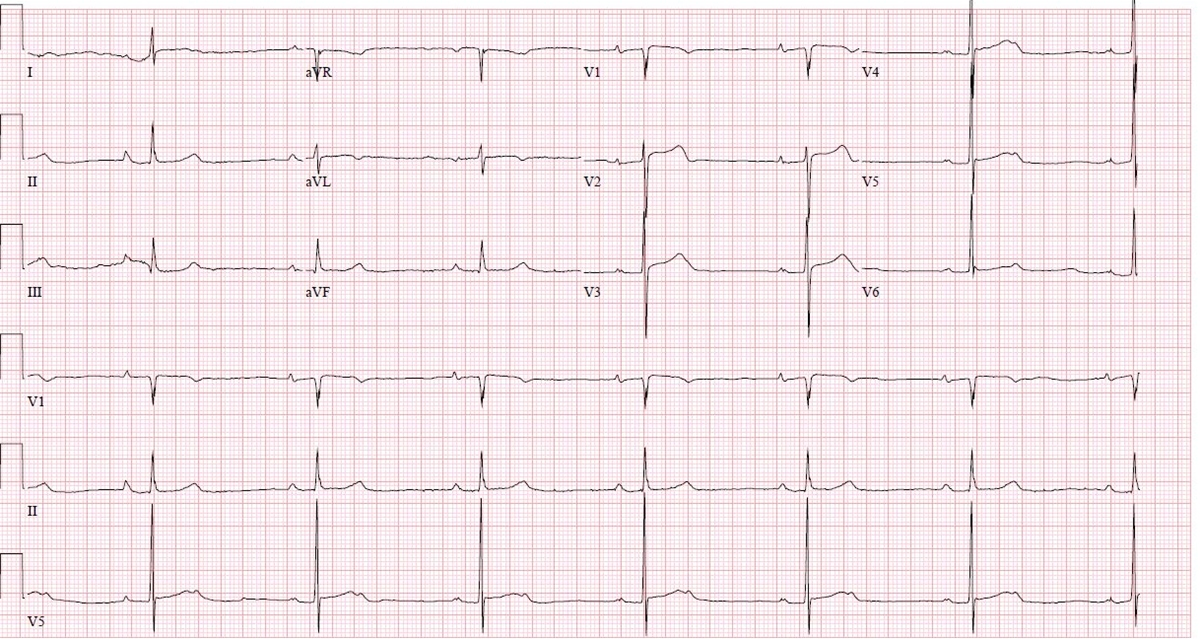 Which of the following is the best management for this patient?
 (Multiple Choice)
4.9/5 (79)
(79) A 60-year-old woman comes to the office due to several months of lower extremity swelling. Medical history is significant for hypertension, type 2 diabetes mellitus, and hepatitis C infection. The patient was also diagnosed with latent tuberculosis 10 years ago, but she declined antibiotic therapy. Blood pressure is 120/80 mm Hg and pulse is 90/min. Physical examination shows symmetric pitting edema of the lower extremities. The liver is palpated 4 cm below the costal margin, and ascites is present. The tip of the spleen is palpated on deep inspiration. Hepatojugular reflux is present when sustained pressure is applied to the upper abdomen. The lungs are clear on auscultation. Which of the following findings is most suggestive of a cardiac cause for this patient's edema?
(Multiple Choice)
4.9/5 (76)
(76) A 68-year-old man comes to the office with a deep headache throughout the day for the past 2 months. He works as a construction foreman and says his hard hat has felt unusually tight during that time, which he believes may be contributing to his symptoms. The patient has no associated muscle weakness, sensory changes, or eye symptoms. Laboratory studies show an elevated serum alkaline phosphatase level of 656 U/L. His other liver function tests are within normal limits, and serum calcium and phosphorus levels are normal. Erythrocyte sedimentation rate and serum prostate-specific antigen are also normal. CT scan of the head reveals no brain lesions, but the skull has thickened cortices with mixed lytic and osteoblastic lesions. Nuclear bone scan reveals increased uptake in the skull and tibia. In addition to optimization of vitamin D and calcium intake, which of the following is the most appropriate next step in management of this patient?
(Multiple Choice)
4.9/5 (52)
(52) A 28-year-old woman comes to the urgent care center at a ski resort due to frostbite. She dropped one of her gloves while riding the chairlift and was unable to find it while skiing down the slope. By the time the patient returned to the resort, she was experiencing numbness and paresthesias in her left hand. Her medical history is unremarkable, and her only regular medication is an oral contraceptive. The patient does not smoke and drinks alcohol only on social occasions. Temperature is 36.7 C (98 F), blood pressure is 108/65 mm Hg, and pulse is 88/min. Examination shows stiff, pale skin at the fourth and fifth digits of the left hand. Vesicles and small bullae are seen at the lateral aspect of the fingertips. The affected digits show absent light-touch sensation and capillary refill. Which of the following is the most appropriate next step in management of this patient's injury?
(Multiple Choice)
4.9/5 (76)
(76) A study was conducted to assess the relationship between race and end-stage renal disease. Two groups of pathologists independently studied specimens from 1,000 kidney biopsies. The first group of pathologists was aware of the race of the patient from whom the biopsy came, while the second group was blinded from the patient's race. The first group reported "hypertensive nephropathy" much more frequently for Black patients than the second group. This study best demonstrates which of the following types of bias?
(Multiple Choice)
4.8/5 (70)
(70) A 19-year-old woman comes to the office for a routine health maintenance examination. She has coughing, wheezing, and breathlessness following her twice-weekly workout sessions, but no symptoms at other times. Her medical history is otherwise significant for allergic rhinitis and acne, for which she uses topical benzoyl peroxide and erythromycin cream. The patient does not use tobacco, alcohol, or illicit drugs. On physical examination, her vital signs are within normal limits and chest auscultation is unremarkable. Which of the following is the most appropriate pharmacotherapy in management of this patient?
(Multiple Choice)
5.0/5 (75)
(75) A 17-year-old boy is brought to the office due to unusual behavior and argumentativeness. He was a pleasant student with good grades until a year ago, when his grades started slipping and he became argumentative with teachers and parents. The patient has a 24-year-old, healthy sister, and family history is unremarkable. He is not sexually active. Temperature is 36.9 C (98.4 F), blood pressure is 112/74 mm Hg, pulse is 78/min, and respirations are 14/min. BMI is 25 kg/m2. Sclerae are anicteric. Mucous membranes are moist. The mouth is held slightly open. The neck is supple. The chest is clear to auscultation. The abdomen is soft and nontender; hepatomegaly is present. There is no splenomegaly or ascites. Neurologic examination shows dysarthria and hyperactive deep tendon reflexes. Which of the following is the best next step in management?
(Multiple Choice)
4.8/5 (76)
(76) A 40-year-old man comes to the emergency department due to severe headache associated with photophobia and nausea for the past several hours. The patient reports mild cold symptoms a week ago. He has a 2-year history of hypertension and has smoked a pack of cigarettes daily for 15 years. His father died of stroke at the age of 75. Temperature is 37.7 C (100 F), blood pressure is 170/100 mm Hg, and pulse is 92/min and regular. He appears to be uncomfortable and had an episode of nonbilious vomiting in the emergency department. Neurologic examination shows 4/5 motor strength and 2+ deep tendon reflexes bilaterally in the upper and lower extremities. Sensation to light touch and pinprick is normal. CT scan of the head without contrast is shown below. 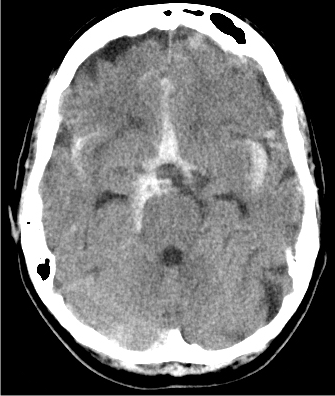 Which of the following is the most likely cause of this patient's headache?
 (Multiple Choice)
5.0/5 (71)
(71) A 66-year-old man is admitted to the hospital for left lower quadrant abdominal pain, fever, and vomiting. CT scan of the abdomen reveals diverticulitis. The patient is started on supportive care and antibiotics. His symptoms improve over 2 days; however, on the third day of hospitalization he reports acute pain in the right ankle, which becomes "unbearable" within a few hours. The patient had a similar pain 1 year ago that resolved with over-the-counter medication. Medical history is notable for type 2 diabetes, hyperlipidemia, and hypertension. His temperature is 37.1 C (98.8 F), blood pressure is 140/90 mm Hg, and pulse is 98/min. BMI is 36 kg/m2. Examination shows a swollen, erythematous right ankle with moderate restriction of movement due to pain; the left ankle is normal. Both ankles were normal at the time of admission to the hospital. Which of the following is the most likely diagnosis?
(Multiple Choice)
4.8/5 (68)
(68) A 34-year-old woman comes to the physician with complaints of periodic visual obscurations. She has episodes during which she goes blind for several seconds when standing up or stooping forward abruptly. She also describes frequent morning headaches over the last 2 months for which she takes ibuprofen or aspirin almost every morning. The patient takes no other medications. Her past medical history is insignificant except for an uncomplicated vaginal delivery. She does not use tobacco, alcohol, or illicit drugs. Her temperature is 36.4 C (97.6 F), blood pressure is 138/88 mm Hg, and pulse is 93/min. Her body mass index is 35 kg/m2. Visual field testing shows enlarged blind spots. Which of the following ocular features is most commonly associated with this patient's condition?
(Multiple Choice)
4.9/5 (100)
(100) A 52-year-old woman comes to the physician with symptoms of a "pounding" sensation in her neck and lower extremity edema. She has lost weight recently. Her other medical problems include migraine disorder, chronic diarrhea, and severe post-menopausal flushes. The patient has a 30-pack-year smoking history. Physical examination shows poor oral hygiene. A 2/6 murmur is heard at the lower sternal border that increases with inspiration. Echocardiography shows retracted and immobile tricuspid valve leaflets with poor coaptation and severe tricuspid insufficiency. Which of the following is the most likely diagnosis?
(Multiple Choice)
4.9/5 (77)
(77) A 34-year-old man comes to the office due to low back pain and tightness for the past 3 months. The pain is dull, has an aching quality, and has become progressively worse. It is worse late at night and in the early morning hours but improves gradually during the day as he moves around. The patient has had no recent injury. Medical history is unremarkable. He lives with his wife and does not use tobacco, alcohol, or recreational drugs. Temperature is 36.1 C (97 F), blood pressure is 120/76 mm Hg, and pulse is 80/min. Examination shows no tenderness over the lumbar spine or lower extremity weakness. Straight-leg raising test is negative. Which of the following most likely accounts for this patient's symptoms?
(Multiple Choice)
4.8/5 (82)
(82) Showing 881 - 900 of 1702
 Prev
- 1
- ...
- 2
- ...
- 3
- ...
- 4
- ...
- 5
- ...
- 6
- ...
- 7
- ...
- 8
- ...
- 9
- ...
- 10
- ...
- 11
- ...
- 12
- ...
- 13
- ...
- 14
- ...
- 15
- ...
- 16
- ...
- 17
- ...
- 18
- ...
- 19
- ...
- 20
- ...
- 21
- ...
- 22
- ...
- 23
- ...
- 24
- ...
- 25
- ...
- 26
- ...
- 27
- ...
- 28
- ...
- 29
- ...
- 30
- ...
- 31
- ...
- 32
- ...
- 33
- ...
- 34
- ...
- 35
- ...
- 36
- ...
- 37
- ...
- 38
- ...
- 39
- ...
- 40
- ...
- 41
- ...
- 42
- ...
- 43
- ...
- 44
- ...
- 45
- ...
- 46
- ...
- 47
- ...
- 48
- ...
- 49
- ...
- 50
- ...
- 51
- ...
- 52
- ...
- 53
- ...
- 54
- ...
- 55
- ...
- 56
- ...
- 57
- ...
- 58
- ...
- 59
- ...
- 60
- ...
- 61
- ...
- 62
- ...
- 63
- ...
- 64
- ...
- 65
- ...
- 66
- ...
- 67
- ...
- 68
- ...
- 69
- ...
- 70
- ...
- 71
- ...
- 72
- ...
- 73
- ...
- 74
- ...
- 75
- ...
- 76
- ...
- 77
- ...
- 78
- ...
- 79
- ...
- 80
- ...
- 81
- ...
- 82
- ...
- 83
- ...
- 84
- ...
- 85
- ...
- 86
- ...
- Next

Filters
- Essay(0)
- Multiple Choice(0)
- Short Answer(0)
- True False(0)
- Matching(0)