


 Chat with AI
Exam 1: Medicine

Exam 1: Medicine2 k Questions
Exam 2: Pediatric723 Questions
Exam 3: Psychiatry336 Questions
Exam 4: Surgery563 Questions
Exam 5: Obstetrics & Gynecology469 Questions
Select questions type


A 65-year-old man presents with complaints of decreased vision in both eyes. His visual impairment has been progressively worsening over the past five months. He was diagnosed with diabetes ten years ago. His current medications are metformin and glyburide. His blood pressure is 140/90 mm Hg, pulse is 82/min, respirations are 14/min, and temperature is 98.4° F (36.8° C). Examination shows decreased visual acuity in both eyes. Ophthalmoscopy reveals microaneurysms, dot and blot hemorrhages, hard exudates, and macular edema. Which of the following is the most likely diagnosis?
(Multiple Choice)
5.0/5  (94)
(94) A 40-year-old man comes to the office due to muscle and joint pains for 2 months. Review of systems is otherwise negative. The patient underwent Roux-en-Y gastric bypass surgery for obesity 2 years ago and has lost 40 kg (88 lb) since the surgery. Vital signs are normal. BMI is 28 kg/m2. There is no pallor, lymphadenopathy, thyromegaly, or jaundice. Abdominal examination reveals no tenderness and no organomegaly. Muscle strength is 5/5, and no focal muscle tenderness is present. Deep tendon reflexes are normal. Laboratory results are as follows:  Which of the following is the most appropriate next step in evaluation of this patient?
 (Multiple Choice)
4.8/5 (82)
(82) A 26-year-old man comes to the office due to upper and lower limb skin lesions that have been present for the past week. The lesions started as small, red papules that gradually enlarged but are not painful or pruritic. The patient had similar lesions several months ago and was told that the antibiotic prescribed for a dental infection could be the cause. The lesions spontaneously resolved in about 2 weeks. Prior to the current episode, he was not taking any medications. The patient occasionally drinks alcohol and does not use tobacco or illicit drugs. Temperature is 36.6 C (98 F), blood pressure is 126/78 mm Hg, and pulse is 76/min. Skin examination shows several lesions (shown below) scattered over the extremities with relative sparing of the trunk. 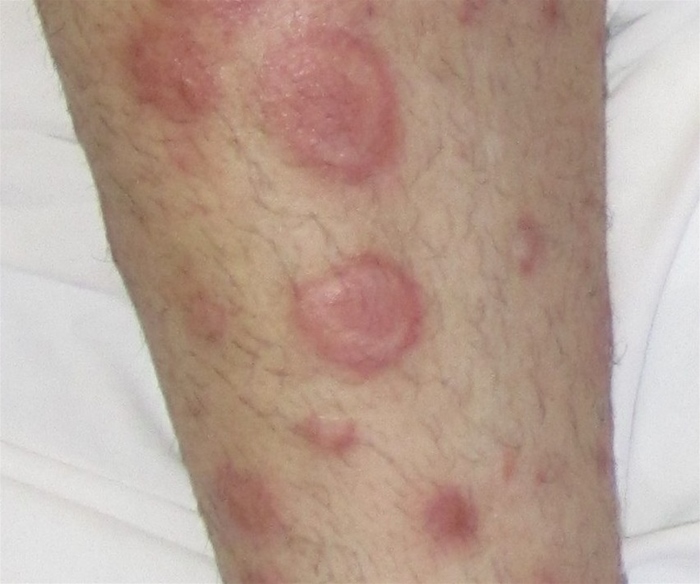 There is no mucous membrane involvement. Which of the following is most likely related to this patient's skin condition?
 (Multiple Choice)
4.8/5 (73)
(73) A 32-year-old man comes to the emergency department due to a 12-hour history of poor oral intake and vomiting. He says that he feels "a little dizzy." He has had no abdominal pain or diarrhea. Medical history is unremarkable. Blood pressure is 110/70 mm Hg while supine and 100/60 mm Hg while sitting. Pulse is 90/min. Laboratory results are as follows:  Which of the following is the most likely cause of the decreased chloride level in this patient?
 (Multiple Choice)
4.8/5 (74)
(74) A 37-year-old man is admitted to the hospital due to a 10-day-history of fever, nonproductive cough, and dyspnea on exertion. The patient has a history of HIV infection for 10 years and has been noncompliant with medications. Temperature is 38.5 C (101.3 F), blood pressure is 120/80 mm Hg, pulse is 102/min, and respirations are 20/min. Pulse oximetry shows 90% on room air and 96% on 2 L/min oxygen. BMI is 20 kg/m2. Physical examination reveals bilateral lung crackles and chest x-ray reveals bilateral interstitial infiltrates. The patient is started on appropriate antibiotics and intravenous normal saline at 150 mL/hr. Two days later, his dyspnea is improved but he develops confusion. Repeat vital signs are as follows: Temperature is 37.5 C (99.5 F), blood pressure is 118/80 mm Hg, pulse is 84/min, and respirations are 16/min. Mucous membranes are moist. There is no jugular venous distension. Lung examination reveals better air entry with reduction of crackles. Heart sounds are normal. There is no peripheral edema. Laboratory studies from the day of admission and today are as follows: 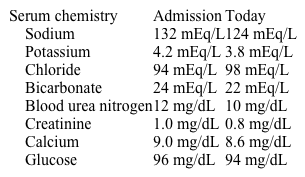 Total intravenous intake of normal saline since admission is ~5 L. Which of the following is the most likely cause of this patient's hyponatremia?
 (Multiple Choice)
4.8/5 (78)
(78) A 19-year-old man comes to the office with a 2-week history of fever, fatigue, and sore throat. He has no diarrhea or rash. The patient has no significant medical history. He occasionally uses tobacco and alcohol; he has smoked marijuana several times but has never used injectable drugs. The patient is sexually active with one partner and uses condoms occasionally. Temperature is 39 C (102.2 F), blood pressure is 110/70 mm Hg, pulse is 88/min, and respirations are 16/min. Physical examination shows enlarged tonsils with white exudates. Enlarged, tender, mobile nodes are palpable along the cervical, axillary, and inguinal chains bilaterally. The examination is otherwise unremarkable. Which of the following tests is most likely to yield the diagnosis in this patient?
(Multiple Choice)
4.8/5 (78)
(78) A 4-year-old boy is brought to the emergency department due to fire ant bites. The patient's mother states he was wearing flip flops and playing in the park yesterday evening when he started screaming because his feet were covered with fire ants. She brushed them off immediately, washed his feet, and applied some ice. She is concerned today because the patient has approximately 10 bites on each foot, and his feet are red, swollen, and painful. Temperature is 36.7 C (98.1 F), blood pressure is 110/60 mm Hg, pulse is 108/min, and respirations are 20/min. The patient is awake and alert. He has a normal oropharyngeal examination. Lungs are clear to auscultation bilaterally. There are approximately 10 small pustules on each foot that are surrounded by a large area of erythema and swelling contiguous to the pustules. The patient can bear weight but cries when he is asked to walk. Perfusion and sensation are normal. Which of the following is the best next step in management of this patient?
(Multiple Choice)
4.8/5 (89)
(89) A study was conducted to establish the average level of total serum cholesterol in a group of patients with acute coronary syndrome. The study results were reported separately for males and females. The mean total cholesterol level was 230 mg/dL for males and 220 mg/dL for females. Which of the following is the best statistical method to compare the average cholesterol level for males and females?
(Multiple Choice)
4.8/5 (75)
(75) A 57-year-old man comes to the emergency department due to a week of progressive shortness of breath and nonproductive cough. The patient has a history of HIV and type 2 diabetes mellitus. He does not regularly go to follow-up appointments or adhere to medication prescriptions. His last CD4 cell count 3 months ago was 120/mm3. Temperature is 38.9 C (102 F), blood pressure is 120/80 mm Hg, pulse is 110/min, and respirations are 24/min. Oxygen saturation is 86% on room air. Lung examination is notable for diffuse rales bilaterally. The abdomen is soft and nontender. Laboratory results are as follows:  Chest x-ray reveals bilateral patchy opacities in the lower lung fields. The patient is treated with azithromycin, ceftriaxone, trimethoprim-sulfamethoxazole, prednisone, and albuterol. He is also given insulin before meals for his diabetes mellitus. On the third day of hospitalization, the patient's serum potassium is 5.9 mEq/L, and his creatinine is 1.5 mg/dL. Which of the following medications is most likely responsible for these laboratory changes?
 (Multiple Choice)
4.8/5 (83)
(83) A 58-year-old woman comes to the clinic due to a 6-month history of left knee pain that is worse with activity. She initially had pain only with ambulation but has progressively developed rest pain at night. In addition, the patient has had intermittent morning stiffness of 10-15 minutes duration. There is no associated fever or weight loss. Medical history is significant for hypertension, type 2 diabetes mellitus, gastroesophageal reflux disease, and obstructive sleep apnea. Current medications include hydrochlorothiazide, lisinopril, omeprazole, atorvastatin, insulin glargine, metformin, and aspirin. Temperature is 37.2 C (98.9 F) and blood pressure is 146/86 mm Hg. Examination shows a mild effusion, tenderness, and decreased range of motion of the left knee. A fluctuant swelling along the posterior aspect of the knee is palpable. Arthrocentesis with synovial fluid analysis reveals the following:  Plain film x-ray of this patient's knee joint would most likely reveal which of the following?
 (Multiple Choice)
4.7/5 (59)
(59) A 22-year-old woman comes to the emergency department for evaluation of a bite on her right arm by her neighbors' dog. The neighbors accompany the patient with their dog, which is not immunized against rabies but appears healthy. The patient has no other medical conditions and takes no medications. Her last tetanus booster was 3 years ago. Temperature is 37 C (98.6 F), blood pressure is 110/70 mm Hg, pulse is 76/min, and respirations are 12/min. On her right forearm is a shallow bite wound that is 1 cm long with no erythema or purulent drainage. The wound is cleaned with soap, water, and povidone-iodine solution. Which of the following is the most appropriate next step in management of this patient?
(Multiple Choice)
5.0/5 (88)
(88) A 23-year-old woman comes to the office due to progressive low back pain and stiffness. The pain has been present for the last few years and has worsened somewhat in recent weeks. The patient has relief of the pain with physical activity and over-the-counter ibuprofen. Associated symptoms include morning stiffness that usually lasts an hour, but she has had no rash, ocular symptoms, urinary symptoms, or diarrhea. Medical history is notable only for an appendectomy at age 11. The patient has taken birth control pills for the past 2 years and is sexually active with one partner. On examination, she is afebrile with normal height and weight. There is reduced forward flexion of the lumbar spine and tenderness over the lumbosacral area. The remainder of the physical examination is normal. Which of the following would be most likely to establish a diagnosis in this patient?
(Multiple Choice)
4.8/5 (82)
(82) A 52-year-old woman comes to the office due to a pruritic rash on the inguinal region and vulva. Over the last 2 weeks the patient's inguinal and vulvar skin has become increasingly irritated and pruritic, particularly after she wears tight clothing. Application of an over-the-counter moisturizing cream has not improved the symptoms. The patient was recently hospitalized for an asthma exacerbation and treated with inhaled bronchodilators and systemic corticosteroids. She underwent a cervical conization at age 36 for dysplasia; all subsequent Pap tests have been normal. The patient has been sexually active with a new partner for the past few months, but the pruritus has prevented intercourse. Her last menstrual period was 8 months ago. BMI is 32 kg/m2. Vital signs are normal. Examination of the patient is seen in the exhibit. 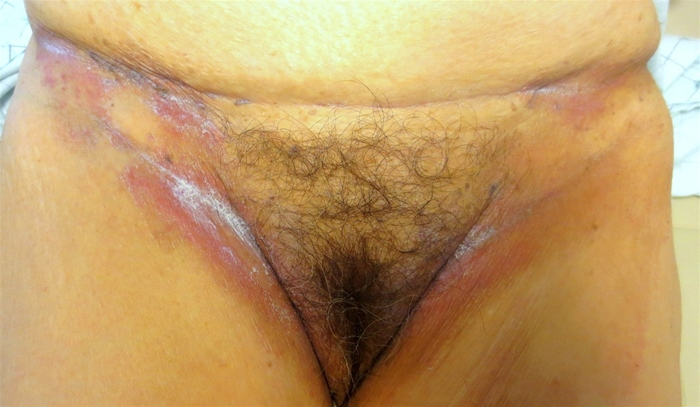 Which of the following is the most appropriate treatment for this patient?
 (Multiple Choice)
4.8/5 (82)
(82) A 22-year-old man comes to the office due to worsening burning sensations in his hands and feet for the past several months. He also reports soreness in his mouth and has had intermittent episodes of a postprandial bloating sensation and diarrhea. The patient drinks alcohol occasionally but does not use tobacco or illicit drugs. He is sexually active and does not use condoms consistently. Vital signs are within normal limits. BMI is 20 kg/m2. On physical examination, the tongue appears red and smooth. The neck is supple and has no lymphadenopathy. Heart and lung sounds are normal. The abdomen is soft and nontender. Neurologic examination shows decreased pinprick and vibration sensation in the bilateral fingers and toes. Muscle strength and deep tendon reflexes are normal. Laboratory testing reveals microcytic anemia. Which of the following is the most likely underlying cause of this patient's symptoms?
(Multiple Choice)
4.9/5 (70)
(70) A 72-year-old woman is brought to the emergency department by her husband due to sudden-onset, right-sided weakness and numbness. The patient's husband reports that her symptoms progressed over several minutes and were later accompanied by vomiting and headache. He also notes that she is now excessively somnolent. The patient has hypertension and persistent atrial fibrillation as well as myelodysplasia that has not required treatment. She takes amlodipine, metoprolol, warfarin, and multivitamins. In the past couple of days, she has also used over-the-counter medications for cold symptoms. Temperature is 37 C (98.6 F), blood pressure is 172/90 mm Hg, pulse is 68/min, and respirations are 16/min. Her laboratory results and CT scan of the head without contrast are as follows: 
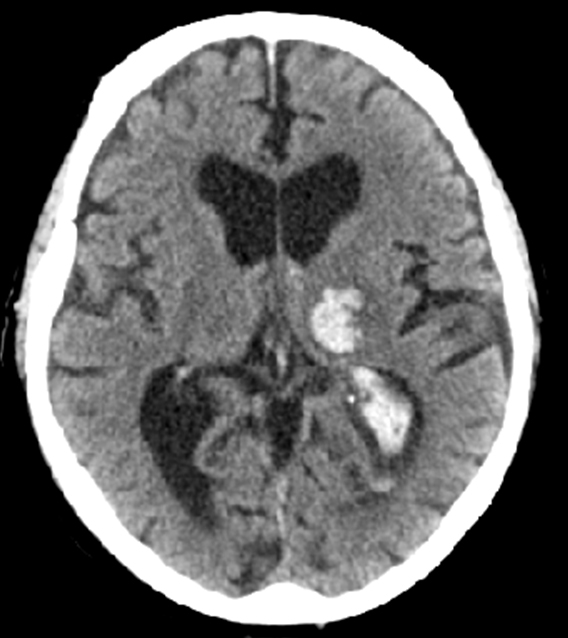 Which of the following is the best immediate step in management of this patient?
 (Multiple Choice)
4.7/5 (76)
(76) A 34-year-old homeless man is brought to the emergency department in a confused state and complaining of flank pain. His past medical history is unknown. The patient's temperature is 36.8 C (98.2 F), blood pressure is 110/70 mm Hg, pulse is 110/min, and respirations are 22/min. His appearance is disheveled. Pupils are equal, 4 mm in size, and reactive to light. Fundoscopic examination is within normal limits. Lungs have vesicular breath sounds. Mild costovertebral angle tenderness is present. A Foley catheter is placed, and the urine appears red, with calcium oxalate crystals seen on microscopy. Laboratory results are as follows: 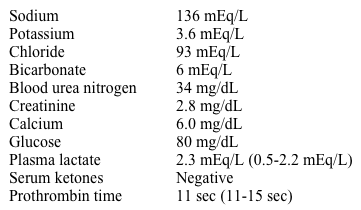 Which of the following is the most appropriate next step in management of this patient?
 (Multiple Choice)
4.8/5 (82)
(82) A 66-year-old man with a history of chronic obstructive pulmonary disease (COPD) comes to the emergency department due to gradually worsening shortness of breath and wheezing for the past several days. The patient also has a productive cough with mucoid sputum but no fever or chest pain. His other medical problems include hypertension and hypercholesterolemia. The patient has a 35-pack-year smoking history and quit 5 years ago. Temperature is 37.1 C (98.8 F), blood pressure is 130/80 mm Hg, and pulse is 114/min and irregular. Pulse oximetry is 86% on room air. Physical examination reveals moderate respiratory distress, bilateral expiratory wheezing, and distant heart sounds. ECG shows an irregular narrow complex tachycardia with 3 different P-wave morphologies and a variable PR interval. Serum electrolytes are within normal limits. Which of the following is the best next step in management of this patient's cardiac arrhythmia?
(Multiple Choice)
4.8/5 (72)
(72) A 59-year-old man comes to the office due to a month of dysuria, urinary urgency, and frequency. Over the past few days, he has also had dull, nonradiating suprapubic pain. He has never had similar symptoms before. The patient has a history of obesity, type 2 diabetes mellitus, gastroesophageal reflux disease, and major depression. He has smoked a pack of cigarettes daily for 40 years and does not use alcohol or drugs. Vital signs are within normal limits. The abdomen is soft with no organomegaly. Mild suprapubic tenderness is present. Rectal examination reveals a smooth, firm enlargement of the prostate with no tenderness, induration, or asymmetry. Laboratory results are as follows. 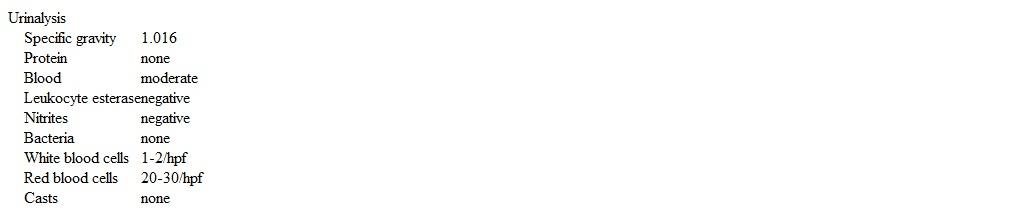 Which of the following is the most likely explanation for this patient's symptoms?
 (Multiple Choice)
4.8/5 (67)
(67) A 67-year-old man is brought to the emergency department after a syncopal episode. He lost consciousness while shopping in a mall. He has no nausea, diaphoresis, chest pain, or shortness of breath. The patient has had 2 episodes of lightheadedness over the past month but has not sought treatment. Other conditions include long-standing hypertension, which is treated with enalapril. Blood pressure is 135/90 mm Hg while supine and 130/85 mm Hg while standing; pulse is 64/min. ECG shows sinus rhythm with high voltage, prolonged PR interval, prolonged QRS-complex duration, normal QTc interval, and occasional premature ventricular contractions. Basic metabolic panel is unremarkable. Echocardiography reveals left ventricular hypertrophy and ejection fraction of 55%. Which of the following is the most likely cause of this patient's syncope?
(Multiple Choice)
4.7/5 (67)
(67) A 23-year-old woman comes to the office due to hair loss. Two weeks ago, she suddenly developed loss of large numbers of hair fibers when washing or brushing her hair. The patient has had 2 pregnancies; the first led to a spontaneous abortion at 13 weeks, and the second led to a normal term vaginal delivery 4 months ago. She subsequently experienced severe postpartum unipolar major depression requiring psychiatric hospitalization. Current medications include fluoxetine and olanzapine. The patient is not breastfeeding. She does not use tobacco, alcohol, or illicit drugs. Vital signs are normal. Examination shows diffuse hair loss with no erythema or scaling in the scalp. When tracts of hair are pulled firmly, >20% of fibers are pulled out. Which of the following is the most likely diagnosis for this patient's hair loss?
(Multiple Choice)
4.9/5 (71)
(71) Showing 1601 - 1620 of 1702
 Prev
- 1
- ...
- 2
- ...
- 3
- ...
- 4
- ...
- 5
- ...
- 6
- ...
- 7
- ...
- 8
- ...
- 9
- ...
- 10
- ...
- 11
- ...
- 12
- ...
- 13
- ...
- 14
- ...
- 15
- ...
- 16
- ...
- 17
- ...
- 18
- ...
- 19
- ...
- 20
- ...
- 21
- ...
- 22
- ...
- 23
- ...
- 24
- ...
- 25
- ...
- 26
- ...
- 27
- ...
- 28
- ...
- 29
- ...
- 30
- ...
- 31
- ...
- 32
- ...
- 33
- ...
- 34
- ...
- 35
- ...
- 36
- ...
- 37
- ...
- 38
- ...
- 39
- ...
- 40
- ...
- 41
- ...
- 42
- ...
- 43
- ...
- 44
- ...
- 45
- ...
- 46
- ...
- 47
- ...
- 48
- ...
- 49
- ...
- 50
- ...
- 51
- ...
- 52
- ...
- 53
- ...
- 54
- ...
- 55
- ...
- 56
- ...
- 57
- ...
- 58
- ...
- 59
- ...
- 60
- ...
- 61
- ...
- 62
- ...
- 63
- ...
- 64
- ...
- 65
- ...
- 66
- ...
- 67
- ...
- 68
- ...
- 69
- ...
- 70
- ...
- 71
- ...
- 72
- ...
- 73
- ...
- 74
- ...
- 75
- ...
- 76
- ...
- 77
- ...
- 78
- ...
- 79
- ...
- 80
- ...
- 81
- ...
- 82
- ...
- 83
- ...
- 84
- ...
- 85
- ...
- 86
- ...
- Next

Filters
- Essay(0)
- Multiple Choice(0)
- Short Answer(0)
- True False(0)
- Matching(0)