


 Chat with AI
Exam 1: Medicine

Exam 1: Medicine2 k Questions
Exam 2: Pediatric723 Questions
Exam 3: Psychiatry336 Questions
Exam 4: Surgery563 Questions
Exam 5: Obstetrics & Gynecology469 Questions
Select questions type


A 52-year-old man comes to the office due to abnormal liver chemistry results found during a life insurance medical examination. He occasionally feels fatigued and has pedal edema after prolonged standing but otherwise feels well. The patient has no medical history and takes no medications. He drinks 1 or 2 cans of beer on weekends and does not smoke. He used intravenous drugs in his 20s but has not since then. Vital signs are within normal range. Physical examination shows palmar erythema and multiple spider angiomas. Laboratory results are as follows: Abdominal ultrasonography reveals a coarse, nodular-appearing liver with no masses, mild ascites, and splenomegaly. Upper gastrointestinal endoscopy demonstrates medium-sized but nonbleeding esophageal varices. He is referred for a hepatitis C evaluation with a gastroenterologist. Which of the following is the best management for this patient at this time?
(Multiple Choice)
4.8/5  (80)
(80) A 35-year-old woman comes to the physician with a 5-month history of episodic retrosternal pain that radiates to the interscapular region. The episodes typically last 15 minutes, although they occasionally can last a few hours, and are precipitated by emotional stress and hot or cold food. She regurgitates food intermittently. The patient's past medical history is unremarkable, and she takes no medications. There is no family history of coronary artery disease. Her vital signs are within normal limits. Physical examination shows no abnormalities. A lipid profile is within normal limits. An electrocardiogram (ECG) during a pain episode shows a normal sinus rhythm without ST-segment changes. Sublingual nitroglycerin tablets alleviate the pain. A stress test fails to reproduce the symptoms or to induce ST/T-wave changes. Chest x-ray, upper gastrointestinal endoscopy, and echocardiography show no abnormalities. Which of the following is the most appropriate next step in management of this patient?
(Multiple Choice)
4.9/5 (76)
(76) A 43-year-old woman comes to the emergency department with abdominal pain and dark urine. Physical examination shows right upper-quadrant tenderness without guarding or rebound. Laboratory results are as follows: 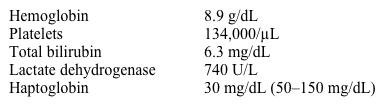 Further workup, including MRI of the abdomen, shows hepatic vein thrombosis. Which of the following is the most likely diagnosis?
 (Multiple Choice)
4.8/5 (81)
(81) A 41-year-old woman, gravida 1 para 1, comes to the office to discuss possible contraceptive options. She was recently diagnosed with hypertension and started on an ACE inhibitor. While discussing the medication, the patient was counseled on the risk of ACE inhibitors in pregnancy and the need for reliable contraception. She has not been on contraception for the past year because she was breastfeeding up until a month ago. Her husband does not want any more children, but the patient is unsure about future pregnancy. She has no other chronic medical conditions and takes no other daily medications. Her menses are monthly with 4 days of light bleeding and mild cramping on the first day. She does not use tobacco, alcohol, or illicit drugs. Blood pressure is 122/78 mm Hg and pulse is 70/min. BMI is 19 kg/m². On pelvic examination, the cervix is multiparous and has no visible lesions. The uterus is mobile and nontender. Which of the following is the most appropriate contraceptive option for this patient?
(Multiple Choice)
4.9/5 (76)
(76) A 55-year-old man is brought to the emergency department by his wife due to sudden-onset confusion. The couple lives on the coast, and the patient was on his boat this morning performing recreational diving with 2 of his friends. Shortly after returning home, the patient reported shortness of breath, as well as tingling and weakness of the left arm. He attempted to walk to a chair but stumbled and fell. His speech then began to slur, and he could not answer questions appropriately. Medical history includes hypertension and diet-controlled type 2 diabetes mellitus. Temperature is 37.2 C (99 F), blood pressure is 102/68 mm Hg, and pulse is 104/min. Physical examination shows moderate respiratory distress. Heart sounds are normal with no murmurs. There are faint lung crackles bilaterally. Neurologic examination reveals reduced muscle strength in the left arm and no other focal findings. Mottling of the skin of the hands and feet is also noted. Which of the following is the most likely cause of this patient's presentation?
(Multiple Choice)
4.8/5 (72)
(72) A 53-year-old woman with long-standing rheumatoid arthritis comes to the emergency department due to seizures. She has had cough, fever, and night sweats for the past 2 weeks. She is on immunosuppressive therapy for her rheumatoid arthritis. Her temperature is 38.9 C (102 F), blood pressure is 120/76 mm Hg, pulse is 80/min, and respirations are 16/min. Physical examination shows scattered rales in both lung fields. CT scan of the chest shows multiple nodules. CT scan of the brain shows left temporal lobe abscess. Bronchoalveolar lavage cultures grow partially acid-fast, gram-positive, branching rods. Which of the following is the most effective treatment for this patient?
(Multiple Choice)
5.0/5 (62)
(62) A 51-year-old man comes to the office due to frequent itching, especially after bathing. He otherwise feels well except for occasional headaches and dizziness. He has no fever or weight loss. The patient has not visited a doctor in 10 years and does not take medications. He does not use tobacco, alcohol, or illicit drugs. The patient's sister has bipolar disorder, and both parents died in a car accident many years ago. Temperature is 36.7 C (98 F), blood pressure is 140/80 mm Hg, pulse is 76/min, and respirations are 14/min. BMI is 30 kg/m2. His face has a ruddy cyanotic appearance. Oropharynx is clear. There is no lymphadenopathy in his cervical, supraclavicular, or axillary chains. Jugular venous pressure is normal. Cardiopulmonary examination shows no abnormalities. Abdomen is soft and nontender; the spleen is palpable 4 cm below the left lower ribs. Laboratory results are as follows: 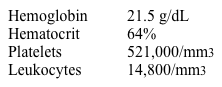 Which of the following is most likely to be seen on further workup?
 (Multiple Choice)
4.9/5 (82)
(82) A 54-year-old man is being evaluated for shortness of breath and cough. His medical problems include rheumatoid arthritis, hypertension, and a history of deep vein thrombosis and pulmonary embolism. He takes multiple medications and has smoked for 30 years. BMI is 34 kg/m2. Examination shows dullness to percussion over the right lower lobe. Breath sounds are increased, especially during expiration, over the right lung base compared to the left. Cardiac examination shows regular rate and rhythm with normal S1 and S2. There is no murmur. Moderate peripheral edema is present. Which of the following is the most likely cause of his shortness of breath and lung examination findings?
(Multiple Choice)
4.7/5 (77)
(77) A 78-year-old woman comes to the office due to muscle pain. For the last 3 weeks, she has had abrupt-onset achy pain and morning stiffness in the shoulders and hips. Associated symptoms include fatigue and low-grade fever, but the patient has had no headache, swelling in the joints, or other new symptoms. Medical history is unremarkable. Physical examination shows increased pain with active abduction at the shoulders and inability to abduct the humerus above horizontal. Motor strength and deep tendon reflexes are normal and symmetric. Laboratory results show a markedly elevated erythrocyte sedimentation rate. Within 1 week, the patient has rapid and complete response to low-dose oral glucocorticoid therapy. Which of the following additional studies is needed to confirm the diagnosis?
(Multiple Choice)
5.0/5 (80)
(80) A 28-year-old man comes to the emergency department due to respiratory distress. A week ago, he developed a sore throat that has progressively worsened. Over the last hour, he has had difficulty breathing. The patient was diagnosed with HIV at age 23 and has been inconsistent with daily antiretroviral therapy. Temperature is 38.3 C (101 F), pulse is 126/min, and respirations are 30/min. Pulse oximetry is 78% on room air. The patient is leaning forward with his neck extended; he is also drooling and speaking in a hoarse voice. The posterior oropharynx has overlying white plaques. There are suprasternal retractions. Examination of the lungs reveals diminished breath sounds bilaterally. Pulse oximetry remains at 78% with 100% oxygen bag-valve-mask ventilation. Endotracheal intubation using a video laryngoscope is attempted but is unsuccessful. Pulse oximetry subsequently decreases to 70% with continued bag-valve-mask ventilation. Which of the following is the best next step in management of this patient?
(Multiple Choice)
4.8/5 (96)
(96) A 62-year-old man is brought to the emergency department due to fever, headache, confusion, and vomiting for the past 2 days. His medical history is significant for liver transplantation secondary to Wilson disease, hypertension, and type 2 diabetes mellitus. The patient's medications include long-acting insulin, amlodipine, and tacrolimus; he has no medication allergies. Temperature is 39.2 C (102.6 F), blood pressure is 120/75 mm Hg, pulse is 102/min, and respirations are 18/min. He is awake but confused. Funduscopy shows no abnormalities. His neck is stiff. Cardiac and pulmonary examinations are normal. White blood cell count is 17,000/mm3 with neutrophilic predominance. Serum creatinine is 1.1 mg/dL. Blood cultures are drawn. CT scan of the head is unremarkable. Lumbar puncture results are pending. Which of the following is the most appropriate empiric antibiotic therapy for this patient?
(Multiple Choice)
4.9/5 (96)
(96) A 17-year-old girl comes to the clinic due to 3 days of a burning sensation while urinating. Today, she noticed spotting on toilet paper after voiding. The patient is sexually active with 3 male partners and does not use condoms consistently. She has regular monthly menses and received outpatient treatment for pelvic inflammatory disease last year. The patient recently completed a course of antibiotics for group A Streptococcus pharyngitis. Vital signs are normal. Physical examination elicits lower abdominal tenderness. Pelvic examination shows clear cervical discharge and no cervical motion tenderness. Urinalysis reveals positive nitrites, positive leukocyte esterase, and 50 white blood cells/hpf. Urine β-hCG is negative. Which of the following is the most likely pathogen causing this patient's presentation?
(Multiple Choice)
4.9/5 (89)
(89) A 52-year-old man comes to the emergency department with shortness of breath and dry cough. The patient has been feeling weak over the last several days with some dyspnea on exertion, which he attributes to work-related stress and fatigue. Earlier this morning, he woke up with persistent breathing difficulty that prompted him to come to the emergency department. The patient has a history of mild intermittent asthma for which he occasionally uses an albuterol inhaler. His family history is insignificant. The patient's temperature is 37.1 C (98.8 F), blood pressure is 117/72 mm Hg, pulse is 89/min, and respirations are 18/min. Laboratory analysis reveals a markedly elevated serum brain natriuretic peptide level. Which of the following clinical signs would best correlate with this finding in this patient?
(Multiple Choice)
4.9/5 (67)
(67) A 28-year-old woman comes to the office due to right shoulder pain and weakness. The patient recently returned from a 2-week hike in the Appalachian Mountains and began noticing the symptoms during the trip. She has had no falls or trauma. The patient has no prior medical conditions and takes no medications. Vital signs are within normal limits. Physical examination reveals weakness of right shoulder abduction and external rotation. Passive range of motion is full. Right upper extremity sensation and deep tendon reflexes are normal. The remainder of the physical examination shows no abnormalities. Which of the following is the most likely cause of this patient's current symptoms?
(Multiple Choice)
4.9/5 (89)
(89) A 52-year-old woman comes to the office due to intense itching and fatigue. She is unable to specify when her symptoms started as they developed gradually. Past medical history is significant for hypothyroidism and carpal tunnel syndrome. Current medications include levothyroxine. The patient lives with her husband and 3 children. She does not smoke and drinks wine on social occasions. Vital signs are normal. Cardiopulmonary examination shows no abnormalities. The abdomen is soft with normal bowel sounds. Hepatomegaly is present. There is no scleral icterus or jaundice, but bilateral xanthelasma and skin excoriations are evident. Laboratory results are as follows: 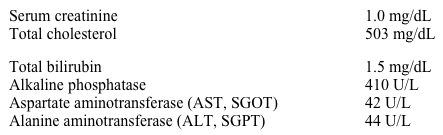 A right upper quadrant ultrasound shows a normal common bile duct. Which of the following is the most appropriate next step in management of this patient?
 (Multiple Choice)
4.8/5 (91)
(91) A 48-year-old man comes to the office due to pain in his right hand. He has had symptoms intermittently for the last year, but they have become worse over the last 3 months, particularly at night. The pain radiates to the anterior aspect of the forearm. Medical history is notable for type 2 diabetes mellitus; his most recent hemoglobin A1c was 8.5%. The patient does not use tobacco, alcohol, or illicit drugs. He works at a retail supermarket where he is responsible for stocking heavy canned goods. Blood pressure is 148/95 mm Hg, pulse is 76/min, and respirations are 12/min. BMI is 32 kg/m2. On examination, the patient is mildly obese but otherwise appears comfortable. There is weakness of thumb opposition and slightly decreased light touch sensation over the palmar surface of the tip of thumb, index finger, and long finger. Sensation is normal in the remaining fingers and forearm. Which of the following is the most likely cause of this patient's symptoms?
(Multiple Choice)
4.8/5 (82)
(82) A 34-year-old woman comes to the emergency department with difficulty breathing and dizziness. An arterial line is placed and her blood pressure tracing is shown below. 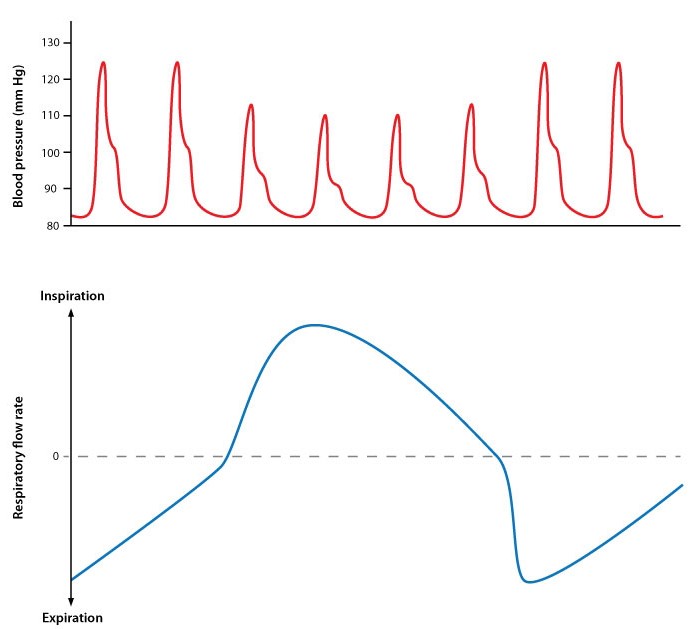 Which of the following diagnoses is most consistent with these findings?
 (Multiple Choice)
4.8/5 (86)
(86) A 57-year-old man comes to the office due to involuntary shaking of his hands. It started on the right side, but now his left hand shakes as well. The shaking disappears with purposeful activity and worsens with emotional stress. He does not have a family history of tremors. Physical examination reveals a resting hand tremor with a frequency of 5-7 cycles/sec. There is some muscle rigidity of both arms. His gait and posture are normal. His mini mental status exam yields a score of 30/30. Which of the following is the most appropriate treatment for this patient?
(Multiple Choice)
4.8/5 (70)
(70) A 50-year-old woman comes to the office with a several-month history of intermittent, substernal chest pain. Her pain is not related to activity, does not radiate, and occurs in episodes lasting from a few seconds to a few minutes. During the episodes, she has difficulty swallowing both liquids and solids. She has no associated weight loss or change in appetite. The patient was recently seen in the emergency department due to sudden worsening of the pain; her evaluation included a normal ECG, normal cardiac biomarkers, and a negative myocardial perfusion scan. Past medical history is notable for hypertension, for which she takes chlorthalidone. The patient does not use tobacco, alcohol, or illicit drugs. Vital signs are normal. Physical examination and upper gastrointestinal endoscopy reveal no abnormalities. Which of the following is the most likely diagnosis?
(Multiple Choice)
4.8/5 (73)
(73) A 24-year-old woman comes to the office due to episodic sweating, palpitation, and tremor for the past 3 weeks. The symptoms typically occur after she skips meals and are relieved by eating carbohydrate-containing foods. The patient has had no abdominal pain, weight change, or excessive urination. Three months ago, she was diagnosed with diabetes mellitus, and treatment with insulin degludec was started. She refuses to monitor glucose levels at home. Medical history is notable for chronic pancreatitis resulting from adult-onset cystic fibrosis; the patient has no other organ involvement from this disease. Her only other medication is oral lipase for pancreatic exocrine insufficiency. Examination shows no abnormalities. BMI is 24 kg/m2. Laboratory results show a hemoglobin A1c of 7.5% and serum creatinine of 0.75 mg/dL. Which of the following is the primary contributor to this patient's symptoms?
(Multiple Choice)
4.9/5 (87)
(87) Showing 521 - 540 of 1702
 Prev
- 1
- ...
- 2
- ...
- 3
- ...
- 4
- ...
- 5
- ...
- 6
- ...
- 7
- ...
- 8
- ...
- 9
- ...
- 10
- ...
- 11
- ...
- 12
- ...
- 13
- ...
- 14
- ...
- 15
- ...
- 16
- ...
- 17
- ...
- 18
- ...
- 19
- ...
- 20
- ...
- 21
- ...
- 22
- ...
- 23
- ...
- 24
- ...
- 25
- ...
- 26
- ...
- 27
- ...
- 28
- ...
- 29
- ...
- 30
- ...
- 31
- ...
- 32
- ...
- 33
- ...
- 34
- ...
- 35
- ...
- 36
- ...
- 37
- ...
- 38
- ...
- 39
- ...
- 40
- ...
- 41
- ...
- 42
- ...
- 43
- ...
- 44
- ...
- 45
- ...
- 46
- ...
- 47
- ...
- 48
- ...
- 49
- ...
- 50
- ...
- 51
- ...
- 52
- ...
- 53
- ...
- 54
- ...
- 55
- ...
- 56
- ...
- 57
- ...
- 58
- ...
- 59
- ...
- 60
- ...
- 61
- ...
- 62
- ...
- 63
- ...
- 64
- ...
- 65
- ...
- 66
- ...
- 67
- ...
- 68
- ...
- 69
- ...
- 70
- ...
- 71
- ...
- 72
- ...
- 73
- ...
- 74
- ...
- 75
- ...
- 76
- ...
- 77
- ...
- 78
- ...
- 79
- ...
- 80
- ...
- 81
- ...
- 82
- ...
- 83
- ...
- 84
- ...
- 85
- ...
- 86
- ...
- Next

Filters
- Essay(0)
- Multiple Choice(0)
- Short Answer(0)
- True False(0)
- Matching(0)