


 Chat with AI
Exam 1: Medicine

Exam 1: Medicine2 k Questions
Exam 2: Pediatric723 Questions
Exam 3: Psychiatry336 Questions
Exam 4: Surgery563 Questions
Exam 5: Obstetrics & Gynecology469 Questions
Select questions type


A 40-year-old man comes to the office due to a rash on his arms. The rash has been present for 3 weeks. The lesions are very itchy; he has applied several over-the-counter lotions, but they did not help. The patient has not participated in any unusual outdoor activity recently. He takes no medications on a regular basis. The patient has used intravenous illicit drugs in the past but not in the last 15 years. Vital signs are normal. Skin findings are shown in the exhibit.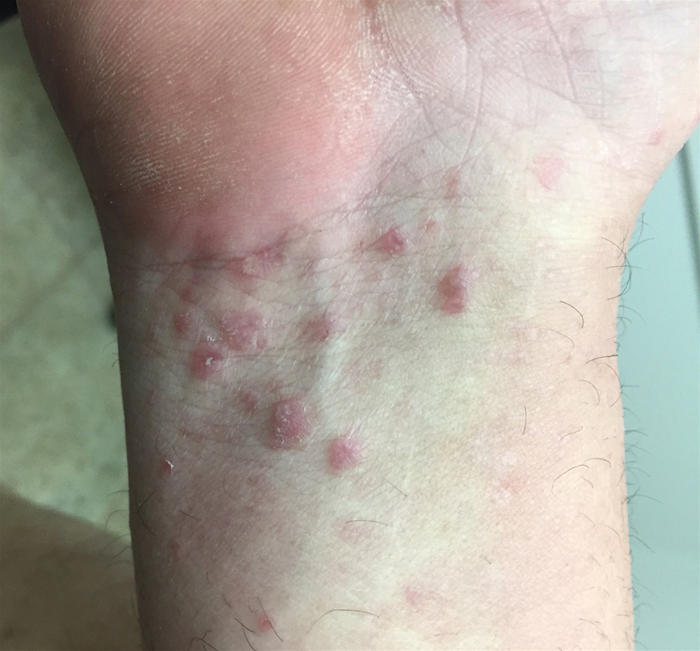 The remainder of the examination shows no abnormalities. Laboratory results are as follows:
 Which of the following is the most likely diagnosis?
The remainder of the examination shows no abnormalities. Laboratory results are as follows: Which of the following is the most likely diagnosis? (Multiple Choice)
5.0/5  (92)
(92) A 19-year-old woman comes to the office due to amenorrhea for the last 5 months. The patient underwent menarche at age 14 and previously had regular menses every 28 days, typically lasting 4-5 days. She has no headaches, visual disturbances, heat intolerance, palpitations, hot flashes, or night sweats. The patient has no medical problems or previous surgeries. She takes no medications and does not use tobacco, alcohol, or illicit drugs. The patient is a national gymnastics champion and attends the local college. She has never been sexually active. Blood pressure is 110/60 mm Hg and pulse is 54/min. Height is 165 cm (5 ft 5 in) and BMI is 20 kg/m2. Physical examination shows a muscular woman. She has mild facial acne but no thyromegaly or facial hair. Breast development and pubic hair are Tanner stage V. Pelvic examination reveals normal external genitalia, vagina, and cervix. On bimanual examination, there is a small, mobile uterus and no adnexal masses. Pregnancy test is negative. TSH and prolactin levels are normal. What is the most likely diagnosis in this patient?
(Multiple Choice)
4.8/5 (100)
(100) A 56-year-old woman comes to the office due to worsening fatigue and edema of the bilateral lower extremities for the past several months. She also reports that her legs feel tight. The patient has no prior medical conditions and takes no medications. Family history is significant for hypothyroidism in her sister. The patient does not use tobacco, alcohol, or illicit drugs. Temperature is 37 C (98.6 F), blood pressure is 112/64 mm Hg, and pulse is 86/min and regular. Physical examination reveals normal heart and lung sounds, mild hepatomegaly, and pitting edema of the bilateral lower extremities. Other examination findings are shown in the exhibit. 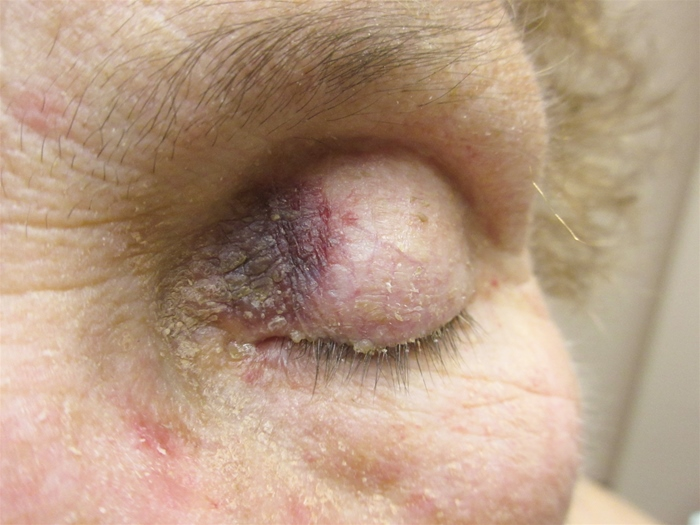 Laboratory studies are as follows:
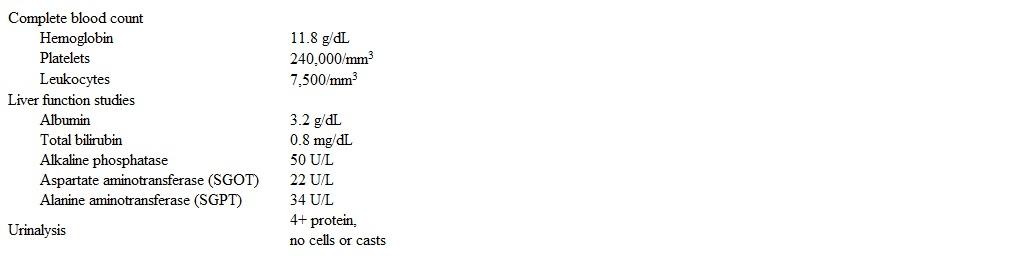 Which of the following is the most likely cause of this patient's current condition?
Laboratory studies are as follows: Which of the following is the most likely cause of this patient's current condition? (Multiple Choice)
4.8/5 (78)
(78) A 58-year-old man is brought to the emergency department due to severe chest pain that began an hour ago. The patient describes the pain as pressure-like in the center of his chest. He has also had nausea but no shortness of breath. Medical history is remarkable for hypertension and diet-controlled diabetes mellitus. Temperature is 37.6 C (99.7 F), blood pressure is 94/62 mm Hg, and pulse is 64/min. On physical examination, the patient is diaphoretic. Cardiac auscultation reveals a normal S1 and S2 with no murmurs or extra heart sounds. The lungs are clear to auscultation. ECG shows ST-segment elevation in leads II, III, aVF, and V4R. Which of the following hemodynamic findings are most likely present in this patient?
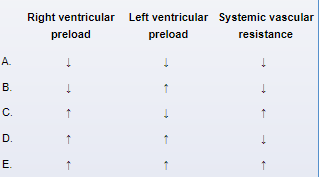
(Multiple Choice)
4.8/5 (83)
(83) A 34-year-old man comes to the office for evaluation of premature atrial complexes found on a routine ECG. He has had no chest pain, shortness of breath, or lightheadedness. He has smoked 1-2 packs of cigarettes daily and consumed 1-2 beers a day for the past 10 years. The patient's family history is significant for a myocardial infarction in his mother at age 65 and a stroke in his father at age 72. He has no personal history of hypertension or diabetes. Physical examination, including vital signs, is within normal limits. What is the best next step in management of this patient?
(Multiple Choice)
4.8/5 (89)
(89) A 32-year-old man comes to the office for a routine preemployment physical. He has been feeling well. Ten years ago, his father died suddenly at age 54. Blood pressure is 175/103 mm Hg in the right arm and 180/105 mm Hg in the left, and pulse is 82/min. BMI is 22.1 kg/m2. The lungs are clear bilaterally and heart sounds are normal. Bilateral, nontender, upper abdominal masses are palpated on examination. Hemoglobin level is 15.2 g/dL and creatinine concentration is 0.8 mg/dL. Which of the following is the most appropriate next step in evaluating this patient's condition?
(Multiple Choice)
4.9/5 (83)
(83) A 35-year-old woman is evaluated due to pain in the left lower extremity. The patient twisted her left ankle a month ago, and the initial pain and swelling gradually improved with rest and ibuprofen. However, over the next few weeks, she began experiencing worsening pain in the left foot, ankle, and lower calf. The pain is severe and constant, has a burning or stinging quality, and is worsened by movement. Vital signs are within normal limits. Examination shows erythema, warmth, and nonpitting edema of the left foot and leg extending up to midcalf. Light touch of the affected area elicits severe pain. There is decreased range of motion of the left ankle. The right lower extremity is normal, and the remainder of the examination shows no abnormalities. Blood cell counts, serum chemistry studies, and erythrocyte sedimentation rate are within normal limits. Left foot and ankle radiographs reveal patchy areas of osteopenia. Which of the following is the most likely diagnosis?
(Multiple Choice)
4.8/5 (88)
(88) A 68-year-old woman comes to the office due to persistent right-sided chest pain. The patient has had burning pain on the right chest wall and back for the past several months. She has had no associated cough, dyspnea, or trauma but had a transient rash in the same region prior to the onset of symptoms. Medical history is notable for breast cancer treated with surgery and chemotherapy, as well as hypertension and type 2 diabetes mellitus. Temperature is 37.1 C (98.8 F), blood pressure is 130/80 mm Hg, and pulse is 82/min. Chest examination shows no skin rash, but there is a band-like area of hyperesthesia on the right side. Lung auscultation reveals prolonged expiration with no wheezes. Heart sounds are normal. Back examination shows no deformity or focal tenderness. Which of the following is the best next step in management of this patient?
(Multiple Choice)
4.9/5 (67)
(67) A 75-year-old man is brought to the hospital for a 2-day history of intermittent confusion and agitation. He refused to allow his visiting nurse into his house for the first time. The patient was discharged from the hospital a week ago after a lumbar laminectomy due to degenerative disc disease. His other medical conditions include hypertension and chronic kidney disease. He takes lisinopril and acetaminophen/hydrocodone as needed for pain. Temperature is 38.5 C (101.3 F), blood pressure is 112/70 mm Hg, pulse is 102/min, and respirations are 16/min. Pulse oximetry is 97% on room air. On mental status examination, the patient gets distracted and is oriented to person but not time or place. Crackles are present at both lung bases. Heart sounds are normal. The abdomen is soft and nontender. The remainder of the physical examination shows no abnormalities. Laboratory studies obtained on arrival are as follows: 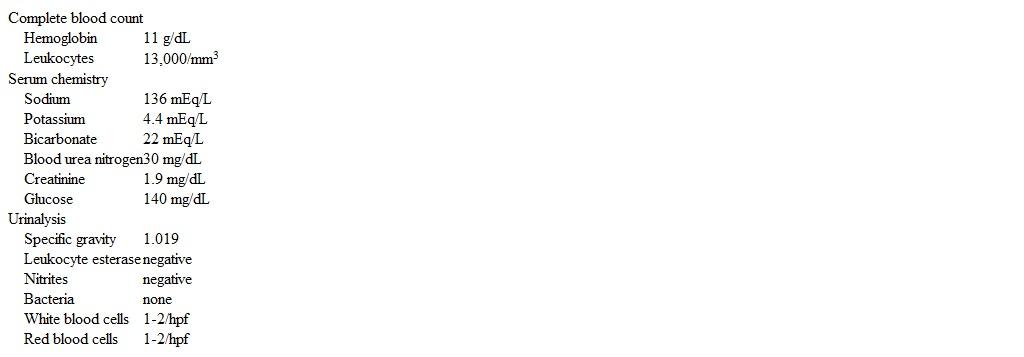 What is the best next step in the management of this patient?
 (Multiple Choice)
4.9/5 (79)
(79) A 64-year-old man comes to the office for the evaluation of new-onset diarrhea. He has noted 6-8 watery, brown stools every day for the past 2 weeks. There have been frequent nocturnal episodes of diarrhea, obliging the patient to wear a diaper while sleeping. He reports no bulky, foul-smelling stools or melena, hematochezia, or abdominal pain. The patient was recently diagnosed with metastatic pancreatic adenocarcinoma and began chemotherapy 4 weeks ago. He has had no sick contacts or recent travel. The patient is afebrile and vital signs are stable. The abdomen is soft and nontender. Rectal examination reveals brown, nonbloody stool. Laboratory studies are as follows:  Stool tests are negative for fecal occult blood and Clostridioides (formerly Clostridium) difficile. Which of the following pharmacologic agents would be most beneficial for this patient?
 (Multiple Choice)
4.9/5 (73)
(73) A 60-year-old Caucasian female comes to the physician because of progressive shortness of breath for the past month. She has had a 13.6 kg (30 lb) weight loss during this period. She has a history of hypertension and hypothyroidism and takes metoprolol and levothyroxine. She has smoked two packs of cigarettes daily for 35 years. Her temperature is 36.7° C (98° F), blood pressure is 130/70 mmHg, pulse is 80/min, and respirations are 20/min. On examination, decreased breath sounds and dullness to percussion are noted on the right, middle and lower lobes of the lung. Her chest x-ray is shown below. 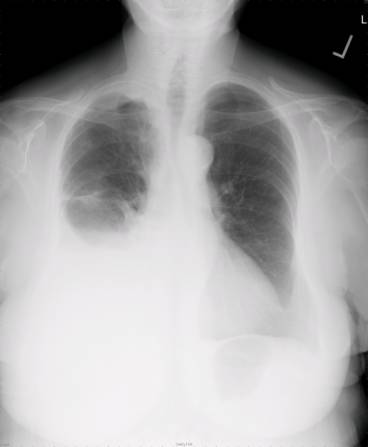 Which of the following is the most appropriate next step in the management?
 (Multiple Choice)
4.8/5 (71)
(71) A 25-year-old graduate student comes to the student health clinic for a routine physical examination. He has been concerned about his health since a close friend died in a motor vehicle collision several weeks ago, but he has otherwise felt well. Medical history reveals no major problems except for a recent history of bulimia. The patient has smoked a pack of cigarettes daily for the past 7 years. He tried varenicline for smoking cessation but did not like the way it made him feel and stopped the medication. He currently takes no medications. The patient's mother has asthma and his father died of a heart attack at age 56. Physical examination is unremarkable, and vital signs are normal. At the end of the visit, he asks for assistance with smoking cessation. In addition to proper counseling and support, which of the following would be considered an appropriate first-line treatment for smoking cessation in this patient?
(Multiple Choice)
4.8/5 (71)
(71) An 18-month-old boy is brought to the emergency department by his parents due to fever, vomiting, and lethargy. This morning, he developed a fever that initially responded to acetaminophen. Throughout the day, the patient developed a progressive rash on the lower extremities and became increasingly lethargic. He was treated with antibiotics for acute otitis media last month but is otherwise healthy. Immunizations are up to date. The patient lives with his parents and 3-year-old brother. Both he and his brother attend day care. Temperature is 40.2 C (104.4 F), and pulse is 124/min. On examination the patient is lethargic. He flexes his hips when his neck is flexed. There is an erythematous, nonblanching, pinpoint rash on the trunk and lower extremities. Which of the following is the most likely organism causing this patient's symptoms?
(Multiple Choice)
4.9/5 (74)
(74) A 28-year-old woman comes to the physician for evaluation of a rash on her left foot. A week ago, she noticed multiple lesions on the sole of her foot that are painful with walking or standing. The patient has no other medical conditions. Her only medication is an oral contraceptive. She has no history of tobacco or alcohol use. She works as an accountant. The patient has had 2 sexual relationships in the past 3 years and has been sexually active with her current boyfriend for the past 6 months. Her temperature is 36.1 C (97 F), blood pressure is 128/76 mm Hg, and pulse is 78/min. Skin examination is shown below. The remainder of her physical examination is within normal limits. 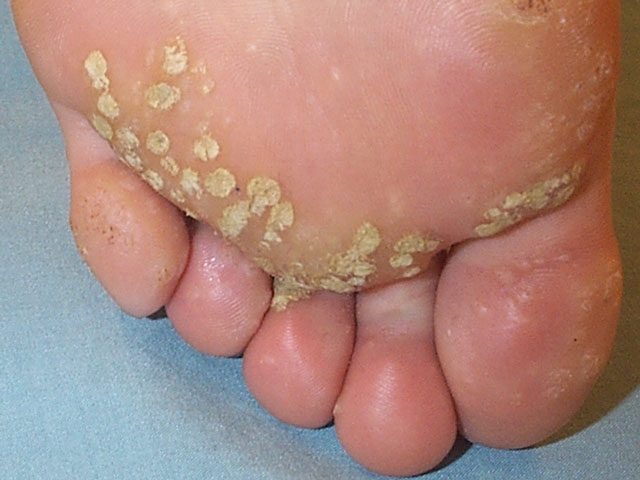 Which of the following is the most likely etiology for this patient's findings?
 (Multiple Choice)
4.8/5 (68)
(68) A 46-year-old man comes to the office due to a sensation of right upper-quadrant fullness. He has been obese since early adolescence. Past medical history is notable for type 2 diabetes mellitus and hypertension. His current medications include metformin, candesartan, and hydrochlorothiazide. The patient does not use tobacco, alcohol, or illicit drugs. His father has type 2 diabetes mellitus. Temperature is 36.7 C (98 F), blood pressure is 138/90 mm Hg, pulse is 72/min, and respirations are 16/min. BMI is 36 kg/m2. On examination, the patient has acanthosis nigricans over the neck creases and hepatomegaly. Laboratory results are as follows: 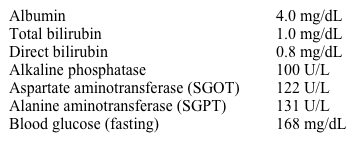 Viral hepatitis serologies, antimitochondrial antibodies, antinuclear antibodies, serum ceruloplasmin, and transferrin saturation are normal. Which of the following is the most likely pathophysiologic mechanism responsible for this patient's increased liver enzymes?
 (Multiple Choice)
4.9/5 (74)
(74) A 58-year-old woman comes to the office due to recent-onset tremor, palpitations, weight loss, and fatigue. She has no other medical conditions and takes no medications or over-the-counter supplements. The patient's mother had hypothyroidism and osteoporosis. Blood pressure is 144/80 mm Hg, pulse is 110/min, and respirations are 18/min. On examination, there is diffuse, nontender enlargement of the thyroid gland. Ocular examination shows bilateral proptosis, lid lag, and periorbital puffiness. The patient has diplopia and ocular discomfort on extremes of lateral gaze. Laboratory tests show a suppressed TSH and elevated thyroid hormone levels. Which of the following treatment options is most likely to worsen this patient's eye disease?
(Multiple Choice)
4.9/5 (80)
(80) A 44-year-old woman comes to the office due to pain, tingling, and numbness in her hands for the past several months. The symptoms are worse at night. She often takes ibuprofen or soaks her hands in warm water for symptom relief, but her wrists and fingers are stiff and painful again by the next morning. The patient has difficulty doing morning chores but feels better by midday. She also has excessive fatigue. The patient has no prior medical conditions and takes no prescription medications. Temperature is 37.6 C (99.7 F), blood pressure is 118/72 mm Hg, and pulse is 68/min. BMI is 28 kg/m2. Physical examination shows that the bilateral wrists and joints of the fingers are mildly swollen and tender. Tapping on the flexor surface of the wrist elicits tingling in the first 3 digits of each hand. The remainder of the joints are normal. Lungs are clear on auscultation and heart sounds are normal. The abdomen is soft and nontender with no hepatosplenomegaly. The patient has no rashes or lower extremity edema. Which of the following is the best next step in evaluation of this patient's symptoms?
(Multiple Choice)
4.8/5 (78)
(78) A 40-year-old man is brought to the emergency department after a motor vehicle collision. He was the restrained driver when his car was hit on the side by a truck. He did not injure his head or lose consciousness but had severe left leg pain with intensity rated at 10 out of 10. The patient has a history of injection heroin use but has not used any illicit drugs since completing a methadone rehabilitation program 2 years ago. Temperature is 37.1 C (98.8 F), blood pressure is 147/86 mm Hg, pulse is 114/min, and respirations are 18/min. There is an open fracture of the left leg with some external bleeding but no other injuries. Wound debridement and external fixation of the fracture are planned. The patient is given a dose of intravenous ketorolac. One hour later, his pain is persistent. Which of the following is the most appropriate analgesic pharmacotherapy for this patient?
(Multiple Choice)
4.9/5 (72)
(72) A 3-year-old girl is brought to the emergency department for acute onset of right elbow pain. She was playing in the snow and started crying when her father pulled her by the arm to take her inside. On examination, the girl keeps her hand in a pronated position, refuses to use her hand, and cries when her elbow is moved. There is no swelling or deformity. Palpation of the radial head elicits mild tenderness. A click is felt when the forearm is hyperpronated, and the child stops crying and starts to use her arm. What is the most likely etiology of this child's symptoms?
(Multiple Choice)
4.9/5 (80)
(80) A 45-year-old man comes to the office due to a month of intermittent bloody diarrhea and abdominal pain and a 4-kg (9-lb) unintentional weight loss. The patient has no dizziness or chest pain. He was diagnosed with HIV a year ago after several years of intravenous heroin use. The patient does not take antiretroviral treatment consistently and no longer uses recreational drugs. He is currently engaged to an HIV-negative woman. The patient has never traveled abroad. Temperature is 38 C (100.4 F), blood pressure is 114/68 mm Hg, and pulse is 96/min. The mucous membranes are moist, and moderate cervical lymphadenopathy is present. Abdominal examination shows mild tenderness in the left lower quadrant. Laboratory results are normal except for a CD4 count of 28/mm3 and a potassium count of 3.2 mEq/L. What is the most likely cause of this patient's diarrhea?
(Multiple Choice)
4.8/5 (78)
(78) Showing 261 - 280 of 1702
 Prev
- 1
- ...
- 2
- ...
- 3
- ...
- 4
- ...
- 5
- ...
- 6
- ...
- 7
- ...
- 8
- ...
- 9
- ...
- 10
- ...
- 11
- ...
- 12
- ...
- 13
- ...
- 14
- ...
- 15
- ...
- 16
- ...
- 17
- ...
- 18
- ...
- 19
- ...
- 20
- ...
- 21
- ...
- 22
- ...
- 23
- ...
- 24
- ...
- 25
- ...
- 26
- ...
- 27
- ...
- 28
- ...
- 29
- ...
- 30
- ...
- 31
- ...
- 32
- ...
- 33
- ...
- 34
- ...
- 35
- ...
- 36
- ...
- 37
- ...
- 38
- ...
- 39
- ...
- 40
- ...
- 41
- ...
- 42
- ...
- 43
- ...
- 44
- ...
- 45
- ...
- 46
- ...
- 47
- ...
- 48
- ...
- 49
- ...
- 50
- ...
- 51
- ...
- 52
- ...
- 53
- ...
- 54
- ...
- 55
- ...
- 56
- ...
- 57
- ...
- 58
- ...
- 59
- ...
- 60
- ...
- 61
- ...
- 62
- ...
- 63
- ...
- 64
- ...
- 65
- ...
- 66
- ...
- 67
- ...
- 68
- ...
- 69
- ...
- 70
- ...
- 71
- ...
- 72
- ...
- 73
- ...
- 74
- ...
- 75
- ...
- 76
- ...
- 77
- ...
- 78
- ...
- 79
- ...
- 80
- ...
- 81
- ...
- 82
- ...
- 83
- ...
- 84
- ...
- 85
- ...
- 86
- ...
- Next

Filters
- Essay(0)
- Multiple Choice(0)
- Short Answer(0)
- True False(0)
- Matching(0)