


 Chat with AI
Exam 1: Medicine

Exam 1: Medicine2 k Questions
Exam 2: Pediatric723 Questions
Exam 3: Psychiatry336 Questions
Exam 4: Surgery563 Questions
Exam 5: Obstetrics & Gynecology469 Questions
Select questions type


A 48-year-old woman is admitted to the oncology service for the 4th time in 2 months. She was diagnosed with breast cancer 2 years ago and has endured surgery, chemotherapy, and radiation. She also participated in multiple experimental trials. Unfortunately, her disease has progressed. Today, the patient is hospitalized for hemoptysis and shortness of breath. She complains of severe pain in her back and has lost another 5 pounds since she was discharged 2 weeks ago. Her body mass index is 17 kg/m2. The patient has expressed a wish to stop all treatment, go home, and enjoy her remaining days. She is found to have the capacity to make this decision. The oncologist, patient, and patient's family decide that hospice care is the most appropriate plan. Which of the following is considered a requirement for referring a patient for hospice care?
(Multiple Choice)
4.9/5  (68)
(68) A 55-year-old man comes to the office due to fatigue for the past month. He has also had occasional heartburn but no chronic abdominal pain. Medical history is significant for hepatomegaly due to fatty liver. He has been drinking 3-4 shots of alcohol per day for several years. He does not smoke. Physical examination reveals pallor of skin and mucous membranes, and mild hepatomegaly. Laboratory results are as follows: 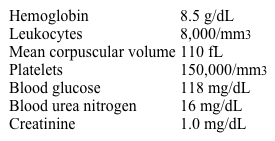 What is the most likely cause of anemia in this patient?
 (Multiple Choice)
5.0/5 (82)
(82) A 49-year-old man comes to the office due to a pruritic rash. For the last 6 months he has had an enlarging rash at the groin that causes significant discomfort when he works outdoors in hot weather. The patient has tried over-the-counter diphenhydramine cream, which only partially relieves the itching. Examination findings are shown in the exhibit. 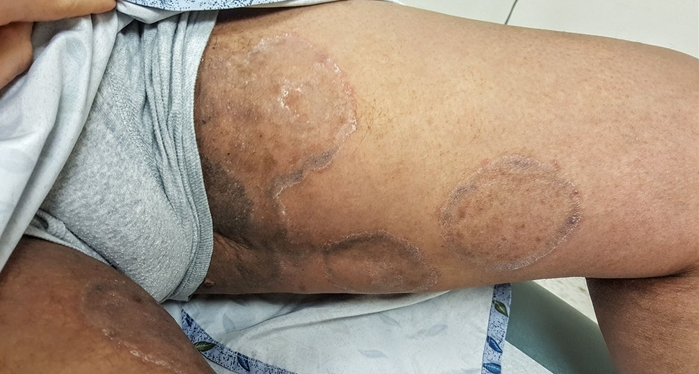 The scrotum is not involved, and there is no inguinal adenopathy. Which of the following is the most likely diagnosis of this patient's rash?
 (Multiple Choice)
4.8/5 (83)
(83) A 66-year-old man comes to the office for a routine visit. He has no current complaints. The patient has a history of poorly controlled type 2 diabetes mellitus and hypertension. His blood work from 2 months ago showed hyperkalemia, and lisinopril was discontinued at that time. The patient's current medications include glipizide, furosemide, nifedipine, and aspirin. His blood pressure is 150/90 mm Hg and pulse is 78/min. Examination is unremarkable. Repeat blood test results today are as follows: 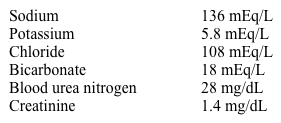 Which of the following is the most likely cause of this patient's electrolyte abnormalities?
 (Multiple Choice)
4.9/5 (72)
(72) A 66-year-old man complains of exertional dyspnea that has progressed over the last two years. As a result he has had to limit his physical activities to avoid becoming short of breath. He denies any significant chest pain, but does note having a recurrent cough productive of whitish sputum. His past medical history is significant for hypertension controlled with hydrochlorothiazide. He has a 40 pack-year smoking history. His family history is significant for a stroke in his mother. His blood pressure is 160/90 mmHg and his heart rate is 80/min. Physical examination reveals a mildly overweight patient in no acute distress. His anteroposterior chest diameter is markedly increased. Breath sounds are decreased bilaterally with scattered expiratory wheezes. Which of the following agents is most likely to reduce this patient's symptoms?
(Multiple Choice)
4.9/5 (75)
(75) A 27-year-old man comes to the office due to recent onset of right knee pain. The pain developed 2 weeks ago while the patient was training for a triathlon. The pain is sharp and is on the medial side of the knee. It has been continuous but is exacerbated by exercise and improves partially with ice and rest. The patient has had no associated knee locking. He otherwise feels well and has no chronic medical conditions. Vital signs are normal. On examination, there is localized tenderness at the medial tibia below the knee joint with no associated redness or warmth. A valgus stress test has no effect on the pain. The gait is normal. X-ray of the knee and tibia reveals no abnormalities. Which of the following is the most likely cause of this patient's knee pain?
(Multiple Choice)
4.9/5 (79)
(79) A 32-year-old woman comes to the office for evaluation of intermittent abdominal cramps and diarrhea for the past several years, which are increasing in frequency. Her bowel movements alternate between solid stools and 3 or 4 episodes of watery diarrhea per day, often containing mucus. The diarrhea is frequently preceded by lower abdominal cramps that improve after defecation. The patient also reports an occasional bloating sensation and nausea but has had no fevers, night sweats, hematochezia, melena, vomiting, or weight loss. There are no specific food triggers. Medical history is notable for anxiety during her college years and she takes no medications. Her father was diagnosed with colon cancer at age 62. She smokes 4 or 5 cigarettes daily and drinks alcohol on social occasions. Temperature is 36.9 C (98.4 F), blood pressure is 128/82 mm Hg, pulse is 74/min, and there are no orthostatic changes. On physical examination, the patient is well-appearing with no scleral icterus, and the mucous membranes are pink and moist. There are no oral lesions. Lungs are clear on auscultation and heart sounds are normal. The abdomen is nondistended and soft with mild lower quadrant tenderness on deep palpation. There is no hepatosplenomegaly and bowel sounds are normal. No extremity edema or skin rashes are present. Laboratory testing shows the following. 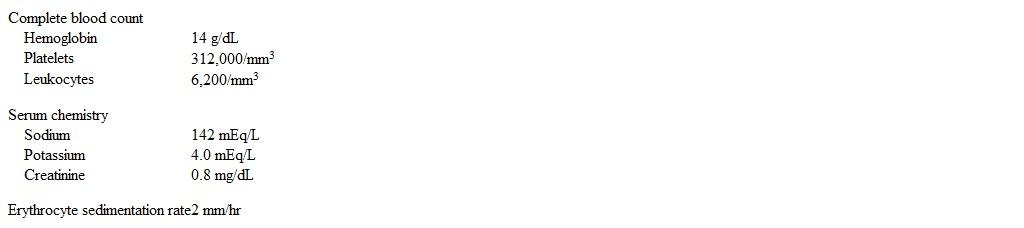 Serum IgA and antitissue transglutaminase levels are within normal limits. Which of the following is the most appropriate next step in management of this patient?
 (Multiple Choice)
4.8/5 (73)
(73) A 57-year-old woman receiving chemotherapy for stage IV Hodgkin lymphoma has severe nausea, vomiting, and general malaise. Her last bowel movement was yesterday, and she has had crampy abdominal pain on and off since the vomiting began. The patient's second cycle of chemotherapy ended 3 days ago. Her temperature is 36.7 C (98 F), blood pressure is 109/68 mm Hg, pulse is 88/min, and respirations are 18/min. Pulse oximetry reading is 95% on room air. BMI is 18 kg/m2. Physical examination shows dry mucous membranes and enlarged cervical lymph nodes. The chest is clear to auscultation. Mild epigastric tenderness is present on abdominal palpation, but there is no guarding or rebound. Laboratory studies are as follows: 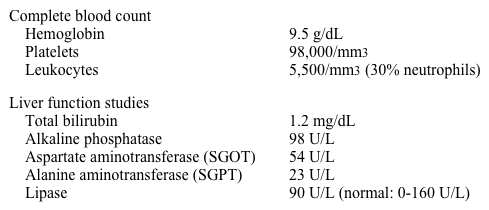 Intravenous fluids are started. Which of the following is the best next step in the management of this patient?
 (Multiple Choice)
4.8/5 (77)
(77) A 52-year-old man comes to the clinic due to frequent chest pain over the last 6 weeks. The pain typically occurs at night and is described as retrosternal and burning. The patient also has a history of chronic cough and occasional hoarseness. He has coronary artery disease and received a drug-eluting stent after a non-ST elevation myocardial infarction 3 years ago. Current medications include low-dose aspirin, atorvastatin, metoprolol, and losartan. The patient discontinued tobacco use after the myocardial infarction. Vital signs are normal. Examination shows no abnormalities. Resting ECG reveals no significant abnormalities. Exercise ECG reveals 1 mm ST segment depression in the inferior leads at 90% of predicted maximal heart rate, but myocardial perfusion study reveals no evidence of stress-induced ischemia. The patient did not experience chest pain during the stress test. Which of the following is the best treatment for this patient's chest pain?
(Multiple Choice)
4.9/5 (97)
(97) A 64-year-old man comes to the emergency department due to chest pain. The pain is sharp, localized to the anterior chest, and exacerbated by deep breathing. Six weeks ago, the patient underwent coronary artery bypass graft surgery due to stable triple-vessel coronary artery disease. The patient also has a history of type 2 diabetes mellitus and early-stage chronic kidney disease. Temperature is 38 C (100.4 F), blood pressure is 144/78 mm Hg, and pulse is 99/min and regular. The sternal wound appears unremarkable, and there is no crepitus on palpation. No heart murmurs are heard. Breath sounds are normal. ECG shows sinus tachycardia with nonspecific ST-segment changes. Laboratory results are as follows:  Echocardiography shows normal biventricular function, no significant valvular disease, and a small pericardial effusion without evidence of cardiac compression. What is the most likely cause of this patient's current presentation?
 (Multiple Choice)
4.9/5 (75)
(75) A 58-year-old man comes to the office due to 2 months of exertional shortness of breath and easy fatigability. The patient has no chronic medical problems and takes no medications. He eats a balanced diet. He does not use tobacco, alcohol, or illicit drugs. Vital signs are within normal limits. Physical examination shows conjunctival pallor and areas of depigmentation on the arms suggestive of vitiligo. The tongue appears shiny. The spleen is not palpable. The remainder of the examination is normal. Laboratory results are as follows:  Which of the following is the most likely cause of this patient's current symptoms?
 (Multiple Choice)
4.8/5 (64)
(64) A 23-year-old woman comes to the office due to nasal congestion, rhinorrhea, and postnasal drip for more than a year. Symptoms fluctuate in intensity and are worsened by cigarette smoke and strong fragrances. Although symptoms do not change with the season, they worsen when the patient walks from indoors to outdoors on a cold day. She has no eye or ear symptoms, itching, wheezing, or skin rash. The patient has been using over-the-counter oral loratadine and pseudoephedrine without significant improvement. Medical history is unremarkable. On inspection, the nasal mucosae appear boggy and erythematous, and rhinorrhea is clear. The conjunctivae are normal. The lungs are clear to auscultation. Which of the following is the best next step in management of this patient?
(Multiple Choice)
4.9/5 (72)
(72) A 26-year-old man comes to the physician with a 1-week history of dysuria and increased urinary frequency. He has had multiple sexual partners in the past month and is inconsistent with condom use. His temperature is 37.1 C (98.9 F), blood pressure is 110/70 mm Hg, and pulse is 68/min. Mucopurulent discharge is seen at the urethral meatus. Urinalysis shows the following: 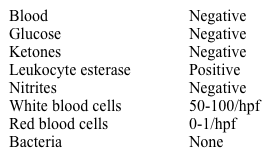 Gram stain of the discharge shows no bacteria. Culture of the discharge and urine show no growth after 48 hours of incubation. Which of the following is the most likely diagnosis?
 (Multiple Choice)
4.7/5 (105)
(105) A 32-year-old man comes to the physician after a day of blurred vision in his right eye. He has no pain, ocular discharge, or gritty sensation. On examination, visual acuity is slightly reduced in the right eye. Fluorescein examination shows a large geographic corneal staining defect. Which of the following nerve dysfunctions is most likely responsible for this patient's impaired corneal sensation?
(Multiple Choice)
4.9/5 (92)
(92) A 65-year-old man comes to the emergency department with palpitations. He also complains of headache, insomnia, and 2 episodes of vomiting this morning. His other medical problems include severe chronic obstructive pulmonary disease, pulmonary hypertension, essential hypertension, and hyperlipidemia. He had a puncture wound of the foot a week ago that is being treated with ciprofloxacin. His other medications include tiotropium, inhaled fluticasone/salmeterol, theophylline, simvastatin, lisinopril, and hydrochlorothiazide. He does not use tobacco or alcohol. His temperature is 36.7°C (98.0°F), blood pressure is 150/80 mm Hg, pulse is 115/min, and respirations are 18/min. Examination shows mildly decreased breath sounds throughout the lung fields consistent with his chronic obstructive pulmonary disease. Neurologic examination shows no focal deficits. Electrocardiogram shows multifocal atrial tachycardia and a single ventricular premature beat. Which of the following is the next best step in management of this patient?
(Multiple Choice)
4.8/5 (88)
(88) A 37-year-old man with HIV comes to the urgent care clinic due to 2 months of cough. The cough is productive of sputum, particularly in the early morning, and is sometimes associated with streaks of blood. He drinks alcohol and uses intravenous illicit drugs. The patient was hospitalized 4 months ago due to alcohol-withdrawal seizures. CD4 count at that time was 520/mm3. Temperature is 37.7 C (99.9 F), blood pressure is 130/80 mm Hg, pulse is 75/min, and respirations are 14/min. Oxygen saturation is 98% on room air. Lung examination reveals crackles and rhonchi over the right upper lung field. No cardiac murmurs or rashes are present. Chest x-ray findings are shown in the image below: 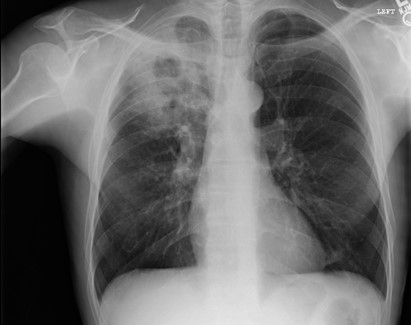 Which of the following is the most likely diagnosis for this patient?
 (Multiple Choice)
4.9/5 (71)
(71) A 39-year-old woman comes to the emergency department due to 3 days of fever, dysuria, and left flank pain. The patient has a history of multiple urinary tract infections and had a ureteropelvic junction calculus removed 2 years ago. Last month, she was treated for vaginal candidiasis. The patient does not use tobacco, alcohol, or illicit drugs. Her mother has thyroid cancer. Temperature is 38.3 C (100.9 F), blood pressure is 120/70 mm Hg, and pulse is 110/min. Left costovertebral angle tenderness is present. Laboratory results are as follows:  Imaging reveals an enlarged left kidney with perinephric fat stranding and a nonobstructive renal calculus. Which of the following organisms is most likely to be seen in this patient's urine culture?
 (Multiple Choice)
4.9/5 (54)
(54) A 65-year-old man comes to the office due to tingling, numbness, and burning pain in his left hand for several weeks. He also has similar symptoms in his right hand but to a lesser extent. The patient has end-stage renal disease due to hypertension and, for the past 2 years, has been receiving hemodialysis through an arteriovenous fistula of the left arm. Symptoms worsen during hemodialysis sessions. The patient has no symptoms in the legs. He has no muscle weakness, headache, vision changes, speech changes, or swallowing difficulty. Which of the following is the most likely diagnosis?
(Multiple Choice)
4.9/5 (68)
(68) A 36-year-old woman comes to the office due to dyspnea on exertion. She has no other medical problems. She does not use tobacco, alcohol, or drugs. Her father has prostate cancer and her mother had a stroke. She takes no medication and has no known drug allergies. Her temperature is 36.7 C (98 F), blood pressure is 140/90 mm Hg, pulse is 84/min, and respirations are 22/min. Examination shows clear lung fields. Her chest x-ray shows prominent pulmonary arteries and an enlarged right heart border. ECG shows right axis deviation. Which of the following is the most likely diagnosis?
(Multiple Choice)
4.9/5 (86)
(86) A group of investigators is studying the relationship between a particular 5-lipoxygenase genotype and atherosclerosis. A random sample of patients from a local university hospital is invited to participate in the study. Blood samples for leukocyte genotyping are obtained, and ultrasonography to assess carotid intima-media thickness (CIMT), a marker of atherosclerosis, is performed. Results show that the particular 5-lipoxygenase genotype is associated with abnormally increased CIMT, a predisposition to atherosclerosis. Which of the following best describes this study design?
(Multiple Choice)
4.9/5 (81)
(81) Showing 541 - 560 of 1702
 Prev
- 1
- ...
- 2
- ...
- 3
- ...
- 4
- ...
- 5
- ...
- 6
- ...
- 7
- ...
- 8
- ...
- 9
- ...
- 10
- ...
- 11
- ...
- 12
- ...
- 13
- ...
- 14
- ...
- 15
- ...
- 16
- ...
- 17
- ...
- 18
- ...
- 19
- ...
- 20
- ...
- 21
- ...
- 22
- ...
- 23
- ...
- 24
- ...
- 25
- ...
- 26
- ...
- 27
- ...
- 28
- ...
- 29
- ...
- 30
- ...
- 31
- ...
- 32
- ...
- 33
- ...
- 34
- ...
- 35
- ...
- 36
- ...
- 37
- ...
- 38
- ...
- 39
- ...
- 40
- ...
- 41
- ...
- 42
- ...
- 43
- ...
- 44
- ...
- 45
- ...
- 46
- ...
- 47
- ...
- 48
- ...
- 49
- ...
- 50
- ...
- 51
- ...
- 52
- ...
- 53
- ...
- 54
- ...
- 55
- ...
- 56
- ...
- 57
- ...
- 58
- ...
- 59
- ...
- 60
- ...
- 61
- ...
- 62
- ...
- 63
- ...
- 64
- ...
- 65
- ...
- 66
- ...
- 67
- ...
- 68
- ...
- 69
- ...
- 70
- ...
- 71
- ...
- 72
- ...
- 73
- ...
- 74
- ...
- 75
- ...
- 76
- ...
- 77
- ...
- 78
- ...
- 79
- ...
- 80
- ...
- 81
- ...
- 82
- ...
- 83
- ...
- 84
- ...
- 85
- ...
- 86
- ...
- Next

Filters
- Essay(0)
- Multiple Choice(0)
- Short Answer(0)
- True False(0)
- Matching(0)