Multiple Choice
A 66-year-old man comes to the office for a routine visit. He has no current complaints. The patient has a history of poorly controlled type 2 diabetes mellitus and hypertension. His blood work from 2 months ago showed hyperkalemia, and lisinopril was discontinued at that time. The patient's current medications include glipizide, furosemide, nifedipine, and aspirin. His blood pressure is 150/90 mm Hg and pulse is 78/min. Examination is unremarkable. Repeat blood test results today are as follows: 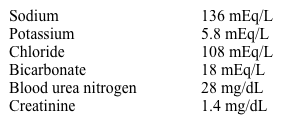 Which of the following is the most likely cause of this patient's electrolyte abnormalities?
A) Furosemide use
B) Laxative abuse
C) Pre-renal azotemia
D) Primary hyperaldosteronism
E) Renal artery stenosis
F) Renal tubular acidosis
G) Surreptitious vomiting
Correct Answer:

Verified
Correct Answer:
Verified
Q539: A 50-year-old woman comes to the office
Q540: A 24-year-old woman comes to the office
Q541: A 48-year-old woman is admitted to the
Q542: A 55-year-old man comes to the office
Q543: A 49-year-old man comes to the office
Q545: A 66-year-old man complains of exertional dyspnea
Q546: A 27-year-old man comes to the office
Q547: A 32-year-old woman comes to the office
Q548: A 57-year-old woman receiving chemotherapy for stage
Q549: A 52-year-old man comes to the clinic