


 Chat with AI
Exam 1: Medicine

Exam 1: Medicine2 k Questions
Exam 2: Pediatric723 Questions
Exam 3: Psychiatry336 Questions
Exam 4: Surgery563 Questions
Exam 5: Obstetrics & Gynecology469 Questions
Select questions type


A 68-year-old man comes to the emergency department due to a cough. Chest x-ray shows no infiltrates but reveals a right upper lobe lung lesion incidentally. A chest CT scan with intravenous contrast reveals a 1x2 cm nodule in the right upper lobe. The patient is admitted to the hospital and is found to have worsening acute renal failure. Medical history is significant for hypertension, hyperlipidemia, diabetes, chronic kidney disease, and coronary artery disease. Pre-admission medications include aspirin, hydrochlorothiazide, clopidogrel, metoprolol, atorvastatin, metformin, and lisinopril, all of which he has taken for several years. He has no known drug allergies. The patient is a former smoker and does not use alcohol or illicit drugs. Blood pressure is 140/90 mm Hg and has remained in the 140s/90s throughout the hospitalization. Physical examination is unremarkable. Laboratory results are as follows:  Over the course of the next week, the patient's renal function returns to normal. Which of the following would have been most helpful in preventing his acute kidney injury?
 (Multiple Choice)
4.9/5  (84)
(84) A 23-year-old woman with a history of anorexia nervosa is evaluated due to acute-onset confusion while hospitalized. Over the past 6 months, she has been severely restricting her caloric intake and has lost 7 kg (15.4 lb). On admission, she was tachycardic and orthostatic, and her BMI was 15 kg/m2. The patient has been receiving intravenous hydration and parenteral nutrition. Today, her family notes that she seems newly confused and unsteady when walking. Temperature is 36.7 C (98 F), blood pressure is 110/70 mm Hg, and pulse is 86/min. She is not oriented to time or place. Bilateral pupils are equal and reactive. Her lateral gaze is restricted on both sides and evokes a horizontal nystagmus. There is no nuchal rigidity or motor weakness. Bilateral ankle reflexes are diminished. The patient walks slowly with short and wide-based steps. Which of the following is the best next step in management of this patient?
(Multiple Choice)
4.8/5 (73)
(73) A 35-year-old man comes to the physician with a 2-week history of low-grade fever and progressive weakness. He has a long history of "heart murmur." He does not use illicit drugs. Examination shows splinter hemorrhages, small petechiae on the palatal mucosa, and an audible murmur. His erythrocyte sedimentation rate is 96 mm/h. Urinalysis shows microscopic hematuria and 1+ proteinuria. Which of the following valvular dysfunctions is most likely to be detected in this patient?
(Multiple Choice)
4.8/5 (73)
(73) A 48-year-old woman comes to the office due to episodic headaches. The patient has had occasional headaches, but during the past month, they have become more frequent without any significant change in quality. She describes the headaches as constant pressure in the temporal and occipital regions, frequently developing in the afternoon. The patient is able to carry out daily activities during the headaches, but they are often bothersome, so she takes acetaminophen. She has had no nausea or visual disturbances. The patient's medical history includes hypertension, hyperlipidemia, and fibromyalgia. She does not use tobacco, alcohol, or illicit drugs. Her sister recently died of a glioblastoma. Temperature is 37.0 C (98.6 F), blood pressure is 140/90 mm Hg, and pulse is 82/min. Bilateral pupils are equal and reactive to light. Motor strength, sensation, and deep tendon reflexes are normal. Which of the following is the most likely cause of this patient's headaches?
(Multiple Choice)
4.8/5 (77)
(77) A 16-year-old girl is brought to the office for a routine health maintenance examination. She feels well and has no concerns. The patient is an honor student in tenth grade and plays varsity soccer. She eats a well-balanced diet. Depression screening is negative. The patient has tried marijuana "a few times" but does not use tobacco or alcohol. She has been sexually active with one partner for the past 2 years and takes an oral contraceptive daily. The patient's parents have type 2 diabetes mellitus but are otherwise healthy. Her maternal grandfather died of a myocardial infarction at age 68. BMI is 24 kg/m2. Vital signs and physical examination are normal. Which of the following is the best next step in evaluation of this patient?
(Multiple Choice)
4.9/5 (77)
(77) A 65-year-old man complains of two years of persistent cough. He says that he coughs up whitish sputum almost every morning on waking, and then continues coughing throughout the day. He also complains of exertional shortness of breath that becomes disabling if he gets an upper respiratory infection. He has smoked one pack of cigarettes daily for the past 40 years. Pulmonary function testing reveals a vital capacity that is 65% of his predicted. Which of the following best explains this finding?
(Multiple Choice)
4.7/5 (94)
(94) A 56-year-old woman comes to the office due to 4 months of mild cough with occasional, scant sputum production. Yesterday, she noticed blood in her sputum. The patient has no chronic medical conditions. She has never smoked or used illicit drugs but drinks alcohol socially. Vital signs and pulmonary examination are normal. Chest x-ray reveals a 2.5-cm irregular nodule in the peripheral right upper lung field with no hilar or mediastinal lymph node enlargement. What is the most likely diagnosis in this patient?
(Multiple Choice)
4.9/5 (86)
(86) A 58-year-old woman comes to the office due to increasing fatigue and muscle cramps over the past 2 months. Medical history is significant for Sjögren syndrome. Blood pressure is 130/74 mm Hg, and pulse is 86/min. Physical examination shows enlarged parotid glands and dry oral mucosa. Laboratory results are as follows: 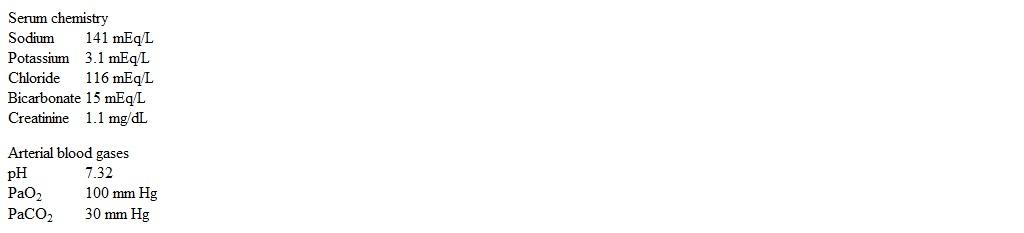 Urine pH is 6.8. Which of the following is the most likely cause of this patient's acid-base imbalance?
 (Multiple Choice)
4.9/5 (74)
(74) A 38-year-old man comes to the emergency department with high-grade fever, shaking chills, productive cough, and shortness of breath. He has had 2 hospital admissions for alcohol-withdrawal seizures in the past year but continues to drink alcohol every day. The patient has no other medical problems and takes no medications. Temperature is 39.7 C (103.5 F), blood pressure is 100/70 mm Hg, pulse is 110/min, and respirations are 20/min. Skin and mucous membranes are dry. Physical examination reveals crackles and bronchial breath sounds in the right lower lung field. Cardiac examination is unremarkable. Chest x-ray reveals right lower lobe consolidation. The patient is prescribed intravenous antibiotics. Twelve hours later, he develops significant shortness of breath. Respirations are 38/min. Oxygen saturation is 80% on a nonrebreather mask. A repeat chest x-ray is shown in the image below. 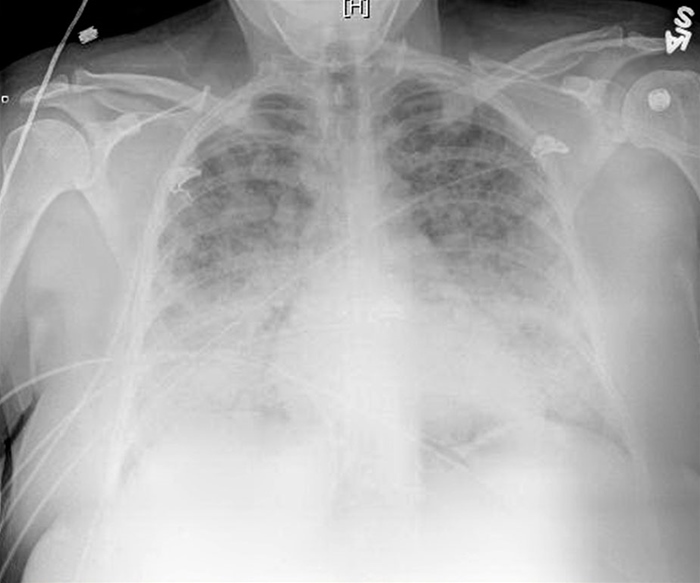 The patient is intubated immediately. Which of the following is most likely to be present in this patient just prior to intubation?
 (Multiple Choice)
4.9/5 (92)
(92) A 28-year-old woman comes to the emergency department due to bilateral upper extremity weakness and abdominal pain. The patient has had progressive weakness of the upper extremities for 2 days and severe, diffuse, poorly localized abdominal pain for 1 day. Temperature is 37.3 C (99.1 F), blood pressure is 148/86 mm Hg, and pulse is 112/min. On physical examination, the patient appears restless and is diaphoretic. There is no scleral icterus. The abdomen is soft and nontender, with no organomegaly, guarding, or rebound tenderness. Bowel sounds are decreased. Neurological examination shows normal cranial nerves, weakness of the proximal upper extremity muscles, and loss of the biceps and triceps reflexes on both sides. Laboratory results are as follows: 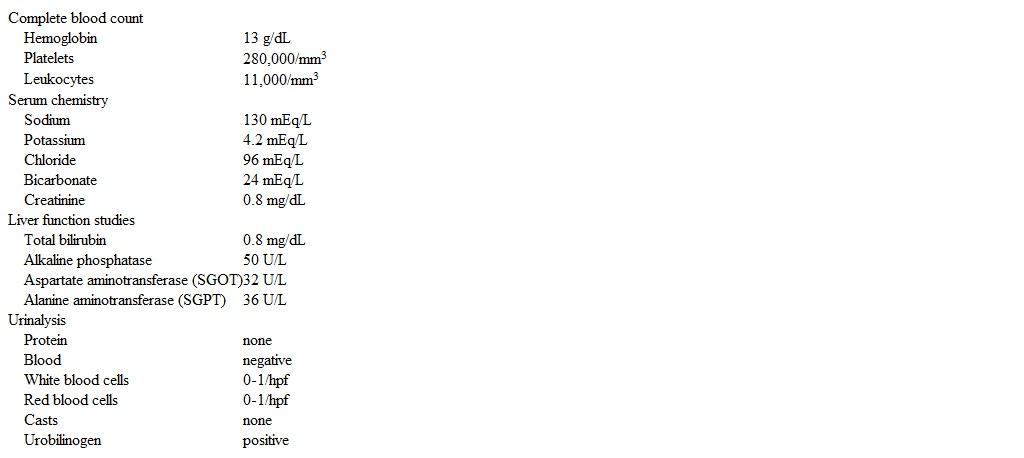 Which of the following is most likely to yield the diagnosis in this patient?
 (Multiple Choice)
4.8/5 (75)
(75) A 21-year-old woman comes to the emergency department due to a worsening skin rash. The patient returned from a 3-day camping and hiking trip in the Colorado mountains and developed an itchy, erythematous rash on her upper extremities and torso later that day. Some of the lesions progressed into small blisters. She reports falling into a bush and getting a few insect bites during the trip. Medical history includes seizures managed with levetiracetam. The patient is menstruating. Temperature is 37.2 C (99 F), blood pressure is 116/68 mm Hg, and pulse is 90/min. On physical examination, the patient appears to be uncomfortable. Skin examination findings are shown in the exhibit. 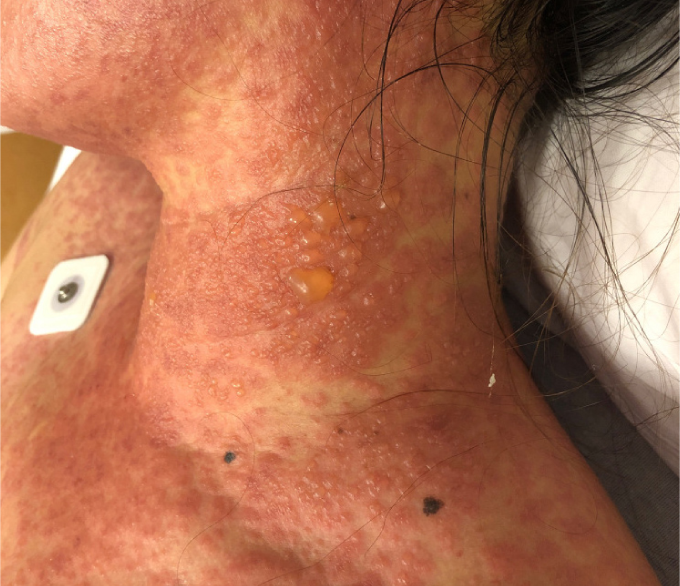 No oropharyngeal lesions are present. The lungs are clear to auscultation, and heart sounds are normal. The abdomen is soft and nontender. Which of the following is the most likely cause of this patient's current condition?
 (Multiple Choice)
4.9/5 (88)
(88) A 38-year-old woman comes to the office because of chronic aching pain and stiffness around her neck, shoulders, lower back, and hips. Even minor exertion worsens the pain. The patient also has difficulty sleeping and frequently wakes up in the middle of the night. Even after a good night's sleep, she always feels fatigued in the morning. The patient has no muscle weakness, fever, malaise, weight loss, or rash. She tried water aerobic exercise 3 times a week but had no symptom improvement. She has a history of irritable bowel syndrome. Vital signs are within normal limits. Examination shows multiple tender spots at muscle insertion points and bony prominences. Her muscle strength is 5/5 in all extremities, and deep-tendon reflexes are 2+ throughout. No sensory abnormalities are noted. Laboratory results are as follows: 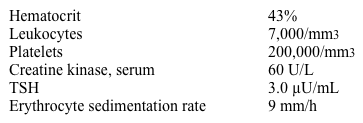 Which of the following is the most appropriate therapy for this patient?
 (Multiple Choice)
4.9/5 (74)
(74) A 62-year-old man comes to the office due to difficulty swallowing both solids and liquids. The patient's symptoms have progressively worsened over the last 3 months. He also has occasional regurgitation of undigested food and a nighttime cough that disturbs his sleep. He has never had similar symptoms before. The patient has lost 4.5 kg (10 lb) during this period but has no other medical problems and takes no medications. He has a 20-pack-year smoking history but quit 10 years ago. He drinks wine on the weekends. Vital signs are normal, and his physical examination is unremarkable. Chest x-ray reveals a widened mediastinum, and barium studies show a dilated esophagus with smooth tapering of the distal esophagus. Which of the following is the best next step in management of this patient?
(Multiple Choice)
5.0/5 (64)
(64) A 55-year-old woman comes to the office with right shoulder pain for the past 2 months. The patient is unable to raise her arm or reach for objects. Her right hand is dominant, but she has recently been using her left more due to the problems on the right. The patient lives with her disabled spouse, who had a stroke 8 months ago. Before the pain, she had taken care of his daily activities and helped transfer him from his bed to wheelchair but is now unable to do so. The patient's other medical conditions include type 2 diabetes mellitus, Graves disease, hypertension, and hypercholesterolemia. On examination, there is markedly decreased passive and active abduction, flexion, and rotation at the right shoulder. Palpation of the shoulder and acromioclavicular joint do not reproduce the pain. The remainder of the physical examination is unremarkable. X-ray of the shoulder is shown below. 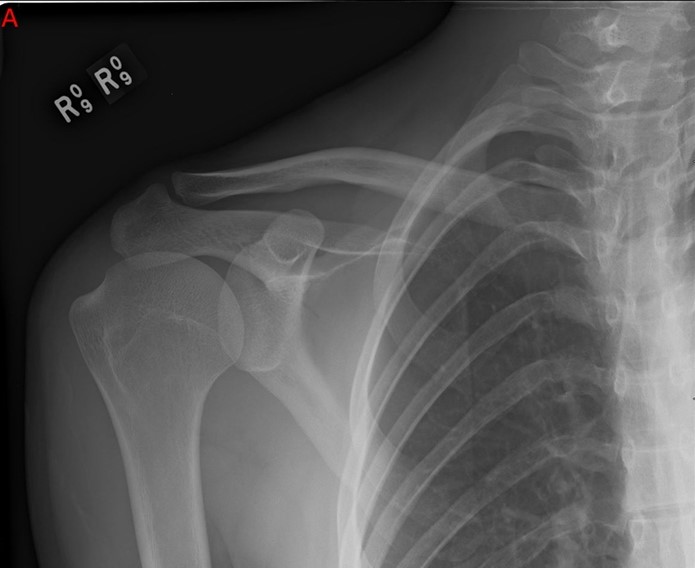 Which of the following is the most likely cause of this patient's current symptoms?
 (Multiple Choice)
4.9/5 (91)
(91) A 70-year-old man comes to the office due to 6 months of progressive fatigue and dyspnea. He has had no fever, night sweats, or weight loss. The patient's medical history is significant for benign prostatic hyperplasia, hypertension, and mechanical aortic valve replacement for severe aortic stenosis. The patient currently takes warfarin, tamsulosin, and amlodipine. He does not drink alcohol. Temperature is 36.4 C (97.5 F), blood pressure is 150/99 mm Hg, and pulse is 68/min. BMI is 27 kg/m2. The patient appears well nourished and fit. No scleral icterus is present, but the mucosa is pale. There is no jugular venous distension or lymphadenopathy. Cardiac examination reveals a normal S1 and a mechanical S2. Pulmonary examination is normal. Both the liver and the spleen are palpable. The remainder of the examination shows no abnormalities. Laboratory results are as follows: 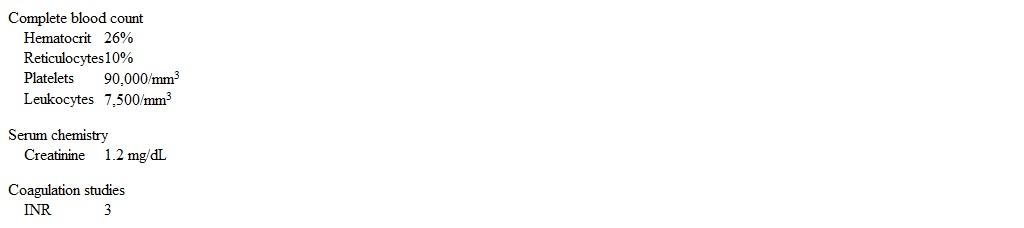 Which of the following is the best next step in management?
 (Multiple Choice)
4.8/5 (73)
(73) A 24-year-old woman comes to the office due to skin lesions on her trunk and proximal upper limbs. The patient noticed the lesions after returning from a summer vacation at a Florida beach a week ago. During the vacation, she had sun exposure on several occasions without prior application of sunscreen. The lesions are mildly itchy but not painful. Medical history is notable for hypothyroidism, for which she takes levothyroxine. She drinks alcohol on social occasions but does not use tobacco or illicit drugs. Examination shows hypopigmented lesions as shown in the image below. 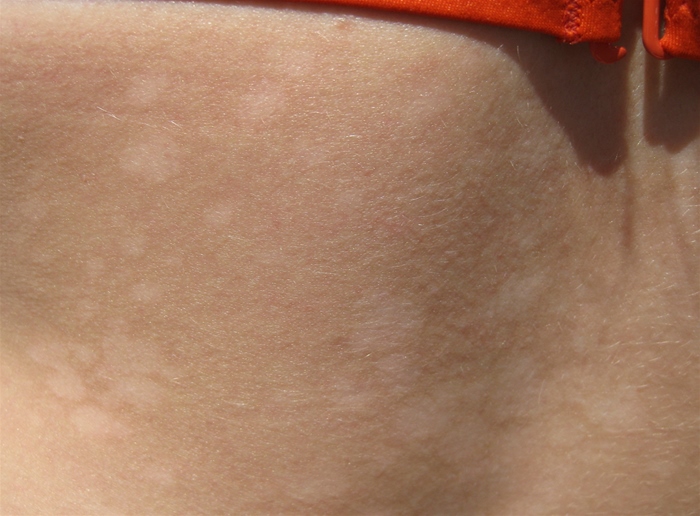 Which of the following is the most likely cause of this patient's current condition?
 (Multiple Choice)
5.0/5 (71)
(71) A 46-year-old man comes to the office due to bilateral ankle and facial swelling, especially prominent in the periorbital area. He has no shortness of breath, fever, or changes in urine color. The patient does not use tobacco, alcohol, or illicit drugs. He has no significant medical history and takes no medications. His temperature is 37.1 C (99 F), blood pressure is 130/70 mm Hg, pulse is 78/min, and respirations are 14/min. Examination shows bilateral 1+ pitting ankle edema. Auscultation shows clear lungs, normal heart sounds, and no murmurs. Dipstick urinalysis is positive for protein. A 24-hour urine collection shows proteinuria of 4.6 g/day. Laboratory results are as follows: 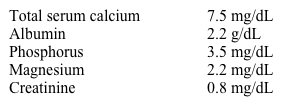 Which of the following is the most likely cause of this patient's low serum calcium level?
 (Multiple Choice)
4.9/5 (77)
(77) A 62-year-old woman comes to the office due to a nonproductive cough that is "quite disturbing." The cough has been present for 2 months and is accompanied by a tickling or scratching sensation in the throat. The patient cannot identify a provoking factor for the cough, which occurs mostly during the day. She has no fever, rhinorrhea, or chest pain. The patient has had no changes in appetite or weight, and her lifestyle is mostly sedentary. She has difficult-to-control hypertension. Her medications, which were last readjusted 3 months ago, include chlorthalidone, ramipril, and amlodipine. The patient, who emigrated from China 30 years ago, does not use tobacco, alcohol, or illicit drugs. Her temperature is 36.8 C (98.2 F), blood pressure is 130/90 mm Hg, pulse is 80/min, and respirations are 16/min. The patient's conjunctivae are normal, oropharynx is clear without erythema or cobblestoning, lungs are clear without wheezes or crackles, and heart sounds are normal. She has no peripheral edema. Complete blood count and chest x-ray are normal. Which of the following is the most likely cause of this patient's current symptoms?
(Multiple Choice)
4.8/5 (69)
(69) A 27-year-old primigravida at 8 weeks gestation is found to have a thyroid nodule during her initial prenatal visit. She has fatigue and frequent nausea with vomiting. The patient has no heat or cold intolerance and no skin changes. She has no dysphagia to solids or liquids, although she has been eating more carbohydrates since becoming pregnant. Medical history is otherwise not significant. The patient does not use tobacco, alcohol, or illicit drugs. Temperature is 36.7 C (98.1 F), blood pressure is 110/70 mm Hg, pulse is 86/min, and respirations are 18/min. Physical examination shows a small, 1.5-cm nodule in her right thyroid gland. Pelvic examination reveals a slightly enlarged uterus consistent with 8 weeks gestation. Serum TSH is normal. Ultrasound of her thyroid reveals a 1.5-cm hypoechoic nodule in her right thyroid lobe with irregular margins, internal microcalcifications, and internal vascularity. Which of the following is the next most appropriate step in management of this patient?
(Multiple Choice)
4.8/5 (80)
(80) A 45-year-old woman comes to the office with knee pain. She has a long history of rheumatoid arthritis affecting the joints of her hands, wrists, and knees. The patient has mild residual pain and joint stiffness on low-dose methotrexate but has otherwise done well. Over the past 2 days, the pain in her right knee has been much more severe and was associated with an episode of chills. Temperature is 38.7 C (101.6 F), blood pressure is 120/70 mm Hg, pulse is 100/min, and respirations are 18/min. Physical examination shows mild swelling in the joints of the hands and wrists. The right knee is red and more swollen than on previous examinations; active and passive range of motion at the right knee is limited due to pain. After appropriate diagnostic testing, which of the following is most likely to be indicated for this patient's current condition?
(Multiple Choice)
4.8/5 (85)
(85) Showing 1261 - 1280 of 1702
 Prev
- 1
- ...
- 2
- ...
- 3
- ...
- 4
- ...
- 5
- ...
- 6
- ...
- 7
- ...
- 8
- ...
- 9
- ...
- 10
- ...
- 11
- ...
- 12
- ...
- 13
- ...
- 14
- ...
- 15
- ...
- 16
- ...
- 17
- ...
- 18
- ...
- 19
- ...
- 20
- ...
- 21
- ...
- 22
- ...
- 23
- ...
- 24
- ...
- 25
- ...
- 26
- ...
- 27
- ...
- 28
- ...
- 29
- ...
- 30
- ...
- 31
- ...
- 32
- ...
- 33
- ...
- 34
- ...
- 35
- ...
- 36
- ...
- 37
- ...
- 38
- ...
- 39
- ...
- 40
- ...
- 41
- ...
- 42
- ...
- 43
- ...
- 44
- ...
- 45
- ...
- 46
- ...
- 47
- ...
- 48
- ...
- 49
- ...
- 50
- ...
- 51
- ...
- 52
- ...
- 53
- ...
- 54
- ...
- 55
- ...
- 56
- ...
- 57
- ...
- 58
- ...
- 59
- ...
- 60
- ...
- 61
- ...
- 62
- ...
- 63
- ...
- 64
- ...
- 65
- ...
- 66
- ...
- 67
- ...
- 68
- ...
- 69
- ...
- 70
- ...
- 71
- ...
- 72
- ...
- 73
- ...
- 74
- ...
- 75
- ...
- 76
- ...
- 77
- ...
- 78
- ...
- 79
- ...
- 80
- ...
- 81
- ...
- 82
- ...
- 83
- ...
- 84
- ...
- 85
- ...
- 86
- ...
- Next

Filters
- Essay(0)
- Multiple Choice(0)
- Short Answer(0)
- True False(0)
- Matching(0)