


 Chat with AI
Exam 1: Medicine

Exam 1: Medicine2 k Questions
Exam 2: Pediatric723 Questions
Exam 3: Psychiatry336 Questions
Exam 4: Surgery563 Questions
Exam 5: Obstetrics & Gynecology469 Questions
Select questions type


A 45-year-old man comes to the emergency department with poor appetite and nausea for the last 3-4 weeks. He admits to drinking vodka daily. He attempted to quit on several occasions over the last year but relapsed each time. Two years ago, he was admitted for seizures but has had no medical follow-up since. The patient takes no medications and does not use any illicit drugs. He has had no recent sexual encounters. He has no recent unintentional weight loss. His temperature is 37.2 C (99 F), blood pressure is 120/70 mm Hg, and pulse is 102/min. His sclerae appear icteric. The liver is enlarged and mildly tender. The gallbladder is not palpable, and Murphy's sign is negative. The patient has no abdominal distension, peripheral edema, spider angiomas, gynecomastia, or asterixis. Which of the following laboratory findings are most likely to be present? AST = aspartate aminotransferase; ALT = alanine aminotransferase; GGT = gamma-glutamyltransferase.
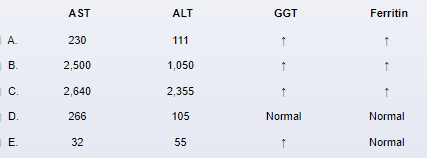
(Multiple Choice)
4.8/5  (94)
(94) A 23-year-old man comes to the emergency department with a 5-day history of diarrhea and abdominal pain. The diarrhea occurs 5-6 times a day; it was initially watery but since yesterday has become bloody. He describes the abdominal pain as colicky and severe, with associated nausea and decreased appetite but no vomiting. The patient's past medical history is insignificant, with no prior episodes of similar symptoms and no recent hospitalizations or illnesses. He is not sexually active and does not use illicit drugs. The patient lives in Boston. He has no history of recent travel and no close contacts with similar symptoms. The patient's father had colon cancer at age 50, and his uncle died of liver cirrhosis. His temperature is 36.6 C (98.0 F), blood pressure is 123/82 mm Hg, and pulse is 102/min. He has prominent periumbilical and right lower quadrant tenderness but no guarding or rebound. Rectal examination shows brownish stool mixed with blood. Which of the following is the most likely etiology in this patient?
(Multiple Choice)
5.0/5 (72)
(72) A 17-year-old girl comes to the office for evaluation of right knee pain. For the past 3 months, the patient has had poorly localized, achy pain at the anterior right knee that is worse when she runs, sits for extended periods, or goes up or down a staircase. She has been taking nonsteroidal anti-inflammatory drugs, which partially relieve the pain but have lost effectiveness over time. The patient also has a sensation that the knee is "giving way" when she is running. Vital signs are normal. BMI is 19 kg/m2. Physical examination shows a normal gait and no visible knee deformities. There is mild pain with flexion of the right knee. With the knee extended, compressing the patella into the trochlear groove reproduces the pain. Which of the following is the best next step in management of this patient?
(Multiple Choice)
4.7/5 (85)
(85) A 48-year-old woman comes to the emergency department due to urinary frequency, burning pain on urination, severe nausea, and weakness. The patient has a history of type 2 diabetes mellitus treated with metformin. Her last menstrual period was a year ago, and she is not sexually active. Temperature is 38.3 C (101 F), blood pressure is 120/76 mm Hg, pulse is 95/min, and respirations are 14/min. The patient is obese. Mild costovertebral angle tenderness is present. Laboratory results are as follows:  Urinalysis shows many white blood cells. Intravenous ceftriaxone is started. Two days later, the patient feels better, is eating well, and is afebrile. Urine culture results show Escherichia coli sensitive to ceftriaxone, gentamicin, ciprofloxacin, and trimethoprim-sulfamethoxazole. Which of the following is the most appropriate next step in management of this patient?
 (Multiple Choice)
4.8/5 (88)
(88) A 26-year-old woman comes to the office due to yellowish discoloration of the eyes and dark urine for the past several days. She has no abdominal pain, anorexia, or nausea. The patient has been told a few times that her eyes look yellow in the past. She has no significant medical history other than mild acne vulgaris. The patient started taking oral contraceptives 2 weeks ago. Her father has diabetes mellitus, and her grandfather has heart failure. The patient is a doctoral student and moved to the United States from abroad a year ago. Vitals signs are normal. Examination shows mild scleral icterus. Laboratory results are as follows:  During further evaluation, the sample from a liver biopsy shows dark, granular pigments in the hepatocytes. Which of the following is the most likely cause of this patient's current condition?
 (Multiple Choice)
5.0/5 (73)
(73) A 54-year-old homeless man comes to the emergency department 24 hours after the onset of substernal chest pain and is diagnosed with an anterior wall myocardial infarction. The patient has no history of hypertension or diabetes mellitus and has had no previous chest pain, dyspnea, palpitations, syncope, or leg swelling. He has a 40-pack-year smoking history. Echocardiography shows normal left ventricular size and left ventricular anterior wall hypokinesis, as well as an ejection fraction of 40%. The patient refuses pharmacologic therapy on discharge and is scheduled for an outpatient clinic visit but never shows up. Two years later, the patient is found dead in the street. Autopsy reveals a dilated left ventricle with a globular shape and thinned walls with a scar on the anterior wall. Which of the following would most likely have helped prevent this patient's pathologic findings?
(Multiple Choice)
4.8/5 (81)
(81) A 30-year-old man comes to the office due to skin lesions, fever, and malaise for the last week. The patient was diagnosed with HIV 3 years ago. His medication regimen includes antiretroviral therapy and trimethoprim-sulfamethoxazole. Temperature is 39.3 C (102.7 F), blood pressure is 115/75 mm Hg, pulse is 84/min, and respirations are 18/min. Examination shows several 1-2 cm round, reddish, vascular, non-tender, and friable exophytic nodules, as shown below in the picture. 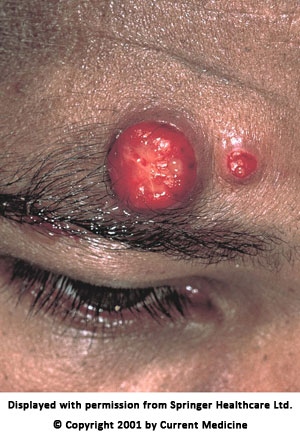 Which of the following is the most likely diagnosis in this patient?
 (Multiple Choice)
4.9/5 (70)
(70) A 66-year-old man comes to the office due to several months of progressive lower back pain. The pain is constant and dull and often bothers him during sleep. Initially, acetaminophen provided temporary relief but has not adequately controlled the pain lately. He has had no leg weakness, sensory loss, or bowel dysfunction. The patient is anuric due to end-stage renal disease from hypertensive nephrosclerosis, and he receives intermittent hemodialysis. He does not use tobacco, alcohol, or illicit drugs. Temperature is 37.1 C (98.8 F), blood pressure is 130/86 mm Hg, and pulse is 88/min. Back examination shows midline tenderness over the lumbar area. Lower extremity deep tendon reflexes are normal, and flexor plantar response is present bilaterally. Spine radiography reveals irregular and hyperdense areas of bony sclerosis in the L1 and L2 vertebrae. There are no other bony lesions, fractures, or dislocations. Laboratory results are as follows: 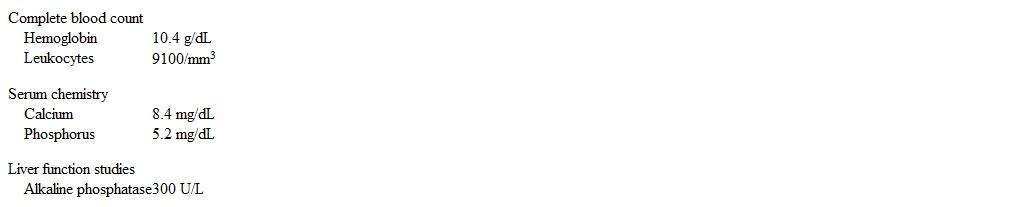 Which of the following is the most likely cause of this patient's lower back pain?
 (Multiple Choice)
4.9/5 (90)
(90) A 25-year-old man comes to the office due to a positive home HIV test. The patient's partner was recently hospitalized with Pneumocystis pneumonia, which prompted the patient to get tested. He has no chronic medical conditions and takes no medications. He smokes a pack of cigarettes daily and uses intravenous heroin. The patient received all recommended childhood vaccinations through age 18. Vital signs are normal. Physical examination reveals no abnormalities. Laboratory results are as follows:  Which of the following immunizations are recommended for this patient?
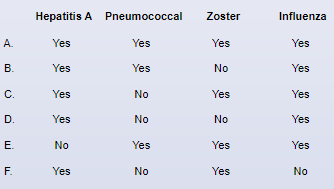
Which of the following immunizations are recommended for this patient?
(Multiple Choice)
4.8/5 (71)
(71) A 35-year-old male from Wisconsin presents to his physician complaining of fever, night sweats, productive cough, and an unintentional 17-lb weight loss over the past 3 months. Several days ago, he also began to notice multiple skin lesions. He has no known medical problems and does not take any medications, nor does he use tobacco, alcohol or illicit drugs. He works outdoors in wood cutting and construction. Physical examination reveals a man of medium build in no apparent distress. His temperature is 38.4°C (101.1°F), blood pressure is 120/68 mm Hg, pulse is 86/min, and respirations are 14/min. Skin examination reveals multiple, well-circumscribed, verrucous, crusted lesions. Chest x-ray shows left upper lobe consolidation and two lytic lesions in the anterior ribs. Which of the following is the most likely cause of his current symptoms?
(Multiple Choice)
4.7/5 (81)
(81) A 45-year-old man comes to the office due to intermittent pain and numbness in the right hand for the last several months. The symptoms occur primarily at night and occasionally wake the patient. Shaking the hand or holding it in a dependent position briefly relieves the pain. He works as a carpenter. The patient has a 20-pack-year smoking history but does not use alcohol or illicit drugs. Vital signs are normal. BMI is 36 kg/m2. Examination shows normal range of motion in the wrists and digits. Sensation is decreased to pinprick in the thumb and index finger. Biceps, triceps, and brachioradialis reflexes are normal. There is no muscle atrophy. Phalen and Tinel tests do not provoke symptoms. The remainder of the examination is normal. Which of the following is the most appropriate next step to confirm the diagnosis in this patient?
(Multiple Choice)
4.9/5 (84)
(84) A 34-year-old man with no previous medical history comes to the clinic due to worsening headaches and dizziness. The headaches tend to occur during periods of stress and are sometimes associated with blurry vision and nausea. The patient does not use tobacco, alcohol, or illicit drugs. Blood pressure is 170/100 mm Hg supine and 150/90 mm Hg standing 2 minutes, and pulse is 90/min and regular. BMI is 24 kg/m2. The remainder of the physical examination is unremarkable. Fasting laboratory results are as follows:  Which of the following investigations should be ordered next?
 (Multiple Choice)
4.7/5 (81)
(81) A 60-year-old man is brought to the emergency department after passing out at home. The patient was watching television while seated in an armchair when he suddenly passed out with no warning. According to his wife, he was unconscious for 1-2 minutes and displayed several muscle jerks while unconscious. The patient has never had a similar episode. Medical history includes hypertension and hyperlipidemia. The patient had a myocardial infarction 6 months ago and spent 5 days in the hospital. There have been no changes to his medications in the last few weeks. He now appears comfortable and has no symptoms. Blood pressure is 130/85 mm Hg and pulse is 80/min with frequent ectopic beats. Physical examination reveals a 2/6 holosystolic apical murmur radiating to the axilla. Which of the following is the most likely cause of this event?
(Multiple Choice)
4.9/5 (70)
(70) A 36-year-old man comes to the physician with skin lesions on his right forearm and the back of his neck. He has painless nodules and large wartlike lesions. He reports a dry cough with mild malaise for 2 months but no fever, chills, night sweats, or weight loss. The patient's past medical history is notable for seasonal allergies, but he has otherwise been healthy. He has never smoked. He works as an agricultural irrigation mechanic and has no history of recent travel outside his hometown in southern Wisconsin. The patient's temperature is 37.3 C (99.2 F), pulse is 87/min, and blood pressure is 124/74 mm Hg. Examination shows 4- to 5-cm warty, heaped-up skin lesions with a violaceous hue and sharply demarcated border. The lesion on the neck appears crusted and has a small peripheral ulcer. Wet preparation of skin scrapings from the lesions shows yeast. What is the most likely diagnosis in this patient?
(Multiple Choice)
4.8/5 (73)
(73) A 29-year-old woman, gravida 3 para 2, comes to the emergency department due to sudden-onset, heavy vaginal bleeding that has soaked through her clothes. The patient has had inconsistent prenatal care and says she is "about 8 months" pregnant. She has had some nonpainful contractions. Four years ago, she had a low transverse cesarean delivery. The patient smokes a pack of cigarettes a day and takes no medications. Temperature is 37 C (98.7 F), blood pressure is 96/70 mm Hg, pulse is 118/min, and respirations are 16/min. Fetal heart monitoring shows a baseline of 150/min, moderate variability, accelerations, and no decelerations. Tocodynamometry shows irregular contractions every 10-15 minutes. Which of the following is the most likely diagnosis in this patient?
(Multiple Choice)
4.8/5 (81)
(81) A 24-year-old woman comes to the emergency department after being sexually assaulted 2 hours ago by a male coworker in their building's parking garage. She is tearful and avoids eye contact but can give a detailed account of the incident. The patient had no head trauma or loss of consciousness. She has no chronic medical conditions and takes no medications. Her last menstrual period was 2 weeks ago. The police are notified and present for the examination. There is bruising across the abdomen, around the neck, and on both wrists. Pelvic examination shows tender abrasions on the labia minora. A speculum examination is deferred, and evidence for the sexual assault kit is collected. A urine pregnancy test is negative, and emergency contraception is given. Which of the following is the best next step in management of this patient?
(Multiple Choice)
4.9/5 (82)
(82) A 35-year-old man is brought to the emergency department due to weakness and lethargy. His friend could not get him out of bed this morning and called emergency medical services (EMS). The patient has a history of injection heroin use, but intramuscular naloxone administered by EMS personnel failed to improve his condition. Temperature is 38.1 C (100.6 F), blood pressure is 110/66 mm Hg, pulse is 104/min, and respirations are 19/min. There is ptosis of both eyes, and the pupils are dilated and sluggish to react. The patient is unable to hold his head up, and respirations are shallow. The lungs are clear on auscultation, and no cardiac murmurs are present. The abdomen is soft and nontender with normal bowel sounds. Two abscesses are present on the left thigh. Arterial blood gases reveal hypoxia and acute respiratory acidosis. The patient is intubated, and mechanical ventilation is begun. Which of the following is the best next step in management of this patient?
(Multiple Choice)
4.9/5 (82)
(82) A 53-year-old man comes to the office with 2 episodes of hemoptysis over the past week. He has a 2-year history of morning cough producing approximately 1 tablespoon of white sputum. During the last week, his morning cough was accompanied by a small amount of blood on 2 occasions. He has no dyspnea, fever, chest pain, or weight loss. The patient has smoked for 30 years but has tried to cut down recently. He works in construction. His only medication is ranitidine for occasional heartburn. Which of the following is the most likely cause of this patient's hemoptysis?
(Multiple Choice)
4.9/5 (83)
(83) A 75-year-old woman comes to the emergency department for shortness of breath. Her family reports she has been having difficulty breathing for the last few nights. About an hour ago, the patient's condition suddenly deteriorated and she developed significant respiratory distress. She has had no fever or cough but has been out of her regular medications for a week. Medical history is significant for hypertension, coronary artery disease, and heart failure. Temperature is 36.7 C (98.1 F), blood pressure is 205/110 mm Hg, pulse is 112/min, and respirations are 32/min. Pulse oximetry is 89% on high-flow oxygen. The patient is awake but in distress and able to speak only in 1-word sentences. Bilateral crackles and an S3 gallop are present. She has 3+ pitting edema in her bilateral lower extremities. Noninvasive positive pressure mechanical ventilation is initiated. The beneficial effects of positive pressure ventilation in this patient are most likely through which of the following physiologic changes?
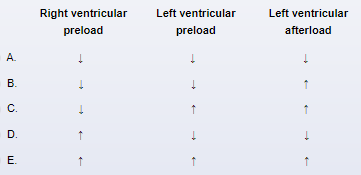
(Multiple Choice)
4.8/5 (82)
(82) A 26-year-old man with a history of Crohn disease is being evaluated for initiation of anti-tumor necrosis factor therapy. The patient has had progressively severe ileocolitis despite taking glucocorticoids for several weeks. Interferon-gamma release assay is performed. During the test, the interferon-gamma level in the patient's blood sample is measured at baseline and after incubating the sample with control antigens and mycobacterial antigens. The results are as follows: HIV testing is negative. Which of the following best explains the results of this patient's interferon-gamma release assay?
(Multiple Choice)
4.8/5 (61)
(61) Showing 1681 - 1700 of 1702
 Prev
- 1
- ...
- 2
- ...
- 3
- ...
- 4
- ...
- 5
- ...
- 6
- ...
- 7
- ...
- 8
- ...
- 9
- ...
- 10
- ...
- 11
- ...
- 12
- ...
- 13
- ...
- 14
- ...
- 15
- ...
- 16
- ...
- 17
- ...
- 18
- ...
- 19
- ...
- 20
- ...
- 21
- ...
- 22
- ...
- 23
- ...
- 24
- ...
- 25
- ...
- 26
- ...
- 27
- ...
- 28
- ...
- 29
- ...
- 30
- ...
- 31
- ...
- 32
- ...
- 33
- ...
- 34
- ...
- 35
- ...
- 36
- ...
- 37
- ...
- 38
- ...
- 39
- ...
- 40
- ...
- 41
- ...
- 42
- ...
- 43
- ...
- 44
- ...
- 45
- ...
- 46
- ...
- 47
- ...
- 48
- ...
- 49
- ...
- 50
- ...
- 51
- ...
- 52
- ...
- 53
- ...
- 54
- ...
- 55
- ...
- 56
- ...
- 57
- ...
- 58
- ...
- 59
- ...
- 60
- ...
- 61
- ...
- 62
- ...
- 63
- ...
- 64
- ...
- 65
- ...
- 66
- ...
- 67
- ...
- 68
- ...
- 69
- ...
- 70
- ...
- 71
- ...
- 72
- ...
- 73
- ...
- 74
- ...
- 75
- ...
- 76
- ...
- 77
- ...
- 78
- ...
- 79
- ...
- 80
- ...
- 81
- ...
- 82
- ...
- 83
- ...
- 84
- ...
- 85
- ...
- 86
- ...
- Next

Filters
- Essay(0)
- Multiple Choice(0)
- Short Answer(0)
- True False(0)
- Matching(0)