


 Chat with AI
Exam 1: Medicine

Exam 1: Medicine2 k Questions
Exam 2: Pediatric723 Questions
Exam 3: Psychiatry336 Questions
Exam 4: Surgery563 Questions
Exam 5: Obstetrics & Gynecology469 Questions
Select questions type


A 45-year-old man comes to the emergency department complaining of dyspnea, fatigue, poor appetite, and weight gain over the past 2 weeks. His symptoms started with worsening shortness of breath with exertion. He has been waking up at night breathless for the past few days. He also finds it difficult to open his eyes in the morning due to facial edema. The patient has no other medical problems and takes no medications. His blood pressure is 200/120 mm Hg and pulse is 100/min. Physical examination shows anasarca with distended jugular veins while sitting upright. Lung auscultation shows bibasilar crackles. Urinalysis shows 1+ protein, no nitrite, trace leukocyte esterase, >50 red blood cells, red blood cell casts, and occasional neutrophils. Which of the following is the most likely mechanism of this patient's edema?
(Multiple Choice)
4.8/5  (84)
(84) A 73-year-old woman is brought to the office by her son due to a change in behavior and increasing forgetfulness. Over the past 2 days the patient has become more irritable, has been unable to sleep, and has uncharacteristically forgotten to pick up the mail or feed her dogs. When interviewed, the patient appears to be distracted as if responding to internal stimuli. During the examination, she shouts at the nurse, "Get out of my house! Where did you thieves take my clothing?" Several minutes later she appears drowsy. The patient has forgotten people's names and had word-finding difficulties over the last year, but the son was not initially concerned because she lived independently, shopped, cooked, and handled her own finances without difficulty. Temperature is 38.3 C (101 F), blood pressure is 140/90 mm Hg, pulse is 118/min, and respirations are 18/min. Laboratory results are as follows: 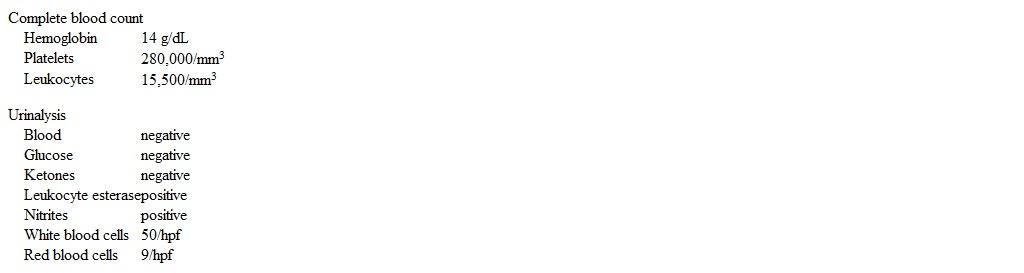 Which of the following is the most likely diagnosis in this patient?
 (Multiple Choice)
4.9/5 (76)
(76) A 65-year-old man comes to the office due to intermittent right knee pain for the last 3 or 4 months. The symptoms are worse at the end of the day, and he has had mild swelling at the knee following strenuous exertion. There is no associated fever, malaise, or rash. The patient takes metformin for type 2 diabetes mellitus. BMI is 36 kg/m2. On examination, the right knee has bony enlargement and a small effusion but no warmth or erythema. Range of motion elicits pain. Analysis of synovial fluid obtained via arthrocentesis shows a leukocyte count of 1,800/mm3 with no crystals. Serum creatinine is 0.8 mg/dL and serum uric acid is 5.6 mg/dL. In addition to a supervised exercise program, which of the following medications is the most appropriate for relief of this patient's symptoms?
(Multiple Choice)
4.9/5 (98)
(98) A 3-year-old boy is brought to the office due to difficulty keeping up with the other children at day care. Over the last 2 months, the day care attendants have noticed that the patient has seemed more tired and less interested in active play. He has also had difficulty climbing stairs and jumping. The patient's parents mention that he is still eating well and gaining weight but has had recurrent upper respiratory infections since starting day care. His last upper respiratory infection began 5 days ago. Temperature is 37 C (98.6 F), blood pressure is 90/50 mm Hg, pulse is 94/min, and respirations are 18/min. Examination shows clear rhinorrhea bilaterally. Cardiopulmonary and abdominal examinations are normal. Neurologic examination demonstrates 1+ patellar and Achilles reflexes bilaterally. The calves are enlarged and nontender. Which of the following is the most likely cause of this patient's presentation?
(Multiple Choice)
4.9/5 (86)
(86) A 45-year-old previously healthy man is brought to the emergency department due to headaches and confusion for 2 days. He has no focal weakness or sensory symptoms. The patient has no significant past medical history and does not take any medications. He does not use tobacco, alcohol, or illicit drugs. Temperature is 37.9 C (100.2 F), blood pressure is 140/86 mm Hg, pulse is 96/min, and respirations are 16/min. Mild icterus is present. His neck is supple and without rigidity. Cardiopulmonary and abdominal examinations are normal. Neurologic examination shows no focal deficits. Laboratory results are as follows: 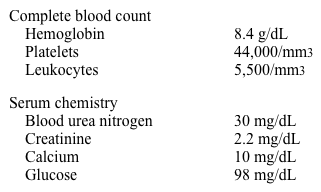 A peripheral blood smear shows many fragmented red blood cells. The prothrombin time is normal. Which of the following is the most appropriate next step in the management of this patient?
 (Multiple Choice)
4.9/5 (92)
(92) A 42-year-old man comes to the office due to fatigue and dark urine. Medical history is insignificant and he takes no medications. He used intravenous drugs in the remote past. The patient is an ex-smoker with 25-pack-year history. His father died of colon cancer at age 52. Temperature is 37 C (98.6 F), blood pressure is 122/70 mm Hg, and pulse is 80/min. BMI is 30 kg/m2. The sclera and skin are icteric. The abdomen is nondistended and nontender. Laboratory results are as follows: 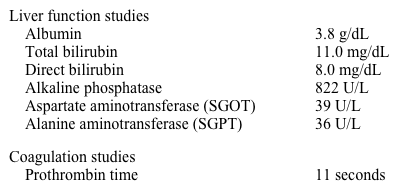 Which of the following is the best next step in management?
 (Multiple Choice)
4.9/5 (84)
(84) A 65-year-old man comes to the office due to a 4-month history of periodic back pain radiating to his buttocks and thighs. The pain is exacerbated by walking or prolonged standing, although he can tolerate bicycling without significant discomfort. Associated symptoms include occasional tingling and numbness in both lower extremities. Medical history is notable for benign prostatic hyperplasia, hypertension, and hypercholesterolemia, for which he takes appropriate medications. The patient does not use tobacco, alcohol, or illicit drugs. His blood pressure is 140/80 mm Hg, pulse is 76/min, and respirations are 14/min. On examination, distal pulses are full and symmetric. Neurologic examination shows normal motor strength, deep tendon reflexes, and plantar reflexes in the lower extremities bilaterally. Which of the following is the most likely cause of this patient's condition?
(Multiple Choice)
5.0/5 (80)
(80) A 22-year-old student comes to the physician complaining of 4 days of fever, double vision, and painful swelling around his eyes. He also has significant muscle pain in his neck and jaw muscles. Two weeks ago, the patient returned from a trip to central Mexico. One week after his return, he developed abdominal pain, nausea, vomiting, and diarrhea. These symptoms resolved spontaneously. He has a history of intravenous drug abuse but recently completed a drug rehabilitation program. His temperature is 38.3 C (101 F), blood pressure is 110/70 mm Hg, pulse is 92/min, and respirations are 14/min. Physical examination shows subungual splinter hemorrhages, periorbital edema, and chemosis. Lungs are clear to auscultation. Cardiac examination shows no murmurs. The abdomen is soft and nontender without organomegaly. Laboratory results are as follows: 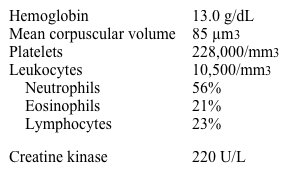 Which of the following is the most likely diagnosis?
 (Multiple Choice)
4.9/5 (88)
(88) A 43-year-old man comes to the clinic due to fever, night sweats, fatigue, and progressive skin lesions. The patient says the skin lesions started as small, reddish/purple papules that gradually enlarged to large nodules. He has a history of HIV and is not compliant with antiretroviral therapy or prophylactic antimicrobials. His last CD4 count 3 months ago was 50/mm3. He has been hospitalized in the past for Pneumocystis pneumonia. The patient is homeless and primarily lives outdoors but sometimes stays in shelters. Temperature is 38 C (100.4 F), blood pressure is 116/70 mm Hg, and pulse is 92/min. The patient is cachectic. White plaques are present on his palate. Hepatosplenomegaly is present. Skin examination shows several purple, pedunculated lesions on the face and extremities that are friable and bleed easily with palpation. CT scan of the abdomen reveals hypodense liver lesions that enhance with intravenous contrast. Which of the following is the most likely cause of this patient's current systemic illness?
(Multiple Choice)
4.9/5 (79)
(79) A 45-year-old man comes to the office due to exertional dyspnea and fatigue. The patient spends most of his time indoors because of his symptoms. He has end-stage renal disease due to glomerulonephritis, and 6 months ago he began hemodialysis via an arteriovenous fistula. The patient has stayed close to his "dry" weight, and his hemoglobin has been maintained in the desired range with iron and erythropoietin supplementation. He is afebrile. Blood pressure is 160/60 mm Hg and pulse is 100/min and regular. Oxygen saturation is 96% on room air. The right arm arteriovenous fistula is distended with very strong pulse augmentation. Carotid upstroke is brisk. The point of maximal impulse is displaced to the left, and a soft systolic murmur is heard over the cardiac apex that does not change with the Valsalva maneuver. Scattered rales are heard at the lung bases. The extremities are warm, and there is trace peripheral edema. Which of the following is the most likely cause of this patient's symptoms?
(Multiple Choice)
4.9/5 (81)
(81) A 28-year-old man comes to the office due to 4 days of urethral discharge and dysuria. The patient had similar symptoms a month ago, and urethral swab Gram stain at that time revealed numerous neutrophils but no organisms. He was treated with a single dose of azithromycin, and his symptoms resolved completely. The patient has no other medical conditions and takes no medications. He drinks alcohol socially and does not use tobacco or illicit drugs. The patient had multiple sexual partners in the past but has been in a monogamous relationship with a female partner for the past 3 months. His partner has no symptoms and takes oral contraceptives. The patient is afebrile. Physical examination shows mucoid discharge from the urethral meatus. Urine dipstick test is positive for leukocyte esterase. Nucleic acid amplification testing is positive for Chlamydia trachomatis. Which of the following is the most likely cause of symptom recurrence in this patient?
(Multiple Choice)
4.9/5 (88)
(88) A 25-year-old man comes to the emergency department due to dry cough, wheezing, and congestion. The patient says his symptoms have been worsening over the past 3 days; he has no fever or chills. Medical history includes well-controlled asthma and no hospitalizations. The patient says normally he uses his reliever inhaler only as needed, usually 3 or 4 times a year, but it has not relieved his symptoms during this episode. Temperature is 37.1 C (98.8 F), blood pressure is 138/78 mm Hg, pulse is 112/min, and respirations are 24/min. Oxygen saturation is 95% on room air. Diffuse wheezing is noted on examination. The patient is appropriately treated and says he feels much better 2 hours later. On reexamination, respirations are 18/min, oxygen saturation is 99% on room air, and the wheezing has decreased. The patient would like to go home. In addition to optimizing his rescue inhaler therapy, which of the following medications is indicated on discharge to promote resolution of this patient's exacerbation?
(Multiple Choice)
5.0/5 (79)
(79) A 19-year-old college student is brought to the emergency department via ambulance after his roommate found him barely rousable in bed this morning. The patient had developed a fever, headache, and nausea the evening before. On examination, he is stuporous and not responding to questions. The patient is diagnosed with meningococcal meningitis. The roommate received the meningococcal booster vaccine several months ago and has no active symptoms or additional sick contacts. Which of the following is the most appropriate treatment recommendation for the patient's roommate?
(Multiple Choice)
4.9/5 (79)
(79) A 7-year-old boy is brought to the emergency department due to fever and right leg pain. The patient's symptoms began 3 days ago, when his parents noticed him limping. He had mild right lower leg pain at that time, but subsequently developed fever, fatigue, and decreased appetite 2 days ago. The patient's pain is currently 7 on a scale of 0-10 in severity, is nonradiating, and is unrelieved by ibuprofen, heat, or rest. He has no history of trauma and is otherwise healthy. Immunizations are up to date. The patient's second cousin has sickle cell disease. Current temperature is 39.4 C (102.9 F), blood pressure is 100/70 mm Hg, pulse is 138/min, and respirations are 22/min. Examination of the right leg shows bony point tenderness, erythema, and warmth over the proximal tibia. Blood is drawn for culture. Which of the following organisms will most likely be isolated from this patient's blood?
(Multiple Choice)
4.9/5 (84)
(84) A 68-year-old man comes to the emergency department due to severe dizziness while playing tennis an hour ago. He says that he had a spinning sensation accompanied by nausea and vomiting; the symptoms have now subsided. The patient has had brief episodes of dizziness in the past, especially when performing vigorous work with his arms. He has also experienced heaviness and fatigue of the left arm with exertion. The patient has a history of hypertension, hyperlipidemia, and type 2 diabetes mellitus. Blood pressure is 140/90 mm Hg on the right arm and 100/74 mm Hg on the left, and pulse is 82/min and regular. A systolic bruit is present at the base of the neck just above the clavicle on the left side. Cardiac auscultation discloses a fourth heart sound. There is no extremity weakness or sensory loss. Which of the following is the most likely cause of this patient's symptoms?
(Multiple Choice)
5.0/5 (66)
(66) A 65-year-old man comes to the emergency department due to sudden-onset painless vision loss in the right eye that began several hours ago. The patient says, "It was like a shade dropping over my eye." He had a similar episode 3 months ago that resolved spontaneously after several minutes. He has never seen flashing lights or floaters in his eyes. The patient's medical history includes hypertension and hyperlipidemia. Temperature is 37.1 C (98.8 F), blood pressure is 150/90 mm Hg, pulse is 72/min and regular, and respirations are 14/min. Visual acuity is 20/20 on the left and 20/200 on the right. Funduscopy findings of the right eye are shown below. 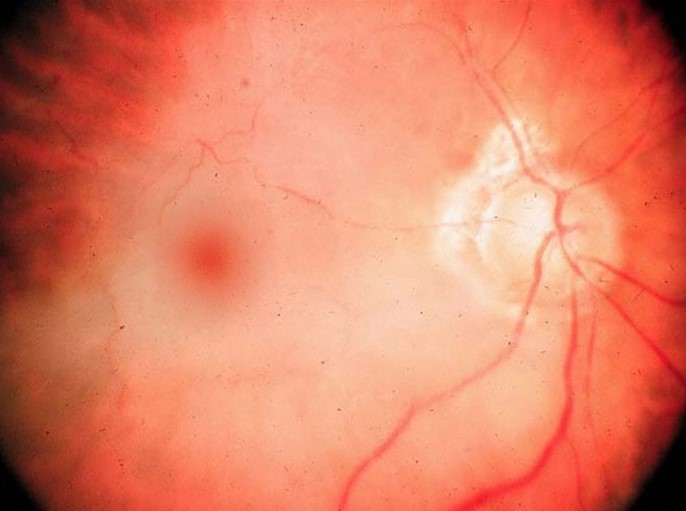 Which of the following is the most likely cause of this patient's symptoms?
 (Multiple Choice)
4.9/5 (78)
(78) A 45-year-old woman comes to the emergency department with 1 day of fever, chills, nausea, and vomiting. She has had progressively worsening right upper quadrant abdominal pain for the past 2 days. The patient has a history of depression as a teenager and attempted suicide. She currently takes no medications and does not use alcohol or illicit drugs. Temperature is 39.5 C (103.1 F), blood pressure is 90/48 mm Hg, pulse is 98/min, and respirations are 30/min. BMI is 36 kg/m2. The patient appears ill and confused. Skin and sclera are icteric. Cardiopulmonary examination is normal. Marked tenderness and guarding are present at the right upper quadrant of the abdomen. She has no flank pain or dullness. Laboratory results are as follows: 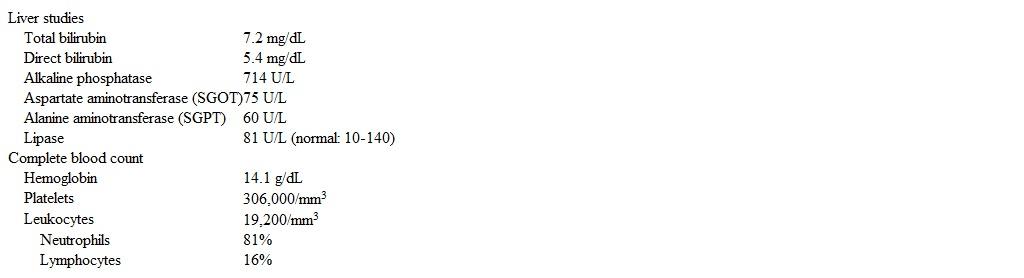 Further workup in this patient would most likely show which of the following?
 (Multiple Choice)
4.8/5 (66)
(66) A 26-year-old, previously healthy man comes to the emergency department due to an eye injury. The patient was hiking earlier today when the person in front of him pushed and let go of a small tree branch, which snapped back and hit him on the face. He had sudden pain in the right eye followed by a persistent foreign-body sensation and increased tearing. On physical examination, the patient appears in moderate distress. Right eye examination reveals no foreign bodies, but there is mild conjunctival erythema, especially around the limbus. The cornea is clear with no blood in the anterior chamber. The pupil is small, round, and reactive to light. Visual acuity is normal. Left eye examination reveals no abnormalities. Which of the following is the best next step in management of this patient?
(Multiple Choice)
5.0/5 (91)
(91) A 47-year-old woman is evaluated for exertional dyspnea. The patient is a smoker with type 2 diabetes mellitus, mild normocytic anemia, and stage 3 chronic renal disease. Her family history is insignificant. Blood pressure is 142/88 mm Hg and pulse is 76/min. BMI is 32 kg/m2. Single photon emission CT images of the heart are obtained at rest and after 5 minutes of treadmill exercise by using separate intravenous injections of technetium-99-labeled perfusion agent, as seen below, with the bottom panel showing images of the heart at rest (REST), and the top panel showing images of the heart after exercising (STRESS). 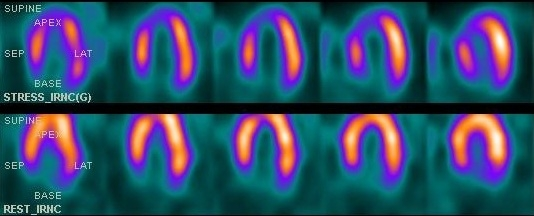 This patient would benefit most from which of the following medications?
 (Multiple Choice)
4.9/5 (92)
(92) An 18-year-old man is on mechanical ventilation after sustaining severe head trauma in a motor vehicle collision. The patient is unresponsive to various stimuli. Blood pressure is 108/60 mm Hg and heart rate is 110/min. After monitoring the patient for 24 hours, the physician decides to do a bedside assessment of brain death. Which of the following can be observed in a patient with brain death?
(Multiple Choice)
4.8/5 (86)
(86) Showing 1241 - 1260 of 1702
 Prev
- 1
- ...
- 2
- ...
- 3
- ...
- 4
- ...
- 5
- ...
- 6
- ...
- 7
- ...
- 8
- ...
- 9
- ...
- 10
- ...
- 11
- ...
- 12
- ...
- 13
- ...
- 14
- ...
- 15
- ...
- 16
- ...
- 17
- ...
- 18
- ...
- 19
- ...
- 20
- ...
- 21
- ...
- 22
- ...
- 23
- ...
- 24
- ...
- 25
- ...
- 26
- ...
- 27
- ...
- 28
- ...
- 29
- ...
- 30
- ...
- 31
- ...
- 32
- ...
- 33
- ...
- 34
- ...
- 35
- ...
- 36
- ...
- 37
- ...
- 38
- ...
- 39
- ...
- 40
- ...
- 41
- ...
- 42
- ...
- 43
- ...
- 44
- ...
- 45
- ...
- 46
- ...
- 47
- ...
- 48
- ...
- 49
- ...
- 50
- ...
- 51
- ...
- 52
- ...
- 53
- ...
- 54
- ...
- 55
- ...
- 56
- ...
- 57
- ...
- 58
- ...
- 59
- ...
- 60
- ...
- 61
- ...
- 62
- ...
- 63
- ...
- 64
- ...
- 65
- ...
- 66
- ...
- 67
- ...
- 68
- ...
- 69
- ...
- 70
- ...
- 71
- ...
- 72
- ...
- 73
- ...
- 74
- ...
- 75
- ...
- 76
- ...
- 77
- ...
- 78
- ...
- 79
- ...
- 80
- ...
- 81
- ...
- 82
- ...
- 83
- ...
- 84
- ...
- 85
- ...
- 86
- ...
- Next

Filters
- Essay(0)
- Multiple Choice(0)
- Short Answer(0)
- True False(0)
- Matching(0)