


 Chat with AI
Exam 1: Medicine

Exam 1: Medicine2 k Questions
Exam 2: Pediatric723 Questions
Exam 3: Psychiatry336 Questions
Exam 4: Surgery563 Questions
Exam 5: Obstetrics & Gynecology469 Questions
Select questions type


A 54-year-old man is evaluated for erectile dysfunction. The patient has been having problems attaining and maintaining erections during sexual activity for the past 6 months. Prior to the development of this problem, he had an active and satisfactory sex life. The patient continues to have normal early-morning penile erections. Medical history is notable for hypertension, mixed hyperlipidemia, gastroesophageal reflux, and lumbar stenosis with a chronic right L4 radiculopathy. His current medications include ibuprofen, ranitidine, lisinopril, and atorvastatin. The patient smokes a pack of cigarettes daily and drinks alcohol only on social occasions. Blood pressure is 144/78 mm Hg and pulse is 80/min. BMI is 35 kg/m2. Physical examination shows normal body hair distribution and testicular size with no gynecomastia. Which of the following is the most likely cause of this patient's erectile dysfunction?
(Multiple Choice)
4.7/5  (84)
(84) A 42-year-old man comes to the clinic due to recurrent palpitations. After initial evaluation, he is diagnosed with paroxysmal atrial fibrillation. Echocardiography shows normal left ventricular function and no valvular disease. He is initiated on medication therapy. Two weeks later, the patient undergoes a treadmill exercise test. During the test, his heart rate increases from 75/min to 165/min and QRS complex duration increases from 0.09 seconds to 0.13 seconds. Which of the following medications is most likely responsible for the observed findings?
(Multiple Choice)
4.9/5 (76)
(76) A 42-year-old man comes to the emergency department due to severe back pain following a fall. He tripped while getting out of his car and landed on his back. The patient has a 20-year history of ankylosing spondylitis, for which he takes prescribed medication regularly, but he has never had pain similar to this. His medical history is also notable for a duodenal ulcer 7 years ago. The patient does not use alcohol, tobacco, or illicit drugs. Vital signs are normal except for a mild, regular tachycardia. He appears to be in pain, with grimacing and diaphoresis. Examination shows midline tenderness over the upper lumbar region. Spinal range of motion is restricted. There is no tenderness over the sacroiliac joints. Cardiac auscultation shows an early diastolic murmur. Which of the following is the most likely cause of his current pain?
(Multiple Choice)
4.8/5 (73)
(73) A 63-year-old man comes to the physician complaining of cough and nocturnal wheezing. The cough is mostly non-productive, but sometimes a small amount of yellow sputum is produced. Past medical history is significant for hospitalization for pneumonia 2 years ago and osteoarthritis of the knees. The patient has a good appetite but has lost 6.8 kg (15 lb) over the last 3 months. He has a 40-pack-year smoking history and drinks 2-3 cans of beer a day on the weekends. His mother has type 2 diabetes mellitus and his father died of a stroke at age 67. His blood pressure is 140/80 mm Hg and pulse is 80/min. Chest hyperinflation and scattered expiratory wheezes are present on auscultation. The patient expires through pursed lips. His fingers demonstrate prominent clubbing that was not present 6 months ago. Which of the following is the most likely explanation for this patient's digital clubbing?
(Multiple Choice)
4.8/5 (76)
(76) A 65-year-old man comes to the clinic due to left thigh pain. The pain has been present for several months with constant, moderate severity. The patient has no recent history of trauma, and there is no associated weight change or loss of appetite. Medical history is significant only for high blood pressure. He does not use tobacco, alcohol, or illicit drugs. Temperature is 37.2 C (98.9 F), blood pressure is 138/88 mm Hg, pulse is 80/min, and respirations are 12/min. On examination, the lower back and hips have no apparent deformity, warmth, or erythema. There is normal, pain-free range of motion at the hip. His gait is mildly antalgic. Lower-extremity reflexes, motor strength, and sensation are normal, and the patient has full pedal pulses. Laboratory results are as follows: 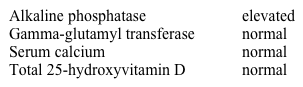 X-ray reveals cortical thickening in the left femur. Bone scintigraphy shows increased radiotracer uptake in several spots, including the left femur. This patient is at highest risk of developing which of the following complications?
 (Multiple Choice)
4.9/5 (60)
(60) A 47-year-old man comes to the emergency department after an episode of coffee ground emesis. He has had upper abdominal discomfort for several months, which he describes as "burning and fullness" that is relieved by food. Over the last week the patient has had black, tarry stools associated with weakness and fatigue. His medical history is unremarkable. He takes no prescription or over-the-counter medications. The patient smokes a pack of cigarettes a day and occasionally drinks alcohol. His blood pressure is 124/82 mm Hg while supine and 110/70 mm Hg while standing. Pulse is 102/min. On examination, the conjunctivae and palmar creases appear pale. Abdominal examination is unremarkable. Which of the following is most likely increased in this patient?
(Multiple Choice)
4.8/5 (67)
(67) A group of investigators is studying the properties of different antihypertensive agents. They perform an individual, patient-level meta-analysis of several randomized clinical trials and pool the reported adverse effects. According to investigators, the use of a specific class of antihypertensive agents is associated with weight gain and worsening glucose tolerance. Which of the following classes is most likely described by the investigators?
(Multiple Choice)
4.9/5 (64)
(64) A 34-year-old woman, gravida 1 para 1, comes to the clinic for evaluation of her contraceptive method. For the past 8 months, the patient has experienced unpredictable bleeding since having a subdermal progestin implant placed and requests its removal. She previously used combined oral contraceptives and would like to return to that method. The patient has primary hypertension that was diagnosed last year and has been well controlled with hydrochlorothiazide. She takes no other medications and has no allergies. Her father and brother have type 2 diabetes mellitus. The patient does not use tobacco, alcohol, or illicit drugs. BMI is 24 kg/m2. Blood pressure is 130/75 mm Hg. Physical examination is normal. Combination oral contraceptives increase the patient's risk of which of the following?
(Multiple Choice)
4.9/5 (84)
(84) A 55-year-old man is evaluated prior to hospital discharge. The patient underwent allogeneic renal transplantation for end-stage renal disease 5 days ago. His postoperative course was uncomplicated, and the transplanted kidney is functioning well. The patient is on maintenance immunosuppression with prednisone and tacrolimus. Temperature is 36.6 C (97.9 F), blood pressure is 130/65 mm Hg, pulse is 80/min, and respirations are 14/min. The surgical wound is healing well with no signs of infection. Which of the following should be added to this patient's medication regimen to prevent opportunistic infections?
(Multiple Choice)
4.7/5 (77)
(77) A 78-year-old woman is brought to the emergency department due to insomnia and frequent episodes of agitation over the past 2 days. The patient was confused yet calm on arrival; but now she is yelling loudly and trying to pull out her intravenous lines, take off her clothes, and run away while being examined. She is a nursing home resident. Her recent medical history includes severe memory loss. The patient's chronic medical issues include hypertension, type 2 diabetes mellitus, peptic ulcer disease, and chronic pyelonephritis. Her temperature is 37.2 C (99 F), blood pressure is 162/96 mm Hg, and pulse is 95/min and regular. Pulse oximetry shows 96% oxygen saturation on room air. ECG shows normal sinus rhythm, left ventricular hypertrophy, a normal QTc interval, and no acute ischemic changes. Laboratory studies are as follows: 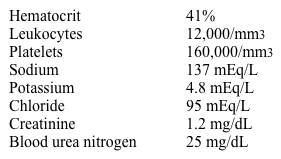 Urinalysis shows trace protein, numerous leukocytes, and occasional erythrocytes. Which of the following is the best initial treatment for this patient?
 (Multiple Choice)
4.9/5 (71)
(71) An 80-year-old man comes to the emergency department due to sudden loss of vision in his left eye that occurred on waking this morning. He has no associated pain. Past medical history is notable for hypertension. Current medications include ramipril and chlorthalidone. He has smoked half a pack of cigarettes a day for the past 60 years. His temperature is 36.8 C (98.4 F), blood pressure is 140/90 mm Hg, pulse is 86/min, and respirations are 14/min. Examination of the right eye shows no abnormalities. Funduscopic examination of the left eye reveals swelling of the optic disk, retinal hemorrhages, dilated and tortuous veins, and cotton wool spots. Which of the following is the most likely diagnosis?
(Multiple Choice)
4.7/5 (82)
(82) A 34-year-old man comes to the office due to severe diarrhea and light-headedness. The diarrhea started approximately 14 days ago and is associated with malaise, nausea, and abdominal cramps. Since then, the patient has had 8-10 watery, nonbloody stools daily and believes he has lost weight. He has a history of HIV infection and has been noncompliant with his medication regimen. The patient's CD4 count was 94/mm3 last month. He recently started working at a horse breeding farm. The patient has not traveled outside of the United States. Temperature is 38.0 C (100.4 F), blood pressure is 108/72 mm Hg, and pulse is 104/min. BMI is 18 kg/m2. Mucous membranes are dry. Bowel sounds are increased. Stool is brown and negative for occult blood. Which of the following is the most likely organism responsible for this patient's condition?
(Multiple Choice)
4.9/5 (81)
(81) A 35-year-old man is found unresponsive in a parking lot with syringes and drug paraphernalia next to him. Emergency medical personnel administer naloxone and intubate the patient for airway protection. On arrival at the emergency department, health care providers begin mechanical ventilation in assist control mode; tidal volume is 500 mL, respiratory rate is 10/min, fraction of inspired oxygen is 40%, and positive end-expiratory pressure is 5 cm H2O. Physical examination reveals an unresponsive patient with sluggish pupils. His blood alcohol level is elevated, and urine drug screen is positive for opioids and benzodiazepines. CT scan of the head shows no acute findings. The patient is admitted to the intensive care unit for further management. An arterial blood gas obtained an hour later reveals the following:  Which of the following is the most appropriate next step in management of this patient?
 (Multiple Choice)
4.7/5 (57)
(57) A 42-year-old man comes to the clinic to discuss pain management. He wants to establish care as a new patient after recently relocating to the area. The patient has chronic back pain due to a motor vehicle collision 5 years ago that led to several back surgeries. The pain usually does not interfere with work or day-to-day activities. Medications include oxycodone, naproxen, and acetaminophen. A review of the state prescription drug monitoring program database shows no irregularities. The patient is asked to sign a controlled substance agreement. After reading through the agreement, the patient becomes upset, saying, "Why do you have to treat me like a drug addict?" Which of the following is the most appropriate response?
(Multiple Choice)
4.9/5 (70)
(70) An 87-year-old woman comes to the emergency department due to severe abdominal pain and vomiting. The pain began suddenly yesterday and waxes and wanes, but it never goes away completely. The patient has also felt nauseated and vomited once today. She has not had hematemesis or melena. The patient has a history of hypertension, atrial fibrillation, insulin-dependent type 2 diabetes mellitus, and colonic diverticulosis. She takes amlodipine, metoprolol, and basal-bolus insulin; anticoagulation therapy was stopped a year ago due to gastrointestinal bleeding. She does not use tobacco, alcohol, or illicit drugs. Temperature is 37.7 C (99.8 F), blood pressure is 102/54 mm Hg, pulse is 104/min and irregularly irregular, and respirations are 20/min. BMI is 29 kg/m2. On physical examination, the patient appears anxious. Mucous membranes are moist. Cardiopulmonary examination reveals clear lungs and normal first and second heart sounds. The abdomen is soft with mild midepigastric tenderness and no guarding or rebound tenderness. Laboratory results are as follows: 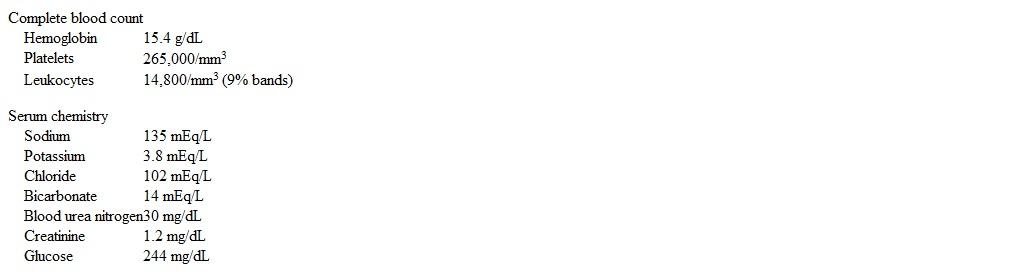 Testing for stool occult blood is positive. Which of the following is most likely to reveal the cause of this patient's abdominal pain?
 (Multiple Choice)
4.9/5 (79)
(79) A 35-year-old woman comes to the emergency department with 3 days of burning substernal chest pain and "excruciating" pain with swallowing. She could not eat or drink anything today due to severe pain. She has not had nausea, vomiting, difficulty initiating swallowing, or a sensation of food getting stuck in her throat. The patient has a history of HIV, asthma, and uterine fibroids. Her current medications include atazanavir-ritonavir, tenofovir, emtricitabine, trimethoprim-sulfamethoxazole, azithromycin, and albuterol. She has a history of medication noncompliance but says that she is currently taking all her medications as prescribed. Her most recent CD4 count was 30/mm3. Her temperature is 37.9 C (100.2 F), blood pressure is 108/59 mm Hg, and pulse is 103/min. The patient is thin and somewhat pale. She has significant dental caries, but oral examination is otherwise normal. Cardiopulmonary examination is unremarkable. The abdomen is soft and nontender. Empiric therapy is initiated, and upper gastrointestinal endoscopy is scheduled. Which of the following is the most likely cause of this patient's symptoms?
(Multiple Choice)
4.8/5 (85)
(85) A 68-year-old man is brought to the emergency department due to confusion that started this morning. He lives with his daughter, who says that the patient has had 3 days of fever and cough productive of yellow sputum. He has a history of coronary artery disease and has smoked a pack of cigarettes daily for 40 years. Temperature is 39.4 C (103 F), blood pressure is 110/70 mm Hg, pulse is 110/min, and respirations are 24/min. Pulse oximetry is 92% on room air. Chest auscultation reveals crackles and reduced breath sounds over the right lower chest. Laboratory results are as follows:  Chest x-ray reveals alveolar infiltrates in the right lower lobe. Which of the following is the most appropriate next step in management of this patient?
 (Multiple Choice)
4.8/5 (73)
(73) A 42-year-old man comes to the office due to skin lesions on his scalp and upper and lower limbs. He initially noticed scaly patches on his elbows, which rapidly progressed in size and number over the past 2 months. The lesions are not painful but are mildly pruritic. The patient has had stiffness and pain of the hand joints bilaterally for the last 2 weeks. He has never had similar lesions and has no medical problems besides genital herpes, which has not recurred for several years. The patient occasionally drinks alcohol but does not use tobacco or illicit drugs. Temperature is 37.1 C (98.7 F), blood pressure is 130/80 mm Hg, and pulse is 80/min. Skin examination shows several large, erythematous plaques covered by thick, adherent, silvery-white scales on the elbows, knees, sacrum, and scalp. When the scales are removed, pinpoint areas of hemorrhage can be observed. Which of the following diagnostic studies is most appropriate in management of this patient?
(Multiple Choice)
4.9/5 (82)
(82) A 27-year-old woman comes to the office due to a rash. Four weeks ago, she had an acute onset of numerous painful, dark lesions on her legs. The patient has never had a similar rash in the past and otherwise feels well. Medical history is unremarkable except for a recent episode of cystitis, which was treated with trimethoprim-sulfamethoxazole. Examination shows multiple tender, indurated lesions on the lower extremities, as shown in the exhibit. 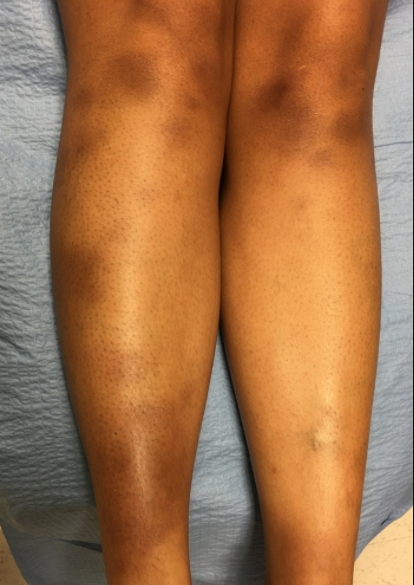 Which of the following is the most likely diagnosis of this patient's skin lesions?
 (Multiple Choice)
4.9/5 (75)
(75) A 60-year-old man comes to the emergency department with a 10-day history of malaise and lower back pain. He has tried high-dose acetaminophen with no relief. His past medical history is significant for benign prostate hyperplasia and recent urinary tract infection treated with ciprofloxacin. He reports resolution of urinary symptoms. His temperature is 38.3 C (101 F), blood pressure is 120/76 mm Hg, pulse is 90/min, and respirations are 16/min. Physical examination shows exquisite tenderness over the L4-L5 vertebrae and local paravertebral muscle spasm. Neurologic examination shows 2+ deep-tendon reflexes and 5/5 muscle strength in all extremities. The straight leg raise test is negative at 60 degrees. The prostate is mildly enlarged and nontender. Laboratory results are as follows:
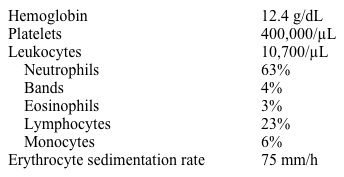 Plain x-rays of the lumbar spine show mild degenerative changes. What is the best next step in management of this patient?
 (Multiple Choice)
4.9/5 (77)
(77) Showing 301 - 320 of 1702
 Prev
- 1
- ...
- 2
- ...
- 3
- ...
- 4
- ...
- 5
- ...
- 6
- ...
- 7
- ...
- 8
- ...
- 9
- ...
- 10
- ...
- 11
- ...
- 12
- ...
- 13
- ...
- 14
- ...
- 15
- ...
- 16
- ...
- 17
- ...
- 18
- ...
- 19
- ...
- 20
- ...
- 21
- ...
- 22
- ...
- 23
- ...
- 24
- ...
- 25
- ...
- 26
- ...
- 27
- ...
- 28
- ...
- 29
- ...
- 30
- ...
- 31
- ...
- 32
- ...
- 33
- ...
- 34
- ...
- 35
- ...
- 36
- ...
- 37
- ...
- 38
- ...
- 39
- ...
- 40
- ...
- 41
- ...
- 42
- ...
- 43
- ...
- 44
- ...
- 45
- ...
- 46
- ...
- 47
- ...
- 48
- ...
- 49
- ...
- 50
- ...
- 51
- ...
- 52
- ...
- 53
- ...
- 54
- ...
- 55
- ...
- 56
- ...
- 57
- ...
- 58
- ...
- 59
- ...
- 60
- ...
- 61
- ...
- 62
- ...
- 63
- ...
- 64
- ...
- 65
- ...
- 66
- ...
- 67
- ...
- 68
- ...
- 69
- ...
- 70
- ...
- 71
- ...
- 72
- ...
- 73
- ...
- 74
- ...
- 75
- ...
- 76
- ...
- 77
- ...
- 78
- ...
- 79
- ...
- 80
- ...
- 81
- ...
- 82
- ...
- 83
- ...
- 84
- ...
- 85
- ...
- 86
- ...
- Next

Filters
- Essay(0)
- Multiple Choice(0)
- Short Answer(0)
- True False(0)
- Matching(0)