


 Chat with AI
Exam 1: Medicine

Exam 1: Medicine2 k Questions
Exam 2: Pediatric723 Questions
Exam 3: Psychiatry336 Questions
Exam 4: Surgery563 Questions
Exam 5: Obstetrics & Gynecology469 Questions
Select questions type


A 53-year-old man comes to the office due to occasional shaking of his right hand for the last 3 months. He frequently notices the shaking while resting in an armchair and watching television. It often stops when he reaches for the remote to change the channel. The shaking becomes more pronounced when the patient is engaged in mental tasks. He drinks coffee and occasionally has a glass of wine at dinner; these have no effect on the tremor. His left hand has no symptoms. The patient has no weakness, numbness, paresthesias, or gait dysfunction. There is no other significant medical history and he takes no medications. Which of the following is most likely responsible for this patient's condition?
(Multiple Choice)
4.9/5  (74)
(74) A 54-year-old woman comes to the emergency department due to double vision and a droopy eyelid. The patient began seeing 2 side-by-side images while watching television last night. She attributed the symptoms to tiredness and went to bed. The vision disturbance was persistent on waking up today, and the patient also found her right eyelid was drooping. The diplopia is worse when looking toward the left and is not associated with headache, nausea, dizziness, or focal weakness or numbness. Physical examination shows ptosis of the right eye. Adduction and upward gaze are impaired on the right side. Pupils are 2 mm on the left and 5 mm on the right, and both are reactive to light. Examination of other cranial nerves is unremarkable. Upper and lower extremity strength, deep tendon reflexes, and sensation are normal. Noncontrast CT scan of the head is normal. Which of the following is the best next step in evaluation of this patient?
(Multiple Choice)
4.8/5 (88)
(88) A 74-year-old man comes to the hospital due to weight loss, fatigue, and blood in the stools. Review of systems is positive for a change in bowel habits. Further evaluation reveals localized colon carcinoma. The patient is told the diagnosis and is educated about his prognosis and treatment options, including surgery; he listens carefully and asks no questions. He is a high school graduate and worked in an automotive factory until retirement; he and his wife have been active in his retirement community. The patient appears to comprehend the information without difficulty. He says, "I've lived long enough, and I do not want surgery or treatment of any kind." The patient is accompanied by his wife, who agrees with the physician's recommendation for surgery. Which of the following is the most appropriate next step in addressing this situation?
(Multiple Choice)
4.7/5 (80)
(80) A 40-year-old man comes to the office for evaluation of dysphagia. For the past 3 years, the patient has had difficulty swallowing solid foods and liquids, with symptoms worsening recently. He reports that it is easier to swallow standing upright. He has occasional regurgitation of undigested food and has lost 5 kg (11 lbs) over the past 6 months. The patient has no chest pain or muscle weakness. His only other medical problem is generalized anxiety disorder for which he takes sertraline. He does not use tobacco, alcohol, or recreational drugs. Vital signs are normal. His neck is supple without masses. Cardiopulmonary examination shows no abnormalities. Muscle strength is 5/5 in all 4 extremities, and deep tendon reflexes are 2+ symmetrically. Barium esophagogram is shown in the exhibit. 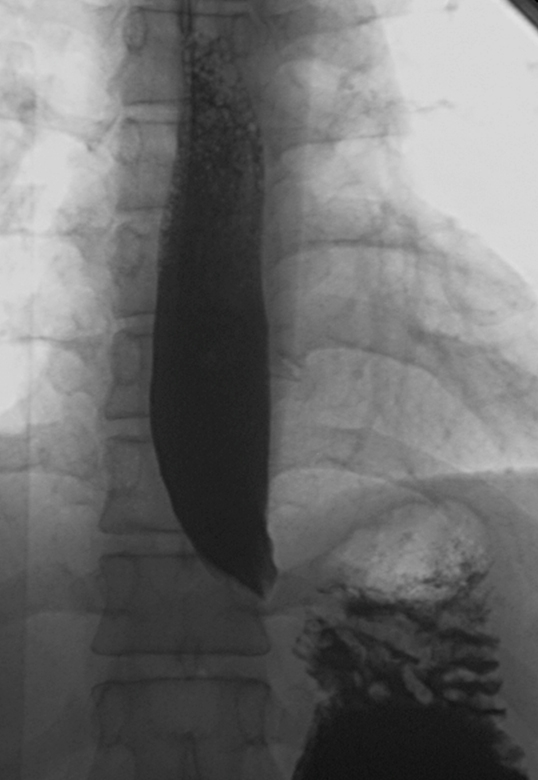 Which of the following is the patient's most likely diagnosis?
 (Multiple Choice)
4.9/5 (84)
(84) A 34-year-old woman comes to the office due to diarrhea, weight loss, and fatigue over the past year. The diarrhea occurs 2 or 3 times daily and is accompanied by crampy abdominal pain. She has diarrhea occasionally at night but no tenesmus or blood in the stool. The patient describes her stools as very foul smelling and floating. Associated symptoms include diffuse bone pain. Physical examination is unremarkable. Laboratory results show hemoglobin of 9.8 g/dL with a mean corpuscular volume of 72 µm3. Which of the following serum laboratory findings would be expected in this patient?
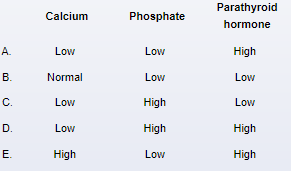
(Multiple Choice)
4.9/5 (77)
(77) A 55-year-old man is brought to the emergency department due to sudden onset of palpitations and chest tightness. His other medical problems include hypertension, gout, and type 2 diabetes mellitus. Cardiac monitoring shows atrial fibrillation at a rate of 120-140/min. His initial blood pressure is 112/70 mm Hg and oxygen saturation is 92% on room air. As the nurse is attempting to establish intravenous access, the patient becomes unresponsive. There is no palpable pulse over the carotids or femoral arteries, and he has agonal breathing. The cardiac monitor still shows atrial fibrillation at the same rate. Which of the following is the best next step in management of this patient?
(Multiple Choice)
4.8/5 (90)
(90) An 18-year-old woman comes to the office for a physical prior to beginning a community college program. She recently moved into a fourth-floor apartment and reports some mild dyspnea with climbing stairs. The patient has no chest pain, lightheadedness, or syncope. She has a history of heavy menstrual bleeding for which she takes oral contraceptive pills. She does not use tobacco and consumes a few drinks at parties. The patient reports that one of her younger sisters was born with "a hole" in the heart that closed spontaneously in infancy. Temperature is 36.7 C (98 F), blood pressure is 100/60 mm Hg, pulse is 92/min, and respirations are 14/min. Pulse oximetry shows 98% on room air. Weight is 75 kg (165.3 lb) and height is 160 cm (5 ft 3 in) tall. BMI is 29 kg/m2. Her conjunctivae are pink and mucous membranes are moist. There is no jugular venous distension. Lungs are clear on auscultation. During expiration, there is an extra high-pitched sound heard after the S1. There is a grade 3/6 systolic crescendo-decrescendo murmur that is loudest at the left upper sternal border. The S2 is split throughout the respiratory cycle and splitting increases with inspiration. The murmur does not increase with standing. Her dorsalis pedis pulses are 2+ bilaterally. Which of the following is the most likely mechanism of this patient's murmur?
(Multiple Choice)
4.9/5 (78)
(78) A 43-year-old man presents to your office complaining of periodic involuntary head turning and head fixation to the right side. Physical examination reveals a hypertrophied left sternocleidomastoid muscle. What is the most likely diagnosis?
(Multiple Choice)
4.9/5 (77)
(77) A 26-year-old woman comes to the physician for evaluation of a lesion on her left foot. She initially noticed a small bump 6-7 months ago that has gradually become firm and slightly pigmented. She has no pain or itching around the site and has no other medical conditions. The patient has no history of tobacco or alcohol use. She works as an accountant. Her temperature is 36.1 C (97 F), blood pressure is 128/76 mm Hg, and pulse is 78/min. Skin examination (shown below) reveals a 0.8 cm hyperpigmented nodule with dark edges. There is a central dimple that develops when the lesion is pinched at the edges. The remainder of her physical examination is within normal limits. 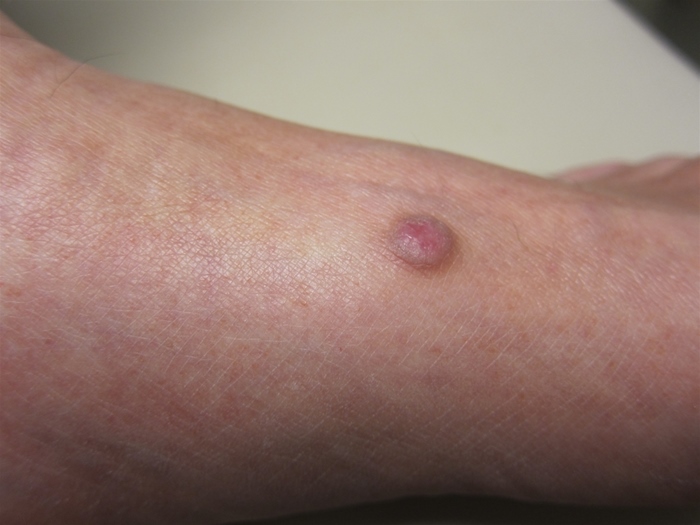 Which of the following is the most likely diagnosis?
 (Multiple Choice)
4.9/5 (75)
(75) A 63-year-old woman comes to the office due to back pain. The patient works as a postal carrier, and the pain started 2 days ago while she was lifting a heavy package on the job. She has had no lower extremity weakness or sensory symptoms. The patient was treated for a urinary tract infection a month ago. She smokes a pack of cigarettes daily. The patient reports "I am tired of the heavy lifting I've been doing for 30 years." Temperature is 36.7 C (98.1 F), blood pressure is 120/76 mm Hg, and pulse is 80/min. Physical examination shows paravertebral tenderness localized to the L3 level on the right side. There is no tenderness over the spine. Lower extremity strength is 5/5, and deep tendon reflexes are 2+ and symmetric. Babinski sign and straight-leg raising test are negative. Which of the following is the most likely diagnosis in this patient?
(Multiple Choice)
4.8/5 (93)
(93) A 34-year-old man is being evaluated for a 3-month history of chest pain. He describes frequent episodes of substernal squeezing-type chest discomfort that radiates to his neck. The episodes are not related to any particular activity, often occur at rest, and last up to 2 hours. He has no shortness of breath, wheezing, palpitations, syncope, or leg swelling. The patient does not use tobacco, alcohol, or illicit drugs. Family history is unremarkable. His blood pressure is 123/72 mm Hg, and pulse is 76/min. BMI is 32 kg/m2. ECG is normal. Exercise stress test shows no abnormalities. Which of the following is the most likely cause of this patient's chest pain?
(Multiple Choice)
4.7/5 (88)
(88) A 70-year-old man is brought to the emergency department after his daughter found him lethargic and confused in his home. He has had a "cold" for the past 2 days. The patient lives alone and ambulates with a walker after a stroke 5 years ago. His daughter lives nearby and helps him with his daily activities of living. On arrival, temperature is 38 C (100.4 F), blood pressure is 90/65 mm Hg, pulse is 112/min, and respirations are 24/min. Mucous membranes are dry. The airway is maintained, and oxygen is administered. Intravenous access is secured, and blood and urine samples are drawn. Laboratory results are as follows: 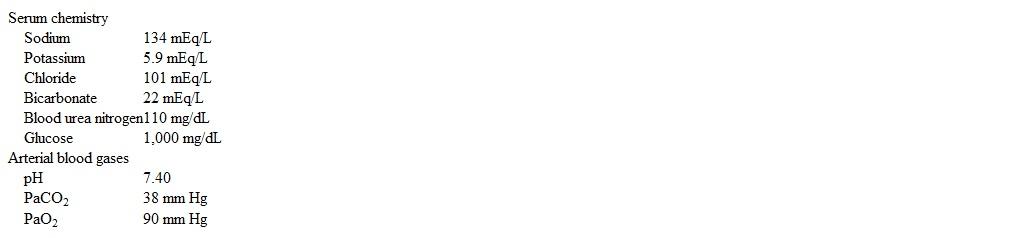 Which of the following is the best immediate treatment for this patient?
 (Multiple Choice)
4.9/5 (74)
(74) A 46-year-old man comes to the office for a routine health maintenance visit. He has no medical conditions. The patient smokes a pack of cigarettes daily and does not drink alcohol. His mother has hypertension, and his father died of prostate cancer at age 70. Blood pressure is 128/76 mm Hg and pulse is 80/min. BMI is 29 kg/m2. Laboratory results are as follows:  The patient's calculated 10-year risk of atherosclerotic cardiovascular disease is 10.5%. Smoking cessation counseling and recommendations for diet, weight loss, and exercise are provided. Which of the following is the most appropriate next step in the management of this patient's cardiovascular risk?
 (Multiple Choice)
4.8/5 (93)
(93) A 34-year-old man comes to the office due to lack of sexual desire and erectile dysfunction for 3 months. Medical history is significant for opioid use disorder, for which he has been taking methadone for 2 years. The patient has gained 4.5 kg (10 lb) over the past 6 months. Vital signs are normal. BMI is 24.5 kg/m2. On examination, the testes are small and soft. There is no gynecomastia. Visual field and thyroid examination findings are normal. Laboratory results are as follows:  Which of the following is the most likely cause of this patient's symptoms?
 (Multiple Choice)
4.8/5 (67)
(67) A 2-year-old boy is brought to the emergency department due to difficulty breathing that started 6 hours earlier. The patient has had rhinorrhea, nasal congestion, and a dry cough that sounds "like a barking dog" for the past day. Temperature is 37.7 C (99.9 F), blood pressure is 92/64 mm Hg, pulse is 122/min, and respirations are 30/min. Pulse oximetry is 99% on room air. The patient has inspiratory stridor when crying. He is diagnosed with croup, administered oral dexamethasone, and observed in the emergency department. On reassessment 30 minutes later, oxygen saturation is 96% on room air and respirations are 40/min. The patient has inspiratory stridor at rest and subcostal and intercostal retractions. Which of the following is the best next step in management of this patient?
(Multiple Choice)
4.8/5 (92)
(92) A 27-year-old man is brought to the emergency department by his roommate due to headache and lethargy. The patient is unable to provide any history, but his roommate says the patient returned to the apartment an hour ago after having a few drinks at a bar where he was also involved in an altercation. Since then, he has had worsening headache, vomited twice, and became progressively lethargic. The patient drinks 2-3 beers daily and does not use tobacco, but occasionally smokes marijuana. Blood pressure is 146/88 mm Hg and pulse is 92/min. On physical examination, he is somnolent and his breath smells of alcohol. A noncontrast CT scan of the head is shown in the exhibit. 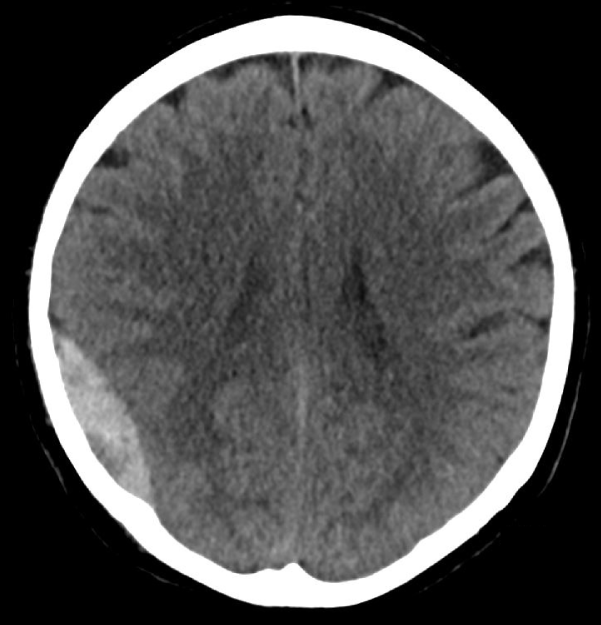 Which of the following is the best next step in management of this patient?
 (Multiple Choice)
4.7/5 (75)
(75) A 42-year-old woman comes for follow-up after a recent urinary tract infection treated with a short course of antibiotics. During her emergency department visit, the patient was told that her blood pressure was "mildly elevated." She currently has no symptoms. Medical history is otherwise insignificant, and the patient does not regularly see a physician. Family history is unremarkable. The patient jogs twice a week and eats a healthy diet. She takes no medications. Blood pressure is 142/91 mm Hg. BMI is 28 kg/m2. Physical examination is unremarkable. ECG and laboratory tests, including a basic metabolic panel, are unremarkable. Which of the following is the best next step in managing this patient?
(Multiple Choice)
4.9/5 (65)
(65) A 65-year-old man comes to the emergency department (ED) due to recurrent hematemesis. Over the past few months, he has had melena, exertional dyspnea, dizziness, and fatigue. The patient takes ibuprofen for knee osteoarthritis. He has no other medical conditions. Hemoglobin level on arrival to the ED is 6 g/dL. The patient is given 2 L of intravenous normal saline and 2 units of packed red blood cells. During transfusion of the second unit of blood, he develops significant dyspnea. He denies chest pain. Temperature is 36.9 C (98.4 F), blood pressure is 90/70 mm Hg, pulse is 120/min, and respirations are 30/min. Oxygen saturation is 80% on room air. The patient is in marked respiratory distress and uses accessory muscles for breathing. Cardiopulmonary examination shows bilateral crackles, no stridor, normal heart sounds, and no S3 or murmur. The abdomen is mildly tender in the epigastrium. The extremities are cool to touch, with no edema, and there is no rash. A chest radiograph reveals bilateral pulmonary infiltrates, a normal-sized heart, and no pleural effusion. Plasma brain natriuretic peptide concentration is within the reference range. Which of the following is the most likely diagnosis?
(Multiple Choice)
4.8/5 (81)
(81) A 16-year-old girl is brought to the office for evaluation of hyperglycemia. A week ago, the patient was seen at an urgent care clinic due to vaginal discharge and dysuria. She was diagnosed with candidal vulvovaginitis, and her urine dipstick was positive for glucose and negative for ketones. Finger-stick blood glucose was 200 mg/dL and a subsequent hemoglobin A1c level was 7.6%. The patient has been excessively thirsty over the past several weeks but has had no abdominal pain, nausea, or vomiting. She has no previous medical conditions and takes no medications. Family history is significant for diabetes mellitus and hypertension in both parents. Vital signs are within normal limits and BMI is at the 95th percentile for her age. Which of the following findings is most likely to be observed in this patient?
(Multiple Choice)
4.7/5 (69)
(69) A 45-year-old woman comes to the office for evaluation of "muscle tightness." The patient reports having stiffness and muscle pain in her neck and shoulders for the past few months. She was previously a stay-at-home mom but started a new job as a receptionist 6 months ago and spends most of her time seated at a desk. The patient notes feeling increasingly stressed and fatigued since she started working and cannot get through the day without feeling overwhelmed. The patient finds herself thinking about "anything but work," including whether her son will get into college and if her husband will get a raise. She often texts her kids to check-in with them throughout the day and calls at 4 PM to make sure they arrived home safely. When she gets home in the evenings, she prefers to spend time alone because she tends to get easily irritated by her family. Medical history is noncontributory. The patient takes no medications. Vital signs are within normal limits. Physical examination shows no abnormalities. Which of the following is the most likely diagnosis in this patient?
(Multiple Choice)
4.9/5 (70)
(70) Showing 481 - 500 of 1702
 Prev
- 1
- ...
- 2
- ...
- 3
- ...
- 4
- ...
- 5
- ...
- 6
- ...
- 7
- ...
- 8
- ...
- 9
- ...
- 10
- ...
- 11
- ...
- 12
- ...
- 13
- ...
- 14
- ...
- 15
- ...
- 16
- ...
- 17
- ...
- 18
- ...
- 19
- ...
- 20
- ...
- 21
- ...
- 22
- ...
- 23
- ...
- 24
- ...
- 25
- ...
- 26
- ...
- 27
- ...
- 28
- ...
- 29
- ...
- 30
- ...
- 31
- ...
- 32
- ...
- 33
- ...
- 34
- ...
- 35
- ...
- 36
- ...
- 37
- ...
- 38
- ...
- 39
- ...
- 40
- ...
- 41
- ...
- 42
- ...
- 43
- ...
- 44
- ...
- 45
- ...
- 46
- ...
- 47
- ...
- 48
- ...
- 49
- ...
- 50
- ...
- 51
- ...
- 52
- ...
- 53
- ...
- 54
- ...
- 55
- ...
- 56
- ...
- 57
- ...
- 58
- ...
- 59
- ...
- 60
- ...
- 61
- ...
- 62
- ...
- 63
- ...
- 64
- ...
- 65
- ...
- 66
- ...
- 67
- ...
- 68
- ...
- 69
- ...
- 70
- ...
- 71
- ...
- 72
- ...
- 73
- ...
- 74
- ...
- 75
- ...
- 76
- ...
- 77
- ...
- 78
- ...
- 79
- ...
- 80
- ...
- 81
- ...
- 82
- ...
- 83
- ...
- 84
- ...
- 85
- ...
- 86
- ...
- Next

Filters
- Essay(0)
- Multiple Choice(0)
- Short Answer(0)
- True False(0)
- Matching(0)