


 Chat with AI
Exam 1: Medicine

Exam 1: Medicine2 k Questions
Exam 2: Pediatric723 Questions
Exam 3: Psychiatry336 Questions
Exam 4: Surgery563 Questions
Exam 5: Obstetrics & Gynecology469 Questions
Select questions type


A 36-year-old man comes to the office with a 6-month history of fatigue, mild headache, and decreased libido. His past medical history is notable for type 2 diabetes and bipolar disorder. His medications include metformin and risperidone. The patient smokes a pack of cigarettes a day and drinks 2 or 3 cans of beer daily. Blood pressure is 126/73 mm Hg and pulse is 86/min. His BMI is 31 kg/m2. Physical examination shows decreased testicular volume but is otherwise normal. Laboratory results are as follows: 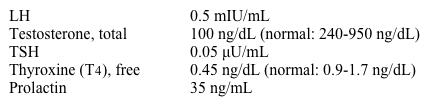 Which of the following is the most likely diagnosis?
 (Multiple Choice)
4.9/5  (81)
(81) A 75-year-old man is brought to the emergency department from home after being found unresponsive by his son. His medical history is significant for coronary artery disease with coronary stenting 2 years ago, diabetes mellitus, hypertension, and stroke. He was hospitalized 2 months ago with pneumonia and upper gastrointestinal bleeding, during which time he received intravenous antibiotics and a transfusion of 4 units of packed red blood cells. In the emergency department today, temperature is 39.1 C (102.4 F), blood pressure is 70/40 mm Hg, pulse is 120/min, respiratory rate is 32/min, and oxygen saturation is 79% on room air. Laboratory results are notable for leukocytosis but are otherwise unremarkable. Chest x-ray reveals a new right upper lobe infiltrate. He is treated with normal saline, antibiotics, vasopressors, and mechanical ventilation. The next day, laboratory analyses reveal the following: 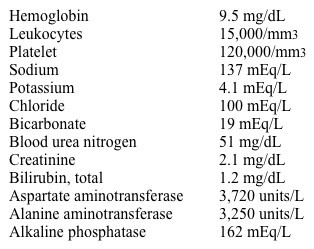 Which of the following most likely accounts for the abnormal liver function panel?
 (Multiple Choice)
4.8/5 (69)
(69) A 64-year-old man with a long history of uncontrolled hypertension is brought to the emergency department due to chest pain for the last 8 hours. ECG reveals normal sinus rhythm with ST-segment elevation in the anterior leads. Percutaneous coronary intervention, performed via right femoral artery access, demonstrates complete occlusion of the proximal left anterior descending artery. Stenting is performed, and appropriate medical therapy is initiated. Six days later, the patient develops sudden onset of severe left leg pain. On examination, the left lower leg is cold and mottled in appearance, without swelling. The femoral pulses are palpable and symmetric; the pedal pulses are present on the right and absent on the left. Vascular surgery is consulted. Which of the following should also be considered in this patient?
(Multiple Choice)
4.9/5 (82)
(82) A 43-year-old man with a 2-year history of type 2 diabetes mellitus comes to the office for a routine preventive examination. He feels well and has no symptoms. Medications include metformin and aspirin. The patient works as a computer programmer and has a sedentary lifestyle. He drinks 1 or 2 cans of beer on weekends and has a 20-pack-year smoking history. The patient is 183 cm (6 ft) tall and weighs 109 kg (240 lb); BMI is 32.5 kg/m2. Blood pressure is 153/94 mm Hg and pulse is 82/min. The remainder of the physical examination is unremarkable. Hemoglobin A1c is 7.6%. At a previous visit 3 months ago, blood pressure was 149/92 mm Hg. Which of the following interventions would most likely cause the largest decrease in this patient's blood pressure?
(Multiple Choice)
4.9/5 (74)
(74) A 17-year-old boy comes to the emergency department due to palpitations. He has had prior episodes of "chest fluttering" that were short-lived, but this episode is sustained. He is preparing for school examinations and has a high level of stress. The patient appears diaphoretic and uncomfortable on examination. Blood pressure is 110/75 mm Hg and pulse is 210/min. His pulse oxymetry shows 99% on room air. An ECG is immediately obtained and shows a narrow complex tachycardia. An intravenous bolus of medication is administered and results in abrupt cessation of the tachycardia. A follow-up ECG is shown in the exhibit. 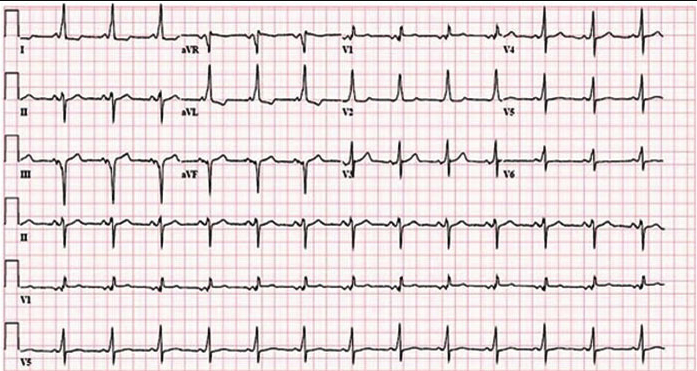 Which of the following is the most likely underlying cause of this patient's current condition?
 (Multiple Choice)
4.9/5 (91)
(91) A 73-year-old man with dementia is brought to the emergency department by nursing home staff because he has been moaning continuously and gripping his lower abdomen for the past 36 hours. The patient is unable to give any history, but staff members say that he refused oral intake the previous day. He has had no vomiting or diarrhea. His last bowel movement was 2 days ago. The patient uses adult diapers, which were last changed 2 days ago. He has a history of benign prostatic hyperplasia, external hemorrhoids, hypertension, and hyperlipidemia. One year ago, he was hospitalized for diverticular bleeding that resolved spontaneously. His medications review shows that his primary care physician started amitriptyline 8 days ago for chronic neck pain. On physical examination, the patient is afebrile. His blood pressure is 160/70 mm Hg and his pulse is 100/min. The mucous membranes are moist. His lung fields are clear to auscultation. Palpation of the abdomen shows fullness and tenderness along the midline below the umbilicus without guarding or rigidity. Bowel sounds are heard in all 4 quadrants. Which of the following is the best initial management for this patient?
(Multiple Choice)
4.8/5 (70)
(70) A 34-year-old woman comes to the hospital after a day of sudden onset fever, chest tightness, dyspnea, and dry cough. The patient has been hospitalized twice in the past 3 months with similar symptoms. Both times she received antibiotic treatment for pneumonia and the symptoms resolved within 1-2 days. She does not use tobacco, alcohol, or illicit drugs. She has no known drug allergies. Temperature is 37.9 C (100 F), blood pressure is 128/80 mm Hg, pulse is 92/min, and respirations are 20/min. Pulse oximetry is 90% on room air. BMI is 29 kg/m2. The patient is in mild respiratory distress. Examination shows normal jugular venous pressure, no lymphadenopathy, and normal heart sounds. Diffuse fine crackles are heard throughout both lung fields. Leukocytes are 11,200/mm3. CT scan of the chest reveals a bilateral micronodular interstitial pattern. Blood cultures are negative. Which of the following is the most likely diagnosis?
(Multiple Choice)
5.0/5 (85)
(85) A 28-year-old man returns to the emergency department due to abdominal cramps and diarrhea. The patient has a 3-year history of ulcerative colitis and initially presented 2 weeks ago with abdominal pain and bloody stools. He was hospitalized and underwent colonoscopy, which revealed active colitis in the rectum, sigmoid, and descending colon. His symptoms gradually improved with medical treatment, and he was discharged on prednisone and 5-aminosalicylic acid therapy. The patient's symptoms had resolved completely, but he has now had 2 days of mild abdominal cramps and voluminous watery diarrhea despite taking medications as prescribed. He has no other medical problems. Temperature is 37.9 C (100.2 F), blood pressure is 124/76 mm Hg, pulse is 78/min, and respirations are 12/min. No orthostatic changes are present. There is mild generalized abdominal tenderness without rebound tenderness or guarding. Bowel sounds are normoactive. Laboratory results are as follows: 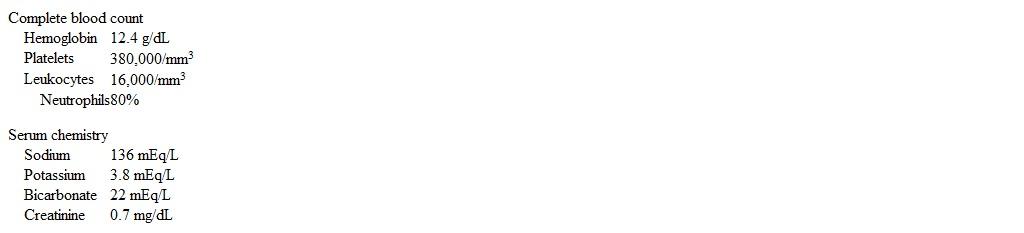 Which of the following is the best next step in management of this patient?
 (Multiple Choice)
4.8/5 (72)
(72) A 32-year-old man comes to the office for follow-up of elevated blood pressure. A week ago, he was seen in the emergency department for nasal bleeding and found to be hypertensive. The patient has no significant medical history. Both parents are alive; his father was diagnosed with coronary artery disease at age 55, and his mother has hypertension and diabetes. Blood pressure is 150/95 mm Hg, and repeat blood pressure measurements demonstrate similar readings. Pulse is 96/min and regular. BMI is 27 kg/m2. On examination, no heart murmurs are present. There is no thyromegaly or lymph node enlargement. A fine hand tremor is present. No skin rashes are noted. Laboratory results show a serum TSH of 1.2 µU/mL, normal serum electrolytes, and creatinine of 0.7 mg/dL. Which of the following is the best next step in evaluating this patient?
(Multiple Choice)
4.9/5 (76)
(76) A 28-year-old woman comes to the clinician with pain and numbness of both hands over the last 6 months. Cold temperatures seem to precipitate these episodes. Medical history includes exercise-induced asthma, lower back pain, and hypothyroidism. The patient takes levothyroxine daily. She does not use alcohol or illicit drugs but has a 10-pack-year smoking history. Laboratory studies show normal complete blood count and chemistry panel. TSH is 4.7 µU/mL. Antinuclear antibody screen is negative. Physical examination findings are shown in the image below. 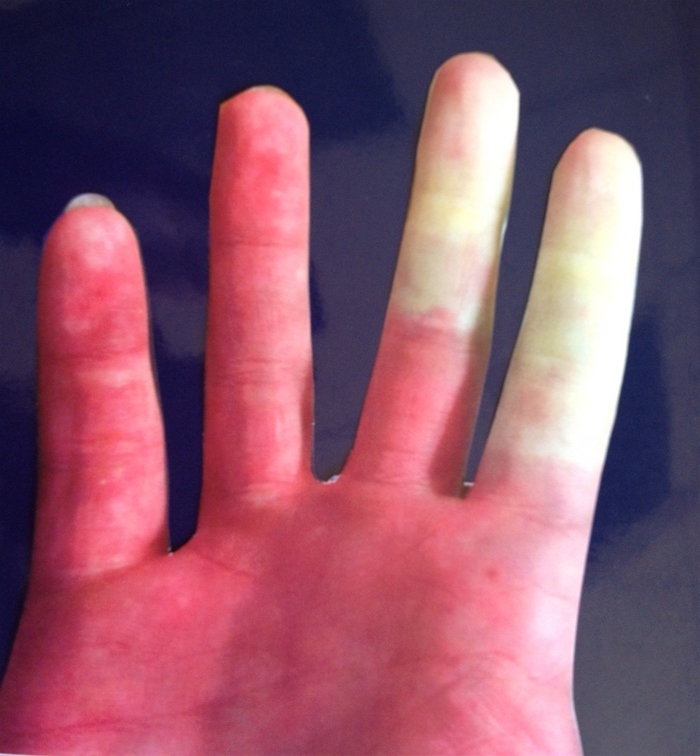 In addition to smoking cessation, which of the following is the best initial therapy for this patient?
 (Multiple Choice)
5.0/5 (78)
(78) A 62-year-old woman comes to the office due to a weeklong history of brief episodes of sharp chest pain that worsen with deep inspiration. She has had no cough or dyspnea but has had fatigue and stiffness and pain in the hands and knees. Medical history is significant for obesity, hypertension, and nonischemic cardiomyopathy with a left ventricular ejection fraction of 40%. She has a history of intolerance to angiotensin system inhibitor therapy. Medications include carvedilol, furosemide, hydralazine, and isosorbide mononitrate. Her medications were adjusted 6 months ago. She does not use tobacco, alcohol, or illicit drugs. Temperature is 37.8 C (100 F), blood pressure is 134/78 mm Hg, and pulse is 74/min and regular. Physical examination shows nondistended jugular veins and no heart murmurs. Lung auscultation reveals no crackles, but an inspiratory rub is present. There is moderate swelling and tenderness of the hand and knee joints bilaterally. No rash is present. Which of the following is the most likely cause of this patient's current symptoms?
(Multiple Choice)
4.8/5 (69)
(69) A 26-year-old man comes to the clinic due to a 2-week history of persistent abdominal pain in the right upper quadrant, low-grade fever, and anorexia. The patient recently immigrated to the United States from Mexico, where he worked as a mechanic. Several months ago, he had bloody diarrhea for several days, which resolved spontaneously. He takes no medications or herbal preparations. The patient has had no other travel, exposure to animals, or sick contacts. Temperature is 38.7 C (101.7 F), blood pressure is 122/80 mm Hg, pulse is 82/min, and respirations are 14/min. Physical examination shows tenderness to palpation in the right upper quadrant but is otherwise unremarkable. Laboratory results are as follows: 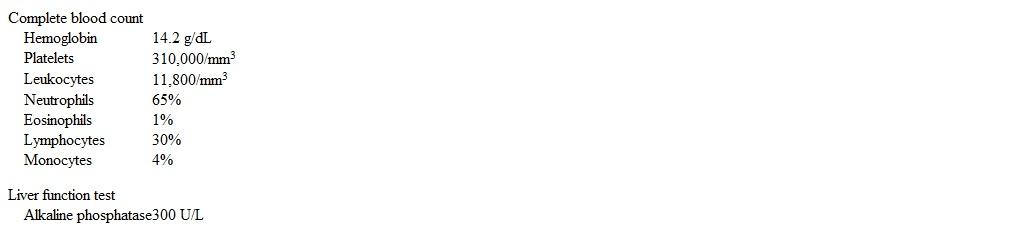 Blood cultures are sterile through 48 hours. CT scan of the abdomen reveals a 2x3 cm abscess in the right lobe of the liver. In addition to confirmatory testing, which of the following is the most appropriate next step in management?
 (Multiple Choice)
4.8/5 (67)
(67) A 22-year-old man comes to the emergency department after an episode of gross hematuria and right flank pain that resolved spontaneously. The episode occurred while he was hiking in the mountains in summer heat. The patient has no dysuria, urgency, frequency, or fever. He smokes cigarettes occasionally but does not use illicit drugs or alcohol. Temperature is 36.7 C (98 F), blood pressure is 120/70 mm Hg, pulse is 70/min, and respirations are 14/min. Physical examination shows no abnormalities. Laboratory results are as follows: 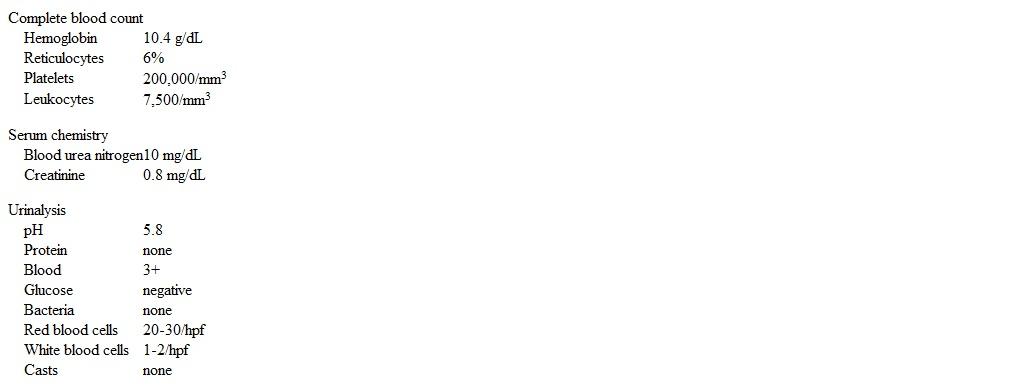 Urine microscopic examination reveals numerous intact red blood cells but no other abnormal findings. Renal ultrasound demonstrates increased echogenicity of the renal medulla, but there is no hydronephrosis. Which of the following is the most likely cause of this patient's hematuria?
 (Multiple Choice)
4.9/5 (83)
(83) A 45-year-old woman comes to the office due to 3 months of excessive hair growth over her face and body. Her last menstrual period was 4 months ago. The patient's menstrual cycle had previously been regular, and she has had 2 successful pregnancies. Medical history includes hypothyroidism, for which she takes a stable dose of levothyroxine; a recent TSH level was normal. The patient has smoked half a pack of cigarettes daily for 25 years. Blood pressure is 124/82 mm Hg and pulse is 72/min. BMI is 24 kg/m2. The patient is muscular and has an enlarged clitoris. There is temporal balding, and a large amount of coarse terminal hair is present on the face, back, chest, and lower abdomen. The remainder of the physical examination is normal. Urine pregnancy test is negative. Which of the following is the best next step in evaluation of this patient?
(Multiple Choice)
4.8/5 (64)
(64) A 34-year-old man is brought to the emergency department by paramedics. His friend called emergency medical services after receiving a text message saying he was going to commit suicide. At the hospital, the patient is conscious and alert. He repeats, "It's not worth it anymore," but refuses to give any history. Temperature is 36.8 C (98.2 F), blood pressure is 130/70 mm Hg, pulse is 90/min, and respirations are 28/min. The patient is conscious and alert but in severe pain. The pupils are 3 mm bilaterally. The oropharynx is erythematous with some mild ulcerations. There is heavy drooling. The abdomen is benign with normal bowel sounds. Ingestion of which of the following is the most likely explanation for this patient's symptoms?
(Multiple Choice)
4.8/5 (84)
(84) A 45-year-old man comes to the office due to an itchy rash on his penis. He first noted the lesions several months ago. Findings from examination of the penile skin are shown in the exhibit. 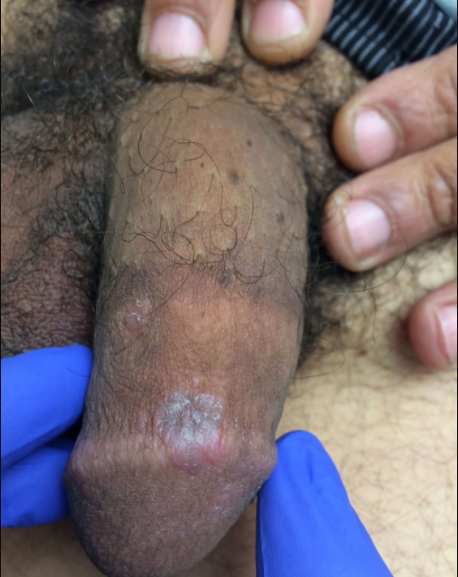 The remainder of the physical examination is normal. Which of the following is the most likely diagnosis?
 (Multiple Choice)
4.8/5 (80)
(80) A 16-year-old girl is brought to the office by her mother due to constipation. The patient has had bowel movements twice a week for the past 2 months. She has no abdominal pain but states her stomach is "puffing up." Her mother says the patient appears tired and wears multiple layers of clothing despite the warm weather. Medical history is significant for acne vulgaris treated with topical retinoids. Temperature is 36 C (96.8 F), blood pressure is 90/60 mm Hg, pulse is 54/min, and respirations are 16/min. BMI is 18 kg/m2. On physical examination, the abdomen is scaphoid and nontender with normal bowel sounds. Which of the following is the most likely diagnosis for this patient?
(Multiple Choice)
5.0/5 (80)
(80) A 63-year-old woman comes to the office due to a rash on her face. She has had pustules and pink bumps in this area for years; the rash appears to wax and wane but never fully resolves. The patient has also had a tingling sensation in the involved areas following sun exposure, but there are no other associated symptoms. Skin examination findings are shown in the exhibit. 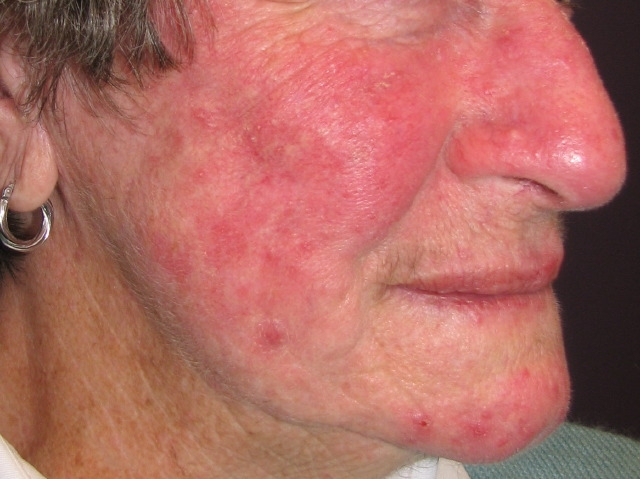 Which of the following is the best next step in management of this patient's skin condition?
 (Multiple Choice)
4.8/5 (81)
(81) A 50-year-old man comes to the office due to diarrhea, abdominal pain and weight loss. He has bulky, foul-smelling stools, abdominal distension and flatulence. He also has arthralgias and a chronic cough. His temperature is 37.8 C (100° F), blood pressure is 120/80 mm Hg, pulse is 80/min, and respirations are 18/min. Physical examination shows generalized lymphadenopathy, skin hyperpigmentation and a diastolic murmur in the aortic area. Small bowel biopsy shows villous atrophy with numerous PAS-positive materials in the lamina propria. Which of the following is the most likely diagnosis?
(Multiple Choice)
5.0/5 (70)
(70) A 34-year-old male immigrant from Mexico is brought to the emergency department after coughing up foamy sputum with a "significant" amount of bright-red blood. His clothes are stained red, but he is not currently having any coughing spells. He has no recent trauma and no other medical problems. He takes no medications. His blood pressure is 112/63 mm Hg, pulse is 97/min, and respirations are 16/min. Pulse oximetry shows 95% on room air. The patient is mildly agitated. Breath sounds are audible bilaterally with some expiratory wheezing on the right side. Intravenous fluids are initiated, and the patient is placed on supplemental oxygen. Portable chest x-ray shows a dense opacity in the right upper lobe.
Which of the following is the best initial step in management of this patient?
(Multiple Choice)
4.8/5 (84)
(84) Showing 601 - 620 of 1702
 Prev
- 1
- ...
- 2
- ...
- 3
- ...
- 4
- ...
- 5
- ...
- 6
- ...
- 7
- ...
- 8
- ...
- 9
- ...
- 10
- ...
- 11
- ...
- 12
- ...
- 13
- ...
- 14
- ...
- 15
- ...
- 16
- ...
- 17
- ...
- 18
- ...
- 19
- ...
- 20
- ...
- 21
- ...
- 22
- ...
- 23
- ...
- 24
- ...
- 25
- ...
- 26
- ...
- 27
- ...
- 28
- ...
- 29
- ...
- 30
- ...
- 31
- ...
- 32
- ...
- 33
- ...
- 34
- ...
- 35
- ...
- 36
- ...
- 37
- ...
- 38
- ...
- 39
- ...
- 40
- ...
- 41
- ...
- 42
- ...
- 43
- ...
- 44
- ...
- 45
- ...
- 46
- ...
- 47
- ...
- 48
- ...
- 49
- ...
- 50
- ...
- 51
- ...
- 52
- ...
- 53
- ...
- 54
- ...
- 55
- ...
- 56
- ...
- 57
- ...
- 58
- ...
- 59
- ...
- 60
- ...
- 61
- ...
- 62
- ...
- 63
- ...
- 64
- ...
- 65
- ...
- 66
- ...
- 67
- ...
- 68
- ...
- 69
- ...
- 70
- ...
- 71
- ...
- 72
- ...
- 73
- ...
- 74
- ...
- 75
- ...
- 76
- ...
- 77
- ...
- 78
- ...
- 79
- ...
- 80
- ...
- 81
- ...
- 82
- ...
- 83
- ...
- 84
- ...
- 85
- ...
- 86
- ...
- Next

Filters
- Essay(0)
- Multiple Choice(0)
- Short Answer(0)
- True False(0)
- Matching(0)