


 Chat with AI
Exam 1: Medicine

Exam 1: Medicine2 k Questions
Exam 2: Pediatric723 Questions
Exam 3: Psychiatry336 Questions
Exam 4: Surgery563 Questions
Exam 5: Obstetrics & Gynecology469 Questions
Select questions type


A 55-year-old man comes to the physician with red skin lesions on his abdomen. The patient reports no associated symptoms but says his wife is concerned about possible malignancy. He has hypertension and degenerative joint disease but no other medical problems. Physical examination shows the findings in the image below: 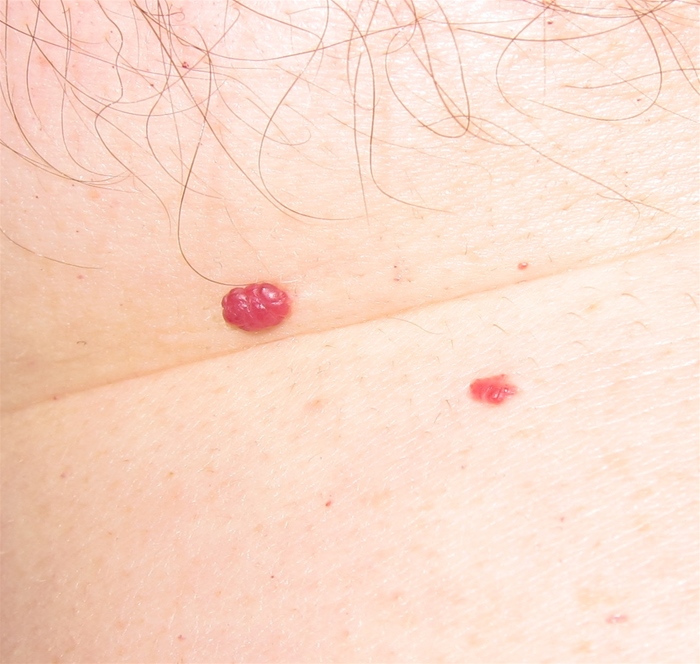 Which of the following is the most likely diagnosis in this patient?
 (Multiple Choice)
4.8/5  (79)
(79) A 6-year-old boy is brought to the office due to eyelid swelling. His mother noted a mosquito bite below his left lower eyelid 2 days ago. He developed mild swelling and redness of the lid yesterday and awoke today with his left eye swollen shut. He had a fever this morning that was relieved with acetaminophen. The patient has also had decreased energy and took naps after breakfast and lunch yesterday, which was unusual. Temperature is 38.3 C (101 F). The left lower eyelid is erythematous, edematous, and tender to palpation. Visual acuity is 20/20 in both eyes. The pupils are equal, round, and reactive. There is limited left eye adduction; the right eye has a normal range of motion. Laboratory results are as follows:  Which of the following is the most concerning finding in this patient?
 (Multiple Choice)
4.8/5 (77)
(77) A 27-year-old woman comes to the office due to joint pain. Her symptoms began 10 days ago and consist of bilateral pain in the metacarpophalangeal joints, proximal interphalangeal joints, wrists, knees, and ankles. She describes joint stiffness lasting 10-15 minutes on awakening in the morning. The patient has also had associated fatigue and a few episodes of loose bowel movements associated with mild skin itching and patchy redness. She has no fever, weight loss, or lymphadenopathy. She has no other medical conditions and takes no medications. The patient is married and has 2 children. She works as an elementary school teacher. On examination, there is tenderness of the involved joints without swelling or redness. The remainder of the physical examination is unremarkable. Which of the following is most likely elevated in this patient?
(Multiple Choice)
4.8/5 (78)
(78) A 67-year-old woman with a past medical history of hypertension, hypercholesterolemia, and type 2 diabetes calls 911 for severe dyspnea. Her symptoms started 2 hours ago with chest pain and progressed rapidly to orthopnea and dyspnea. Her blood pressure is 170/100 mm Hg and pulse is 120/min and regular. A third heart sound is present. Bilateral crackles are heard on chest auscultation. Her oxygen saturation is 78% with 40% inspired oxygen. She is intubated in the field by paramedics for progressive respiratory failure and treated with nitrates and diuretics. After initial measures, breath sounds on the left side are markedly decreased. Her repeat blood pressure is 168/96 mm Hg. Which of the following is most likely to restore breath sounds to the left hemithorax?
(Multiple Choice)
4.8/5 (84)
(84) A 52-year-old woman with known liver cirrhosis comes to the emergency department with bright red bleeding per rectum for 2 days. She also has increasing abdominal distension and discomfort. The patient has been on daily furosemide and spironolactone as well as water and sodium restriction. She had variceal banding after an episode of esophageal bleeding due to esophageal varices 3 months ago. The patient's temperature is 36.5 C (97.7 F), blood pressure is 91/55 mm Hg, pulse is 116/min, and respirations are 18/min. Her abdomen is distended and nontender with positive shifting dullness and has normal bowel sounds. There is 2+ peripheral pitting edema. Laboratory results are as follows: 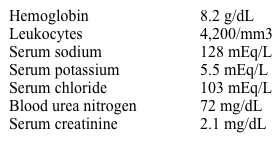 After blood transfusion and holding diuretics for a day, the patient's urine output decreases despite adequate intravenous volume resuscitation. Urine dipstick is negative for protein and blood. Urine sodium is 5 mEq/L. Which of the following is the most likely cause of this patient's acute kidney injury?
 (Multiple Choice)
4.8/5 (73)
(73) An 81-year-old woman comes to the office for follow-up of type 2 diabetes mellitus, which has been well controlled on a stable medication regimen for several years. Medical history is notable for hypertension and osteoporosis. Six months ago, she suffered a nondisplaced orbital fracture. She is widowed and has lived with her daughter and son-in-law for the last year. She claims that she is independent and "takes care" of herself. Blood pressure is 176/102 mm Hg and pulse is 84/min. Examination shows bruising at the right forearm and right flank. No cardiac murmurs are heard. Abdominal examination is unremarkable. Gait is steady and the patient does well on the Timed Up and Go test. Laboratory results show a fasting glucose of 220 mg/dL and hemoglobin A1c of 9%. Four months ago, glucose was 105 mg/dL and hemoglobin A1c was 7.2%. On further discussion, the patient says, "The pharmacy charges me too much these days. I just can't afford my medication anymore." Which of the following is the most likely explanation for this patient's clinical findings?
(Multiple Choice)
4.8/5 (79)
(79) A 5-year-old boy is brought to the emergency department by his mother after drowning. They were at a pool party when another child told the mother that her son was under water and not moving. She immediately pulled the boy out and administered 3 rescue breaths, and he started coughing up water. On arrival, temperature is 36.1 C (97 F), blood pressure is 105/60 mm Hg, pulse is 112/min, and respirations are 26/min. Oxygen saturation is 97% on room air. The patient is awake, alert, and well appearing. He is talkative and playful and asking to eat at a restaurant. The lungs are clear to auscultation bilaterally. Neurologic examination is normal. What is the appropriate disposition of this patient?
(Multiple Choice)
4.8/5 (79)
(79) A 65-year-old man is brought to the emergency department due to chest pain. The patient has had fatigue, retrosternal heaviness, and a nonproductive cough for several weeks. Today, he developed severe chest pain after drinking a beer at a retirement party. The patient has no chronic medical conditions but has been taking diphenhydramine for the last month due to generalized pruritus. He does not smoke but drinks alcohol socially. Temperature is 36.5 C (97.7 F), blood pressure is 132/84 mm Hg, and pulse is 86/min. Physical examination shows clear lungs and normal heart sounds. ECG reveals sinus rhythm with no ST-segment or T-wave changes. Chest x-ray reveals a large, anterior mediastinal mass displacing the trachea. Laboratory results are as follows: 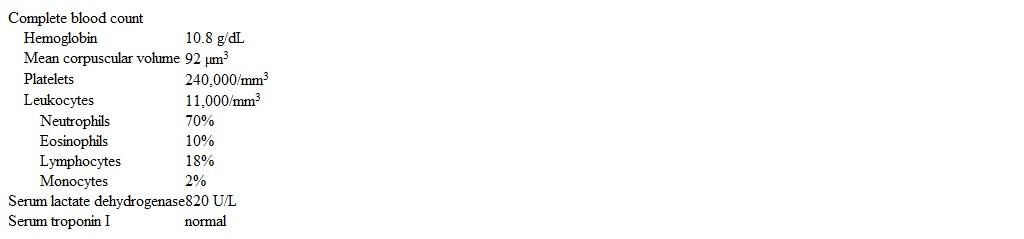 Which of the following is the most likely diagnosis for this patient?
 (Multiple Choice)
4.8/5 (85)
(85) A 67-year-old man with mild chronic obstructive pulmonary disease is brought to the emergency department by his daughter with the chief complaint of seizure. The patient has had episodes of confusion and lethargy over the past week. He complains of some exertional shortness of breath and nonproductive cough. His daughter believes that he is losing weight and has decreased appetite. His temperature is 37.2 C (99 F), blood pressure is 134/88 mm Hg, and pulse is 104/min and irregular. The mucous membranes are moist and there is no peripheral edema. Neurologic examination is unremarkable. Laboratory results are as follows: 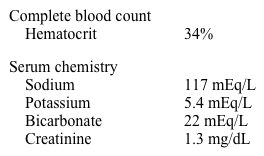 Rapid correction of this patient's metabolic abnormalities puts him at highest risk of which of the following?
 (Multiple Choice)
4.9/5 (88)
(88) A 45-year-old woman comes to the office due to frequent nighttime cough and wheezing over the past several months. Lately, she has also experienced similar episodes during the daytime. Medical history includes hypertension, hyperlipidemia, and obesity. Medications are amlodipine, lisinopril, and simvastatin. She has a 15-pack-year smoking history but quit 10 years ago. There is no personal or family history of lung disease. Blood pressure is 130/84 mm Hg, pulse is 72/min, and respirations are 16/min. Pulse oximetry shows 95% on room air. BMI is 31 kg/m2. Jugular venous pressure is 3 cm H2O above the sternal angle. The heart has a regular rate and rhythm with no murmurs. The lungs show good air movement with expiratory wheezes and no crackles. Chest x-ray is unremarkable. The results of pulmonary function testing are as follows:  Which of the following is the primary pathogenesis of this patient's symptoms?
 (Multiple Choice)
4.9/5 (83)
(83) A 50-year-old man comes to the emergency department due to acute onset respiratory difficulty. He also has periorbital, circumoral and facial edema. He denies any itching or skin rash. Two weeks ago, he experienced chest pain, profuse sweating and anxiety, and was subsequently admitted to the cardiac intensive care unit. At that time, his ECG showed ST segment elevation and Q waves in the inferior leads. He was taken to the catheterization lab and had an angioplasty with stent done for 100% occlusion of the right coronary artery. He was discharged with the following medications: aspirin, clopidogrel, metoprolol, enalapril, simvastatin and isosorbide mononitrate. In the ED, his pulse is 102/min, blood pressure is 110/70 mmHg, respirations are 24/min and temperature is 36.8°C (98.4°F). Which of the following is most likely responsible for his present symptoms?
(Multiple Choice)
4.8/5 (71)
(71) A 27-year-old African American woman comes to the office due to 6 weeks of pain and swelling of her hands and wrists. The pain worsens in the morning and is associated with stiffness for 10-15 minutes. She also has had easy fatigability and muscle aches. The patient has no significant medical history and does not take any medications. She has been sexually active with a new partner. Temperature is 37.9 C (100.2 F), blood pressure is 140/90 mm Hg, and pulse is 76/min. Physical examination shows slightly swollen, tender metacarpophalangeal and proximal interphalangeal joints. There is a nontender ulcer on the buccal mucosa. Mild cervical and axillary lymphadenopathy are present. Cardiopulmonary auscultation is normal. The abdomen is soft and nontender. Laboratory results are as follows:  X-ray of the hands and wrists reveals no bony erosions. Urinalysis shows 2+ protein and 20-30 red blood cells/hpf. Which of the following is the most likely diagnosis?
 (Multiple Choice)
5.0/5 (74)
(74) A 32-year-old man comes to the office due to a rash on his neck. The rash has been present for 6 months and is associated with mild pain and tenderness. The patient has tried a number of emollients, cleansers, and astringent products without relief. Medical history is unremarkable. He does not use tobacco, alcohol, or illicit drugs. Examination findings are shown in the image below: 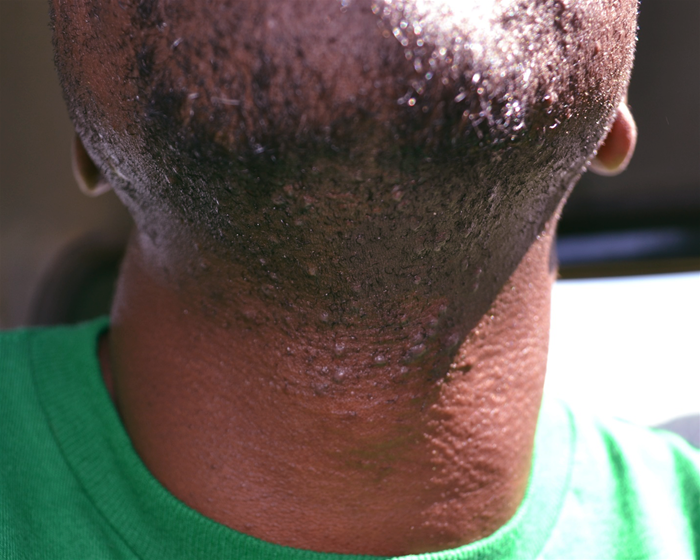 Which of the following is the most likely diagnosis?
 (Multiple Choice)
4.8/5 (87)
(87) A 67-year-old man is brought by his daughter to the emergency department with fever, back pain, and chest pain. The pain is constant and severe, and it does not vary with respirations. The patient has severe dysphagia due to esophageal achalasia, for which he frequently self-induces vomiting to relieve the sensation of choking. Other medical conditions include hypertension, peripheral vascular disease, and a 4-cm abdominal aortic aneurysm. He has a 30-pack-year smoking history and quit 5 years ago. The patient uses alcohol, usually during the weekends. He also has had a 5-kg (11-lb) weight loss over the past year. On examination, the patient is in distress due to pain. Temperature is 38.7 C (102 F), blood pressure is 100/60 mm Hg, pulse is 118/min, and respirations are 24/min. There is dullness to percussion and decreased breath sounds in the left lung base. Heart sounds are normal. Chest x-ray reveals left-sided pleural effusion; no additional infiltrates are seen. Which of the following is the most likely diagnosis?
(Multiple Choice)
4.9/5 (76)
(76) A 75-year-old woman comes to the emergency department due to a day of severe low back pain. The pain started after she lifted a turkey from the freezer and worsens with standing, walking, and lying on her back. She had no recent falls, lower extremity weakness, or sensory loss in the legs. The patient has a history of temporal arteritis, which was diagnosed several months ago and is being treated with prednisone. She does not use tobacco or alcohol. Temperature is 36.7 C (98.1 F), blood pressure is 140/70 mm Hg, pulse is 80/min, and respirations are 16/min. Physical examination shows midline tenderness to palpation or percussion of the lumbar spine. Ankle jerk reflexes are absent bilaterally. Knee reflexes are 2+ in both legs. Flexor plantar responses are present bilaterally. Muscle strength is 5/5 in both legs. Bilateral straight-leg raising test to 90 degrees does not increase the pain. Which of the following is the most likely diagnosis in this patient?
(Multiple Choice)
4.9/5 (89)
(89) A 45-year-old man comes to the office for follow up of type 2 diabetes mellitus. Since his diagnosis 4 years ago, the patient has followed a low-fat diet and taken metformin and atorvastatin as prescribed. Ophthalmologic examination conducted a month ago revealed no evidence of diabetic retinopathy. Blood pressure is 119/76 mm Hg, pulse is 70/min, and BMI is 30 kg/m2. Heart rhythm is regular and without murmurs. Lungs sounds are normal. Foot examination shows normal pulses and intact sensation to vibration, pressure, and pinprick. Hemoglobin A1c is 7.0%, creatinine is 0.9 mg/dL, and urine albumin/creatinine ratio is 15 mg/g. What is the most appropriate next step in management of this patient?
(Multiple Choice)
5.0/5 (73)
(73) A 42-year-old man is brought to the emergency department due to weakness. The patient drinks alcohol daily and has been binge drinking for the past 2 days. He also used cocaine the previous night. This morning, the patient stumbled and fell several times while trying to get to the bathroom. He has no other medical problems and takes no medications. Temperature is 37 C (98.6 F), blood pressure is 160/100 mm Hg, pulse is 102/min, and respirations are 18/min. Oxygen saturation is 96% on room air. Physical examination shows mildly dilated pupils. The oropharynx is clear. There is no jugular venous distension. Cardiopulmonary examination is normal. The abdomen is soft and nontender. Bilateral thighs and calves are mildly swollen and tender. Lower extremity muscle strength is decreased, but sensation to touch and vibration is normal. Upper extremity examination shows no abnormalities. Over the next several days, this patient is at greatest risk for which of the following complications of his current condition?
(Multiple Choice)
4.8/5 (79)
(79) A prospective cohort study was conducted to assess the relationship between caffeine consumption and the risk of colon cancer in middle-aged women. The study showed that caffeine consumption decreases the risk of colon cancer with a relative risk of 0.83 and p value of 0.04. The fact that the study was conducted specifically in middle-aged women raises most concerns regarding which of the following issues?
(Multiple Choice)
4.9/5 (68)
(68) A 19-year-old man comes to the emergency department during the summer due to vomiting. He was well this morning but developed an increasingly painful headache and vomiting approximately 4 hours ago while playing golf. The patient is a college student who lives in a fraternity house on campus. Temperature is 40.1 C (104.2 F), blood pressure is 90/50 mm Hg, and pulse is 120/min. The patient is initially alert but becomes increasingly obtunded over the course of the examination. There is resistance to passive flexion of the neck. The hands and feet are cold and slightly mottled with a diffuse, petechial rash over the extremities. Which of the following is the best next step in management of this patient?
(Multiple Choice)
4.7/5 (98)
(98) A 40-year-old man comes to the office due to exertional dyspnea of 6 months duration. He occasionally expectorates mucoid sputum. He has no fever, night sweats, weight loss, or loss of appetite. The patient's past medical history is otherwise unremarkable. He is married and has 2 children. His father died of nonalcoholic liver cirrhosis at age 58. The patient smoked <1/2 pack of cigarettes daily for 15 years but stopped after becoming short of breath. He does not use alcohol or recreational drugs. Vital signs are normal, and pulse oximetry is 97% on room air. Breath sounds are decreased bilaterally. There are no crackles or wheezes. Laboratory results are as follows: 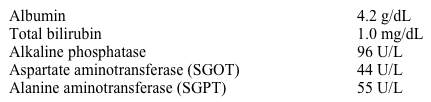 Which of the following is the most likely diagnosis?
 (Multiple Choice)
4.7/5 (74)
(74) Showing 821 - 840 of 1702
 Prev
- 1
- ...
- 2
- ...
- 3
- ...
- 4
- ...
- 5
- ...
- 6
- ...
- 7
- ...
- 8
- ...
- 9
- ...
- 10
- ...
- 11
- ...
- 12
- ...
- 13
- ...
- 14
- ...
- 15
- ...
- 16
- ...
- 17
- ...
- 18
- ...
- 19
- ...
- 20
- ...
- 21
- ...
- 22
- ...
- 23
- ...
- 24
- ...
- 25
- ...
- 26
- ...
- 27
- ...
- 28
- ...
- 29
- ...
- 30
- ...
- 31
- ...
- 32
- ...
- 33
- ...
- 34
- ...
- 35
- ...
- 36
- ...
- 37
- ...
- 38
- ...
- 39
- ...
- 40
- ...
- 41
- ...
- 42
- ...
- 43
- ...
- 44
- ...
- 45
- ...
- 46
- ...
- 47
- ...
- 48
- ...
- 49
- ...
- 50
- ...
- 51
- ...
- 52
- ...
- 53
- ...
- 54
- ...
- 55
- ...
- 56
- ...
- 57
- ...
- 58
- ...
- 59
- ...
- 60
- ...
- 61
- ...
- 62
- ...
- 63
- ...
- 64
- ...
- 65
- ...
- 66
- ...
- 67
- ...
- 68
- ...
- 69
- ...
- 70
- ...
- 71
- ...
- 72
- ...
- 73
- ...
- 74
- ...
- 75
- ...
- 76
- ...
- 77
- ...
- 78
- ...
- 79
- ...
- 80
- ...
- 81
- ...
- 82
- ...
- 83
- ...
- 84
- ...
- 85
- ...
- 86
- ...
- Next

Filters
- Essay(0)
- Multiple Choice(0)
- Short Answer(0)
- True False(0)
- Matching(0)