


 Chat with AI
Exam 1: Medicine

Exam 1: Medicine2 k Questions
Exam 2: Pediatric723 Questions
Exam 3: Psychiatry336 Questions
Exam 4: Surgery563 Questions
Exam 5: Obstetrics & Gynecology469 Questions
Select questions type


A middle-aged man was recently diagnosed with hypertension. The prescribed antihypertensive medication enhances natriuresis, decreases serum angiotensin II concentration, and decreases aldosterone production. This medication most likely belongs to which of the following drug classes?
(Multiple Choice)
4.8/5  (80)
(80) A gynecologic oncology research institute isolates a potential tumor marker for endometrial cancer. A large multicenter study is then performed to evaluate serum levels of the tumor marker in women with and without endometrial cancer. The following curves are generated using the results of the study. 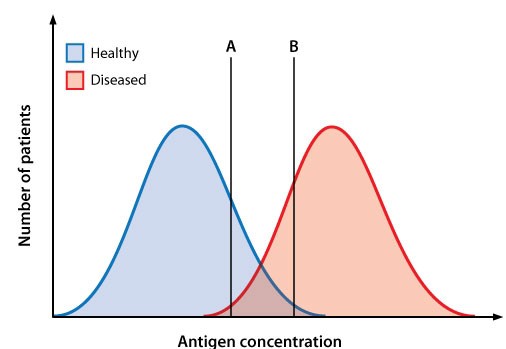 Clinical researchers decide to use the tumor antigen to develop a confirmatory test for patients with suspected endometrial cancer. During preliminary design of the test, the cutoff point for positive/negative results is set at point A. If the cutoff point is moved from A to B, the specificity of the test will change in which of the following ways?
 (Multiple Choice)
5.0/5 (85)
(85) A 32-year-old woman comes to the hospital complaining of fever, chills, pleuritic chest pain, and shortness of breath for the last 3 days. She was found to be HIV positive 1 year ago; her CD4 count was 378/µL about 1 month ago. The patient does not regularly attend clinic appointments and takes no medications. She uses intravenous heroin and cocaine. Her only sexual partner is also HIV positive. Her temperature is 39.3° C (102.7° F), blood pressure is 120/68 mm Hg, pulse is 110/min, and respirations are 22/min. Examination shows scattered crackles in both lung fields. Her abdomen is soft and nontender without hepatosplenomegaly. Her extremities exhibit several needle marks. Laboratory results are as follows: 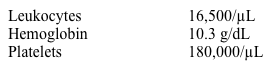 Imaging of the chest reveals multiple nodular lesions with small cavities, as shown below.
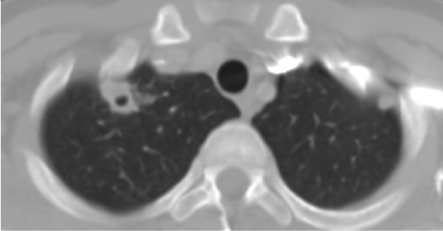
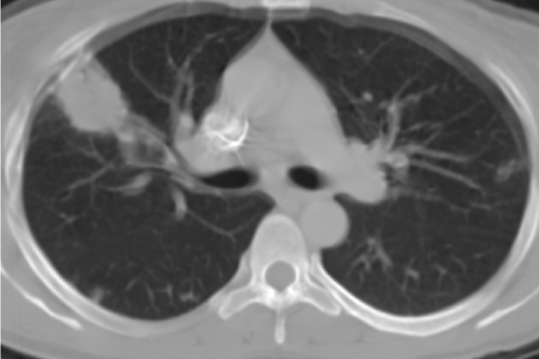
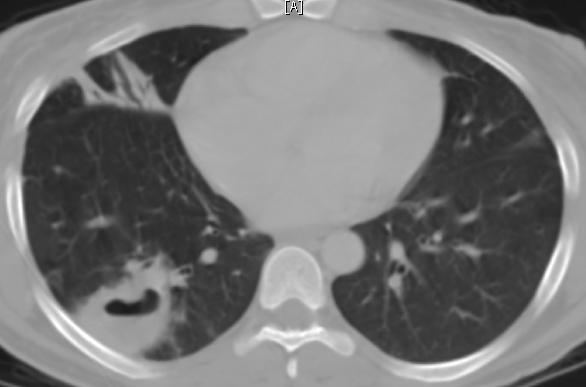 Which of the following organisms is most likely responsible for this patient's current condition?
Imaging of the chest reveals multiple nodular lesions with small cavities, as shown below.
Which of the following organisms is most likely responsible for this patient's current condition? (Multiple Choice)
4.8/5 (83)
(83) A 40-year-old man with type 1 diabetes mellitus comes to the office due to recurrent hypoglycemia. A month ago, the patient was seen in the emergency department due to unconsciousness associated with a blood glucose level of 34 mg/dL. Since then, he has had several blood glucose readings <50 mg/dL that he corrected by drinking fruit juice; however, he had no tremor, sweating, or palpitations during the episodes. Medications include insulin glargine, insulin lispro, lisinopril, hydrochlorothiazide, and simvastatin. Vital signs and physical examination are normal. Hemoglobin A1c is 8.1% and serum creatinine is 1.1 mg/dL. Which of the following is the most likely cause of hypoglycemia unawareness in this patient?
(Multiple Choice)
4.9/5 (84)
(84) A 23-year-old woman is brought to the emergency department due to an hour of difficulty breathing. She has a history of asthma and has been hospitalized several times with exacerbations. The patient is not compliant with an inhaled corticosteroid but takes albuterol as needed for shortness of breath. She says that the breathing difficulty feels like an asthma attack. The patient was just diagnosed with acute sinusitis following an upper respiratory infection; she took an antibiotic for it earlier this morning. She has used the albuterol inhaler several times since symptom onset. On examination, the patient is in moderate respiratory distress. Temperature is 37.8 C (100 F), blood pressure is 82/50 mm Hg, pulse is 118/min, and respirations are 30/min. Oxygen saturation is 85% on room air. There is no visible jugular venous distension. Chest auscultation reveals audible wheezing bilaterally and prolonged expiration. The abdomen is soft and nontender. An urticarial rash is seen over the trunk and upper extremities, and the extremities are warm. Which of the following is the most appropriate next step in management of this patient?
(Multiple Choice)
5.0/5 (80)
(80) A 45-year-old man comes to the office for evaluation of pain in his right lateral thigh. The pain has been present for 2 weeks and is described as a "pins and needles" sensation; it is exacerbated when he strains for bowel movements. The patient has never had this pain before and has no associated leg weakness or back pain. Medical history is significant for recently diagnosed type 2 diabetes mellitus, for which he was prescribed metformin 3 months ago. Vital signs are normal. BMI is 37 kg/m2. Examination shows loss of light touch and pinprick sensation in an area of the upper lateral thigh. There is no tenderness to palpation of the lateral femoral epicondyle. Knee and hip examinations are normal. A straight leg raising test is negative bilaterally and strength is 5/5 in both extremities. Which of the following is the most appropriate next step in management?
(Multiple Choice)
4.8/5 (82)
(82) An 82-year-old man is evaluated for a heart murmur. He states that he feels healthy. On review of systems, he has had no chest pain, dyspnea, lightheadedness, syncope, or lower extremity swelling. The patient walks several miles per day. He has a history of hypertension treated with amlodipine. He is a lifetime nonsmoker. Blood pressure is 145/60 mm Hg and pulse is 72/min and regular. The lungs are clear on auscultation. Echocardiogram reveals a calcified aortic valve without stenosis but with severe aortic regurgitation. The left ventricle is dilated with an ejection fraction of 63%. No other valvular abnormalities are noted. Which of the following compensatory mechanisms best explains why this patient is asymptomatic with the existing pathology?
(Multiple Choice)
4.9/5 (85)
(85) A 78-year-old woman is brought to the emergency department due to sudden-onset, right-sided hemiplegia and right-sided facial droop. Medical history is significant for chronic kidney disease and hypertension. The patient has a history of medication nonadherence and does not remember the names of her prescribed medications. Temperature is 37 C (98.6 F), blood pressure is 218/128 mm Hg, pulse is 84/min, and respirations are 15/min. On examination, the patient is mildly lethargic but able to converse. Cranial nerve examination shows upper-motor-neuron, right-sided facial weakness. Muscle strength is 0/5 in the right upper and lower extremities. CT scan of the head, immediately performed, is shown in the exhibit.
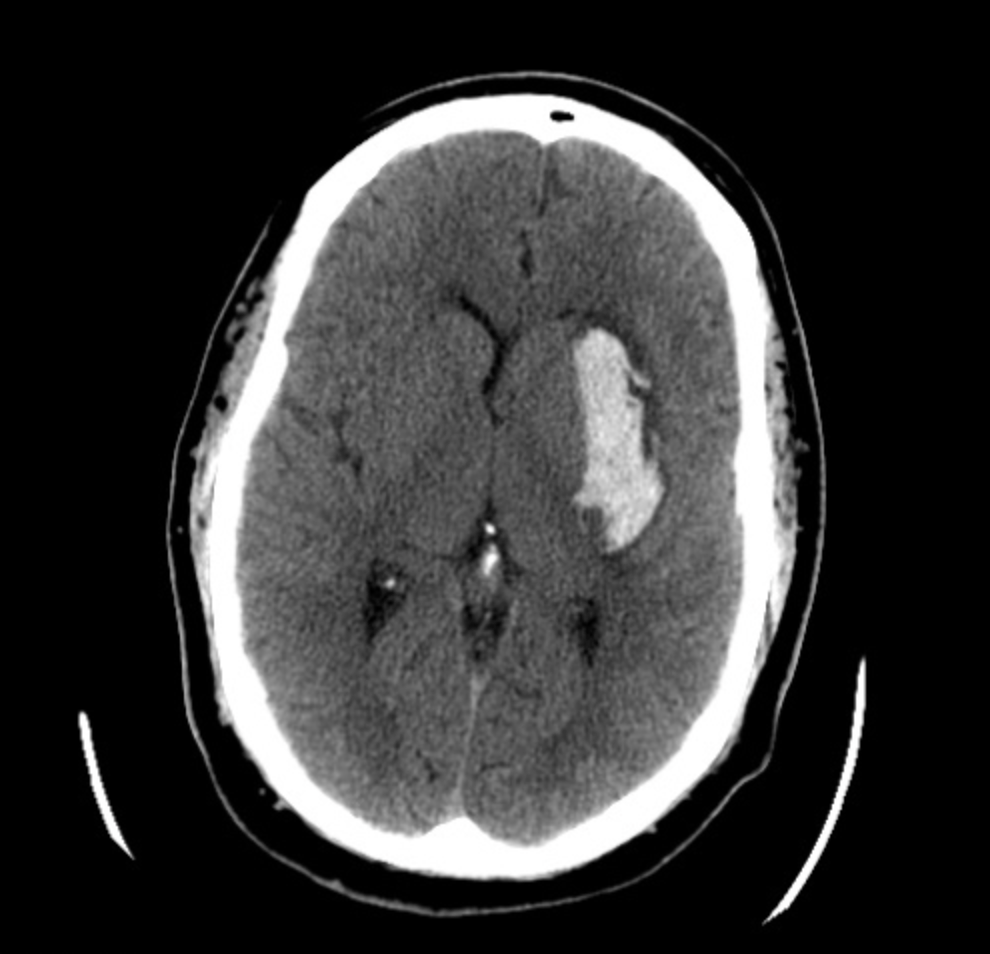 Laboratory results are as follows:
 Which of the following is the best next step in management of this patient?
Laboratory results are as follows: Which of the following is the best next step in management of this patient? (Multiple Choice)
4.9/5 (77)
(77) A 26-year-old woman calls the office with a question about management of hypothyroidism during pregnancy. The patient is not pregnant but wishes to become pregnant soon. She has a history of hypothyroidism for several years and has been on a stable dose of levothyroxine. TSH checked 3 months ago was 2.0 µU/mL. The patient currently has mild fatigue but is otherwise asymptomatic. Family history is notable for primary hypothyroidism in her mother, who is doing well on a regimen of liothyronine (T3) and levothyroxine (T4). Which of the following is the most appropriate recommendation for this patient?
(Multiple Choice)
4.9/5 (86)
(86) A 66-year-old man comes to the emergency department with acute onset of severe chest pain and shortness of breath. The pain is in the right upper chest and is aggravated by deep breathing and coughing. Medical history is significant for hypertension and obstructive sleep apnea. The patient quit smoking 10 years ago and drinks beer on weekends. Blood pressure is 110/70 mm Hg, pulse is 116/min and regular, and respirations are 22/min. BMI is 30 kg/m2. Normal vesicular breath sounds are heard on auscultation of the chest. Cardiac auscultation reveals tachycardia and an accentuated S2. Chest x-ray is unremarkable. ECG shows sinus tachycardia. CT angiogram of the chest reveals an embolus in the right pulmonary artery. Which of the following is the most likely origin of this embolus?
(Multiple Choice)
4.8/5 (85)
(85) A 28-year-old woman comes to the emergency department with fever, chills, and generalized weakness for the past week. Her only other medical problem was a hospital admission for right arm cellulitis 6 months ago. Temperature is 40.0° C (104° F), blood pressure is 110/65 mm Hg, pulse is 110/min, and respirations are 18/min. Examination shows a normal oropharynx, and lungs are clear to auscultation. A holosystolic murmur is heard at the lower sternum which increases in intensity with inspiration. Examination of the right arm is shown in the image below. 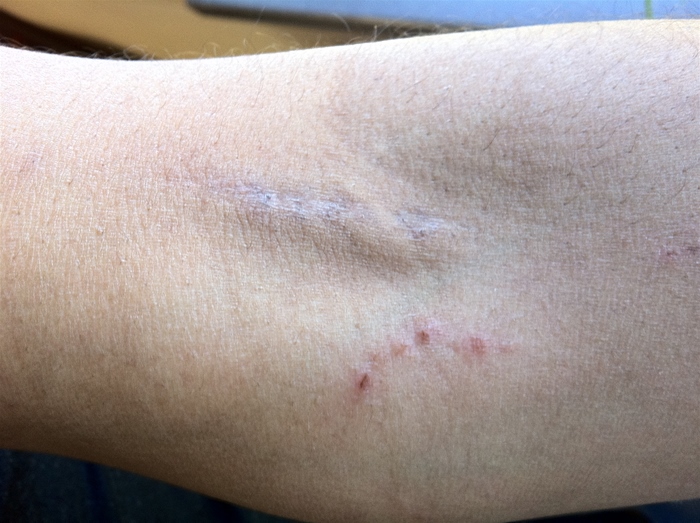 Blood is drawn and sent for culture. Which of the following is the most appropriate initial antibiotic therapy for this patient?
 (Multiple Choice)
4.9/5 (87)
(87) A 45-year-old woman comes to the clinic due to occasional episodes of nocturnal substernal chest pain that wake her from sleep. The episodes last 10-15 minutes and resolve spontaneously. She leads a sedentary lifestyle but states that she can climb 2 flights of stairs without discomfort. The patient smokes cigarettes but does not use illicit drugs. Blood pressure is 130/70 mm Hg, pulse is 78/min and regular, and respirations are 13/min. BMI is 28 kg/m2. The jugular veins are flat with the patient in a sitting position and there are no carotid bruits. Lungs are clear on auscultation. There are no heart murmurs. ECG shows normal sinus rhythm with no repolarization abnormalities. Extended ambulatory ECG monitoring shows transient ST-segment elevation in leads V4-V6 during a pain episode. The pathophysiologic mechanism of this patient's condition is most similar to that of which of the following?
(Multiple Choice)
4.9/5 (83)
(83) A 66-year-old woman comes to the office due to 2 days of increasing productive cough and low-grade fever. She was treated for community-acquired pneumonia 4 months ago and sinusitis 2 months ago. Her review of systems is positive for fatigue, generalized weakness, and right-sided chest pain. The patient is otherwise healthy and takes no medications. She has never smoked cigarettes and drinks alcohol only on rare social occasions. Temperature is 38.4 C (101.2 F), blood pressure is 126/72 mm Hg, pulse is 98/min, and respirations are 16/min. Pulse oximetry is 96%. She is well-appearing. There is mucosal pallor. There is no lymphadenopathy in her cervical or supraclavicular chains. Bronchial breath sounds and crackles are present in the left lower lung field. There is point tenderness over the right seventh and eighth ribs at the midclavicular line. The abdomen is soft with no hepatosplenomegaly. Laboratory results are as follows:  Chest x-rays shows consolidation in the left lower lung and right-sided osteolytic lesions with fractures at the seventh and eighth ribs. This patient is at increased risk for recurrent infections due to which of the following abnormalities?
 (Multiple Choice)
4.8/5 (80)
(80) A 56-year-old man is brought to the emergency department due to worsening confusion. He has been forgetful and irritable for the past several days, and today, the patient's wife found him in bed, lethargic and disoriented. He has had no fever, headache, abdominal pain, or vomiting. The patient drinks a half to a full pint of vodka daily and was hospitalized previously for acute alcoholic pancreatitis. Temperature is 36.9 C (98.4 F), blood pressure is 116/68 mm Hg, and pulse is 84/min. The patient is somnolent but awakens to physical stimuli. He follows simple instructions but is not oriented to time or place. His speech is slurred. Lung fields are clear to auscultation and cardiac examination reveals normal heart sounds with no murmur. The abdomen is moderately distended with shifting dullness. The patient moves all extremities equally and has a flapping tremor of his outstretched, dorsiflexed hands. Deep tendon reflexes are 3+ diffusely. Laboratory results are as follows: 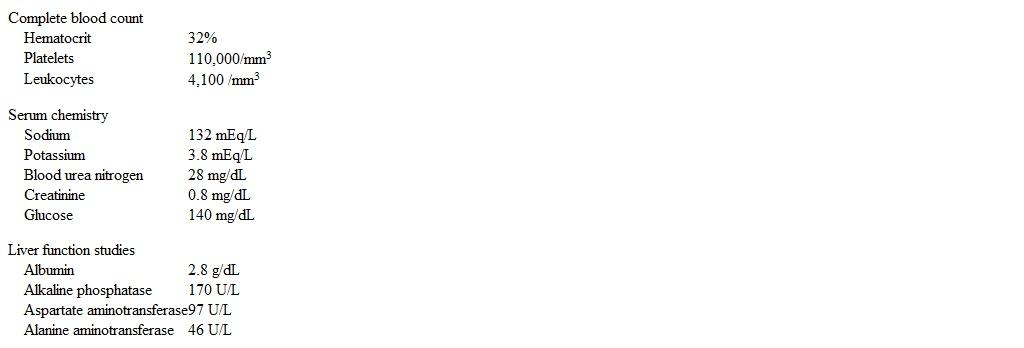 Which of the following treatments will most likely improve this patient's mental status?
 (Multiple Choice)
4.9/5 (84)
(84) A 19-year-old college student comes to the office prior to a trip to India with concern for travel-related infections. He has no prior medical problems and is up to date with basic immunizations. Physical examination is normal. The patient is advised to consume bottled water and avoid raw foods. Hepatitis A and typhoid vaccinations and prescriptions for traveler's diarrhea are provided. Which of the following is the most effective measure for preventing malaria in this patient?
(Multiple Choice)
4.8/5 (102)
(102) A 27-year-old man comes to the physician for follow-up of hypertension. He feels healthy and has no complaints. Two weeks ago, he was found to have high blood pressure during an emergency department visit for a sports injury. The patient has a strong family history of hypertension and stroke. His blood pressure is 155/97 mm Hg and pulse is 78/min. Physical examination and basic laboratory workup are unremarkable. He is instructed to follow a low-salt diet and started on low-dose (12.5 mg daily) hydrochlorothiazide. Two weeks later, the patient comes to the emergency department complaining of muscle cramps, weakness, and palpitations. His blood pressure is 150/93 mm Hg and pulse is 82/min. Mucous membranes are moist. Laboratory results are as follows: 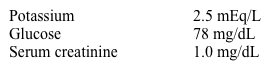 Which of the following is the best next step in management of this patient?
 (Multiple Choice)
5.0/5 (85)
(85) A 30-year-old man comes to the office due to shortness of breath, nonproductive cough, and fatigue for the past 3-4 weeks. He also has been urinating more than usual. The patient has no other medical issues and currently takes no medications. He has smoked a pack of cigarettes daily for 8 years. Vital signs are normal. Cardiopulmonary examination shows scattered crackles but is otherwise unremarkable. The abdomen is soft and nontender. Laboratory results are as follows: 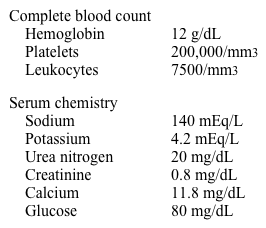 Chest x-ray reveals bilateral hilar fullness and interstitial infiltrates. Results of HIV testing and purified protein derivative skin testing are negative. Which of the following is the best therapy for this patient?
 (Multiple Choice)
4.9/5 (63)
(63) A 63-year-old man is brought to the emergency department along with multiple other people who developed rapid-onset shortness of breath at a crowded shopping mall. The patient reports smelling a faint, fruity odor prior to developing symptoms. Temperature is 36.7 C (98 F), blood pressure is 106/60 mm Hg, pulse is 54/min, and respirations are 22/min. On physical examination, the patient is diaphoretic and drooling. The pupils are pinpoint and unreactive. Diffuse rhonchi and wheezing are present in the bilateral lung fields. Which of the following would most likely confirm the diagnosis?
(Multiple Choice)
4.8/5 (77)
(77) A 55-year-old man comes to the office reporting "a swollen belly and puffy feet" that began several months ago. He has not seen a physician for several years but says that he was previously diagnosed with depression. The patient takes no medications. He currently lives alone and is unemployed. He admits to drinking 6-12 beers a night, depending on what he can afford. He has a remote history of cigarette smoking. Physical examination reveals bilateral gynecomastia, spider angiomas on the chest, Dupuytren contracture of both hands, and palmar erythema. Dilated periumbilical veins are also visible. Percussion of the abdomen demonstrates shifting dullness. Splenomegaly is present. There is no evidence of asterixis. There is pitting edema of the lower extremities. Laboratory studies reveal increased prothrombin time and thrombocytopenia. Which of the following findings has the same pathogenesis as spider angiomas?
(Multiple Choice)
4.7/5 (81)
(81) A 27-year-old woman comes to the office for follow-up. The patient was last seen 2 months ago due to generalized musculoskeletal pain and several months of fatigue. She was diagnosed with fibromyalgia and prescribed a low-impact exercise program and pharmacotherapy. Her pain and fatigue have improved, but she now notes intermittent episodes of "dizziness." Most of the episodes are short-lived, but she occasionally needs to brace herself against a wall or sit until the dizziness resolves. She also notes worsened lethargy and frequent dry mouth. Other medical history includes migraines and irritable bowel syndrome. The patient currently takes daily amitriptyline for fibromyalgia, occasional acetaminophen for muscular pains, and polyethylene glycol as needed for constipation. Temperature is 36.8 C (98.2 F), blood pressure is 110/70 mm Hg, pulse is 70/min, and respirations are 14/min. BMI is 21 kg/m2. Mucous membranes are pink and moist, and there is no jugular venous distension. Cardiopulmonary auscultation is normal. Neurologic examination demonstrates intact cranial nerves and normal muscle strength in all extremities. Which of the following would be most helpful in determining the cause of this patient's dizziness?
(Multiple Choice)
4.8/5 (85)
(85) Showing 941 - 960 of 1702
 Prev
- 1
- ...
- 2
- ...
- 3
- ...
- 4
- ...
- 5
- ...
- 6
- ...
- 7
- ...
- 8
- ...
- 9
- ...
- 10
- ...
- 11
- ...
- 12
- ...
- 13
- ...
- 14
- ...
- 15
- ...
- 16
- ...
- 17
- ...
- 18
- ...
- 19
- ...
- 20
- ...
- 21
- ...
- 22
- ...
- 23
- ...
- 24
- ...
- 25
- ...
- 26
- ...
- 27
- ...
- 28
- ...
- 29
- ...
- 30
- ...
- 31
- ...
- 32
- ...
- 33
- ...
- 34
- ...
- 35
- ...
- 36
- ...
- 37
- ...
- 38
- ...
- 39
- ...
- 40
- ...
- 41
- ...
- 42
- ...
- 43
- ...
- 44
- ...
- 45
- ...
- 46
- ...
- 47
- ...
- 48
- ...
- 49
- ...
- 50
- ...
- 51
- ...
- 52
- ...
- 53
- ...
- 54
- ...
- 55
- ...
- 56
- ...
- 57
- ...
- 58
- ...
- 59
- ...
- 60
- ...
- 61
- ...
- 62
- ...
- 63
- ...
- 64
- ...
- 65
- ...
- 66
- ...
- 67
- ...
- 68
- ...
- 69
- ...
- 70
- ...
- 71
- ...
- 72
- ...
- 73
- ...
- 74
- ...
- 75
- ...
- 76
- ...
- 77
- ...
- 78
- ...
- 79
- ...
- 80
- ...
- 81
- ...
- 82
- ...
- 83
- ...
- 84
- ...
- 85
- ...
- 86
- ...
- Next

Filters
- Essay(0)
- Multiple Choice(0)
- Short Answer(0)
- True False(0)
- Matching(0)