



 Chat with AI
Exam 2: Pediatric

Exam 1: Medicine2 k Questions
Exam 2: Pediatric723 Questions
Exam 3: Psychiatry336 Questions
Exam 4: Surgery563 Questions
Exam 5: Obstetrics & Gynecology469 Questions
Select questions type


A 3-week-old girl is evaluated in the neonatal intensive care unit due to apnea. The patient was born at 26 weeks gestation with a birth weight of 820 g (1 lb 13 oz). She had mild respiratory distress syndrome initially and has been breathing comfortably on high-flow nasal cannula at 21% FiO2. Enteral breast milk feeds have been started. The patient received ampicillin and gentamicin empirically until cultures were sterile at 48 hours. On day of life 3, she began having episodes of apnea, with 25-30 seconds without respiratory effort and subsequent bradycardia and desaturations. These episodes have occurred intermittently for the past several weeks. The patient recovers spontaneously or with brief stimulation. In between the episodes, she is well-appearing and has normal vital signs. The anterior fontanel is slightly sunken and soft. Lungs are clear to auscultation. The abdomen is soft and bowel sounds are normal. Ultrasound of the head on day of life 10 is normal. Which of the following is the best next step in management of this patient's condition?

Free
(Multiple Choice)
4.7/5  (72)
(72) Correct Answer: Verified
B
A 10-year-old girl is brought to the office due to right ear pain that began yesterday. The patient's ear feels itchy and gives the sensation of something stuck inside. She recently returned from visiting her grandparents at their beach house for a family reunion; a few cousins also visiting were recovering from an upper respiratory infection. The patient had recurrent acute otitis media complicated by persistent effusion and required tympanostomy tube placement at age 2. The tympanostomy tubes have since fallen out, and she has had no ear infections since age 3. She is not up to date on vaccinations but has no chronic medical conditions. Her parents are smokers but usually do not smoke inside the house. Temperature is 37.1 C (98.8 F), blood pressure is 102/58 mm Hg, and pulse is 94/min. On examination of the right ear, there is exquisite tenderness to movement of the pinna during otoscopy. The canal is red and swollen. Most of the tympanic membrane can be seen, and it is clear with no fluid. The left ear is normal. Which of the following risk factors most likely contributed to this patient's condition?
Free
(Multiple Choice)
4.8/5 (90)
(90) Correct Answer:Verified
VerifiedF
A 14-month-old boy is brought to the office for follow-up due to pneumonia. The patient required hospitalization 2 weeks ago for lobar pneumonia, his second admission for this diagnosis in the past 6 months. A chest tube was placed for an effusion, with the pleural fluid demonstrating minimal leukocytes and numerous gram-positive cocci in clusters. The fever resolved after 10 days, after which the patient was discharged, although he continues to have cough and occasional increased work of breathing. This slow symptom improvement also occurred with an episode of nonpurulent staphylococcal cellulitis last month. Temperature is 37.7 C (99.9 F). Oral examination reveals eruption of both upper central incisors with surrounding erythema and ulceration. The posterior oropharynx appears unremarkable. Lung sounds are diminished at the left lower base with some scattered crackles. Heart sounds are normal. The abdomen is soft and nondistended without hepatosplenomegaly. The remainder of the examination is unremarkable. Laboratory results are as follows:  Chest x-ray reveals opacification of the left lower lobe and a small left effusion improved from 2 weeks ago. Which of the following is most likely present in this patient?
Free
(Multiple Choice)
4.9/5 (68)
(68) Correct Answer:Verified
VerifiedE
A 5-year-old boy is brought to the emergency department due to confusion and weakness. The patient was accompanying his mother on a shopping trip 2 hours ago when he developed a severe headache, followed by vomiting. His mother took him home and allowed him to rest. Thirty minutes ago, he appeared excessively drowsy and could not move the left side of his body. The patient has had no recent illnesses and takes no medications. He has a history of hereditary hemorrhagic telangiectasia. Temperature is 37.2 C (99 F) and blood pressure is 140/90 mm Hg. Examination shows a somnolent boy who withdraws from painful stimuli. There are a few telangiectasias along the lips and tongue. Cardiopulmonary examination is unremarkable. The abdomen is soft with normal bowel sounds. Which of the following features would most likely be found on CT scan of the head?
(Multiple Choice)
4.9/5 (92)
(92) A 12-year-old girl is brought to the office due to a 2-hour history of upper and lower extremity swelling. There is no redness, itching, or pain. She has had similar symptoms along with abdominal pain following minor injuries and injections in the past. These episodes usually last for 2 to 4 days and resolve spontaneously. The patient has no history of severe or frequent infections. Her father has had similar episodes but was never evaluated. Temperature is 37 C (98.6 F), blood pressure is 110/78 mm Hg, pulse is 88/min, and respirations are 16/min. Oxygen saturation is 98% on room air. Examination shows nonpitting edema extending from hands to elbows and from feet to knees in an asymmetrical fashion. Cardiopulmonary examination is normal. Which of the following is the most appropriate next step in evaluation?
(Multiple Choice)
4.9/5 (68)
(68) A 2-hour-old boy is evaluated in the newborn nursery due to cyanosis. The boy was born at 38 weeks gestation via spontaneous vaginal delivery to a primigravida mother whose pregnancy and delivery were uncomplicated. When the mother attempted to breastfeed in the first hour of life, the patient latched and sucked well but began to appear blue around the lips and face. He began crying and turned pink when he was removed from the breast. He has voided and passed meconium. The patient's weight is appropriate for gestational age. Heart rate and 4-extremity blood pressures are normal. Examination shows a nondysmorphic neonate with mild cyanosis at rest. Auscultation shows clear lungs and no murmurs. There are no intercostal retractions or stridor. Peripheral pulses are strong and symmetric. Which of the following is the most likely diagnosis in this patient?
(Multiple Choice)
4.8/5 (86)
(86) A 4-year-old girl is brought to the office by her parents due to frequent squinting of the left eye. That eye also seems more prominent than the right, according to the mother. The child was born full term after a normal pregnancy and delivery. Developmental milestones have been age appropriate. Left eye examination reveals mild proptosis, esotropia, and optic disc pallor. Visual acuity is decreased in the left eye but is normal in the right. There are several large café-au-lait macules and marked axillary freckling. Which of the following is the most likely cause of this patient's ocular findings?
(Multiple Choice)
4.8/5 (76)
(76) A 5-year-old boy is brought to the office by his parents after exposure to a child with a rash. Three days ago, the patient had a day-long playdate with a friend who had low-grade fever and a vesicular rash. That child and another child in the neighborhood were subsequently diagnosed with chickenpox. The patient has no symptoms and no history of medical problems. The boy received age-appropriate vaccinations in infancy but has not received any immunizations after age 1. He lives at home with his mother, father, and 1-year-old brother. The boy's mother is currently pregnant and immune to the varicella zoster virus. Vital signs are within normal limits. Examination of the skin, ears, and mucous membranes is normal; the remainder of the examination is unremarkable. Which of the following is the most appropriate next step in management of this patient?
(Multiple Choice)
4.7/5 (80)
(80) A 13-year-old boy is brought to the office for a well-child visit. The patient is concerned that he is the shortest boy in his class. He is in 7th grade and participates in soccer and baseball. The patient is a picky eater whose diet consists primarily of cereal, fruit, pasta, and pizza. He has seasonal allergies and takes cetirizine and a daily multivitamin. His mother is 165 cm (65 in), and his father is 178 cm (70 in). Height is 140 cm (55 in) and weight is 39 kg (86 lb). The patient's sexual maturity rating (Tanner stage) is 1. The remainder of the examination is unremarkable. A radiograph of the left wrist reveals a bone age of 10 years. His growth chart is shown below. 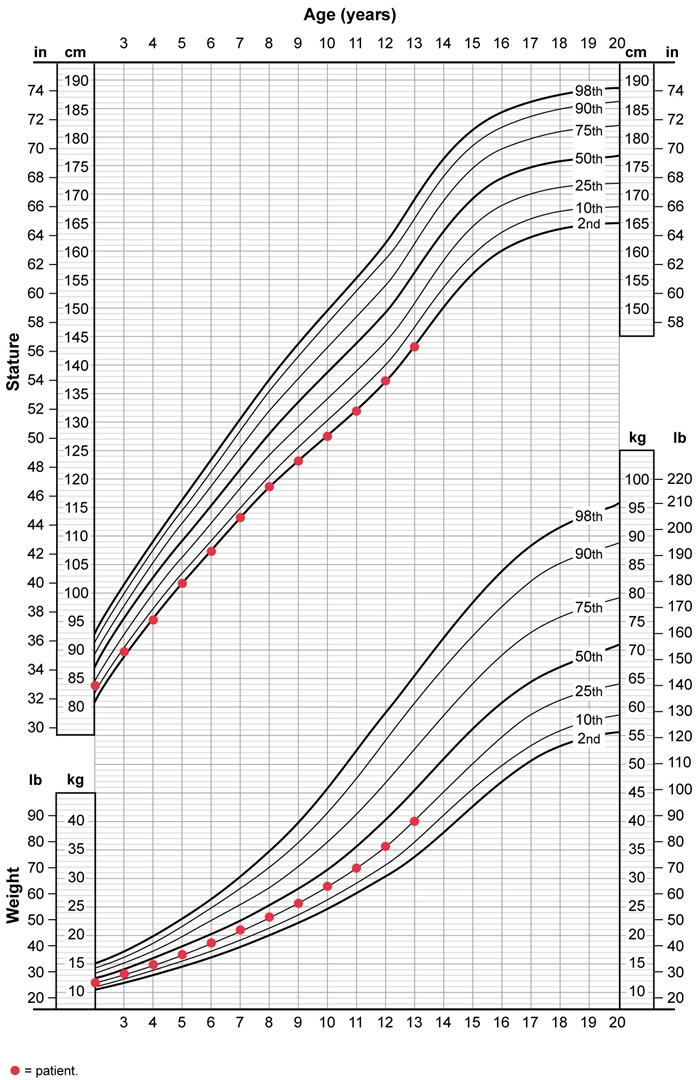 Which of the following is the most likely diagnosis in this patient?
 (Multiple Choice)
4.7/5 (84)
(84) A newborn girl is examined in the delivery room immediately after induced vaginal delivery for fetal growth restriction. She was born to a 40-year-old woman with no significant medical history. In addition to fetal growth restriction, a prenatal ultrasound demonstrated a ventricular septal defect. Her parents declined additional prenatal testing. The patient's weight and head circumference are <5th percentile. Examination shows hypertonia and closed fists, with the second digit overlapping the third and the fifth overlapping the fourth. Based on this patient's presumed chromosomal abnormality, which of the following additional physical findings is most likely to be present on examination?
(Multiple Choice)
4.8/5 (67)
(67) A 68-year-old woman is brought to the emergency department due to right-sided weakness and double vision. The patient was well when she went to bed last night, but on waking, she had difficulty getting out of bed. She has a 20-year history of hypertension and type 2 diabetes mellitus. Blood pressure is 162/90 mm Hg and pulse is 84/min. On physical examination, the left eyelid is drooping, and the patient is unable to raise it. The left eye is deviated laterally, and the pupil does not constrict with either direct or consensual light stimulation. Extraocular movement in the right eye is normal, with brisk pupillary response. The right corner of the mouth droops slightly. Muscle weakness in the right arm and leg is present; muscle strength and reflexes in the left arm and leg are normal. Sensation to light touch and pain is intact bilaterally. Which of the following is the most likely diagnosis in this patient?
(Multiple Choice)
4.9/5 (97)
(97) A 2-year-old boy is brought to the office for a health supervision visit. His mother has noticed that the patient looks cross-eyed at times, but she otherwise has no concerns. The patient was born at full term without pregnancy complications. He has no medical conditions, but family history is significant for glaucoma in his father. Examination shows the right eye is mildly deviated toward the nose, and pupillary red reflexes are asymmetric. There is no proptosis, and extraocular movements are intact and nonpainful. Which of the following is the best next step in management of this patient?
(Multiple Choice)
4.9/5 (93)
(93) A 9-year-old boy is brought to the clinic for evaluation of dark brown urine for a day. He has had no fever, dysuria, hesitancy, or urinary frequency. For the past 3 days, the patient has had rhinorrhea, nasal congestion, and a sore throat, but these symptoms are improving. He has bilateral, sensorineural hearing loss that has worsened over the past 4 years. A maternal uncle died from complications of a renal transplant 5 years ago. Temperature is 37.1 C (98.8 F), blood pressure is 132/94 mm Hg, pulse is 90/min, and respirations are 14/min. The abdomen is soft and nontender and has no palpable masses. There is no suprapubic or costovertebral angle tenderness. Urinalysis reveals hematuria. Serum creatinine is 1.4 mg/dL, and serum complement levels are normal. A renal biopsy is performed. Which of the following is the most likely histologic finding?
(Multiple Choice)
4.9/5 (81)
(81) A newborn boy is being examined in the newborn nursery. He was born at term to a 34-year-old primigravida via spontaneous vaginal delivery. The mother had routine prenatal care with an uneventful pregnancy, and family history is unremarkable. Weight, length, and head circumference are at the 25th percentile. Examination shows an awake newborn with normal tone. The anterior fontanel is open and flat. The ears are in the normal position. Eye examination shows absence of the iris in both eyes. Examination of the oropharynx reveals an intact palate. Cardiopulmonary examination is normal. The abdomen is soft and the liver edge is palpable. Genitourinary examination shows the urethral opening at the ventral side of the penile shaft. The left testis is not palpable but the right testis is present. Examination of the skin and extremities is normal. This patient is at increased risk of developing which of the following disorders?
(Multiple Choice)
4.8/5 (84)
(84) A 6-year-old girl is brought to clinic by her mother due to constipation. Over the last 8 months, the patient's stools have become much more formed and less frequent. She now has large-caliber stools that clog the toilet every 4-5 days and are painful to pass. Her mother has been giving her daily stool softeners over the last month, without improvement. Twice in the last 2 weeks, the patient has had some drops of blood in the toilet after stooling, which prompted the clinic visit. She has been eating well with no associated vomiting, but her mother says that the patient is sometimes picky. Height is 111 cm (3 ft 8 in) and weight is 17.7 kg (39 lb), unchanged from her last well-child check 10 months ago. Temperature is 37 C (98.6 F) and pulse is 70/min. The patient is well-appearing. There is mild abdominal distension and a small anal fissure at the posterior commissure of the anus; the remainder of the examination is normal. Which of the following is most concerning for a pathologic, rather than a functional, cause of constipation in this patient?
(Multiple Choice)
4.8/5 (79)
(79) A 12-year-old boy is brought to the office for evaluation of a limp. Since waking this morning, the patient has not been able to put any weight on his right leg due to hip pain. He has had this pain for the past 2 days and has been taking ibuprofen, but the pain has not improved. The patient plays in a baseball league and practices a few days a week. Last week, he fell during practice and scraped his right hip. The abraded area developed mild cellulitis, which was treated with topical antibiotic ointment. The patient has no chronic medical conditions or previous surgeries. Temperature is 38.9 C (102 F). Height is at the 30th percentile and weight is at the 70th percentile for age. On examination, the right hip is externally rotated and has pain with passive movement. The remainder of the examination is normal. Hemoglobin is 13 g/dL, platelets are 280,000/mm3, and leukocyte count is 18,000/mm3. Erythrocyte sedimentation rate is 52 mm/hr. Which of the following treatment options would be most beneficial in preventing long-term morbidity for this patient's condition?
(Multiple Choice)
4.9/5 (72)
(72) A 7-month-old boy is brought to the clinic due to concerns for frequent infections. The patient has had 2 episodes of acute otitis media in the past month and developed bronchiolitis at age 5 months. The patient is developing normally and has received all age-appropriate vaccinations. Height and weight are at the 65th percentile. Cardiopulmonary examination is unremarkable. The abdomen is soft and nontender with no hepatosplenomegaly. There are red, scaly lesions over the cheeks bilaterally with some surrounding excoriations. Laboratory results are as follows: 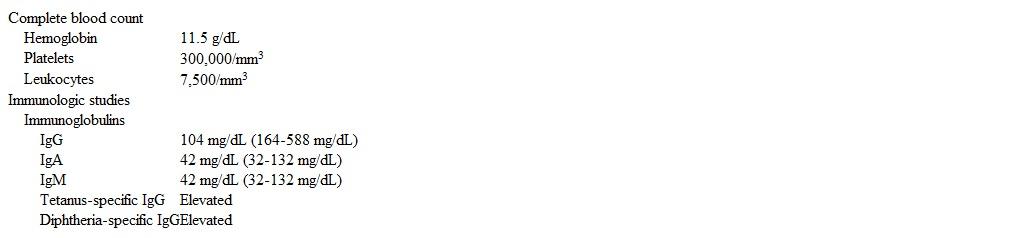 Which of the following is the most likely diagnosis in this patient?
 (Multiple Choice)
4.8/5 (80)
(80) An 18-month-old boy is brought to the office for a well-child visit. He was born full term and had no perinatal complications. He has had 2 episodes of otitis media that required treatment with antibiotics. The patient has a 12-15-word vocabulary, but strangers can understand only about 4 words. According to his parents, he babbles gibberish most of the time. He uses single words to indicate what he wants but does not combine them into 2-word phrases. He pulls to stand and can walk only while holding on to furniture or a parent's hand. Growth has been consistent along the 40th percentile for height, weight, and head circumference. During the visit, the patient pretends to feed a baby doll and sits on the floor scribbling with a crayon. He offers his mother the crayon but cries when the physician tries to play with him. Which of the following is the most likely diagnosis in this patient?
(Multiple Choice)
4.8/5 (81)
(81) A 1-day-old boy is in the neonatal intensive care unit due to congenital anomalies noted at birth. The infant was born vaginally at 36 weeks gestation to a 25-year-old woman, gravida 2 para 2, who declined prenatal testing and reported decreased fetal movement in the week preceding delivery. The infant was not latching well for the first 24 hours but has urinated and stooled. Examination shows a small face and jaw with a prominence on the back of the head. The oral mucosa is pink, but the hands and feet are mildly cyanotic. There are no skin creases on the palmar aspect of the digits. There is overlapping of the fingers bilaterally along with convexity of bilateral soles and limited hip abduction. A murmur at the left lower sternal border is heard on auscultation. Which of the following cardiovascular abnormalities is most likely present in this patient?
(Multiple Choice)
4.8/5 (85)
(85) A 4-day-old infant is brought to the emergency department due to bilious vomiting. The boy was born at 38 weeks gestation via an uncomplicated spontaneous vaginal delivery. His birth weight was 3.4 kg (7.5 lb), and Apgar scores were 8 and 9 at 1 and 5 minutes, respectively. The patient's hospital course was uncomplicated, and he was sent home on day 2 of life. Since discharge, he has been nursing every 2-3 hours but has begun to appear uncomfortable after feeding. Today, he developed 2 episodes of bile-stained vomiting after feeding. He has had no stool since discharge. Vital signs are normal. The infant appears irritable. There is moderate abdominal distension, and the anal canal is tight. Abdominal radiographs reveal dilated loops of bowel and air-fluid levels with no evidence of pneumatosis. Which of the following is the best next step in management of this patient?
(Multiple Choice)
4.9/5 (73)
(73) 
Filters
- Essay(0)
- Multiple Choice(0)
- Short Answer(0)
- True False(0)
- Matching(0)