



 Chat with AI
Exam 2: Pediatric

Exam 1: Medicine2 k Questions
Exam 2: Pediatric723 Questions
Exam 3: Psychiatry336 Questions
Exam 4: Surgery563 Questions
Exam 5: Obstetrics & Gynecology469 Questions
Select questions type


A 60-year-old man is brought to the office due to a 2-week history of involuntary muscle spasms in his arms, especially when he is startled. Over the past 2 months, the patient has experienced worsening insomnia and confusion and gotten lost in his surroundings. He has no fever, headache, or urinary symptoms. Temperature is 37.1 C (98.8 F), blood pressure is 130/76 mm Hg, and pulse is 82/min. The patient is alert but poorly groomed. Examination is notable for frequent irregular jerks of the upper and lower extremities, increased muscle tone, brisk deep tendon reflexes, and bilateral extensor plantar responses. On cognitive testing, the patient recalls 0 of 3 delayed recall items and is unable to draw a clock. A noncontrast head CT scan is normal. Electroencephalography reveals periodic sharp-wave complexes. Which of the following is the most likely outcome for this patient?
(Multiple Choice)
4.8/5  (84)
(84) A 4-year-old girl is brought to the office due to behavioral concerns. Over the last 2 months, her parents and preschool teacher have noticed that she frequently does not respond to their questions, and they often need to repeat themselves several times to get a response. Three months ago, the patient was hospitalized due to high fever, headache, nuchal rigidity, and recurrent seizures. Cerebrospinal fluid culture grew Streptococcus pneumoniae, and she was given parenteral antibiotics. The seizures were initially difficult to control but resolved after 72 hours of antibiotic therapy. A repeat cerebrospinal fluid culture was sterile, and the patient completed the course of antibiotics. She has had no fever or headache since then and has not followed up until today's visit. Vital signs and growth parameters are normal for age. In the office, the child is alert and can hop on 1 foot. She can copy a cross and square on paper. Which of the following is the most likely cause of this patient's current symptoms?
(Multiple Choice)
4.8/5 (84)
(84) A 10-hour-old boy is evaluated for jitteriness. The patient was born at 38 weeks gestation to a 36-year-old primigravid woman via cesarean delivery due to nonreassuring fetal heart tones. Pregnancy was complicated by maternal gestational diabetes. Birth weight was 4.5 kg (9 lb 14 oz). Apgar scores were 7 and 9 at 1 and 5 minutes, respectively. After birth, the patient had low blood glucose, which was treated appropriately. He has not yet had a bowel movement. The patient is afebrile with normal pulse and blood pressure. Oxygen saturation is 98% on room air. Examination shows a jittery neonate. Cardiopulmonary examination is unremarkable. There is no increased work of breathing, cyanosis, or tachypnea. The abdomen is soft, nontender, and nondistended. The remainder of the examination is unremarkable. Blood glucose is 65 mg/dL. Which of the following is the most appropriate next step in evaluation of this patient's symptoms?
(Multiple Choice)
4.8/5 (91)
(91) An 8-year-old boy is brought to the emergency department due to a bee sting. The patient's mother reports he was playing in the family's treehouse yesterday when he saw a beehive and tried to knock it down. He received a bee sting to his right hand. His mother removed the stinger and applied ice last night, but upon waking this morning, she noticed the patient's right hand was swollen and mildly painful. He does not report difficulty breathing, vomiting, or swelling of the throat. Temperature is 36.7 C (98.1 F), blood pressure is 110/60 mm Hg, pulse is 98/min, and respirations are 22/min. Pulse oximetry is 100% on room air. The patient is awake and alert, oropharyngeal examination is normal, and lungs are clear to auscultation bilaterally. On the dorsum of his right hand, there is swelling, redness, and induration extending 11 cm from a central clear area. It is painful to make a fist. Perfusion and sensation are intact in his fingers. Which of the following is the most likely cause of this patient's symptoms?
(Multiple Choice)
4.9/5 (85)
(85) An 18-year-old man is brought to the emergency department following a generalized tonic-clonic seizure. He developed full body jerking at home this morning, which lasted approximately 1 minute. The episode occurred just before the patient was about to visit the clinic for evaluation of a worsening headache for the past 2 days. His parents say that he has also seemed clumsy over the same period, including tripping a few times yesterday. He has no history of seizures and was previously healthy except for seasonal allergies managed with over-the-counter medications. Temperature is 38.9 C (102 F), blood pressure is 130/80 mm Hg, and pulse is 92/min. The patient is awake but oriented only to person. Pupillary examination is unremarkable. The patient has bilateral hyperreflexia in the upper and lower extremities. MRI of the brain is shown below: 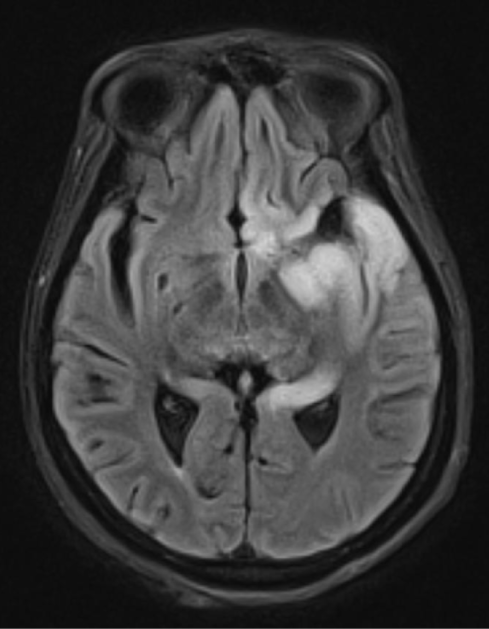 Which of the following is the most likely diagnosis for this patient?
 (Multiple Choice)
4.8/5 (83)
(83) A 23-year-old man comes to the physician complaining of worsening headache over the past week. He is "under a lot of stress at school" and having trouble sleeping because the headache is constant. Two weeks ago, he had an insect bite on his right cheek and now both of his eyes are swollen. He also has lost his appetite and vomited twice today. His temperature is 38.3° C (101° F), blood pressure is 130/90 mm Hg, pulse is 104/min, and respirations are 20/min. Examination shows erythema and swelling of the right cheek and bilateral eyelid edema, right greater than left. Bilateral extraocular movements are restricted. The bilateral forehead and mid-face are extremely tender to light palpation. Which of the following is the most likely diagnosis?
(Multiple Choice)
4.8/5 (82)
(82) A 17-year-old girl comes to the office for a routine maintenance evaluation. The patient is thinking about having sex for the first time. She has been in a relationship for 6 months and would like to have a "physical connection" with her boyfriend. The patient has not felt pressured by him and feels comfortable and safe in the relationship. She has fantasies often about having sex with her boyfriend and masturbates 4 or 5 times a week. The patient has no history of partnered sexual activity. Which of the following is the most appropriate response by the physician at this time?
(Multiple Choice)
4.9/5 (89)
(89) A 3-year-old boy is brought to the emergency department for 2 days of fever, cough, and worsening shortness of breath. The patient's parents report that he recently recovered from prolonged diarrhea due to Giardia infection. Medical history is significant for recurrent ear infections treated with antibiotics since age 6 months and lobar pneumonia requiring hospitalization. Temperature is 38.7 C (101.7 F), pulse is 140/min, and respirations are 60/min. Physical examination reveals small tonsils and crackles in the lower lobe of the right lung. The child's weight is at the 40th percentile. Which of the following is the most likely cause of this patient's recurrent infections?
(Multiple Choice)
4.9/5 (83)
(83) A 5-day-old girl is brought to the physician for her first checkup. She was born full term to a primigravid mother by uncomplicated vaginal delivery. She was discharged from the well-baby nursery 3 days ago. Since then, she has been breastfeeding exclusively every 1-3 hours for 15 minutes per breast. She has had 5-6 wet diapers and 3-4 "yellow, seedy" stools daily. Birth weight was 3402 g (7 lb 8 oz). Current weight is 3260 grams (7 lb 3 oz). On examination, the girl is awake and alert. The anterior fontanelle is open, soft, and flat. Her mucous membranes are moist and capillary refill is <2 seconds. Peeling of the hands and feet is seen, as is acrocyanosis. Her diaper is shown below. 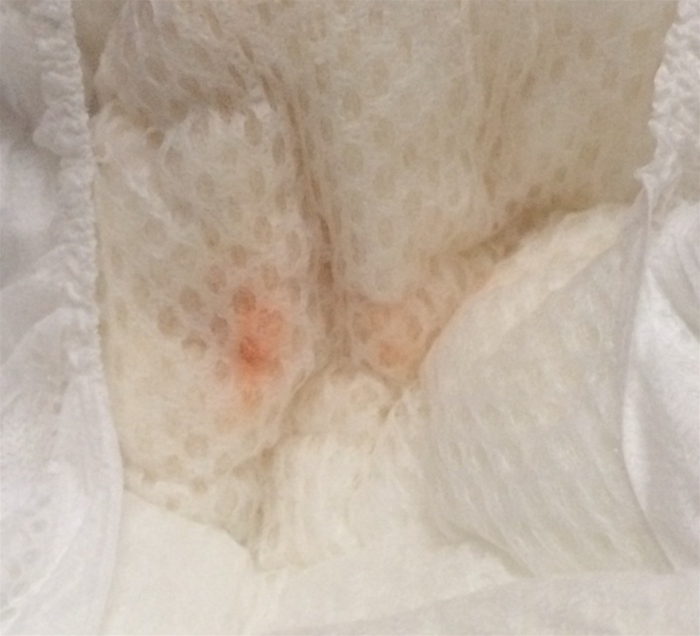 Which of the following is the most appropriate next step in management of this patient?
 (Multiple Choice)
4.9/5 (76)
(76) A newborn boy is brought to the emergency department for coughing and difficulty feeding. The patient was born at home 3 hours ago via spontaneous vaginal delivery. When the mother, a 24-year-old primigravida, attempted to breastfeed him, the patient coughed and vomited. The mother had no prenatal care. She has a history of illicit drug use but says she did not use any substances during the pregnancy. Temperature is 37 C (98.6 F), pulse is 120/min, and respirations are 50/min. Oxygen saturation is 95%. Ballard score estimates the boy was born at 37 weeks gestation. Weight and length are at the 25th and 50th percentiles for age, respectively. After attempting another feed with 10 mL of formula, the patient has a coughing fit; there is formula mixed with saliva in his mouth. Coarse breath sounds are noted bilaterally on pulmonary examination with intercostal retractions. Cardiac examination reveals a grade 2/6 systolic murmur at the upper left sternal border. There is no hepatomegaly. Neurologic examination shows normal tone. Which of the following is the best next step in the management of this patient?
(Multiple Choice)
4.9/5 (77)
(77) A 5-year-old girl is brought to the clinic for follow-up after being diagnosed with a febrile urinary tract infection 3 days ago. She was prescribed oral antibiotics, which she has been taking for the past 3 days. Despite taking the antibiotics, the patient continues to have a fever and has had 3 episodes of nonbloody, nonbilious emesis. The patient last vomited this morning but has been able to tolerate ice chips. Urine culture grew >100,000 colony-forming units/mL of Escherichia coli, and sensitivities are pending. Temperature is 38.8 C (101.8 F), blood pressure is 110/70 mm Hg, pulse is 144/min, and respirations are 20/min. Bilateral tympanic membranes are clear. The oropharynx is dry but has no exudates or erythema. The lungs are clear to auscultation bilaterally. Bowel sounds are hypoactive. There is tenderness along the left costovertebral angle. In addition to broadening antibiotic coverage, which of the following is the best next step in management of this patient?
(Multiple Choice)
4.8/5 (83)
(83) A 13-year-old boy is brought to the office due to poor weight gain. His mother also notes that he is the shortest student in his class. The patient has occasional abdominal discomfort and a bloating sensation but has a good appetite and eats a balanced diet. He has had no nausea, vomiting, diarrhea, hematochezia, or melena. The patient has a 3-year history of type 1 diabetes, and his insulin was recently decreased due to recurrent episodes of hypoglycemia. Family history is significant for hypothyroidism in the mother. Vital signs are within normal limits. Weight is at the 5th percentile for age and height is at the 10th. Physical examination shows anicteric sclera, moist mucous membranes, no enlarged lymph nodes, and normal heart and lung sounds. The abdomen is nondistended, soft, and nontender with no organomegaly. Laboratory results are as follows:  Which of the following is the best next step in evaluation of this patient?
 (Multiple Choice)
4.9/5 (86)
(86) A 9-year-old girl is brought to the office by her mother for assessment of "bad stomach aches." The patient has missed 5 days of school in the past few weeks due to intermittent abdominal pain that is "achy all over" and worse in the morning. She has not had associated nausea, vomiting, diarrhea, or constipation. Her appetite is poor. The mother reports that her daughter used to be talkative and outgoing, but now she declines invitations to play at friends' houses and instead takes naps after school. The patient has been distracted in class lately and less engaged in group activities. Her father lost his job 3 months ago and has been home more often since then. The mother says, "Things have been difficult financially. It doesn't help that her father has started drinking again." When interviewed, the patient is withdrawn and makes poor eye contact. When asked if she feels depressed, she says, "Everything will be better when no one has to take care of me anymore." She avoids answering further questions. The patient has no significant medical history. Vital signs and physical examination, including abdominal examination, are normal. Which of the following is the most appropriate next step in the management of this patient?
(Multiple Choice)
4.9/5 (72)
(72) A 34-year-old previously healthy man comes to the office due to severe back pain. Two days ago, the patient was working on the lawn and experienced sudden-onset low back pain while moving a bag of soil. The pain worsens with movement and radiates to his left leg. He also reports weakness of the left leg. He has had some improvement in the pain after taking NSAIDs and resting. Physical examination shows spasm of lower paraspinal muscles. There is weakness of left ankle dorsiflexion and toe extension. Ankle and knee reflexes are normal. Sensory examination shows loss of pinprick sensation over the dorsum of the left foot. Rectal tone is normal, and the remainder of the examination shows no abnormalities. Which of the following is the most likely cause of this patient's current condition?
(Multiple Choice)
4.9/5 (87)
(87) A 2-hour-old boy is admitted to the neonatal intensive care unit with severe respiratory distress. The patient was born via forceps-assisted vaginal delivery at 38 weeks gestation to a 35-year-old woman, gravida 2 para 2, whose pregnancy was complicated by poorly controlled gestational diabetes mellitus. The delivery was complicated by recurrent late decelerations and thick meconium. The patient was intubated in the delivery room due to respiratory distress. Blood pressure is 58/30 mm Hg, pulse is 158/min, and respirations are 70/min. Pulse oximetry readings are 90% in the right hand and 79% in the right foot on 100% oxygen. Physical examination is remarkable for meconium-stained nails and intercostal and subxiphoid retractions. Chest x-ray reveals bilateral, patchy opacities and hyperinflation consistent with meconium aspiration syndrome. Echocardiogram shows decreased right ventricular output. Which of the following is the best next step in management of this patient?
(Multiple Choice)
5.0/5 (98)
(98) A 6-year-old boy with cystic fibrosis is brought to the office for shortness of breath. He has had a worsening, productive cough over the past week and now has fever, chills, and difficulty breathing. His vaccinations are up to date. Weight is at <5th percentile and height is at the 10th percentile. His temperature is 38.9 C (102 F), blood pressure is 122/80 mm Hg, pulse is 118/min, and respirations are 28/min. Pulse oximetry shows an oxygen saturation of 91%. Physical examination shows a tired-appearing boy with nasal flaring, intercostal retractions, and a barrel-shaped chest. Auscultation reveals diffuse bilateral wheezing and crackles. Clubbing of the fingers and toes exhibit 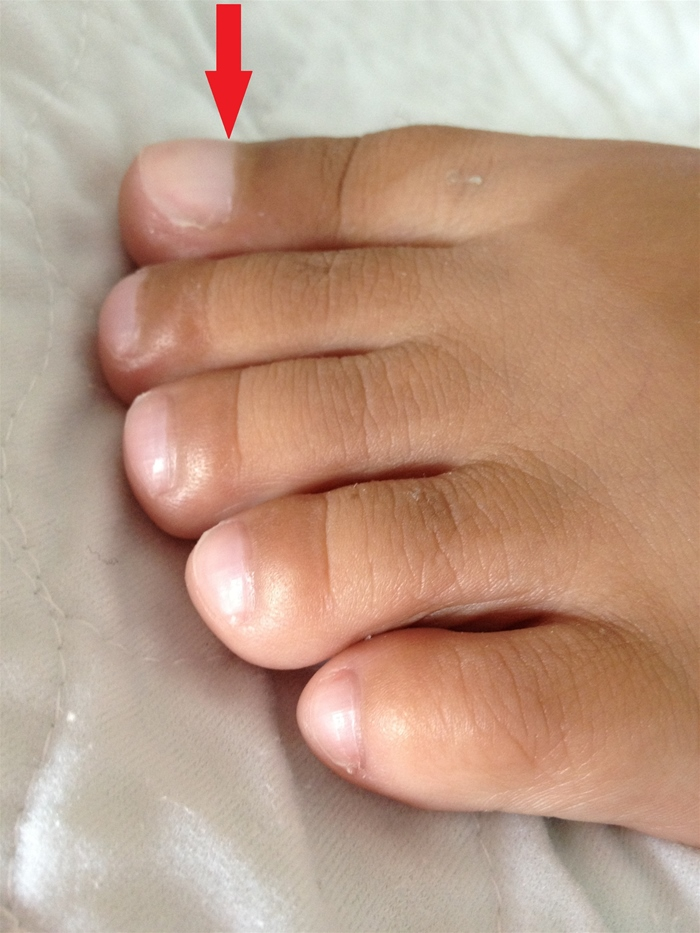 is present. Sputum culture results are pending. What is the most likely causative organism of this patient's pneumonia?
 (Multiple Choice)
4.8/5 (75)
(75) An 80-year-old woman is brought to the emergency department due to progressive confusion, generalized weakness, and unsteadiness for the past several days. The patient had a right femoral fracture 4 months ago and underwent hip surgery. She has been using a walker to ambulate since coming home from a physical rehabilitation facility 3 weeks ago. She has had no fever, chest pain, vomiting, diarrhea, or dysuria. The patient's medical problems include hypertension, hyperlipidemia, coronary artery disease, transient ischemic attack, and persistent atrial fibrillation. Her medications include aspirin, warfarin, metoprolol, and a statin. Temperature is 37.2 C (99 F), blood pressure is 140/90 mm Hg, pulse is 72/min and irregular, and respirations are 14/min. CT scan of the head without contrast is shown below. 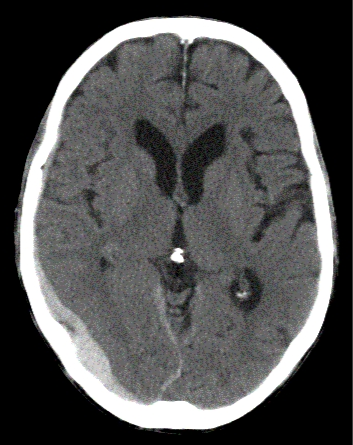 Which of the following is the most likely cause of this patient's condition?
 (Multiple Choice)
4.8/5 (87)
(87) A 6-year-old boy is brought to the office by his mother due to bleeding gums for the past 3 months. The patient brushes his teeth regularly and visits a dentist twice per year; his most recent dentist appointment 6 months ago was normal. The patient has become easily fatigued over the last 3-4 weeks and is not as active as he was previously. Height is below the 5th percentile and weight is at the 25th percentile for age. Several small patches of hypopigmentation are noted on the trunk. The thumbs appear hypoplastic and thenar eminences are flattened. Laboratory results are as follows:  Which of the following is the most likely cause of this patient's condition?
 (Multiple Choice)
4.9/5 (60)
(60) An 18-month-old girl is brought to the emergency department due to decreased energy. Over the last 2 months, the parents have noticed that she tires easily after play, and the fatigue has steadily worsened. The patient has been drinking 1,080 mL (36.5 oz) of cow's milk daily since transitioning from breast milk at age 12 months. She is a picky eater. Examination is unremarkable other than notable pallor. Hemoglobin is 2.3 g/dL. Stool occult blood is negative. The patient is admitted to the hospital for iron deficiency anemia due to poor dietary intake and receives 20 mL/kg of packed red blood cells over 3 hours. An hour after completion, she develops respiratory distress. Temperature is 37.1 C (98.8 F), blood pressure is 130/60 mm Hg, pulse is 160/min, and respirations are 44/min. Pulse oximetry is 89% on room air. The patient is grunting with retractions. Cardiac examination shows tachycardia with an S3 gallop but no friction rub. Lung examination shows diffuse crackles bilaterally. She is placed on oxygen. Which of the following is the best next step in management of this patient?
(Multiple Choice)
4.9/5 (80)
(80) A 17-year-old girl comes to the office due to knee pain. She first noticed a dull, achy pain in her left knee a week ago after soccer practice. Despite icing her knee regularly, the patient has been unable to participate this week due to pain when running and jumping. She does not recall trauma to the knee and has otherwise been healthy. Vital signs are normal. Examination shows a well-appearing adolescent with a moderate effusion of the left knee and a limp. There is mild tenderness to palpation and limited knee extension. Which of the following additional pieces of information is most likely to help identify the underlying diagnosis?
(Multiple Choice)
4.8/5 (68)
(68) 
Filters
- Essay(0)
- Multiple Choice(0)
- Short Answer(0)
- True False(0)
- Matching(0)