



 Chat with AI
Exam 2: Pediatric

Exam 1: Medicine2 k Questions
Exam 2: Pediatric723 Questions
Exam 3: Psychiatry336 Questions
Exam 4: Surgery563 Questions
Exam 5: Obstetrics & Gynecology469 Questions
Select questions type


A 6-year-old boy with congenital deafness is brought to the emergency department after fainting. He was running in his backyard when he suddenly fell to the ground and lost consciousness. The patient regained consciousness quickly and without confusion. The event was not associated with convulsions, tongue biting, or urinary incontinence. He has never had an episode like this before. The patient is developmentally normal and takes no medications. He underwent bilateral cochlear implantation at age 2 for sensorineural hearing loss. The patient had a brother who died during a swim meet at age 14. Blood pressure is normal. Cardiac examination reveals a regular heart rate and no murmurs. The remainder of the physical examination is unremarkable. Serum chemistry is normal. ECG is shown in the exhibit.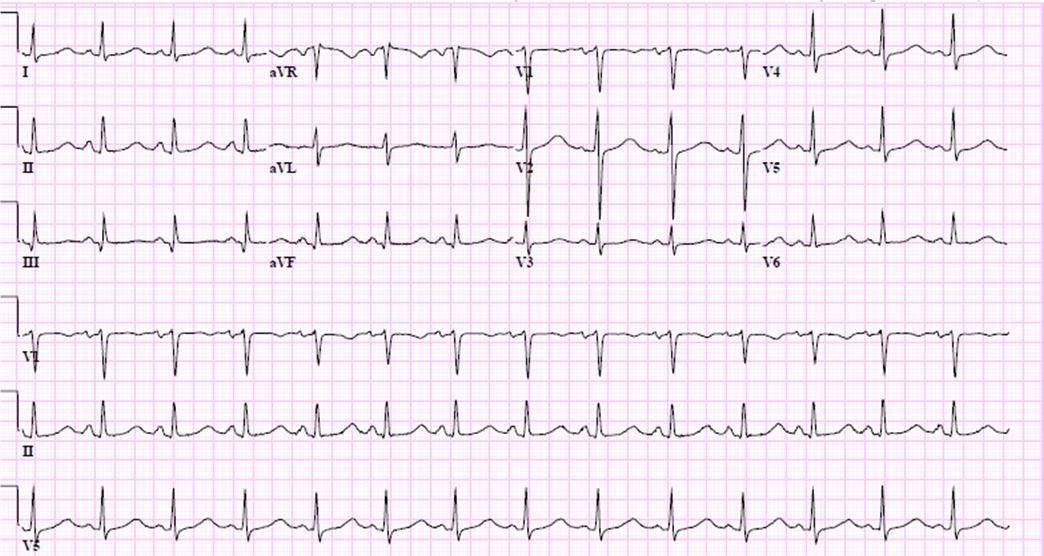 Which of the following is the most appropriate pharmacologic treatment for this patient?
 (Multiple Choice)
4.9/5  (73)
(73) A 2-day-old boy is being evaluated in the nursery. The patient was born at 39 weeks gestation via spontaneous vaginal delivery to a 17-year-old primigravida. The pregnancy was complicated by lack of prenatal care. The delivery was uncomplicated, and the patient had Apgar scores of 9 and 9 at 1 and 5 minutes, respectively. He is formula-feeding well and has stooled twice but has had only a single wet diaper in the first 48 hours. Weight is 2.89 kg (6 lb 6 oz), down 3% from birth weight. Physical examination is unremarkable. Which of the following is the best next step in the evaluation of this patient?
(Multiple Choice)
4.8/5 (64)
(64) A 1-day-old girl is being evaluated in the newborn nursery. She was born at 39 weeks gestation. Vital signs are normal. Examination shows a vigorous newborn with a firm, nonfluctuant swelling confined to the right side of the skull, as seen in the image below: 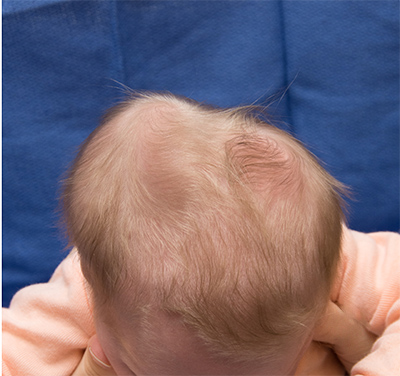 In addition to monitoring bilirubin levels, which of the following is the best next step in management of this patient?
 (Multiple Choice)
5.0/5 (81)
(81) A 10-year-old girl is brought to the clinic for evaluation of a limp. She first noticed mild pain in the right groin 2 weeks ago and took ibuprofen, which initially helped. The pain acutely worsened 2 days ago after the patient fell while ice skating. Since then, she has been unable to fully bear weight on her right leg due to pain, which is now minimally relieved with ibuprofen and rest. The patient has autoimmune hypothyroidism for which she takes levothyroxine. Temperature is 37.2 C (99 F). Height and weight are at the 10th and 25th percentiles for age, respectively. When the right hip is flexed, there is external rotation of the hip. When the left hip is flexed, the hip remains in a neutral position. There is normal range of motion in both knees and no redness or edema overlying the hips and knees. The patient has a limp and bears little weight on her right side when walking. Bilateral hip radiograph with frog-leg lateral view reveals the following: 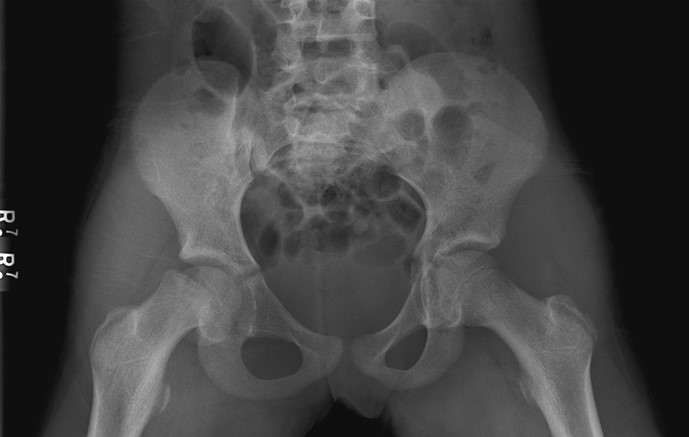 Which of the following is the best next step in management of this patient?
 (Multiple Choice)
4.8/5 (76)
(76) A 14-year-old girl is brought to the clinic for an annual well check. Her father says that the patient has always been a picky eater but does eat 3 meals a day. She used to stay up late talking to friends but lately has been tired and goes to bed after dinner. Blood pressure is 110/70 mm Hg, and pulse is 52/min. Breast examination is consistent with Tanner stage 1, and genital examination shows pubic hair consistent with Tanner stage 4. The remainder of the examination is unremarkable. The patient's growth chart is shown in the image below: 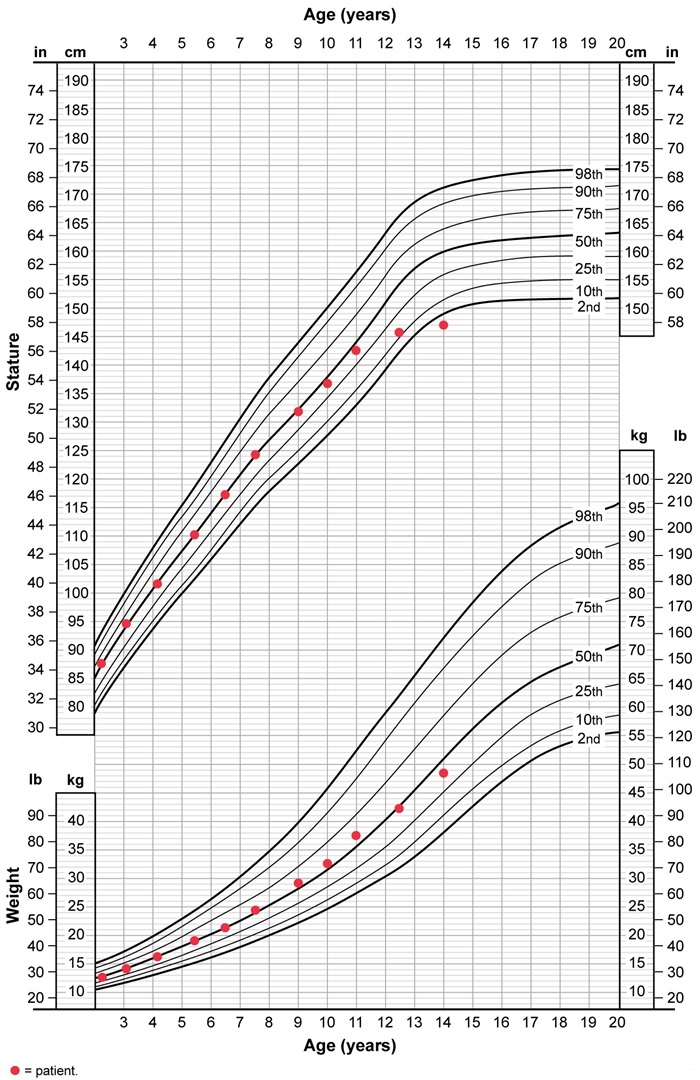 Bone age is significantly less than chronologic age. Which of the following is the most likely cause of this patient's presentation?
 (Multiple Choice)
4.7/5 (82)
(82) A 6-month-old girl is brought to the office due to a rash on her cheeks, arms, and chest for the past 2 weeks. She is constantly scratching and rubbing her arms, and her parents are having a hard time keeping her hands away from the affected areas. The patient drinks breast milk and formula and has not started solid foods. There are no household pets, and she is bathed every 2 days with a body wash free of fragrance, alcohol, and dyes. The patient has not been exposed to new clothing, detergents, lotions, or other substances. Physical examination of the arms is shown in the exhibit. 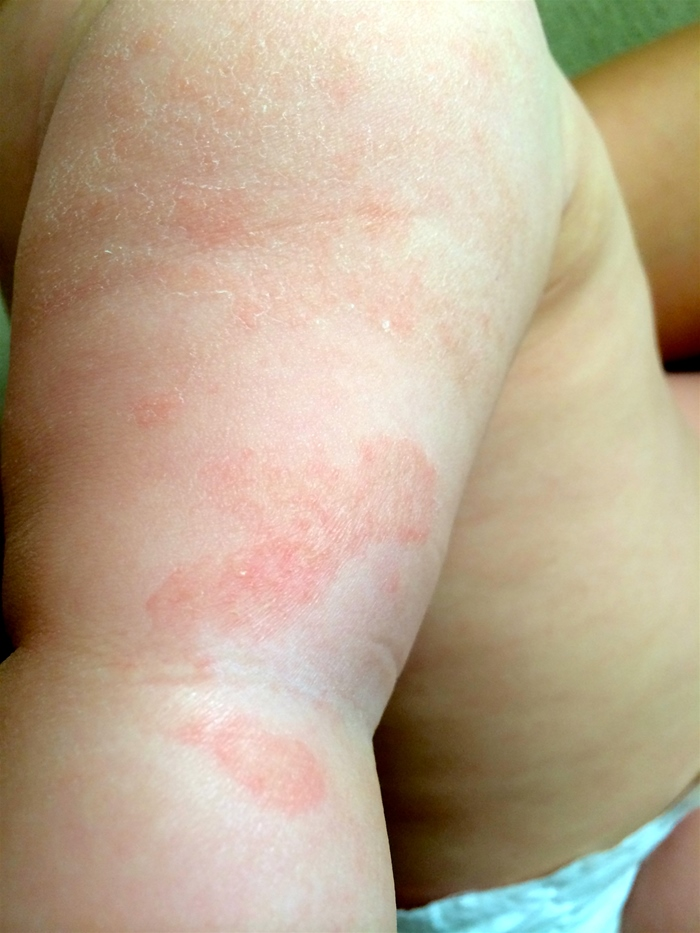 The face and chest have similar lesions. There is no rash in the diaper area or on the palms or soles. Which of the following is the most likely diagnosis in this patient?
 (Multiple Choice)
4.8/5 (80)
(80) A 56-year-old man comes to the emergency department an hour after sudden onset of left hemiparesis that resolved completely in 30 minutes. The patient has not seen a physician for many years and takes no medications. Two years ago, he was told that his blood pressure was elevated during a visit to the dentist. The patient has a 30-pack-year smoking history and drinks 1 or 2 cans of beer daily. He has a sedentary lifestyle and a diet consisting mostly of fast food. The patient's father had a stroke at age 60. Blood pressure is 170/95 mm Hg and pulse is 94/min. BMI is 34 kg/m2. Physical examination is normal. ECG shows sinus rhythm with no acute ischemic abnormalities, and noncontrast CT scan of the head reveals no hemorrhage. Serum LDL is 165 mg/dL and hemoglobin A1c is 7.5%. Which of the following is the greatest risk factor associated with this patient's neurological condition?
(Multiple Choice)
5.0/5 (87)
(87) A 15-month-old boy is brought to the emergency department with cyanosis. Over the past week, the patient has been teething and has had mild nasal congestion and low-grade fevers. He has been eating and drinking normally. The patient was extremely fussy today, despite his mother giving him acetaminophen and a topical anesthetic that she used when she had a toothache. He was hospitalized for bronchiolitis 6 months ago but is otherwise healthy, and immunizations are up to date. Blood pressure is 90/60 mm Hg, pulse is 158/min, and respirations are 50/min. Pulse oximetry is 85% on room air. Physical examination shows a sleepy child with blue discoloration of the skin and nails. The lungs are clear to auscultation bilaterally. Cardiac examination reveals no murmurs or gallops. The abdomen is soft, nontender, and has no hepatosplenomegaly. Blood samples, including arterial blood gas on room air, are obtained for laboratory testing. Subsequently, 100% oxygen is administered but fails to increase the pulse oximetry reading or the cyanosis.
Which of the following laboratory findings would most likely be seen in this patient?
(Multiple Choice)
4.8/5 (87)
(87) A 12-year-old girl recently diagnosed with idiopathic aplastic anemia is brought to the clinic for follow-up. Since her visit a week ago, the patient has developed red spots and bruising on her arms and legs. Laboratory evaluation reveals an absolute neutrophil count of 420 cells/mm3 and platelet count of 7,000/mm3. She is given a platelet transfusion. Toward the end of the transfusion, the patient develops a rash on her chest that spreads to the rest of the body. Temperature is 37.2 C (99.0 F), blood pressure is 110/82 mm Hg, pulse is 90/min, and respirations are 18/min. Pulse oximetry is 98% on room air. Oropharynx examination is normal. Lung examination is unremarkable. Skin examination reveals a diffuse, urticarial rash along the trunk and extremities, along with pinpoint, nonblanching, red macules and bruises at the extremities. The transfusion is stopped, and the patient receives diphenhydramine. Vital signs remain stable over the next hour, and the rash improves slightly. Which of the following is the best next step in evaluation of this patient's transfusion reaction?
(Multiple Choice)
4.8/5 (71)
(71) A 3-year-old girl is brought to the emergency department due to severe oral pain. The pain began 2 weeks ago with discomfort while chewing and has progressively worsened; she now refuses any oral intake. The patient had a similar episode of oral pain last year. Medical history includes 2 sinus infections and numerous episodes of nonpurulent cellulitis. Skin cultures from previous infections isolated Staphylococcus aureus and Streptococcus pyogenes. Physical examination shows periodontal inflammation with ulceration and necrosis. The results of a complete blood count are as follows:  Which of the following abnormalities is most likely present in this patient?
 (Multiple Choice)
4.9/5 (77)
(77) A 24-year-old woman is brought to the emergency department 30 minutes after a seizure. The patient had an uncomplicated spontaneous vaginal delivery 10 days ago and was discharged from the hospital 2 days after delivery. She has had worsening headache for the past several days, which is most severe upon awakening in the morning and is associated with vomiting. Today, she experienced a brief generalized tonic-clonic seizure that was witnessed by her husband. She has no history of seizure disorder or other medical conditions. Family history is significant for recurrent deep venous thrombosis in her mother. Temperature is 37.1 C (98.7 F), blood pressure is 105/70 mm Hg, and pulse is 90/min. On physical examination, the patient is somnolent but arouses to voice and follows instructions. Pupils are normal but there is bilateral papilledema. There is no focal weakness or sensory loss. There is no neck stiffness. A noncontrast CT scan of the head reveals no intracranial hemorrhage or mass lesions. Blood cell counts, serum electrolytes, and liver function studies are within normal limits. Urinalysis is normal. Which of the following is the best next step in management of this patient?
(Multiple Choice)
4.9/5 (87)
(87) A 1-day-old girl is evaluated in the newborn nursery due to swollen hands and feet. She was born at term via an emergency cesarean because her mother had preeclampsia with severe features complicated by pulmonary edema. The newborn's vital signs are normal. Examination shows a short, webbed neck; dysplastic nails; and bilateral, nonpitting carpal and pedal edema. Ultrasound of the abdomen shows a horseshoe kidney. Which of the following is the most likely cause of the edema in this patient?
(Multiple Choice)
4.9/5 (70)
(70) A 45-year-old woman comes to the office to discuss her facial asymmetry. For the past 6 weeks, the right side of her face has been progressively weakening. The patient notices there are fewer wrinkles on the right side of her forehead than on the left, and the fold in front of her cheek seems less deep. Sometimes she has "spasms" of the right side of her face, and her right eye feels "gritty, like there is sand in it." The patient has no chronic medical conditions and takes no medications. Vital signs are within normal limits. On examination, the ears are clear with no lesions. She is unable to hear a finger rub on the right side. Extraocular movements are intact; there is edema and erythema of the conjunctiva on the right, and normal conjunctiva on the left. Pupils are equal and reactive to light. There is asymmetry between the left and right sides of the face at rest. When asked to move her face, there is a little movement of right-sided parts of the face, including the forehead. There is incomplete eye closure of the right eye; the left eye closes fully. Which of the following is the most appropriate next step in diagnosis?
(Multiple Choice)
4.8/5 (78)
(78) A 62-year-old man is brought to the emergency department after losing consciousness at church 30 minutes earlier. The patient was attending a service with his wife when he suddenly became unresponsive. He was noted to have brief jerking movements of the arms. The patient was helped to the floor and became responsive and was back at his baseline mental status after about 2 minutes. In the emergency department, the patient is awake and alert, and he has mild tongue pain. The patient had a similar episode 3 weeks ago; while sitting on the toilet, he became disoriented and then found himself lying on the bathroom floor. He had no lightheadedness or chest pain prior to these events. Medical history includes hypertension, myocardial infarction, and stroke with no residual neurologic deficit. Vital signs are within normal limits, and there are no orthostatic changes. A small, nonbleeding laceration is present on the lateral border of the tongue. The lungs are clear on auscultation, and heart sounds are normal. Neurologic examination reveals normal cranial nerves; there is no focal weakness or sensory loss. Which of the following findings in this patient are most indicative of epileptic seizure compared to syncope?
(Multiple Choice)
4.8/5 (84)
(84) A 6-year-old boy is brought to the office for evaluation of leg pain. The pain has been constant for the last 2 weeks and keeps the patient from playing with his friends. It is worse at night and has made it difficult for the child to fall asleep. He wakes up several times nightly to void and has had episodes of incontinence as the leg pain prevents him from walking to the bathroom. The patient has had no recent fever or dysuria. Temperature is 36.7 C (98 F). Cardiac examination reveals tachycardia; no murmurs are present. A soft, non-fluctuant, tender, 5-cm (2.5-in) mass over the right anterior distal thigh without overlying erythema is noted. The right knee has full range of motion, and no effusion is noted. An erythematous, papular rash is present over the chest, trunk, and groin. Laboratory results are as follows:  Skeletal survey reveals a single small, well-defined, lytic distal femoral diaphyseal lesion. Which of the following is the most likely diagnosis in this patient?
 (Multiple Choice)
4.7/5 (87)
(87) A 3-year-old boy is brought to the office by his father due to a rash near his buttocks for 2 weeks. The father states, "He has been scratching his bottom during the day. We have tried several over-the-counter barrier ointments and antifungal creams to soothe the area, but nothing seems to help." The patient is toilet-trained during the day but uses diapers at night. He usually stools twice a day without straining, but for the last few days he has had pain with bowel movements and blood on the toilet paper after wiping. He has had no recent illnesses and has been eating and sleeping well. The patient has no chronic medical conditions, and vaccinations are up to date. His 8-year-old sister had pharyngitis a few weeks ago but is now recovered after taking antibiotics. Temperature is 37.2 C (99 F). Physical examination shows a well-appearing child with a bright red, sharply defined rash that extends 2 cm circumferentially around the anus. There are 2 fissures in the perianal region. No other rashes are present on the body. Which of the following is the most likely diagnosis in this patient?
(Multiple Choice)
4.7/5 (78)
(78) A 3-year-old boy is brought to the clinic due to decreased energy and yellow skin. The patient first became ill 2 days ago when he developed a runny nose and cough. Yesterday, he had abdominal pain with nausea, but he has not had vomiting or diarrhea. The mother also noticed yellowing of the patient's eyes and skin, and this morning he did not want to play or eat. Medical history includes similar yellowing of the skin after birth that required phototherapy. Otherwise, he has been healthy. Several members of his family had similar intermittent episodes of skin yellowing during childhood, and 2 relatives underwent splenectomies in adulthood. The patient takes no medications. Physical examination shows a tired-appearing toddler with mild jaundice. Eye examination shows mild scleral icterus. The abdomen is soft and tender in the left upper quadrant. The spleen is 4 cm below the costal margin. The remainder of the examination shows no abnormalities. Laboratory results are as follows:  Additional evaluation of this patient would most likely reveal which of the following laboratory findings?
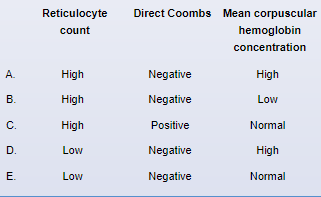
Additional evaluation of this patient would most likely reveal which of the following laboratory findings?
(Multiple Choice)
4.9/5 (67)
(67) A 5-year-old boy is brought to the clinic due to persistent ear discharge. The patient began to have purulent right ear drainage a month ago. Topical antibiotic drops and oral antibiotics have not improved his symptoms. He has had no fever, ear pain, dizziness, or tinnitus. The patient was born with a cleft palate that was repaired in infancy. Due to bilateral persistent middle ear effusions, tympanostomy tubes were also placed. Three years ago, the tympanostomy tubes were removed, after which audiometry was normal. He has no other medical conditions. Temperature is 37.2 C (99 F). There is scant, yellow, malodorous discharge in the right ear canal. The right tympanic membrane (TM) is immobile with insufflation and appears intact. There is retraction of the superior portion of the TM and a pearly white mass. The left TM is mobile and normal in appearance. Audiometry reveals conductive hearing loss on the right side. Gait is normal. Which of the following is most likely responsible for this patient's presentation?
(Multiple Choice)
4.9/5 (76)
(76) A 36-year-old woman comes to the clinic for an ultrasound after an elevated alpha-fetoprotein level was found during a second trimester quadruple screen. The patient has had routine prenatal care since 8 weeks gestation. She has been taking a daily prenatal multivitamin since the first trimester and takes no other medications. She has had 2 prior spontaneous abortions but has no chronic medical conditions. The patient does not use tobacco, alcohol, or illicit drugs. Transabdominal ultrasound reveals a fetus with thickened intestinal loops that are floating free in the amniotic sac. There is also decreased fluid in the amniotic sac, suggestive of oligohydramnios. This patient's ultrasound finding is most likely due to which of the following conditions?
(Multiple Choice)
4.8/5 (72)
(72) An 11-month-old boy is brought to the emergency department due to irritability and poor fluid intake. Seven days ago, the patient developed a fever with poor appetite, and he has continued to have daily fevers. Over the past 2 days, the patient has only consumed half of the daily volume of formula he normally drinks. The patient has also been sweating while feeding. He is often irritable when awake and has been napping longer than usual. Temperature is 38.6 C (101.5 F), blood pressure is 74/38 mm Hg, pulse is 194/min, and respirations are 60/min. The patient appears irritable and is grunting. Examination shows an injected pharynx and bilateral conjunctivae. There is perianal peeling and periungual desquamation of his hands, fingers, and toes. Cardiopulmonary examination reveals an S3 gallop and diffuse, fine lung crackles bilaterally. The liver is 3 cm below the costal margin. There is edema of the bilateral lower extremities. Chest-x ray reveals pulmonary edema. Which of the following is the most likely etiology of this patient's condition?
(Multiple Choice)
4.8/5 (94)
(94) 
Filters
- Essay(0)
- Multiple Choice(0)
- Short Answer(0)
- True False(0)
- Matching(0)