



 Chat with AI
Exam 2: Pediatric

Exam 1: Medicine2 k Questions
Exam 2: Pediatric723 Questions
Exam 3: Psychiatry336 Questions
Exam 4: Surgery563 Questions
Exam 5: Obstetrics & Gynecology469 Questions
Select questions type


A 3-week-old neonate is brought to the office due to a facial rash. Three days ago, the rash started as small bumps on the forehead that subsequently spread to the entire face. The patient seems unbothered by the rash and has continued to take 3 ounces of formula every 2-3 hours. The patient was born at term via a spontaneous vaginal delivery to a mother with an uncomplicated pregnancy. The patient has an older brother who attends day care. Temperature is 36.9 C (98.4 F), heart rate is 125/min, and respirations are 37/min. On examination, the patient is awake and alert. Skin examination is shown in the exhibit.  The remainder of the examination, including skin in other areas, is normal. Which of the following is the most appropriate next step in the management of this patient's rash?
 (Multiple Choice)
4.8/5  (72)
(72) A 4-month-old boy is brought to the office by his parents due to progressive lethargy, poor feeding, fatigue, and increasing pallor for the past 4 weeks. Antenatal and birth histories are unremarkable. The patient's diet consists mainly of breast milk. Immunizations are current. Physical examination shows a webbed neck, cleft palate, mild hypertelorism, flat nasal bridge, and pale mucous membranes. The thumbs appear triphalangeal. Cardiac examination reveals tachycardia with a systolic ejection flow murmur. Laboratory results are as follows:  Maternal blood type is O+. Which of the following is the most likely diagnosis in this patient?
 (Multiple Choice)
4.7/5 (94)
(94) A 7-month-old boy is brought to the emergency department due to persistent bilious vomiting for the past 6 hours. The infant has had no fever, diarrhea, or recent illness. His last bowel movement was 24 hours ago. The patient has no chronic medical conditions and has had no surgeries. Temperature is 37 C (98.6 F), blood pressure is 70/50 mm Hg, pulse is 180/min, and respirations are 65/min. Cardiac examination demonstrates normal heart sounds with no rubs or murmurs. The lungs are clear to auscultation bilaterally. The child moans on soft palpation of the abdomen, which is distended and hypertympanic. Bowel sounds are absent on auscultation. Which of the following is the most likely cause of this patient's symptoms?
(Multiple Choice)
4.7/5 (91)
(91) A 2-hour-old boy has developed worsening cyanosis over the past few minutes. The infant was delivered vaginally at term after an uncomplicated pregnancy. Birth weight was 4.1 kg (9 lb). Apgar scores were 7 and 8 at 1 and 5 minutes, respectively. Oxygen is administered by hood but does not relieve the cyanosis. Further examination shows tachypnea, subcostal retractions, a normal first heart sound, a single and loud second heart sound, and no murmur. Which of the following is the most likely cause of the infant's cyanosis?
(Multiple Choice)
4.9/5 (90)
(90) A 5-day-old girl is being evaluated for fussiness, poor feeding, and decreased urine output that began this morning. She was born to a 31-year-old woman via an uncomplicated vaginal delivery at home. During the first 2 days of life, the infant had latched and fed well and made an adequate number of wet diapers. Temperature is 36.4 C (97.5 F), pulse is 170/min, and respirations are 80/min. Blood pressure is 60/40 mm Hg in the right upper extremity and 40/26 mm Hg in the right lower extremity. Femoral pulses are markedly decreased compared to brachial pulses. There is no heart murmur. Bilateral fine rales are present. Laboratory results are as follows:  An x-ray of the chest reveals cardiomegaly with pulmonary edema. Immediate therapy is aimed at increasing which of the following?
 (Multiple Choice)
4.8/5 (86)
(86) A 13-month-old girl is brought to the office by her mother due to concern about bruising. The mother first noticed bruising around her daughter's eyes 2 weeks ago after the patient returned from a weekend at her father's house. She recently started walking and falls frequently; the bruising was attributed to bumping her head on a coffee table. The bruising has since been persistent, and there is no other notable bruising on her body. The patient has no fever, vomiting, diarrhea, cough, or congestion. Three weeks ago, the patient recovered from influenza. The girl's parents are divorced, and she spends most weekends with her father. Weight is 9 kg (20 lb), down from 9.5 kg (21 lb) a month ago. On examination, the patient has rapid, jerking movements of both eyes with infraorbital ecchymoses bilaterally. The abdomen is mildly distended with a 6-cm (2.4-in) palpable, firm mass anterior to the left flank. Which of the following is the most likely diagnosis?
(Multiple Choice)
4.8/5 (85)
(85) A 58-year-old man is brought to the emergency department after a witnessed tonic-clonic seizure. The patient was at work when he suddenly collapsed and convulsed for approximately a minute. His coworker says that the patient was confused immediately afterward; however, he is now awake and cooperative. He has been having headaches for the past several weeks and has never before had a seizure. He has no prior medical problems and takes no medications. The patient is a former smoker with a 45-pack-year history. He occasionally drinks alcohol but does not use illicit drugs. The patient has lived most of his life in Texas and has never traveled outside of the country. Temperature is 36.7 C (98.1 F), blood pressure is 122/70 mm Hg, and pulse is 77/min. Cardiopulmonary auscultation is normal, and no masses are present on abdominal examination. Cranial nerves are intact, and there is no muscle weakness or sensory loss. MRI of the brain reveals several discrete, circumscribed lesions at the junction of the gray and white matter with surrounding edema. Rapid HIV testing is negative. Which of the following is the most likely cause of this patient's seizure?
(Multiple Choice)
4.8/5 (84)
(84) A 69-year-old man is evaluated shortly after undergoing elective surgical repair of a descending thoracic aortic aneurysm. He has weakness in both lower extremities and urinary retention, which were not present before the procedure. The surgery was complicated by significant blood loss requiring multiple transfusions. The patient has a history of osteoarthritis, hypertension, hyperlipidemia, type 2 diabetes mellitus, and coronary artery disease. He also has 70% stenosis of his right carotid artery. Neurologic examination shows flaccid paralysis and loss of pain sensation in the lower extremities; vibratory sensation is intact. Upper extremity examination reveals no abnormalities. Which of the following is the most likely cause of this patient's neurologic dysfunction?
(Multiple Choice)
4.7/5 (79)
(79) A newborn is evaluated in the delivery room for respiratory distress. The patient was born at 37 weeks gestation via vaginal delivery to a mother whose pregnancy was notable for poorly controlled gestational diabetes. Labor was complicated by shoulder dystocia, and birth weight was at the 99th percentile for age. Apgar scores were 4 and 6 at 1 and 5 minutes, respectively. Temperature is 37 C (98.6 F), pulse is 150/min, and respirations are 75/min. Oxygen saturation is 95% on room air. The patient is in mild respiratory distress with subcostal retractions. There is right midshaft clavicular crepitus with normal movement and tone of both upper extremities. Cardiac examination shows a 3/6 systolic ejection murmur. Echocardiogram reveals a small left ventricular cavity and increased interventricular septal wall thickness. Which of the following is the most likely outcome for this patient's cardiac abnormality?
(Multiple Choice)
4.9/5 (69)
(69) A 4-year-old boy is brought to the office by his mother due to bruising. Over the last month, he has developed multiple bruises along his chest, back, and legs. The patient normally is very active and enjoys playing outside with his older siblings. However, he has been more tired than usual and takes longer naps. He has also had a poor appetite. This past week, his gums have been oozing blood during tooth brushing. The patient takes no daily medications. Last year, he had a tonsillectomy with no complications. His paternal uncle has hemophilia. Vital signs are normal. The patient appears pale and tired. Examination shows a few hematomas on the buccal mucosa. Scattered bruises are present on the shins, anterior chest, and back. Nontender anterior cervical lymphadenopathy is palpated bilaterally. Abdominal examination shows hepatosplenomegaly. No joint swelling is present. Further evaluation of this patient would most likely reveal a deficiency in which of the following?
(Multiple Choice)
4.8/5 (77)
(77) A 6-month-old boy is brought to the emergency department for lethargy and poor feeding. For the past 4 days, the infant has been sleepier than normal and eating less. His normal daily intake includes 26 oz of formula and a combination of fruit, cereal, honey, and yogurt; however, he has consumed only 10 oz of formula daily in recent days. This morning, when his mother lifted him from his crib, "he was completely floppy." The patient has had no vomiting, fever, abnormal movements, or known trauma. He has had frequent wet diapers daily but has not stooled for a week. Until this past week, the patient was able to sit unsupported and reach for toys. His prenatal course and delivery were uncomplicated, and he takes no daily medications. Immunizations are up to date. Weight and length are at the 25th percentile. Temperature is 36.7 C (98.1 F), pulse is 108/min, and respirations are 36/min. Examination reveals a severely hypotonic and lethargic infant who cries faintly while lying on the examination table. Which of the following additional findings would most likely be seen on physical examination of this patient?
(Multiple Choice)
5.0/5 (71)
(71) A 2-day-old girl is in the neonatal intensive care unit due to prematurity and respiratory distress. The patient was born at 29 weeks gestation via spontaneous vaginal delivery to a 28-year-old primigravida mother. Her mother received a single dose of antenatal betamethasone before undergoing a precipitous delivery. Birth weight was 1.3 kg (2 lb 14 oz), and Apgar scores were 5 and 8 at 1 and 5 minutes, respectively. The patient received surfactant replacement and was placed on nasal continuous positive airway pressure (nCPAP) and has been receiving intravenous fluids. A few minutes ago, she developed an acute onset of grunting and increased work of breathing. Respiratory rate is 70/min and pulse oximetry is 80%. Lung examination shows decreased breath sounds on the left and intercostal retractions. Cardiac examination reveals heart sounds that are loudest over the right side of the chest and no murmurs. Bedside transillumination is performed, and the left chest shows increased brightness relative to the right. Which of the following is the best next step in management of this patient?
(Multiple Choice)
4.9/5 (70)
(70) A 34-year-old man is treated in the intensive care unit after being involved in a motorcycle accident. He has multiple injuries, including severe traumatic brain injury. Head CT scan shows areas of contusion and swelling without subdural or epidural hematoma. On the second day of hospitalization, a ventriculostomy is placed for invasive intracranial pressure monitoring. On the third day, his pressure is high despite adequate sedation, elevation of the head of the bed, and removal of cerebrospinal fluid. Hyperventilation would decrease this patient's intracranial pressure by which of the following mechanisms?
(Multiple Choice)
4.7/5 (76)
(76) A 7-year-old boy is brought to the emergency department due to fatigue. One week ago, he developed abdominal pain, vomiting, and diarrhea. A few days later, he noticed significant blood in his stool, which has since resolved. The patient had been feeling better until today, when his mother noticed that he did not want to get out of bed. Despite drinking a normal amount of fluids, the patient has not urinated in 24 hours. Multiple family members had similar initial gastrointestinal symptoms after attending a family cookout last week, but they have all recovered. On physical examination, there is scleral icterus and 2+ pedal edema. Which of the following laboratory abnormalities is most likely associated with this patient's current condition?
(Multiple Choice)
4.8/5 (84)
(84) A 5-year-old boy is brought to the office by his parents for evaluation of "clumsiness." The patient's fine and gross motor development have been normal at prior visits, but he now frequently runs into doorways or corners of furniture while walking around the house. He has also begun drinking large amounts of water and urinating "all the time." Temperature is 37 C (98.6 F), blood pressure is 95/65 mm Hg, and pulse is 130/min. Physical examination shows dry mucous membranes and loss of peripheral visual fields. Laboratory results are as follows: 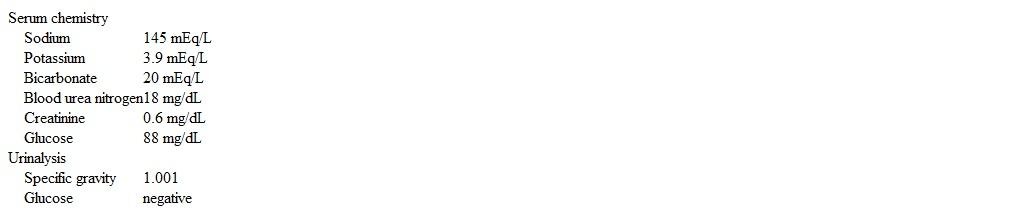 CT scan of the brain (exhibit)
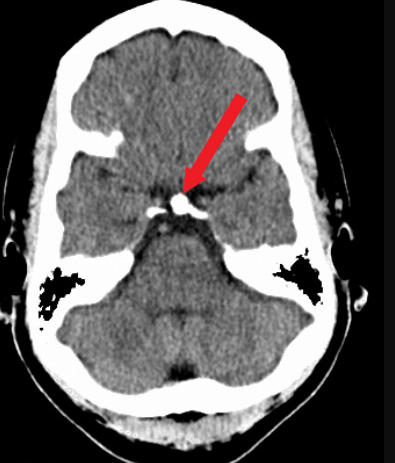 reveals an abnormality. Which of the following is the most likely diagnosis?
CT scan of the brain (exhibit) reveals an abnormality. Which of the following is the most likely diagnosis? (Multiple Choice)
4.9/5 (74)
(74) A 9-year-old boy is brought to the clinic due to poor academic performance. The patient receives special needs education, including speech therapy. His teachers have had difficulty keeping his attention in class, and his grades are declining. Over the last few weeks, the patient has been falling asleep at his desk. He watches television in the evenings until bedtime at 9 PM and wakes at 7 AM every day. He feels tired most days and is occasionally sad because his parents recently divorced. Blood pressure is 104/70 mm Hg and respirations are 26/min. Weight and height are at the 50th and 20th percentile, respectively. Tonsils are 1+. Cardiopulmonary examination is normal. The patient has difficulty opening his hands after squeezing the examiner's fingers. There is full range of motion in the bilateral extremities. Which of the following is the most likely explanation for this patient's clinical presentation?
(Multiple Choice)
4.8/5 (83)
(83) An 18-year-old woman is brought to the emergency department with severe abdominal pain. Medical history includes asthma, eczema, and multiple episodes of pneumonia. Her temperature is 37.2 C (99 F), blood pressure is 90/60 mm Hg, and pulse is 128/min. Physical examination shows pallor and a tender, rigid abdomen. Laboratory studies reveal a hemoglobin concentration of 6.9 mg/dL and platelet count of 378,000/mm3. Emergency laparotomy reveals a ruptured ectopic pregnancy. The patient receives a transfusion with blood type O, Rh-negative, packed red blood cells. During the transfusion, she experiences generalized hives and a drop in blood pressure to 70/40 mm Hg. The transfusion is stopped and intramuscular epinephrine is administered. Which of the following is the most likely diagnosis?
(Multiple Choice)
4.9/5 (77)
(77) A 7-year-old boy is brought to the office for evaluation of chronic left thigh pain and a limp. The pain began 8 months ago as an intermittent ache, especially after soccer practice. The patient's family thought his symptoms were growing pains and have been giving him ibuprofen as needed for pain, with some improvement. Over the past month, however, the pain has been constant, and the patient recently developed a limp. He has had no fever, additional joint pain, or chronic medical problems and takes no daily medications. While walking to the examination table, the patient avoids bearing full weight on the left leg. Examination shows significantly limited range of motion of the left hip and atrophy of the left proximal thigh muscle. The remainder of the examination is unremarkable. X-ray of the pelvis is shown in the image. 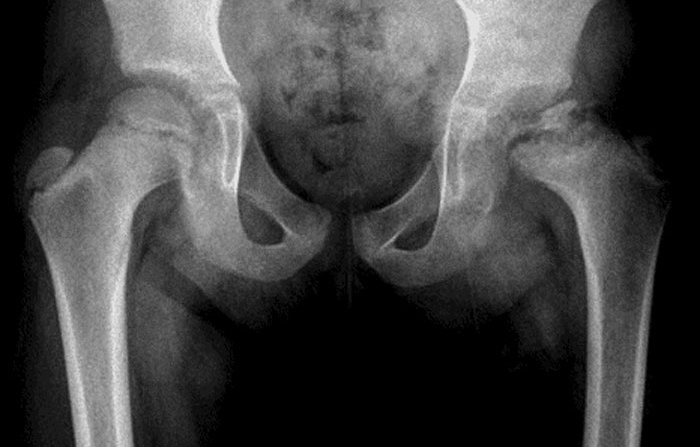 Which of the following is most likely responsible for this patient's condition?
 (Multiple Choice)
4.9/5 (77)
(77) A 14-year-old girl is brought to the office by her mother because she has not started menstruating. She is otherwise healthy and has no chronic medical conditions. The patient takes no daily medications and does not use tobacco, alcohol, or illicit drugs. She is not sexually active. Her mother and older sister underwent menarche at age 13. Height is at the 15th percentile and weight is at the 20th percentile for age. Vital signs are normal. Physical examination shows normal heart sounds without murmur. There is no breast development or axillary hair. The abdomen is soft, nontender, and nondistended. Pelvic examination reveals normal external female genitalia and no pubic hair. Ultrasound confirms the presence of a uterus. Which of the following is the best next step in management of this patient?
(Multiple Choice)
5.0/5 (81)
(81) A 4-year-old boy is brought to the office for difficulty breathing through his nose. The issue started 6 months ago and has progressively worsened. Since his adoption at age 6 months, the patient has had recurrent epistaxis and numerous courses of antibiotics for sinus infections and pneumonia. Weight and height are at the 3rd and 5th percentiles, respectively. Temperature is 38.9 C (102 F), blood pressure is 100/70 mm Hg, pulse is 112/min, and respirations are 24/min. Pulse oximetry reveals an oxygen saturation of 93%. Physical examination shows a thin boy with audible nasal breathing and bilateral nasal polyps. The oropharynx is clear, and the neck is supple. Cardiac examination is unremarkable. Lung auscultation reveals diffuse, coarse crackles. The abdomen is soft with no organomegaly. Pulses are strong, and digital clubbing is present. Which of the following is the most likely diagnosis in this patient?
(Multiple Choice)
4.9/5 (65)
(65) 
Filters
- Essay(0)
- Multiple Choice(0)
- Short Answer(0)
- True False(0)
- Matching(0)