



 Chat with AI
Exam 2: Pediatric

Exam 1: Medicine2 k Questions
Exam 2: Pediatric723 Questions
Exam 3: Psychiatry336 Questions
Exam 4: Surgery563 Questions
Exam 5: Obstetrics & Gynecology469 Questions
Select questions type


A newborn boy is evaluated in the delivery room 10 minutes after birth for increasing respiratory distress. He was born at 38 weeks gestation by a forceps-assisted vaginal delivery complicated by a 2-minute shoulder dystocia. The infant's mother did not receive any prenatal care. Temperature is 36.8 C (98.2 F), blood pressure is 70/40 mm Hg, pulse is 168/min, and respirations are 72/min. Oxygen saturation is 82% on room air. Physical examination shows grunting, nasal flaring, and cyanosis of the mucous membranes. Chest x-ray is shown below: 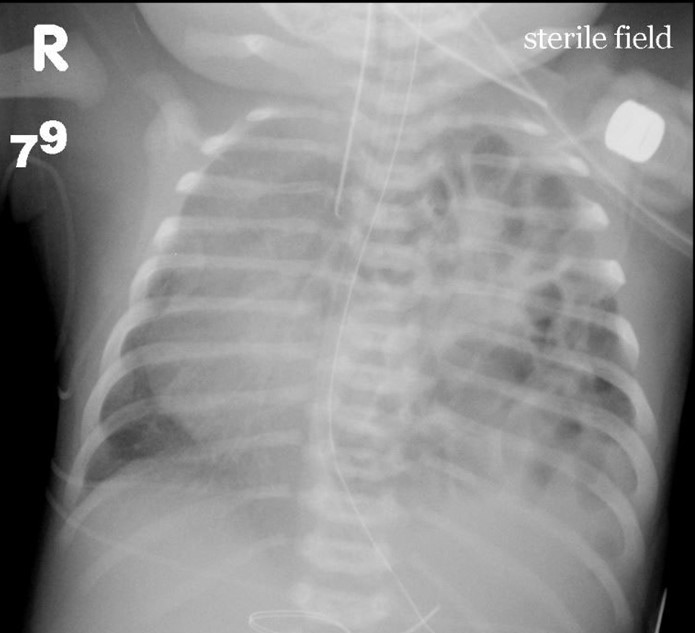 Which of the following is the most likely diagnosis in this patient?
 (Multiple Choice)
4.8/5  (81)
(81) A 2-year-old boy is brought to the office for the first time by his parents for a well visit. The family recently moved to the area, and the child has not been seen for routine child care since age 12 months. No complications occurred during pregnancy, and the patient was born full term. At age 4 months, he was hypotonic; he did not sit unsupported until age 10 months. Three months ago, the patient developed spasticity and dystonia with involuntary movements of the hands and feet. Over the past month, he has started biting his fingers and hands, pinching himself, and banging his limbs against the wall. Family history is unremarkable. On examination, the patient is nonverbal and hypertonic. There is hyperreflexia of the upper and lower extremities and extensor plantar reflexes bilaterally. Several new and healing abrasions are present on the fingers and hands. Which of the following is the most likely diagnosis in this patient?
(Multiple Choice)
4.8/5 (88)
(88) A 3-year-old boy from a refugee camp is brought to the physician for evaluation of a rash. He recently came to the United States and his medical history is unknown. The rash has been present for a few weeks and seems to be spreading. He is hungry "all the time" and his family had limited access to food in their home country. Review of systems is negative for nausea, vomiting, diarrhea, headaches, numbness, or tingling. The boy takes no medications and has no known allergies. His weight and length are <5th percentile for age and sex. Examination shows a malnourished boy with minimal subcutaneous fat. Scaling and fissures are present at the mouth corners and his lips are cracked and inflamed. The patient's tongue and oropharyngeal mucous membranes are swollen and hyperemic. There are erythematous scaly patches on his eyebrows, cheeks, and nose. The rash is also present on the scrotal skin and extends to the medial aspect of both thighs. The skin and conjunctivae are pale and his fingers and toenails are brittle. Laboratory results are as follows: 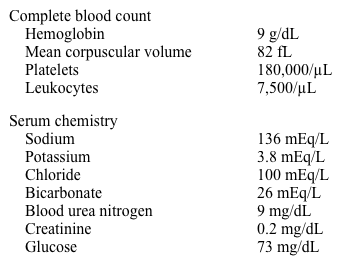 Which of the following is the most likely cause of this patient's condition?
 (Multiple Choice)
4.9/5 (85)
(85) A 4-year-old girl is brought to the office for evaluation of a rash that developed yesterday and is mildly pruritic. The patient received the measles-mumps-rubella vaccine in her left thigh and varicella-zoster virus vaccine in her right thigh 2 weeks ago. The patient has mild persistent asthma and uses inhaled steroids daily and bronchodilators as needed. She also has a history of peanut anaphylaxis and she carries an epinephrine pen. The patient has no known sick contacts. Her 6-year-old brother is undergoing chemotherapy for acute lymphoblastic leukemia. Temperature is 37.8 C (100 F). Examination shows 6 scattered papular and vesicular lesions on her chest. Auscultation of the chest reveals clear breath sounds and no wheezes or crackles. Which of the following is the most likely mechanism of this patient's presentation?
(Multiple Choice)
4.9/5 (88)
(88) A 15-year-old girl is brought to the office due to absent menstruation. Her sister and mother attained menarche at 13, and she wants to know when she will start her menstrual period. The patient has asthma and takes albuterol as needed for cough or wheeze. She was hospitalized at age 2 for pneumonia. The patient is on the varsity track team and is a C+ student. Height and weight are at the 60th percentile. Vital signs are normal. Physical examination shows Tanner stage IV breast development and pubic hair, normal external female genitalia, and shaved axillary hair. Pelvic ultrasonography shows 2 normal-sized ovaries but no uterus. Which of the following is the most likely cause of this patient's condition?
(Multiple Choice)
4.9/5 (66)
(66) A 3-year-old African American boy is brought to the emergency department for fever. Since returning from a family trip to Nigeria last week, he has been lethargic with constant nausea and headache. He has had several episodes of vomiting and watery diarrhea each day and high spiking fevers, chills, and drenching sweats every other day. The boy carries the sickle cell trait and has no other medical problems. He takes no medications and his vaccinations are up to date. His temperature is 40 C (104 F), blood pressure is 90/60 mm Hg, pulse is 132/min, and respirations are 24/min. Examination shows a tired-appearing boy with jaundice. Lungs are clear to auscultation. The abdomen is soft and nontender. Hepatosplenomegaly is present. Range of motion in his neck and extremities is normal. Laboratory studies show mild anemia and thrombocytopenia. Which of the following factors is associated with decreased morbidity from this illness?
(Multiple Choice)
4.9/5 (76)
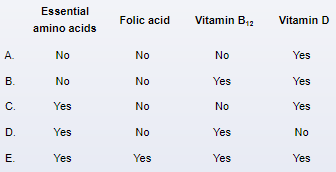
(76) A 15-year-old girl is brought to the office by her parents for a wellness visit. The patient is up to date on recommended vaccinations and does not use tobacco, alcohol, or illicit drugs. She is at the 30th percentile for height and weight and achieved normal developmental milestones throughout childhood. The patient and her family live on a farm in rural Vermont. They recently started following a vegan diet with exclusive consumption of unprocessed, locally produced foods, including a variety of fruits, vegetables, grains, legumes, and nuts, and strictly avoiding all animal-based products. Physical examination is normal. This patient's diet places her at increased risk for deficiency for which of the following nutrients?
(Multiple Choice)
4.8/5 (90)
(90) A 4-year-old boy is brought to the clinic for worsening ear pain that started after completing a course of antibiotics for otitis media 2 weeks ago. For the past several nights, he has also been awakened by headaches; however, he feels better after vomiting in the morning. The patient has had recurrent ear infections since infancy but no other medical problems. Temperature is 38 C (100.4 F), blood pressure is 100/60 mm Hg, pulse is 95/min, and respirations are 18/min. Physical examination reveals an irritable child. Funduscopic examination is normal and extraocular motion is intact. The left tympanic membrane is bulging, erythematous, and opaque. The left mastoid is tender, erythematous, and swollen. Complete blood count results are as follows:  Which of the following is the best next step in management of this patient?
 (Multiple Choice)
4.7/5 (77)
(77) A 46-year-old man is being evaluated for a gait disorder. He was referred by social workers due to frequent falls. His symptoms began gradually about a year ago and have become progressively worse. The patient's history is notable for alcohol use disorder, and he is currently experiencing homelessness, with sporadic stays in a nearby shelter. On examination, he has a broad-based, unsteady gait. A single tap on his patellar tendon elicits persistent, slow, back-and-forth swinging of the leg. Nystagmus and truncal ataxia are also present. Which of the following additional findings would most likely be seen in this patient?
(Multiple Choice)
4.8/5 (82)
(82) The patient undergoes further evaluation with a pelvic ultrasound, which reveals a prepubertal uterus with small ovaries. Laboratory findings are as follows:  Which of the following is the most likely underlying cause of the patient's condition?
 (Multiple Choice)
4.8/5 (88)
(88) An 8-year-old girl is brought to the office after her mother noticed bloody spotting in the girl's underwear. The patient has no chronic medical conditions and is up to date on her vaccinations. She plays soccer with her elementary school team, and her parents are divorced. Vital signs are normal. Height and weight are at the 40th percentile. Physical examination reveals sexual maturity rating (Tanner) stage 1 breast development and no acne or axillary hair. Pelvic examination shows multiple 2-mm, raised, fleshy papules on the vulva and anus that bleed on contact with a cotton swab. Which of the following is the best next step in evaluation of this patient's lesions?
(Multiple Choice)
4.8/5 (92)
(92) An 18-month-old boy is brought to the clinic because he has been pulling on his ears. Two weeks ago, the patient was taken to an urgent care center for fever and irritability and was found to have acute otitis media of the right ear. He completed the prescribed course of amoxicillin, with resolution of symptoms. However, for the past few days, the patient has been tugging at both of his ears, and his parents are concerned that he may have another ear infection. Temperature is 36.8 C (98.2 F). On otoscopic examination, air-fluid levels are visible posterior to both tympanic membranes, which appear translucent and gray. Pneumatic insufflation demonstrates reduced mobility of tympanic membranes bilaterally. Both external ear canals are clear. The remainder of the examination is unremarkable. Which of the following is the best next step in management of this patient?
(Multiple Choice)
4.9/5 (93)
(93) A 52-year-old man is evaluated for ongoing cognitive difficulties. For the past 2 months, he has been sleeping 12-16 hours daily, much more than he usually does. When he is awake, he is withdrawn and less socially engaged than normal. During this time, the patient has had trouble driving, sideswiping cars on the right side of the road more than once. He also has had several falls, which he attributes to feeling off-balance. Vital signs are normal. The patient scores 22/30 (normal: ≥26) on the Montreal Cognitive Assessment. A partial right homonymous hemianopsia is noted. Motor and reflex examinations are normal with intact vibratory sensation. He exhibits dysdiadochokinesia and dysmetria on testing of his upper and lower extremities along with a wide-based gait. CT scan of the head is normal. Real-time quaking-induced conversion testing of his cerebrospinal fluid is positive. This patient will most likely develop which of the following?
(Multiple Choice)
4.8/5 (77)
(77) A 16-year-old girl is brought to the emergency department due to rash and joint pain. Yesterday, a pink rash developed on the patient's face and has spread to her chest, back, and extremities this morning. She awoke today with pain in her fingers and wrists as well. The patient feels tired and has had a fever but no neck stiffness, nausea, or vomiting. She is sexually active with a male partner and uses condoms inconsistently. The patient has received no vaccinations. Temperature is 38.2 C (100.8 F), blood pressure is 118/76 mm Hg, pulse is 86/min, and respirations are 14/min. Physical examination shows a well-appearing and well-hydrated girl. There is a blanching, erythematous maculopapular rash on the face, chest, back, and extremities that spares the palms and soles. Posterior auricular and suboccipital lymphadenopathy is present. The oropharynx is clear. Which of the following is the most likely cause of this patient's symptoms?
(Multiple Choice)
4.9/5 (64)
(64) An 18-year-old man comes to the office due to an irritating, dry cough. He developed symptoms approximately 3 weeks ago after returning from a Caribbean cruise with his family. The patient visited several islands during the trip and participated in many activities, including hiking and water sports. He initially had clear rhinorrhea for a week, followed by a dry cough that lasted a week. This week, the coughing episodes have worsened, now occur without warning, and have twice caused vomiting. The patient has no chronic medical conditions and last received routine childhood vaccinations at age 11. Vital signs are normal. Examination shows nasal congestion. The lungs are clear to auscultation. There is bilateral muscle tenderness between the ribs. The lymph nodes and spleen are not enlarged. Which of the following risk factors is most associated with this patient's diagnosis?
(Multiple Choice)
4.8/5 (76)
(76) A 10-year-old boy is brought to an urgent care center by his parents due to a rash. The patient awoke yesterday with a rash on his trunk, but his mother says that "it now seems particularly red in his underarms and private area." Over the last 2 days, he has also had headache, fever, and sore throat. He has no allergies, and his immunizations are up to date. Temperature is 38.3 C (101 F), blood pressure is 112/70 mm Hg, pulse is 108/min, and respirations are 20/min. The patient is tired-appearing but playful and in no acute distress. Examination reveals a fine, erythematous, papular rash with a rough texture on the anterior trunk. The rash appears more concentrated in the axillae and groin and blanches with pressure. Tender, shotty, anterior cervical lymphadenopathy is present, and the posterior oropharynx is erythematous with tonsillar exudates and soft palatal petechiae. The father adds, "Two kids in his class had the same symptoms and now have peeling of their hands and feet." What is the most likely diagnosis?
(Multiple Choice)
4.8/5 (91)
(91) A 14-year-old boy is brought to the office by his camp counselor due to a tick bite. He arrived at summer camp in Vermont earlier today and spent the afternoon outdoors. About an hour ago, the patient noticed a tick attached to his right thigh. He has no fever or pain at the site and has no chronic medical conditions. Vital signs are normal. Physical examination shows a small, brown tick attached to the right medial thigh with an area of erythema 3 mm in diameter. The remainder of the examination is unremarkable. Which of the following is the best next step in management of this patient?
(Multiple Choice)
4.9/5 (79)
(79) An 18-month-old boy is brought to the emergency department due to fever lasting 2 days. Yesterday, he developed a fever, achiness, and fatigue. Today, the patient vomited 3 times but has had no cough, rhinorrhea, or diarrhea. He has no chronic medical conditions and takes no daily medications. However, the patient has not yet received the routine 12- to 15-month vaccines because of a cross-country move. Temperature is 39.4 C (102.9 F). Physical examination reveals an alert but irritable child who cries and closes his eyes during funduscopic examination. The anterior fontanel is closed. When the examiner flexes the neck, the child flexes the knees. Mucous membranes are dry. The oropharynx has no erythema or exudate. Patellar and Achilles deep tendon reflexes are 2+. Cerebrospinal fluid analysis results are as follows:  Which of the following is the most likely cause of this patient's illness?
 (Multiple Choice)
4.7/5 (72)
(72) A 1-month-old boy is brought to the emergency department by his mother due to fussiness and vomiting. Three days ago, the patient vomited after being laid down for a nap. The vomitus was not bloody or bilious. The mother thought the vomiting was due to gastroesophageal reflux and kept the infant upright after his next feedings. However, he continued to vomit several times a day and today has been difficult to console. Urine output remains normal. The patient was born at home via spontaneous vaginal delivery and is exclusively breastfed. He has received no vaccinations or medications. Temperature is 37.4 C (99.3 F). Vital sign measurement also reveals intermittent bradycardia and hypertension. The anterior fontanelle is bulging. Eye examination shows a persistent downward gaze bilaterally. Cardiac examination reveals no murmurs. Extremities appear normal. Head imaging is as shown: 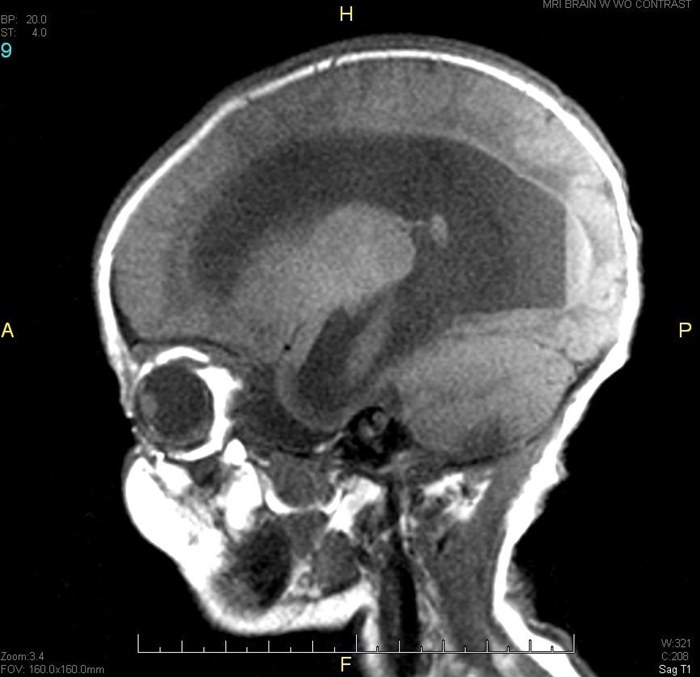 Which of the following is the most likely cause of this patient's presentation?
 (Multiple Choice)
4.7/5 (77)
(77) A 3-year-old boy is brought to the clinic for evaluation of red-tinged urine, which his mother noticed earlier this week. The patient has had multiple episodes since but has no associated dysuria. He has had no prior injury but was recently treated with antibiotics for streptococcal pharyngitis. The patient has no chronic medical conditions and has reached all developmental milestones. Temperature is 36.7 C (98.1 F). Examination shows a well-appearing and well-nourished boy. There is a firm, nontender, palpable mass in the left abdomen. Urinalysis reveals:  Which of the following is the most likely diagnosis for this patient?
 (Multiple Choice)
4.8/5 (69)
(69) 
Filters
- Essay(0)
- Multiple Choice(0)
- Short Answer(0)
- True False(0)
- Matching(0)