


 Chat with AI
Exam 1: Medicine

Exam 1: Medicine2 k Questions
Exam 2: Pediatric723 Questions
Exam 3: Psychiatry336 Questions
Exam 4: Surgery563 Questions
Exam 5: Obstetrics & Gynecology469 Questions
Select questions type


A 72-year-old man is hospitalized for a right femoral fracture following a motor vehicle collision. Six days after undergoing surgical repair, he is found to be lethargic. The patient has hypertension and osteoarthritis. His medications include hydrochlorothiazide, lisinopril, and naproxen, which were continued in the hospital. On examination, the patient is drowsy but awakens briefly when addressed by name. Temperature is 36.7 C (98 F), blood pressure is 144/76 mm Hg, pulse is 88/min, and respirations are 16/min. Pulse oximetry is 95% on room air. Multiple contusions are present in the anterior abdominal wall and thighs. Physical examination findings are shown in the video clip. Laboratory results are as follows:  Which of the following is the most appropriate next step in management of this patient?
 (Multiple Choice)
4.8/5  (77)
(77) A 33-year-old man comes to the office due to painful swelling of the right lower eyelid for the past 2 days. He has had no trauma or history of similar symptoms in the past. The patient says he recently visited his niece who was having an upper respiratory tract infection. He has no significant prior medical problems other than occasional episodes of herpes labialis. He is sexually active with his girlfriend who takes oral contraceptives. Temperature is 36.8 C (98.2 F), blood pressure is 130/80 mm Hg, and pulse is 80/min. Examination of the right eye shows localized swelling along the margin of the lower eyelid with associated erythema and tenderness. There is no conjunctival injection or ocular discharge. Visual acuity is normal, and the left eye appears unremarkable. Which of the following is the most appropriate initial management of this patient's current condition?
(Multiple Choice)
4.7/5 (83)
(83) A 55-year-old woman comes to the office due to 2 years of episodic cough productive of yellow sputum. Her first episode lasted nearly 3 weeks with chest congestion, cough productive of purulent sputum, and shortness of breath. The patient saw her primary care physician at that time and was diagnosed with bronchitis; her condition improved after the administration of antibiotics. She has since had 6 more episodes, each with cough productive of large amounts of yellow sputum (sometimes tinged with blood), shortness of breath, and sinus congestion. Her condition improved each time with antibiotics. However, she continues to have a persistent cough that has worsened in the past 2 weeks. The patient has no fever, chills, chest pain, pets at home, or recent travel. She has never smoked cigarettes. Temperature is 37.2 C (99 F), blood pressure is 120/68 mm Hg, pulse is 80/min, and respirations are 14/min. The patient's neck is supple without lymphadenopathy. Lung examination reveals diffuse rhonchi and wheezes with coarse crackles bilaterally in the bases. The remainder of the examination shows no abnormalities. Chest x-ray (shown below) reveals linear atelectasis in the mid and lower lung fields bilaterally. 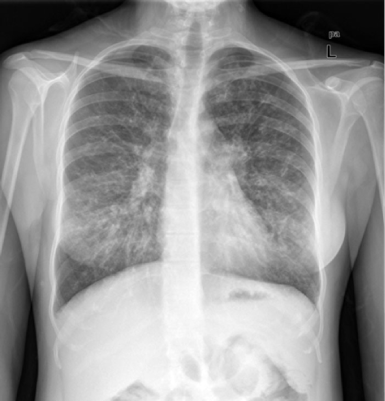 Which of the following is the most appropriate next step for confirming the diagnosis in this patient?
 (Multiple Choice)
4.9/5 (68)
(68) A study was done to evaluate a new serologic screening test for human immunodeficiency virus (HIV) infection. A total of 1000 people were randomly selected from the population, screened using the new test, and screened again using the gold standard (i.e., Western blot analysis) to determine true infection state. The findings are as follows:
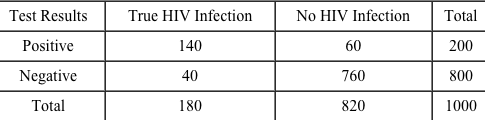 What is the sensitivity of this new serologic screening test?
 (Multiple Choice)
4.9/5 (88)
(88) An 8-year-old boy is brought to the clinic due to 10 days of profuse diarrhea and abdominal cramps. His stools are foul-smelling and appear nonbloody and oily; volume and frequency have been persistent. The patient tolerates liquids but has had minimal solid food due to lack of appetite. Prior to these symptoms, he was well except for an episode of acute otitis media for which he completed a course of amoxicillin last month. The patient recently returned a few weeks ago from a vacation at his family's lake house. Weight is 30.4 kg (67 lb), a decrease of 2.3 kg (5 lb) from his annual checkup 3 months ago. He is afebrile. Abdominal examination reveals hyperactive bowel sounds but is otherwise normal, as is the remainder of the examination. Complete blood count is normal, and stool guaiac testing is negative. This patient's diarrhea is most likely due to which of the following mechanisms?
(Multiple Choice)
4.8/5 (74)
(74) A 36-year-old woman comes to the emergency department due to left-sided facial droop. The patient woke up 4 hours ago and noticed that the left side of her face was sagging and that she was drooling from a corner of the mouth. She has had no facial numbness but has noticed an increased sensitivity to noise. The patient has a history of migraines, seasonal allergies, and gestational diabetes. Temperature is 36.5 C (97.7 F), blood pressure is 120/70 mm Hg, and pulse is 78/min. BMI is 32 kg/m2. The face appears asymmetric with loss of the left nasolabial fold. When the patient is asked to smile, the left side of her face does not move. She is unable to raise her left eyebrow or completely close her left eye. Facial sensation to touch and pain is normal bilaterally. There are no skin or mucous membrane lesions. Which of the following is the most likely cause of this patient's current condition?
(Multiple Choice)
4.9/5 (96)
(96) A 55-year-old man is brought to the emergency department due to altered mental status. The patient's wife came home from work and found him confused. He was fine that morning before she left the house. The patient has a medical history of chronic migraines and major depression; he has been out of work for a few months due to the pain. The wife reports her husband has tried "every migraine medication there is," but she does not know which one he is currently taking. Blood pressure is 80/60 mm Hg, and pulse is 125/min. The patient is drowsy and does not answer questions or follow commands. The oral membranes are dry. There is reddening around the face and neck. ECG reveals sinus tachycardia with a QRS duration of 120 msec and frequent premature ventricular beats. Initial laboratory studies are ordered, and intravenous hydration is started. Which of the following is the best next step in management?
(Multiple Choice)
4.8/5 (75)
(75) A 46-year-old man comes to the office for a routine health examination. The patient has no current concerns and says he is taking his medications as prescribed. He has a history of type 2 diabetes mellitus treated with diet, exercise, and metformin. The patient smokes a half pack of cigarettes a day and drinks 1 or 2 glasses of wine 3 times a week. Temperature is 36.7 C (98 F), blood pressure is 128/76 mm Hg, pulse is 80/min, and respirations are 14/min. Laboratory results are as follows:  Serum chemistry values are within normal limits. Urinalysis shows no proteinuria. The addition of which of the following is most appropriate in the management of this patient?
 (Multiple Choice)
4.9/5 (84)
(84) A 20-year-old woman comes to the office for follow-up after being discharged from the hospital 2 weeks ago. The patient has been hospitalized twice in the past 3 months for right lower lobe pneumonia; treatment with antibiotics resolved her symptoms on both occasions, and she currently feels well. Family history is not significant. She has never smoked cigarettes. Temperature is 37.5 C (99.5 F), blood pressure is 120/76 mm Hg, pulse is 88/min, and respirations are 15/min. Oxygen saturation is 96% on ambient air. BMI is 24 kg/m2. Oropharynx is clear, and nasal passages are normal. There is no lymphadenopathy. Localized wheezes are present in right lower lobe. There is no clubbing. Complete blood count with differential is normal. Chest radiograph reveals a persistent right lower lobe infiltrate. Which of the following is the most likely diagnosis in this patient?
(Multiple Choice)
4.7/5 (71)
(71) A 64-year-old woman comes to the emergency department due to worsening productive cough and difficulty breathing for the last 3 days. Over the past day, she has also had some difficulty chewing and a sensation of choking on solid foods. Medical history includes hypothyroidism and myasthenia gravis. The patient takes levothyroxine and pyridostigmine. She does not use tobacco, alcohol, or illicit drugs. Temperature is 38.3 C (100.9 F), blood pressure is 130/82 mm Hg, pulse is 110/min, and respirations are 22/min. On physical examination, the patient is diaphoretic and ill-appearing. Lung examination reveals shallow respirations and right basal crackles. Cardiac auscultation is normal with the exception of tachycardia. The abdomen is soft and nontender. There is mild, symmetric muscle weakness of the proximal limbs. Laboratory testing shows the following: 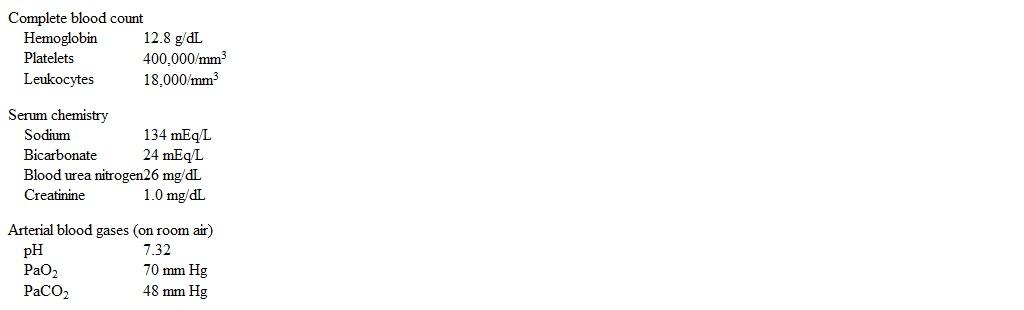 Chest x-ray shows evidence of poor inspiratory effort with a right lower lobe consolidation. Which of the following is the best next step in management of this patient?
 (Multiple Choice)
4.8/5 (82)
(82) A 56-year-old man is brought to the emergency department due to chest pain. An hour ago, he woke up with burning retrosternal severe chest pain accompanied by sweating and left arm numbness. The patient's symptoms improved with aspirin and sublingual nitroglycerin administered by the paramedics; he currently rates his chest pain as 4 on a scale of 10. He has had no nausea, vomiting, or abdominal discomfort. The patient has a history of gastroesophageal reflux disease, diet-controlled diabetes mellitus, and 30-pack-years of smoking. Temperature is 37.3 (99 F), blood pressure is 150/90 mm Hg on the right arm and 145/88 mm Hg on the left arm, and pulse is 95/min and regular. The lungs are clear on auscultation and heart sounds are normal with no murmur or gallop. ECG shows normal sinus rhythm with T-wave inversion in leads V1-V4. The troponin level is normal. Which of the following is the most appropriate next step in management of this patient?
(Multiple Choice)
4.9/5 (71)
(71) A 25-year-old woman comes to the office due to hair loss. For the past 6 months, she has noticed thinning hair on her head and an increased amount of hair in the shower drain. The patient is not currently sexually active but has had 5 lifetime partners. Menarche was at age 11. She has light periods every 35-50 days. She takes an over-the-counter sleep aid, but does not use tobacco, alcohol, or illicit drugs. The patient's mother is age 56 and has endometrial carcinoma; her paternal grandmother died from metastatic breast cancer diagnosed at age 72. Review of systems is negative except for extensive facial and back acne. BMI is 33 kg/m2. Physical examination shows thinning hair at the forehead with a receding hairline. The thyroid is nonenlarged with no nodules. Cardiac examination shows a regular rate and rhythm; there are no murmurs. The abdomen is obese with no palpable masses. A urine pregnancy test is negative. Serum prolactin and thyroid function tests are normal. Which of the following additional tests is indicated in this patient?
(Multiple Choice)
5.0/5 (83)
(83) A quality assurance committee is conducting an assessment of diagnostic errors related to myocardial infarction (MI) in the emergency department. The committee finds that clinicians were 4 times more likely to miss MI in women age 60-70 compared to men of the same age. Women were more likely to have a chief complaint of episodic substernal chest pressure exacerbated by mental stress and were incorrectly diagnosed with gastroesophageal reflux disease. Which of the following factors is most likely responsible for this finding?
(Multiple Choice)
4.9/5 (84)
(84) An 82-year-old woman with Alzheimer dementia is brought to the office for evaluation of new-onset drooling. The patient lives in a nursing home, and the staff noticed that she has been having liquid drip out of the right side of her mouth when they feed her. She has also been very tearful over the past 2 weeks, particularly at night when she wakes up crying and clutching her ear. The patient has type 2 diabetes mellitus that requires insulin and multiple medications. Her last hemoglobin A1c was 8.5%. Temperature is 38 C (100.4 F), blood pressure is 140/90 mm Hg, pulse is 96/min, and respirations are 18/min. Physical examination of the right ear canal shows granulation tissue with a surrounding white drainage in the floor of the canal. The tympanic membrane is clear and mobile to pneumatic otoscopy. There is facial asymmetry with some downward deviation of the right corner of the mouth. Which of the following is the most likely causative organism for this patient's condition?
(Multiple Choice)
4.9/5 (81)
(81) A 73-year-old woman comes to the office due to an 8-month history of thickening and discoloration of multiple toenails in both feet. The patient has had no associated pain but frequently snags her stockings on the nails. Medical history is notable for rheumatoid arthritis and hypertension. The patient does not use tobacco or alcohol. Examination findings are as shown in the exhibit. 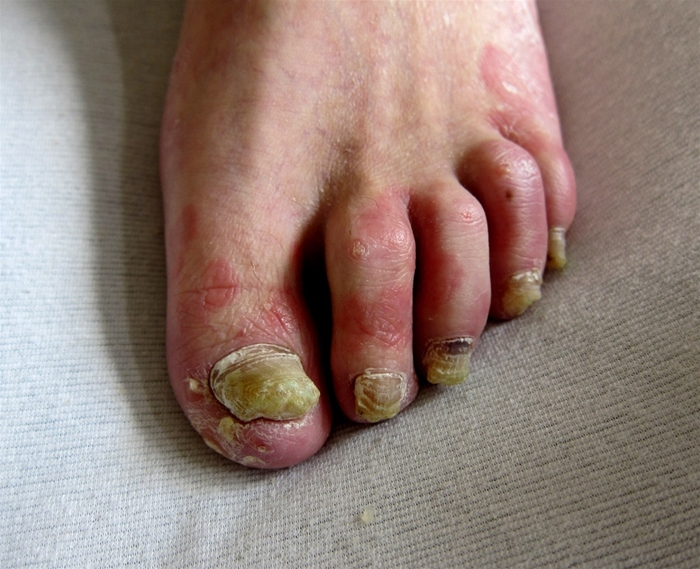 Which of the following is the most likely diagnosis?
 (Multiple Choice)
4.8/5 (92)
(92) A 15-year-old girl is brought to the emergency department with intermittent lower abdominal pain. The patient woke up this morning with intermittent, sharp pain in the left lower quadrant that radiates to the lower back. The pain episodes are associated with nausea and vomiting and spontaneously resolve after a few minutes. She has no nausea or vomiting between episodes and no urinary symptoms, vaginal bleeding, or abnormal vaginal discharge. The patient has no chronic medical conditions and takes no daily medications. Her last menstrual period was 2 weeks ago, and she is not sexually active. Temperature is 37.2 C (99 F), blood pressure is 130/84 mm Hg, pulse is 118/min, and respirations are 20/min. On examination, the patient appears comfortable and has mild tenderness to palpation in the left lower quadrant. Urine pregnancy test is negative. Pelvic ultrasound shows a 5-cm left ovarian mass with normal ovarian arterial and venous blood flow. After the ultrasound, the patient has another episode of severe pain with nausea when walking back to her room from the restroom. On reevaluation, she is in acute distress and has severe, constant tenderness to palpation in the left lower quadrant. Which of the following is the best next step in management of this patient?
(Multiple Choice)
4.8/5 (76)
(76) A 56-year-old woman comes to the office for a follow-up visit. She has chronic kidney disease due to systemic lupus erythematosus (SLE) and nonsteroidal anti-inflammatory drug use. Medical history is notable for recurrent kidney stones, and the patient experienced natural menopause at age 49. Her only current medication is hydroxychloroquine. The patient quit smoking 10 years ago when she was diagnosed with SLE. Family history is noncontributory. Laboratory results are as follows: 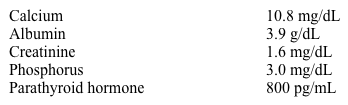 DXA bone densitometry scan shows a T score of -2.5 at the lumbar spine, which is consistent with osteoporosis. Which of the following is the most likely cause of this patient's hypercalcemia?
 (Multiple Choice)
4.8/5 (80)
(80) A 24-year-old woman at 10 weeks gestation comes to the office for evaluation of thrombocytopenia. She was found to have a platelet count of 90,000/mm3 at her initial prenatal visit last week. The patient has no known history of a blood disorder; she had episodes of epistaxis during childhood but none since and has never had other bleeding issues. Prior to her pregnancy, her menses occurred monthly and lasted 4-5 days with light vaginal bleeding. The patient has no other medical conditions and takes no medications. She drank alcohol occasionally but stopped after a positive home pregnancy test. There is no significant family history of blood disorders or cancer. Vital signs are within normal limits. Physical examination shows no enlarged lymph nodes or hepatosplenomegaly. The remainder of the physical examination is unremarkable. Repeat platelet count is 98,000/mm3. Peripheral blood smear is shown in the exhibit. 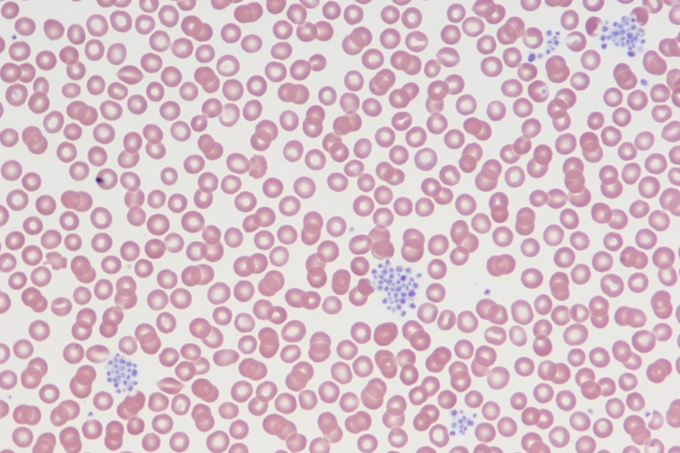 Which of the following is the most likely diagnosis?
 (Multiple Choice)
4.8/5 (82)
(82) A 28-year-old man comes to the office for evaluation of white lesions over the tongue that he recently noticed while brushing his teeth. The lesions are not painful or itchy. Review of systems is negative for dysphagia and positive for both fatigue and unintentional weight loss over the past 4 months. The patient smokes a pack of cigarettes daily and does not drink alcohol. Vital signs are within normal limits. BMI is 22 kg/m2. Examination shows bilateral corrugated, adherent plaques located on the lateral tongue surfaces; the lesions cannot be scraped off. Dentition is normal without any caries or decayed tooth. There are multiple enlarged cervical lymph nodes bilaterally that are mobile and nontender. What is the most appropriate next step in management?
(Multiple Choice)
4.7/5 (79)
(79) A 59-year-old man comes to the office for a preventive visit. He feels well but has experienced an unexpected 2.3 kg (5 lb) weight loss in the last 2 months. The patient has a 40-pack-year smoking history, and medical history is otherwise unremarkable. Physical examination is normal. Fecal occult blood testing is positive and colonoscopy is advised. The patient asks, "A colonoscopy, that sounds serious! Do you think I have cancer?" Which of the following is the most appropriate response to this patient's question?
(Multiple Choice)
4.9/5 (64)
(64) Showing 1541 - 1560 of 1702
 Prev
- 1
- ...
- 2
- ...
- 3
- ...
- 4
- ...
- 5
- ...
- 6
- ...
- 7
- ...
- 8
- ...
- 9
- ...
- 10
- ...
- 11
- ...
- 12
- ...
- 13
- ...
- 14
- ...
- 15
- ...
- 16
- ...
- 17
- ...
- 18
- ...
- 19
- ...
- 20
- ...
- 21
- ...
- 22
- ...
- 23
- ...
- 24
- ...
- 25
- ...
- 26
- ...
- 27
- ...
- 28
- ...
- 29
- ...
- 30
- ...
- 31
- ...
- 32
- ...
- 33
- ...
- 34
- ...
- 35
- ...
- 36
- ...
- 37
- ...
- 38
- ...
- 39
- ...
- 40
- ...
- 41
- ...
- 42
- ...
- 43
- ...
- 44
- ...
- 45
- ...
- 46
- ...
- 47
- ...
- 48
- ...
- 49
- ...
- 50
- ...
- 51
- ...
- 52
- ...
- 53
- ...
- 54
- ...
- 55
- ...
- 56
- ...
- 57
- ...
- 58
- ...
- 59
- ...
- 60
- ...
- 61
- ...
- 62
- ...
- 63
- ...
- 64
- ...
- 65
- ...
- 66
- ...
- 67
- ...
- 68
- ...
- 69
- ...
- 70
- ...
- 71
- ...
- 72
- ...
- 73
- ...
- 74
- ...
- 75
- ...
- 76
- ...
- 77
- ...
- 78
- ...
- 79
- ...
- 80
- ...
- 81
- ...
- 82
- ...
- 83
- ...
- 84
- ...
- 85
- ...
- 86
- ...
- Next

Filters
- Essay(0)
- Multiple Choice(0)
- Short Answer(0)
- True False(0)
- Matching(0)