


 Chat with AI
Exam 1: Medicine

Exam 1: Medicine2 k Questions
Exam 2: Pediatric723 Questions
Exam 3: Psychiatry336 Questions
Exam 4: Surgery563 Questions
Exam 5: Obstetrics & Gynecology469 Questions
Select questions type


A 29-year-old man comes to clinic 2 weeks after an emergency department visit for epistaxis requiring anterior nasal packing. In the emergency department, his blood pressure was 170/110 mm Hg. He has occasional headaches and fatigue but no chest pain, palpitations, or syncope. His past medical history is unremarkable and he does not use tobacco, alcohol, or illicit drugs. The patient's current blood pressure is 180/112 mm Hg and pulse is 78/min and regular. Cardiac auscultation in the supine position reveals no murmurs or additional sounds. Abdominal examination shows no periumbilical bruits. ECG shows normal sinus rhythm, high-voltage QRS complexes, downsloping ST-segment depression, and T wave inversion in leads V5 and V6. Laboratory results are as follows:  Which of the following is the best next step in evaluation of this patient?
 (Multiple Choice)
4.8/5  (85)
(85) A 47-year-old woman with a long-standing history of systemic lupus erythematosus (SLE) comes to the office due to a month of worsening fatigue and low-grade fevers. She has lost 4.6 kg (10 lb) during this time but has no joint pain, cough, dyspnea, or chest pain. Other medical conditions include hypertension, hypothyroidism, and anemia of chronic disease. The patient takes hydroxychloroquine for SLE and uses glucocorticoids intermittently for acute symptom flares. Temperature is 37.5 C (99.5 F), blood pressure is 132/84 mm Hg, pulse is 78/min, and respirations are 14/min. Physical examination shows no scleral icterus, oral ulcers, or skin rashes. The cervical and axillary lymph nodes are enlarged. The lungs are clear on auscultation, and heart sounds are normal. The abdomen is soft and nontender with no organomegaly. There is no extremity edema or joint tenderness. Laboratory results are as follows: 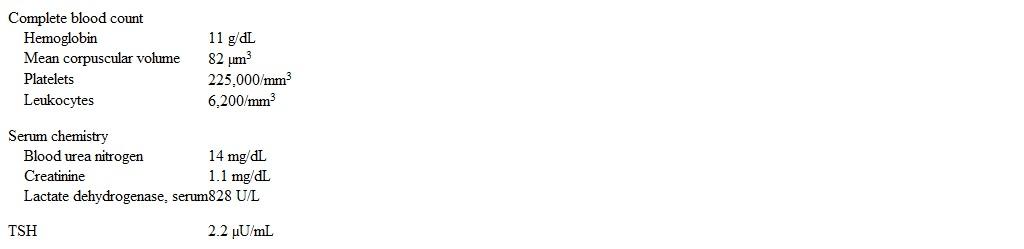 Which of the following is the most likely cause of this patient's current condition?
 (Multiple Choice)
4.9/5 (80)
(80) A 16-year-old boy comes to the emergency department due to a day of severe left thigh pain. He was diagnosed with sickle cell disease during childhood. The boy has had several episodes of unbearable pain in his abdomen, thighs, and lower back that have required 6 separate hospitalizations for pain management and intravenous fluids. Temperature is 36.7 C (98 F), blood pressure is 120/80 mm Hg, pulse is 100/min, and respirations are 16/min. Pulse oximetry shows an oxygen saturation of 97%. Examination shows an uncomfortable-appearing boy. Lungs are clear to auscultation. The left thigh is tender to palpation but has no erythema or swelling. The patient is able to bear weight and has no pain elsewhere. Adequate hydration and analgesics are administered, with improvement of symptoms. On discharge from the hospital, the patient's hematologist counsels him about starting a first-line medication to decrease the frequency of his pain crisis. What is the most common potential side effect of this first-line medication?
(Multiple Choice)
4.8/5 (99)
(99) A 25-year-old woman comes to the physician with a 3-month history of weight loss, irritability, insomnia, and palpitations. Her medical history is insignificant. She is not currently taking any medications. The patient does not use tobacco, alcohol, or illicit drugs. Blood pressure is 155/70 mm Hg and pulse is 110/min. Physical examination shows lid retraction, warm skin, and fine tremor of the hands. Which of the following is the most likely cause of this patient's hypertension?
(Multiple Choice)
4.9/5 (79)
(79) A 63-year-old woman with a long history of hypertension collapses in her church after experiencing the sudden onset of severe chest pain that radiated to her back. She is rushed to the emergency department. On arrival, she is confused and agitated. Her blood pressure is 90/50 mm Hg and heart rate is 110/min. The jugular veins are distended. The lungs are clear on auscultation. An intra-arterial catheter in the radial artery shows significant variation of systolic blood pressure related to the respiratory cycle. Chest x-ray reveals widening of the mediastinum. Which of the following is the most likely cause of this patient's syncope?
(Multiple Choice)
4.8/5 (71)
(71) A 56-year-old man comes to the office due to 3 months of dyspnea that was initially exertional but has progressively worsened to the point that the patient is now breathless even at rest. He has not had any chest pain, palpitations, syncope, or ankle swelling. The patient has no significant past medical history, and he takes no medications. He has been smoking a pack of cigarettes daily for the last 30 years and has been drinking alcohol heavily for the past 5 years. His mother died of breast cancer at age 57. The patient's temperature is 37.1 C (98.8 F), blood pressure is 113/76 mm Hg, and pulse is 86/min. A third heart sound is heard on cardiac auscultation; there are no murmurs. Chest auscultation indicates bibasilar crackles. His abdomen is soft and with no evidence of ascites. Laboratory results are as follows: 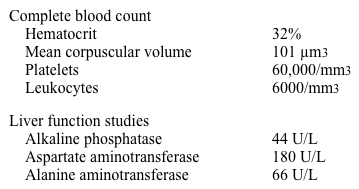 Chest x-ray reveals cardiac silhouette enlargement and signs of pulmonary venous congestion. Echocardiography shows a dilated left ventricle with an estimated left ventricular ejection fraction of 25%. Coronary angiography reveals no evidence of obstructive coronary artery disease. Which of the following measures is most likely to reverse this patient's heart function?
 (Multiple Choice)
4.7/5 (76)
(76) A 60-year-old previously healthy woman is evaluated for progressively worsening fatigue, exertional dyspnea, and lower extremity swelling. The patient also bruises easily and was recently found to have significant proteinuria. She takes no medications but has a 10-pack-year smoking history and drinks 2 or 3 glasses of wine daily. Temperature is 37.1 C (98.8 F), blood pressure is 130/70 mm Hg, pulse is 80/min, and respirations are 14/min. Examination shows jugular venous distension. The lungs are clear to auscultation. Echocardiography shows small pericardial effusion and concentric thickening of the ventricular walls with diastolic dysfunction. Ventricular chamber dimensions are normal. Which of the following is the most likely cause of this patient's symptoms?
(Multiple Choice)
4.9/5 (89)
(89) A 65-year-old woman comes to the emergency department due to seeing a sudden burst of flashing lights and blurred vision in her left eye. These symptoms started this morning. She now sees small spots in her field of vision. She felt "like a curtain came down" over her eye. She had a successful cataract extraction in her left eye 4 months ago. Her vital signs are stable. Examination shows a sluggish left pupil. Ophthalmoscopy reveals retinal tears and a grayish-appearing retina. What is the most likely diagnosis?
(Multiple Choice)
4.9/5 (70)
(70) A 43-year-old woman comes to the office for evaluation of high blood pressure. She exercises regularly and has followed a low-salt diet over the last 2 months. At the patient's previous 2 visits, blood pressure was 154/88 and 150/92 mm Hg. She has no headaches or other symptoms. Medical history is notable for asthma, for which the patient uses a fluticasone inhaler and, very occasionally, as-needed albuterol. She does not smoke or use alcohol and has no known drug allergies. Family history is significant for myocardial infarction in her father at age 65. During this visit, blood pressure is 146/89 mm Hg and pulse is 69/min. BMI is 27 kg/m2. Heart and lung examinations are unremarkable. No vascular bruits are heard, and peripheral pulses are 2+ and symmetrical. ECG shows normal sinus rhythm. Complete blood count and chemistry panel are normal. Which of the following additional studies is recommended for this patient?
(Multiple Choice)
4.9/5 (83)
(83) A 65-year-old man comes to the office due to a several month history of difficulty swallowing and frequent coughing during meals. His wife reports that his breath odor has changed and his voice sounds "gurgly." The patient occasionally regurgitates food or medications taken earlier in the day. Medical history is significant for hypertension, gastroesophageal reflux disease, and osteoarthritis of the right knee. Medications include hydrochlorothiazide, ranitidine, and, occasionally, naproxen as needed. Which of the following mechanisms leads to the development of this patient's condition?
(Multiple Choice)
4.9/5 (73)
(73) A 34-year-old woman comes to the physician with daily crampy abdominal pain for the last 2 years. The pain sometimes occurs after meals but is not always preceded by eating. It is often accompanied by passage of small, loose stools and mucus, after which she feels significantly better. The patient reports that these symptoms interfere with her daily activities, including work. She has no fever, weight loss, or blood in her stools. She takes over-the-counter medications for gas and constipation. Her mother died of colon cancer at age 65. Which of the following is the most likely finding on further evaluation of this patient?
(Multiple Choice)
4.9/5 (73)
(73) A 25-year-old man comes to the office due to a painless ulcer on his penis. He has no fever or urethral discharge. A few weeks ago, he had unprotected vaginal sex with a sex worker. The patient previously required hospitalization in the intensive care unit for toxic epidermal necrolysis after taking penicillin. He has no other medical conditions and takes no medications. Vital signs are within normal limits. Physical examination shows a shallow, nontender, and nonexudative penile ulcer with a smooth base. Mild, bilateral inguinal lymphadenopathy is present. Serum rapid plasma reagin is positive, and HIV testing is negative. Which of the following is the most appropriate treatment for this patient?
(Multiple Choice)
4.8/5 (88)
(88) A 25-year-old man comes to the emergency department in the afternoon due to the sudden onset of abdominal cramps, nausea, and 6 or 7 episodes of vomiting over the past 3 hours. He has had no diarrhea or fever. Yesterday, the patient went on a day-long hike in a nearby forest and had dinner at a Chinese restaurant with friends. Today, he reheated some of the leftover noodles and rice for lunch. None of his friends developed similar symptoms. The patient took amoxicillin 4 weeks ago for acute sinusitis but otherwise has no medical history. Temperature is 37.1 C (98.8 F), blood pressure is 110/80 mm Hg, and pulse is 90/min. The abdomen is soft and nontender with no organomegaly. Which of the following is the most likely cause of this patient's current condition?
(Multiple Choice)
4.8/5 (75)
(75) A 25-year-old woman, gravida 1 para 0, at 24 weeks gestation comes to the office due to diarrhea. The patient has intermittently loose stools 2-6 times a day. Bowel movements are always associated with lower abdominal cramps, which improve after defecation. Although the symptoms predate the pregnancy, they have worsened over the past few weeks. The patient denies constipation, fecal incontinence, hematochezia, melena, and vomiting. She has never experienced dysmenorrhea or painful intercourse. Her pregnancy has progressed without complication, and ultrasonography confirms that fetal size is appropriate for gestational age. Medical and family history are unremarkable, and the patient does not use tobacco or alcohol. Vital signs are within normal limits. Heart and lung sounds are normal. The abdomen is minimally tender to palpation in the bilateral lower quadrants without rebound or guarding. There is trace pitting edema in the bilateral lower extremities. Fecal occult blood testing is negative. Hemoglobin is 10.9 g/dL and mean corpuscular volume is 86 μm3. Erythrocyte sedimentation rate is normal. Which of the following most likely explains this patient's symptoms?
(Multiple Choice)
4.9/5 (73)
(73) A 24-year-old woman comes to the office due to a month of progressive exertional dyspnea. The patient does not have chest pain or palpitations. She has no chronic medical conditions and takes no medications regularly. Temperature is 37 C (98.6 F), blood pressure is 114/68 mm Hg, pulse is 90/min, and respirations are 12/min. BMI is 23 kg/m2. Examination shows mucosal pallor and bilateral cervical lymphadenopathy. Cardiopulmonary auscultation reveals clear lung fields and no murmurs. Laboratory results are as follows:  Chest x-ray reveals significant bilateral mediastinal lymphadenopathy. What is the most likely cause of this patient's anemia?
 (Multiple Choice)
4.8/5 (77)
(77) A 55-year-old man comes to the office due to difficulty chewing food over the past 2 months. The patient initially experienced coughing while drinking liquids and has recently had difficulty ingesting solid foods. In addition, several people have told him they have difficulty understanding his speech. Review of systems is positive for a 5-kg (11-lb) weight loss over the past 3 months. The patient smoked a pack of cigarettes daily for 35 years. Temperature is 37 C (98.6 F), blood pressure is 120/70 mm Hg, pulse is 78/min, and respirations are 14/min. BMI is 24 kg/m2. On examination, there is pooling of secretions in the oral cavity. Involuntary muscle twitching is noted over the chin, tongue, and upper and lower limbs. Power is 4/5 in both upper extremities. Deep tendon reflexes are 3+ throughout. Bilateral Babinski is present. Mental and sensory examinations are normal. Which of the following is most likely present in this patient?
(Multiple Choice)
4.7/5 (99)
(99) A 52-year-old woman is brought to the emergency department due to severe dizziness, unsteadiness, and nausea. The spinning sensation began suddenly when the patient's head was tilted back and to the left while getting her hair washed at a salon. When she tried to get out of the chair, she tilted to the left and was unable to sit upright without assistance. She reports no similar symptoms in the past but recently had an upper respiratory illness. Medical history includes hypertension and hyperlipidemia. The patient is an active smoker with a 20-pack-year history and drinks alcohol occasionally. Temperature is 37 C (98.6 F), blood pressure is 144/90 mm Hg, and pulse is 92/min and regular. On physical examination, the patient appears uncomfortable and keeps her eyes closed. The pupils are equal and reactive, and nystagmus is present. Impaired pinprick sensation is present on the left side of the face and right upper and lower extremities. Deep tendon reflexes are normal throughout. Which of the following is the most likely cause of this patient's current condition?
(Multiple Choice)
4.8/5 (72)
(72) A 54-year-old man comes to the emergency department due to increasing left flank pain, nausea, and hematuria for 5 days. The pain is dull, constant, and nonradiating. Yesterday, the patient also noticed swelling of the left testis. He was diagnosed with idiopathic membranous nephropathy 6 months ago. The diagnosis was confirmed by kidney biopsy and is medically managed. Temperature is 37 C (98.6 F), blood pressure is 130/70 mm Hg, and pulse is 90/min. Examination reveals left flank tenderness. Dilated and tortuous veins are noted in the left scrotum. Bilateral 1+ pitting edema is also present. Which of the following most likely underlies this patient's acute presentation?
(Multiple Choice)
4.7/5 (74)
(74) An 18-year-old girl comes to the office with a new-onset skin rash and malaise. She is concerned as her aunt has lupus treated with corticosteroids. Her medical history is unremarkable except for dysuria and increased urinary frequency a week ago, which was effectively treated with sulfamethoxazole-trimethoprim. The patient takes no medications and uses no illicit drugs. She has had the same sexual partner for the past 4 months. Her temperature is 38.0 C (100.4 F), pulse is 86/min, and respirations are 16/min. Physical examination reveals a disseminated maculopapular rash. There is no costovertebral tenderness. The patient has no joint swelling or effusion. Her serum creatinine is 2.0 mg/dL. Urinalysis reveals 2-5 red blood cells/hpf, numerous white blood cell casts, and mild proteinuria. Which of the following is the most likely diagnosis?
(Multiple Choice)
4.9/5 (89)
(89) A 65-year-old man is brought to the emergency department due to chest discomfort and diaphoresis that began suddenly an hour ago while he was resting in a chair and watching television. He describes the discomfort as "squeezing"; it is associated with left arm numbness and nausea. En route to the hospital, he was given oral aspirin and sublingual nitroglycerin. The patient has never had similar symptoms and has no medical history. He has smoked a pack of cigarettes daily for the past 40 years. Temperature is 36.9 C (98.4 F), blood pressure is 165/95 mm Hg, pulse is 50/min, and respirations are 18/min. The first and second heart sounds are normal, and a fourth heart sound is heard. The lungs are clear to auscultation. There is no jugular venous distension or pedal edema. A tracing from his initial ECG is shown in the exhibit. 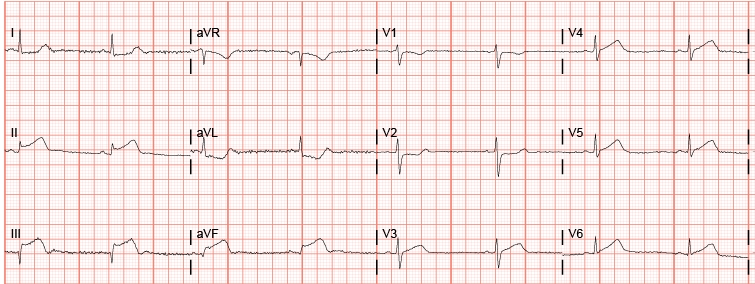 Immediate interventions aimed at achieving which of the following goals would most improve this patient's long-term prognosis?
 (Multiple Choice)
4.8/5 (85)
(85) Showing 501 - 520 of 1702
 Prev
- 1
- ...
- 2
- ...
- 3
- ...
- 4
- ...
- 5
- ...
- 6
- ...
- 7
- ...
- 8
- ...
- 9
- ...
- 10
- ...
- 11
- ...
- 12
- ...
- 13
- ...
- 14
- ...
- 15
- ...
- 16
- ...
- 17
- ...
- 18
- ...
- 19
- ...
- 20
- ...
- 21
- ...
- 22
- ...
- 23
- ...
- 24
- ...
- 25
- ...
- 26
- ...
- 27
- ...
- 28
- ...
- 29
- ...
- 30
- ...
- 31
- ...
- 32
- ...
- 33
- ...
- 34
- ...
- 35
- ...
- 36
- ...
- 37
- ...
- 38
- ...
- 39
- ...
- 40
- ...
- 41
- ...
- 42
- ...
- 43
- ...
- 44
- ...
- 45
- ...
- 46
- ...
- 47
- ...
- 48
- ...
- 49
- ...
- 50
- ...
- 51
- ...
- 52
- ...
- 53
- ...
- 54
- ...
- 55
- ...
- 56
- ...
- 57
- ...
- 58
- ...
- 59
- ...
- 60
- ...
- 61
- ...
- 62
- ...
- 63
- ...
- 64
- ...
- 65
- ...
- 66
- ...
- 67
- ...
- 68
- ...
- 69
- ...
- 70
- ...
- 71
- ...
- 72
- ...
- 73
- ...
- 74
- ...
- 75
- ...
- 76
- ...
- 77
- ...
- 78
- ...
- 79
- ...
- 80
- ...
- 81
- ...
- 82
- ...
- 83
- ...
- 84
- ...
- 85
- ...
- 86
- ...
- Next

Filters
- Essay(0)
- Multiple Choice(0)
- Short Answer(0)
- True False(0)
- Matching(0)