



 Chat with AI
Exam 1: Advanced Clinical Medicine

Exam 1: Advanced Clinical Medicine1 k+ Questions
Exam 2: Foundations of Independent Practice597 Questions
Select questions type


A 35-year-old man is brought to the emergency room after sustaining gunshots to the head. After initial hemodynamic stabilization, the patient is transferred to the intensive care unit. The following day, after consultations with the neurosurgeons, it is concluded that the patient is brain dead and there is no chance of meaningful recovery. While searching for a contact address, the nurse finds an organ donation card in the patient's clothing. Family members are contacted and they confirm that the patient had always wanted to donate his organs. Which of the following is the most appropriate next step in management of this patient?
(Multiple Choice)
4.8/5  (72)
(72) A 32-year-old man is evaluated for syncope. The patient passed out once briefly when playing basketball and experienced no post-syncopal symptoms. Over the last year, he has tired easily and becomes short of breath when climbing 3-4 flights of stairs. The patient takes lansoprazole for acid reflux. In the past, a physician had told him that his blood pressure is "borderline." The patient smokes half a pack of cigarettes a day. His paternal uncle died suddenly at age 30. Blood pressure is 152/90 mm Hg and pulse is 90/min. A 2/6 midsystolic murmur is heard at the left sternal border and accentuates on standing. Lungs are clear to auscultation. Echocardiography shows left atrial enlargement, interventricular septal thickness of 2 cm (normal <1.1 cm), and posterior left ventricular wall thickness of 0.9 cm (normal <1.1 cm). Left ventricular ejection fraction is 75%. There is systolic anterior motion of the mitral valve. At rest, peak instantaneous left ventricular outflow gradient is 30 mm Hg and increases to 45 mm Hg with Valsalva. Which of the following is the most appropriate next step in management of this patient?
(Multiple Choice)
4.9/5 (75)
(75) A 13-year-old boy is brought to the office by his parents due to their concern about his behavior and academic performance. The patient is failing several classes in junior high school and has few friends. His mother reports, "His teachers complain that he doesn't pay attention and disrupts the class. One teacher says that he clears his throat repeatedly, distracting the other kids and making it difficult for her to teach. She has asked him to stop but he keeps doing it." The boy says, "I try in school but the kids are mean and make fun of me because they think I am weird or something." Over the past year, his father has observed frequent repeated blinking, which he found unusual but assumed was a sign of fatigue. His mother adds that several months ago the boy was grimacing frequently, but this seems to have passed. In the office, the boy shrugs his left shoulder repeatedly. Medical history is unremarkable. A Stanford-Binet test administered 2 years ago measured the boy's intelligence quotient as 95. Temperature is 37.2 C (99 F), blood pressure is 110/70 mm Hg, pulse is 88/min, and respirations are 14/min. Weight is 45 kg (99.2 lb) and height is 155 cm (5 ft 1 in). Physical examination, including neurological examination, is normal. The diagnosis of Tourette syndrome is made. The physician educates the patient and his parents about the disorder and provides counseling on behavioral techniques to suppress tics. Six months later, the patient returns with his mother for a follow-up visit. She reports that the tics are worse and very distressing. Although his grades have improved somewhat, he is miserable at school and refuses to attend any afterschool activities. Examination shows grunting, facial grimacing, and writhing of the left side of the body. Which of the following medications would be most effective in reducing tics in this patient?
(Multiple Choice)
4.9/5 (83)
(83) A 15-year-old boy comes to the office for a follow-up visit regarding acne. He first developed acne a year ago and has tried over-the-counter acne washes with no improvement. His first visit for acne was 3 months ago, at which time he was prescribed a topical retinoid and benzoyl peroxide for inflamed papules and pustules on his cheeks and forehead. The patient says, "I've been using these 2 ointments every day. Do you think I should keep using them? Sometimes my face gets red and stings a little. I don't feel like my skin looks much better than before." He takes no other medications and always uses an oil-free, non-comedogenic sunscreen when outdoors. He has no allergies. Skin findings on examination are shown below. 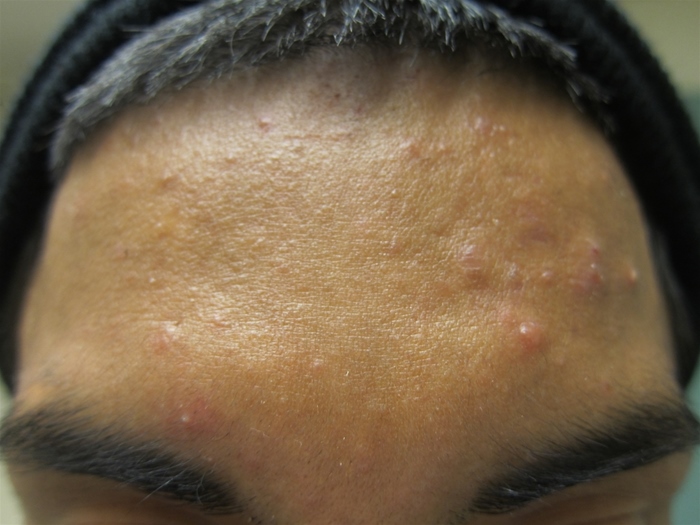 Which of the following is the most appropriate next step in management of this patient?
 (Multiple Choice)
4.7/5 (90)
(90) A 48-year-old woman comes to the office after abnormal serum liver chemistry results were found during a life insurance medical evaluation. She has no chronic medical issues and takes no medications. The patient says she has felt excessively tired lately, which she attributes to menopause. She has had no hot flashes, changes in sleep pattern, anorexia, or weight loss. The patient does not use tobacco, alcohol, or illicit drugs. She works in an accounting firm. Her father died at age 62 from an unknown liver disease. Vital signs are within normal limits. BMI is 30 kg/m2. She has small bilateral xanthelasmata but no scleral icterus. The thyroid is not enlarged. Cardiopulmonary examination is unremarkable. The abdomen is soft and nontender with no hepatosplenomegaly. She has no skin rash. Current laboratory results are as follows: 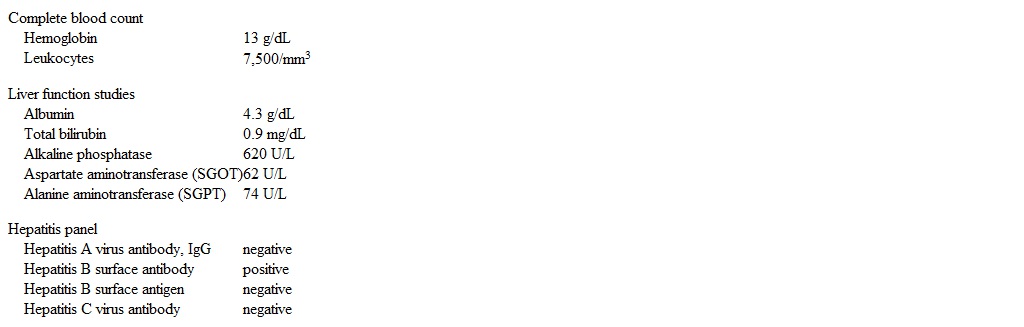 Abdominal ultrasonography reveals a normal-sized liver and no gallstones. Intrahepatic and common bile ducts are normal. This patient is at greatest risk for which of the following due to nutritional complications of her current condition?
 (Multiple Choice)
4.8/5 (75)
(75) An 18-year-old woman comes to the office due to pain on urination and "constantly feeling like I have to go to the bathroom even though I go several times every hour." The patient is sexually active with her boyfriend and, since her symptoms began 3 days ago, has felt pain during intercourse but has not had fever, chills, nausea, vomiting, or flank pain. The patient uses condoms consistently during intercourse. Her last menstrual period was 4 weeks ago. She has no chronic medical conditions or surgeries. The patient has no known drug allergies. Temperature is 37.8 C (100 F), blood pressure is 110/70 mm Hg, pulse is 82/min, and respirations are 18/min. Mild suprapubic tenderness is present on abdominal examination. Pelvic examination shows no cervical discharge or cervical motion tenderness. The remainder of the examination is normal. Urinalysis shows positive leukocyte esterase, positive nitrites, and 10 red blood cells/hpf. A decision is made to treat the patient with one week of trimethoprim-sulfamethoxazole. The patient's pregnancy test is positive. Which of the following is the most appropriate treatment for her presenting symptoms?
(Multiple Choice)
4.8/5 (79)
(79) A study was conducted to identify factors associated with rebleeding in patients admitted to the hospital with upper gastrointestinal hemorrhage. The medical charts of 2,488 patients were analyzed retrospectively, and a logistic regression analysis was conducted to identify potential risk factors for rebleeding. An excerpt of study results is shown below. 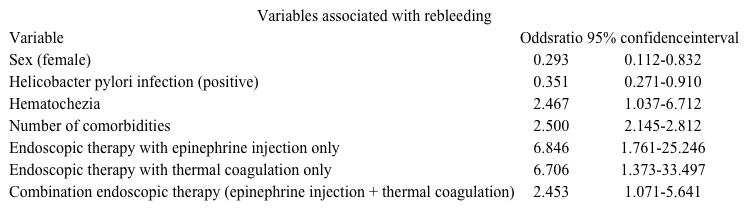 No missing data points regarding the type of endoscopic therapy received, comorbidities, or Heliobacter pylori status were reported in the study. Which of the following is the best interpretation of the study results?
 (Multiple Choice)
4.8/5 (70)
(70) A 34-year-old man is brought to the emergency department due to 3 weeks of intermittent fever, headache, malaise, and night sweats. Over the last few days, his headaches have worsened, and he has had blurry and double vision. The patient uses injection drugs and was treated for staphylococcal endocarditis 4 years ago. Temperature is 38.1 C (100.6 F), blood pressure is 150/100 mm Hg, pulse is 66/min, and respirations are 18/min. BMI is 18.4 kg/m2. The patient is ill in appearance and somnolent but easily arousable and oriented. There are white plaques on the oropharyngeal mucosa and several skin lesions resembling molluscum contagiosum. There is increased resistance to passive neck flexion. Neurologic examination reveals leftward gaze restriction in the left eye but no other focal weakness or sensory loss. Funduscopy reveals bilateral papilledema. A noncontrast CT scan of the head shows no abnormalities. The patient receives a lumbar puncture; results of the spinal fluid analysis are as follows: 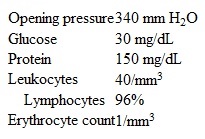 Which of the following is the best pharmacotherapy for this patient's current condition?
 (Multiple Choice)
4.8/5 (88)
(88) A 32-year-old woman comes to the physician complaining of one year of nasal congestion and runny nose. She also feels mucus dripping down her throat that sometimes makes her cough. She has tried over-the-counter saline spray with mild relief. The patient cannot identify any precipitating factors and feels that her nasal passages are constantly blocked. Physical examination shows boggy-appearing nasal turbinates with mild erythema. Which of the following is the best next step in management of this patient?
(Multiple Choice)
4.7/5 (73)
(73) A 56-year-old man comes to the physician with fatigue, bilateral knee and ankle pain, and left-sided chest pain. He has awakened in an uncomfortable sweat several nights during the last 4 weeks. He experienced exertional shortness of breath and was diagnosed with non-ischemic cardiomyopathy a year ago. During his initial evaluation, his left ventricular ejection fraction was 20%, and cardiac catheterization showed no significant coronary disease. The patient's medications include carvedilol, hydralazine, isosorbide dinitrate, furosemide, and spironolactone. He received an automatic implantable cardioverter-defibrillator for primary prevention of cardiac death 6 months ago. He is allergic to angiotensin-converting enzyme inhibitors, which caused facial angioedema. His blood pressure is 142/90 mm Hg and his heart rate is 65/min and regular. There is no jugular venous distension. Breath sounds are decreased at the left base due to splinting. There is no splenomegaly. There is a small effusion in the right knee with mild tenderness. There are no skin rashes. Chest x-ray shows cardiomegaly and a small left pleural effusion. Which of the following is the best next step in management of this patient?
(Multiple Choice)
4.9/5 (78)
(78) A 29-year-old Asian woman, gravida 1 para 0, comes to the office at 26 weeks gestation for prenatal care. The patient has no abdominal pain, vaginal bleeding, or leakage of fluid. Fetal movement is normal. For the last few weeks, she has become increasingly fatigued and is sleeping at least 8 hours a night in addition to taking an afternoon nap. Her pregnancy has been uncomplicated and initial prenatal laboratory results were as follows: 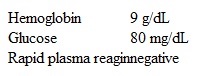 The patient has no chronic medical conditions and has had no previous surgeries. She takes a daily prenatal vitamin; however, she was unable to begin taking it until 18 weeks gestation due to daily nausea and vomiting. Blood pressure is 110/60 mm Hg and pulse is 64/min. Weight is 60 kg (132.3 lb), a 5-kg (11-lb) increase from her prepregnancy weight. Fetal heart rate is 145/min by Doppler ultrasound. Fundal height is 26 cm. Urine dipstick is negative for protein and glucose. Routine third-trimester laboratory results include the following:
The results of a peripheral blood smear are shown below:
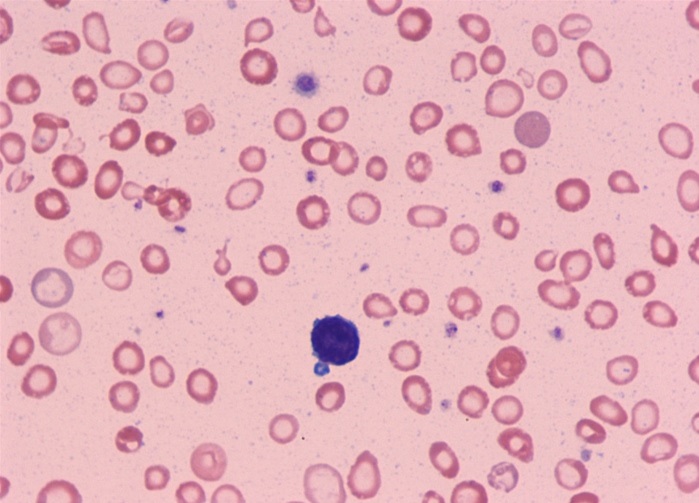 The patient asks about the cause of her fatigue and whether she needs treatment. Which of the following is the most appropriate response to this patient?
The patient has no chronic medical conditions and has had no previous surgeries. She takes a daily prenatal vitamin; however, she was unable to begin taking it until 18 weeks gestation due to daily nausea and vomiting. Blood pressure is 110/60 mm Hg and pulse is 64/min. Weight is 60 kg (132.3 lb), a 5-kg (11-lb) increase from her prepregnancy weight. Fetal heart rate is 145/min by Doppler ultrasound. Fundal height is 26 cm. Urine dipstick is negative for protein and glucose. Routine third-trimester laboratory results include the following:
The results of a peripheral blood smear are shown below:
The patient asks about the cause of her fatigue and whether she needs treatment. Which of the following is the most appropriate response to this patient? (Multiple Choice)
4.7/5 (85)
(85) A 17-year-old girl is brought to an urgent care center for sunburn. She was jogging outside for an hour today and subsequently developed redness and pain on the exposed portion of her arms and face. The patient says, "It wasn't even that sunny today. I've been outside for a lot longer than this and have never had a sunburn this bad." Her medical history includes acne vulgaris for which she was prescribed a topical and an oral medication, neither of which she can remember by name. She does not take any other medications and has no allergies. The patient is a long-distance runner for her high school track team. She lives with her father, who has dyslipidemia. Physical examination shows numerous comedones, papules, and pustules on her face and chest. Confluent areas of erythema, warmth, and edema are present on the patient's face and upper extremities. Her left arm is shown in the image below. 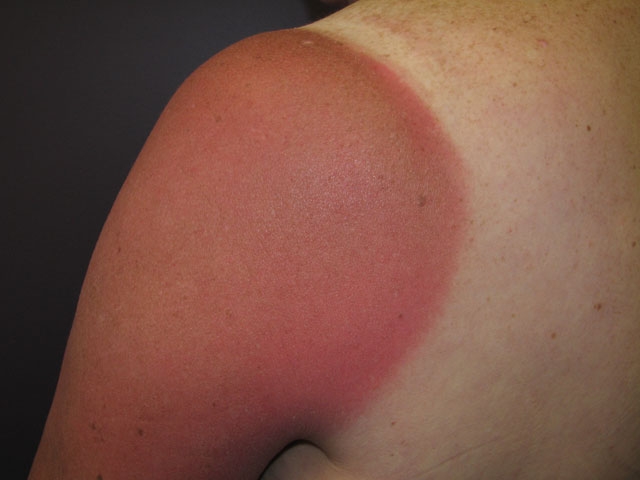 Which of the following treatments is indicated for this patient's condition?
 (Multiple Choice)
4.8/5 (80)
(80) A 3-month-old boy is brought to the office by his mother due to a "bulge in his groin." The mother states that the bulge appears when the infant passes stool, but then it disappears without intervention. The bulge does not appear to cause him any discomfort. The infant is exclusively breastfed and nurses every 2 hours. He rarely spits up and is voiding and stooling adequately. The patient was born at 35 weeks gestation due to preterm premature rupture of membranes. Pregnancy and delivery were otherwise uncomplicated. Length and weight are at the 75th percentile. Vital signs are normal. The child is alert and smiling. The abdomen is soft, nontender, and without hepatosplenomegaly. The testes are descended bilaterally. A 4-cm (1.6-in), nontender bulge appears in the right groin and extends toward the scrotum when the infant cries. The mass has no discoloration or tenderness and is able to be gently pushed back into the groin. The area appears normal once the child is consoled by his mother. This patient's condition is associated with which of the following complications?
(Multiple Choice)
5.0/5 (69)
(69) A 26-year-old woman comes to the office for an annual examination. The patient has regular menses with no intermenstrual spotting or abnormal vaginal discharge. Review of systems is negative. The patient is sexually active with her boyfriend of 1 year and uses combined oral contraceptives. She has no chronic medical conditions or previous surgeries. The patient's menstrual periods are regular, every 28 days with 3-4 days of light vaginal bleeding. Her last menstrual period ended 2 weeks ago. The patient's last Pap test, 3 years ago, was normal; the human papillomavirus vaccination series was completed at age 17. She has never had a sexually transmitted infection and has had 4 lifetime sexual partners. Family history is noncontributory. The patient does not use tobacco, alcohol, or illicit drugs. She has no known allergies. Temperature is 36.7 C (98.1 F), blood pressure is 134/88 mm Hg, and pulse is 76/min. BMI is 32 kg/m2. Pelvic examination reveals normal external genitalia with no areas of inflammation. On speculum examination, the cervix has no lesions, is nonfriable, and has no discharge. The uterus is small and mobile and has no cervical motion tenderness. There are no adnexal masses. Pap testing is negative for intraepithelial lesions; however, multiple motile, flagellated organisms are visualized. Which of the following is the most appropriate next step in management of this patient?
(Multiple Choice)
4.7/5 (74)
(74) A 55-year-old woman comes to the office for a preventive visit. She has no concerns at this time. The patient experienced a myocardial infarction 2 years ago. Current medications are metoprolol and aspirin. The patient does not smoke or use alcohol. Blood pressure is 125/80 mm Hg and pulse is 65/min. Physical examination is unremarkable. Fasting blood glucose level is 100 mg/dL. Laboratory results are as follows: 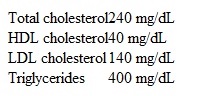 The initiation of which of the following medications is most appropriate in this patient?
 (Multiple Choice)
4.9/5 (88)
(88) A 51-year-old man comes to the office for a follow-up visit. He has no concerns. His medical conditions include type 2 diabetes mellitus, hypertension, and obesity. The patient does not use tobacco, alcohol, or illicit drugs. His mother and maternal grandfather also had diabetes. His current medications include aspirin, glyburide, metformin, and lisinopril. Blood pressure is 144/79 mm Hg and pulse is 88/min. Weight is 120 kg (265 lb). Examination shows no abnormalities. Laboratory results are as follows: 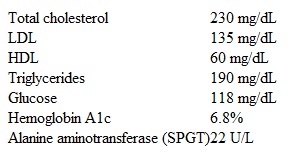 Which of the following is the most appropriate therapy to prevent atherosclerotic cardiovascular disease in this patient?
 (Multiple Choice)
4.7/5 (78)
(78) A 32-year-old woman, gravida 2 para 0 aborta 1, at 7 weeks gestation comes to the office to initiate prenatal care. The patient has had nausea and vomiting unresponsive to an oral antiemetic but has not had abdominal pain or vaginal bleeding. Her first pregnancy 2 years ago ended in a first-trimester spontaneous abortion. The patient has a history of epilepsy that is managed with antiepileptic medication. However, because she had been seizure free for 3 years, the medication was stopped prior to pregnancy. She has smoked a pack of cigarettes daily for the past 14 years. The patient has tried to quit several times and is unsure if she is ready to try again. She does not use alcohol or illicit drugs. Vital signs are within normal limits. BMI is 27 kg/m2. Pelvic examination is normal. Ultrasound reveals a 7-week intrauterine gestation with a normal heartbeat. Which of the following is the best initial advice regarding smoking cessation for this patient?
(Multiple Choice)
4.8/5 (67)
(67) A 68-year-old woman comes to the office for follow-up of her anticoagulation therapy. Her medical problems include chronic atrial fibrillation, hypertension, congestive heart failure (CHF) NYHA II, and coronary artery disease. Her medications include daily warfarin 6 mg, lisinopril, furosemide, and carvedilol. She started taking an over-the-counter supplement 2 weeks ago to help increase her energy level but cannot recall the name. She denies bleeding episodes. Echocardiogram performed 2 months ago shows a dilated left atrium and moderately depressed left ventricular ejection fraction. Laboratory evaluation done early in the morning shows an international normalized ratio (INR) of 4.3 with a prothrombin time of 46 sec. Which of the following is the most appropriate next step in management?
(Multiple Choice)
4.9/5 (76)
(76) A 24-year-old man is brought to the emergency department by his girlfriend due to progressive weakness. They have been on a cross-country road trip for the past month. While traveling through the midwestern United States 2 weeks ago, the patient developed diarrhea, nausea, and vomiting. He rested, drank fluids, and improved spontaneously after 2-3 days. However, the patient had persistent fatigue, and 4 days ago they had to stop traveling as his legs became too weak to press down the brake pedal. He is now unable to get out of bed. The patient has also had tingling of the hands and feet as well as shortness of breath. He has had no fever, chills, abdominal pain, or recurrent diarrhea. The patient has no prior medical problems and takes no medications. He does not use tobacco, alcohol, or illicit drugs. Temperature is 37.7 C (99.8 F), blood pressure is 120/70 mm Hg, pulse is 90/min, and respirations are 20/min. Pulse oximetry shows 98% on ambient air. The patient is awake, alert, and speaking in full sentences but develops a weak cough after taking a sip of water. The lungs are clear to auscultation and heart sounds are normal. The abdomen is soft and nontender. Neurologic examination shows symmetric bilateral lower extremity weakness. Deep tendon reflexes are absent at the knees and ankles, and 1+ in the biceps and triceps. Cranial nerve examination and sensation are normal, and he has no neck rigidity. There is no skin rash or lymphadenopathy. Item 1 of 3
Which of the following is the best immediate step in management of this patient?
(Multiple Choice)
4.7/5 (90)
(90) A 41-year-old woman, gravida 1 para 1, comes to the office for persistent vaginal spotting and lower abdominal pain following an uncomplicated delivery 4 months ago. Since then, she has had bloody discharge of decreasing volume that has not completely resolved. For the past month, the patient has used a sanitary pad that is stained but not saturated with blood at the end of the day. The abdominal pain has been mild but constant and is minimally relieved by over-the-counter analgesics. The patient's last Pap test, during her initial prenatal visit, was normal. Human papillomavirus testing at that time was negative. She is breastfeeding her infant, who is doing well. The patient is a former smoker who has not used alcohol since prior to pregnancy and does not use illicit drugs. Temperature is 36.7 C (98.1 F), blood pressure is 110/70 mm Hg, pulse is 68/min, and respirations are 18/min. BMI is 30 kg/m2. Abdominal examination reveals mild lower abdominal tenderness to deep palpation but no masses, rebound, or guarding. Pelvic examination reveals an enlarged uterus and no adnexal masses. Speculum examination shows a dark, irregular 2-cm lesion on the posterior fornix that bleeds after contact with an applicator, with scant blood in the vaginal vault. A urine pregnancy test is positive. Which of the following is the most likely diagnosis for this patient?
(Multiple Choice)
4.9/5 (76)
(76) Showing 1041 - 1060 of 1121

Filters
- Essay(0)
- Multiple Choice(0)
- Short Answer(0)
- True False(0)
- Matching(0)