



 Chat with AI
Exam 1: Advanced Clinical Medicine

Exam 1: Advanced Clinical Medicine1 k+ Questions
Exam 2: Foundations of Independent Practice597 Questions
Select questions type


A 7-month-old boy is brought to the office for a routine visit. The parents' only concern is that their son's "private area looks abnormal," which his primary care provider has been monitoring. He breastfeeds on demand and recently started eating pureed fruits and vegetables. The infant urinates frequently and stools once a day. He rolls in both directions, responds to his name, and transfers objects from one hand to the other. The patient was born by cesarean delivery at 36 weeks gestation for maternal preeclampsia. He was small for gestational age but has gained weight appropriately since birth. Weight, length, and head circumference track along the 30th percentile. Physical examination shows an interactive and alert infant. The abdomen is soft, nontender, and nondistended. Genital examination reveals a hypoplastic, hypopigmented, empty left scrotum (shown in the image below). 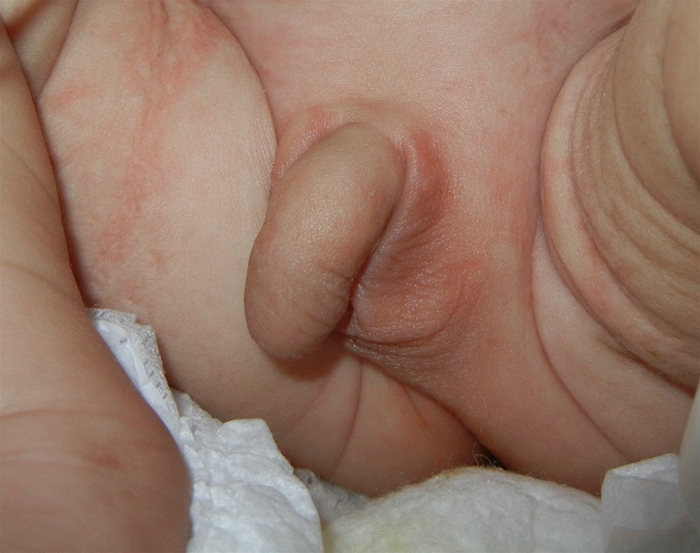 A small mobile mass is palpable in the left inguinal canal. The right testicle is palpated in the right hemiscrotum, which has normal cremasteric reflex and normal rugae. The penis is uncircumcised, and the urethral meatus is at the tip of the glans. Which of the following is the most appropriate next step in management of this patient?
 (Multiple Choice)
4.9/5  (71)
(71) A 2-week-old girl is brought to the office because she looks "a bit yellow." She was born at 40 weeks gestation by normal spontaneous vaginal delivery to a mother whose blood type is AB+. Apgar scores were 9 (-1 color) and 9 (-1 color) at 1 and 5 minutes, respectively. Birth weight, length, and head circumference were at the 50th percentile. She was discharged home on the second day of life and has been breastfeeding every 2-3 hours for 15 minutes on each side. The infant has 6 wet diapers and 5-6 yellow seedy stools per day. She has regained her birth weight and has normal vital signs. Physical examination shows an active, crying infant with moist mucous membranes and jaundice of the face, neck, and chest. The remainder of the examination is normal. Total bilirubin is 10 mg/dL and direct bilirubin is 0.6 mg/dL.
Which of the following is the most likely cause of this infant's hyperbilirubinemia?
(Multiple Choice)
4.8/5 (78)
(78) A 66-year-old man comes to a community clinic after undergoing a computed tomography scan of the head at a local emergency department. He fell while stepping out of the bathtub and struck his head but did not lose consciousness. The patient sustained a small head laceration that was closed with sutures, but no other injuries were identified in the emergency department. He reports a longstanding history of normal-pressure hydrocephalus with frequent falls, but he has not followed up with his neurologist for several years. The patient is now asymptomatic with no headaches, focal weakness, or dizziness. His head computed tomography scan with bone windows is shown in the image below. 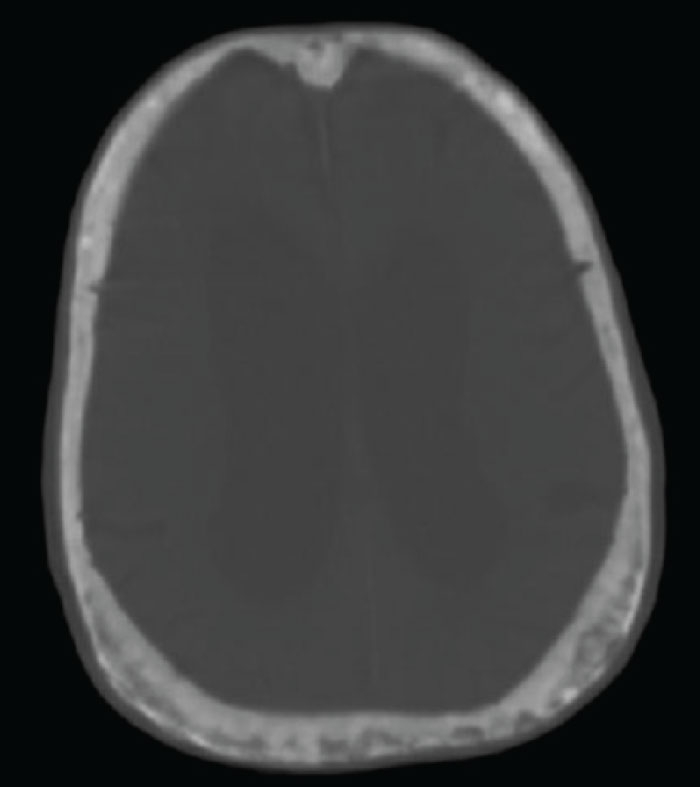 What is the best next step in management of this patient?
 (Multiple Choice)
4.8/5 (93)
(93) A 75-year-old man comes to the office due to difficulty sleeping for the past several months. The patient says, "I think I would be fine if I could just get some sleep." He describes taking at least 45 minutes to an hour to fall asleep at night. He also awakens 2-3 times in the middle of the night and has difficulty falling back asleep, often staying up for an hour or more at a time. He wakes up naturally at his usual time of 6:30 AM but then feels tired throughout the day. The patient lives in a retirement community. His wife died last year and he lives alone. He misses his wife but has no other psychosocial stressors and enjoys playing golf and socializing with a group of friends. He does not feel anxious or depressed and is not sure what keeps him awake or why he is waking up so often. His medical history is significant for aortic stenosis, well-controlled hypertension, osteoporosis, benign prostatic hyperplasia, and constipation. His current medications include terazosin, alendronate, and over-the-counter fiber supplements and multivitamins. The patient does not smoke or use illicit drugs. He drinks alcohol rarely on social occasions. Physical examination is noncontributory. Which of the following is the most appropriate management of this patient's condition?
(Multiple Choice)
4.8/5 (76)
(76) A 32-year-old man comes to the office due to right-sided facial weakness for 3 days. He has had no fever, headache, vision disturbances, or extremity weakness or numbness but has been extremely fatigued over the past several months. The patient has no prior medical conditions and takes no medications. He drinks alcohol occasionally and does not use tobacco or illicit drugs. The patient lives in coastal California and has not traveled recently. Vital signs are within normal limits. Physical examination reveals right-sided facial droop with flattening of the nasolabial fold. He is unable to elevate the right eyebrow or close the right eye completely. Upper and lower extremity muscle strength, deep tendon reflexes, and sensation are normal on both sides. There is no neck rigidity. The lungs are clear on auscultation, and heart sounds are normal. Hepatosplenomegaly is present. The cervical, axillary, and inguinal lymph nodes are multiple, firm, and nontender. No skin rash or extremity edema is present. The joints are not swollen or tender. Item 1 of 2 Which of the following is the best initial test for this patient?
(Multiple Choice)
4.9/5 (83)
(83) A 52-year-old woman comes to the office for follow-up after a forearm fracture. She experienced a nondisplaced radial fracture in a ground-level fall a week ago, and was treated with casting in the emergency department. The patient has a history of chronic constipation but has had no polyuria, bone pain, hematuria, or headaches. Medical history is notable for borderline hypertension that has been stable for several years with dietary modification. Her only medications include calcium and vitamin D supplements that she started after experiencing menopause a year ago. The patient has a 15-pack-year smoking history but quit 20 years ago; she does not use alcohol or illicit drugs. Her mother has osteoporosis and her father had type 2 diabetes mellitus and hypertension. Blood pressure is 157/98 mm Hg and pulse is 72/min. BMI is 28 kg/m2. Physical examination shows a cast on the right forearm but is otherwise unremarkable. Laboratory results are as follows: 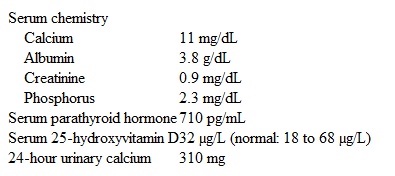 Serum calcium a year ago was 10.9 mg/dL. DXA reveals a T-score of −2.6 at the lumbar spine and −1.8 at the femoral neck. Which of the following is the best management for this patient?
 (Multiple Choice)
4.8/5 (65)
(65) A 16-year-old girl comes to the office due to joint pain lasting several days. The patient says, "My hands and knees feel stiff when I wake up, and those joints are painful throughout the day." The symptoms are improving, but she still has significant discomfort with daily activities. The patient has never before had such symptoms. A mildly pruritic rash on her face, arms, and legs developed around the same time as the joint symptoms. Last week, the patient had an upper respiratory infection with fever and myalgias that resolved quickly without intervention. She has seasonal allergies for which she uses a glucocorticoid intranasal spray as needed. She does not use tobacco, alcohol, or illicit drugs. The patient is not in a relationship and has never been sexually active. Temperature is 37.2 C (99 F). She appears well and is sitting comfortably on the examination table. Cardiopulmonary examination is normal. Examination of the hands shows mild symmetric swelling of the proximal interphalangeal and metacarpophalangeal joints; there is no warmth or erythema. Bilateral knees have a full range of motion, mild tenderness to palpation, and no swelling. Strength and sensation are symmetric and intact throughout, and distal pulses are strong bilaterally. There is a faint, erythematous, reticular rash on both arms and legs. Medication is prescribed and the patient returns a month later for follow-up. The patient says that her symptoms have resolved and she feels "quite good." However, she is concerned about the prognosis of her disease and the possibility of recurrent joint problems. Physical examination reveals complete resolution of the joint swelling. Which of the following is the best response to this patient's concern?
(Multiple Choice)
5.0/5 (77)
(77) A 29-year-old woman, gravida 1 para 0, at 11 weeks gestation is brought to the emergency department by her husband who says she has been acting "bizarrely and out of control" for the past 8 days. The patient reported to her husband, "I am the smartest graduate in America right now. This new company I am working on will rocket to the top." She has not slept in 4 days and spends most of the night writing plans for a company that will sell baby shoes. The patient quit her job suddenly yesterday and began shopping online for luxury baby clothes and furniture despite the couple's financial difficulties. Psychiatric history is remarkable for 3 similar episodes that required hospitalization. The patient's husband says that she has been relatively stable since discharge from her last hospitalization 2 years ago. She took lithium until 5 months ago, when she asked to discontinue it due to the adverse effects of weight gain and hand tremors and to her desire to start a family. Physical examination is normal. Mental status examination shows loud, pressured speech and rapid shifts in mood and affect. The patient starts to cry when discussing her grandmother's death 6 months ago and then bursts into laughter after making an inappropriate joke. She has no suicidal or homicidal ideation. She tells the doctor, "My baby is going to be a king and a prince of the weak, like Moses." Which of the following is the most appropriate treatment recommendation for this patient?
(Multiple Choice)
4.8/5 (86)
(86) A 13-year-old boy is brought to the office by his parents due to their concern about his behavior and academic performance. The patient is failing several classes in junior high school and has few friends. His mother reports, "His teachers complain that he doesn't pay attention and disrupts the class. One teacher says that he clears his throat repeatedly, distracting the other kids and making it difficult for her to teach. She has asked him to stop but he keeps doing it." The boy says, "I try in school but the kids are mean and make fun of me because they think I am weird or something." Over the past year, his father has observed frequent repeated blinking, which he found unusual but assumed was a sign of fatigue. His mother adds that several months ago the boy was grimacing frequently, but this seems to have passed. In the office, the boy shrugs his left shoulder repeatedly. Medical history is unremarkable. A Stanford-Binet test administered 2 years ago measured the boy's intelligence quotient as 95. Temperature is 37.2 C (99 F), blood pressure is 110/70 mm Hg, pulse is 88/min, and respirations are 14/min. Weight is 45 kg (99.2 lb) and height is 155 cm (5 ft 1 in). Physical examination, including neurological examination, is normal.
Which of the following is the most likely diagnosis?
(Multiple Choice)
5.0/5 (70)
(70) A 63-year-old man comes to the emergency department due to worsening pain in the right upper quadrant, nausea, and vomiting since last night. He woke up at midnight with abdominal discomfort and nausea. He could not fall back to sleep due to the increasing pain as well as malaise and shaking chills. The patient had 2 episodes of vomiting this morning. He has gastroesophageal reflux disease and takes esomeprazole occasionally. He also has a history of hypertension and osteoarthritis. The patient drinks a glass of wine daily with dinner but does not use tobacco or illicit drugs. On initial evaluation, he appears uncomfortable due to pain. Temperature is 38.3 C (101 F), blood pressure is 96/65 mm Hg, pulse is 102/min and regular, and respirations are 18/min. Physical examination shows mild scleral icterus. Mucous membranes are dry. The abdomen is soft and nondistended, with moderate tenderness in the right upper quadrant. There is no rebound tenderness. Bowel sounds are active. Laboratory results are as follows: 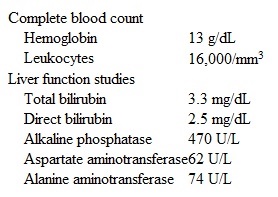 Serum creatinine is 0.9 mg/dL. Abdominal ultrasonography reveals increased liver echotexture consistent with fatty infiltration, several small gallstones, and dilated biliary ducts. Intravenous fluids and empiric antibiotics are administered, and the blood pressure and tachycardia improve. Which of the following is the best management strategy for this patient?
 (Multiple Choice)
4.9/5 (73)
(73) A 66-year-old woman comes to the office to follow up for heart failure. Four weeks ago, she was diagnosed with new onset heart failure with reduced ejection fraction of 30%. At that time, ECG showed normal sinus rhythm, narrow QRS complexes, and T-wave inversion in the lateral leads. Coronary angiogram revealed no significant coronary artery disease. She is feeling better except for mild exertional fatigue. The patient typically uses 2 pillows to sleep and gets up once at night to urinate. She has no lightheadedness. Her only other medical condition is type 2 diabetes mellitus. Current medical therapy is sacubitril-valsartan, metoprolol succinate, and furosemide. Blood pressure is 109/60 mm Hg, pulse is 62/min, and respirations are 12/min. Pulse oximetry shows 98% on room air. Examination shows normal jugular venous pressure, clear lungs, and a 2/6 pansystolic murmur at the apex. The abdomen is soft and nontender. She has no peripheral edema. Laboratory results are as follows: 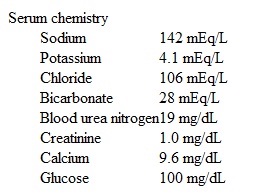 Which of the following is the most appropriate next step in pharmacotherapy management of this patient?
 (Multiple Choice)
4.8/5 (85)
(85) A 72-year-old woman comes to the emergency department due to right ear pain and drainage for the past 2 days. She saw her primary care physician approximately a week ago for decreased hearing in the right ear and underwent aural irrigation to remove impacted cerumen. The patient's medical history is notable for hypertension, diabetes mellitus, and rheumatoid arthritis. Current medications include hydrochlorothiazide, enalapril, metformin, and methotrexate. She does not use tobacco, alcohol, or illicit drugs. Temperature is 37.2 C (99 F), blood pressure is 146/74 mm Hg, pulse is 100/min, and respirations are 16/min. There is marked tenderness with motion of the right earlobe. Purulent discharge and granulation tissue are noted on the floor of the right external auditory canal at the osseocartilaginous junction. The tympanic membrane appears intact. Which of the following is the most appropriate initial treatment for this patient's condition?
(Multiple Choice)
4.9/5 (89)
(89) A 32-year-old woman with systemic lupus erythematosus comes to the office for a follow-up visit. The patient was diagnosed with lupus 3 years ago during evaluation of a skin rash and joint pain, and her symptoms have been well controlled with hydroxychloroquine. She takes no other medications, has no other medical conditions, and does not use tobacco, alcohol, or illicit drugs. Blood pressure is 150/90 mm Hg and was normal during previous office visits. Temperature is 37.2 C (99 F), pulse is 78/min, and respirations are 14/min. There is a faint malar rash but no mucosal ulcers, joint tenderness, or swelling. The lungs are clear on auscultation and heart sounds are normal with no murmur, rub, or gallop. The abdomen is soft and nontender with no hepatosplenomegaly. There is mild pitting edema of the bilateral lower extremities. Neurologic examination shows no abnormalities. Laboratory results are as follows:
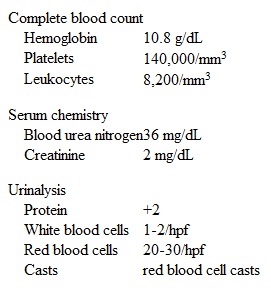 The patient's serum chemistry and urinalysis were within normal limits 2 months ago. Renal ultrasonography shows normal-sized kidneys with no hydronephrosis.
Item 1 of 2
Which of the following is the best next step in management of this patient?
The patient's serum chemistry and urinalysis were within normal limits 2 months ago. Renal ultrasonography shows normal-sized kidneys with no hydronephrosis.
Item 1 of 2
Which of the following is the best next step in management of this patient? (Multiple Choice)
4.8/5 (80)
(80) A 6-year-old girl is brought to a walk-in clinic for evaluation of growth. The patient and her family immigrated to the United States from Haiti 2 months ago. For the past 3 months, decreased appetite has led to the loss of several pounds. The patient has had occasional episodes of abdominal discomfort and diarrhea. The family denies any recent changes to her diet. There is no gross blood or mucus in the stool, and the patient has no fever. A mild cough early in the course of symptoms has since resolved. The patient received all age-appropriate vaccinations prior to immigration. She was also immunized in infancy for bacille Calmette-Guérin. Skin tuberculin testing at the time of immigration showed 2 mm induration. Temperature is 36.7 C (98.1 F), pulse is 102/min, and respirations are 18/min. Height is 120 cm (4 ft, 10th percentile) and weight is 19 kg (41.9 lb, <5th percentile). Physical examination shows a slightly distended abdomen with soft, hyperactive bowel sounds. There is generalized mild tenderness to deep palpation. No guarding, rebound tenderness, or hepatosplenomegaly is present. Fecal occult blood test is positive. Laboratory results are as follows: 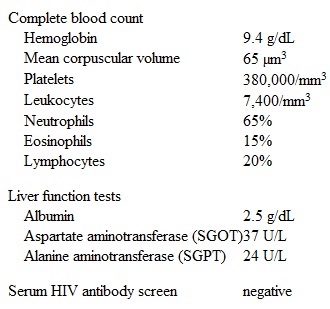 Which of the following diagnostic studies is most likely to be abnormal in this patient?
 (Multiple Choice)
4.8/5 (73)
(73) A 65-year-old man comes to the office for a follow-up visit. His friend recently died from a massive cerebrovascular event. The patient is worried about his individual risk for stroke. Medical conditions include hypertension, type 2 diabetes mellitus, hypercholesterolemia, and obesity. He is an active smoker with a 40-pack-year history. The patient does not use alcohol or illicit drugs. Family history is not contributory. Medications include low-dose (81-mg) aspirin, metformin, lisinopril, and atorvastatin. Blood pressure is 161/92 mm Hg. BMI is 30 kg/m2. Examination shows no abnormalities. Laboratory results are as follows: 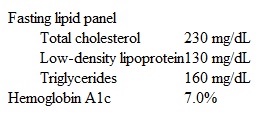 Which of the following would provide the greatest benefit for decreasing this patient's risk for an ischemic stroke?
 (Multiple Choice)
4.7/5 (71)
(71) A 17-year-old boy is brought to the office by his mother for follow-up. He was diagnosed with major depressive disorder 6 months ago; after failing to improve with cognitive-behavioral therapy, he was started on fluoxetine 20 mg daily 4 months ago. The physician discussed the risks and benefits of antidepressants and how they work, as well as how to take the medication; the patient reported that he understood the discussion. At today's visit, his mother says, "He was doing well on the medication at the start and really seemed to be improving. He was going out again with friends and enjoying school. He was smiling again and just seemed happier in general. But for the past month he has struggled to wake up in time for school and seems to have really low energy, and his grades have been dropping. He isn't smiling as much either. I am worried that he is becoming depressed again." When interviewed alone, the patient says, "My mother worries too much about me. I'm just in a slump because I missed a lot of schoolwork when I was really depressed and I'm struggling to make it up. I prefer not to take the medication every day and take it only when I have a really bad day." He has no loss of appetite, no difficulty sleeping, and no suicidal ideation. Which of the following is the most appropriate response to address this patient's nonadherence to medication?
(Multiple Choice)
4.9/5 (74)
(74) A 9-year-old girl is brought to the office due to diarrhea. The patient has had 10 episodes of watery diarrhea and abdominal cramping over the past 36 hours. Her last bowel movement was a few minutes ago in the waiting room bathroom. She also had an episode of nonbilious emesis prior to the onset of diarrhea, but she has been able to drink water without further vomiting. The patient says, "I think I am hungry, but I am afraid to eat because I keep having to go to the bathroom. I am also afraid of throwing up again. All I ate was a banana and a slice of bread yesterday." She has been afebrile. There is no history of recent travel or change in diet. Several of her classmates have the same symptoms. The patient has no chronic medical problems and takes no medications; her immunizations are up to date. Temperature is 37.2 C (99 F), blood pressure is 112/74 mm Hg, pulse is 108/min, and respirations are 16/min. Physical examination demonstrates an awake and alert but tired-appearing child. The lips are slightly dry, oral mucosa is moist, and no erythema or exudate is present in the pharynx. The neck is supple and there is no lymphadenopathy. The lungs are clear to auscultation bilaterally, and heart sounds are normal without murmurs. There is no abdominal distension, and bowel sounds are hyperactive. The abdomen is soft and nontender without masses or organomegaly. Which of the following is the most appropriate recommendation for this patient's condition?
(Multiple Choice)
4.9/5 (81)
(81) A 42-year-old nulliparous woman comes to the office for a follow-up visit. The patient was recently diagnosed with stage I breast cancer that was estrogen receptor positive, HER2 negative, lymph node negative, and without metastases. She underwent a mastectomy and recently completed adjuvant chemotherapy. She has had no weight loss, loss of appetite, weakness, or abdominal pain. The patient also has a history of hypertension controlled with a single medication. She had a normal Pap test 5 years ago, and human papillomavirus co-testing was negative. All previous Pap tests were normal. The patient uses a copper-containing intrauterine device for contraception and has regular menstrual periods that last 5 days with moderate bleeding on the first day. She does not use tobacco, alcohol, or illicit drugs. Temperature is 37.2 C (99 F), blood pressure is 130/80 mm Hg, and pulse is 76/min. BMI is 28 kg/m2. Cardiac examination reveals a normal rate and rhythm with no rubs or murmurs. The lungs are clear to auscultation bilaterally. Breast examination is consistent with postmastectomy changes. Because of the estrogen receptor-positive tumor, she will be started on a course of tamoxifen as part of her treatment. Which of the following is the best screening strategy for the side effects of tamoxifen in this patient?
(Multiple Choice)
4.9/5 (62)
(62) An 18-month-old boy is brought to the office for right ear pain. About 4 weeks ago, he had fever and right ear pain and was prescribed a 10-day course of high-dose amoxicillin for acute otitis media; he completed the course and had a normal follow-up visit 2 weeks ago. While on the medication, he experienced improvement in his symptoms. For the past 3 days, he has been tugging on his right ear and crying; he developed fever today. He has no nasal congestion, neck stiffness, cough, emesis, or other symptoms. He is otherwise healthy and takes no medications. His immunizations are up to date. Temperature is 38.5 C (101.3 F), blood pressure is 108/66 mm Hg, pulse is 96/min, and respirations are 21/min. Physical examination demonstrates an alert, uncomfortable child. Pupils are equal and reactive; the conjunctivae are injected bilaterally and have purulent discharge. There is no rhinorrhea or sinus tenderness. The external ears appear normal and are not painful to manipulation; there is no drainage in the external canal. The right tympanic membrane is erythematous, bulging, and immobile on pneumatic air insufflation. The left tympanic membrane appears normal. Both mastoids are nontender and nonerythematous. The neck is nontender and has full range of motion. Cardiopulmonary examination is normal.
Which of the following is the most likely cause of this patient's current symptoms?
(Multiple Choice)
4.8/5 (79)
(79) A 14-year-old boy comes to the office with his mother for a well-child visit. He is in 9th grade and recently joined the football team. His diet is well-varied and includes fruits, vegetables, meat, and dairy. He had rhinorrhea and cough last week that resolved on its own. Otherwise, the patient has no medical problems and takes no medications. Height has increased by 7.5 cm (3 in) since his last physical, and he has gained 3.2 kg (7 lb); BMI is at the 65th percentile. The mother leaves the room while the patient undergoes physical examination and continued discussion with his health care provider. The boy is not sexually active. He drinks 1 or 2 beers on weekends and has never tried cigarettes or drugs. When asked if he would like to discuss any additional issues in private, the boy says, "This is so embarrassing, but I think something is wrong. My chest is getting bigger. I didn't want to tell my mom because my grandma died from breast cancer last year." Physical examination shows a nervous and alert boy. Palpation of the chest reveals a 3-cm (1.2-in), firm, mobile mass beneath the areola bilaterally. There is no skin dimpling or nipple discharge. The testes are descended bilaterally, and genital examination reveals Tanner stage III pubic hair. A 0.5-cm soft, mobile node is palpated on his right anterior cervical chain. The remainder of the physical examination is unremarkable. Which of the following is the best next step in management of this patient?
(Multiple Choice)
4.7/5 (76)
(76) Showing 61 - 80 of 1121

Filters
- Essay(0)
- Multiple Choice(0)
- Short Answer(0)
- True False(0)
- Matching(0)