



 Chat with AI
Exam 1: Advanced Clinical Medicine

Exam 1: Advanced Clinical Medicine1 k+ Questions
Exam 2: Foundations of Independent Practice597 Questions
Select questions type


A 26-year-old woman comes to the office due to excessive fatigue and decreased exercise capacity for the past several weeks. She delivered a healthy boy 5 months ago with no complications and has been attributing her symptoms to "baby blues." The patient enjoys spending time with her son and is excited to return to work. She has had no change in appetite but has been gaining weight. The patient has had no insomnia, excessive urination, feelings of worthlessness, or suicidal ideations. She takes no medications and does not use alcohol, tobacco, or illicit drugs. Temperature is 36.5 C (97.7 F), blood pressure is 136/92 mm Hg, and pulse is 64/min. Weight is 70 kg (154 lb) and BMI is 27 kg/m2. Physical examination shows moist mucous membranes and no scleral icterus, lymphadenopathy, or jugular venous distension. The lungs are clear on auscultation and heart sounds are normal. The abdomen is soft and nontender. There is mild, nonpitting edema of the hands and feet. Laboratory results are as follows: 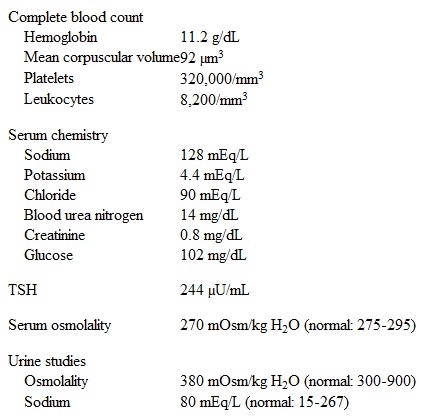 Which of the following is the definitive treatment for this patient's hyponatremia?
Free
(Multiple Choice)
4.7/5  (98)
(98) Correct Answer: Verified
D
A 45-year-old Caucasian man comes to see you in the office. He is accompanied by his wife. They have noticed that he has shakiness of both hands for the past six months. The shakiness is limited only to his hands and has not progressed over time. It becomes much more pronounced when he tries to pick up things or attempts to eat or drink. On physical examination, you notice a constant tremor in both his hands, which becomes much more pronounced when his arms are outstretched. There is also a very subtle head tremor present. There is no rigidity or slowing of voluntary movements in the upper or lower extremities. His father had a similar problem in his 50s or 60s, but he is not sure what treatment he received at that time. His wife is extremely anxious and wants to know his prognosis.
The patient works as a carpenter and feels that he is unable to perform the fine motor tasks due to the tremor. Which of the following is the most appropriate next step in the management of this patient?
Free
(Multiple Choice)
4.9/5 (93)
(93) Correct Answer:Verified
VerifiedC
A 45-year-old woman comes to the office due to a 6-month history of mild aching and stiffness in the joints of her hands. The symptoms are worse in the morning for about an hour and then gradually improve throughout the day. The patient has no previous medical problems and takes no medications. She does not use tobacco or illicit drugs, and drinks a glass of wine every day. Vital signs are normal. Physical examination shows multiple small, sharply demarcated and erythematous scaly plaques on the extensor surfaces of both elbows. The right hand is shown in the image below, and the left hand has similar abnormalities. X-rays of the hands reveal bony erosions with evidence of new bone formation at multiple distal interphalangeal joints. 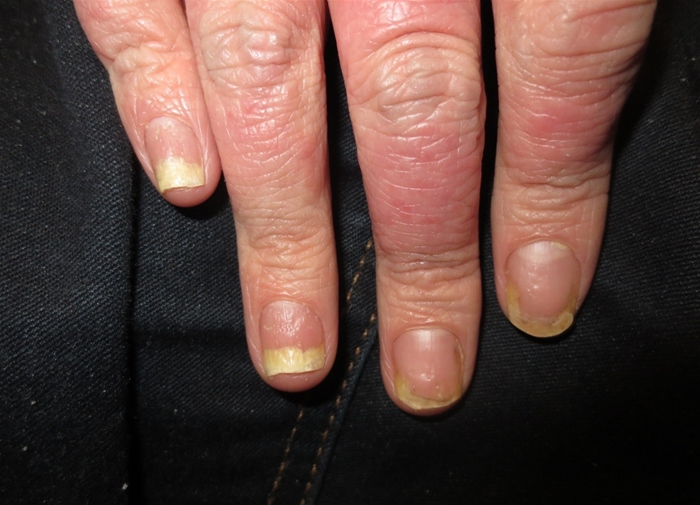 Which of the following is the most appropriate next step in management of this patient?
Free
(Multiple Choice)
4.8/5 (87)
(87) Correct Answer:Verified
VerifiedC
A 55-year-old woman comes to the physician due to a 2-month history of malaise, mild fever, and difficulty climbing stairs and rising from a chair. She has unintentionally lost 9.1 kg (20.1 lb) over this period. The patient has hypertension and asthma. Medications include amlodipine, as-needed albuterol, and inhaled glucocorticoids during winter. The patient does not smoke or use illicit drugs. She worked for 20 years supervising cotton processing in a textile factory but has been working as a secretary for the past 10 years. Temperature is 37.8 C (100 F), blood pressure is 120/70 mm Hg, pulse is 82/min, and respirations are 12/min. Chest examination reveals clear lung fields and normal S1 and S2. The patient has bilateral proximal upper and lower extremity weakness with normal reflexes. Plantar reflexes are down-going bilaterally. Violaceous papules and plaques are seen on the dorsum of both hands, as shown in the image below: 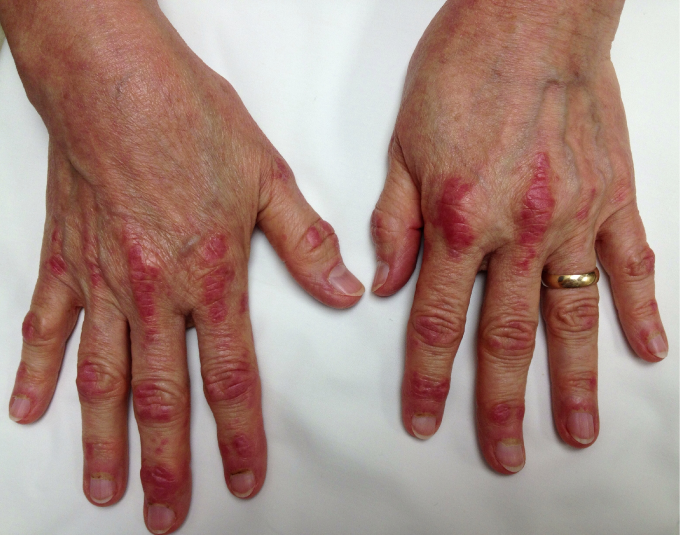 Kidney and liver function are within normal limits. Creatine kinase level is 1,200 IU/L.
Which of the following is the best next step in management of this patient?
Kidney and liver function are within normal limits. Creatine kinase level is 1,200 IU/L.
Which of the following is the best next step in management of this patient? (Multiple Choice)
4.7/5 (71)
(71) A 12-year-old boy is brought to the office by his father for an urgent care visit due to right hip pain that has worsened over the past 3 weeks. The patient initially had "a little bit" of hip pain, but now the pain has spread to his thigh and knee. He says, "It is so bad that I can barely walk." The boy has had no recent injuries, fever, or sore throat. Aside from the pain in the right lower extremity, he feels well. He has mild eczema that is managed with emollients. He is allergic to dust and cats. The patient's only hospitalization was for an appendectomy at age 7. Temperature is 37 C (98.6 F), blood pressure is 114/74 mm Hg, and pulse is 90/min. He is at the 95th percentile for weight and the 50th percentile for height. Physical examination reveals an obese boy in moderate pain, with the right hip in an externally rotated position. There is no warmth, swelling, or tenderness of the right knee or thigh. The patient has normal Tanner 3 male external genitalia; the testes are descended bilaterally. Sensation is intact in the lower extremities, and peripheral pulses are 2+ bilaterally. Dry, red patches are present on the right knee and left elbow. The remainder of the physical examination is normal. X-ray of the hips is shown below. 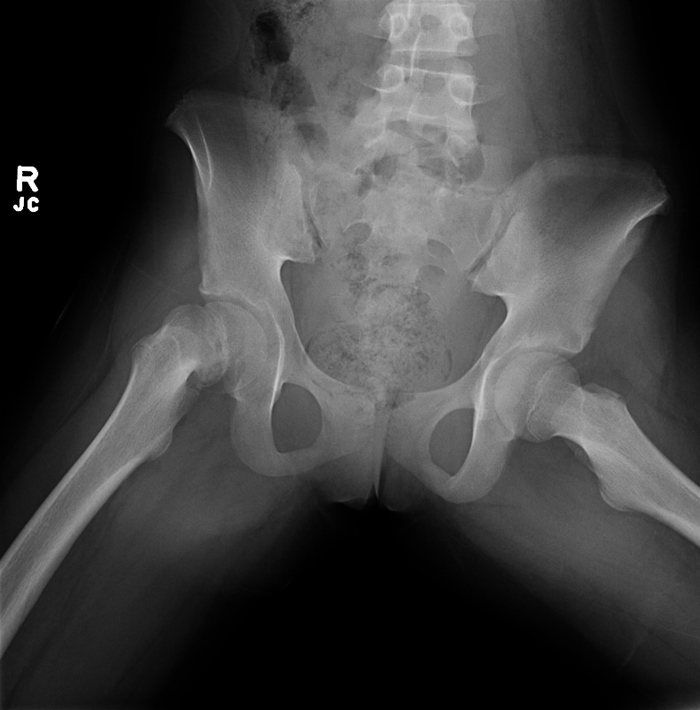 Which of the following is the most appropriate next step in management of this patient's condition?
 (Multiple Choice)
4.9/5 (67)
(67) A 28-year-old man with a history of bipolar I disorder is brought to the emergency department after being pulled over by police for driving erratically. The police report indicates that the patient appeared alcohol-intoxicated and refused to cooperate with questions, stating, "I have the skills of a race car driver and a need for speed." He has been on lithium for years and says he has been adherent. The patient has a history of bilateral knee injuries sustained in an accident when he jumped from a high ledge. He has no other medical history. The emergency physician contacts the outpatient psychiatrist, who reports that the patient has been treated with lithium for the past 3 years. He had a therapeutic lithium level and appeared stable at his last visit 2 weeks ago. The patient is re-interviewed when he is sober. He felt upset after his girlfriend left him and was turned down for a job, and so decided to "get drunk." He is apologetic for driving recklessly and says he intends to follow up with his outpatient psychiatrist. Although the patient admits to a history of crack cocaine use, he currently uses no illicit substances other than marijuana on weekends. Temperature is 37.2 C (99 F), blood pressure is 140/80 mm Hg, and pulse is 88/min. Physical examination is normal. The patient is alert, and his speech is nonpressured. Urine toxicology screen is negative for illicit substances.
Which of the following is the most appropriate next step in management?
(Multiple Choice)
4.8/5 (83)
(83) A 31-year-old woman, gravida 1 para 0, at 14 weeks gestation comes to the office to establish prenatal care. She has had some nausea but no vomiting, abdominal pain, or vaginal bleeding. The patient contracted HIV through intravenous heroin use. She was diagnosed 3 years ago while hospitalized for drug rehabilitation. The patient is on triple-combination antiretroviral therapy with no significant side effects. She has no other chronic medical conditions and has had no previous surgeries. In addition to her HIV medications, the patient takes a daily prenatal vitamin. She does not use tobacco or alcohol and has not used illicit drugs since rehabilitation. Temperature is 36.7 C (98.1 F), blood pressure is 110/60 mm Hg, and pulse is 65/min. BMI is 24 kg/m2. Pelvic examination reveals a 14-week-sized nontender uterus with no adnexal masses. Laboratory results are as follows:
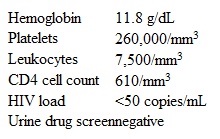 Bedside ultrasound reveals a 14-week intrauterine pregnancy with a normal heart rate.
Which of the following is the most appropriate recommendation for this patient?
Bedside ultrasound reveals a 14-week intrauterine pregnancy with a normal heart rate.
Which of the following is the most appropriate recommendation for this patient? (Multiple Choice)
4.9/5 (75)
(75) A 30-year-old nurse comes to the occupational health clinic for evaluation. He accidentally pricked his finger with a needle after drawing blood from a woman with a known history of intravenous drug abuse. The nurse has no significant medical history and takes no medications. According to his employment record, he received a series of 3 vaccinations for hepatitis B when first employed 5 years ago, tetanus immunization 2 years ago, and a yearly influenza vaccination. However, a postimmunization titer for hepatitis B was never checked. Today, the titer is found to be 5 mIU/mL (>10 mIU/mL is considered protective). The source patient is currently in the hospital for treatment of endocarditis. Laboratory testing of the source patient sent on the day of exposure shows the following results: 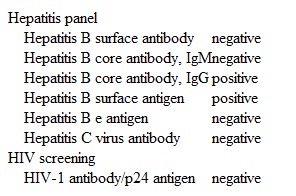 What is the most appropriate strategy to prevent infection in this health care worker?
 (Multiple Choice)
4.7/5 (70)
(70) A 36-year-old African American woman comes to the emergency department and complains of a severe, throbbing headache that began several hours ago. She also has acute onset of blurred vision and nausea. She took acetaminophen, which did not provide any relief. She was diagnosed with Raynaud phenomena a few years ago. She recently started having heartburn, for which she takes over-the-counter ranitidine. Her temperature is 36.7C (98.0F), blood pressure is 200/110 mm Hg, and pulse is 94/min. Pulse oximetry showed 94% in room air. There is no abdominal bruit. Ophthalmologic examination demonstrates bilateral papilledema. The laboratory results are as follows: CBC
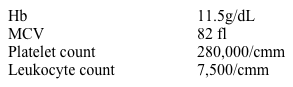 Serum
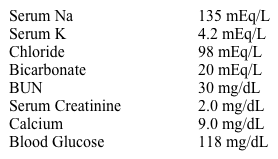 Which of the following is the most appropriate pharmacotherapy?
Serum
Which of the following is the most appropriate pharmacotherapy? (Multiple Choice)
4.9/5 (79)
(79) A 52-year-old man comes to the office due to difficulty using his left hand. Over the last year, he has had progressive stiffness at the palm and third and fourth digits, which has led to difficulty doing yard work and typing at his computer. The patient has tried splints and warm compresses without relief. He has no history of trauma to the hand and no other musculoskeletal issues. On examination, the patient has decreased extension at the left third and fourth metacarpophalangeal joints. Findings of the left hand examination are shown below: 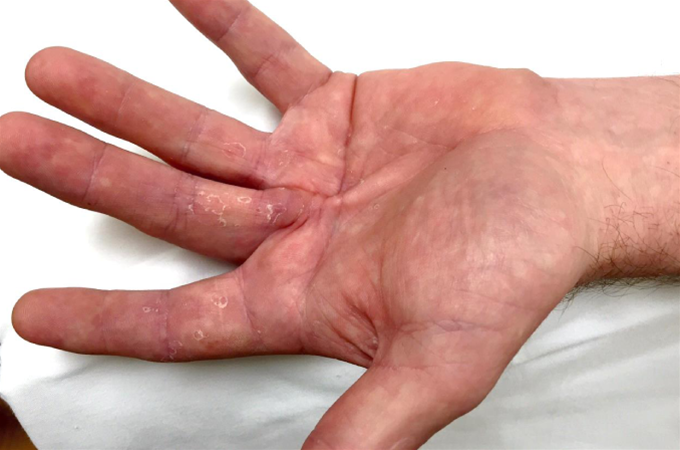 Which of the following is most closely associated with this patient's condition?
 (Multiple Choice)
4.8/5 (82)
(82) A 33-year-old woman comes to the office to discuss possible bariatric surgery. The patient has a history of morbid obesity that has not responded to dietary modification and exercise. She has no other chronic medical conditions and has had no previous surgeries. The patient does not use tobacco, alcohol, or illicit drugs. She is considering pregnancy after her bariatric surgery. Blood pressure is 130/80 mm Hg and pulse is 86/min. BMI is 42 kg/m2. The remainder of the physical examination is unremarkable. Which of the following is the most appropriate statement regarding pregnancy after bariatric surgery?
(Multiple Choice)
4.9/5 (95)
(95) A 79-year-old woman is brought to the office by her daughter for a follow-up visit after a fall. Two days ago, her knees gave out while standing up from bed, and she fell to the floor. There was no loss of consciousness, and evaluation in the emergency department revealed no significant trauma. The patient has a history of frequent falls and has been prescribed a walker but does not use it consistently. Other chronic medical problems include hypertension, type 2 diabetes mellitus, osteoarthritis, and obesity. The patient uses oxygen therapy for idiopathic pulmonary fibrosis. She lives with her daughter and performs basic activities of daily living independently. The patient no longer drives; her daughter shops for food for her and takes her to family events and church services. Her daughter says, "I am working 2 jobs and am finding less time to care for my mother. I worry that she may fall again and break her hip. I have also found that sometimes she forgets to take her medications." Blood pressure is 156/80 mm Hg and pulse is 72/min. Gait is unsteady but no focal weakness or sensory loss is present. The patient's daughter would like to learn more about home health services for her mother. Which of the following conditions qualifies this patient for home health services?
(Multiple Choice)
4.8/5 (80)
(80) A 76-year-old woman with a history of hypertension, type 2 diabetes mellitus, coronary artery disease, heart failure with preserved ejection fraction, and atrial fibrillation comes to the office for a follow-up visit. The patient says, "I feel exhausted all the time, and my feet are often swollen at the end of the day. I have also gained several pounds over the past 3 months." She has had no chest pain, dyspnea, orthopnea, or dizziness. Her medications include low-dose aspirin, metoprolol, lisinopril, furosemide, metformin, insulin glargine, and a daily multivitamin supplement. The patient underwent electrical cardioversion for persistent atrial fibrillation 6 months ago and has since been taking amiodarone. Two months ago, anticoagulation was discontinued due to recurrent falls related to gait disturbance from diabetic neuropathy. Blood pressure is 134/70 mm Hg with no postural changes, pulse is 58/min and regular, and oxygen saturation is 96% on room air. Weight is 77 kg (170 lb), which is 4.5 kg (10 lb) more than her recorded weight a few months ago. With the head of the bed elevated to 30 degrees, the jugular venous pressure is 2 cm above the sternal angle. Hepatojugular reflux is absent. Lung fields are clear to auscultation. Trace edema is noted at the ankles. Decreased vibratory and light touch sensation is present in the distal lower extremities. The remainder of the physical examination is normal. Serum creatinine is 0.8 mg/dL, sodium is 132 mEq/L, and potassium is 3.7 mEq/L. Which of the following is the most appropriate next step in management of this patient?
(Multiple Choice)
4.9/5 (76)
(76) A 42-year-old man comes to the office with concerns about his sexual function. The patient reports an abrupt inability to participate in sexual intercourse for the past 2 months. He is variably able to achieve an erection during foreplay but is unable to maintain an erection sufficient to engage in intercourse. The patient reports normal sexual desire. He has been married for 4 years and says, "I am ready to start a family, but my wife is focused on her job right now and is not as excited as I am." Medical history is notable for hypertension, migraine headaches, and irritable bowel syndrome. Current medications include lisinopril and as-needed polyethylene glycol and ibuprofen. The patient does not use tobacco or illicit drugs and drinks 1 or 2 cans of beer on weekends. He exercises several times per week. Family history is notable for hypertension in his parents. Blood pressure is 124/68 mm Hg, pulse is 70/min, and BMI is 23 kg/m2. Physical examination shows normal heart sounds. Extremities are warm and peripheral pulses are normal. The patient's genitalia and body hair distribution are normal. Visual fields are intact. Blood cell counts and serum chemistry are within normal limits. Which of the following is the best response and next step concerning this patient's symptoms?
(Multiple Choice)
4.9/5 (85)
(85) A 50-year-old African American man comes to the emergency department because his left leg has been bothering him. He describes vague, diffuse left leg pain that is present both at rest and with activity. He denies any chest pain, shortness of breath, palpitations, syncope, or hemoptysis. He was discharged from the hospital one month ago after being diagnosed with and treated for a left popliteal vein thrombosis. Since his discharge from the hospital, he has been taking a stable dose of warfarin every evening, without medical followup. His blood pressure is 143/82 mmHg and his heart rate is 72/min. His oxygen saturation is 98% on room air. His BMI is 37 kg/m2. There is marked swelling of the left leg. His INR (International Normalized Ratio) in the emergency room is 1.4. An ultrasound examination reveals venous thrombosis involving the common femoral vein. Which of the following is the best next step in managing this patient?
(Multiple Choice)
4.9/5 (87)
(87) A 32-year-old Hispanic man comes to the emergency department after an episode of choking in the restaurant. He was drinking and dining with his friends at a local restaurant, when he accidentally choked on a fish bone. He initially felt a sharp painful sensation, but this subsided to a vague discomfort after drinking four glasses of water. He denies having any difficulty in breathing, and only has a slight difficulty in swallowing his saliva. He has a mild discomfort and can still feel the fish bone lodged in the back of his throat. On a quick examination of his upper oropharynx, you do not see any evidence of fishbone. Which of the following is the most appropriate next step in the management of this patient?
(Multiple Choice)
4.8/5 (78)
(78) A 43-year-old woman comes to the office for a follow-up appointment. She was diagnosed with major depressive disorder a year ago and was prescribed citalopram, which provided no symptom relief. The patient was then switched to sertraline, and the dose was gradually increased. She is now taking the highest recommended dose, which she tolerates without difficulty. Although the patient has experienced 50% improvement in depression, she still has symptoms. Specifically, she continues to have low energy and sleeps 12 hours a day without feeling rested. She also describes an increased appetite with recent weight gain of 4.5 kg (10 lb) and poor libido. The patient says, "I really hoped I would feel back to my normal self, but my lack of energy drags me down. I'm reluctant to discontinue sertraline because I feel it has helped somewhat." The patient is married with 2 children and works as a grade school teacher. She describes her marriage as "good" but is concerned that her husband is becoming frustrated with her. She does not smoke or use alcohol. Blood pressure is 128/76 mm Hg and pulse is 64/min. BMI is 28 kg/m2. Physical examination is normal. Which of the following is the most appropriate change in pharmacotherapy?
(Multiple Choice)
4.9/5 (84)
(84) A 54-year-old homeless man is brought to the emergency department by the police after he was found to be confused and disheveled. The patient is unable to provide a medical history and has no prior hospital record. Temperature is 36.5 C (97.7 F), blood pressure is 110/60 mm Hg, pulse is 90/min, and respirations are 16/min. The patient is thin and appears ill, with temporal muscle wasting. The mucous membranes are dry. The lungs are clear to auscultation, and heart sounds are normal with no murmur. The abdomen is soft, nontender, and nondistended. The patient is disoriented and unable to recognize where he is or state the date. Bilateral pupils are equal and reactive to light, but extraocular motion is restricted on leftward gaze. No obvious motor weakness is present. Deep tendon reflexes are reduced and plantar responses are flexor. The patient has no neck rigidity, but his gait is markedly ataxic. Laboratory results are as follows: 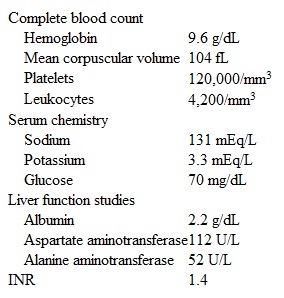 With treatment, the patient's gait abnormalities and eye movement gradually improve. He becomes more oriented, but the nurses report that he is forgetful and tells incongruent stories that seem to have never happened. Neuroimaging is most likely to reveal abnormalities in which of the following areas of this patient's brain?
 (Multiple Choice)
4.8/5 (84)
(84) A 34-year-old man is brought to the emergency department due to 3 weeks of intermittent fever, headache, malaise, and night sweats. Over the last few days, his headaches have worsened, and he has had blurry and double vision. The patient uses injection drugs and was treated for staphylococcal endocarditis 4 years ago. Temperature is 38.1 C (100.6 F), blood pressure is 150/100 mm Hg, pulse is 66/min, and respirations are 18/min. BMI is 18.4 kg/m2. The patient is ill in appearance and somnolent but easily arousable and oriented. There are white plaques on the oropharyngeal mucosa and several skin lesions resembling molluscum contagiosum. There is increased resistance to passive neck flexion. Neurologic examination reveals leftward gaze restriction in the left eye but no other focal weakness or sensory loss. Funduscopy reveals bilateral papilledema. A noncontrast CT scan of the head shows no abnormalities. The patient receives a lumbar puncture; results of the spinal fluid analysis are as follows: 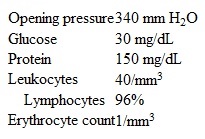 The patient is hospitalized and antimicrobial therapy is administered. Further cerebrospinal fluid studies confirm the diagnosis, and the patient is also found to be HIV positive with a CD4 count of 26/mm3. He had initial symptom relief but the severe headache returned, and he has also started to experience worsening nausea, vomiting, and lethargy. Neurologic examination shows no new focal deficits. Which of the following is the best next step in management of this patient?
 (Multiple Choice)
4.7/5 (81)
(81) A case-control study evaluated the association between long-term use of a heartburn medication and bladder and colon cancer. The study enrolled 130 patients with bladder cancer, 130 patients with colon cancer, and 230 patients matched by age and sex with no history of cancer. All study participants were interviewed and their medical records reviewed for past long-term use of the heartburn medication. Long-term use of the heartburn medication was found in 30 (23.1%) patients with bladder cancer, in 28 (21.5%) patients with colon cancer, and in 30 (13.0%) patients with no history of cancer. Based on these results, which of the following is the closest interpretation of the odds ratio (OR) of long-term use of the heartburn medication in patients with bladder cancer relative to patients with no history of cancer?
(Multiple Choice)
4.9/5 (84)
(84) Showing 1 - 20 of 1121

Filters
- Essay(0)
- Multiple Choice(0)
- Short Answer(0)
- True False(0)
- Matching(0)