



 Chat with AI
Exam 1: Advanced Clinical Medicine

Exam 1: Advanced Clinical Medicine1 k+ Questions
Exam 2: Foundations of Independent Practice597 Questions
Select questions type


A 6-year-old boy is brought to the office for a routine health maintenance examination. Several "dark spots" on his trunk have been increasing in number and now appear to be spreading. The skin lesions are not painful or pruritic. The patient has no chronic medical conditions and takes no medications. He has reached all developmental milestones and is in the first grade. Maternal family history is noncontributory. The parents are divorced and paternal history is unknown. Blood pressure is 98/64 mm Hg and pulse is 100/min. The patient is at the 25th and 50th percentile for height and weight, respectively. Examination shows an alert, active boy. Pupils are equal and reactive bilaterally. Cranial nerves II-XII are intact. Cardiac examination reveals a regular rate and rhythm; no murmurs are auscultated. The abdomen is soft and has no palpable masses. Scattered 1×2 cm, hyperpigmented macules are seen over the trunk, left arm, and right thigh, as shown in the exhibit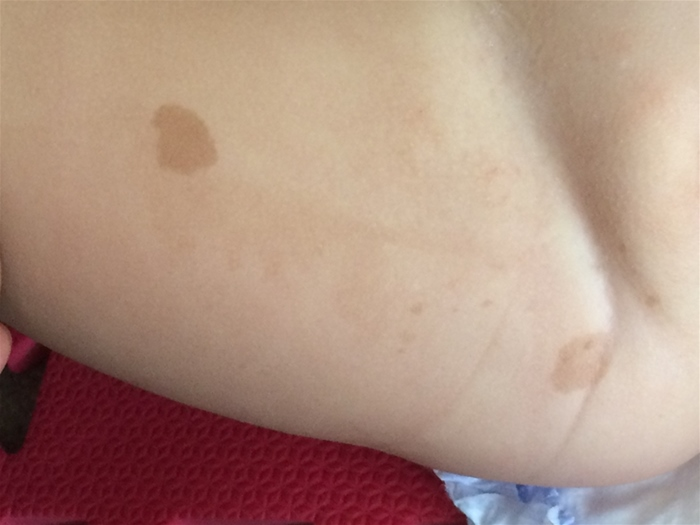 , and numerous 2×3 mm, hyperpigmented macules are seen in the bilateral inguinal creases. The patellar and Achilles deep tendon reflexes are 2/4 bilaterally. Muscle bulk and tone are normal in all extremities. Which of the following is the best next step in management of this patient?
 (Multiple Choice)
4.9/5  (70)
(70) A 5-week-old boy is brought to the office by his mother due to vomiting. The mother explains, "Over the past 4 days, my son has been vomiting forcefully right after drinking his formula. He used to spit up after feeding, but it has been getting worse, and now, he seems to throw up everything he eats." The emesis is the color of milk. The patient has had fewer wet diapers today and a single stool yesterday. He was born at 39 weeks gestation after an uncomplicated pregnancy. Newborn metabolic screening was normal. Medical history is notable for switching to formula at age 2 weeks due to low breast milk production. At that time, the patient was at the 25th percentile for length, weight, and head circumference. Today, he is at the 10th percentile for weight, although length and head circumference remain at the 25th percentile. Temperature is 36.7 C (98.1 F) and pulse is 169/min. Physical examination shows an awake, alert, slightly fussy infant. The anterior fontanelle is open and mildly sunken. The lips and mucous membranes are slightly dry. Cardiopulmonary examination shows no abnormalities. The abdomen is soft and nondistended with active bowel sounds, although waves of peristalsis are visible. There is no hepatosplenomegaly or tenderness to palpation. Serum chemistry is pending. Which of the following most likely represents the electrolyte profile of this patient?
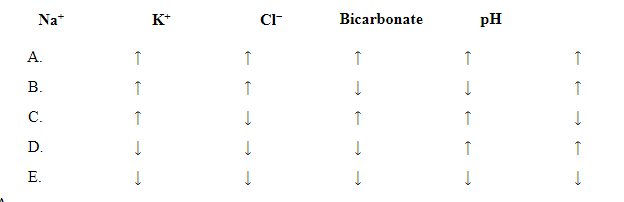
(Multiple Choice)
4.7/5 (73)
(73) A 16-year-old girl comes to the office with shortness of breath. She has not been able to participate in weekly soccer practice for the last few months due to dyspnea and chest tightness. Her symptoms start 10-15 minutes after beginning exercise and last about 30 minutes, but she is asymptomatic at other times. The patient has no known medical problems. Her brother has ostium secundum atrial septal defect and her mother has allergic rhinitis. Vesicular breath sounds are heard on lung examination. Cardiac auscultation reveals normal splitting of second heart sound in the left upper sternal border during inspiration and no murmurs. Jugular venous pressure is estimated at 5 cm H2O. There is no lower extremity edema. Which of the following is the most appropriate next step in managing this patient?
(Multiple Choice)
4.8/5 (74)
(74) A 9-year-old boy is brought to the clinic by his parents due to difficulty at school. According to his teachers, the boy has grunted frequently in class for the past year. Recently, it has reached the point of significantly distracting other students. His parents have also noted the grunting at home. They are concerned that he is being teased by his classmates and have noticed that since the behavior started he seems less interested in playing with his classmates after school. There is no family history of similar symptoms. The patient's medical history includes attention-deficit hyperactivity disorder treated with behavioral therapy and mild asthma treated with an albuterol inhaler. He takes no other medications and has no medication allergies. Temperature is 36 C (96.8 F), blood pressure is 119/78 mm Hg, and pulse is 82/min. The lungs are clear to auscultation. During the physical examination, the patient makes several sudden grunting noises and frequently shrugs his shoulders. Neurologic examination reveals normal strength and sensation in all extremities. Although he has an increased rate of blinking, he has no nystagmus. This patient is at greatest risk of developing which of the following?
(Multiple Choice)
4.9/5 (81)
(81) A 58-year-old man comes to the office for follow-up 2 months after a non-ST elevation myocardial infarction. During the hospitalization, he underwent cardiac catheterization with a percutaneous coronary intervention to the left anterior descending artery. The patient's subsequent hospital course was uncomplicated, and he has not had any recurrent chest pain, dyspnea, or dizziness. However, since hospitalization he has not been able to achieve an erection sufficient for sexual intercourse, which has never happened previously. The patient says, "I am still interested in sex, but maybe my heart is just not able to work as well as it used to." He continues to have spontaneous nocturnal erections, and reports a satisfying marriage with no significant marital discord. The patient has returned to work as an insurance agent and has experienced no difficulty climbing 2 flights of stairs at his workplace. Medical history is notable for type 2 diabetes mellitus, hypertension, and hyperlipidemia. Current medications include aspirin, clopidogrel, metformin, atorvastatin, isosorbide mononitrate, lisinopril, and carvedilol. He does not use alcohol or illicit drugs; he has a 40-pack-year smoking history but quit 8 weeks ago. Vital signs are within normal limits, and physical examination shows no abnormalities. Laboratory testing shows normal blood counts and serum chemistry studies, and hemoglobin A1c is 7.1%. Which of the following is the best next step in management of this patient's erectile dysfunction?
(Multiple Choice)
4.7/5 (76)
(76) A 12-month-old boy is brought to the office for a routine checkup. The patient had an upper respiratory tract infection and otitis media a month ago and was treated with antibiotics. He completed the full course of antibiotics and has been well. The patient has no other past medical history and has met all developmental milestones. He takes no medications, and his immunizations are up-to-date. The patient is allergic to penicillin, which causes a rash. His older sister was diagnosed with infantile-type polycystic kidney disease and underwent kidney transplantation 2 months ago. She is receiving immunosuppressive therapy. The patient is scheduled to receive the varicella vaccine today. Which of the following is the most accurate statement regarding varicella vaccination in this patient?
(Multiple Choice)
4.9/5 (65)
(65) A 67-year-old man comes to the emergency department due to abdominal cramps, diarrhea, and fever that started 3 days ago. The patient initially had 3 or 4 stools per day for 2 days but, today, had 7 watery stools; the stools have not had gross blood or mucus or black discoloration. The patient has also had generalized weakness and malaise. Two weeks ago, he was treated with oral antibiotics for acute cellulitis. Since then, the patient's appetite has decreased, and he has had mild bloating. He has no history of recent travel, unusual foods, or sick contacts with similar symptoms. Other medical conditions include type 2 diabetes mellitus, hypertension, and hyperlipidemia. Temperature is 38.7 C (101.7 F), blood pressure is 110/70 mm Hg, and pulse is 95/min. Physical examination shows moderate abdominal tenderness. The cellulitis has resolved. Leukocytes are 26,000/mm3, serum creatinine is 1.9 mg/dL (increased from 1.2 mg/dL 2 months ago), and serum albumin is 2.9 g/dL. The patient does not want to be admitted to the hospital and would like to be treated as an outpatient.
The patient is at most risk for developing which of the following complications?
(Multiple Choice)
4.8/5 (72)
(72) A 42-year-old man comes to the office due to a painless lump under the skin on his right upper back, which he first noticed 3 months ago. He is incidentally noted to have a blood pressure of 180/110 mm Hg. He has no symptoms. The patient has no history of hypertension or other medical conditions and has not seen a physician since high school. He takes no medications, does not use tobacco, and consumes 1 or 2 alcoholic beverages on weekends. Family history is notable for hypertension in his mother and end-stage renal disease in a maternal uncle. The patient exercised regularly until recently, when he started work as a supervisor at a warehouse. He eats fast food at least 3 days a week. Repeat blood pressure measurements after 15 minutes of rest are 180/105 mm Hg on the right arm and 185/110 mm Hg on the left. Temperature is 36.7 C (98.1 F), pulse is 68/min, and respirations are 12/min. BMI is 26.2 kg/m2. Cardiac examination reveals a diffuse and sustained apical impulse with normal heart sounds and no murmurs or gallops. There is a 3-cm, soft, mobile, nontender, subcutaneous mass consistent with a lipoma in the right scapular region. The remainder of the examination, including funduscopy, is normal. Blood cell counts, serum electrolytes, serum creatinine, blood glucose, and urinalysis are within normal limits. The ECG is shown in the exhibit. 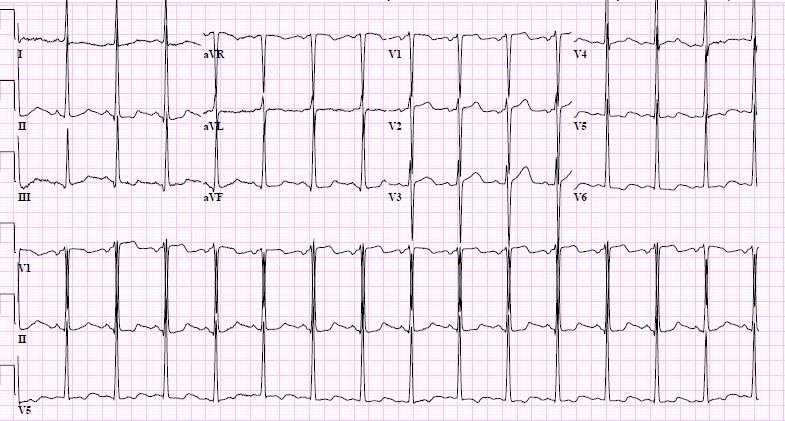 Which of the following is the best initial therapy for this patient?
 (Multiple Choice)
4.7/5 (75)
(75) A 16-year-old boy comes to the office due to an itchy rash on his back and shoulders. The rash has been present for the last 3 months, but he has had similar symptoms intermittently in other body areas over the last 10 years. The patient has no fever and has had no recent illnesses. Current medications include daily cetirizine for seasonal allergies and topical benzoyl peroxide for acne. Vital signs are normal. On skin examination, there are excoriated lichenified plaques on the back and right shoulder, as shown in the exhibit. 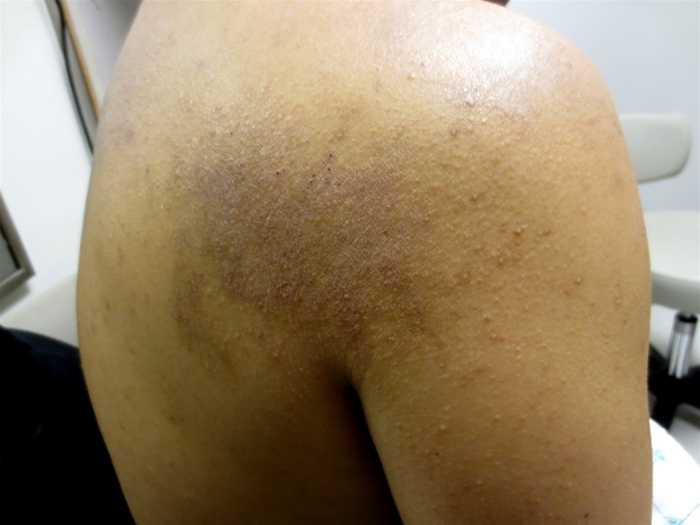 The patient returns to the office in 4 weeks with only modest improvement. The rash continues to itch and is disrupting his sleep. Examination findings are largely unchanged. Which of the following is the most appropriate next step in management of this patient's symptoms?
 (Multiple Choice)
4.9/5 (74)
(74) A 63-year-old African-American male presents for the evaluation of urinary urgency, hesitancy, nocturia, and a weak urinary stream. These symptoms have progressively worsened over the past year, despite being on doxazosin. He denies any fever, abdominal pain, hematuria, malaise, or weight loss. He is a non-smoker and non-alcoholic. Rectal examination reveals a smooth, firm enlargement of the prostate without any induration or asymmetry. Neurological examination is normal. His PSA level is elevated, and you explain the option of transurethral resection of the prostate. He is concerned about the complications of the procedure. Which of the following is the most likely expected complication of this procedure?
(Multiple Choice)
4.9/5 (75)
(75) A 74-year-old woman is brought to the emergency department with fever, chills, and shortness of breath. Two days ago, she choked while having tea and doughnuts and almost lost consciousness. Her son performed the Heimlich maneuver. The patient has advanced Alzheimer dementia, and her son is her health care proxy and primary caregiver; her 73-year-old husband also participates in her care. Her other medical problems include hypertension, hyperlipidemia, coronary heart disease, ischemic stroke with mild residual right hemiparesis, history of heme-positive stools, and urine incontinence. She is allergic to penicillin (anaphylaxis). Her temperature is 38.9 C (102 F), blood pressure is 120/80 mm Hg, pulse is 92/min, and respirations are 24/min. Pulse oxymetry shows 89% on room air and 94% on 40% facemask oxygen. Auscultation of the chest shows crackles at the right lung base. The heart sounds are regular. There is no jugular venous distension. The abdomen is soft, nontender, and nondistended. There is no peripheral edema. Laboratory results are as follows: 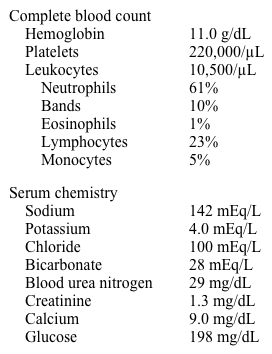 A portable chest x-ray shows a right lower-lobe infiltrate.
With the appropriate treatment, the patient's kidney function recovers. She is afebrile with mild persistent cough and is ambulating without difficulties. She is now ready to be discharged. Which of the following is most important to perform before discharging the patient?
A portable chest x-ray shows a right lower-lobe infiltrate.
With the appropriate treatment, the patient's kidney function recovers. She is afebrile with mild persistent cough and is ambulating without difficulties. She is now ready to be discharged. Which of the following is most important to perform before discharging the patient? (Multiple Choice)
4.7/5 (72)
(72) A 15-year-old boy is brought to the office by his parents due to concerns about his pubertal development. The patient says, "I am the only one of my friends whose voice has not changed and who does not have any body hair. I'm tired of being called 'weak' in gym class." The patient has been fatigued lately, which he attributes to staying up late talking with friends; he otherwise feels well. He has had no recent headaches, vomiting, or vision changes. The patient has a good appetite and eats a well-varied diet. His father is 178 cm (5 ft 10 in) and his mother is 160 cm (5 ft 3 in). Blood pressure is 116/70 mm Hg and pulse is 78/min. Weight and height are at the 15th and 3rd percentiles, respectively, unchanged from his last visit 12 months ago. The patient's height has increased 4.5 cm (1.8 in) since then. Physical examination shows a well-appearing, quiet adolescent with no dysmorphic features. The thyroid is palpable and not enlarged. There is no gynecomastia. Cardiopulmonary examination is normal. The testes are soft and measure 2 mL (Tanner stage I). The phallus is normal in length. There is no axillary or pubic hair. The rest of the physical examination is normal. Bone age x-ray is consistent with age 13. Item 1 of 2
Which of the following is the most likely diagnosis in this patient?
(Multiple Choice)
4.8/5 (85)
(85) A 36-year-old woman, gravida 1 para 0, at 34 weeks gestation comes to the emergency department due to 4 hours of decreased fetal movement. She has had no vaginal bleeding, contractions, or leakage of fluid. The patient reports no headaches, changes in vision, or right upper quadrant pain. Her last prenatal visit was at 16 weeks gestation; she moved from out of state at 18 weeks gestation for a new job. A maternal serum alpha-fetoprotein level performed at that visit was normal. The patient has a history of chronic back pain for which she takes a daily nonsteroidal anti-inflammatory drug. She has had no surgeries. The patient does not use tobacco, alcohol, or illicit drugs. Blood pressure is 160/90 mm Hg and pulse is 68/min. BMI is 30 kg/m2. Fetal heart rate shows a baseline of 140/min, moderate variability, accelerations, and no decelerations. The tocometer shows no contractions. Fundal height is 38 cm. Bedside ultrasound reveals an estimated fetal weight consistent with 36 weeks gestation and an amniotic fluid index of 30 cm. Laboratory results are as follows: 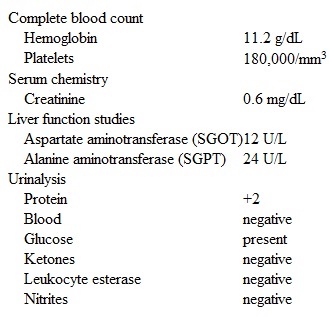 Which of the following is the most likely cause of this patient's ultrasound findings?
 (Multiple Choice)
4.9/5 (80)
(80) A randomized controlled trial is conducted to evaluate the safety and efficacy of monotherapy with a new disease-modifying antirheumatic drug (DMARD) after switching from methotrexate versus continuing methotrexate in patients with inadequate response to methotrexate. The study enrolled adults (age ≥18) who fulfilled the American College of Rheumatology (ACR)-European League Against Rheumatism (EULAR) classification criteria for rheumatoid arthritis. The investigators defined monotherapy with the new DMARD as effective if the treatment resulted in a 20% improvement in the ACR criteria (ACR20) at week 14. In designing the study, the researchers set the probability of wrongly finding that DMARD monotherapy after switching from methotrexate is more effective than continuing methotrexate as 1%, and they set the probability of wrongly finding that the effectiveness of the two therapies is the same as 5%. Which of the following is the most accurate estimate of the statistical power in this study?
(Multiple Choice)
4.9/5 (80)
(80) A 38-year-old woman, gravida 2 para 0 aborta 1, at 16 weeks gestation comes to the office for prenatal care. The patient reports no pain, vaginal bleeding, or leakage of fluid. This pregnancy was complicated by first-trimester vaginal bleeding, which resolved spontaneously. A prophylactic cerclage was placed 2 weeks ago as her first pregnancy ended with a painless, 18-week spontaneous abortion. The patient has a history of polycystic ovary syndrome and required in vitro fertilization for both pregnancies. Medical history includes type 2 diabetes mellitus and chronic hypertension, both managed with oral medications. The patient also takes a daily prenatal vitamin with iron supplementation. She does not use tobacco, alcohol, or illicit drugs. Prior to her in vitro fertilization, the patient jogged for 30-45 minutes approximately 3 days a week, which she would like to resume. Blood pressure is 140/90 mm Hg and pulse is 88/min. BMI is 30 kg/m2. The fetal heart rate is 150/min by Doppler sonography. Laboratory results are as follows: 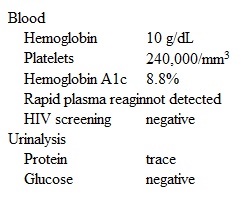 Which of the following is the best recommendation for this patient regarding exercise during pregnancy?
 (Multiple Choice)
5.0/5 (69)
(69) A 17-year-old girl comes to the office for evaluation of a generalized rash. The rash was present when she woke up this morning and does not feel painful or itchy. For the past 10 days, the patient has had a sore throat, fever, fatigue, and body aches. She had a bottle of amoxicillin from a recent episode of pharyngitis and took a few pills this week, but the symptoms did not resolve. Her only medical problem was major depression, which resolved with behavioral therapy 3 years ago. She is sexually active and takes oral contraceptive pills. The patient takes no other medications. She does not use tobacco, alcohol, or illicit drugs. Temperature is 38 C (100.4 F), blood pressure is 110/76 mm Hg, pulse is 88/min, and respirations are 16/min. Physical examination demonstrates an awake but tired-appearing adolescent. There is no rhinorrhea, tympanic membranes are clear, and tonsils are enlarged and erythematous with white exudate bilaterally. There is tender cervical lymphadenopathy but no neck stiffness. S1 and S2 are normal. Lungs are clear to auscultation bilaterally. The abdomen is soft and nontender with mild hepatosplenomegaly. A diffuse, erythematous, blanching, maculopapular rash is seen on the chest, abdomen, and extremities. Laboratory results are as follows:
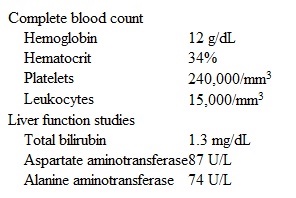 In addition to discontinuing antibiotics, which of the following is the most appropriate management for this patient's rash?
 (Multiple Choice)
4.7/5 (66)
(66) A 28-year-old man comes to the physician due to pain in his left earlobe. He pierced his earlobe to be able to wear earrings 3 months ago. The puncture wound never healed well, and he has experienced itching and sharp pains there ever since. His medical history is otherwise unremarkable. He is currently not taking any medications. On physical examination, there is excessive scar tissue formation on the earlobe at the site of the piercing as shown. 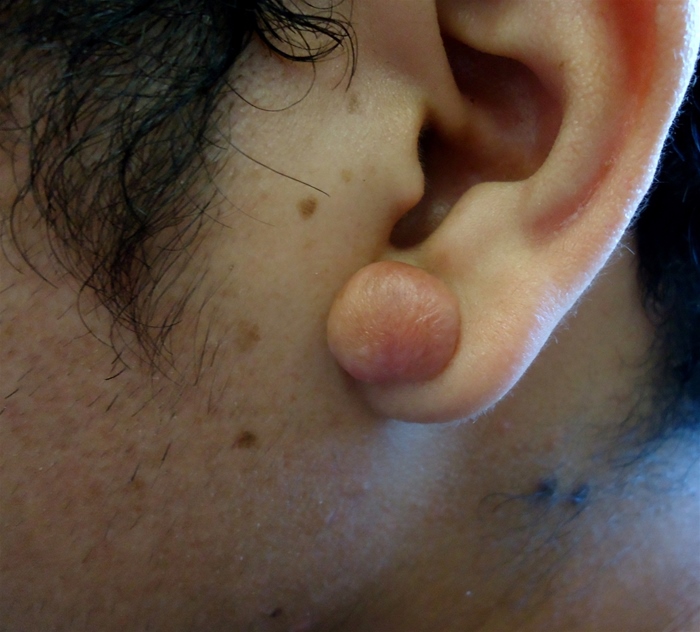 What is the most appropriate means of treating this patient's lesion?
 (Multiple Choice)
4.9/5 (62)
(62) A 35-year-old man comes to the office due to worsening daytime sleepiness over the last 6 months. He says, "I keep falling asleep during inappropriate times of the day. I regularly fall asleep in staff meetings and even fell asleep while talking to a customer." The patient has not fallen asleep while driving and has had no episodes of sudden weakness, inability to move, or restless legs. Although he has no difficulty falling asleep and sleeps 7-8 hours a night, he rarely feels rested. The patient lives alone and does not know if he snores. He does not report gasping for air. He is not depressed but says he is "under stress" at work after receiving a negative performance evaluation, and he worries he will be fired for falling asleep. His medical history is significant for hypertension treated with lisinopril. He smokes a pack of cigarettes a day and consumes an average of 2-5 alcoholic drinks a week. He does not use illicit drugs. Temperature is 36.7 C (98 F), blood pressure is 129/88 mm Hg, pulse is 84/min, and respirations are 14/min. BMI is 36 kg/m2. Physical examination is within normal limits. Which of the following is the best next step in management of this patient?
(Multiple Choice)
4.8/5 (88)
(88) A 10-year-old boy is brought to the clinic by his adoptive parents due to a worsening cough. The patient has had a productive cough with yellow-green sputum since his parents adopted him at age 7 from a developing country. A tuberculin skin test at the time of immigration revealed a 3-mm induration. The patient's cough has worsened over the past 3 days, and this morning he had a fever of 38.3 C (101 F). His parents kept him home from school, and he has been resting in bed. The patient has been hospitalized twice in the past year for pneumonia. Temperature is 38.1 C (100.6 F). Height and weight, which were at the 25th percentile 2 years ago, are now at the 5th percentile. The patient is a thin, cooperative child in no acute distress. Auscultation of the lungs reveals scattered bilateral rhonchi and wheezes. Cardiac examination reveals a regular rhythm and no murmurs. The abdomen is soft and nontender with hard stool palpable in the right lower quadrant. Chest x-ray reveals hyperinflation with increased bronchovascular markings throughout and several parallel linear opacities in the bilateral upper lobe parenchyma. Which of the following would most likely establish the diagnosis in this patient?
(Multiple Choice)
4.8/5 (75)
(75) An 11-year-old boy is brought to the clinic by his parents due to eye redness and discharge. He has had a sore throat for 4 days and right eye redness for 2 days. The boy says, "It sometimes feels like my eye is burning!" This morning, both eyes were crusted shut. His father used a moist towel to open the patient's eyelids and saw that the left eye was also red. The boy has had no eye pain, visual changes, or itching. He has a history of eczema for which he uses topical moisturizers at night. The patient lives with his parents, 2 younger sisters, 7 dogs, 3 cats, and a turtle. No one in his family has similar symptoms. Temperature is 37.4 C (99.4 F). Physical examination reveals conjunctival injection and clear mucoid discharge in both eyes. Mild rhinorrhea and pharyngeal erythema are also present. The lungs are clear to auscultation, and the remainder of the examination is normal. The patient's diagnosis is discussed with the family. The mother says, "I've heard that this condition is very contagious, and I don't want him to get his classmates sick. When can he return to school?" Which of the following is the most appropriate response?
(Multiple Choice)
4.9/5 (78)
(78) Showing 21 - 40 of 1121

Filters
- Essay(0)
- Multiple Choice(0)
- Short Answer(0)
- True False(0)
- Matching(0)