



 Chat with AI
Exam 1: Advanced Clinical Medicine

Exam 1: Advanced Clinical Medicine1 k+ Questions
Exam 2: Foundations of Independent Practice597 Questions
Select questions type


A 58-year-old Caucasian man comes to the office with complaints of cough for the past two months and blood-tinged sputum for the past three days. He has lost approximately 25 pounds over the past six months. He denies any history of low-grade fevers or night sweats. He has a long history of heavy smoking and chronic obstructive pulmonary disease. His temperature is 37.0C (99F), blood pressure is 120/62 mmHg, and heart rate is 82/min. He is a thin, cachectic man who is in no acute distress. Lung auscultation reveals the presence of rales in the right upper lung fields. His white cell count is 8,000/cubic mm with normal differential count. His serum calcium level is 12.8 mg/dL. His chest x-rays shows a 3.2 cm mass in the right upper lung zone, which is suspicious for a lung malignancy. Sputum cytology reveals poorly differentiated squamous cell carcinoma. Pulmonary function testing shows that his FEV1 is 1200 cc, while quantitative ventilation-perfusion scan shows that 65% of his pulmonary function comes from his right lung. What is the next best step in the management of this patient?
(Multiple Choice)
4.9/5  (89)
(89) A 6-month-old boy is brought to the emergency department by his mother during the winter due to 3 days of nasal discharge and cough. His mother states, "He hasn't been breastfeeding well today because he's so congested." The infant has been voiding adequately and has had no vomiting, diarrhea, or skin rash. His older brother attends preschool and is recovering from an upper respiratory illness. The patient has no prior illnesses and no known allergies, and all vaccinations are up to date. He was born at term via an uncomplicated delivery and has met all developmental milestones appropriately. Temperature is 37.5 C (99.5 F), blood pressure is 90/60 mm Hg, pulse is 150/min, and respirations are 50/min. Pulse oximetry shows an oxygen saturation of 93% on room air. Examination reveals moderate respiratory distress with subcostal retractions, coarse breath sounds, and expiratory wheezing bilaterally. Oral mucous membranes are dry, but capillary refill is <2 seconds. The patient is admitted to the hospital and placed on appropriate infection-control precautions.
Which of the following is the best next step in management of this patient?
(Multiple Choice)
4.9/5 (79)
(79) A 4-year-old girl with sickle cell disease is brought to the emergency department with fatigue and loss of appetite. Her parents first noticed her fatigue 3 days ago when she asked to go to sleep earlier than her bedtime. Over the past 2 days, the patient has been drinking well but eating much less than normal. Her father states, "She's been so tired that she wouldn't even get out of bed this morning." She had an episode of acute chest syndrome 2 years prior that required an exchange transfusion. The patient takes folic acid and penicillin. Immunizations are up to date, including the annual influenza vaccine. Temperature is 36.7 C (98 F), blood pressure is 110/65 mm Hg, pulse is 120/min, and respirations are 25/min. Oxygen saturation is 95% on room air. Physical examination shows a pale and tired-appearing girl. Conjunctival pallor is present. Respiratory, abdominal, and neurologic examinations are within normal limits. Laboratory results are as follows: 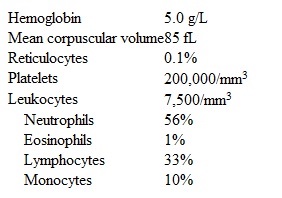 Which of the following is the most likely diagnosis of this patient?
 (Multiple Choice)
4.8/5 (86)
(86) A 67-year-old man with a advanced multiple myeloma is brought to the office due to progressively increasing generalized weakness and altered mental status for 5 days. He currently takes acetaminophen, naproxen, and a fentanyl patch for pain. Temperature is 36.5 C (97.7 F), blood pressure is 120/70 mm Hg, and pulse is 68/min. Examination shows no focal findings. Laboratory results are as follows: Which of the following is the most likely explanation for this patient's altered mental status?
(Multiple Choice)
4.8/5 (72)
(72) A 46-year-old female comes to see you in the office to follow-up her breast biopsy results. She does not have any family history of breast cancer. She had a screening mammogram done about a month ago, which identified an area of microcalcification suspicious for malignancy in her left breast. She subsequently underwent core needle biopsy of the lesion. The biopsy results revealed the presence of lobular carcinoma in situ (LCIS) in the left breast. Which of the following is the most appropriate next step in the management of this patient?
(Multiple Choice)
4.8/5 (86)
(86) A 54-year-old man comes to the office due to a recent finding of abnormal liver function tests. Four weeks ago, he went to the emergency department due to 2 days of diarrhea and vomiting. During the evaluation for viral gastroenteritis, the patient was found to have elevated liver aminotransferase levels and was advised to follow up with his primary care physician. Since then, his gastrointestinal symptoms have improved. He has had no fever, abdominal pain, nausea, vomiting, jaundice, or pruritus. The patient has no chronic medical problems. He had an appendectomy during childhood with some operative complications requiring blood transfusions. His only medication is ibuprofen as needed. The patient does not use tobacco or illicit drugs and drinks alcohol occasionally. He is married and in a monogamous relationship. Temperature is 37 C (98.6 F), blood pressure is 130/80 mm Hg, and pulse is 78/min. He has no scleral icterus, and mucous membranes are pink and moist. Cardiopulmonary examination is unremarkable. The abdomen is soft and nontender with no organomegaly. Current laboratory results are as follows: 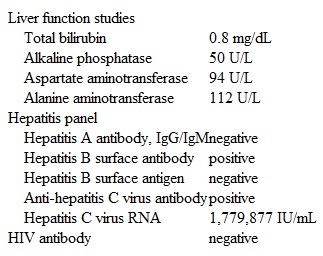 The laboratory results are discussed with the patient, and a plan for treatment with direct-acting antivirals is made. The patient agrees to abstinence from alcohol as well as regular follow-up. Which of the following additional interventions is most appropriate in this patient?
 (Multiple Choice)
4.8/5 (70)
(70) An 84-year-old woman is brought to the emergency department for hip pain after a fall from her bed. Her medical problems include hypertension, type 2 diabetes mellitus, coronary artery disease, and mild cognitive impairment. She is ambulatory and lives on her own, requiring only a home health aide to drive her around. The patient's temperature is 36.1 C (97 F), blood pressure is 160/85 mm Hg, pulse is 102/min, and respirations are 18/min. Physical examination shows an obese and alert elderly woman. She has an ecchymotic area on the lateral aspect of the left thigh. Her left leg is rotated outward and looks shorter than the right leg. X-ray of the hip reveals a left-sided intertrochanteric hip fracture. The patient's family members call for a meeting with the treating team to discuss whether surgical repair should be performed. Which of the following is the most appropriate statement about the patient's condition?
(Multiple Choice)
4.9/5 (92)
(92) A 76-year-old woman comes to the office due to malaise accompanied by diffuse, achy pain. The pain began 6 weeks ago and is most pronounced around her shoulder and pelvic girdle muscles. The patient has no headache, visual symptoms, fever, rash, muscle weakness, or urinary symptoms. She has a history of hypertension, hypercholesterolemia, and osteoporosis. The patient's medications include enalapril, simvastatin, alendronate, and hydrochlorothiazide. Family history is unremarkable. She does not use tobacco or alcohol. Physical examination shows mild tenderness in the muscles of the pelvic girdle. The rest of the physical examination is unrevealing. Routine laboratory studies, including serum creatine kinase levels, are normal. What is the best next step in management of this patient?
(Multiple Choice)
4.9/5 (85)
(85) A 10-year-old girl is brought to the office by her father due to concerns about her behavior and declining school performance over the last 6 months. Her teachers have said that she is constantly distracted and does not pay attention in class. The patient's grades have dropped significantly and she is failing most of her classes. In addition, she has been irritable and moody with frequent outbursts of crying recently. She takes no daily medications or supplements. Temperature is 36.7 C (98 F), blood pressure is 116/58 mm Hg, and pulse is 114/min. Weight is 27 kg (59.5 lb), decreased by 1 kg (2.2 lb) from last year. Physical examination reveals a nervous-appearing girl who is fidgeting with her clothes. The pupils are equally reactive to light. The sclera is nonicteric and visible above the iris. Cardiac examination reveals a regular rhythm and normal S1 and S2. The abdomen is soft and nontender without hepatosplenomegaly. Deep tendon reflexes are 3+ and symmetric in the upper and lower extremities. The skin is warm and moist. Without treatment, this patient is at risk of developing which of the following long-term complications?
(Multiple Choice)
4.9/5 (79)
(79) A 62-year-old man comes to the physician for a preventive visit. He is being treated for mild hypertension and has no other known medical problems. He drinks alcohol occasionally but does not use tobacco. He works as a rancher. The patient has some lesions on his head, which are pictured below: 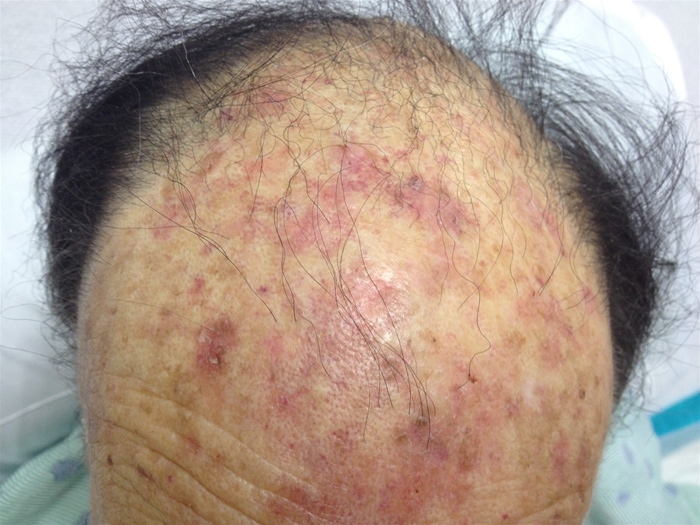 Palpation of these lesions reveals small, rough-textured papules. Which of the following is the most appropriate next step in the management of this patient?
 (Multiple Choice)
4.8/5 (70)
(70) A 34-year-old man comes to the psychiatry outpatient clinic for follow-up accompanied by his parents. He has a 15-year history of schizophrenia characterized by auditory hallucinations, disorganized thoughts, and paranoid delusions. The patient was diagnosed at age 19 and has been hospitalized 6 times for acute psychotic episodes. He has had multiple trials of antipsychotic medication, including risperidone, olanzapine, and fluphenazine, with minimal improvement. He is currently taking aripiprazole. Despite adherence to his medication regimen, the patient has persistent psychotic symptoms. He has been unable to work, hears voices throughout the day, and is too paranoid to attend group therapy. He lives with his parents, who supervise his medication. The patient has no other medical problems. There is a family history of hypertension, diabetes, and coronary artery disease. After a discussion of the risks and benefits, the patient agrees to begin a trial of clozapine. What should he be told regarding treatment with this medication?
(Multiple Choice)
4.8/5 (74)
(74) A 54-year-old woman comes to the office due to increasing anxiety and depression over the past 6 weeks. The patient was diagnosed with cutaneous squamous cell carcinoma and underwent successful surgical excision 3 months ago. Despite an excellent prognosis, she has been feeling sad and worries about her future and the possibility of recurrence. She has difficulty concentrating at work and worries that her colleagues and boss have noticed. She has avoided socializing with coworkers and friends because she does not want to explain her condition. The patient still enjoys hobbies of gardening and cooking, and spending time with her family. She reports that she tends to overeat when feeling anxious and overwhelmed, but this is not new. Her sleep and energy level are unchanged. She has no feelings of guilt, low self-esteem, or suicidal ideation. Her other medical problems include hypertension and hypercholesterolemia. Physical examination shows a small, well-healed surgical scar and is otherwise unremarkable. Which of the following is the most likely explanation for her symptoms?
(Multiple Choice)
4.9/5 (80)
(80) An 11-year-old girl is brought to the clinic due to concerns about her posture. She does not fully extend her back and has difficulty with some of the positions in her ballet class. The patient is active in multiple sports as well as dance and typically practices 2 hours a day with various activities. She also has mid-thoracic back pain that feels like a "dull ache," and she occasionally wakes up at night to adjust her position due to discomfort. The patient takes no medications and has no allergies. She has not undergone menarche. There is no family history of scoliosis. The patient is at the 50th percentile for height and weight. Examination shows a talkative girl with no dysmorphic features. Cardiopulmonary examination reveals normal heart tones and good air entry in all fields. The breasts and pubic hair are sexual maturity rating stage 3. Forward bend test reveals moderate scoliosis with a right rib hump that does not correct by placing a block under the left leg. Gait is normal. Two café-au-lait spots, each measuring 2 cm, are noted on the right flank. Which of the following features of this patient's presentation is concerning for a pathologic cause of scoliosis?
(Multiple Choice)
4.8/5 (74)
(74) A 64-year-old woman comes to the office for evaluation of dysuria and difficulty voiding. The patient began having difficulty voiding a year ago, but it has progressively worsened and now causes a sensation of incomplete emptying. She awakens several times at night to void but has no uncontrolled leakage of urine. The patient also has increasing vulvar pruritus, which she attributes to irritation from wiping with toilet paper so frequently. She has no chronic medical conditions and has had no surgeries. The patient has not been sexually active for the last 5 years; her husband has multiple medical conditions that preclude intercourse. Her last Pap test was 3 years ago and she has no history of abnormal testing. She has no known medication allergies. The patient has a 20-pack-year smoking history but quit a few years ago; she does not use alcohol or illicit drugs. Vitals signs are normal. BMI is 23 kg/m2. The abdomen is soft; there is no suprapubic or costovertebral angle tenderness. Pelvic examination reveals thin, hypopigmented lesions that extend from the clitoris to the labia majora and perineum. The labia minora appear fused over the urethra. Diffuse erosions and excoriations are present on the vulva. Speculum examination reveals an atrophic vagina with no lesions. Urinalysis is within normal limits. Which of the following is the most appropriate treatment for this patient?
(Multiple Choice)
4.8/5 (88)
(88) A 17-year-old girl comes to the office for evaluation of a generalized rash. The rash was present when she woke up this morning and does not feel painful or itchy. For the past 10 days, the patient has had a sore throat, fever, fatigue, and body aches. She had a bottle of amoxicillin from a recent episode of pharyngitis and took a few pills this week, but the symptoms did not resolve. Her only medical problem was major depression, which resolved with behavioral therapy 3 years ago. She is sexually active and takes oral contraceptive pills. The patient takes no other medications. She does not use tobacco, alcohol, or illicit drugs. Temperature is 38 C (100.4 F), blood pressure is 110/76 mm Hg, pulse is 88/min, and respirations are 16/min. Physical examination demonstrates an awake but tired-appearing adolescent. There is no rhinorrhea, tympanic membranes are clear, and tonsils are enlarged and erythematous with white exudate bilaterally. There is tender cervical lymphadenopathy but no neck stiffness. S1 and S2 are normal. Lungs are clear to auscultation bilaterally. The abdomen is soft and nontender with mild hepatosplenomegaly. A diffuse, erythematous, blanching, maculopapular rash is seen on the chest, abdomen, and extremities. Laboratory results are as follows:
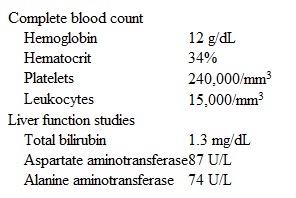 An appropriate diagnosis is made and the correct management is initiated. Which of the following is a true statement about the patient's condition?
 (Multiple Choice)
4.9/5 (82)
(82) A 27-year-old woman, gravida 3 para 1 aborta 1, at 36 weeks gestation comes to the emergency department due to abdominal pain and heavy vaginal bleeding that began acutely an hour ago. She reports no leakage of fluid. The patient's 11-week and 18-week ultrasounds revealed a singleton intrauterine pregnancy with a posterior placenta. She was previously evaluated in the emergency department at 27 weeks gestation for preterm contractions after she fell on her abdomen. Her examination at that time was normal and she was discharged without intervention. The patient has no chronic medical conditions. Her pregnancy history includes an 8-week spontaneous abortion and a cesarean delivery after a failed labor induction. The patient smokes ½ pack of cigarettes a day, but does not drink alcohol or use illicit drugs. She takes a daily prenatal vitamin and iron supplementation. Temperature is 36.7 C (98 F), blood pressure is 110/60 mm Hg, and pulse is 94/min. The fetal heart rate tracing shows a baseline of 150/min, moderate variability, no accelerations, and occasional late decelerations. Tocometer shows contractions every 2 minutes. Abdominal examination demonstrates a firm, tender, gravid abdomen. Speculum examination shows 50 mL of clotted blood in the vagina and continued heavy bleeding. The cervix is 4 cm dilated and 80% effaced, with the fetal head at 0 station. Which of the following is the most likely cause of this patient's presentation?
(Multiple Choice)
4.7/5 (86)
(86) A 65-year-old white woman comes to the physician for acute mid-thoracic back pain. Seven days ago, she slipped and fell in her driveway and has had the back pain ever since. The pain is described as deep-seated, boring in quality, and non-radiating, and has not improved with over-the-counter pain medications. Her past medical history is significant for chronic obstructive pulmonary disease (COPD) treated with fluticasone, salmeterol, and ipratropium inhalers, and hypertension treated with lisinopril and hydrochlorothiazide. She has had occasional brief courses of oral glucocorticoids for COPD exacerbations. The patient has a 30-pack-year smoking history and quit approximately 5 years ago. She experienced menopause when she was 48 years old. Her mammogram and Pap smear were negative 6 months ago. Her mother and 2 sisters have osteoporosis. Examination shows tenderness over the mid-thoracic vertebrae. The rest of the examination is unremarkable. The complete blood count, basic metabolic panel, calcium, and phosphorus are within normal limits. Plain radiographs of the thoracic spine reveal a compression fracture in the 10th and 11th vertebrae. Her 25-hydroxyvitamin D level is 25 ng/mL (normal 30-50 ng/mL), and TSH level is 2.1 µU/mL. Bone density at the spine and hip shows a T-score of -2.4 at the lumbar spine and -2.0 at the hip. In addition to optimization of calcium and vitamin D intake, which of the following is the most appropriate intervention for this patient?
(Multiple Choice)
4.9/5 (84)
(84) A 38-year-old woman comes to the office due to dyspnea on exertion for the past 6 months. She says, "I get out of breath even when I walk less than a block at my usual pace. I climb stairs very slowly." A year ago, the patient was able to walk 10-12 blocks without any limitations. She has no chest pain, palpitations, syncope, cough, or hemoptysis. She has no medical problems. The patient saw a doctor 2 years ago and had a routine physical that did not show any abnormalities. She does not use tobacco, alcohol, or illicit drugs. Her mother has a history of breast cancer and "blood clots" in her legs. Her father had a stroke. The patient takes no prescription or over-the-counter medications. She has no known drug allergies. On examination, she appears comfortable at rest. Temperature is 36.7 C (98 F), blood pressure is 143/91 mm Hg, pulse is 84/min, and respirations are 16/min. Pulse oximetry shows 94% saturation on room air. BMI is 34 kg/m2. On cardiac auscultation there is a prominent S2 but no murmurs or additional sounds. The lungs are clear. Peripheral pulses are full and no finger or toe clubbing is present. There is no peripheral edema. Chest-x ray reveals prominent pulmonary arteries but no infiltrates. ECG reveals normal sinus rhythm with right axis deviation. Echocardiography demonstrates increased right-sided pressures, right ventricular dilation, and normal left ventricular size and function. Right heart catheterization reveals a mean pulmonary artery pressure of 40 mm Hg (normal: <20 mm Hg) and a pulmonary capillary wedge pressure of 10 mm Hg. Further studies, including pulmonary function test, ventilation/perfusion scan, and polysomnography, are unremarkable. This patient would benefit most from an antagonist of which of the following receptors?
(Multiple Choice)
4.8/5 (89)
(89) A 31-year-old woman, gravida 1 para 0, at 28 weeks gestation comes to the office for a routine prenatal visit. The patient has had good fetal movement. She has no abdominal pain or vaginal bleeding but reports a thin, malodorous vaginal discharge that is increasing and now requires her to use a panty liner. The patient's pregnancy has been complicated by gestational diabetes mellitus diagnosed at 26 weeks gestation. Due to uncontrolled glucose levels last week, an oral antihyperglycemic medication was prescribed; glucose level today shows improvement. The patient has no other chronic medical conditions. She exercises 3 days a week in a water aerobics class. The patient does not use tobacco, alcohol, or illicit drugs. She has no drug allergies. Temperature is 37.1 C (98.8 F), blood pressure is 120/76 mm Hg, and pulse is 74/min. Fundal height is 28 cm. Fetal heart rate is 150/min by Doppler ultrasonography. Pelvic examination reveals a nontender, closed cervix without cervical discharge and a nontender gravid uterus. A thin, gray vaginal discharge is present, but no vesicles, ulcers, or other lesions are seen. There is no leakage of fluid through the cervix during the Valsalva maneuver. Microscopy of the vaginal fluid shows epithelial cells that have a stippled appearance but no ferning. Urine dipstick test is negative for protein and glucose. Item 1 of 2
Which of the following is the most appropriate management of this patient's condition?
(Multiple Choice)
4.7/5 (82)
(82) An 82-year-old woman is brought to the office due to new-onset fecal incontinence. The patient has a history of Alzheimer disease and lives with her daughter but is able to perform most of the activities of daily living independently. Her daughter states that the patient has had several incidents of involuntary stool leakage over the past week. She also has had mild abdominal discomfort but no fever, nausea, vomiting, or blood in stools. Other medical issues include hypertension and osteoarthritis. The patient has delivered 4 children vaginally. She does not use tobacco or alcohol. Temperature is 37 C (98.6 F), blood pressure is 140/80 mm Hg, and pulse is 78/min. The abdomen is nondistended and soft with mild generalized tenderness. There is no guarding or rebound tenderness. Bowel sounds are active. Rectal examination shows mildly decreased anal sphincter tone and a copious amount of hard stool. Perineal sensation is normal. Stool testing for occult blood is negative. Abdominal imaging shows no air-fluid levels or free intraperitoneal air. Which of the following is the most appropriate next step in management of this patient?
(Multiple Choice)
4.9/5 (75)
(75) Showing 861 - 880 of 1121

Filters
- Essay(0)
- Multiple Choice(0)
- Short Answer(0)
- True False(0)
- Matching(0)