



 Chat with AI
Exam 1: Advanced Clinical Medicine

Exam 1: Advanced Clinical Medicine1 k+ Questions
Exam 2: Foundations of Independent Practice597 Questions
Select questions type


A 42-year-old man is brought to the emergency department due to 4 hours of chest tightness and shortness of breath. He has not had similar symptoms before. He returned to the United States from a business trip to Paris a week ago. He thinks that his symptoms are due to an upper respiratory infection, which he suspects he contracted from recirculated air on the plane. The patient takes no medications and does not use alcohol or illicit drugs. He has a 20-pack-year smoking history. Blood pressure is 152/99 mm Hg and pulse is 92/min. BMI is 32 kg/m2. ECG is shown in the exhibit. 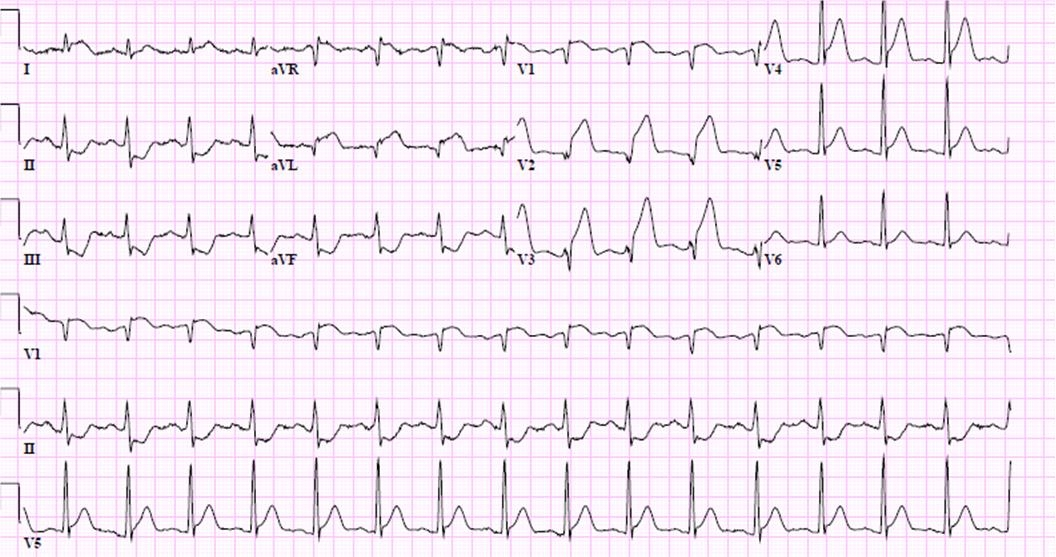 Which of the following is the most appropriate next step in management of this patient?
 (Multiple Choice)
4.8/5  (86)
(86) A 32-year-old woman with systemic lupus erythematosus comes to the office for a follow-up visit. The patient was diagnosed with lupus 3 years ago during evaluation of a skin rash and joint pain, and her symptoms have been well controlled with hydroxychloroquine. She takes no other medications, has no other medical conditions, and does not use tobacco, alcohol, or illicit drugs. Blood pressure is 150/90 mm Hg and was normal during previous office visits. Temperature is 37.2 C (99 F), pulse is 78/min, and respirations are 14/min. There is a faint malar rash but no mucosal ulcers, joint tenderness, or swelling. The lungs are clear on auscultation and heart sounds are normal with no murmur, rub, or gallop. The abdomen is soft and nontender with no hepatosplenomegaly. There is mild pitting edema of the bilateral lower extremities. Neurologic examination shows no abnormalities. Laboratory results are as follows:
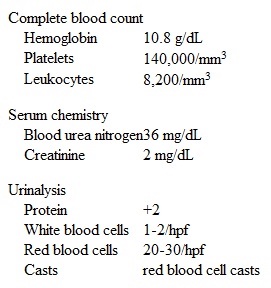 The patient's serum chemistry and urinalysis were within normal limits 2 months ago. Renal ultrasonography shows normal-sized kidneys with no hydronephrosis.
Renal biopsy reveals diffuse lupus nephritis (Class IV) and appropriate therapy is initiated. Which of the following is most appropriate for monitoring the renal disease activity in this patient?
The patient's serum chemistry and urinalysis were within normal limits 2 months ago. Renal ultrasonography shows normal-sized kidneys with no hydronephrosis.
Renal biopsy reveals diffuse lupus nephritis (Class IV) and appropriate therapy is initiated. Which of the following is most appropriate for monitoring the renal disease activity in this patient? (Multiple Choice)
4.8/5 (71)
(71) A 26-year-old male graduate student under treatment for depression comes to the office for follow-up. Two weeks earlier, he was evaluated for symptoms of depressed and irritable mood, loss of appetite, low energy, and impaired concentration. He had no motivation to work on his thesis and was sleeping 12-14 hours a day. Physical examination and laboratory studies were unremarkable. The patient was agreeable to a trial of medication and was started on fluoxetine 20 mg. At today's visit, he reports feeling irritable and anxious, but notes that his energy is much improved. He is now staying up almost all night to work on his thesis and says, "I've had some fascinating insights into my research that I never thought of before." The patient has been adherent with his medication and has no other medical problems. He denies substance use apart from 2 beers he drank at a party 3 nights ago. Mental status examination shows mildly pressured speech and tense affect. The patient interrupts the physician several times to ask inappropriate questions about the physician's personal life. No delusions or hallucinations are elicited. He has no suicidal ideation.  Item 1 of 2 Which of the following is the most appropriate next step in management of this patient?
 (Multiple Choice)
4.8/5 (83)
(83) A 56-year-old man is brought to the emergency department with a 4-hour history of crushing, substernal chest pain. His ECG shows a 3-mm ST-segment elevation in leads V2-V4. He is taken for cardiac catheterization and undergoes primary angioplasty and stenting of the occluded mid-left anterior descending artery. There is 30%-40% stenosis of the right coronary artery that does not require intervention. After the procedure, the patient is admitted to the coronary care unit. Echocardiogram shows mild anterior wall hypokinesis and a normal left ventricular ejection fraction. He remains chest pain free throughout his 3-day hospital stay. The patient is started on dual antiplatelet therapy. He begins a progressive supervised activity program, which is uneventful, and he is subsequently discharged home. At a follow-up appointment 3 weeks later, he reports that he has been walking for 20 minutes each day without any problems. The patient occasionally has some bleeding when brushing his teeth, but is otherwise asymptomatic. He asks whether it would be safe for him to resume sexual activity. Which of the following is the most appropriate recommendation?
(Multiple Choice)
4.9/5 (76)
(76) A 32-year-old woman, gravida 1 para 0, calls the office to schedule her first prenatal visit. Her last menstrual period was 5 weeks ago and she had a positive pregnancy test 2 days ago. The patient feels well and has no vaginal bleeding or cramping. She was diagnosed with Hashimoto thyroiditis 4 years ago and has been on a stable dose of levothyroxine for the past 2 years. Serum TSH 3 months ago was within normal limits. The patient has no other chronic medical conditions or previous surgeries. She has started taking a prenatal vitamin daily. Family history is significant for a sister currently undergoing evaluation for recurrent miscarriages. The patient does not use tobacco, alcohol, or illicit drugs. She is nervous about her sister's obstetric history and asks if she needs to make any changes to her medication. Which of the following would be the most appropriate response to this patient?
(Multiple Choice)
4.9/5 (78)
(78) An 18-hour-old girl is undergoing a routine examination in the newborn nursery. The patient has urinated 4 times and passed meconium. She was born via uncomplicated vaginal delivery at 41 weeks to a 23-year-old primipara. Apgar scores were 8 and 9 at 1 and 5 minutes, respectively. Birth weight and length are at the 25th percentile for gestation. Temperature is 37.2 C (99 F). The patient is initially asleep but easily roused. Examination shows open and soft fontanelles, posteriorly rotated ears, and a small maxilla. The soft palate has a high arch, but no submucosal cleft is felt on palpation. The neck is short and webbed, without masses. Auscultation reveals a regular heart rate and rhythm with no murmurs. There is good air entry in all fields with no grunting, retractions, or nasal flaring. External genitalia are normal. The hands and feet are moderately edematous. Crease lines on both hands are normal. Pulses are 2+ in all extremities. The mother is concerned about the recurrence risk of this condition in subsequent pregnancies. Which of the following is the best response?
(Multiple Choice)
4.9/5 (75)
(75) A 43-year-old man comes to the physician for a follow-up visit. He was diagnosed with coronary artery disease and received a stent to the left circumflex artery a year ago. At that time, he was started on aspirin, clopidogrel, metoprolol, and atorvastatin. About a week ago, the patient was seen in the emergency department for pain in both thighs following a 15-mile walk sponsored by a local organization. His serum creatine kinase level was 500 units/L (normal 25-90 units/L). Atorvastatin was discontinued, and he was discharged with a prescription for ibuprofen. The patient also was advised to consult his primary care physician. His symptoms have improved markedly since discharge from the emergency department. His physical examination is normal. The patient's most current lipid profile, performed about 15 days ago while on medication, shows low-density lipoprotein cholesterol of 132 mg/dL, triglycerides of 100 mg/dL, and high-density lipoprotein cholesterol of 40 mg/dL. He asks about restarting atorvastatin. Which of the following is the best recommendation for this patient?
(Multiple Choice)
4.8/5 (77)
(77) A 55-year-old man comes to the office after a friend was diagnosed with prostate cancer. He has no urinary symptoms and has never had prostate cancer screening. The patient has a history of hyperlipidemia, which is being managed with lifestyle modification. He takes no medications, exercises regularly, and does not use tobacco, alcohol, or illicit drugs. Screening colonoscopy at age 50 was normal, and the patient has no significant family history of cancer. Which of the following is a true statement that should be taken into consideration when counseling the patient regarding prostate cancer screening?
(Multiple Choice)
4.7/5 (92)
(92) A 4-month-old boy is brought to the office by his mother due to concerns about feeding. The patient has been drinking formula since birth and drinks 3-4 oz every 2-3 hours. His mother says, "Within 15 minutes of each feed, my son throws up a yellowish liquid that looks like partially digested formula. The spit-up dribbles on his and my clothes, and I have had to change our shirts several times a day for the past few months." The patient has 2 soft, yellow stools each day. He has no coughing or choking with feeds. He was born at 39 weeks to a gravida 1 para 1 woman and lives with both parents. Review of his growth chart shows a birth weight at the 47th percentile, with today's weight at the 44th percentile. Physical examination reveals a well-appearing, well-nourished infant lying in his mother's arms. The anterior fontanelle is soft and flat, and the abdomen is soft, nontender, and nondistended. The mucous membranes are moist and skin turgor is normal. Which of the following is the most appropriate next step in management of this patient?
(Multiple Choice)
4.8/5 (85)
(85) A 68-year-old man is hospitalized after coronary artery bypass grafting surgery. The patient has a history of coronary artery disease treated with stenting of the right coronary artery several years ago. Medical history also includes hypertension, type 2 diabetes mellitus, and hypercholesterolemia. Over the past 6 months, the patient has had worsening angina, and cardiac catheterization revealed 80% stenosis of the left main artery and restenosis of the right coronary artery. Echocardiography showed a left ventricular ejection fraction of 40% with no valvular abnormalities. A 2-vessel coronary artery bypass grafting with a left internal mammary to the left anterior descending artery and a saphenous vein graft to the right coronary artery was performed. The intraoperative course was uncomplicated, and the patient was extubated 24 hours later. On the third postoperative day, the patient developed atrial fibrillation. He is hemodynamically stable with adequate urine output and good control of the postoperative pain. Serum electrolytes are within normal limits. The patient becomes concerned about the postoperative arrhythmia. Which of the following is the most accurate statement about this patient's atrial fibrillation?
(Multiple Choice)
4.8/5 (66)
(66) A group of hospital administrators at a tertiary care center is interested in optimizing quality-related outcomes, including length of hospitalization and patient functional status for high-risk patients undergoing neurosurgical procedures. Patients at highest risk for poor outcomes include those who are age >65 and have multiple medical comorbidities, including hypertension, diabetes, coronary artery disease, and heart failure. The administrators are considering methods to coordinate care between the attending surgeon and a hospitalist-led, multidisciplinary team. Which of the following team-based approaches is associated with improved quality of care?
(Multiple Choice)
4.9/5 (86)
(86) A 10-year-old girl is brought to the emergency department due to right ear pain. She was participating in a martial arts competition this afternoon when her opponent struck her on the right side of the head. The patient has had no discharge from the ear canal and no hearing loss, rhinorrhea, or vertigo. She has no chronic medical conditions and takes no medications. Blood pressure is 110/70 mm Hg and pulse is 92/min. The patient is awake, alert, and appears in moderate pain. The face has normal contours with no point tenderness. The pupils are equal and reactive to light; extraocular movements are intact. There is erythema and a 2.5-cm (1-in) hematoma overlying the superior antihelix of the right pinna. The right pinna is tender to light touch, and manipulation of the pinna is painful. Scant dried blood is noted at the external auditory meatus. Bilateral tympanic membranes are clear. The mastoid process is nontender and has no bruising. The patient's parents ask if there is anything else that needs to be done for the hematoma. Which of the following is the most appropriate statement regarding management of this patient?
(Multiple Choice)
4.9/5 (81)
(81) A 67-year-old man comes to the physician with a 3-week history of right shoulder pain. The pain is dull, occurs mostly at night, and is poorly responsive to over-the-counter analgesics. He has had no trauma to his shoulder. His past medical history is significant for hypertension, type 2 diabetes mellitus, and chronic lower back pain. The patient is a lifetime nonsmoker. His last hemoglobin A1c was 8.2%, and prostate-specific antigen checked a few weeks ago was 22 ng/mL (normal <4 ng/mL). On physical examination, the right shoulder has full range of motion and no local tenderness. There is decreased vibration sense at both ankles and first metatarsal heads. Digital rectal examination shows an enlarged nodular prostate. Plain radiographs of the right shoulder show no abnormalities. Results of a transrectal prostate biopsy are pending. Which of the following is the best next step in management of this patient's shoulder pain?
(Multiple Choice)
5.0/5 (74)
(74) A 15-month-old boy is brought to the emergency department by ambulance after an episode of "jerking movements" at home. The patient was sitting in the living room with his toys when he suddenly developed uncontrollable rhythmic jerking of his extremities that lasted approximately 2 minutes. His eyes deviated leftward, and he was nonresponsive during this event. The patient did not hit his head before or after the incident. He creeps but has not begun crawling or pulling to stand. The patient says "mama" but speaks no other words. Growth parameters are at the 50th percentile for age and sex. His vital signs are within normal limits. Physical examination shows hypopigmented lesions on the patient's back. Cardiopulmonary examination is unremarkable. Genetic testing in the patient shows a mutation in the tuberous sclerosis complex 1 (TSC1) gene. Which of the following comorbidities is the predominant cause of death in patients with tuberous sclerosis?
(Multiple Choice)
4.8/5 (75)
(75) A 48-hour-old boy is evaluated in the newborn nursery on morning rounds. The infant has been breastfeeding exclusively with good latch. He passed meconium yesterday and has urinated several times, but the parents are concerned about his increasing yellow discoloration. He was born at 38 weeks gestation via normal spontaneous vaginal delivery. Review of prenatal records shows a maternal blood type of O+ and normal routine blood testing. Physical examination shows an alert, nondysmorphic boy with a strong suck and intact Moro reflex. He has icteric sclerae and appears jaundiced from head to feet. The abdomen is soft, nontender, and nondistended. The liver is palpable 1 cm below the right costal margin. The examination is otherwise unremarkable. The infant's blood is drawn at 49 hours of life; laboratory results are as follows: 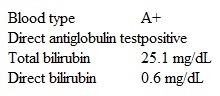 Which of the following is the most appropriate next step in management of this patient?
 (Multiple Choice)
4.8/5 (79)
(79) A 55-year-old man comes to the office with 3 weeks of persistent low back pain. The pain increases in severity at night and when he lifts heavy objects. Over-the-counter naproxen initially improved the patient's pain slightly. There is no history of trauma. He has had no fever, weight loss, muscle weakness, urinary retention, bowel incontinence, or night sweats. The patient has no other medical problems and takes no other medications. He is a construction worker, has a 40-pack-year smoking history, and drinks 1 or 2 beers on weekends. Vital signs are within normal limits. Physical examination shows moderate paravertebral muscular tenderness. The range of motion of the spine is normal, and there is no scoliosis or excessive kyphosis. Neurologic examination is normal. Which of the following is the best next step in management of this patient?
(Multiple Choice)
4.8/5 (69)
(69) A 70-year-old woman comes to the office due to back pain, fatigue, and inability to carry out her daily work. The pain began 6 months ago and has slowly intensified. The patient had a hip fracture 3 months ago but has no other medical conditions. She is a lifetime nonsmoker and drinks alcohol on social occasions. She currently takes no medications. The patient has no extremity weakness or paresthesia. She has mild constipation; urination is normal. Initial laboratory results are as follows: 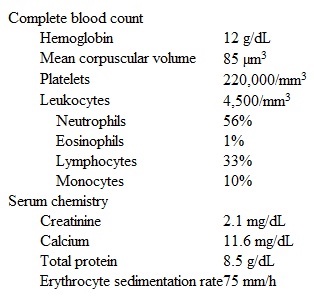 Dipstick urinalysis is normal. The patient is informed about the prognosis, potential risks, and benefits of therapy. She declines treatment. The physician documents their discussions and arranges for follow-up visits. One month later, the patient is brought to the emergency department by family members due to acute-onset blurry vision, headache, confusion, and epistaxis. A detailed history from the family members fails to identify any precipitating factor. On examination, the patient is lethargic but arousable. Scant gingival bleeding is noted. The lungs are clear to auscultation; there is no peripheral edema. Serum creatinine is 2.4 mg/dL. Which of the following is the most likely cause of this patient's acute change in status?
 (Multiple Choice)
4.8/5 (81)
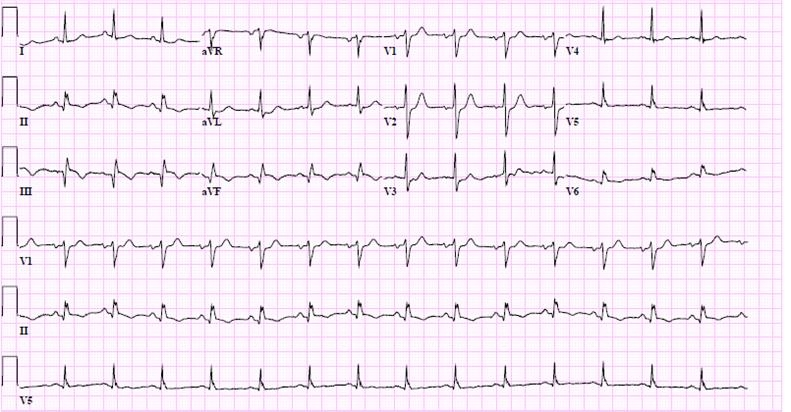
(81) A 56-year-old man comes to the physician for an initial evaluation. He reports tiredness and decreased exercise tolerance over the past few weeks. He feels "out of breath" when he goes ballroom dancing with his wife, which has been a regular activity for them. He has not had any cough, orthopnea, wheezing, and lower extremity edema. The patient's other medical problems include gastroesophageal reflux disease. Approximately a month ago he had a particularly severe episode of burning in the upper abdomen and chest, but he has not noted any dark stools or blood in the stool. He takes ranitidine intermittently and uses ibuprofen periodically for pain in his left knee but is not taking any regular medications. He has a 30-pack-year smoking history and drinks 1-2 beers per night. The patient's mother had diabetes mellitus and died of a stroke. His father died of colon cancer. His blood pressure is 144/89 mm Hg and pulse is 94/min and regular. BMI is 32 kg/m2. Examination shows normal jugular venous pressure and clear lungs. First and second heart sounds are normal. Deep palpation in the epigastric region elicits mild tenderness. Laboratory results are as follows: 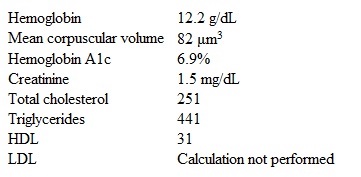 ECG is shown in the exhibit.
 Which of the following is the most appropriate next step in pharmacotherapy?
ECG is shown in the exhibit. Which of the following is the most appropriate next step in pharmacotherapy? (Multiple Choice)
4.9/5 (86)
(86) The patient is diagnosed with major depressive disorder and begins weekly psychotherapy. Arrangements are made to have extra help in the home. Despite these interventions, she becomes increasingly depressed and anxious. The patient's husband is concerned that she is getting worse. He says, "Although the baby is healthy, she continues to worry about the baby's feeding and growth and berates herself for being a bad mother. She even has difficulty making everyday decisions such as what diapers and groceries to buy." The patient has difficulty falling and staying asleep. Her appetite is poor, and she has lost 15 pounds over the past month. She says, "Maybe my baby would be better off without me" but has no intention or plan to take her own life or hurt her baby. No delusions or hallucinations are elicited. The patient is willing to take medication but wants to continue breastfeeding and does not want to take anything that would harm the baby. Which of the following is the most appropriate intervention?
(Multiple Choice)
4.9/5 (74)
(74) A 14-year-old girl is brought to the office by her mother due to irregular menses. The patient's first menstrual period occurred a year ago. Her menses since then have been irregular and unpredictable, occurring every 3-8 weeks. The patient says that when she does have a period, the bleeding lasts 3-7 days. When she has a >6-week lapse in menses, the heavy bleeding often soaks through a tampon and large pad overnight. The patient also has passage of small clots during the first 2 days. She has had no nausea, breast tenderness, or cramping. The patient has no chronic medical conditions and takes no medications. She is not sexually active and does not use tobacco, alcohol, or illicit drugs. Family history is significant for an aunt who had a hysterectomy for endometrial hyperplasia. Blood pressure is 100/60 mm Hg and pulse is 68/min. BMI is 24 kg/m2. Mild comedonal acne is present on the forehead. Skin examination is otherwise unremarkable. Breast development is Tanner stage 4. The abdomen is soft and nontender with no palpable masses. Examination of external genitalia shows Tanner stage 4 pubic hair. Urine pregnancy testing is negative. Which of the following is the best next step in management of this patient?
(Multiple Choice)
4.7/5 (79)
(79) Showing 901 - 920 of 1121

Filters
- Essay(0)
- Multiple Choice(0)
- Short Answer(0)
- True False(0)
- Matching(0)