



 Chat with AI
Exam 2: Foundations of Independent Practice

Exam 1: Advanced Clinical Medicine1 k+ Questions
Exam 2: Foundations of Independent Practice597 Questions
Select questions type


A 52-year-old woman comes to the office for follow-up of hypertension. The patient's blood pressure has been stable over the past 8 years on treatment with hydrochlorothiazide and amlodipine. However, recent home blood pressure readings have been higher than usual. The patient has had no changes in sleep quality, caffeine intake, or dietary sodium, but she has been drinking an herbal tea, which her son brought back from a trip to Asia, several times a day. She also takes black cohosh for occasional menopausal hot flashes. The patient does not use tobacco, alcohol, or illicit drugs. Temperature is 36.5 C (97.7 F), blood pressure is 152/88 mm Hg, pulse is 70/min, and respirations are 14/min. Physical examination reveals normal jugular venous pressure, clear lung fields, and normal S1 and S2. Femoral pulses are 2+ bilaterally, and no abdominal bruits are noted. Laboratory results are as follows: 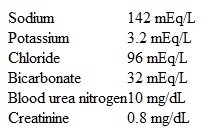 Additional testing shows a supine morning plasma renin activity of 0.15 ng/mL per hour (normal: 0.3-1.9) and a serum aldosterone level of 0.9 ng/dL (normal: 2-5). Which of the following is the most likely cause of this patient's uncontrolled hypertension?
Free
(Multiple Choice)
4.9/5  (66)
(66) Correct Answer: Verified
C
A 60-year-old man is taken to the post-anesthesia care unit less than an hour after an elective laparoscopic cholecystectomy. The surgery was uneventful and the patient was extubated in the recovery room. Medical history is significant for hypertension, hyperlipidemia, chronic kidney disease, and obstructive sleep apnea. The patient has no history of alcohol, tobacco, or recreational drug use. Temperature is 100 F (37.8 C), blood pressure is 125/65 mm Hg, pulse is 75/min, and respirations are 7/min. Oxygen saturation is 100% on 4 L of oxygen via nasal cannula. When the nurse attempts to wean the patient from the oxygen, pulse oximetry drops to 87%. The patient is somnolent but arousable when his name is called. Auscultation reveals shallow respirations with no rales, wheezing, or rhonchi. Abdominal examination shows a surgical wound with mild distension and tympany. There is no lower extremity edema. Chest x-ray reveals mild hypoinflation. Arterial blood gas analysis on 36% FiO2 is as follows: 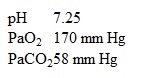 Which of the following is the most likely cause of this patient's requirement of supplemental oxygen?
Free
(Multiple Choice)
4.9/5 (82)
(82) Correct Answer:Verified
VerifiedD
A 28-year-old woman with a diagnosis of glioblastoma multiforme has recently decided to transition to hospice care following intracranial surgery and a course of chemotherapy. She has been informed by her oncologist that her prognosis is poor and that she will likely not live more than 6 months. The physician overseeing the hospice team visits the patient's home for a follow-up. During this visit, the patient mentions that she has been having second thoughts about choosing hospice care and, after speaking with family members and friends, feels that this would be "giving up." Her twin brother will be getting married in 8 months and she wants to attend his wedding. She has consulted 2 other oncologists who are experts in the field of glioblastoma for second opinions; they recommend an experimental life-prolonging chemotherapy regimen. She says, "I feel like I have to give this a try." Approximately 8 weeks later, the hospice team is contacted by the patient's twin brother. He says that the experimental treatment did not go as planned and the patient suffered multiple complications, including toxic epidermal necrolysis, respiratory failure, and ischemic brain damage that required a stay in the intensive care unit. A ventriculoperitoneal shunt was placed due to increased intracranial pressure. All family members are in agreement that the patient should return to hospice for comfort care. The patient is unable to indicate whether she wishes to return to hospice or continue pursuing curative treatments. Which of the following is a contraindication to the patient returning to hospice?
Free
(Multiple Choice)
4.7/5 (76)
(76) Correct Answer:Verified
VerifiedD
A 34-year-old woman comes to the emergency department due to a 12-hour history of sudden-onset, upper abdominal pain. She describes the pain as intense, constant, and radiating to the back. The pain is relieved by leaning forward and worsens with eating. The patient also reports nausea and has vomited several times. She has no previous episodes of abdominal pain, fever, chills, weight loss, fatigue, or night sweats. The patient has no known medical conditions and takes no prescription or over-the-counter medications. She does not use alcohol, tobacco, or illicit drugs. Her last menstrual period was 2 weeks ago and was normal. The patient is sexually active with a male partner and uses condoms. Temperature is 36.7 C (98.1 F), blood pressure is 134/72 mm Hg, pulse is 72/min, and respirations are 14/min. BMI is 24 kg/m2. Physical examination shows moist mucous membranes and anicteric sclera. Lung fields are clear, and S1 and S2 are normal. The abdomen is soft and tender in the upper abdomen but without rebound, involuntary guarding, or rigidity. Bowel sounds are normal. Neither hepatomegaly nor splenomegaly is present. Bimanual examination reveals no adnexal masses or tenderness. Neurologic examination is within normal limits.
Laboratory results are as follows:
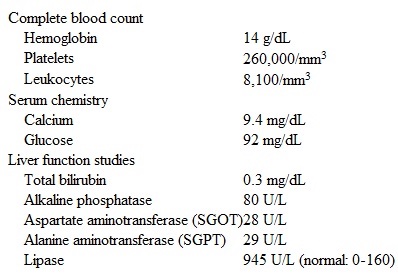 Pregnancy testing is negative. Abdominal ultrasound reveals a normal-appearing gallbladder and a nondilated biliary tree. The patient is admitted to the hospital; intravenous fluid, antiemetics, and pain medications are started. Which of the following is the best next step in management of this patient?
 (Multiple Choice)
4.8/5 (67)
(67) A physician receives a phone call from his sister requesting an antidepressant prescription for her 16-year-old son. She explains that he saw a psychiatrist who prescribed the medication for depression a year ago. The boy has been doing well on the medication and has not seen the psychiatrist for more than 6 months. She is concerned that the psychiatrist will be unwilling to refill the prescription without seeing him for a follow-up appointment. The sister is reluctant to schedule an appointment due to cost and inconvenience and asks the physician to do her this favor. As far as the physician knows, his nephew has no medical problems and does well in school. He was unaware of his nephew's history of depression until now. Which of the following is the most appropriate course of action?
(Multiple Choice)
4.9/5 (71)
(71) A large study surveyed 24-hour dietary fiber intake in a nationally representative sample of the United States population. The investigators also collected anthropometric and laboratory data soon after survey completion. The following results were reported for prevalence of obesity, metabolic syndrome, and elevated inflammatory markers per quintiles of daily dietary fiber intake. 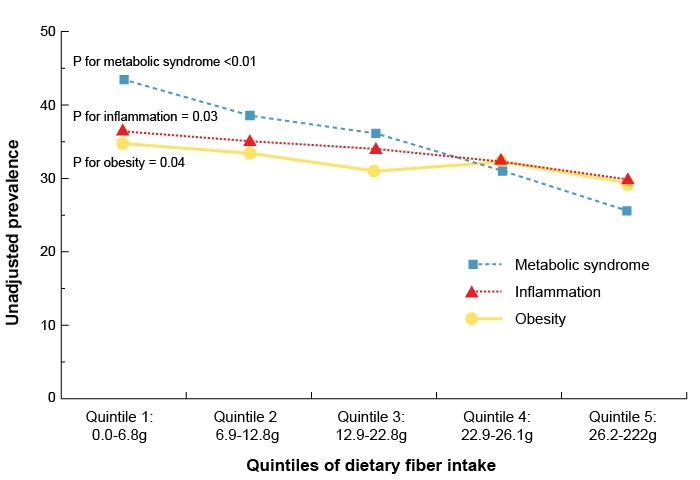 Which of the following is the best interpretation of the study results?
 (Multiple Choice)
4.8/5 (98)
(98) A 64-year-old woman comes to the office for a health maintenance visit. Her medical issues include hypothyroidism treated with levothyroxine and postmenopausal vaginal dryness treated with estrogen cream. The patient exercises 3 times a week and eats a well-balanced diet. She does not use tobacco and drinks a glass of wine 3-5 days a week. She works as a volunteer at her local public library. The patient's 88-year-old father has Alzheimer disease and was recently placed in a nursing facility. She mentions that it has been difficult to see her father decline and was upset when he failed to recognize her at her last visit. She says, "I do crossword puzzles every day because I am afraid I will develop Alzheimer disease" and mentions that she has seen information on the internet and television describing beneficial effects from ginkgo biloba, fish oil, and vitamins. The patient asks, "Will any of these supplements help prevent dementia?" Which of the following is the most appropriate advice for this patient?
(Multiple Choice)
4.8/5 (66)
(66) A large randomized double-blinded study compares a new inhalational steroid agent to fluticasone in patients with moderate persistent asthma. The following results are highlighted in the study: The investigators conclude that the study drug is more effective in this patient population. Which of the following is the major limitation of this conclusion?
(Multiple Choice)
4.9/5 (74)
(74) A 28-year-old woman comes to the office due to chronic diarrhea. She also has osteoporosis and anemia. The diagnosis of celiac sprue is considered. An article reviewing the efficacy of 2 new tests available for celiac sprue diagnosis contains the following 2 tables:
Based on these data, which of the following statements is most accurate?
(Multiple Choice)
4.7/5 (69)
(69) A 54-year-old man comes to the office for follow-up of type 2 diabetes mellitus. The patient also has a history of hypertension, obesity, and chronic kidney disease (CKD). Medications include an antihyperglycemic agent and insulin. Blood pressure is 148/92 mm Hg and pulse is 81/min and regular. BMI is 34 kg/m2. Physical examination is otherwise unremarkable. Laboratory results are as follows:
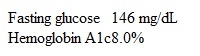 Based on his serum creatinine level, his CKD has progressed, and the calculated glomerular filtration rate (eGFR) is now 42 mL/min/1.73 m2, down from 55 mL/min/1.73 m2 as measured 6 months ago.
Based on the ad, which of the following is the most accurate statement concerning the use of kanebaflozin in this patient?
Based on his serum creatinine level, his CKD has progressed, and the calculated glomerular filtration rate (eGFR) is now 42 mL/min/1.73 m2, down from 55 mL/min/1.73 m2 as measured 6 months ago.
Based on the ad, which of the following is the most accurate statement concerning the use of kanebaflozin in this patient? (Multiple Choice)
4.8/5 (73)
(73) Several clinical trials studied the effect of a new antiviral agent on symptomatic relief of genital herpes simplex virus infection. All trials were based on physician report of symptom improvement; valacyclovir was used as a comparator. The pooled analysis of studies that blinded only patients favored valacyclovir with an odds ratio for valacyclovir of 1.65 (95% confidence interval, 1.53-1.75). The pooled analysis of studies that blinded both patients and treating physicians favored the new agent with an odds ratio for valacyclovir of 0.64 (95% confidence interval, 0.38-0.79). Which of the following best explains the difference in the reported odds ratios?
(Multiple Choice)
4.8/5 (92)
(92) A 32-year-old woman comes to the emergency department due to right eye pain and redness. The symptoms started 2 days ago and have progressively worsened. The patient notes, "My right eye is blurry, and it hurts when I look at bright light." She has had no eye trauma or similar symptoms in the past. She has no prior medical conditions but has had several weeks of nonproductive cough. The patient does not use tobacco, alcohol, or illicit drugs. Vital signs are within normal limits. Right eye examination reveals conjunctival injection, particularly around the cornea. The right pupil is constricted and reacts sluggishly to light. Left eye examination is normal, but penlight examination of the left eye results in right eye discomfort. The lungs are clear to auscultation. The abdomen is soft and nontender with no hepatosplenomegaly. Skin examination shows several small, tender nodules on the shins. Chest radiography reveals bilateral hilar lymphadenopathy. Which of the following is the most likely cause of this patient's ocular symptoms?
(Multiple Choice)
4.8/5 (77)
(77) A 10-year-old boy is brought to the office by his parents for a follow-up visit. The patient has sickle cell disease (SCD) and says that he has had an increase in the number of pain crises in the past 12 months. The parents ask whether their child can receive the recently approved Drug Z for the treatment of vasoocclusive crises (VOCs) in patients with SCD. The drug trials' snapshot summary for Drug Z states that its benefit was evaluated in 2 randomized, placebo-controlled trials in adults with SCD who had 4 to 8 VOCs in the 12 months before they were enrolled in the trials. The first trial (n = 61) showed that therapy with high-dose Drug Z resulted in a significantly lower rate of VOCs than placebo (45.3% lower rate; p < 0.01). The second trial (n = 32) showed that therapy with low-dose Drug Z resulted in a significantly lower rate of VOCs than placebo (35.8% lower rate; p = 0.01). Which of the following conclusions can be drawn about this situation?
(Multiple Choice)
4.9/5 (84)
(84) A 32-year-old woman telephones the office due to continued vaginal discharge and vulvar pruritus. She first noticed the presence of a white, malodorous vaginal discharge a week ago. The patient began using an over-the-counter antifungal cream at that time. A few times last year she had similar symptoms that resolved with the same medication. The patient was diagnosed with type 1 diabetes mellitus 20 years ago. She has had no surgeries. The patient has no medication allergies and does not use tobacco, alcohol, or illicit drugs. Family history is noncontributory. She is sexually active and uses a levonorgestrel-releasing intrauterine device for contraception. The patient is concerned about the ongoing symptoms and asks for a recommendation of a more effective treatment. Which of the following is the most appropriate response?
(Multiple Choice)
4.9/5 (73)
(73) An 8-month-old boy with sickle cell disease is brought to an urgent care center by his parents following several hours of intermittent crying. Yesterday afternoon, the patient had been active and crawling around, but he seemed irritable in the evening and was awake most of the night. Today, his parents noticed swelling of his hands and feet, which appear painful to the touch. The pain seems to be only minimally relieved with over-the-counter acetaminophen and ibuprofen. The boy has been breastfeeding less than usual due to fussiness but has been voiding appropriately. The patient has never been hospitalized. He takes oral penicillin prophylaxis and a vitamin D supplement. Immunizations, including an annual influenza vaccination, are up to date. Temperature is 36.7 C (98 F), blood pressure is 90/60 mm Hg, pulse is 158/min, and respirations are 32/min. Pulse oximetry is 98% on room air. Physical examination shows a fussy infant who can be consoled for short periods of time but appears restless and grimaces occasionally during the examination. There is symmetric swelling of the hands and feet. There are no rashes or skin abrasions. Lungs are clear to auscultation, and there are no retractions or use of accessory muscles. The abdomen is soft, nontender, and nondistended; the spleen is not palpable. The remainder of the examination is normal. The last dose of ibuprofen was given 1 hour ago. Which of the following is the most appropriate next step in management of this patient?
(Multiple Choice)
4.9/5 (82)
(82) A 2-year-old girl is brought to the emergency department due to bloody stools. She had a blood-tinged stool last night and has a large amount of bright red blood in her diaper today. The patient has otherwise been well; has been eating and drinking normally; and has no nausea, vomiting, abdominal pain, or diarrhea. Her past medical history is unremarkable. The patient takes no medications, and her vaccinations are up to date. Temperature is 37.2 C (99 F) and pulse is 108/min. Examination shows a soft, nontender, and slightly distended abdomen. Bowel sounds are normal. There is no rebound tenderness or rigidity. Rectal examination shows a normal anus without tears or fissure. A technetium-99 nuclear scan shows an increased uptake in the right lower quadrant of the abdomen. Which of the following is the most likely diagnosis?
(Multiple Choice)
4.8/5 (74)
(74) A 24-year-old man comes to the urgent care clinic due to severe right knee pain. He was playing football with friends earlier that afternoon when he was tackled from the right side. He felt a pop and had difficulty walking and pivoting, but he is able to ambulate slowly. On physical examination, the patient has pain when externally rotating the right tibia with the right knee bent at a 90-degree angle. Pain and moderate laxity are demonstrated with valgus stress testing of the knee. There is no significant effusion. Plain film of the knee is normal. What is the most likely diagnosis?
(Multiple Choice)
4.8/5 (66)
(66) A newborn boy is delivered by cesarean delivery at 39 weeks gestation to a 26-year-old woman, gravida 1 para 1, with gestational diabetes mellitus. First-trimester laboratory testing was normal, and second-trimester ultrasound showed no anomalies. At 28 weeks gestation, oral glucose tolerance testing indicated hyperglycemia, for which the patient initiated dietary modification and exercise. At 34 weeks gestation, maternal fasting blood sugars were consistently >100 mg/dL. She was started on subcutaneous insulin therapy but was frequently hyperglycemic. Other than prenatal vitamins, the patient's mother did not take any medications and did not use tobacco, alcohol, or illicit drugs. The infant's birthweight is 3.99 kg (8.8 lb). Temperature is 36.8 C (98.2 F), blood pressure is 70/40 mm Hg, pulse is 150/min, and respirations are 62/min. Pulse oximetry on room air is 92% in the right upper extremity and 93% in the left lower extremity. Examination shows a nondysmorphic infant with mild tachypnea, nasal flaring, and retractions. Auscultation reveals a heart murmur, but breath sounds are clear. Chest radiograph reveals mild pulmonary congestion. An echocardiogram confirms the suspected cardiac abnormality. After the physician explains the condition, the parents express concerns about the prognosis. Which of the following is the most appropriate response to the parents?
(Multiple Choice)
4.7/5 (92)
(92) A 71-year-old man comes to the office due to slowly progressive shortness of breath for the past year. He enjoys working in his garden, but shortness of breath has forced him to reduce the time he spends there. He also has a mild morning cough productive of whitish sputum. He estimates that his physical activity level is <30 min/day. The patient has a history of hypertension. He is a retired middle school teacher. He smoked 2 packs of cigarettes daily for 20 years and quit 15 years ago. Blood pressure is 127/85 mm Hg, pulse is 78/min, respirations are 14/min, and pulse oximetry is 93% on room air. BMI is 24 kg/m2. Occasional end-expiratory wheezes are present on lung examination, and the heart examination demonstrates a regular rate and rhythm. Chest x-ray shows hyperinflation, and pulmonary function test results are consistent with an obstructive defect. Suppose that 115 of the 160 (71.9%) patients age >65 with chronic obstructive pulmonary disease in the study completed all the surveys and questionnaires. Which of the following best explains the potential bias introduced by the nonresponse in the study?
(Multiple Choice)
4.8/5 (89)
(89) A 26-year-old woman, gravida 1 para 0, comes to the office to initiate prenatal care. The patient has had no nausea, abdominal pain, or vaginal bleeding since her last menstrual period 8 weeks ago. She has no chronic medical conditions. She had an appendectomy as a child but no other surgery. The patient takes a daily prenatal vitamin and does not use tobacco, alcohol, or illicit drugs. She is a vegetarian and emigrated from Southeast Asia 5 years ago. Blood pressure is 110/75 mm Hg and pulse is 80/min. BMI is 21 kg/m2. Pelvic examination reveals an 8-week-sized, nontender uterus and no adnexal masses or tenderness. Laboratory results are as follows: 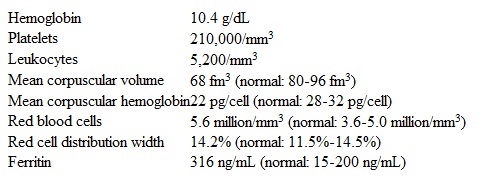 A transvaginal ultrasound reveals an 8-week intrauterine gestation with a normal heartbeat. Which of the following is the most likely cause of this patient's anemia?
A)Folate deficiency
B)Glucose-6-phosphate dehydrogenase deficiency
C)Iron deficiency
D)Physiologic anemia of pregnancy
E)Thalassemia trait
A transvaginal ultrasound reveals an 8-week intrauterine gestation with a normal heartbeat. Which of the following is the most likely cause of this patient's anemia?
A)Folate deficiency
B)Glucose-6-phosphate dehydrogenase deficiency
C)Iron deficiency
D)Physiologic anemia of pregnancy
E)Thalassemia trait (Not Answered)
This question doesn't have any answer yet

Filters
- Essay(0)
- Multiple Choice(0)
- Short Answer(0)
- True False(0)
- Matching(0)