



 Chat with AI
Exam 2: Foundations of Independent Practice

Exam 1: Advanced Clinical Medicine1 k+ Questions
Exam 2: Foundations of Independent Practice597 Questions
Select questions type


A team of neurologists and psychologists researching intellectual function is reviewing the results of a study on the association between childhood lead exposure and adult intellectual function.
Based on the abstract, which of the following is the most concerning factor regarding the design of the study?
(Multiple Choice)
4.7/5  (84)
(84) A 32-year-old woman comes to the emergency department due to 2 days of high fever, chills, and generalized weakness. The patient was hospitalized 6 weeks ago due to polymicrobial sepsis and recently finished several weeks of antibiotics. Her blood cultures at diagnosis were positive for Escherichia coli, Bacteroides, and Peptostreptococcus, and repeat cultures after antibiotics were negative. She believes that "the antibiotics were stopped too soon and now the infection has come back." The patient also has a history of chronic abdominal pain and has had an extensive diagnostic workup, which was unrevealing. She does not use tobacco, alcohol, or illicit drugs and works as a nursing assistant. Temperature is 38.9 C (102 F), blood pressure is 110/64 mm Hg, pulse is 102/min, and respirations are 16/min. She has no scleral icterus, and oropharyngeal mucosa is normal. Lungs are clear to auscultation and heart sounds are normal. The abdomen is diffusely tender with superficial palpation, but no guarding or rebound tenderness is present. Bowel sounds are normal. Rectal examination reveals brown stool that is occult blood negative. Blood cultures are obtained, and empiric antibiotics are administered. Blood cultures grow E coli and Enterococcus faecalis within 48 hours. Which of the following is the most likely cause of this patient's recurrent bacteremia?
(Multiple Choice)
4.9/5 (78)
(78) A 46-year-old man comes to the office due to loose teeth and inflammation in his gums. After periodontal evaluation, the diagnosis of localized aggressive chronic periodontitis (CP) is suspected. Laboratory results, including C-reactive protein (CRP) results, are pending. Results from a recent cross-sectional study evaluating serum CRP levels in 100 subjects with aggressive CP has found that the mean CRP concentration among these subjects is 6 mg/dL ± 1 mg/dL. If the population has a normal distribution, what is the probability that this patient has a CRP ≥9 mg/dL?
(Multiple Choice)
4.7/5 (70)
(70) A 79-year-old female nursing home resident is brought to the clinic by a nurse from the facility. Three years ago, the patient was diagnosed with dementia, and her memory and behavior have gradually worsened. Staff members report that she has been exhibiting increased aggression and paranoia over the last few weeks. She has pushed staff members and tried to rush out of the nursing facility. The patient does not recall these episodes. Gabapentin, valproate, citalopram, and trazodone were tried but did not improve her worsening symptoms. She has a history of hypertension and diabetes, which are well controlled with medication. She had a myocardial infarction approximately 10 years ago with no cardiac symptoms since then. The patient's vital signs are within normal limits, and on examination there are no abnormal findings except for areas of ecchymosis on her upper extremities. ECG is normal, and QTc interval is 430 msecs. The physician recommends low-dose risperidone. The patient's daughter, who is her guardian, is notified of the treatment plan and is concerned as she heard there is an increased risk of death associated with antipsychotics. She asks the physician about the safety of the medication. Which of the following is the most appropriate response regarding the potential safety risks of this class of medications?
(Multiple Choice)
4.9/5 (69)
(69) It is estimated that the prevalence of smoking in a population is 50%. A cohort study conducted using a random sample from this population showed that the 5-year risk of ischemic stroke is 1:1000 among smokers and 0.5:1000 among non-smokers.
What is the relative risk of ischemic stroke among smokers compared to non-smokers?
(Multiple Choice)
4.9/5 (72)
(72) An 18-month-old girl is brought to an urgent care center by her father for evaluation of a fever and rash. Yesterday she developed a fever of 38.2 C (100.7 F), which was treated with acetaminophen. This morning she appeared more tired than usual and did not eat her breakfast. She has been drinking milk and water but refuses to hold her cup due to discomfort from a new rash on her hands. The patient started attending daycare last week, but her parents are not sure if other children have been ill. She has been playing outdoors frequently this summer and has had occasional insect bites, but has stayed inside the past 2 days while sick. The patient has had no rhinorrhea, cough, vomiting, or diarrhea. She was born at term and has no chronic medical conditions. Temperature is 38.1 C (100.5 F). Physical examination shows a mildly ill-appearing patient with 8 small ulcers scattered across the buccal mucosa. Mucous membranes are moist, and the oropharynx is otherwise clear and without erythema or exudates. Cardiopulmonary and abdominal examinations are normal. Skin examination shows multiple lesions on both palms; no other lesions are visualized. Which of the following is the most likely etiology of this patient's examination findings?
(Multiple Choice)
4.9/5 (75)
(75) A study examined the role of biomarkers in diagnosing hypertrophic cardiomyopathy (HCM). The study population included patients without HCM, patients with borderline HCM, and patients with definite HCM. The following echocardiography measurements of the mean left ventricular wall thickness were reported: Assuming homoscedasticity and normality, which of the following tests was used to compare measurements?
(Multiple Choice)
4.7/5 (90)
(90) A follow-up study was conducted to assess the effect of circumcision on the incidence of penile carcinoma. A large cohort was investigated. The rate in uncircumcised males was 8/1000, and the rate in circumcised males was 6/1000. The investigators concluded that circumcision may be markedly effective in reducing the incidence of the disease in the population. According to the study results, how many patients should be circumcised to prevent one case of penile carcinoma?
(Multiple Choice)
4.7/5 (102)
(102) The drug advertisement suggests that BoXeva should be added to metformin for the treatment of patients with type 2 diabetes mellitus. A 56-year-old woman comes to the office for follow-up. She has a history of type 2 diabetes mellitus and hypertension. The patient has been on metformin therapy for the past 6 months. Despite adhering to a diabetic diet and increasing her level of physical activity, she has been unable to lose weight. At the current visit, her blood pressure is 145/90 mm Hg, and heart rate is 72/min. Her weight is 82 kg (180 lb). HbA1c is 7.6%, and serum creatinine is 0.9 mg/dL.
Compared to adding BoXeva, adding glimepiride to this patient's current regimen will most likely lead to which of the following at 52 weeks of treatment?
(Multiple Choice)
4.9/5 (87)
(87) An 81-year-old man is brought to the physician due to a recent fall. Three days ago, he stumbled on a rug in his living room and fell to the floor. He had no dizziness or loss of consciousness prior to the event and did not hit his head. He says that he only slipped, but his wife is concerned about the possibility of his falling again. The patient's other medical problems include hypertension and a history of stroke 10 years ago. His medications include aspirin, atorvastatin, and lisinopril. He lives independently with his wife. The patient's vital signs, including orthostatics, are within normal limits. Physical examination, including vision, cranial nerves, sensation, and reflexes, shows no abnormalities. No bruises or other superficial lesions are present. After evaluating medication use, alcohol use, appropriate footwear, and home environmental factors, which of the following is the most appropriate next step in management?
(Multiple Choice)
4.9/5 (84)
(84) A 65-year-old Caucasian female presents to the emergency department with progressive shortness of breath on minimal exertion and fatigue. She was diagnosed with myelodysplasia two years ago, and has been receiving supportive therapy with frequent RBC transfusions. Her last transfusion was 3 months ago. She experienced an episode of severe pneumonia one year ago that required hospitalization and IV antibiotic therapy. She is taking no medications currently and has no known allergies. Her blood pressure is 120/70 mmHg and heart rate is 95/min. Physical examination reveals pallor. Systolic murmur with intensity of II/VI is heard over the cardiac apex. Laboratory findings are significant for hematocrit of 24% and hemoglobin level of 5.7 mg/dL. You consider RBC transfusion in this patient. Blood grouping and cross-matching are done, but the blood bank is unable to find suitable blood. This is the first time such an incompatibility has occurred. What is the most likely reason for this incompatibility?
(Multiple Choice)
4.8/5 (81)
(81) A 13-year-old girl is brought to the office due to intermittent abdominal pain for the past 2 months. The pain is "around the belly button" and tends to occur after eating. For breakfast, she usually has cereal with milk, after which she "passes a lot of gas." The patient says, "I feel embarrassed when my friends and I go out for dessert after school. Last night, after I finished ice cream in a waffle cone, I had to run to the bathroom immediately because I had watery diarrhea." She is a vegetarian and has not had similar symptoms with other foods, including fruits, vegetables, eggs, yogurt, and grilled cheese sandwiches. The patient has been taking oral minocycline for acne for the past year. She also has seasonal allergies, for which she takes oral loratadine; her asthma has been well controlled with oral montelukast and inhaled corticosteroids. Menarche occurred at age 12; her last menstrual period was 2 weeks ago. Weight is 45.4 kg (100 lb, 15th percentile), unchanged since her last appointment 6 months ago. Height is 155 cm (5 ft 1 in, 10th percentile), increased from 150 cm (4 ft 11 in). Blood pressure is 110/68 mm Hg and pulse is 70/min. Physical examination shows small comedones and pustules on the forehead and chin. The lungs are clear to auscultation. Normoactive bowel sounds are heard, and the abdomen is soft, nontender, and nondistended. There is no hepatosplenomegaly. Which of the following is the most appropriate strategy in management of this patient?
(Multiple Choice)
4.9/5 (99)
(99) A 65-year-old man comes to the office due to a foot ulcer. The ulcer began 2 weeks ago, a few days after he scrubbed a callus off the bottom of his left foot. The patient tried over-the-counter antibiotic creams, but the ulcer gradually enlarged and started draining a foul discharge. The foot is not painful and he has had no fever. The patient has a history of hypertension, hyperlipidemia, and type 2 diabetes mellitus. His diabetes has been poorly controlled by oral medications, and he has refused to take insulin. The patient is a retired veteran and does not use tobacco, alcohol, or illicit drugs. Temperature is 37.2 C (99 F), blood pressure is 130/86 mm Hg, and pulse is 80/min. BMI is 32 kg/m2. Examination of the left foot shows a 2×2 cm plantar ulcer with a necrotic base. No surrounding erythema or induration is present, and metal probing does not contact bone. Lower extremity pulses are diminished but palpable. Sensation to light touch and vibration is reduced, and ankle reflexes are absent bilaterally. Leukocyte count is 13,000 cells/mm3 and erythrocyte sedimentation rate is 95 mm/hr. Blood cultures and wound swab cultures are obtained. Imaging reveals soft tissue inflammation and cortical destruction. Blood cultures are negative, but the wound swab culture grows Staphylococcus epidermidis, Proteus mirabilis, and Bacteroides susceptible to all tested antibiotics. Debridement of the necrotic tissue and wound care is planned. Which of the following is the best approach for antibiotic selection in this patient?
(Multiple Choice)
4.9/5 (76)
(76) A 53-year-old woman comes to the emergency department with a 1-day history of hematemesis and hypotension. She was hospitalized for unprovoked right femoral vein thrombosis and pulmonary embolism 1 month ago and has been taking warfarin since. In the emergency department, the patient is resuscitated with intravenous fluids and fresh frozen plasma. Warfarin is discontinued and she is started on intravenous pantoprazole. Upper gastrointestinal endoscopy shows several deep gastric ulcers. Later during the hospital course, the option of inferior vena cava (IVC) filter placement is discussed with the patient. Which of the following complications would this patient be at highest long-term risk for developing following IVC filter placement?
(Multiple Choice)
4.8/5 (83)
(83) A 49-year-old man comes to the office for follow-up. A friend was recently diagnosed with gout, and the patient is anxious that he will also develop gout. The patient states that he had read "something about a diet called DASH that reduces the excess of uric acid in the blood and reduces the risk of gout." He would like to try the diet but asks if a less strict version would nevertheless help to reduce his chances of developing gout.
Based on the abstract, if this patient decided to adopt a strict version of the DASH diet (corresponding to the highest fifth intake ranking) as compared to a less strict version of the DASH diet (corresponding to the third fifth intake rating), what proportion of his reduction in risk of gout could be attributed to this intervention?
(Multiple Choice)
4.8/5 (81)
(81) A 78-year-old man is brought to the emergency department for evaluation of fever, cough, and shortness of breath. His wife reports he has been coughing for 2 days, but his breathing worsened today. The patient has a history of Alzheimer disease, with a Montreal Cognitive Assessment (MOCA) score of 24 during a visit to his primary care physician 3 weeks ago. Temperature is 38.7 C (101.7 F), blood pressure is 86/42 mm Hg, pulse is 122/min, and respirations are 20/min. Pulse oximetry shows an oxygen saturation of 92% on room air. On examination, the patient is awake, alert, and oriented but appears in mild respiratory distress. He has dry mucous membranes and bibasilar rhonchi on auscultation. He is moving all extremities, following commands, and his speech is clear. Chest x-ray shows bilateral pneumonia. The wife has the patient's living will with her, which includes signed do-not-resuscitate (DNR) and do-not-intubate (DNI) forms. Which of the following is the best next step in confirming the goals of care?
(Multiple Choice)
4.8/5 (76)
(76) Researchers are interested in determining whether oral corticosteroid administration is a more effective treatment for patients with multiple sclerosis exacerbation than intravenous corticosteroid administration. They plan to conduct a systematic review and meta-analysis to compare the efficacy of these 2 treatments for acute exacerbations in this population. The primary outcome is defined as the proportion of patients with improvement on the Expanded Disability Status Scale at 4 weeks. The table lists the studies that meet inclusion criteria for the meta-analysis: The researchers included only studies 2, 3, and 5 in their meta-analysis. Which of the following statements concerning the possible results of the meta-analysis is most likely true?
(Multiple Choice)
4.9/5 (77)
(77) A 36-year-old woman comes to the emergency department with severe left calf pain. While she was running on a racetrack, she heard a loud snap and then felt an "excruciating pain" in her left calf area. She was a marathon runner in the past, but stopped running 2 years ago after she had her first baby. She started retraining a week ago for an upcoming race. She has no other medical problems. She does not use tobacco, alcohol, or illicit drugs. Her mother has a history of osteoporosis. Vital signs are within normal limits. Which of the following is the most accurate test to confirm complete Achilles tendon rupture in this patient?
(Multiple Choice)
4.9/5 (71)
(71) A 54-year-old man comes to the office for follow-up of type 2 diabetes mellitus. The patient also has a history of hypertension, obesity, and chronic kidney disease (CKD). Medications include an antihyperglycemic agent and insulin. Blood pressure is 148/92 mm Hg and pulse is 81/min and regular. BMI is 34 kg/m2. Physical examination is otherwise unremarkable. Laboratory results are as follows:
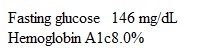 Based on his serum creatinine level, his CKD has progressed, and the calculated glomerular filtration rate (eGFR) is now 42 mL/min/1.73 m2, down from 55 mL/min/1.73 m2 as measured 6 months ago.
As stated in the ad, the proportion of subjects reaching A1c <7.0% was one of the prespecified secondary endpoints evaluated at week 26. Compared to the placebo group, a greater proportion of subjects in the 2 kanebaflozin groups achieved A1c <7.0%; however, researchers did not perform or report tests for the statistical significance of the differences in secondary endpoints among the 3 groups. Which of the following is the most likely reason that these statistical tests were not conducted?
Based on his serum creatinine level, his CKD has progressed, and the calculated glomerular filtration rate (eGFR) is now 42 mL/min/1.73 m2, down from 55 mL/min/1.73 m2 as measured 6 months ago.
As stated in the ad, the proportion of subjects reaching A1c <7.0% was one of the prespecified secondary endpoints evaluated at week 26. Compared to the placebo group, a greater proportion of subjects in the 2 kanebaflozin groups achieved A1c <7.0%; however, researchers did not perform or report tests for the statistical significance of the differences in secondary endpoints among the 3 groups. Which of the following is the most likely reason that these statistical tests were not conducted? (Multiple Choice)
4.9/5 (89)
(89) A 23-year-old woman comes to the physician for treatment of acne vulgaris. She has moderate comedonal acne affecting the face, neck, and shoulders. The patient has attempted treatment with topical azelaic acid without improvement. She has no other medical problems. She is married and has no children. The patient does not smoke but drinks alcohol socially on weekends. What additional information is needed before advising this patient on treatment options?
(Multiple Choice)
4.9/5 (85)
(85) 
Filters
- Essay(0)
- Multiple Choice(0)
- Short Answer(0)
- True False(0)
- Matching(0)