



 Chat with AI
Exam 2: Foundations of Independent Practice

Exam 1: Advanced Clinical Medicine1 k+ Questions
Exam 2: Foundations of Independent Practice597 Questions
Select questions type


The proportion of colonoscopies performed by a physician with at least 1 detected adenoma is called the adenoma detection rate. A study examined the association between the adenoma detection rate and the risk of colorectal cancer 6 months to 10 years after colonoscopy. In the graph below, physicians were sorted into quintiles based on their adenoma detection rate, with quintile 1 being the lowest rate of detection and quintile 5 being the highest. There were no significant differences in rates of complications. The hazard ratios (HRs), shown along with their corresponding 95% confidence intervals (CIs), were adjusted for other variables including patient age, sex, comorbidities, and indication for colonoscopy. 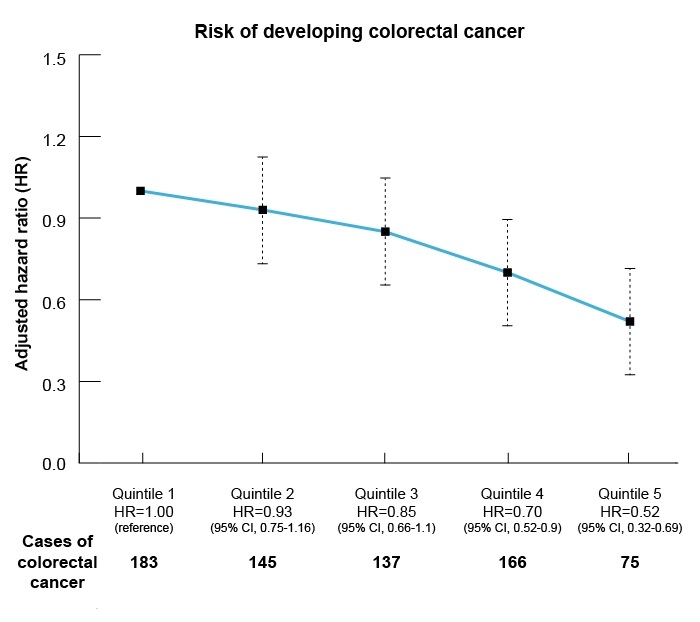 Which of the following statements best describes the study results?
 (Multiple Choice)
4.8/5  (73)
(73) A 38-year-old man is brought to the emergency department due to sudden-onset shortness of breath and diaphoresis. He has no fever, chills, cough, or abdominal pain. The patient has no other medical problems and takes no medications. He had surgery for bilateral inguinal hernias at age 16. The patient does not use tobacco, alcohol, or illicit drugs. Blood pressure is 95/60 mm Hg, pulse is 116/min and regular, and respirations are 28/min. He is in marked respiratory distress. Pallor and diaphoresis are noted. His skin is velvety and has many atrophic scars. The apical impulse is hyperdynamic. Cardiac auscultation reveals a soft, early-systolic decrescendo murmur at the cardiac apex. S1 is barely audible; S2 is normal. Lung examination reveals bibasilar crackles. Jugular venous distension is present. The abdomen is soft, nontender, and nondistended. Neurologic examination shows no abnormalities. ECG shows sinus tachycardia with occasional premature ventricular complexes. Chest x-ray reveals no cardiomegaly, but bilateral alveolar infiltrates and hilar prominence are present. The patient feels better after receiving appropriate therapy. A more detailed physical examination shows the presence of thoracolumbar scoliosis. Serial cardiac enzymes are negative. Arterial blood gas analysis shows respiratory alkalosis. Complete blood cell count and serum chemistry results are unremarkable. Which of the following is the most likely diagnosis?
(Multiple Choice)
4.9/5 (75)
(75) A 26-year-old woman comes to the office due to several weeks of fatigue, headaches, joint pain and swelling, light sensitivity, and occasional periods of low-grade fever. The patient has no other medical issues. She works as a systems engineer for a major airline. Family history is unremarkable. The diagnosis of systemic lupus erythematosus (SLE) is considered, and an antinuclear antibody (ANA) assay is obtained. The prevalence of SLE in patients from whom an ANA test is obtained is 3.2%. The sensitivity of ANA for SLE is 96%, and the specificity is 91%. Assuming that this patient has SLE, how likely is she to have a positive ANA result compared with a patient without SLE having a positive ANA result?
(Multiple Choice)
5.0/5 (81)
(81) A 52-year-old man is brought to the emergency department by his roommate after threatening to commit suicide. He is angry about being taken to the hospital and says, "I just want to go home and sleep." His roommate says, "I can't take it anymore; I thought he was going to jump out of the car on the way to the hospital." The patient has a history of recurrent major depression, post-traumatic stress disorder, and alcohol abuse. He describes increasing depression since his divorce 5 years ago. He feels hopeless, has difficulty getting out of bed, and eats only one meal a day. The patient ruminates about his failed marriage and blames himself for his heavy drinking and losing contact with his 2 grown children. He has always owned a gun, which he usually keeps in a locked drawer in a bedside table. However, in the last week he has taken the gun out and held it before going to sleep "because it feels like a security blanket, it's reassuring." The patient has suicidal thoughts but does not think he will act on them. He says, "I just need to know I have a way out." His medical record indicates that he tried to overdose 3 months ago by taking a handful of sleeping pills and drinking 2 liters of vodka. Last year, he tried to hang himself in his garage but was discovered by his roommate. The patient has been followed by a psychiatrist in an outpatient clinic. He felt better when taking duloxetine but has not taken the medication for the past few months as he can no longer afford it. He insists that he is not feeling suicidal now and demands to leave.
Which of the following is the most appropriate next step in management of this patient?
(Multiple Choice)
4.9/5 (82)
(82) The drug advertisement suggests that BoXeva should be added to metformin for the treatment of patients with type 2 diabetes mellitus. A 56-year-old woman comes to the office for follow-up. She has a history of type 2 diabetes mellitus and hypertension. The patient has been on metformin therapy for the past 6 months. Despite adhering to a diabetic diet and increasing her level of physical activity, she has been unable to lose weight. At the current visit, her blood pressure is 145/90 mm Hg, and heart rate is 72/min. Her weight is 82 kg (180 lb). HbA1c is 7.6%, and serum creatinine is 0.9 mg/dL.
The section of the drug advertisement shown does not mention side effects. BoXeva inhibits sodium-glucose cotransporter 2 (SGLT2), which is expressed in the proximal renal tubules. Based on this mechanism of action, which of the following side effects would be expected for the SGLT2 inhibitor class of medications?
(Multiple Choice)
4.9/5 (98)
(98) A 60-year-old man is brought to the emergency department due to acute-onset shortness of breath. His past medical history is significant for hypertension, coronary artery disease, and type 2 diabetes mellitus. His current medications include hydrochlorothiazide, insulin glargine, atorvastatin, aspirin, and a daily multivitamin. Temperature is 36.7 C (98 F), blood pressure is 128/72 mm Hg, pulse is 116/min, and respirations are 28/min. Physical examination shows an anxious-appearing, diaphoretic man. Jugular venous pulsations are noted up to the angle of the jaw. The heart sounds are regular, and an S3 gallop and faint holosystolic murmur are heard over the cardiac apex. Lung examination shows crackles to the mid-lung level bilaterally. He has pitting edema in both lower extremities. Which of the following is the best initial approach to improving this patient's symptoms?
(Multiple Choice)
4.8/5 (87)
(87) A 4-year-old boy is brought to the office by his mother for an annual wellness examination. The mother mentions that the boy has recently experienced several thrashing episodes at night in which he awakens screaming and crying about an hour after falling asleep. She says, "It's baffling because his eyes are open during these episodes, but he does not appear to be aware that I am present. I try to calm him down and comfort him, but it seems to have no effect." Eventually he falls back asleep and appears to have no recollection of the previous night's events in the morning. The mother says, "He recently saw a horror movie with his older siblings and I wonder if this upset him." The only recent change has been moving to a new home within the same city. The patient has no other medical problems. Physical examination is normal, and the boy appears to be meeting all developmental milestones. For advising the mother about the child's prognosis, which of the following is the most accurate statement?
(Multiple Choice)
4.8/5 (73)
(73) A mother brings her 7-year-old son to the pediatrician for a check-up. He was born 8 weeks premature and has a history of asthma. The physician has cared for the child from birth but is part of a large group practice in which other physicians may see the patient on occasion due to scheduling issues. Over the years, the physician has become close to the patient's mother, who confided that she is unhappily married and is seeking a divorce. The physician and the patient's mother started dating last year but have kept the relationship hidden from the patient. He has been too embarrassed to discuss the situation with his colleagues. The physician now feels increasingly concerned about the ethics of treating the patient as the relationship with the mother has intensified. At today's visit, the mother insists that he continue as the child's physician because she trusts him the most. After the visit, the physician approaches one of his colleagues for advice. Which of the following is the best advice to give the physician at this time?
(Multiple Choice)
4.9/5 (79)
(79) A 69-year-old man comes to the physician with bilateral shoulder and thigh pain for 2-3 months. The pain is associated with prolonged morning stiffness. He also complains of new-onset intermittent right-sided headaches and jaw pain. His only other medical problem is hypertension. The patient's medications include acetaminophen, lisinopril, and chlorthalidone. Examination shows no significant neck, shoulder, or thigh tenderness. He has normal passive range of motion at the shoulders but bilateral stiffness with active abduction. Joints show no obvious synovitis. Neurologic examination, including muscular strength, is normal. Which of the following is the most appropriate screening test for this patient?
(Multiple Choice)
4.8/5 (78)
(78) A 30-year-old woman comes to the office for evaluation and treatment of depression. The patient says, "I have been feeling down for the past 3 months. Sometimes I cry for no reason. My energy is low all day at work. On weekends, all I want to do is stay in bed, and I make excuses for avoiding my friends and family. My sleep and appetite are poor, and the only things I eat are unhealthy snacks." The patient has a demanding job as a restaurant manager and is worried that she has become less productive at work. She is not interested in dating and says, "Who would want to be with me when I feel so down?" The patient has no medical problems. Her medications include combination estrogen-progestin contraceptives. Physical examination is normal. On mental status examination, the patient has a depressed mood and sad affect. She has no suicidal ideation or psychotic features. She says, "I have heard good things about St. John's wort and wonder if it would help me. I have read positive reviews for it on the Internet, and my sister takes it and is doing well." Which of the following would be the most appropriate response to this patient?
(Multiple Choice)
4.9/5 (88)
(88) A 14-year-old boy is brought to the office by his mother, who is concerned about his academic performance. The patient has a history of attention-deficit hyperactivity disorder (ADHD) diagnosed at age 6. He responded well to methylphenidate and continued stimulant medication through age 11. Currently, he takes no medication. His mother says, "He is less hyperactive at home and I no longer get phone calls from the school about his behavior, but adjusting to high school has been a challenge. Even though he is very bright, he has difficulty keeping up with his schoolwork. He often hands assignments in late and his work is sloppy. Now that he is in high school and grades are important, I worry that his poor grades will limit his options for college." The boy feels fine but says that "the teachers are boring and treat me unfairly. I know the answer, but then get in trouble for not raising my hand." The patient struggles, particularly in math, and is getting mostly Cs and Ds in his other classes. He has several friends and was excited when he made the soccer team. However, he decided to quit after receiving several warnings for being late to practice and forgetting his equipment. His mother says that he is much less hyperactive at home and hopes that he has "outgrown" his ADHD by now.
Which of the following is the most appropriate statement in response to the mother's concerns?
(Multiple Choice)
4.8/5 (77)
(77) A 33-year-old woman comes to the office due to dyspareunia. The pain started about a year ago after the birth of her second child. When the patient saw her obstetrician for follow-up 4 months ago, he reassured her that everything was normal and her pain would improve shortly. She has no other medical issues and her vital signs are within normal limits. Pelvic examination reveals an abnormal episiotomy scar with contracture around the perineum secondary to scarring. This is the fifth patient in the past 12 months the physician has seen with the same examination findings; all 5 are patients of the same obstetrician. Previously, after seeing the second of those patients, the physician had contacted the obstetrician to discuss his rationale for the procedure, and the obstetrician had responded, "It is an acceptable and safe procedure that generally has excellent results. Both of those patients' symptoms should get better soon. I appreciate your concern, but I am a specialist and I know what I am doing." Which of the following is the most appropriate course of action?
(Multiple Choice)
4.9/5 (73)
(73) A 23-year-old woman comes to the physician with skin lesions. She noticed a small papule 2 weeks ago and now has additional similar lesions. There is no associated pain. The patient has had no systemic symptoms except 1 day of diarrhea that resolved 3 weeks ago. She has no previous medical problems and works as an assistant at a veterinary facility. The patient has been sexually active with a new partner. She drinks alcohol socially, but does not use tobacco or illicit drugs. Her vital signs are normal. Physical examination is normal except for the lesions as shown below. 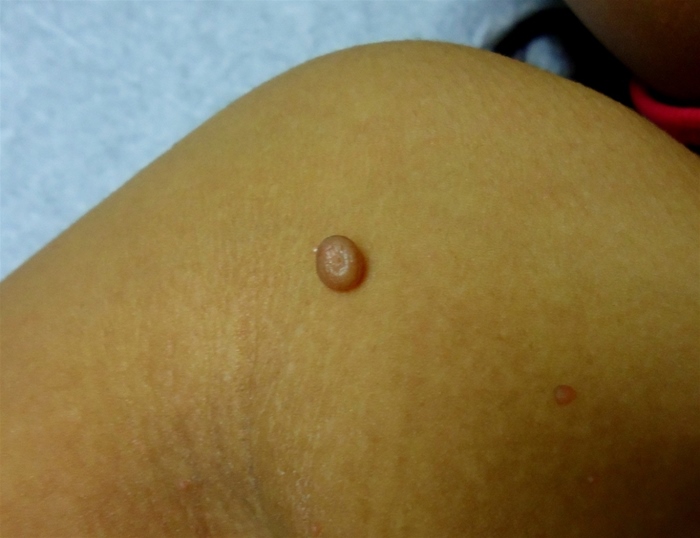 Which of the following is the most likely cause of her skin lesions?
 (Multiple Choice)
4.9/5 (75)
(75) A 16-year-old girl comes to the office with a breast lump that she discovered 2 days ago while applying lotion. Menarche was at age 12 and menstrual periods are regular, occurring approximately every 30 days. Her last menstrual period was about 1 month ago. The patient has a history of atopic dermatitis that typically flares during the summer and with exercise. She also has asthma for which she takes albuterol as needed. She takes no other medications and has no allergies. Her immunizations are up to date. The patient drinks alcohol and smokes marijuana 2-3 times per week. She does not use tobacco or other drugs. Her maternal aunt is in remission after metastatic breast cancer, which was diagnosed at age 55. Physical examination shows a rubbery, 4-cm mass in the superior outer quadrant of the left breast. Which of the following findings is most likely to be expected in this patient?
(Multiple Choice)
4.8/5 (77)
(77) A 2-month-old boy is brought to the office by his parents for well-child care. The infant was born at term via spontaneous vaginal delivery to a primigravid mother who developed acute hepatitis B infection during the third trimester. Both parents have a history of intravenous heroin use, and the father also has chronic, active hepatitis B. The parents entered a detoxification program after her diagnosis and no longer use illicit substances. The parents say, "We are terrified that he might develop hepatitis, too - it's all we can think about." The infant received hepatitis B immunoglobulin and vaccination at birth. The patient is gaining weight well and is formula feeding exclusively. Since his last visit, he has begun making cooing sounds and smiling. Vital signs are normal. Abdominal examination, including liver size, is unremarkable. The sclerae are white. The remainder of the physical examination is unremarkable. Which of the following is the most appropriate next step in this infant's care?
(Multiple Choice)
4.8/5 (76)
(76) A 77-year-old woman is brought to the office by her son due to frequent falls and confusion. The patient began to fall without clear provocation 2 years ago. Her family didn't think anything of the falls until she began having episodes of confusion a year ago. The patient's son says, "She has good and bad days. On good days she seems almost like her old self, but on bad days she appears confused and is difficult to understand." He adds that she sometimes appears to be distracted and agitated by people or things that he cannot see. The patient's medical history includes hypertension and coronary artery disease; her mother died of a stroke and her father had several heart attacks. Temperature is 37.2 C (98.9 F), blood pressure is 140/86 mm Hg, pulse is 84/min, and respirations are 16/min. Her movements and speech are slow, she has a short-stepped gait and rigidity in her upper extremities. Montreal Cognitive Assessment is 20 on a scale of 0-30 (normal: ≥26). The patient is prescribed donepezil, carbidopa levodopa, and risperidone. Two weeks after the initial office visit, she is brought to the emergency department by her son due to increasing confusion and falls. Supine blood pressure and pulse are 124/82 mm Hg and 65/min, respectively; standing blood pressure and pulse are 98/74 mm Hg and 87/min. The patient is not oriented to person, place, or time. Examination shows cranial nerves are within normal limits. Rigidity is present in both upper and lower extremities on passive movement. Upper and lower limb deep tendon reflexes are 2+. Which of the following is the most likely explanation for this patient's symptoms?
(Multiple Choice)
4.8/5 (88)
(88) A cohort of patients with myotonic dystrophy was retrospectively analyzed from 1993 to 2010 to identify incident cases of cancer. The researchers identified 2 cases of thyroid cancer and reported a standardized incidence ratio of 7.4 (P-value = 0.02). This ratio was derived using which of the following formulas?
(Multiple Choice)
4.8/5 (84)
(84) A 22-year-old man is found unresponsive on his bedroom floor. His girlfriend calls emergency medical services, and paramedics arrive within 10 minutes. She says that the patient has been using heroin and points to track marks on his right arm. Temperature is 37.8 C (100 F), blood pressure is 90/40 mm Hg, pulse is 65/min, and respirations are 6/min. The paramedics provide supportive care and administer naloxone on the way to the hospital. The patient's condition stabilizes in the emergency department. The toxicology screen is positive for opiates and cannabis. Once he becomes more alert, additional information, including a substance abuse history, is obtained. The patient says, "I've been using heroin for the last 9 months and drinking since I was 16. I like to use pretty much any drug I can get my hands on; I don't see what the big deal is." He has never tried to stop using and has never been to a drug-detoxification or drug-rehabilitation program. He recently lost his construction job as he was "too high to show up." His girlfriend is considering leaving him if he does not get help.
Which of the following statements or questions is the most appropriate for initiating a discussion about the patient's substance use?
(Multiple Choice)
4.7/5 (84)
(84) A 46-year-old woman comes to the office to establish care. She has not seen a physician in several years and takes no medication. The patient has recently been experiencing a significant amount of stress due to her mother's recent diagnosis of metastatic breast cancer. She expresses sadness due to her mother's condition but has had no suicidal or homicidal ideation or substantial loss of interest or pleasure in performing her activities. She lives at home with her mother, who is widowed, and no other family members live nearby. Due to her mother's worsening condition, the patient has needed to personally assist her with activities of daily living and transportation to medical appointments. The patient works at a large company and states that she is having increasing difficulty fulfilling her commitments at work. She has used up all her sick and vacation days, and her supervisor cannot give her additional time off. The patient is tearful and states, "I'm really hoping you can help me. I am going through so much stress. I just need a few weeks off work so I can look after my dying mother." Which of the following is the most appropriate response by the physician?
(Multiple Choice)
4.8/5 (88)
(88) A group of biomedical researchers developed a diagnostic process that applies the same shortwave rays used in airport security scanners to distinguish cancerous skin lesions from normal skin. The technology uses millimeter-wave radiation, which bounces off different materials with quantifiable reflectivity signatures. The researchers found that cancerous tumors reflect more calibrated energy than normal skin; therefore, the technology identifies diseased tissue by detecting reflectivity hotspots. A preliminary evaluation of the performance of the diagnostic tool showed that 92% of all skin tissue samples with a positive test result were cancerous, and that 99% of all skin tissue samples with a negative test result were normal. Based on these preliminary data, which of the following is the most accurate interpretation of the results?
(Multiple Choice)
4.8/5 (77)
(77) 
Filters
- Essay(0)
- Multiple Choice(0)
- Short Answer(0)
- True False(0)
- Matching(0)