



 Chat with AI
Exam 2: Foundations of Independent Practice

Exam 1: Advanced Clinical Medicine1 k+ Questions
Exam 2: Foundations of Independent Practice597 Questions
Select questions type


A mother brings her 4-year-old son to the clinic for evaluation of 2 days of abdominal pain. She moved to the United States from Vietnam 3 years ago with her husband and children and cannot speak or understand English. She is fluent in Vietnamese. Her husband is fluent in English but is currently out of town on business. The boy is accompanied by his 7-year-old sister, who is fluent in Vietnamese and learning English in elementary school. The treating physician is unable to speak or understand Vietnamese, and there is no Vietnamese interpreter available in the clinic. They are joined by a family friend, who is fluent in both languages. The boy has stable vital signs and does not appear to be in distress. Which of the following is the most appropriate choice to communicate with this patient?
(Multiple Choice)
4.8/5  (90)
(90) A 26-year-old woman comes to the office due to fatigue and poor sleep. For the past month, she has felt unusually tired and has been unable to keep up with her usual aerobics classes. Prior to the onset of symptoms, the patient began taking over-the-counter "energy" pills to improve stamina and promote weight loss. She wants to lose weight because she is getting married in a few months. Medical history is unremarkable; family history is also insignificant. The patient does not use tobacco, alcohol, or illicit drugs. Blood pressure is 138/66 mm Hg and pulse is 101/min. A resting hand tremor is noted. Ocular examination is normal. The thyroid gland is not palpable and there is no neck tenderness. The remainder of the physical examination is unremarkable. Thyroid function tests show TSH of <0.01 μU/mL and free T4 of 2.3 ng/dL (normal: 0.9-1.7). Which of the following is most likely to be found on further evaluation of this patient?
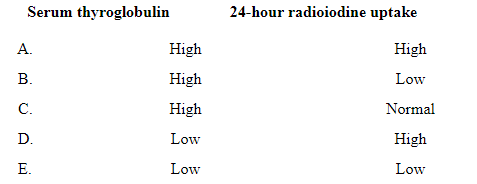
(Multiple Choice)
5.0/5 (108)
(108) A 37-year-old man with a history of bipolar disorder is brought to the emergency department by family members after they prevented him from going to a gun range, where he had planned to shoot himself. On admission to the psychiatric unit, the patient reports being very depressed about breaking up with his girlfriend. In addition, she has recently posted photos of herself with her new boyfriend on social media. Since then, the patient has felt worthless and hopeless, believing that his life is not worth living. On his third day in the hospital he is taken off 1-to-1 constant observation and changed to 30-minute checks. That evening, he asks to speak with his former girlfriend by phone. Following the phone call, the patient does not come out for dinner and is not seen in his room. He is found hanging from a sheet fastened as a noose around the hinge of the bathroom door. He is unresponsive and appears pale. A staff member begins cardiopulmonary resuscitation while awaiting the rapid response team's arrival. Despite resuscitative measures, the patient remains unresponsive and dies. In responding to this incident, which of the following is the most appropriate next step for the hospital to prevent such occurrences in the future?
(Multiple Choice)
4.9/5 (84)
(84) A randomized controlled trial is conducted to evaluate the safety and efficacy of high-dose protovastatin compared with low-dose protovastatin in patients with stable coronary artery disease (CAD) in the prevention of CAD-related complications. A total of 12,780 patients with stable CAD who achieved low-density lipoprotein cholesterol (LDL-C) <120 mg/dL during a run-in period (protovastatin 1 mg/d) are randomized (1:1) to high-dose (protovastatin 4 mg/d; n = 6,392) or low-dose (protovastatin 1 mg/d; n = 6,388) statin therapy. The primary endpoint is a composite of cardiovascular death, nonfatal myocardial infarction, nonfatal ischemic stroke, or unstable angina requiring emergency hospitalization. With a median follow-up of 4 years, the risk of the primary endpoint is 4.3% in the high-dose group and 5.4% in the low-dose group. The difference in the risk of the primary endpoint is statistically significant. Which of the following is the most accurate interpretation of these results?
(Multiple Choice)
4.7/5 (67)
(67) A 16-year-old girl is brought to the physician by her parents. Her mother is concerned because the girl has lost 10 pounds in the last 3 months. She constantly feels weak and tired. She is doing well in high school. The patient says that she eats well, although her appetite has decreased. Her last menstrual period was 3 months ago. She is not sexually active. She does not use tobacco, alcohol, or illicit drugs. Physical examination shows a young, thin girl with multiple brown freckles. The patient has a decreased amount of axillary and pubic hair for her age. Patchy brown spots are seen on her lips and buccal mucosa. Mild generalized muscular tenderness is present. She appears well-groomed, alert, and communicative and does not appear to be especially anxious. Her parents, on the other hand, are worried about her condition and want to know her diagnosis. The patient returns with her parents for a follow-up visit. She complains of intermittent abdominal pain during the past week. Examination findings remain unchanged from the previous visit. Laboratory results are as follows:
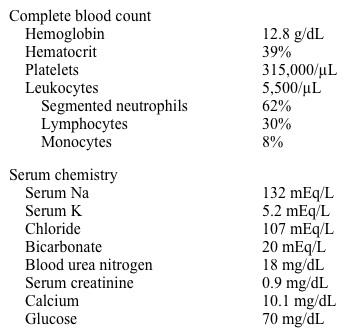 Urinalysis is normal. Pregnancy test is negative. Which of the following is the most likely diagnosis?
 (Multiple Choice)
4.8/5 (78)
(78) A 28-year-old woman comes to the emergency department due to the abrupt onset of palpitations that started while she was watching television. She says, "I suddenly started to feel like my heart was racing." The patient describes mild lightheadedness but no chest pain, shortness of breath, or syncope. In the past, she has experienced similar episodes of palpitations that were nonsustained and terminated abruptly. The patient has never sought medical care for these episodes and cannot identify any provoking factor. She saw a physician for anxiety when she was a teenager but does not remember if she received any therapy. The patient has no other medical problems and takes no medications. She does not use tobacco, alcohol, or illicit drugs. She jogs 2-3 miles a day. The patient has no family history of coronary artery disease, cardiomyopathy, blood clots, or sudden cardiac death. She appears mildly uncomfortable but not in any respiratory distress. Temperature is 36.7 C (98 F), blood pressure is 100/60 mm Hg, pulse is 172/min, and respirations are 20/min. Urine pregnancy test is negative. ECG is shown in the exhibit. 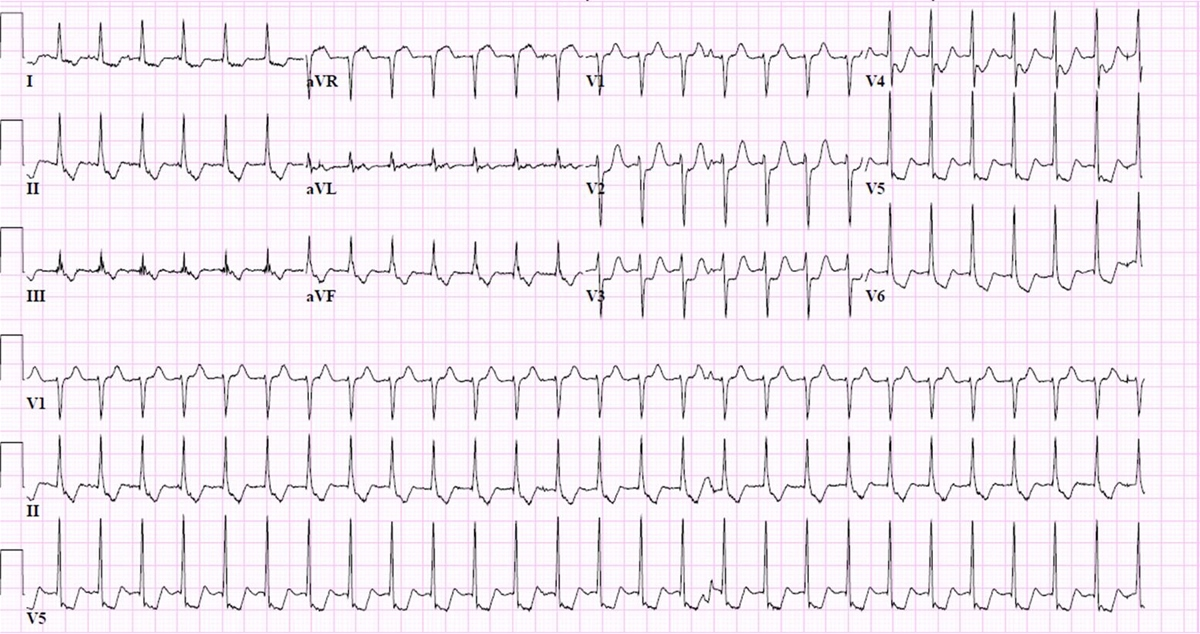 Which of the following is the most likely diagnosis?
 (Multiple Choice)
4.8/5 (84)
(84) A 5-year-old boy is brought to the emergency department by his mother due to redness and white discharge around his penis. His mother reports frequent episodes of nocturnal bed wetting in the past few weeks after months of being dry overnight. The patient has no chronic medical conditions, and his vaccinations are up to date. Temperature is 36.7 C (98.1 F), blood pressure is 104/62 mm Hg, pulse is 86/min, and respirations are 16/min. The abdomen is soft and nontender, and the bladder is not palpable. The penis is uncircumcised, and the glans penis is erythematous with thick, white discharge around the glans when the foreskin is retracted. There is no urethral discharge. There is no phimosis or paraphimosis. In addition to teaching the proper foreskin hygiene, which of the following is the best next step in management of this patient?
(Multiple Choice)
4.8/5 (80)
(80) A 33-year-old woman comes to the office to discuss contraception options. The patient and her boyfriend have been using condoms and the "morning-after pill" occasionally to prevent pregnancy. She most recently used an emergency contraceptive a week ago. The patient used combined oral contraceptives in her early 20s and would like to restart them. Her medical conditions include occasional headaches, which she describes as a throbbing pain on the right side of her face preceded by "flickering zigzags" in her peripheral vision. During the headache, she has light sensitivity and facial numbness. The patient has had no previous surgeries. Her menses are regular; her last menstrual period was 3 weeks ago. The patient's mother was diagnosed with epithelial ovarian cancer at age 59 and is undergoing chemotherapy. Her maternal grandmother also had ovarian cancer and died at age 56. The patient smokes half a pack of cigarettes a week but does not use alcohol or illicit drugs. She has no known medication allergies. Blood pressure is 130/80 mm Hg and pulse is 76/min. BMI is 33 kg/m2. Physical examination is normal. Which of the following is a contraindication to the use of combined hormonal contraceptives in this patient?
(Multiple Choice)
5.0/5 (74)
(74) A large study examined the role of a new medication X in patients with known atherosclerotic vascular disease. Study subjects were randomized into intervention (medication X) versus placebo groups and followed for a mean of 3.9 years. The following results were reported: 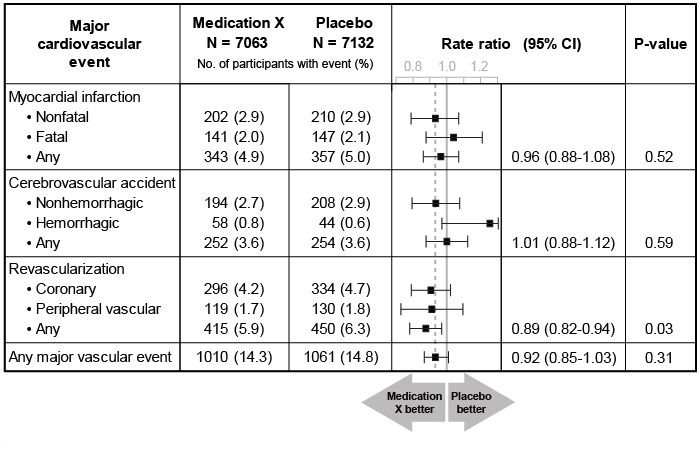 Which of the following is the most accurate statement about the study results?
 (Multiple Choice)
4.8/5 (69)
(69) A 22-year-old man comes to the clinic due to frequent headaches. He plays football on weekends but over the last 3 months has noticed a dry cough and decreased exercise tolerance due to shortness of breath. The patient has also had lower extremity swelling and says that his face feels "puffy." He is a lifetime nonsmoker and does not use alcohol or illicit drugs. The patient's mother was diagnosed with hypertension at age 45 and takes 2 antihypertensive medications; his father is healthy. The patient has no siblings. Blood pressure is 180/102 mm Hg in the right arm and 183/99 mm Hg in the left and pulse is 85/min and regular. BMI is 24 kg/m2. Upper and lower extremity pulses are equal. Bilateral lower extremity edema is present. The remainder of the physical examination is normal. ECG shows normal sinus rhythm. Which of the following is the most likely cause of this patient's condition?
(Multiple Choice)
4.8/5 (70)
(70) A 45-year-old man comes to the emergency department due to progressive back pain for the past several weeks. He has also had poor appetite and lost 2.3 kg (5 lb) over this period. The patient notes productive cough but attributes this to chronic cigarette smoking. He has had no back trauma, lower extremity weakness or numbness, or loss of bladder or bowel control. The patient has no prior medical problems and takes no medications. He has smoked 2 packs of cigarettes daily for 25 years and is trying to quit. The patient came to the United States 2 months ago from Eastern Europe to visit his son. Temperature is 37.4 C (99.4 F), blood pressure is 140/80 mm Hg, and pulse is 84/min. Lung auscultation reveals occasional left-sided rhonchi and crackles. Back examination shows midline tenderness in the lower thoracic region. Neurologic examination is normal. Chest x-ray reveals a cavitary lesion in the left upper lobe, and spine imaging indicates vertebral osteomyelitis and discitis. The patient is immediately isolated and sputum samples are obtained. Sputum for acid-fast bacilli is positive, and antituberculosis treatment is initiated. His close contacts are advised to obtain medical evaluation. Health care personnel who administered care to the patient prior to infection control measures have negative tuberculin skin testing. Which of the following is the next most appropriate step for the health care workers with potential exposure?
(Multiple Choice)
4.9/5 (75)
(75) A 64-year-old woman comes to the physician due to thickening and discoloration of her toenails. Her nails are rough, and this is starting to cause pain and making it difficult to wear shoes with socks. A few months ago, she first noticed that the big toes of both feet were affected, subsequently several other nails became affected as well. On physical examination, the affected nails appear rough, brittle, and discolored as shown in the image below. Potassium hydroxide preparation of nail scrapings shows dermatophytic hyphae and arthrospores. 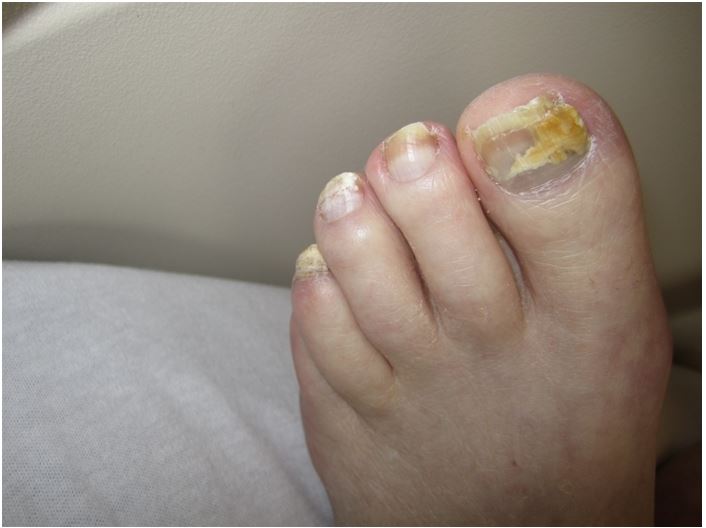 Which of the following is the most effective treatment regimen for this patient's condition?
 (Multiple Choice)
4.9/5 (71)
(71) A 62-year-old man comes to the office to follow-up diabetes. He was diagnosed with type 2 diabetes mellitus 12 years ago and is being treated with sitagliptin and metformin. The patient's father also had type 2 diabetes and died of a "massive heart attack" at age 67. He states, "My father refused to take insulin despite very high sugar levels. I do not want to be like him." The patient has good compliance with his medication regimen as well as with dietary and exercise recommendations. However, his home finger-stick blood glucose levels are frequently >250-300 mg/dL. The patient feels tired during the day as his sleep is interrupted by frequent urination, and he is often bothered by a pins-and-needles sensation in his feet when trying to sleep. He has lost significant weight since his last visit, which he attributes to rigorous lifestyle changes. Medical history is notable for obesity, gout, hypertension, and hyperlipidemia. The patient's other medications include atorvastatin, low-dose aspirin, lisinopril, and amlodipine. He quit smoking 30 years ago and does not use alcohol or illicit drugs. Blood pressure is 134/80 mm Hg and pulse is 70/min. BMI is 33 kg/m2. Examination of the feet is notable for a bilateral decrease in sensation on monofilament testing. The remainder of the physical examination is unremarkable. Hemoglobin A1c is 9.5% and serum creatinine is 1.4 mg/dL. The patient is counseled on the possibility of starting a long-acting basal insulin analog. Which of the following is an advantage of using this therapy over NPH for this patient?
(Multiple Choice)
5.0/5 (75)
(75) The Department of Health Services and Public Health authorities investigated an outbreak of severe gastrointestinal (GI) illness in Bayamón, Puerto Rico. A total of 25 individuals had been admitted to the city hospital with acute diarrhea, vomiting, bloating, and severe abdominal pain. A standardized questionnaire was used to collect relevant information related to person, place, and time from 25 individuals with severe GI illness and 75 individuals matched by age and sex who had been admitted to the same hospital for any reason other than GI illness. Preliminary results showed that 96% of the individuals with severe GI illness had eaten at a popular local restaurant 2-4 days before, and 4% of the individuals without GI illness had eaten at the same restaurant during the same period. Which of the following statements is correct about this study design?
(Multiple Choice)
4.8/5 (73)
(73) A 36-year-old man comes to the emergency department due to sudden-onset left-sided chest pain for the past 2 hours. The patient says, "It feels like someone stabbed my chest and I have difficulty breathing." The pain does not radiate and worsens with deep inspiration and movements. He has had no nausea, diaphoresis, or lightheadedness. The patient has a history of type 1 diabetes mellitus, and a month ago he developed right foot ulceration after stepping on a sharp piece of metal. His foot wound did not heal with nonsurgical treatments, and a week ago he underwent transmetatarsal amputation of the right first toe after evaluation revealed acute osteomyelitis of the metatarsal bone. The patient also experienced severe anaphylactic reaction after intravenous contrast was administered during CT angiography of the right lower extremity prior to the surgery. He has no other medical problems and does not use tobacco, alcohol, or illicit drugs. Temperature is 37.2 C (99 F), blood pressure is 110/62 mm Hg, pulse is 106/min, and respirations are 24/min. The patient's pulse oximetry shows 92% while breathing ambient air. Lung auscultation reveals pleural friction rub over the left lower chest. Heart sounds are regular with an accentuated pulmonary component of S2. There are no murmurs or gallops. The abdomen is soft and nontender. Right foot examination shows healing surgical wound with no erythema or drainage. There is no extremity edema or calf tenderness. ECG shows sinus tachycardia with no significant ST segment or T wave changes. Chest x-ray shows slight blunting of the left costophrenic angle. There are no parenchymal infiltrates or consolidation. Ventilation/perfusion scan is performed, which is reported as low probability for pulmonary embolism. Which of the following is the most likely diagnosis for this patient?
(Multiple Choice)
4.7/5 (71)
(71) An 82-year-old woman is brought to the emergency department due to several hours of confusion and lethargy. She resides in a nursing home, and her oral intake has been poor over the last 2 days. She has had no fever, cough, dyspnea, or abdominal or urinary symptoms. The patient has a history of hypertension, type 2 diabetes mellitus, chronic kidney disease, and coronary artery disease. Three months ago, she had a non-ST elevation myocardial infarction and underwent percutaneous coronary intervention. The patient has been taking her medications without issue, but her long-acting insulin was held last night. Temperature is 35.7 C (96.3 F), blood pressure is 90/40 mm Hg, pulse is 98/min, and respirations are 18/min. Pulse oximetry shows 94% on room air. The patient is unable to answer questions or follow commands. Cardiopulmonary examination reveals no abnormalities. No edema is present in the extremities, and the skin is warm to touch. Neurologic examination is limited due to the patient's mental status, but no obvious focal abnormalities are noted. ECG reveals normal sinus rhythm with minor T-wave abnormalities. Laboratory results are as follows: 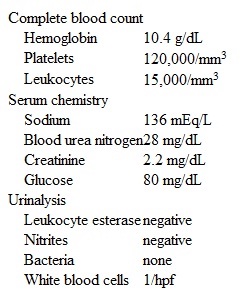 The patient is given a 500-mL bolus of normal saline. Repeat vital signs after the fluids are completed reveal blood pressure of 85/40 mm Hg and heart rate of 95/min. Which of the following is the most appropriate next step in management of this patient?
 (Multiple Choice)
4.8/5 (84)
(84) A 1-month-old boy is brought to the office for a routine well-child examination. The patient has been taking 3 oz of formula every 4 hours and sleeping well between feeds. He was born via vaginal delivery to a 20-year-old primiparous birth mother who received appropriate prenatal care. Apgar scores were 9 and 9 at 1 and 5 minutes, respectively. He was adopted shortly after birth by his 2 fathers as part of a planned open adoption. To date, the birth mother has chosen to have no further contact with the baby. The patient has no known birth family history of developmental delay, autism, or psychiatric disorders. Vital signs, growth measurements, and physical examination are normal. In comparing children of gay and lesbian parents with those of heterosexual parents, which of the following statements is most accurate?
(Multiple Choice)
4.8/5 (75)
(75) An 18-year-old man comes to the emergency department with flank pain and red urine for the past day. Approximately 3 days ago, he experienced flu-like symptoms with rhinorrhea and throat pain that improved with over-the-counter acetaminophen. The patient has no chronic medical conditions and takes no daily medications. He does not use tobacco, alcohol, or illicit drugs. Family history is unremarkable. Temperature is 37.2 C (99 F), blood pressure is 126/76 mm Hg, pulse is 88/min, and respirations are 18/min. The patient has mild costovertebral tenderness. The remainder of the physical examination is normal. Laboratory results are as follows: 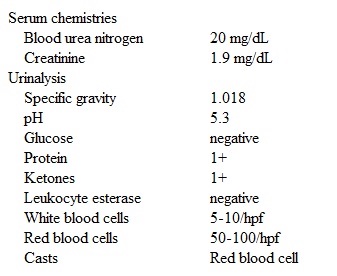 Serum complement levels are normal. Spiral CT scan of the abdomen is normal. Which of the following is the most likely diagnosis in this patient?
 (Multiple Choice)
4.9/5 (70)
(70) An 18-year-old woman comes to the office as she has not had a menstrual period for the last 3 months. Menarche was at age 12, and her menstrual cycles were previously every 28 days, with 3-4 days of moderate bleeding. The patient has had no changes in appetite, headaches, vision or voice changes, or nipple discharge. She has no chronic medical conditions or previous surgeries. Family history is noncontributory. The patient is a gymnast and has increased her training to 4 hours a day to prepare for a national competition. She has never been sexually active. The patient takes ibuprofen occasionally after practices and has no known allergies. Temperature is 37.2 C (99 F), blood pressure is 100/60 mm Hg, pulse is 60/min, and respirations are 12/min. BMI is 18 kg/m2. Physical examination shows well-defined musculature. Hair is present above the upper lip and on the forearms. The breasts are atrophic, with no nipple discharge. The abdomen is soft and nontender and has no palpable masses. Pelvic examination indicates a sexual maturity rating at stage 5. Bimanual examination reveals a small, anteverted, mobile uterus and small ovaries. Which of the following is the most likely diagnosis in this patient?
(Multiple Choice)
4.8/5 (72)
(72) A 54-year-old man comes to the emergency department due to worsening epigastric and retrosternal chest pain, nausea, and vomiting. The patient started having severe nausea, retching, and forceful vomiting after eating some spicy food and consuming a small amount of alcohol with dinner several hours ago. The vomitus contained ingested food particles, but the most recent episode included a small amount of bright red blood. The pain has progressively worsened, and he now has pain while swallowing and mild shortness of breath. The patient has had dyspeptic symptoms in the past, which he self-treated with over-the-counter antacids. He does not use tobacco or illicit drugs. He appears pale, diaphoretic, and in moderate distress. Temperature is 38 C (100.4 F), blood pressure is 140/90 mm Hg, pulse is 120/min, and respirations are 24/min. Neck veins are flat. Dullness to percussion and decreased breath sounds are present over the left basal area. Abdominal examination reveals epigastric tenderness and decreased bowel sounds. Stool occult blood is positive. Upright chest x-ray reveals a small pleural effusion of the left lung, and ECG shows sinus tachycardia; the imaging results are otherwise unremarkable. The patient continues to have chest pain that radiates to the back and worsens during deep breaths. He appears restless and dyspneic. Blood pressure is now 110/60 mm Hg and pulse is 130/min. Intravenous fluids are administered. Laboratory results are as follows:
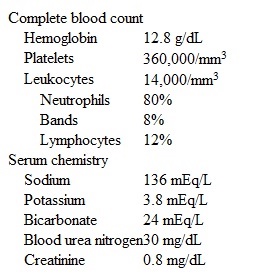 Which of the following is the most appropriate test for confirming this patient's diagnosis?
 (Multiple Choice)
4.9/5 (81)
(81) 
Filters
- Essay(0)
- Multiple Choice(0)
- Short Answer(0)
- True False(0)
- Matching(0)