



 Chat with AI
Exam 2: Foundations of Independent Practice

Exam 1: Advanced Clinical Medicine1 k+ Questions
Exam 2: Foundations of Independent Practice597 Questions
Select questions type


A 34-year-old Caucasian female presents to the emergency department (ED) with a 24-hour history of headaches, myalgias and low-grade fever. She grades the intensity of her headaches as 6-7 on a 10-grade scale, and states that she has never had such symptoms before. She does not know what could have brought these symptoms on. Nobody in her family, or among her co-workers, has recently had similar symptoms. She has no history of recent travel. Her past medical history is significant for an episode of severe pyelonephritis one year ago. CT scan of the head without contrast does not reveal any abnormality. A lumbar puncture is performed, and the CSF findings are as follows: 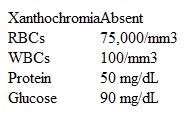 CSF analyses on cryptococcal antigen, Lyme titer, bacterial stains, as well as bacterial cultures, are pending. Which of the following is most consistent with the CSF findings in this patient?
 (Multiple Choice)
4.8/5  (75)
(75) A 28-year-old man comes to the office due to a skin rash on his right cheek. He was exploring caves in central Pennsylvania 2 weeks ago when he sustained a scrape to his cheek from a fallen tree branch. The abrasion improved over a few days, but a red bump appeared at the injury site soon after. The bump gradually enlarged and began to drain a clear fluid with no odor. Two similar bumps then developed near the previous lesion. The patient has had no fever, malaise, cough, or shortness of breath. He does not use tobacco, alcohol, or illicit drugs. Vital signs are within normal limits. A 1.5-cm (0.6-in), erythematous nodule with central ulceration is present at the right jaw line. There is a minimal amount of serous drainage from the lesion. Two smaller erythematous nodules are present in the right anterior cervical area. The cervical lymph nodes are enlarged. The remainder of the physical examination is normal. Which of the following is the most likely diagnosis?
(Multiple Choice)
4.7/5 (74)
(74) A group of researchers wants to investigate an outbreak of acute diarrhea that occurred in a coastal town in northern Massachusetts. Approximately 50 people who were from the town or were visiting the surrounding area had severe hemorrhagic diarrhea, in most cases requiring hospitalization for several days. A fatal case was reported. The researchers believe that the outbreak is related to seafood prepared at one of the coastal restaurants. Which of the following study designs is most appropriate to test this hypothesis?
(Multiple Choice)
4.9/5 (79)
(79) A physician has partnered with a large pharmaceutical company to conduct clinical trials on a new cholesterol-lowering medication. The physician is preparing to travel to a conference where he will be a faculty guest lecturer and present the potential benefits of this new medication to physician attendees. The pharmaceutical company offers to provide him with pre-made presentation slides, reimbursement for travel expenses, and a modest honorarium. According to American Medical Association guidelines for physician behavior, which of the following is appropriate to accept from the pharmaceutical company?
(Multiple Choice)
4.9/5 (81)
(81) A 47-year-old man comes to a homeless shelter clinic due to 2 weeks of skin rash. The patient was recently hospitalized and treated for an infection, but he is unsure of the details. He was diagnosed with HIV 10 months ago and is not on antiretroviral therapy. He also has a history of chronic kidney disease and hypertension. He takes no medication regularly. The patient drinks 1-2 cans of beer daily and does not use tobacco. Temperature is 37.2 C (99.0 F), blood pressure is 120/70 mm Hg, pulse is 80/min, and respirations are 14/min. BMI is 17 kg/m2. Oropharyngeal thrush is present. Cardiopulmonary auscultation reveals clear lung fields, and normal first and second heart sounds without murmur or gallop. The abdomen is soft and nontender. The liver is palpable 3 cm below the costal margin, and mild splenomegaly is present. Neurological examination shows no abnormalities. Multiple small papules with central umbilication are present on the face, neck, trunk, and upper thighs. Some of the lesions have central necrosis and are covered with a hemorrhagic crust. Which of the following is most likely to result in a diagnosis for this patient?
(Multiple Choice)
4.7/5 (83)
(83) A 21-year-old college student is brought to the emergency department by his roommate after he was found carving holes in the walls and ceiling of their dorm room. The patient is agitated and paces in the examination room. He says, "I had no choice. I had to locate and destroy the cameras. I refuse to answer any questions." The roommate has known him for the past year and says, "He seemed like a normal guy, but over the past several months he became withdrawn and started acting strange. He stopped seeing his friends and going to classes, and spent all his time researching government websites. I was getting annoyed with him because he stopped showering and no longer cleaned the room." The roommate does not believe the patient has any other medical problems or known psychiatric history. Temperature is 37.2 C (99 F), blood pressure is 125/85 mm Hg, pulse is 108/min, and respirations are 16/min. Examination shows normal pupils, moist mucous membranes, clear lung fields, and tachycardia. The abdomen is soft and nontender. Bowel sounds are present. There is no rebound tenderness or rigidity. Neurologic examination is within normal limits. Mental state examination is significant for poor eye contact, blank facial expression, and minimal spontaneous speech production. Which of the following would be the most useful test in the diagnostic workup of this patient?
(Multiple Choice)
4.7/5 (56)
(56) Investigators want to explore a possible association between the use of nonsteroidal antiinflammatory drugs (NSAIDs) and the development of Crohn disease. They plan to administer a standardized questionnaire on NSAID use over the past year to patients with newly diagnosed Crohn disease and to age- and sex-matched healthy volunteers. The study design is most concerning for which of the following?
(Multiple Choice)
4.8/5 (82)
(82) A 64-year-old woman with a known history of myasthenia gravis comes to the emergency department with 2 days of fever and worsening headaches and neck pain. She was admitted to another hospital 12 days ago for myasthenic crisis precipitated by urinary tract infection. She was treated with ceftriaxone and intravenous immunoglobulin and discharged home 5 days ago. Her other medical problems include hypertension and type 2 diabetes mellitus. Her medications include metformin, glyburide, hydrochlorothiazide, lisinopril, and mycophenolate. The patient's temperature is 38.3 C (101 F), blood pressure is 110/70 mm Hg, pulse is 92/min, and respirations are 16/min. She is awake and oriented. Moderate neck pain and stiffness are present. She moves all extremities to command and has symmetrical deep-tendon reflexes. The remainder of the examination shows no abnormalities. Laboratory results are as follows: 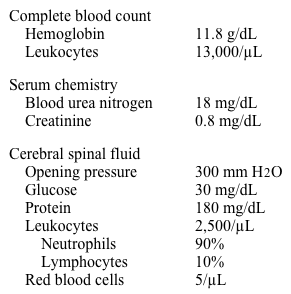 Cerebrospinal fluid Gram stain and culture show no organisms. Cerebrospinal fluid cryptococcal antigen is negative. Computed tomography scan of the head without contrast is normal. Which of the following is the most likely cause of this patient's symptoms?
 (Multiple Choice)
4.8/5 (94)
(94) A 28-year-old man comes to the emergency department due to a 2-day history of polyuria, polydipsia, abdominal pain, nausea, and vomiting. He was diagnosed with primary adrenal insufficiency 6 months ago after developing fatigue and weight loss. The patient was started on hydrocortisone and fludrocortisone at that time, resulting in improvement of symptoms and return to baseline weight. Medical history is otherwise unremarkable. The patient's mother had Graves disease treated with radioiodine, and his sister has hypothyroidism. Family history is negative for diabetes mellitus. The patient does not use tobacco, drinks "a few beers on weekends," and used marijuana occasionally during college. Temperature is 36.9 C (98.4 F), blood pressure is 90/65 mm Hg, pulse is 115/min, and respirations are 22/min. BMI is 22 kg/m2. Oral mucous membranes are dry, and the abdomen shows mild diffuse tenderness with no peritoneal signs. Laboratory results are as follows: 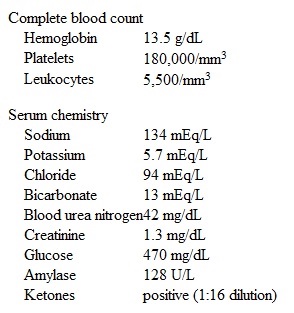 What is the most likely cause of this patient's hyperglycemia?
 (Multiple Choice)
4.8/5 (83)
(83) A 4-hour-old infant is evaluated in the neonatal intensive care unit. The infant was born at 37 weeks gestation via cesarean delivery to a healthy 33-year-old primigravid woman. Apgar scores were 6 and 8, at 1 and 5 minutes, respectively. The delivery was complicated by arrest of descent and nonreassuring fetal heart rate. The mother's laboratory testing from the first prenatal visit demonstrated negative IgG titers to rubella but was otherwise normal. Fetal anatomy ultrasound at 20 weeks gestation showed no abnormalities. The mother traveled to South America at 15 weeks gestation for a family emergency and returned 2 weeks later. She smoked half a pack of cigarettes a day throughout the pregnancy but did not use alcohol or illicit drugs. She declined influenza and tetanus-diphtheria-acellular pertussis vaccines during pregnancy. The infant's vital signs are normal. Height and weight are at the 20th percentile; head circumference is at the 95th percentile. Cardiac examination reveals a normal rate and regular rhythm. Abdominal examination reveals hepatomegaly but no other palpable masses. A head CT scan reveals hydrocephalus and diffuse intracranial calcifications. Which of the following best explains this infant's examination findings?
(Multiple Choice)
4.9/5 (88)
(88) A group of researchers conducted a study to identify risk factors for death after coronary artery bypass graft (CABG) surgery. Individuals who had undergone CABG and who are enrolled in a cohort study represent the source population for the new study. A random sample of 150 of these individuals was selected; they were initially classified as diseased (dead) or nondiseased (alive) based on death following CABG. Diseased and nondiseased subjects were matched for age and gender. The frequency of several risk factors was subsequently compared between the diseased and nondiseased groups. Study results showed that diabetes, cigarette smoking, peripheral vascular disease, lengthy hospitalization, and elevated triglycerides, total cholesterol, C-reactive protein, and high-density lipoprotein cholesterol were significantly associated with death following CABG. Which of the following best describes the study design?
(Multiple Choice)
4.8/5 (89)
(89) A large-scale clinical trial is being planned to evaluate the effect of a nonselective beta blocker, propranolol, on the clinical course of portal hypertension. The comparison is with placebo. The primary outcomes of the study are all-cause mortality and major gastrointestinal hemorrhage. Secondary outcomes are minor gastrointestinal hemorrhage and the number of hospitalizations. Classification of the episodes of gastrointestinal hemorrhage into "major" and "minor" is based on clinical assessment as well as laboratory data such as change in hemoglobin level. The investigators are concerned about the possibility that major gastrointestinal hemorrhage events could be over-reported in the placebo group. Which of the following is the most useful technique to reduce this possibility?
(Multiple Choice)
4.8/5 (83)
(83) A 65-year-old woman comes to the office to discuss the results of bone density testing. She is worried because her 85-year-old mother recently died while recovering from a hip fracture. The patient does not use tobacco or alcohol and gets regular exercise. Her last menstrual period was 13 years ago, and she is not taking any form of hormone replacement therapy. Vital signs and physical examination are within normal limits. BMI is 19 kg/m2. DXA scan reveals a T-score of −1.8 at the lumbar spine and −1.7 at the hip, consistent with osteopenia. In addition to appropriate calcium and vitamin D supplementation, which of the following is the most appropriate next step in management of this patient?
(Multiple Choice)
4.9/5 (74)
(74) A 31-year-old woman, gravida 1 para 1, comes to the office 5 weeks after an uneventful vaginal delivery. She has fatigue, sweating, and heat intolerance. The patient has lost a significant amount of weight, which she believes is expected following delivery. She has had no skin rash, headache, vision changes, or ocular symptoms, and her appetite is normal. The patient is not breastfeeding and states that she "dried out quickly." She has not yet resumed her normal menstruation. The patient's medical history is unremarkable, and her only medication is a daily prenatal vitamin that she continued following her delivery "to maintain her vitamin balance." She quit smoking 10 years ago after smoking for 2 years in college, and she does not drink alcohol or use recreational drugs. The patient's mother has hypothyroidism and celiac disease. Blood pressure is 121/67 mm Hg and pulse is 109/min. Examination shows an enlarged, nontender thyroid gland with no nodules. Ocular examination shows mild lid lag without proptosis. The remainder of the examination is unremarkable. Laboratory results are as follows: 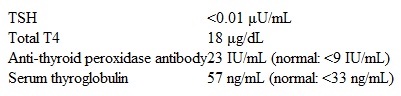 The radioactive iodine uptake in the thyroid gland is 1.5% at 24 hours (normal: 8%-25%). Which of the following is the most likely diagnosis?
 (Multiple Choice)
4.9/5 (83)
(83) A 62-year-old man with a history of dyslipidemia and type 2 diabetes mellitus comes to the emergency department due to severe substernal chest pain and diaphoresis that began 2 hours ago. His ECG shows ST- segment elevation in leads V1 to V4. He is taken to the cardiac catheterization lab and a complete occlusion of the mid-left anterior descending artery (LAD) is diagnosed. A drug-eluting stent is placed in the LAD with complete restoration of flow, and the patient is started on aspirin and clopidogrel. On the third day of hospitalization, the option of adding rivaroxaban is discussed with the patient. He asks about the benefits and risks of the added therapy. Based on the research abstract, which of the following measures would best reflect the net clinical benefit of rivoraxaban?
(Multiple Choice)
4.8/5 (66)
(66) Researchers are interested in further investigating the side effects of a relatively recent hypolipidemic drug. A literature review showed several studies in which patients who took this drug reported severe acute myositis as an adverse event. In many instances, affected patients experienced life-threatening complications from myositis, including rhabdomyolysis leading to acute renal failure and profound electrolyte abnormalities. However, none of these studies documented a statistically significant difference in the occurrence of severe acute myositis between the treatment and placebo groups. Which of the following is the best method to further investigate the association between use of this hypolipidemic drug and development of severe acute myositis?
(Multiple Choice)
4.8/5 (75)
(75) A 39-year-old woman comes to the emergency department with substernal chest pressure and palpitations. She was diagnosed with systemic lupus erythematosus 7 years ago and has had renal involvement. The patient was recently discharged from the hospital for an exacerbation of lupus nephritis. Her medications include prednisone and hydroxychloroquine. She does not use tobacco, alcohol, or illicit drugs. Her temperature is 37.2 C (99 F), blood pressure is 150/90 mm Hg, pulse is 128/min, and respirations are 26/min. During her visit to the emergency department, she sustains cardiac arrest with documented ventricular fibrillation and expires despite resuscitative efforts. Which of the following is the most likely cause of her death?
(Multiple Choice)
4.9/5 (77)
(77) 
Filters
- Essay(0)
- Multiple Choice(0)
- Short Answer(0)
- True False(0)
- Matching(0)