



 Chat with AI
Exam 1: Advanced Clinical Medicine

Exam 1: Advanced Clinical Medicine1 k+ Questions
Exam 2: Foundations of Independent Practice597 Questions
Select questions type


A 56-year-old woman was found to have a TSH level of 0.2 μU/mL on routine laboratory testing. She has had no symptoms suggestive of thyrotoxicosis. She reports good energy level and no change in body weight. The patient has mild hypertension, for which she is on hydrochlorothiazide. Family history is negative for any thyroid disorder. She does not use tobacco or alcohol. She does not have allergies to any medications. The patient had her menopause about 3 years ago. She has never received hormone replacement therapy. She takes adequate amounts of calcium and vitamin D supplementation. Bone mineral density using dual photon absorptiometry was within normal range about 6 months ago. Examination is unremarkable, including examination of the thyroid gland. Free T4 levels and free T3 are well within normal limits. What is the next best step in this patient's care?
(Multiple Choice)
4.8/5  (68)
(68) A 25-year-old Caucasian man comes to see you in the office because of persistent "lumps" in the neck. He recalls an episode of marked fatigue, fever, pharyngitis, and generalized lymphadenopathy about
8-10 weeks ago, when he was diagnosed with infectious mononucleosis. Most of his symptoms except the neck "lumps" resolved completely in two weeks. On physical examination, he has three anterior cervical lymph nodes, the largest being 2 cm x 2 cm in size. They are mobile and have a firm rubbery consistency. The patient denies any associated symptoms, and the rest of his physical examination is unremarkable. Which of the following is the most appropriate next step in the management of this patient?
(Multiple Choice)
4.8/5 (81)
(81) A 50-year-old obese man comes to the emergency department with toe pain. He awoke this morning with sudden severe pain in his left great toe. He has never had this type of pain before and has had no trauma to the toe. The patient has a history of hypertension treated with hydrochlorothiazide. He also has osteoarthritis in his right knee that was treated with an intraarticular steroid injection 6 months ago. He smokes a pack of cigarettes and drinks 1 or 2 glasses of wine daily. His temperature is 36.7 C (98.1 F), blood pressure is 130/80 mm Hg, pulse is 88/min, and respirations are 12/min. The patient's left great toe is inflamed, with swelling and erythema at the metatarsophalangeal joint. There is pain with minimal range of motion. There are no skin rashes. The remainder of the examination is within normal limits.
Which of the following is the best next step in confirming the diagnosis?
(Multiple Choice)
4.7/5 (89)
(89) A 20-year-old woman, gravida 1 para 0, at 12 weeks gestation comes to the office for routine prenatal care during the fall season. She has mild nausea, which she controls with vitamin B supplementation, but no abdominal pain or vaginal bleeding. The patient has no chronic medical conditions or previous surgeries. She takes a daily prenatal vitamin. She is currently in a monogamous relationship and has had 1 partner previously. The patient does not use tobacco, alcohol, or illicit drugs. She did not receive any routine childhood vaccinations but does not object to vaccination. She plans to start taking college courses in the next few years. The patient has no known allergies. Blood pressure is 120/70 mm Hg and pulse is 65/min. BMI is 23 kg/m2. The fetal heart rate is 150/min by bedside Doppler ultrasonography. Initial prenatal laboratory results are as follows: 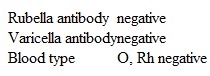 Which of the following preventive vaccines is most appropriate for this patient at this visit?
 (Multiple Choice)
4.8/5 (86)
(86) A 31-year-old man with diabetes comes to the emergency department with abdominal discomfort, nausea, and vomiting. He has not felt well for the past 2 days and has had intractable vomiting. The patient stopped taking his regular dose of insulin as he was unable to "hold anything down." His initial laboratory results are positive for serum ketones and show blood glucose of 360 mg/dL. In the emergency department, he is started on intravenous normal saline with potassium and a continuous insulin infusion. Five hours after his admission to the intensive care unit, he feels better. Laboratory results are as follows:
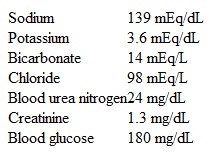 Which of the following is the best next step in management of this patient?
 (Multiple Choice)
4.9/5 (72)
(72) A 63-year-old man with Parkinson disease, hypertension, and a history of depression returns to the office accompanied by his wife. His current medications include amantadine and carbidopa/levodopa, to which he has responded well, in contrast to his insufficient response to previous medications prescribed for Parkinson disease. During his last visit, his dosage of carbidopa/levodopa was increased to target continued shuffling gait, rigidity, and frequent falls. The patient's wife says that initially he did very well after the recent dosage increase. They were able to partake in more social activities, dine out, and visit with friends, and the patient's falls became far less frequent. However, over the past week, she has become increasingly concerned about his behavior. He has become more withdrawn and started to avoid his friends. The patient falsely accused her of infidelity and suddenly refused to see his son, saying, "All he wants is to get his hands on my money." He also called the police on several occasions because he reported seeing strangers in his bedroom. The patient is afebrile; blood pressure is 114/76 mm Hg and pulse is 64/min. Physical examination shows mild rigidity and tremor, which have improved since his last visit. The remainder of the examination is unremarkable. He shows no signs of dementia, delirium, or infection. Which of the following medication adjustments would be most appropriate in management of this patient?
(Multiple Choice)
4.8/5 (91)
(91) A 25-year-old woman, gravida 1 para 0, at 8 weeks gestation comes to the emergency department due to nausea and vomiting. The patient has had nausea and vomiting once or twice a day for the past 2 weeks; today, she has vomited 3 times, but has been able to tolerate liquids and small snacks. She has no fever, chills, diarrhea, or sick contacts. The patient has had no vaginal bleeding, dysuria, or abdominal pain. She has gastroesophageal reflux disease, and has been following a diet of small, frequent, bland meals. The patient takes a daily prenatal vitamin and H2 receptor antagonist. Temperature is 36.7 C (98.1 F), blood pressure is 100/60 mm Hg, and heart rate is 80/min. Weight is 50 kg (110.2 lb), a 0.8-kg (1.8-lb) increase from her prepregnancy weight. Mucous membranes are moist. Cardiac examination shows a regular rate and rhythm with no murmurs. The abdomen is soft, nontender, and nondistended. Serum electrolytes are normal. Urine dipstick is negative for ketones. Transvaginal ultrasound reveals an intrauterine pregnancy with cardiac activity at 160/min, and a crown-rump length consistent with an 8-week gestation. Which of the following is the most appropriate management for this patient?
(Multiple Choice)
4.8/5 (71)
(71) A 40-year-old man comes to the office with concern of HIV infection. The patient had unprotected anal intercourse with a new partner during a business trip a month ago. A few days after the encounter, the patient learned that the partner was HIV positive. The patient immediately visited an urgent care clinic and was tested for HIV using a combination p24 antigen/HIV-antibody immunoassay. Although the test was negative and he has no symptoms, the patient feels anxious about the possibility of infection. He has no prior medical problems and takes no medication. The patient drinks alcohol on social occasions but does not use tobacco or illicit drugs. Temperature is 37.1 C (98.8 F), blood pressure is 130/70 mm Hg, and pulse is 80/min. No oropharyngeal erythema, exudate, or ulcers are present. Lung auscultation is unremarkable and heart sounds are normal. The abdomen is soft and nontender with no organomegaly. Bowel sounds are normal. No anal ulcers are present and genital examination is normal. Repeat testing for HIV antigen and antibody is positive. The patient's CD4+ count is 320/mm3 and serum HIV RNA (viral load) is 500,000 copies/mL. The risks and benefits of antiretroviral therapy are discussed, and the decision is made to initiate treatment. In addition to genotypic drug-resistance testing, what additional laboratory test should be obtained before initiating antiretroviral therapy?
(Multiple Choice)
4.9/5 (75)
(75) A 65-year-old woman is brought to the emergency department by her son. The patient lives alone and works as a librarian. The son became concerned 2 days ago when "she didn't sound right and seemed somewhat confused over the phone." When he arrived at her home this morning, the patient was disoriented and her speech was slurred. Medical history is significant for diabetes mellitus controlled with metformin. The son says that a "mood disorder" runs in the family and that she has taken lithium, escitalopram, and risperidone for the past several years. A month ago, the patient was diagnosed with hypertension and arthritis, and treatment with chlorthalidone and acetaminophen was initiated. She does not use tobacco, alcohol, or illicit drugs. Temperature is 36.1 C (97 F), blood pressure is 150/90 mm Hg, pulse is 52/min, and respirations are 16/min. Physical examination shows coarse hand tremor and an unstable gait. The patient is oriented to person but not to time or place. The patient's lithium level was found to be 4.2 mEq/L (normal: <1.5 mEq/L). Which of the following is the most effective management strategy?
(Multiple Choice)
4.9/5 (73)
(73) A 65-year-old woman is brought to the emergency department by paramedics after falling on a snow-covered sidewalk. The patient fell backward onto her hands while trying to maintain her balance and immediately felt a sharp, excruciating pain in her right arm. She also notes mild tenderness and bruising on the right flank and right buttock. The patient has a history of osteoporosis and hypertension and takes valsartan, alendronate, and a vitamin D supplement. She does not use tobacco, alcohol, or illicit drugs. In the emergency department, radiograph reveals a displaced fracture of the right distal radius. The patient is admitted to the hospital and undergoes open reduction and internal fixation of the radius fracture. On postoperative day 2, she reports severe, constant, burning pain over her right flank. The postsurgical pain in the right arm is mild and well controlled with low-dose morphine as needed. Temperature is 37.8 C (100 F), blood pressure is 145/84 mm Hg, pulse is 97/min, and respirations are 16/min. Mucous membranes are moist and the oropharynx is without lesions. Cardiopulmonary auscultation reveals clear lungs and normal heart sounds. The abdomen is soft, nontender, and nondistended. The right flank is tender to light touch with a rash over the area, as shown in the exhibit. 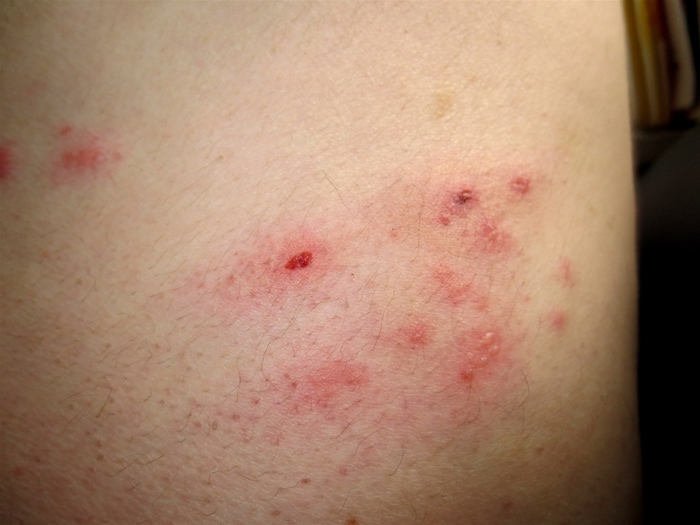 The surgical wound is healing normally without signs of infection. The patient has an otherwise uncomplicated postoperative course and is ready for discharge. Her skin lesions are partially crusted, and she will continue oral valacyclovir as an outpatient. The patient plans to host a small family dinner tonight and is concerned about the risk of disease transmission. There will be no infants, pregnant women, or immunocompromised individuals at this gathering. Which of the following is the most appropriate recommendation for this patient?
 (Multiple Choice)
4.9/5 (82)
(82) A 46-year-old man with type 2 diabetes mellitus is scheduled for cardiac catheterization in 2 days for undiagnosed, episodic chest pain. For 15 days, the patient has had retrosternal chest pain radiating to his arm, and it is becoming more frequent. He went to the emergency department 7 days ago due to chest pain. The patient was admitted for overnight observation but left against medical advice. Three sets of cardiac enzymes tests were negative, and his ECG showed nonspecific ST-T changes. He has a history of hypertension, a 6-year history of diabetes mellitus, and does not check his blood glucose levels regularly. Medications include metformin and lisinopril. At his last emergency department visit, laboratory results (chemistry profile and complete blood count) were normal, and he was started on low-dose aspirin. He has a long smoking history, and uses alcohol occasionally. The patient has a strong family history of premature coronary artery disease. Today, blood pressure is 127/70 mm Hg and pulse is 66/min. BMI is 30 kg/m2. The remainder of the examination is within normal limits. Which of the following is the best next step in management of this patient?
(Multiple Choice)
4.9/5 (71)
(71) A 47-year-old-man comes to the physician for a lesion on his foot. He has a 2-month history of an enlarging, painful, and thickened papule on the plantar surface of his left great toe. The patient attempted treatment for 2 weeks with a "corn pad" without relief. He has no prior history of similar lesions, and his past medical history is unremarkable. 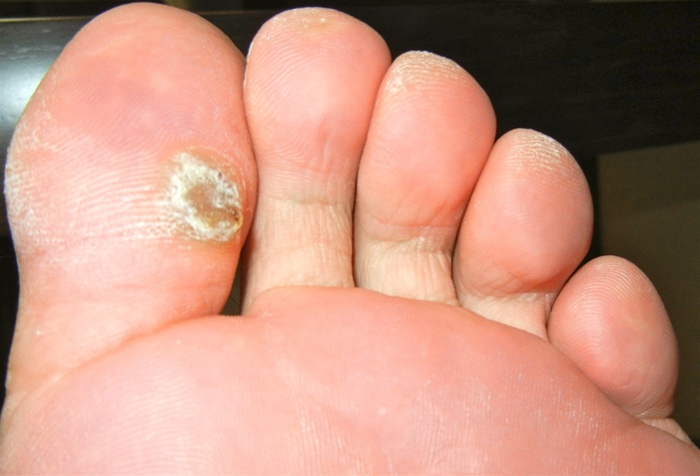 The patient returns in 10 days and has only partial improvement in the size of the lesion. Which of the following is the most appropriate advice for this patient?
 (Multiple Choice)
4.7/5 (88)
(88) A 30-year-old Caucasian female presents to your office for a routine check-up. Her past medical history is insignificant. She does not smoke, and consumes 1-2 bottles of beer on weekends. She is sexually active with her boyfriend and takes oral contraceptives. She also takes one multivitamin tablet daily. The physical examination reveals several 3-4 mm warty projections on the posterior wall of her vagina that turn white on acetic acid application. The patient denies ever having any sexually transmitted disease, but she describes having scant vaginal discharge, which she did not pay much attention to. She wants to know what the most probable cause of her problem is.
Which of the following is the best initial management option for this patient?
(Multiple Choice)
5.0/5 (89)
(89) A 16-year-old male comes to your office for a routine check-up. He was diagnosed with asthma six months ago and started on inhaled corticosteroids as well as an albuterol inhaler as needed. He reports a modest improvement in his symptoms using this regimen. He has no complaints currently. Physical examination reveals white plaques on his buccal mucosa that can be scraped off, leaving hyperemic spots. The lungs are clear on auscultation. Which of the following is the best initial therapy for the oral lesion?
(Multiple Choice)
4.9/5 (77)
(77) A 23-year-old nulligravid woman comes to the office for evaluation of dyspareunia. The patient reports a year-long history of increasing dyspareunia and has not been sexually active for the last 3 months due to pain on penetration. The pain is deep in the pelvis and becomes intolerable, causing her to become tense during intercourse. The pain is not relieved with water-based lubricants. The patient became sexually active at age 19 and has had 4 lifetime partners. She had gonococcal cervicitis at age 20. She has no chronic medical conditions and has never had surgery. Menarche was at age 14 and menstrual periods are regular. The patient has painful cramping with menses that requires nonsteroidal anti-inflammatory drugs for the first 3 days of her menstrual period as well as the day prior. She does not use tobacco, alcohol, or illicit drugs. Temperature is 36.7 C (98 F), blood pressure is 110/80 mm Hg, and pulse is 76/min. BMI is 22 kg/m2. Pelvic examination reveals normal external genitalia with no tenderness to palpation. The cervix has no lesions and no discharge. There is mild tenderness on bimanual examination of the uterus; no adnexal masses are palpated. Transvaginal ultrasound reveals a small, anteverted uterus with no adnexal masses. Which of the following is the best next step in management of this patient?
(Multiple Choice)
4.9/5 (72)
(72) A 36-year-old woman, gravida 1 para 0, at 10 weeks gestation comes to the office for her initial prenatal visit. The patient has had mild nausea throughout the pregnancy but can tolerate small meals. She reports no vaginal bleeding or cramping. The patient's partner has a history of male factor infertility due to low sperm count; this pregnancy is the result of an intrauterine insemination. She has no chronic medical conditions or previous surgeries. The patient has no history of abnormal Pap testing; her last Pap test was 2 years ago. She has a history of gonococcal cervicitis at age 23 but there was no evidence of tubal blockage during her infertility evaluation. The patient takes a prenatal vitamin, folic acid, and vitamin B6 daily. She works as a high school history teacher and volleyball coach. Family history is noncontributory. The patient does not use tobacco, alcohol, or illicit drugs. Blood pressure is 98/60 mm Hg and pulse is 74/min. BMI is 23 kg/m2. Cardiopulmonary examination is unremarkable. Pelvic examination reveals normal external genitalia, minimal physiologic cervical discharge throughout the vaginal vault, and a cervix with no lesions or friability. Bimanual examination reveals a retroverted uterus. Transvaginal ultrasound shows an intrauterine pregnancy with cardiac activity; crown-rump length is consistent with gestational age. In addition to routine prenatal laboratory testing, which of the following should be offered to this patient today?
(Multiple Choice)
4.8/5 (83)
(83) A 56-year-old, previously healthy man is admitted to the intensive care unit for acute respiratory distress syndrome due to viral pneumonia. The patient requires prolonged mechanical ventilation with deep sedation, prone positioning, and paralytic agents. He develops hypoactive delirium, which slowly improves with sedation washout. After 7 days, the patient is successfully extubated and discharged to a skilled rehabilitation center. A week later, he is participating in daily physical therapy. The patient requires 2-person assistance to stand due to diffuse weakness. He has been irritable and confused in the evenings and is prescribed zolpidem to assist with sleep. Montreal Cognitive Assessment score is 25/30, with deficits in attention and memory. Neurologic examination reveals flattened affect and mild psychomotor retardation. He is on extended sick leave from his job as an air traffic controller. Which of the following statements best represents this patient's long-term prognosis?
(Multiple Choice)
5.0/5 (84)
(84) A 16-year-old boy is brought to the emergency department due to severe abdominal pain. He was playing soccer an hour ago when he suddenly developed left upper quadrant pain. The pain is sharp and constant and makes it difficult for him to take deep breaths. The patient has been otherwise healthy except for several days of fever, sore throat, and fatigue 2 weeks ago. He takes no daily medications, and immunizations are up to date. Temperature is 37.2 C (99 F), blood pressure is 86/58 mm Hg, pulse is 122/min, and respirations are 24/min. Pulse oximetry is 96% on room air. Physical examination shows an uncomfortable-appearing adolescent. The lungs are clear to auscultation, and heart sounds are normal. The abdomen is soft, with left upper quadrant rebound tenderness. Which of the following is the best next step in management of this patient?
(Multiple Choice)
4.8/5 (70)
(70) A 15-year-old boy is brought to the office by his father due to concerns about changes in his behavior. The father says, "My son just sits in his room for hours. He quit the basketball team and gets annoyed with his older brothers for no reason. He seems less motivated to do well in school and doesn't seem to care about anything. His mother is upset because he doesn't listen and has started talking back to her. He has never been defiant like this before. He won't talk to me and I am concerned that he might be using drugs." When seen alone, the patient reports that he would rather stay in his room as he does not enjoy going out, because it is "boring." He says he is not using drugs, adding, "I have never done that stuff." He reports getting tension-like headaches a few times a week for the last year but has no other physical concerns. Physical examination is normal. Which of the following is the best next step in management of this patient?
(Multiple Choice)
4.9/5 (77)
(77) A 67-year-old woman is evaluated in the intensive care unit for neck swelling. An hour ago, the patient was admitted to the ICU for treatment of pyelonephritis complicated by septic shock and disseminated intravascular coagulation. A central line catheter was placed in the right internal jugular vein. The insertion was difficult, requiring multiple attempts. X-ray after placement revealed the catheter to be in a good position. Over the past 30 minutes, she has developed swelling at the site of the catheter and a feeling of tightness in her neck. She also feels her voice is changing. On examination, there is ballotable swelling under the site of the catheter with surrounding ecchymosis, and the trachea is deviating to the left. The voice sounds hoarse. Which of the following is the most appropriate next step in management of this patient?
(Multiple Choice)
4.9/5 (87)
(87) Showing 161 - 180 of 1121

Filters
- Essay(0)
- Multiple Choice(0)
- Short Answer(0)
- True False(0)
- Matching(0)