



 Chat with AI
Exam 10: Pathology

Exam 1: Anatomy291 Questions
Exam 2: Behavioral science240 Questions
Exam 3: Biochemistry156 Questions
Exam 4: Biostatistics117 Questions
Exam 5: Embryology52 Questions
Exam 6: Genetics103 Questions
Exam 7: Histology24 Questions
Exam 8: Immunology129 Questions
Exam 9: Microbiology336 Questions
Exam 10: Pathology816 Questions
Exam 11: Pathophysiology464 Questions
Exam 12: Pharmacology538 Questions
Exam 13: Physiology272 Questions
Select questions type


A 44-year-old man comes to the office due to several weeks of difficulty walking and frequent falls. He has had no headache or visual impairment but reports episodes of sharp, stabbing pain in his extremities. The patient has HIV acquired from unprotected sexual contact and is nonadherent with treatments. Temperature is 37 C (98.6 F). Neurologic examination shows 5/5 motor power in all extremities. Deep-tendon reflexes are absent at the knee and ankle bilaterally. Proprioception and vibration sensation are reduced throughout the lower extremities. He has a wide-based gait and a positive Romberg sign. Which of the following diagnostic findings is most likely associated with this patient's current symptoms?
(Multiple Choice)
4.9/5  (81)
(81) A 59-year-old woman comes to the office due to fatigue and generalized itching that have developed slowly over the last year. She has not had a visible rash. The patient is reluctant to seek health care and has not seen a physician in years. She does not use tobacco, alcohol, or illicit drugs. Vital signs are normal. Examination shows mild hepatomegaly. Laboratory studies show a striking increase in serum alkaline phosphatase, with moderate elevations in bilirubin and hepatic transaminases. Liver biopsy reveals dilated bile canaliculi with green-brown plugs and yellowish-green accumulations of pigment within the hepatic parenchyma. The patient does not return for her scheduled follow-up appointment to discuss further management. This patient is at risk for developing which of the following complications?
(Multiple Choice)
4.9/5 (88)
(88) A 40-year-old man comes to the office due to recurrent epigastric abdominal pain, nausea, and watery diarrhea for the past several months. The patient has had similar burning pain previously and was treated for peptic ulcer disease. He has been taking over-the-counter antacids but with no significant symptom relief. The patient does not use tobacco, alcohol, or illicit drugs. Vital signs are within normal limits. Abdominal examination shows mild epigastric tenderness and increased bowel sounds. Testing for stool occult blood is positive, and laboratory studies show microcytic hypochromic anemia. Serum gastrin level is markedly elevated. Upper gastrointestinal endoscopy reveals prominent gastric folds and multiple ulcers in the duodenum and proximal jejunum. Given these findings, this patient should be assessed for a personal or family history of which of the following conditions?
(Multiple Choice)
4.9/5 (75)
(75) A 31-year-old woman, gravida 3 para 2, at 28 weeks gestation comes to the office for a prenatal visit. She has chronic hypertension that has been well controlled during this pregnancy. At the patient's previous prenatal visits, her blood pressure ranged from 120/70 to 130/80 mm Hg. Today, her blood pressure is 150/100 mm Hg and repeat is 152/98 mm Hg. Fundal height is 24 cm. Urinalysis shows 2+ protein. A transabdominal ultrasound reveals oligohydramnios and a fetus with growth restriction. Compared to normal placental parameters, this patient most likely has which of the following hemodynamic changes?
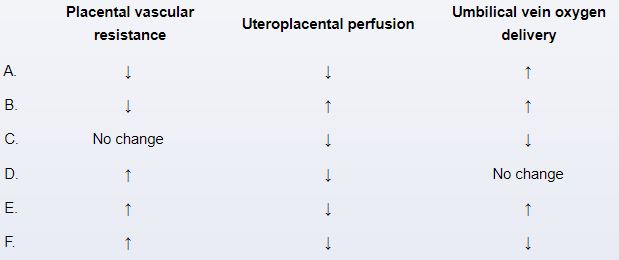
(Multiple Choice)
4.8/5 (80)
(80) A 12-year-old boy is brought to the clinic because of facial puffiness. Examination shows periorbital edema. Urinalysis reveals: 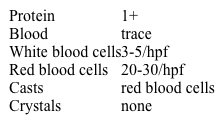 A biopsy image representative of this patient's disease process is shown below.
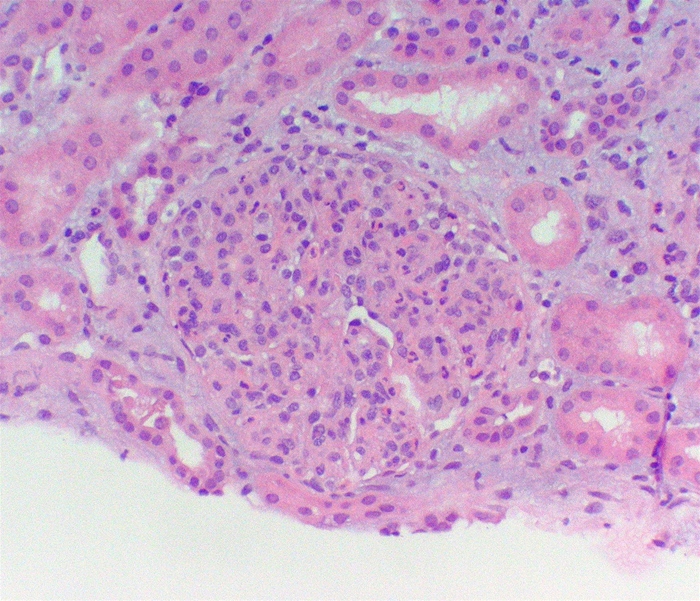 Which of the following additional findings is most likely to be present in this patient?
A biopsy image representative of this patient's disease process is shown below. Which of the following additional findings is most likely to be present in this patient? (Multiple Choice)
4.8/5 (75)
(75) A 38-year-old man comes to the office due to a 2-month history of an enlarging, localized swelling on the left foot. Tying his shoelaces too tight leads to localized pain and numbness in the third and fourth toes. Examination shows a firm, nontender, well-circumscribed lesion on the dorsum of the foot as shown in the exhibit. 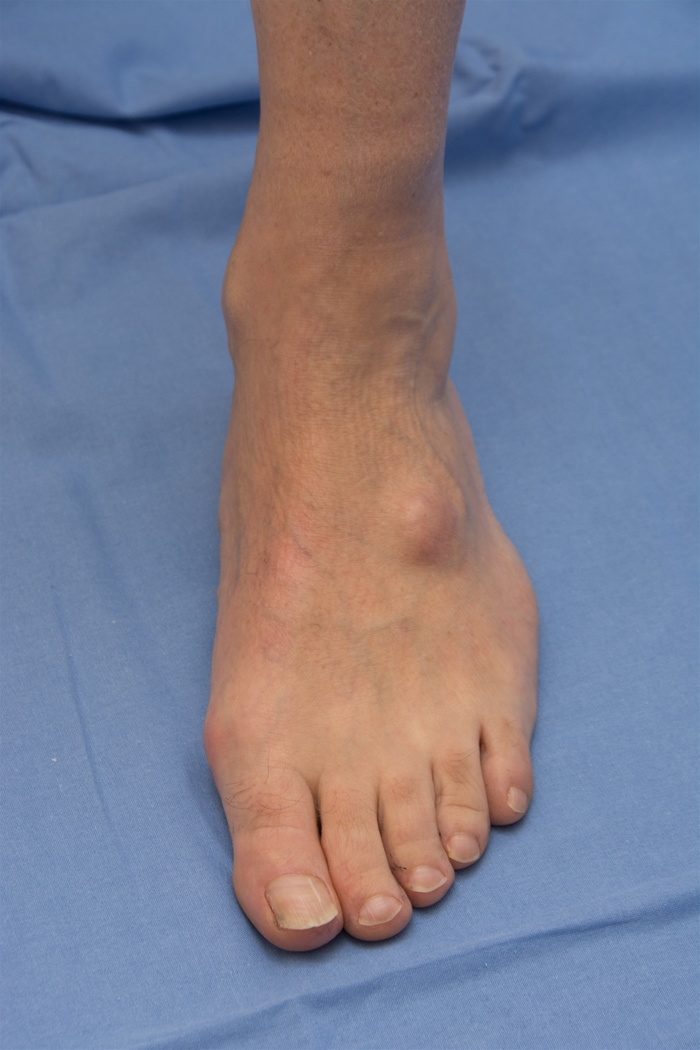 The lesion transilluminates when a penlight is applied to it. Without treatment, which of the following is most likely to occur in this patient?
 (Multiple Choice)
4.8/5 (78)
(78) A 38-year-old woman suddenly collapses at home after experiencing severe chest pain and dies before reaching a hospital. Postmortem examination reveals an occluding thrombus overlying a ruptured atherosclerotic plaque on the left anterior descending artery. The patient is also found to have thickened mitral valve leaflets with multiple small vegetations on both valvular surfaces and fibrinoid necrosis of arterioles. Other findings include glomerular capillary basement membrane thickening with wire-loop changes. This patient was most likely suffering from which of the following conditions?
(Multiple Choice)
4.9/5 (90)
(90) A 53-year-old man comes to the office due to an 8-month history of progressive shortness of breath that peaks during strenuous activity. Several of his coworkers have experienced similar symptoms. His medical history includes hypertension and type 2 diabetes mellitus. Pulmonary examination reveals diffuse fine crackles. Chest x-ray reveals nodular densities in both lungs that are most prominent in the apical regions. Calcification of the hilar lymph nodes is also seen. Bronchoscopy with transbronchial biopsy of a calcified node is performed, and polarized microscopy shows birefringent particles surrounded by dense collagen fibers. This patient most likely has a history of exposure to which of the following substances?
(Multiple Choice)
4.8/5 (80)
(80) A 72-year-old woman comes to the emergency department due to bloody bowel movements. One hour ago, the patient had a sudden urge to defecate and passed a large amount of bright red blood mixed with stool. Several minutes later, she had another episode with a small amount of blood. The patient reports no nausea, vomiting, abdominal pain, diarrhea, or fever and never had such symptoms before. She is hospitalized but has no further bleeding. Physical examination, including a digital rectal examination, is unremarkable. A colonoscopy performed after bowel preparation reveals the findings in the exhibit. 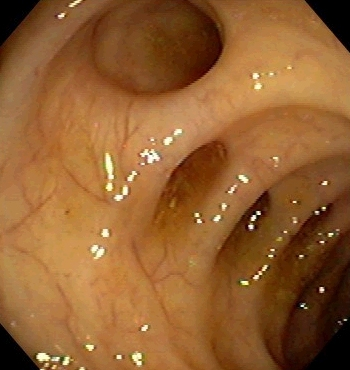 There are no other abnormalities. Which of following is the most likely source of this patient's bleeding?
 (Multiple Choice)
4.7/5 (76)
(76) A 30-year-old woman comes to the office due to a facial rash for the past 3 weeks. The rash worsens with sun exposure, and she has tried several topical sunscreens without relief. The patient also reports easy fatigability and occasional pain and swelling of her hand joints. Past medical history is notable for mild cervical dysplasia that was diagnosed at age 21 and resolved spontaneously. The patient does not use tobacco, alcohol or illicit drugs. Blood pressure is 140/85 mm Hg and pulse is 78/min. Physical examination reveals mucosal pallor, a superficial ulcer on the hard palate, and a rash as shown in the image below. Cardiopulmonary and abdominal examinations are normal. 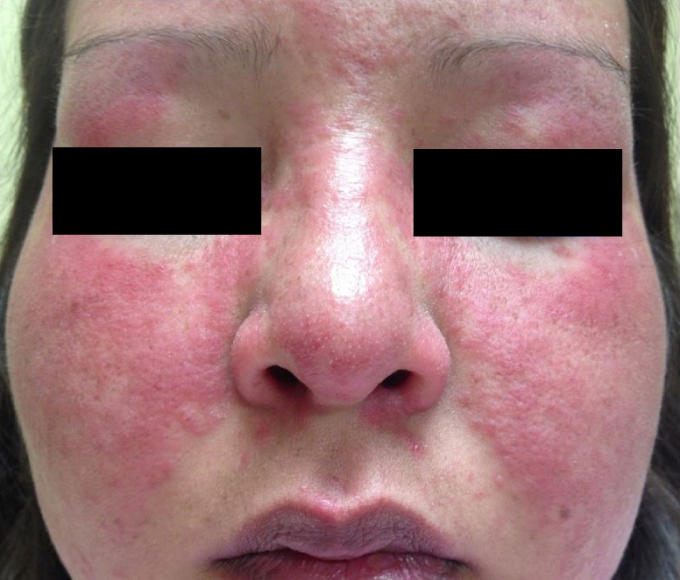 Which of the following laboratory findings is most likely to be seen in this patient's condition?
 (Multiple Choice)
4.9/5 (84)
(84) A 27-year-old man comes to the emergency department due to acute-onset chest pain and shortness of breath. The pain started suddenly an hour ago while he was lifting a box of books. The patient has no chronic medical conditions, and he was in his usual state of health prior to the onset of symptoms. He does not use tobacco, alcohol, or illicit drugs. Height is 182 cm (71.7 in) and weight is 72 kg (158.7 lb). On physical examination, the patient is in acute respiratory distress. Temperature is 37 C (98.6 F), blood pressure is 90/60 mm Hg, pulse is 120/min and regular, and respirations are 26/min. Pulse oximetry shows 86% saturation on room air. Cardiopulmonary examination reveals pectus excavatum, bilateral pulmonary crackles, and a decrescendo diastolic murmur at the right upper sternal border. The abdomen is soft and nontender. There is no peripheral edema. Subsequently, the patient develops cardiac arrest and dies. Which of the following histologic changes is most likely to be seen on autopsy?
(Multiple Choice)
4.7/5 (81)
(81) A 15-year-old boy is brought to the office by his mother due to difficulty with movement. The patient enjoys playing high school basketball but had to leave the team this year due to his progressively worsening symptoms. On examination, he is found to have significant kyphoscoliosis and a high plantar arch. His older brother suffered from a neurologic disorder and died of heart failure at age 25. This patient most likely has which of the following neuropathologic findings?
(Multiple Choice)
4.9/5 (71)
(71) A 53-year-old woman comes to the office due to progressive distension and tightness in her right lower extremity for the past year. She has had no shortness of breath, fever, or skin rash. The patient was diagnosed with melanoma of the right thigh approximately 2 years ago and underwent surgical resection. Two of her inguinal lymph nodes tested positive for metastasis, and she subsequently underwent inguinal lymphadenectomy and received adjuvant therapy. Recent imaging revealed no evidence of recurrent malignancy. The patient's medical history also includes hypertension and hyperlipidemia. Vital signs are within normal limits. Physical examination shows clear lungs and normal heart sounds without murmurs or gallops. No jugular venous distension is present. The right lower extremity is significantly larger in diameter than the left. Edema is present up to the thigh, with mild skin indentation after application of pressure. The skin overlying the involved area is thickened and dry. Laboratory testing, including complete blood count, serum metabolic panel, and urinalysis, is within normal limits. Treatment of this patient's symptoms should include which of the following strategies?
(Multiple Choice)
4.8/5 (90)
(90) A 65-year-old man with a long history of smoking comes to the office due to a nonproductive cough over the last several months. He recently developed left shoulder pain, persistent hiccups, and dyspnea. His temperature is 36.7 C (98 F), blood pressure is 140/85 mm Hg, and pulse is 76/min. Physical examination reveals decreased breath sounds on the left side. Chest x-ray shows a large left lung mass. Compression of a nerve arising from which of the following locations is most likely causing this patient's recent symptoms?
(Multiple Choice)
4.9/5 (90)
(90) An 8-month-old boy is brought to clinic due to abdominal distension. The patient has had excessive straining and irritability with bowel movements since birth. He had been exclusively breastfed, and his symptoms worsened after transitioning to pureed foods. Vital signs are normal. Abdominal examination shows distension with mild tenderness to palpation. Bowel sounds are present, and there is no hepatosplenomegaly. Barium enema shows a relatively narrow rectum and rectosigmoid area. The rest of the colon proximal to this segment is significantly dilated. Colorectal biopsy of which of the following areas is most likely to reveal the underlying cause of this patient's condition?
(Multiple Choice)
4.9/5 (73)
(73) A 34-year-old woman comes to the clinic due to a mass in her right breast. The patient noticed the mass last week while in the shower. She has no chronic medical conditions and takes no daily medications. A 2-cm nodule is noted on examination of the right breast, and the patient is referred for biopsy. Histologic evaluation of the tissue specimen is shown in the image below: 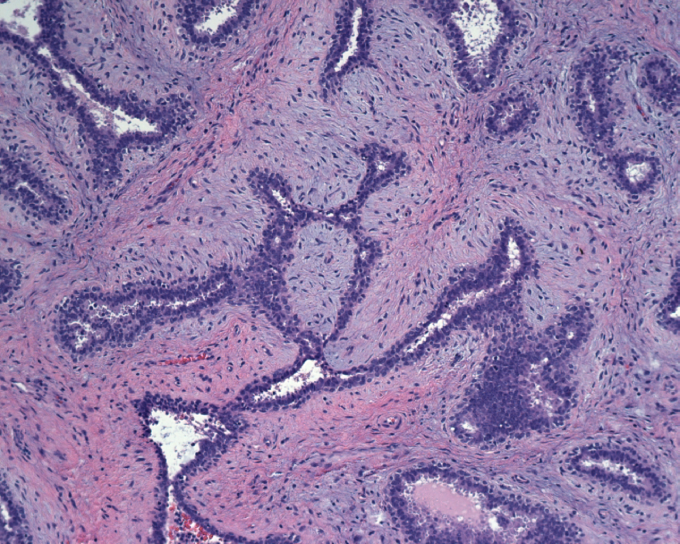 Which of the following is the most likely diagnosis?
 (Multiple Choice)
4.9/5 (93)
(93) A 34-year-old man is evaluated for elevated liver aminotransferases. The patient has no chronic medical conditions but has a history of injection drug use. Family history is notable for liver cirrhosis in his mother. Ultrasonography-guided liver biopsy is performed. Histopathology demonstrates marked panlobular mononuclear cell infiltration that cross into adjacent lobules. Occasional intensely eosinophilic round bodies are seen scattered amongst the hepatic parenchyma. Which of the following is the most likely cause of the latter histopathological finding in this patient?
(Multiple Choice)
4.9/5 (91)
(91) A 48-year-old man comes to the emergency department due to 3 days of progressively worsening retrosternal burning chest pain, dysphagia, and odynophagia. His medical problems include hypertension and end-stage renal disease. He underwent cadaveric renal allograft transplantation 8 months ago. The patient's temperature is 38.3 C (101 F), blood pressure is 130/80 mm Hg, and pulse is 94/min. His BMI is 31 kg/m2. The oral mucosa is pink and moist without ulcerations. Cardiopulmonary examination is normal. The abdomen is soft with mild epigastric tenderness. The patient's leukocyte count is 4,200/mm3. An esophagogastroduodenoscopy demonstrates linear, shallow ulcerations in the lower esophagus. Which of the following is most likely to be seen on esophageal biopsy?
(Multiple Choice)
4.9/5 (94)
(94) A 32-year-old man comes to the office due to progressive fatigue, easy bruising, and recurring episodes of gum bleeding. Physical examination shows several ecchymoses in his lower extremities. Laboratory studies are as follows: 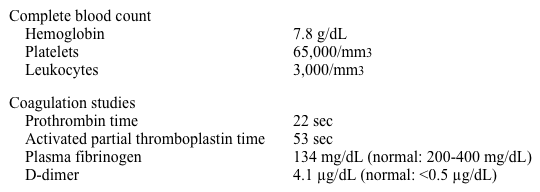 Bone marrow biopsy is performed and fluorescence in situ hybridization studies reveal a balanced translocation between the long arms of chromosomes 15 and 17. Which of the following proteins is most likely to be abnormal in the hematopoietic cells of this patient?
 (Multiple Choice)
4.8/5 (76)
(76) A 58-year-old woman comes to the office due to a week of pain with swallowing. Her symptoms have progressively worsened, and now she cannot eat comfortably. The patient has a history of hypertension, osteoporosis, and primary biliary cholangitis progressing to cirrhosis. She underwent a liver transplant 2 years ago and is on immunosuppressive therapy. She does not use tobacco, alcohol, or illicit drugs. Vital signs are within normal limits. The oropharynx is normal in appearance. Cardiopulmonary examination is unremarkable. The patient has epigastric tenderness with no abdominal distension or guarding. Upper endoscopy shows several small esophageal ulcerations with distinct borders located in the middle and lower portions of the esophagus. A biopsy taken at the edge of an ulcer shows giant cells and intranuclear eosinophilic inclusions. Which of the following is the most appropriate treatment for this patient?
(Multiple Choice)
4.8/5 (84)
(84) 
Filters
- Essay(0)
- Multiple Choice(0)
- Short Answer(0)
- True False(0)
- Matching(0)