



 Chat with AI
Exam 10: Pathology

Exam 1: Anatomy291 Questions
Exam 2: Behavioral science240 Questions
Exam 3: Biochemistry156 Questions
Exam 4: Biostatistics117 Questions
Exam 5: Embryology52 Questions
Exam 6: Genetics103 Questions
Exam 7: Histology24 Questions
Exam 8: Immunology129 Questions
Exam 9: Microbiology336 Questions
Exam 10: Pathology816 Questions
Exam 11: Pathophysiology464 Questions
Exam 12: Pharmacology538 Questions
Exam 13: Physiology272 Questions
Select questions type


A 35-year-old man is being evaluated for nontender cervical lymphadenopathy that he first noticed while shaving. A biopsy is performed, and a low-magnification image of the lymph node histology is shown below. 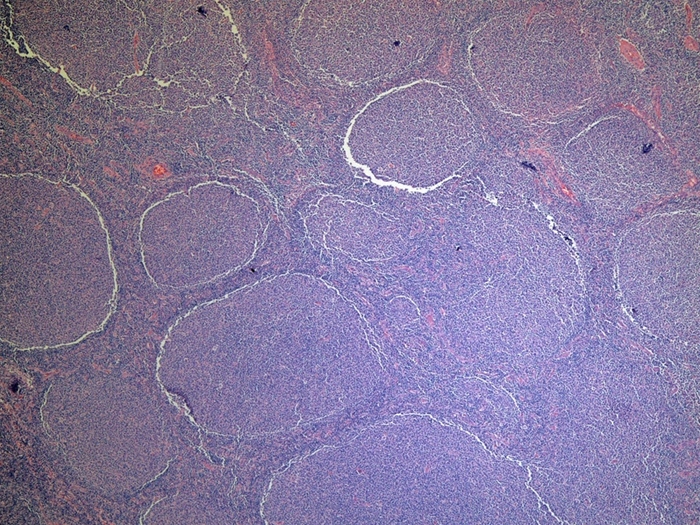 Cytogenetic analysis would most likely demonstrate which of the following patterns?
 (Multiple Choice)
4.9/5  (61)
(61) A 21-year-old man comes to the office with impaired balance, tremor, and difficulty speaking. His symptoms have developed slowly over the last several months. The patient is found to have elevated serum transaminases. Viral hepatitis serologies are negative. He does not use tobacco, alcohol, or illicit drugs. He has a sibling who was diagnosed at a young age with a progressive neurologic disease. Which of the following diagnostic studies would be the most helpful for confirming the diagnosis in this patient?
(Multiple Choice)
4.8/5 (83)
(83) A 54-year-old man dies from profuse upper gastrointestinal hemorrhage. An autopsy is performed; gross examination of his liver is shown in the image below. 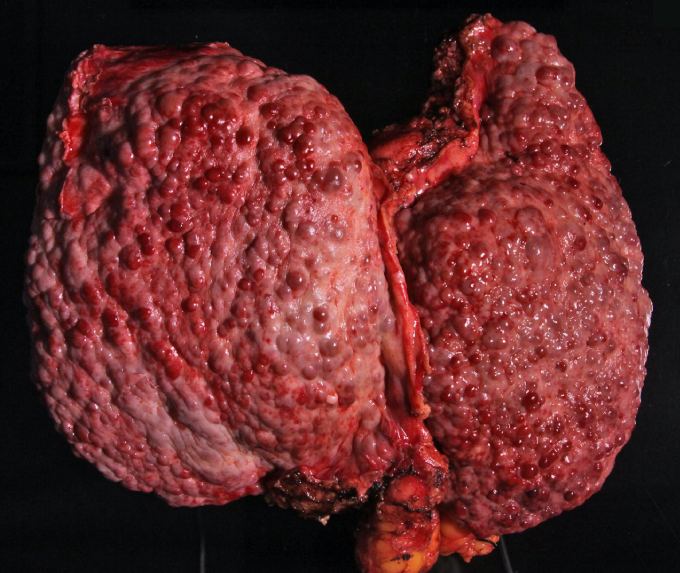 This patient's liver findings most likely resulted from which of the following processes?
 (Multiple Choice)
4.8/5 (70)
(70) A 62-year-old woman comes to the office due to tingling and numbness in her feet over the last several months. The patient has also noticed a small ulcer on her right foot that "doesn't seem to be healing." Medical history is significant for long-term diabetes, hypertension, and gout. Physical examination shows decreased pain sensation over both feet and bilateral absence of ankle reflexes. This patient's neurological symptoms are most likely associated with which of the following features?
(Multiple Choice)
4.7/5 (74)
(74) A 42-year-old woman comes to the office with a nonproductive cough and worsening shortness of breath with exertion. The patient has a history of primary pulmonary hypertension and underwent lung transplantation 8 months ago. She states that she has not missed any doses of her transplant medications. A chest x-ray reveals surgical evidence of her transplant but clear lung fields. Pulmonary function testing demonstrates a forced expiratory volume in 1 second (FEV1), 67% of her best posttransplant FEV1. Her forced vital capacity remains largely unchanged. A lung biopsy shows areas of total fibrotic obstruction in the terminal bronchioles. This patient's condition is most likely caused by which of the following?
(Multiple Choice)
4.8/5 (71)
(71) A 44-year-old man is brought to the hospital after being found unresponsive. Temperature is 35.6 C (96.1 F), blood pressure is 120/80 mm Hg, and pulse is 110/min. He is responsive only to pain and has dry mucous membranes. The patient's condition is initially treated with intravenous fluids, and his mental status slowly improves, but urine output decreases and flank pain develops. A renal biopsy reveals marked ballooning and vacuolar degeneration of proximal renal tubules; multiple oxalate crystals are observed in the tubular lumen. Which of the following is most likely responsible for this patient's acute kidney injury?
(Multiple Choice)
4.8/5 (81)
(81) A 65-year-old hospitalized man is evaluated for decreased urine output and increased serum creatinine. The patient was admitted for 3-vessel coronary artery disease and underwent coronary artery bypass grafting surgery yesterday. Other medical conditions include type 2 diabetes mellitus and hypertension. He received a dose of intravenous vancomycin prior to the surgery for prophylaxis of surgical infection. The patient has also been receiving 100 mL/hour of intravenous normal saline for the past 24 hours. He is afebrile. Blood pressure is 130/80 mm Hg and pulse is 80/min. Examination shows bibasilar crackles. The abdomen is soft. Urine output over the past 6 hours is 100 mL. Laboratory results are as follows: 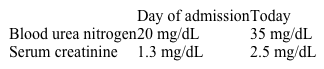 Urine sediment microscopy is shown in the exhibit.
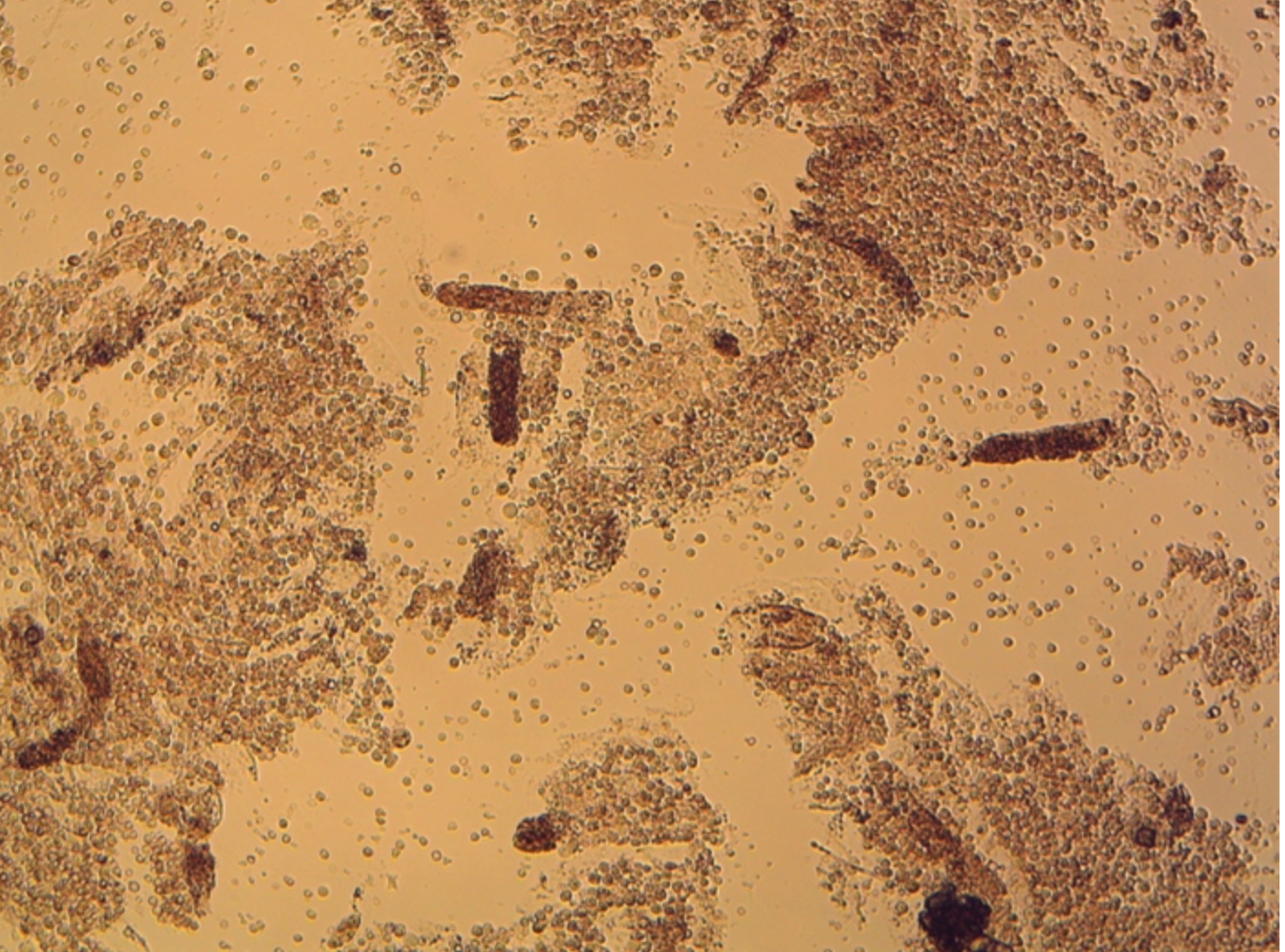 Which of the following is the most likely cause of this patient's current condition?
Urine sediment microscopy is shown in the exhibit.
Which of the following is the most likely cause of this patient's current condition? (Multiple Choice)
4.8/5 (91)
(91) A 65-year-old woman has had several months of progressive fatigue, diminished appetite, and unintentional weight loss. The patient has no chronic medical conditions. She has not received medical care in many years and has not had recommended cancer screening. The patient suddenly dies while undergoing evaluation. Autopsy reveals abnormal liver findings, as shown in the exhibit below. 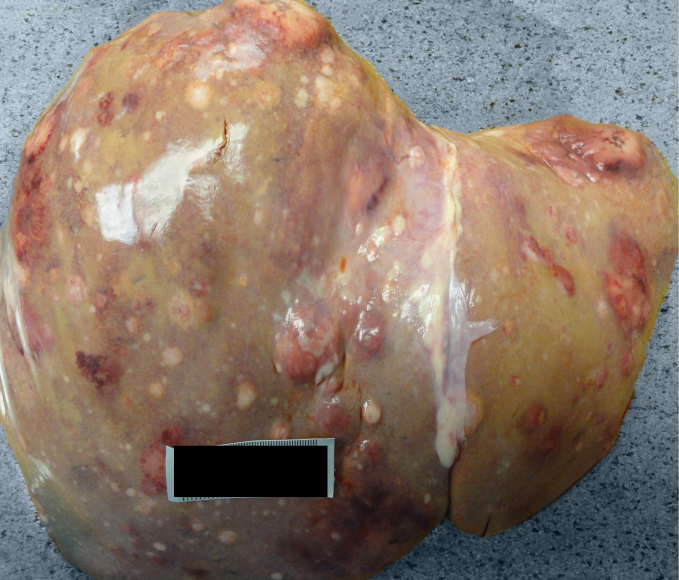 Microscopic evaluation of the lesions reveals neoplastic cells. Which of the following is the most likely cause of this patient's liver lesions?
 (Multiple Choice)
4.7/5 (73)
(73) A 28-year-old man comes to the office due to a 4-month history of pain and stiffness in the lower back and neck. Symptoms are worse with prolonged rest and in the early morning. The patient also has fatigue and poor sleep. He has no other medical conditions and takes no medications. Vital signs are normal. Examination shows limited forward bending of the trunk. Lower extremity muscle power and reflexes are normal. Which of the following is most likely to confirm the diagnosis?
(Multiple Choice)
4.8/5 (85)
(85) A 9-year-old boy with beta thalassemia major comes to the office for a routine red blood cell transfusion. He was diagnosed at age 6 months and has since received numerous blood transfusions and chelation therapies. The patient has tolerated each transfusion and chelation therapy well with no immediate reactions or side effects. Vital signs are normal. On physical examination, the boy has mild frontal bossing, hepatosplenomegaly, and jaundice. A recent liver biopsy showed Kupffer cells containing coarse, yellowish-brown cytoplasmic granules. The granules are most likely composed of which of the following?
(Multiple Choice)
5.0/5 (86)
(86) A 7-year-old boy is brought to the office due to easy bruising and frequent epistaxis for 2 weeks. Temperature is 36.7 C (98 F), blood pressure is 106/60 mm Hg, pulse is 94/min, and respirations are 18/min. Examination shows pale lips with mucositis in the oropharynx. The neck is supple. The abdomen is soft, and pulses are 2+. Laboratory results are as follows: 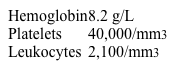 Findings from a bone marrow biopsy are shown in the image below:
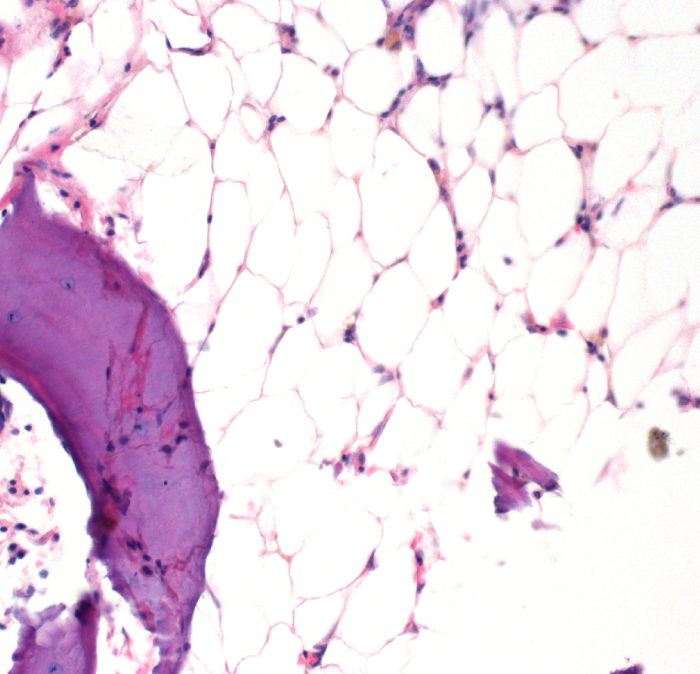 Which of the following is the most likely diagnosis?
Findings from a bone marrow biopsy are shown in the image below: Which of the following is the most likely diagnosis? (Multiple Choice)
4.8/5 (89)
(89) A 9-year-old girl is brought to the emergency department due to prolonged epistaxis. The girl says that she picked her nose immediately before the bleeding started. Her parents decided to bring her to the emergency department after the epistaxis persisted for 20 minutes despite constant compression of the nasal alae. The patient has had frequent nosebleeds that often last >10 minutes. Her family history is significant for a grandfather who had an unspecified bleeding disorder. Given the history of prolonged, recurrent nosebleeds, laboratory tests are ordered, and results are as follows: 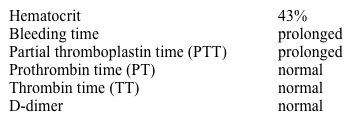 Which of the following is the most likely diagnosis?
 (Multiple Choice)
4.9/5 (79)
(79) A 21-year-old woman comes to the office for evaluation of urinary frequency and urgency for the past 2 days. She has also noticed scant vaginal discharge. The patient has never had these symptoms before. She has no chronic medical conditions, and she takes a combination oral contraceptive pill daily. The patient has been sexually active with multiple partners over the last year. She is a college student and does not use tobacco, alcohol, or illicit drugs. A urine sample is obtained for urinalysis and culture. Which of the following additional findings would be most suggestive of a diagnosis of pyelonephritis?
(Multiple Choice)
4.7/5 (80)
(80) An 8-year-old boy is brought to the office due to a lower extremity skin rash for the past 3 days. The rash began as tender papules that quickly progressed to form vesicles and flaccid bullae that rupture easily. The patient has no mucosal lesions or other rashes and has never had similar symptoms before. He is up to date with recommended vaccinations and takes no medications. Skin examination findings are shown below. 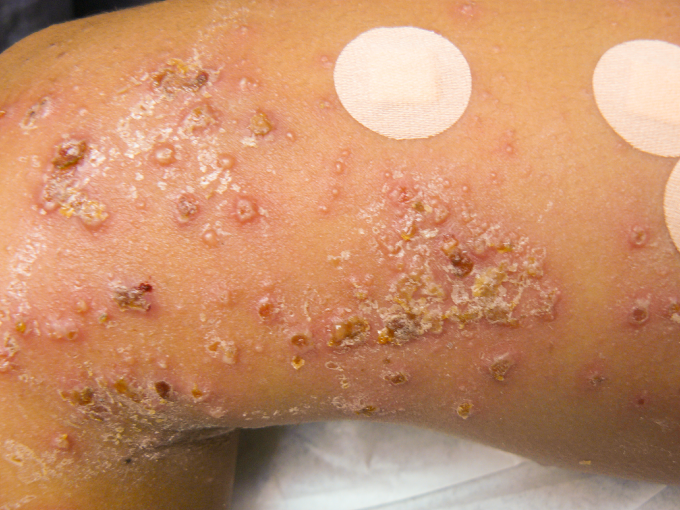 Which of the following is the most likely cause of this patient's skin findings?
 (Multiple Choice)
4.9/5 (87)
(87) A 3-week-old male born to a 23-year-old Caucasian primigravida develops projectile non-bilious vomiting after every meal. Abdominal inspection reveals prominent peristalsis in the epigastrium and an olive-sized mass is felt on deep palpation of the right upper abdomen. The mass most likely represents:
(Multiple Choice)
4.8/5 (82)
(82) A 22-year-old Caucasian male presents to the ER with abdominal pain that started around his bellybutton, then moved to the right lower abdominal quadrant. After initial evaluation, laparotomy is performed, which reveals the following findings (see the slide below). 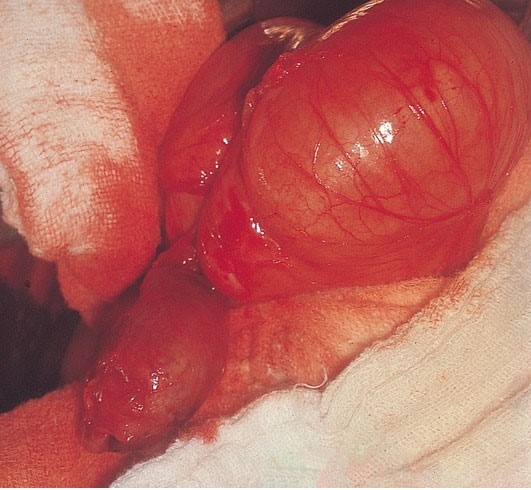 Which of the following most likely initiated this patient's condition?
 (Multiple Choice)
4.8/5 (68)
(68) A 6-year-old boy is brought to the office due to fatigue and abdominal distension. The parents state that the patient bruises easily and appears pale. Physical examination shows subconjunctival pallor and several ecchymoses on the boy's extremities. His abdomen is distended with nontender massive splenomegaly and moderate hepatomegaly. Laboratory studies reveal that his hemoglobin level is 8 g/dL, leukocyte count is 3,800 cells/mm3, and platelet count is 90,000 cells/mm3. Bone marrow aspirate results are shown in the exhibit. 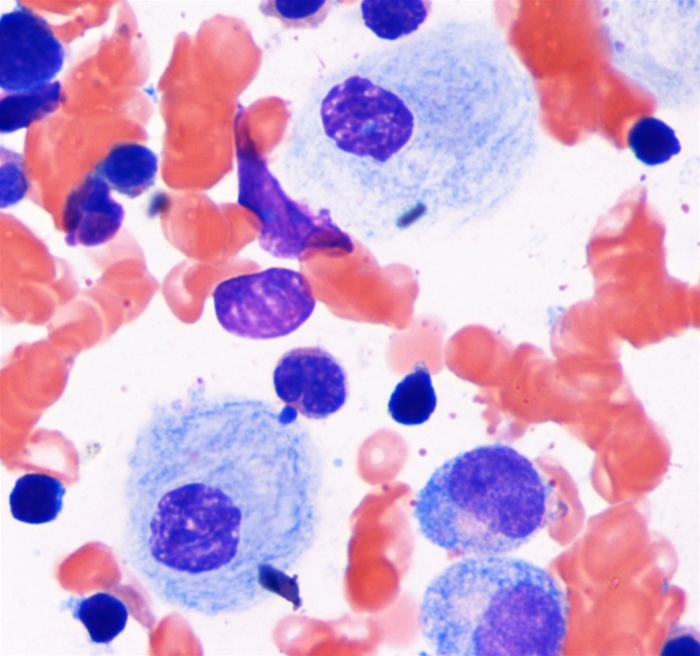 Which of the following is the most likely diagnosis?
 (Multiple Choice)
4.8/5 (77)
(77) A 25-year-old woman is brought to the emergency department after a motor vehicle collision. She has a pneumothorax, multiple rib fractures, and a right femur and tibial fracture. A chest tube is placed. The patient receives resuscitation and undergoes repair of the femur and tibial fractures. The following day, she develops respiratory distress, decreased urine output, and persistent bleeding from the chest tube drains and around the intravenous lines. Which of the following sets of laboratory findings is most likely to be seen in this patient?
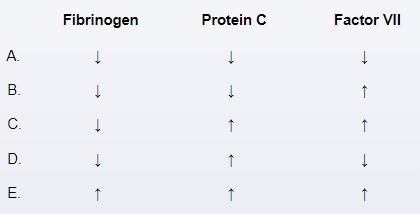
(Multiple Choice)
4.8/5 (96)
(96) A 43-year-old man comes to the office due to malaise, night sweats, and cough for the past several weeks. He has also lost 4.5 kg (10 lb) over the past 4 months. The patient has no appreciable medical history and has not traveled recently. He has spent the last 10 years working as a respiratory therapist at an urban hospital. Chest x-ray is shown below. 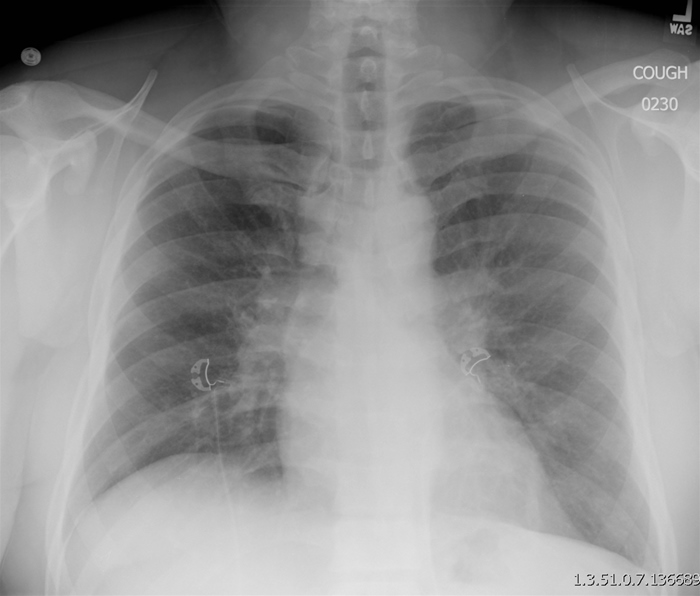 A palpable lymph node in the supraclavicular bed is biopsied and pathology reveals well-formed, noncaseating granulomas. Which of the following is the most likely diagnosis?
 (Multiple Choice)
4.9/5 (75)
(75) An 82-year-old woman comes to the clinic due to memory loss. She lives with her daughter, who reports that her mother has had difficulty remembering recent conversations. The patient has also forgotten recent events, such as her grandson's birthday party last month. Two years ago, she was forced to give up driving after repeatedly getting lost in her own neighborhood and being involved in a minor motor vehicle accident. The patient still enjoys reminiscing about old times with friends and playing bingo at church. The daughter now manages her mother's finances and acts as her health care proxy. Which of the following is the most likely pathological finding in this patient?
(Multiple Choice)
4.9/5 (67)
(67) 
Filters
- Essay(0)
- Multiple Choice(0)
- Short Answer(0)
- True False(0)
- Matching(0)