



 Chat with AI
Exam 10: Pathology

Exam 1: Anatomy291 Questions
Exam 2: Behavioral science240 Questions
Exam 3: Biochemistry156 Questions
Exam 4: Biostatistics117 Questions
Exam 5: Embryology52 Questions
Exam 6: Genetics103 Questions
Exam 7: Histology24 Questions
Exam 8: Immunology129 Questions
Exam 9: Microbiology336 Questions
Exam 10: Pathology816 Questions
Exam 11: Pathophysiology464 Questions
Exam 12: Pharmacology538 Questions
Exam 13: Physiology272 Questions
Select questions type


A 32-year-old man with mild abdominal discomfort and anorexia admits consuming large amounts of alcohol recently. He undergoes a liver biopsy, which shows the light microscopy findings seen in the image below. 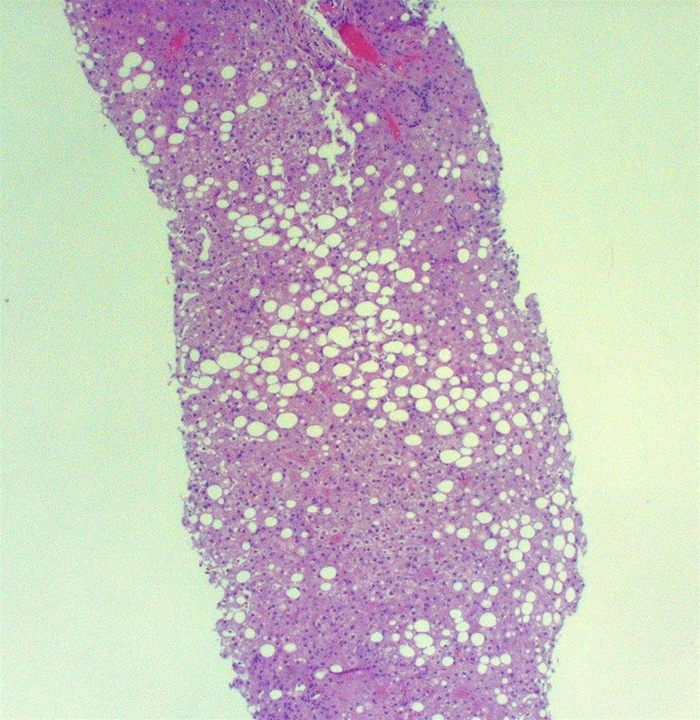 Which of the following is the most likely cause of this patient's condition?
 (Multiple Choice)
4.9/5  (82)
(82) A 32-year-old man is hospitalized with multiple fractures and internal bleeding following a motor vehicle collision. He is successfully resuscitated and taken to the operating room for fixation of a left femoral fracture. The patient's condition remains stable postoperatively, and he is transferred to the surgical floor. Blood pressure is 118/68 mm Hg and pulse is 88/min. He develops oliguria on the second day of hospitalization. Renal biopsy findings are shown in the image below. 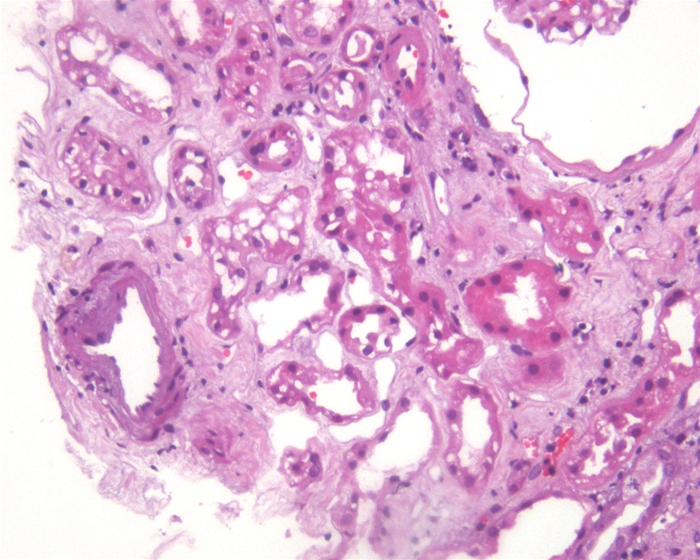 If the kidney biopsy were repeated 1 month from now, which of the following would most likely be seen?
 (Multiple Choice)
4.8/5 (72)
(72) Anterior horn cells of the spinal cord of an experimental animal demonstrate cell body rounding, peripheral displacement of the nuclei and dispersion of Nissl substance to the periphery of the cells. The findings described most likely indicate:
(Multiple Choice)
4.9/5 (77)
(77) A 61-year-old woman comes to the office due to a neck lump. She is otherwise in good health and has no other symptoms. Temperature is 36.7 C (98.1 F), blood pressure is 115/70 mm Hg, and pulse is 78/min. On physical examination, there is a nontender, firm nodule in the left lobe of the thyroid. Laboratory results show a normal serum TSH level. Thyroid ultrasonography reveals a 2-cm, hypoechoic thyroid nodule with increased central blood flow. Fine-needle aspiration biopsy shows clusters of cells with large, overlapping nuclei containing finely dispersed chromatin. Numerous intranuclear inclusion bodies and grooves are also seen. Which of the following is the most likely diagnosis?
(Multiple Choice)
4.9/5 (77)
(77) An 11-month-old boy is brought to the office due to irregular jerking movements. His mother states that for 2 weeks he has looked pale and tired, and he has been more fussy and less playful than usual. Temperature is 36.7 C (98 F), blood pressure is 100/60 mm Hg, pulse is 114/min, and respirations are 16/min. Physical examination reveals spontaneous bursts of nonrhythmic conjugate eye movements in various directions. The patient also has myoclonus involving the trunk and limbs as well as generalized hypotonia. A right-sided, nontender, immobile abdominal mass is palpated. There is no hepatosplenomegaly, and bowel sounds are normal. Complete blood count reveals anemia, and urine is positive for elevated levels of catecholamine breakdown products. Which of the following is the most likely diagnosis?
(Multiple Choice)
4.9/5 (73)
(73) A 47-year-old woman comes to the office due to an itchy rash. For the last 3 months, she has had a gradual onset of multiple pruritic lesions at her wrists, legs, and ankles. The patient tried treating the lesions with emollients and topical over-the-counter hydrocortisone but had no relief. Examination shows scattered, scaly, pink papules and plaques as shown in the exhibit. 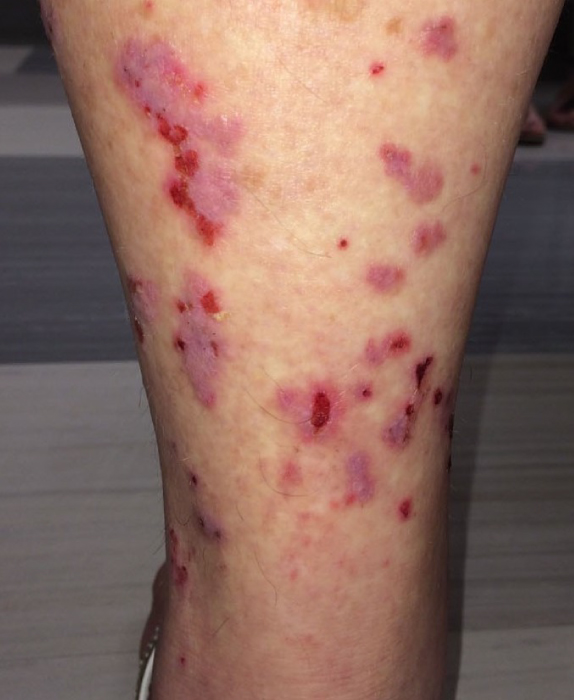 Which of the following is the most likely diagnosis?
 (Multiple Choice)
4.8/5 (89)
(89) A 47-year-old man is treated for bacterial sinusitis with ampicillin. A week later he comes to the emergency department with fever and a skin rash. He also reports low urine output. Temperature is 37.5 C (99.5 F), blood pressure is 123/71 mm Hg, and pulse is 88/min. Physical examination shows a diffuse maculopapular rash. Serum creatinine level is 2.4 mg/dL, and urine sediment microscopy reveals 3-4 red blood cells/hpf, 5-10 white blood cells/hpf, and 3-5 eosinophils/hpf. The pathologic process affecting this patient's kidneys most likely involves which of the following structures?
(Multiple Choice)
4.9/5 (80)
(80) A 26-year-old woman is evaluated for intermittent abdominal pain occurring over the last several years. The pain is crampy without radiation and graded 6/10 in intensity. She also has fluctuating diarrhea but has not seen blood in the stool. The patient has no nausea, vomiting, constipation, urinary frequency, dysuria, or vaginal symptoms. Her last menstrual period was 2 weeks ago. She does not use tobacco or alcohol. Temperature is 37.2 C (99 F), blood pressure is 115/70 mm Hg, and pulse is 90/min. On examination, the abdomen is tender without guarding or rebound. There is a draining fistula near her coccyx. Which of the following is the most likely diagnosis in this patient?
(Multiple Choice)
4.9/5 (87)
(87) In experiments, transient myocardial ischemia causes myocardial cells to increase in size. This effect is due in part to which of the following?
(Multiple Choice)
4.8/5 (88)
(88) A 59-year-old man comes to the emergency department with diplopia that started several hours ago. His past medical history is significant for long-standing diabetes with poor glycemic control, right-knee osteoarthritis, and peptic ulcer disease. Physical examination shows right-sided ptosis with the right pupil in the inferolateral position. Pupils are equal in size and reactive to light bilaterally. This patient's condition is most likely due to which of the following etiologies?
(Multiple Choice)
4.9/5 (81)
(81) A 7-year-old boy is brought to the office by his mother due to facial puffiness that is especially noticeable in the morning. He has a history of mild, intermittent asthma that is well controlled with albuterol as needed. Temperature is 36.1 C (97 F), blood pressure is 98/62 mm Hg, and pulse is 89/min and regular. Physical examination shows bilateral lower extremity pitting edema. Nephrotic-range proteinuria consisting mainly of albumin is revealed on urinalysis. Which of the following mechanisms is the most likely cause of this patient's abnormal laboratory findings?
(Multiple Choice)
4.9/5 (85)
(85) A 56-year-old woman comes to the office due to a pigmented lesion on her back. She first noted the lesion a year ago and says it has enlarged. Past medical history is unremarkable. The patient has worked as a forest service ranger for the last 30 years and has spent much of her time outdoors. On examination, there is a large irregular pigmented lesion on the upper back, as shown in the exhibit,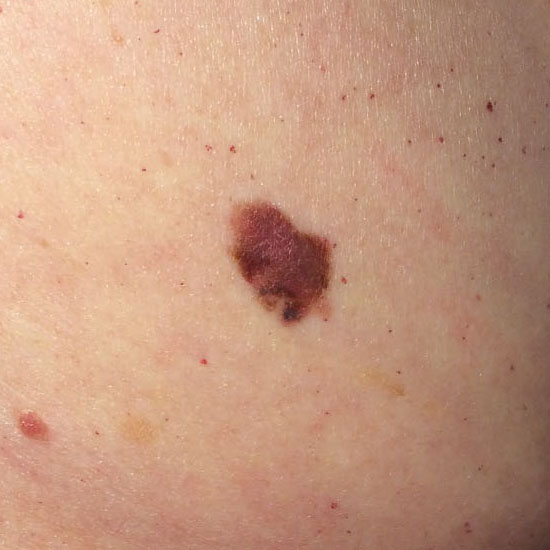 as well as scattered patches of erythema and telangiectasias. Excisional biopsy of the lesion shows malignant melanoma. Which of the following is associated with the highest risk of metastasis for this patient's lesion?
 (Multiple Choice)
4.9/5 (77)
(77) A 65-year-old man comes to the office due to progressive weight loss, jaundice, and anorexia over the last 3 months. His urine has been dark and his stools have been pale. The patient has no prior medical conditions and takes no medications. He has smoked a pack of cigarettes a day for 40 years. He drinks 2 cups of coffee every day and 1 or 2 glasses of wine on most nights. He used illicit drugs for 2 years when he was in his teens but has used none since. The patient has a sedentary lifestyle and frequently consumes red and processed meats. Vital signs are within normal limits. BMI is 28 kg/m2. Physical examination shows scleral icterus. The chest is clear to auscultation and percussion. Abdominal examination shows an enlarged but nontender gallbladder. There is no ascites. Which of the following is the strongest factor predisposing to this patient's current condition?
(Multiple Choice)
4.9/5 (80)
(80) A 72-year-old man comes to the office due to progressive weakness, fatigue, anorexia, and a 10-kg (22-lb) weight loss over the past 4 months. He says that food doesn't taste as good as it once did, and he feels full after eating only a small amount. The patient has had a morning cough for the past several years and had streaks of blood in his sputum 2 weeks ago. He has a 50-pack-year smoking history. On examination, the patient appears frail with a sunken face and bitemporal wasting. His arms are thin with notable muscle wasting. Lung examination reveals wheezing on the right side. Chest x-ray reveals an irregular right perihilar mass. Which of the following is most likely contributing to this patient's muscle wasting?
(Multiple Choice)
4.8/5 (86)
(86) A 4-year-old boy is brought to the clinic after his mother noticed he was developing pubic hair. The boy had a recent growth spurt and is now taller than his 5-year-old brother. The patient's preschool teacher recently mentioned he has body odor after he runs or plays. Height is at the 95th percentile for age, and weight is at the 80th percentile. Examination reveals sparse growth of long, pigmented hair at the base of the penis and in both axillae. Testes are present bilaterally and appear normal. Laboratory assessment reveals high serum concentrations of 17-hydroxyprogesterone and testosterone.Which of the following is most likely present in this patient?
(Multiple Choice)
4.9/5 (68)
(68) A 48-year-old woman comes to the office due to difficulty swallowing dry foods such as crackers. She has no pain during swallowing or heartburn. The patient is a college professor and has to drink water frequently during lectures to keep her mouth moist. She also reports a gritty sensation in her eyes, which is often worse in the evening, and occasional brief episodes of joint pain. Medical history is significant for hypothyroidism, for which she takes levothyroxine. Physical examination shows mild conjunctival erythema and cracking of the lips. There is diffuse, nontender thyroid enlargement, which is unchanged from prior examination. The remainder of the examination is normal. Biopsy of the lip mucosa is most likely to reveal which of the following findings?
(Multiple Choice)
4.9/5 (74)
(74) A 66-year-old woman comes to the office due to worsening chest discomfort and shortness of breath for the past 4 weeks. There is no history of recent upper respiratory illness, fever, cough, palpitations, or syncope. Medical history is significant for hypertension and breast adenocarcinoma treated with surgery and chemotherapy 6 years ago. The patient does not use tobacco or alcohol and has not traveled recently. Temperature is 37 C (98.6 F), blood pressure is 110/70 mm Hg, and pulse is 90/min. Physical examination shows changes consistent with prior right mastectomy. The right axillary lymph nodes are enlarged. The lungs are clear to auscultation. Heart sounds are distant with no murmur. There is no extremity edema. Bedside echocardiography shows a large pericardial effusion. Pericardiocentesis in this patient is most likely to reveal which of the following findings?
(Multiple Choice)
4.9/5 (86)
(86) A 64-year-old man is brought to the emergency department after a motor vehicle collision in which his chest hit the steering wheel. The patient has no prior medical conditions and takes no medications. Temperature is 36.7 C (98 F), blood pressure is 132/78 mm Hg, pulse is 76/min, and respirations are 14/min. Physical examination shows mild tenderness over the lower right chest. Imaging of the neck and chest reveals no fractures or dislocations. However, the chest CT scan reveals pleural opacities as shown below. 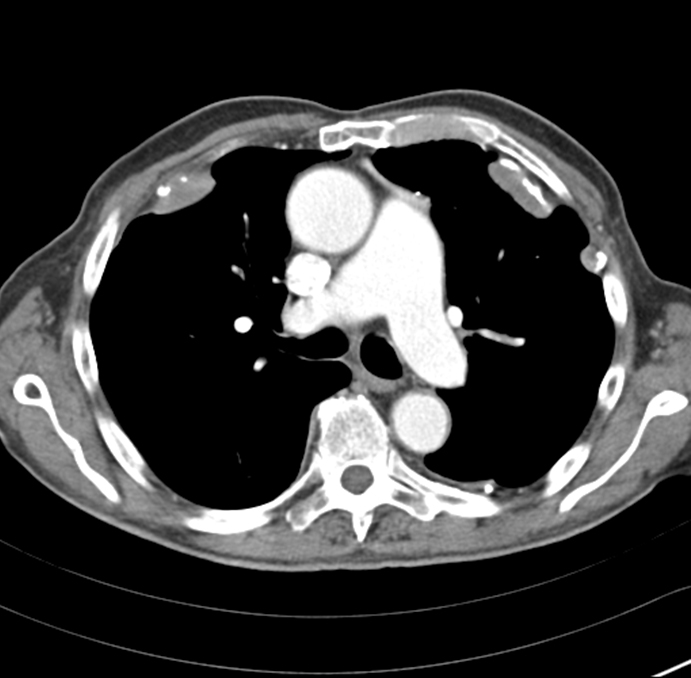 These abnormal findings are most likely to occur in a patient with which of the following occupational histories?
 (Multiple Choice)
4.8/5 (68)
(68) A 49-year-old woman comes to the office for evaluation of abnormal uterine bleeding. The patient has had irregular menses for the past 2 years, but now she has been bleeding daily for 2 weeks. She also has had increased abdominal bloating and pressure but no constipation or diarrhea. Medical history includes early-stage breast cancer diagnosed at age 45 and managed with tamoxifen for the past 4 years. On examination, there is a midline, immobile pelvic mass at the level of the umbilicus. The patient undergoes hysterectomy with bilateral salpingo-oophorectomy. The final pathology report notes nuclear atypia and numerous mitoses in the affected portion of the myometrium. Which of the following is the most likely diagnosis?
(Multiple Choice)
4.9/5 (77)
(77) A 27-year-old woman comes to the emergency department with a scalp laceration after a fall. She reports a tendency to develop big scars even with small injuries. Physical examination reveals an old, healed laceration as shown in the image below. 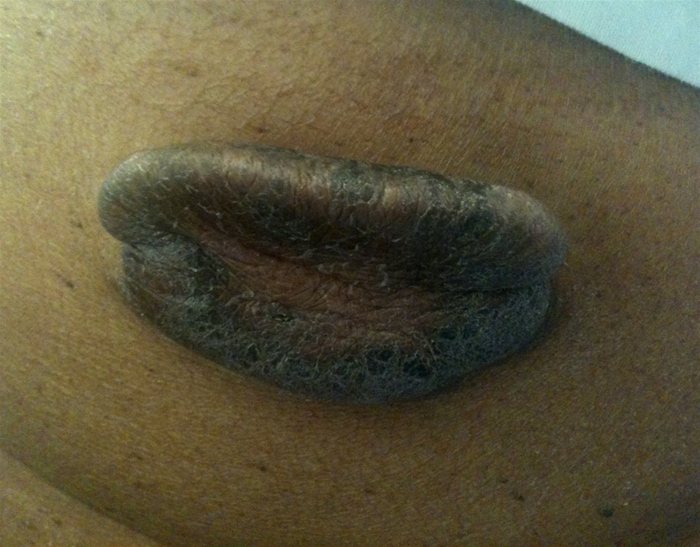 Histochemical analysis of her tissue reveals fibroblasts that overexpress a cytokine essential for normal wound healing. Which of the following substances is most likely involved?
 (Multiple Choice)
4.7/5 (66)
(66) 
Filters
- Essay(0)
- Multiple Choice(0)
- Short Answer(0)
- True False(0)
- Matching(0)