



 Chat with AI
Exam 10: Pathology

Exam 1: Anatomy291 Questions
Exam 2: Behavioral science240 Questions
Exam 3: Biochemistry156 Questions
Exam 4: Biostatistics117 Questions
Exam 5: Embryology52 Questions
Exam 6: Genetics103 Questions
Exam 7: Histology24 Questions
Exam 8: Immunology129 Questions
Exam 9: Microbiology336 Questions
Exam 10: Pathology816 Questions
Exam 11: Pathophysiology464 Questions
Exam 12: Pharmacology538 Questions
Exam 13: Physiology272 Questions
Select questions type


A 45-year-old woman comes to the office due to 2 weeks of persistent back pain. She has also had excessive fatigue, anorexia, and unintentional weight loss over the past several months. The patient has no prior medical problems but has a history of cancer in the family. An imaging study reveals a lytic lesion in the T10 vertebral body. Analysis of the biopsy sample shows cell lineage with abnormally high replicative potential. A genetic study reveals a single nucleotide substitution causing an activating mutation. Which of the following genes is most likely involved in this patient's disease?
(Multiple Choice)
4.9/5  (79)
(79) A 64-year-old man comes to the emergency department due to flank discomfort and red urine. He has a history of hypertension and type 2 diabetes mellitus. Three months ago, the patient had an ischemic stroke and now has mild, residual, right-sided weakness. Serum creatinine is 0.9 mg/dL, and serum lactate dehydrogenase is elevated. Urine microscopy shows many red blood cells. The findings of a CT scan of the abdomen with contrast are shown in the image below: 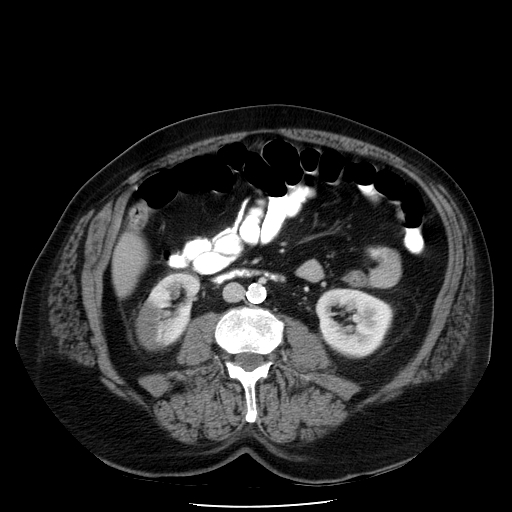 Which of the following is the most likely cause of this patient's symptoms?
 (Multiple Choice)
4.8/5 (92)
(92) An 18-year-old man comes to the emergency department with sudden-onset right-sided chest pain and dyspnea. The patient was at home watching a football game on television when his symptoms abruptly started. He now has pain with deep breaths. He has no other medical problems and takes no medications. The patient has smoked a pack of cigarettes daily for the past 2 years. His respirations are 24/min. Physical examination shows a thin, tall patient in acute distress. The right side of the chest is hyperresonant to percussion and lacks audible breath sounds. His chest x-ray is shown below. 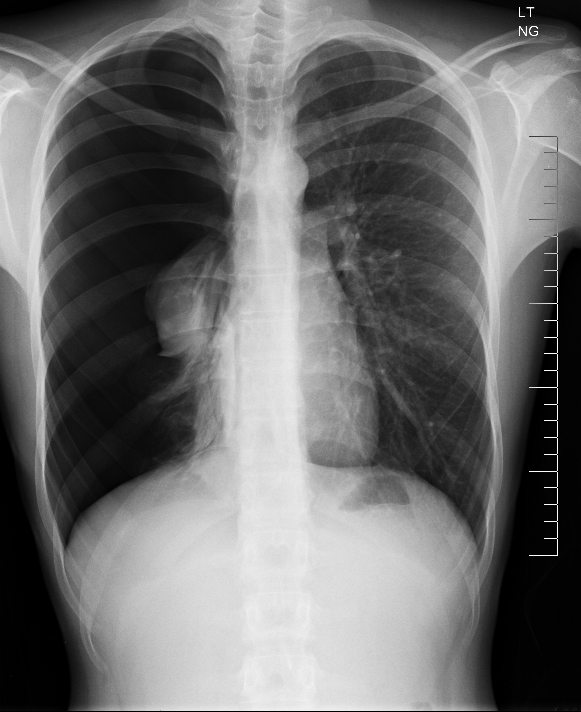 Which of the following conditions most likely led to this patient's presentation?
 (Multiple Choice)
4.8/5 (92)
(92) A 32-year-old woman comes to the office due to postprandial abdominal pain and nausea. The patient has no diarrhea, constipation, bloody stools, or vomiting. Medical history is significant for rheumatoid arthritis. The abdomen is mildly tender to palpation at the epigastrium but without distension or hepatosplenomegaly. Laboratory studies reveal anemia. A small gastric ulcer is seen during upper endoscopy, and biopsies are negative for Helicobacter pylori. Biopsies of the duodenum reveal numerous intraepithelial lymphocytes, villous atrophy, and crypt hyperplasia. Based on these biopsy findings, this patient is at increased risk for developing which of the following conditions later in life?
(Multiple Choice)
4.9/5 (94)
(94) A 54-year-old man comes to the emergency department due to severe fatigue and dyspnea. He has a long history of progressively worsening heart failure that has been resistant to treatment with medications, including diuretics. He was treated with chest radiation 10 years ago for non-Hodgkin lymphoma and has been in remission since then. The patient is admitted to the hospital, but his condition continues to deteriorate despite aggressive therapy. He dies 3 days later, and an autopsy is performed. Gross inspection of the heart shows dense, thick, fibrous tissue in the pericardial space between the visceral and parietal pericardium. Which of the following signs would most likely have been detected during a physical examination of this patient just prior to his death?
(Multiple Choice)
4.8/5 (80)
(80) A 17-year-old girl is brought to the emergency department due to hemoptysis and severe respiratory distress. The patient has been on several oral antibiotics for pneumonia over the past week and has required numerous similar treatments in the past. She has been coughing up blood for the past day, which has become progressively worse. Temperature is 37.0 C (98.6 F), blood pressure is 90/60 mm Hg, pulse is 120/min, and respirations are 42/min. Pulmonary examination reveals diffusely reduced air flow, rales, and intercostal retractions. Copious red blood is produced while coughing during the examination and progresses rapidly. Despite aggressive management, the patient ultimately expires. An autopsy is performed and a gross lung specimen is shown in the image below: 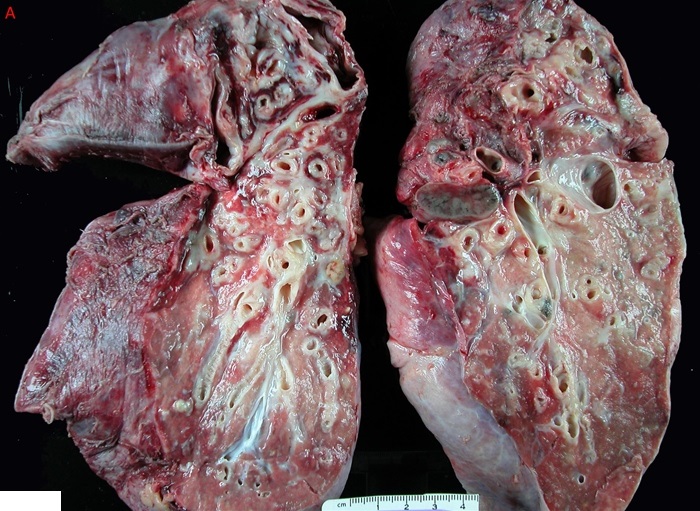 Which of the following is the most likely etiology of this patient's hemoptysis?
 (Multiple Choice)
4.9/5 (80)
(80) A 28-year-old African American man is given prophylactic medications and vaccinations before a business trip to Africa. Five days later, he comes to the emergency department due to jaundice and dark urine. Laboratory results are as follows: 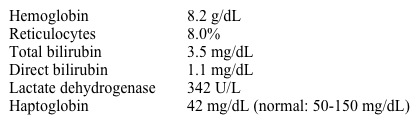 A peripheral smear shows red blood cells with dark inclusions when stained with supravital stain. This patient's condition most likely has which of the following inheritance patterns?
 (Multiple Choice)
4.9/5 (78)
(78) A 62-year-old man with a history of poor medical follow-up comes to the office due to difficulty seeing. He has had blurry vision for the last 2 weeks. A day ago, he noticed a shadow develop suddenly across the visual field of his right eye. The patient has had no recent headaches, double vision, vertigo, light sensitivity, or nausea. On examination, pupils are equal and reactive to light. Visual field testing by confrontation reveals patchy loss of vision. A flame-shaped retinal hemorrhage in the right eye is noted on funduscopic examination, as shown in the image below. 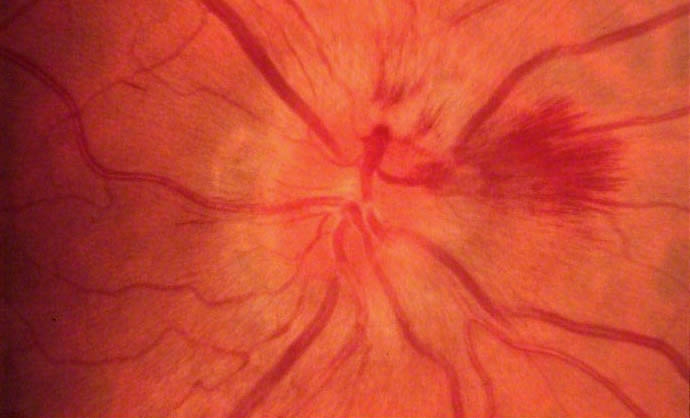 Which of the following is the most likely cause of his visual disturbance?
 (Multiple Choice)
4.9/5 (80)
(80) A 21-year-old woman is hospitalized for elective subtotal colectomy with ileo-rectal anastomosis due to abnormal colonoscopic findings. She underwent screening colonoscopy because of family history of colon cancer. Her maternal grandfather died of metastatic colon cancer, and her mother was also recently diagnosed with colon cancer. The patient has no other medical problems, takes no medications, and does not use tobacco, alcohol, or illicit drugs. The surgery is performed with no operative complications. Numerous lesions are present throughout the resected colon, some of which are shown in the histopathology exhibit below. 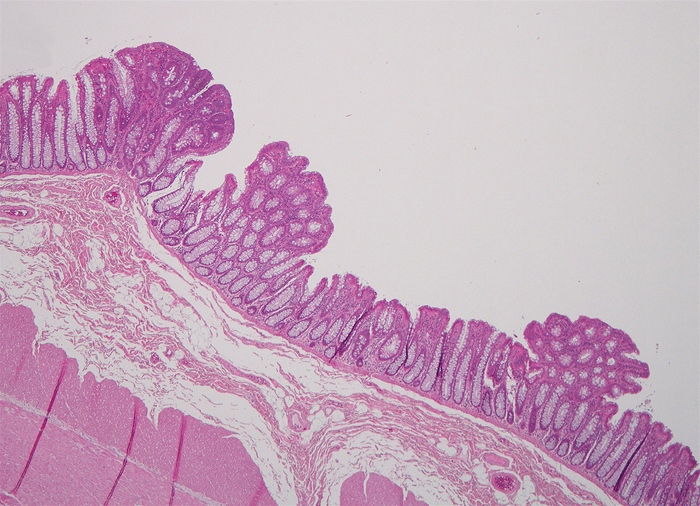 Genetic testing is most likely to reveal a germline mutation resulting in which of the following effects?
 (Multiple Choice)
4.7/5 (75)
(75) A 70-year-old woman with a history of unilateral extremity weakness and seizures is found unresponsive at home by her home health care nurse. On arrival of emergency medical services, she is found to have no pulse or spontaneous respirations and is declared dead. Autopsy shows a large thrombus occluding the left anterior descending coronary artery. Additional cerebral findings are shown in the exhibit. 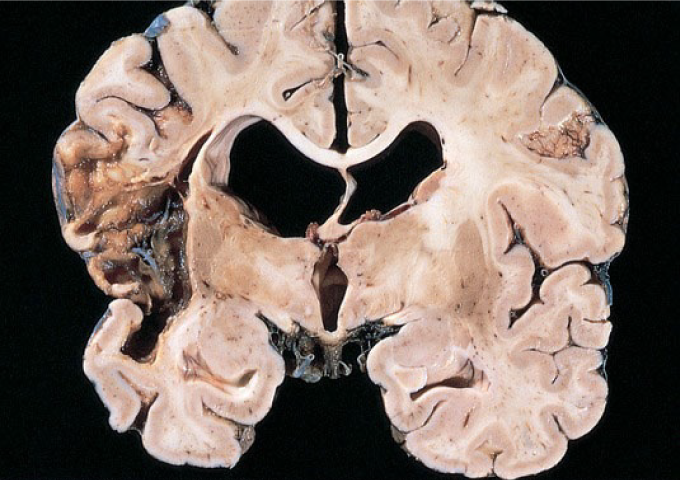 Which of the following most accurately describes the pathogenesis of this patient's brain lesion?
 (Multiple Choice)
4.8/5 (84)
(84) A 51-year-old woman comes to the office due to progressively worsening fatigue, weight gain, and constipation for the past 6 months. The patient has had difficulty performing daily activities due to her fatigue. She has no significant medical history and takes no medications. The patient has no drug allergies and does not use tobacco, alcohol, or illicit drugs. Blood pressure is 110/80 mm Hg and pulse is 55/min. Physical examination shows mild, diffuse enlargement of the thyroid gland. Cardiopulmonary and abdominal examinations are normal. Biopsy of this patient's thyroid is most likely to show which of the following findings?
(Multiple Choice)
4.8/5 (75)
(75) A 15-year-old girl is brought to the clinic for evaluation of swelling around her eyes that developed over the past week. The patient is a cheerleader, and she had been taking ibuprofen daily for the last 3 months for various sprains and aches after practice. She has no chronic medical conditions. Vital signs are normal. On physical examination, there is moderate periorbital edema with bilateral lower extremity pitting edema. Serum creatinine is 0.5 mg/dL and serum albumin is 2.1 g/dL. Urinalysis shows 4+ protein and negative blood. Multiple regions of the kidney are biopsied, and a representative image is shown below: 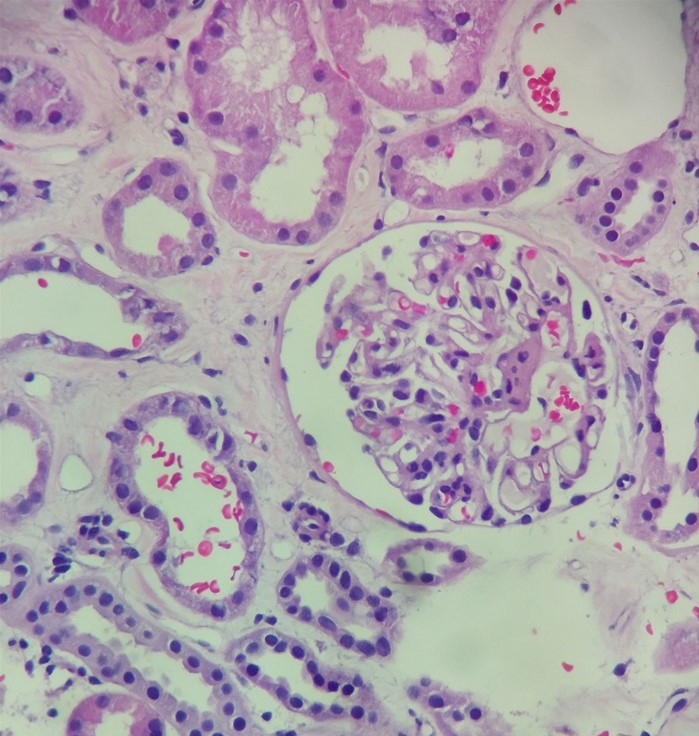 Which of the following is the most likely diagnosis?
 (Multiple Choice)
4.8/5 (81)
(81) A 23-year-old man is hospitalized with acute pancreatitis that resolves rapidly on fasting. He has suffered 2 similar episodes during the past 2 years. A gallbladder ultrasound obtained during a previous episode was normal. The patient has no other medical problems and takes no medications. He does not consume alcohol. Which of the following tests should be considered during the workup of this patient?
(Multiple Choice)
4.8/5 (90)
(90) A 16-year-old boy is being evaluated for difficulty walking. On physical examination, he has thoracic scoliosis and multiple small scars on his hands. When asked about these, the boy replies, "I frequently burn my hands by accident because I can't feel the heat." Neurologic examination reveals 1+ biceps reflexes and 3+ patellar reflexes bilaterally, as well as decreased muscle strength in the bilateral upper and lower extremities. His hand muscles are atrophic, and position and vibration senses in the feet are also impaired. Which of the following is the most likely cause of this patient's problems?
(Multiple Choice)
4.8/5 (85)
(85) A 45-year-old man comes to the office due to recurrent, painful skin lesions in the right axilla for the past 6 months. The patient has no other medical history and takes no medication. He smokes a pack of cigarettes every day and works as a roofer. Vital signs are normal. Examination reveals tender, subcutaneous nodules in the right axilla and other findings as shown in the exhibit.  The remainder of the examination is normal. Which of the following is the most likely cause of the condition?
 (Multiple Choice)
4.9/5 (87)
(87) An 18-year-old man is admitted to the hospital with cough, fever, and hypoxemia. Despite multiple intravenous antibiotics and frequent chest physiotherapy, the patient decompensates and is transferred to the intensive care unit for mechanical ventilation. Sputum cultures grow >100,000 colony-forming units of a non-lactose-fermenting gram-negative rod. After several days, the patient dies of overwhelming pneumonia complicated by respiratory failure. Since age 1, he had been hospitalized for recurrent episodes of multi-lobar pneumonia, sinusitis, and poor growth. On autopsy, both vas deferens are absent. Which of the following findings is also likely to be present on autopsy?
(Multiple Choice)
4.7/5 (80)
(80) A 54-year-old previously healthy man comes to the office due to progressive fatigue and weakness for the past 2 months. His weakness predominantly involves the lower extremities, causing him to have difficulty rising from a chair. The patient also has a persistent cough and unintentional 7-kg (15.4-lb) weight loss during the same period. He has a 30-pack-year smoking history and drinks alcohol occasionally. Physical examination shows bilaterally decreased strength in the proximal muscles of the lower extremities with normal bulk and tone. Quadriceps tendon reflexes are diminished bilaterally. Chest x-ray reveals a hilar mass, biopsy of which demonstrates small cells that stain positive for chromogranin and synaptophysin. Which of the following is the most likely cause of this patient's muscle weakness?
(Multiple Choice)
4.7/5 (95)
(95) A 60-year-old man comes to the office with a 6-month history of exertional chest pain that remits with rest. His other medical conditions include hypertension, diabetes mellitus, and hypercholesterolemia. An exercise stress test is positive for inducible ischemia. Cardiac catheterization shows 80% occlusion of the right coronary artery and 60% occlusion of the left coronary artery. The first step in the pathogenesis of this patient's coronary artery disease most likely involved which of the following cell types?
(Multiple Choice)
4.8/5 (86)
(86) A 37-year-old woman comes to the emergency department due to sudden-onset nausea and severe right lower quadrant pain. The pain developed an hour ago after exercise and has become increasingly severe. The patient has no chronic medical conditions and has had no prior surgeries. She does not use contraception, and her last menstrual period was 3 weeks ago. Blood pressure is 136/94 mm Hg and pulse is 104/min. The abdomen is tender to palpation over the right lower quadrant. Pelvic ultrasound shows a right ovarian mass with no blood flow to the ovary. The specimen obtained from diagnostic laparoscopy and right oophorectomy is shown in the image below: 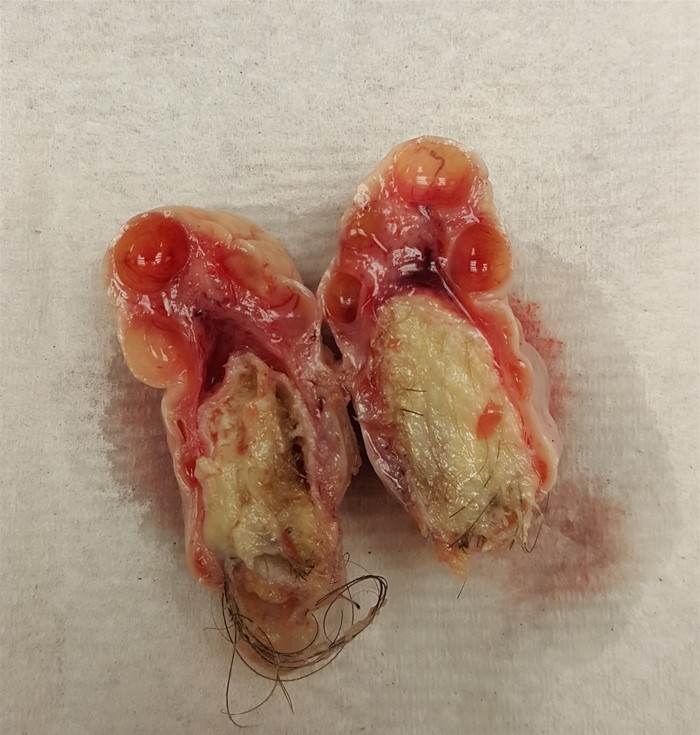 Which of the following is the most likely diagnosis?
 (Multiple Choice)
4.8/5 (71)
(71) A cross-section of the right coronary artery of a 34-year-old Caucasian male who died in the cardiac intensive care unit is shown on the slide below. 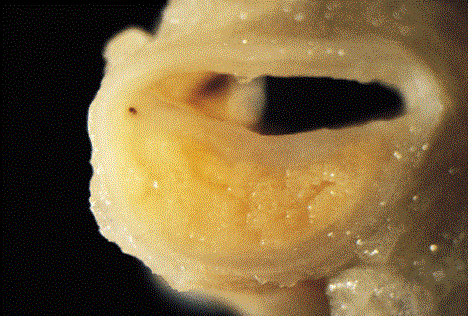 His father died of a heart attack at the age of 40. Assuming this patient's disease had a genetic basis, poor receptor expression in which of the following organs is most likely responsible for his condition?
 (Multiple Choice)
4.8/5 (85)
(85) 
Filters
- Essay(0)
- Multiple Choice(0)
- Short Answer(0)
- True False(0)
- Matching(0)