



 Chat with AI
Exam 10: Pathology

Exam 1: Anatomy291 Questions
Exam 2: Behavioral science240 Questions
Exam 3: Biochemistry156 Questions
Exam 4: Biostatistics117 Questions
Exam 5: Embryology52 Questions
Exam 6: Genetics103 Questions
Exam 7: Histology24 Questions
Exam 8: Immunology129 Questions
Exam 9: Microbiology336 Questions
Exam 10: Pathology816 Questions
Exam 11: Pathophysiology464 Questions
Exam 12: Pharmacology538 Questions
Exam 13: Physiology272 Questions
Select questions type


A 56-year-old male with history of polycystic kidney disease presented to the emergency room because of sudden onset severe headache. He has never had this type of headache in the past. Examination shows some nuchal rigidity. Neurologic examination is within normal limits. Which of the following is the most likely diagnosis?
(Multiple Choice)
4.9/5  (83)
(83) A 4-day-old newborn is brought to the office for a 2-day history of progressive jaundice. He was born at term following an uncomplicated vaginal delivery. The patient has been breastfed since birth. Vital signs are normal. Examination shows scleral icterus and jaundice from the face to the upper abdomen. Laboratory results are as follows: 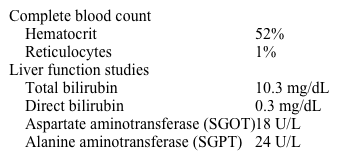 Which of the following is the most likely explanation for these findings?
 (Multiple Choice)
4.9/5 (82)
(82) A 40-year-old female presented to the physician for evaluation of worsening fatigue. She has no other medical problems. She does not use tobacco, alcohol or drugs. Vital signs are within normal limits. Physical examination is within normal limits. Laboratory evaluation shows an alkaline phosphatase level of 180 U/L. Which of the following should be checked next?
(Multiple Choice)
4.8/5 (94)
(94) A 38-year-old woman comes to the emergency department for lower abdominal pain. The patient has had some mild, cramping abdominal pain for the past few days, but today it became constant. She has also had intermittent vaginal bleeding. The patient has a history of irregular menses, and her last menstrual period was 8 weeks ago. Physical examination shows a left adnexal mass. The patient undergoes surgery and the resected specimen is shown in the image below: 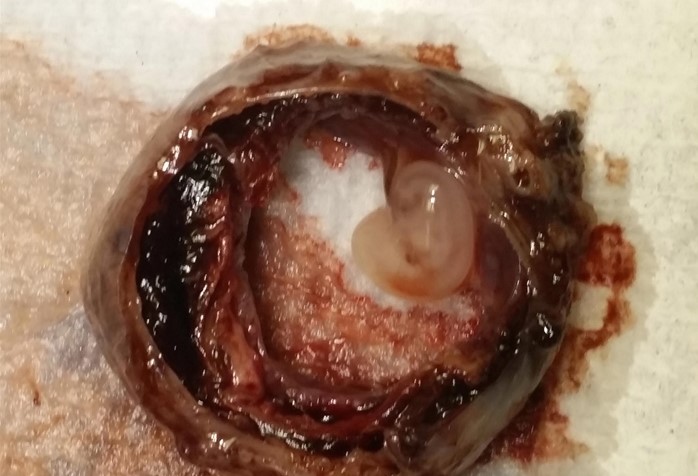 Which of the following risk factors is most strongly associated with this patient's condition?
 (Multiple Choice)
4.9/5 (75)
(75) A 59-year-old woman comes to the office due to progressive fatigue and occasional heart palpitations over the last 6 months. The patient has been under a lot of stress recently due to problems at work. She has no dietary restrictions, eats out at restaurants frequently, and drinks 2 or 3 cans of beer on the weekends. The patient is postmenopausal and has not noticed any uterine bleeding, dark stools, or bleeding with bowel movements. Her BMI is 25 kg/m2. Hemoglobin is 8.5 g/dL. Peripheral blood smear reveals pale, microcytic erythrocytes. Which of the following is the most likely underlying cause of this patient's abnormal laboratory findings?
(Multiple Choice)
4.8/5 (85)
(85) A 45-year-old Caucasian female suffers from recurrent nonpitting edema of the hands. She often wears warm gloves indoors because her fingers turn blue when they are cold. She also complains of retrosternal burning and regurgitation, especially when supine. Which of the following antibodies is most likely to be found in this patient?
(Multiple Choice)
4.8/5 (94)
(94) Further evaluation of the patient reveals microscopic hematuria. Laboratory results are as follows: 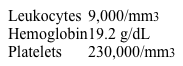 Which of the following is the most likely cause of this patient's hematologic findings?
 (Multiple Choice)
4.8/5 (80)
(80) A 32-year-old man comes to the emergency room due to severe headaches and vomiting. Soon after, he becomes comatose and expires despite extensive resuscitation efforts. Autopsy shows a ruptured cerebral aneurysm with extensive intracranial hemorrhage and a congenital heart defect. This patient's presentation is most likely associated with which of the following abnormalities?
(Multiple Choice)
5.0/5 (92)
(92) A 45-year-old man comes to the office due to a 6-month history of headache, sweating, and pain in his lower back, knees, and small joints of his hands. The pain increases with physical activity. He is unable to remove his wedding ring due to swollen fingers. The patient has also experienced excessive urination and loss of libido. Examination shows a prominent jaw and enlarged supraorbital ridges. The patient's hands are notably broad with thickened fingers. Multiple skin tags are noted on the nape of the neck. Laboratory evaluation reveals low serum testosterone levels. Which of the following is the most likely underlying cause of this patient's joint symptoms?
(Multiple Choice)
4.8/5 (74)
(74) A 27-year-old woman comes to the emergency department with a 1-day history of skin rash. Two weeks ago, she had an episode of recurrent genital lesions, which began with small papules and subsequently became vesicular with ulceration, crusting, and eventual healing. The patient has no other medical conditions and takes no medications. On physical examination, she appears comfortable. Temperature is 37 C (98.6 F). She has small linear erosions in the oral mucosa. Skin findings are shown in the image below. 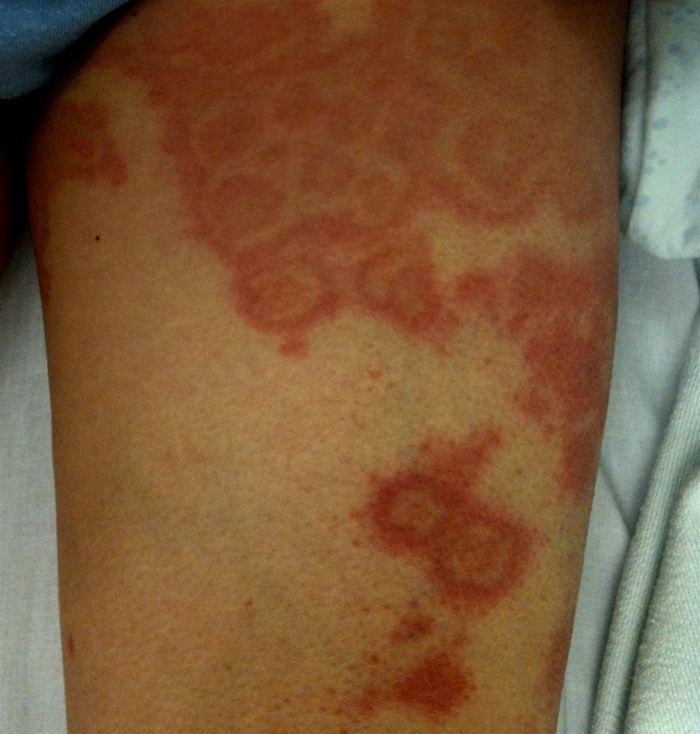 Which of the following is the most likely diagnosis?
 (Multiple Choice)
4.9/5 (95)
(95) A 10-year-old girl is brought to clinic for laboratory follow-up. Her mother was recently diagnosed with von Hippel-Lindau (VHL) disease, and the patient received genetic testing. Examination is unremarkable. Laboratory evaluation reveals a missense mutation in the VHL gene. Periodic surveillance with which of the following is most likely to be of benefit in this patient?
(Multiple Choice)
4.9/5 (81)
(81) A 64-year-old woman is evaluated for progressive gait disturbance over the last 2 years. The patient feels her feet are "stuck on the floor" and that she is unsteady while walking. She also recently began experiencing urinary urgency and has wet herself several times due to difficulty getting to the bathroom on time. The patient stopped working 6 months ago because of difficulty concentrating, and she has also lost interest in her hobbies and social activities. She has had no tremor, visual changes, headaches, nausea, or vomiting. The patient has a remote history of closed traumatic brain injury. Vital signs are within normal limits. On physical examination, lower extremity tone and deep tendon reflexes are increased. Sensation to light touch, pain, and vibration are normal. The patient's gait is slow with small steps and a wide base. CT scan of the head is shown below. 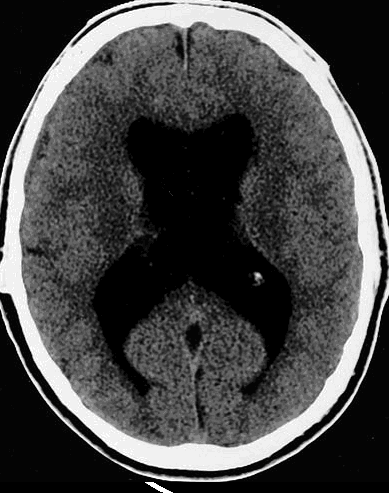 Which of the following is the most likely diagnosis?
 (Multiple Choice)
4.9/5 (91)
(91) A 27-year-old woman comes to the office for a health maintenance examination. The patient has no chronic medical conditions and no family history of cancer. She has had several sexual partners and takes oral contraceptives for birth control. Vital signs are normal. Physical examination, including pelvic examination, is normal. A Pap test is performed and reveals a squamous intraepithelial lesion that tests positive for human papillomavirus. A cervical biopsy is performed and reveals low-grade dysplasia. Which of the following features distinguishes this patient's lesion from cervical malignancy?
(Multiple Choice)
4.9/5 (87)
(87) A 27-year-old man comes to the emergency department with progressive right knee swelling and pain. He has no history of trauma to the area. The patient has no other medical conditions and takes no medications. X-rays reveal a large lytic lesion involving the proximal tibia with extensive soft-tissue swelling. After additional confirmatory testing, the patient undergoes a right-sided, above-knee amputation. Histologic examination of the resected mass is shown in the exhibits. 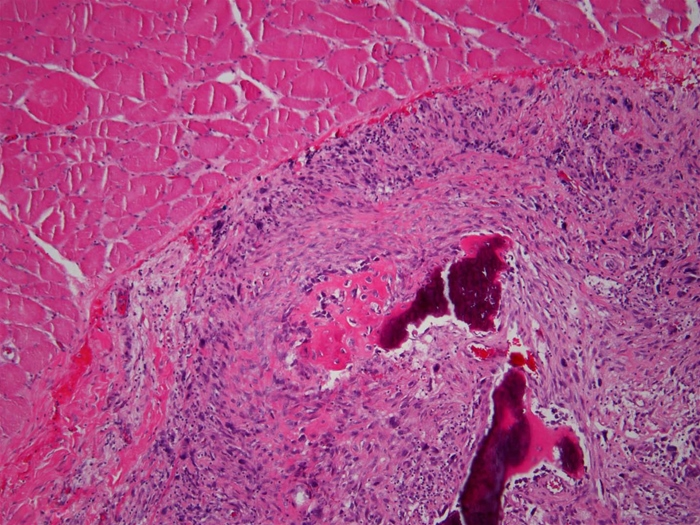
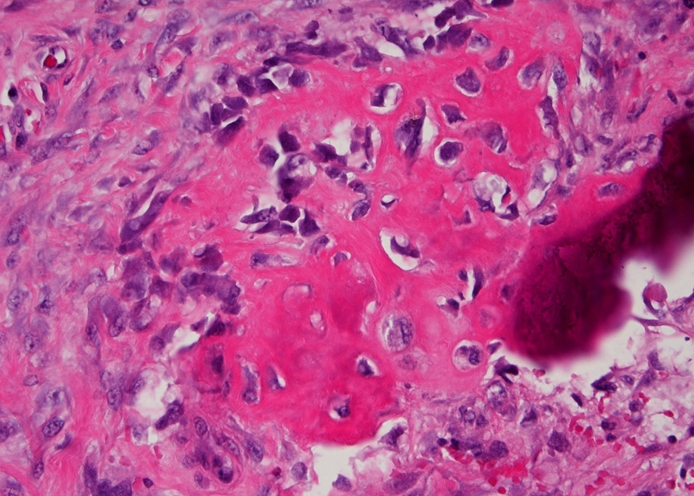 Which of the following is the most likely diagnosis?
 (Multiple Choice)
4.8/5 (75)
(75) A 48-year-old man who recently immigrated to the United States comes to the physician with multiple skin lesions. Physical examination shows a few well-defined, hypopigmented lesions on the skin of his lower extremities that have diminished sensation. After confirming the diagnosis of leprosy, the patient undergoes further testing to help classify the severity of his disease. Intradermal injection of heat-killed Mycobacterium leprae causes the development of a large indurated nodule. The patient is most likely to demonstrate which of the following additional findings?
(Multiple Choice)
4.8/5 (91)
(91) A 45-year-old woman comes to the office due to 3 days of progressive pain in the right upper quadrant, nausea, and vomiting. In the preceding year, the patient has had fatigue, weight loss, joint pain, and intermittent abdominal pain. Laboratory studies show increased blood urea nitrogen and serum creatinine. Right-upper quadrant ultrasound shows no evidence of gallstones, but an inflamed gallbladder is present. The patient undergoes cholecystectomy, and subsequent biopsy of the submucosal gallbladder vessels is shown in the exhibit (2 images). Which of the following is the most likely diagnosis?
(Multiple Choice)
4.8/5 (98)
(98) A 54-year-old man is evaluated in the clinic due to generalized weakness and lethargy for the past 5 years. He has no history of hypothyroidism or depression. The patient uses acetaminophen intermittently for joint pains that he attributes to "old age." He drinks alcohol occasionally but does not use tobacco or illicit drugs. His older brother died of liver cirrhosis. Laboratory tests show a serum ferritin level of 1800 μg/L. If this patient's disorder is hereditary, the genetic defect responsible for his condition most likely affects which of the following processes?
(Multiple Choice)
4.8/5 (83)
(83) A 45-year-old man comes to the office for progressive weakness and fatigue over the last year. The patient was adopted and does not know his family history. After a comprehensive physical examination and laboratory evaluation, the patient undergoes genetic testing. A loss of expression mutation is identified in a gene coding for a protein found on the basolateral surface of hepatocytes and enterocytes. The protein is known to interact with the transferrin receptor. Which of the following conditions is this patient at greatest risk of developing?
(Multiple Choice)
4.8/5 (89)
(89) A 34-year-old man is being evaluated for acute hematuria and oliguria. He has no chronic medical conditions and takes no medications on a regular basis. Blood pressure is 170/100 mm Hg. Blood urea nitrogen is 38 mg/dL and serum creatinine is 4.5 mg/dL. The patient undergoes a kidney biopsy and the following microscopic changes are seen after silver staining to highlight the glomerular tuft: 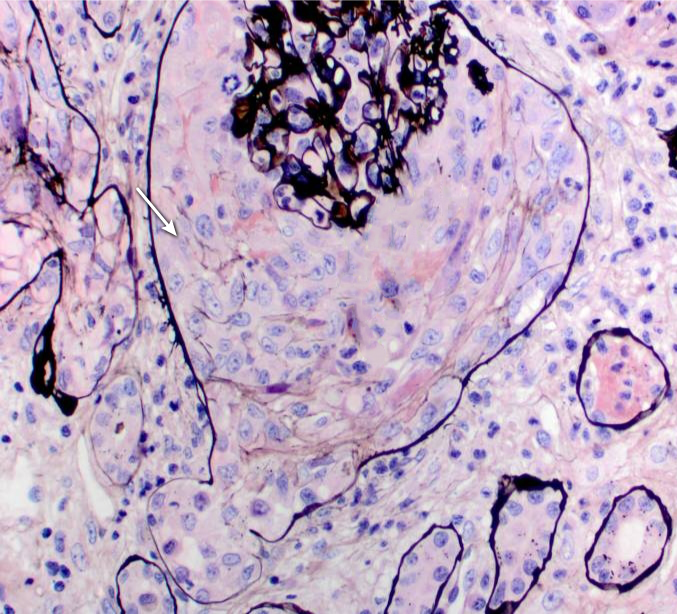 The area marked with an arrow is likely to have abnormal deposition of which of the following substances?
 (Multiple Choice)
4.8/5 (79)
(79) A 45-year-old man comes to the office due to fatigue, lack of sexual desire, and inability to maintain an erection. A year ago, he was advised to lose weight with diet and exercise due to mildly elevated fasting glucose levels. The patient has smoked a pack of cigarettes daily for the past 20 years and drinks an alcoholic beverage 3-4 times per month. Blood pressure is 110/70 mm Hg and pulse is 65/min. Oxygen saturation is 99% on room air. BMI is 29 kg/m2. Skin examination shows increased pigmentation over the knuckles and face. The liver is palpable 3-4 cm below the right costal margin. The remainder of the examination reveals small testes. Which of the following is most likely contributing to the development of the patient's symptoms?
(Multiple Choice)
4.9/5 (76)
(76) 
Filters
- Essay(0)
- Multiple Choice(0)
- Short Answer(0)
- True False(0)
- Matching(0)