



 Chat with AI
Exam 10: Pathology

Exam 1: Anatomy291 Questions
Exam 2: Behavioral science240 Questions
Exam 3: Biochemistry156 Questions
Exam 4: Biostatistics117 Questions
Exam 5: Embryology52 Questions
Exam 6: Genetics103 Questions
Exam 7: Histology24 Questions
Exam 8: Immunology129 Questions
Exam 9: Microbiology336 Questions
Exam 10: Pathology816 Questions
Exam 11: Pathophysiology464 Questions
Exam 12: Pharmacology538 Questions
Exam 13: Physiology272 Questions
Select questions type


A 66-year-old man is brought to the office by his daughter for medical evaluation. The patient reports no chronic medical conditions but has not seen a physician for many years. He takes no medications. The patient is a retired veteran and recently relocated to live closer to his daughter. He is an ex-smoker and does not use alcohol or illicit drugs. Oxygen saturation on room air is 98%. On physical examination, normal breath sounds are heard throughout both lungs. Hand examination findings are shown in the exhibit. 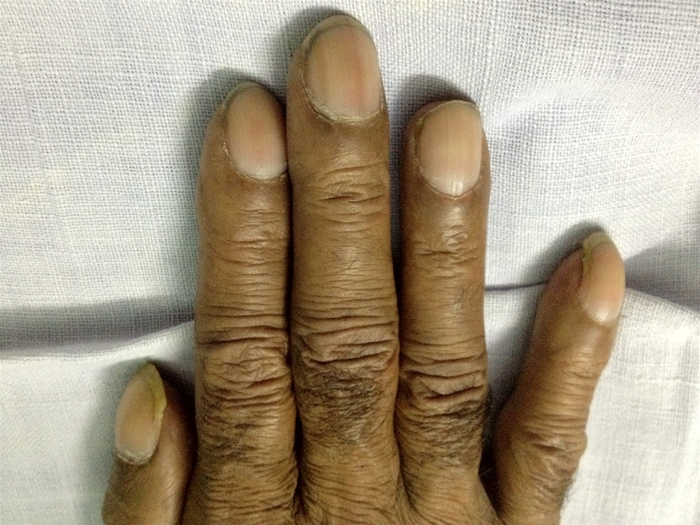 The patient's hand findings are most suggestive of which of the following underlying conditions?
 (Multiple Choice)
4.9/5  (79)
(79) A 12-year-old girl is brought to the emergency department due to several days of worsening exertional dyspnea and lethargy. The patient has a history of sickle cell disease and takes hydroxyurea. Physical examination shows mucosal pallor and a systolic ejection murmur. Laboratory studies reveal a hemoglobin level of 5.6 g/dL. Bone marrow biopsy is performed and demonstrates decreased erythroid precursors and giant pronormoblasts containing inclusions, as shown below. 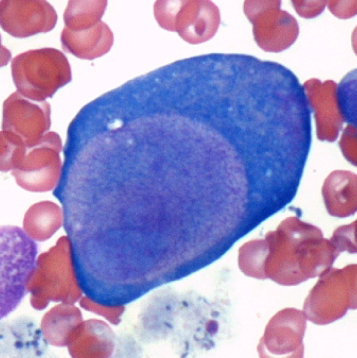 Which of the following is the most likely cause of this patient's current condition?
 (Multiple Choice)
4.8/5 (74)
(74) A 60-year-old woman is being evaluated for abnormal renal function. She is found to have a serum creatinine of 2.2 mg/dL on routine laboratory monitoring; her creatinine level a year ago was 1.2 mg/dL. The patient has a history of nonischemic cardiomyopathy and systolic heart failure and has been on a stable medical regimen for the past 2 years. She has no dyspnea, fever, rash, or lower extremity swelling but has been taking ibuprofen for 2 weeks due to left knee osteoarthritis. Urinalysis reveals the following: 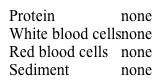 Ibuprofen is discontinued, and her kidney function returns to normal in a week. Which of the following best explains this patient's transient deterioration in renal function?
 (Multiple Choice)
4.8/5 (81)
(81) A 54-year-old man comes to the physician due to blood in his urine and abdominal discomfort that occurred 2 days ago. He was moving potted plants around his porch when he started having pain in his abdomen. Afterward, he noticed blood in his urine but says it resolved the following day. He has a history of hypertension. The patient does not use tobacco, alcohol, or illicit drugs. Physical examination shows no abnormalities. CT scan of the abdomen with contrast is shown below. 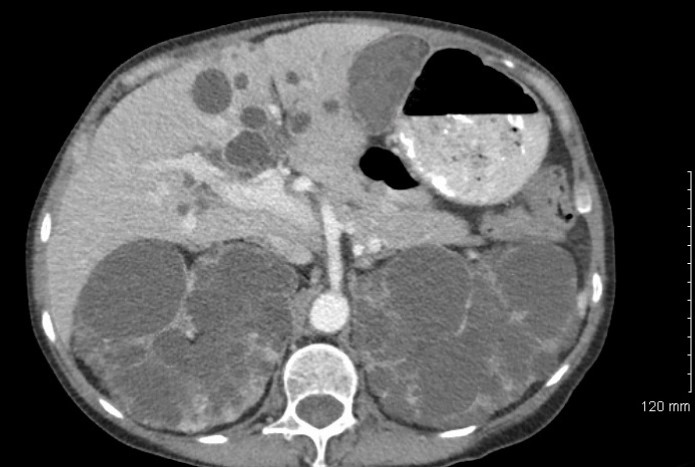 Which of the following is the most likely diagnosis?
 (Multiple Choice)
4.7/5 (83)
(83) A 65-year-old man comes to the office with dysphagia. For the last 3 months, he has relied on protein shakes and juices for nourishment as he has had difficulty swallowing solid foods. He has also had a diminished appetite and an estimated weight loss of 9.1 kg (20 lb). Medical history includes hyperlipidemia, emphysema, and previous episodes of pancreatitis. Family history includes lung cancer in his mother. The patient smoked a pack of cigarettes daily for 50 years but quit 2 years ago. He has been drinking a fifth (750 mL) of vodka weekly for the last decade. Vital signs are normal. BMI is 19.2 kg/m2. Temporal wasting is present but physical examination is otherwise unremarkable. Upper endoscopy reveals a 4-cm mass in the middle third of the esophagus, and several biopsies are taken. Thoracic imaging reveals mediastinal lymphadenopathy. Histologic evaluation of the biopsy specimens will most likely show which of the following in this patient?
(Multiple Choice)
4.9/5 (83)
(83) A 46-year-old man is brought to the emergency department by paramedics after an episode of large-volume hematemesis. He was going over some papers at work when he suddenly felt nauseated and started vomiting up bright red blood. Physical examination reveals a palpable spleen. Endoscopy shows bleeding esophageal varices. A liver biopsy performed 2 days later shows no abnormalities. Which of the following is the most likely cause of this patient's condition?
(Multiple Choice)
4.9/5 (91)
(91) A 48-year-old male is admitted to the hospital with severe epigastric abdominal pain and vomiting after an episode of binge-drinking. Four weeks later, he is found to have a palpable upper abdominal mass and a cystic lesion is visualized on computed tomography scanning (see image below, asterisk marks the lesion). 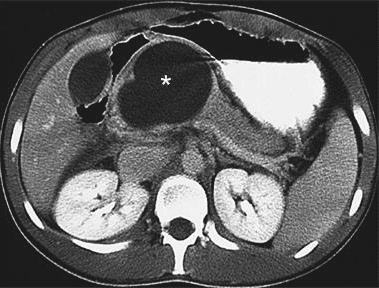 The inner walls of the lesion are most likely lined with:
 (Multiple Choice)
4.8/5 (79)
(79) A 66-year-old man comes to the office after his employer urged him to undergo medical evaluation for repeated mistakes at work. The patient was a highly successful accountant until 6 months ago when he started making uncharacteristic errors and turning in projects late. He says, "I don't know why, but it's suddenly really hard for me to organize and plan for these projects." His wife has had to take over managing their finances at home. The patient is also having difficulty shopping for groceries and preparing meals. He has not seen a physician in many years and takes no medications. Blood pressure is 159/96 mm Hg and pulse is 72/min. Physical examination shows impaired executive neurocognitive function. Reflexes are 2+ in the right lower extremity and 3+ in the left. Strength is 5/5 on the right side and 4/5 in the left lower extremity. He has an unsteady gait. Which of the following is the most likely pathophysiologic process underlying this patient's condition?
(Multiple Choice)
4.9/5 (87)
(87) A 72-year-old woman comes to the office for a routine follow-up appointment. She has no symptoms and her past medical history is insignificant. Her temperature is 36.7 C (98 F), blood pressure is 110/80 mm Hg, and pulse is 76/min and irregular. ECG shows atrial fibrillation with no ischemic changes. Anticoagulation therapy with warfarin is initiated for stroke prevention. Two days later, the patient is hospitalized with severe skin and subcutaneous fat necrosis. Drug effects on which of the following processes are most likely responsible for this patient's skin findings?
(Multiple Choice)
4.9/5 (90)
(90) A 62-year-old man comes to the clinic due to a 6-month history of progressive exertional dyspnea. The patient has an occasional cough but has no palpitations, orthopnea, chest pain, or lower extremity swelling. Past medical history is insignificant. He works as an attorney, does not use tobacco, and drinks alcohol only on social occasions. His symptoms continue to progress, and the patient dies of respiratory failure 3 years after the initial clinic visit. Autopsy findings include heterogenous lung parenchyma with predominantly subpleural areas of dense collagen deposition, lymphocyte infiltration, and fibroblast proliferation intermixed with areas of normal lung tissue. Which of the following is the most likely diagnosis?
(Multiple Choice)
4.7/5 (79)
(79) A 62-year-old man is evaluated for persistent dry cough and exertional dyspnea that has progressed over the past year. He has had difficulty accomplishing normal daily activities. The patient has no significant medical history and takes no medications. He smoked cigarettes for 10 years and quit 25 years ago. The patient works as an investment banker and does not use alcohol or illicit drugs. Vital signs are normal. Physical examination shows bilateral inspiratory crackles and digital clubbing. CT scan of the chest is shown in the exhibit.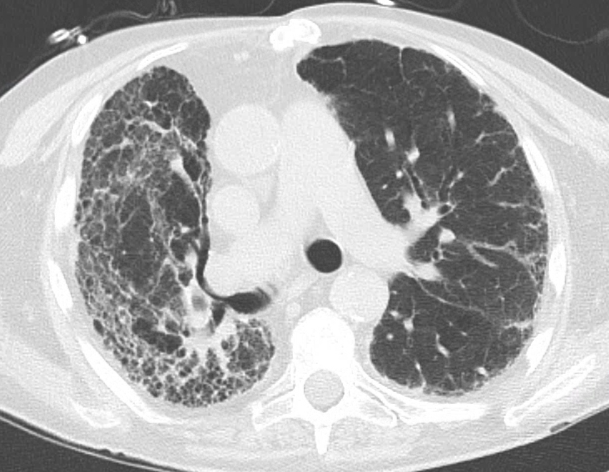 Which of the following changes are most likely present in this patient's lung tissue?
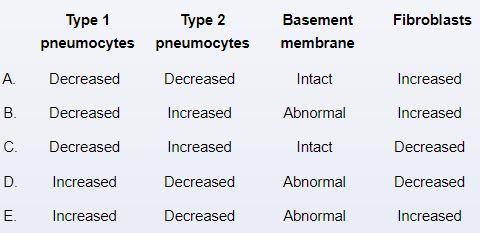 A)A
B)B
C)C
D)D
E)E
Which of the following changes are most likely present in this patient's lung tissue?
A)A
B)B
C)C
D)D
E)E (Short Answer)
4.9/5 (71)
(71) A 65-year-old man comes to the office for evaluation of blood in the urine. The patient has no abdominal pain, urinary frequency, or urgency. He has hypertension, type 2 diabetes mellitus, and stage II chronic kidney disease. He quit smoking 10 years ago and had smoked a pack of cigarettes daily for 30 years. On examination, vital signs are within normal limits. The patient's BMI is 33 kg/m2. After appropriate work-up, the patient undergoes a renal biopsy; histopathologic findings are shown below. 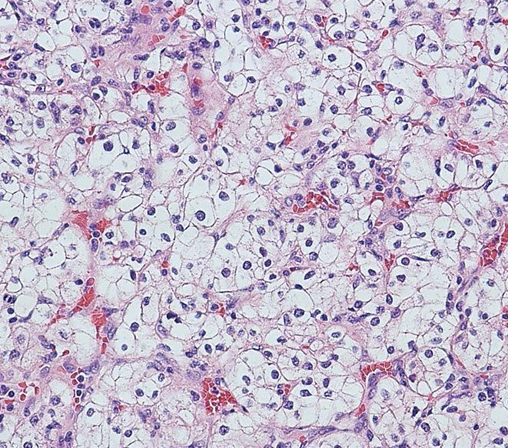 Which of the following processes most likely accounts for the abnormal appearance of these cells?
 (Multiple Choice)
4.9/5 (87)
(87) A 35-year-old woman is brought to the emergency department due to severe right leg pain. She is a concert pianist with no known medical issues. During rehearsal, she began experiencing cramping of the right foot that did not improve with stretching or rest. The pain quickly spread to her calf, and the patient now rates the pain as 9 out of 10 in intensity. On examination, the right foot and calf appear pale and cool compared with the left, and sensation is diminished. Right-sided dorsalis pedis and posterior tibial pulses are absent, and the popliteal pulse is barely palpable. Emergency embolectomy is performed and a gelatinous mass causing arterial occlusion is successfully removed. Histopathologic section of the mass is shown in the exhibit. 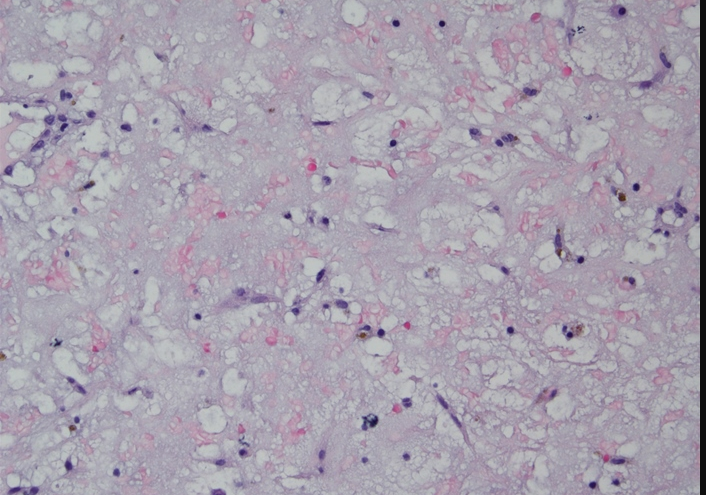 Which of the following is the most likely origin of this patient's embolus?
 (Multiple Choice)
4.9/5 (81)
(81) A 31-year-old Caucasian female presents to your office for routine check-up. You notice several subcutaneous bumps that seem to be attached to Achilles tendons. Her father died from a heart attack at 35 years old and her mother suffers from rheumatoid arthritis. Her aunt was diagnosed with colon cancer while 55 years old. Which of the following is the best initial test in this patient?
(Multiple Choice)
4.9/5 (75)
(75) A 28-year-old previously healthy man comes to the office due to episodic fevers, night sweats, and weight loss for several months. He emigrated from Kenya with his family at age 14. He does not use tobacco, alcohol, or illicit drugs. The patient works as a driving instructor and volunteers at a homeless shelter. His temperature is 37.2 C (99 F). Physical examination is normal with the exception of cervical lymphadenopathy. A lymph node biopsy is performed, and histopathologic findings are shown in the image below. 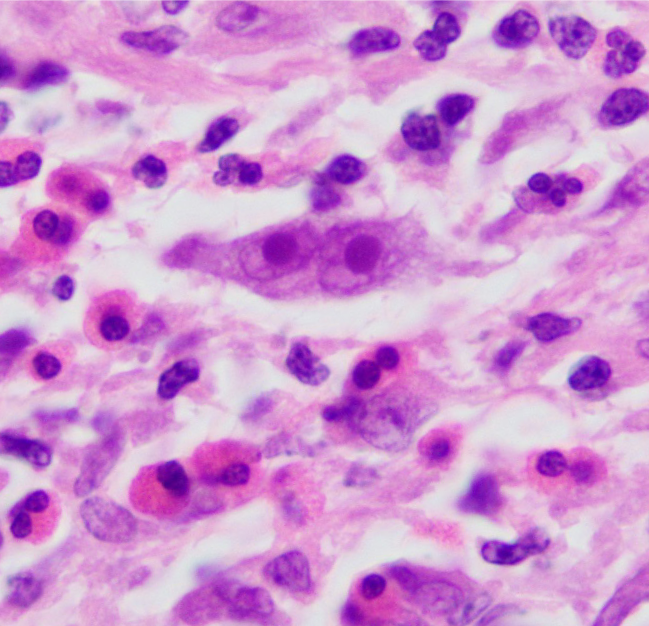 Which of the following is the most likely diagnosis?
 (Multiple Choice)
4.9/5 (86)
(86) A 45-year-old woman recently diagnosed with Sjögren's syndrome complains of severe pruritus that slowly progressed over the last year. She says that pruritus is especially prominent over palms and soles and is unbearable during the night. Laboratory testing shows: 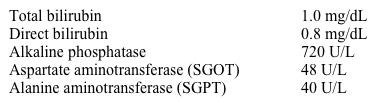 This patient most likely has which of the following conditions?
 (Multiple Choice)
5.0/5 (86)
(86) A 66-year-old man comes to the office due to increasing shortness of breath over the past 3 weeks. He has had a nonproductive cough for several months, which he attributes to allergies, but also notes a 9-kg (20-lb), unintentional weight loss over this time. The patient has no prior medical conditions and takes no medications. He has a 50-pack-year smoking history. Temperature is 36.7 C (98 F), blood pressure is 120/80 mm Hg, pulse is 72/min, and respirations are 18/min. Chest x-ray is shown below. 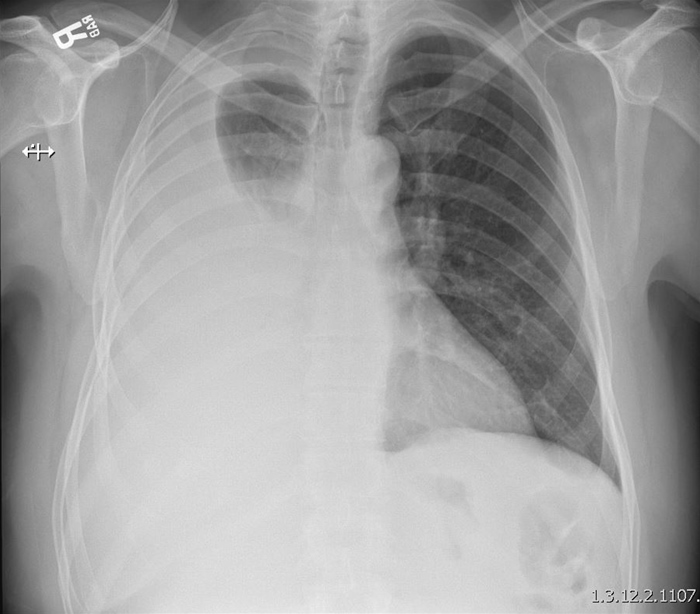 Which of the following would be the expected physical examination finding over the right lower chest?
 (Multiple Choice)
4.8/5 (82)
(82) A 24-year-old man comes to the clinic due to 2 weeks of progressive generalized weakness. He has also had significant bruising on his trunk that developed spontaneously without trauma. The patient has no known medical conditions and takes no medications. Temperature is 37.1 C (98.8 F), pulse is 120/min, and respirations are 20/min. Conjunctival pallor is present. Cardiac examination reveals mild sinus tachycardia with no murmurs. Skin examination shows truncal ecchymoses but is otherwise normal. Laboratory results reveal a hemoglobin of 6.8 g/dL and a normal creatinine. Bone marrow aspiration is grossly pale and histologically appears diluted due to high lipid content. Which of the following laboratory patterns is most likely present in this patient?
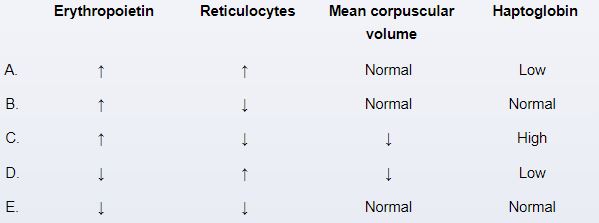
(Multiple Choice)
4.7/5 (75)
(75) A 30-year-old man is admitted to the hospital due to seizures. The repeated, prolonged tonic-clonic seizures were terminated with intravenous lorazepam in the emergency department. Medical history is significant for amphetamine abuse. The patient develops decreased urine output 24 hours after hospital admission. Temperature is 37.1 C (98.8 F), blood pressure is 140/90 mm Hg, pulse is 88/min, and respirations are 18/min. Examination shows bibasilar lung crackles and mild edema of the lower extremities. Laboratory results are as follows: 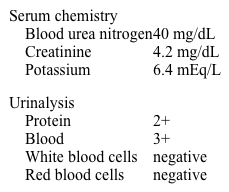 Which of the following is the most likely cause of this patient's kidney injury?
 (Multiple Choice)
4.8/5 (81)
(81) A 46-year-old woman comes to the emergency department due to 3 days of persistent upper abdominal pain, nausea, and vomiting. The patient has had similar pain in the past, especially after fatty meals, which resolved spontaneously within several hours. Temperature is 38.6 C (101.5 F), blood pressure is 110/65 mm Hg, and pulse is 98/min. BMI is 33 kg/m2. Physical examination is notable for severe right upper quadrant tenderness. Leukocyte count is 21,000/mm3. Laparoscopic surgery is performed and reveals an erythematous, distended gallbladder with patchy necrosis. Which of the following events most likely initiated this patient's condition?
(Multiple Choice)
4.8/5 (86)
(86) 
Filters
- Essay(0)
- Multiple Choice(0)
- Short Answer(0)
- True False(0)
- Matching(0)