



 Chat with AI
Exam 10: Pathology

Exam 1: Anatomy291 Questions
Exam 2: Behavioral science240 Questions
Exam 3: Biochemistry156 Questions
Exam 4: Biostatistics117 Questions
Exam 5: Embryology52 Questions
Exam 6: Genetics103 Questions
Exam 7: Histology24 Questions
Exam 8: Immunology129 Questions
Exam 9: Microbiology336 Questions
Exam 10: Pathology816 Questions
Exam 11: Pathophysiology464 Questions
Exam 12: Pharmacology538 Questions
Exam 13: Physiology272 Questions
Select questions type


A 2-month-old girl is brought to the office for a follow-up examination. The parents are concerned about a red bump that first appeared on her scalp at age 3 weeks. The lesion has since grown significantly in size. The child's growth and development are appropriate for age. A photograph of the lesion is shown in the exhibit. 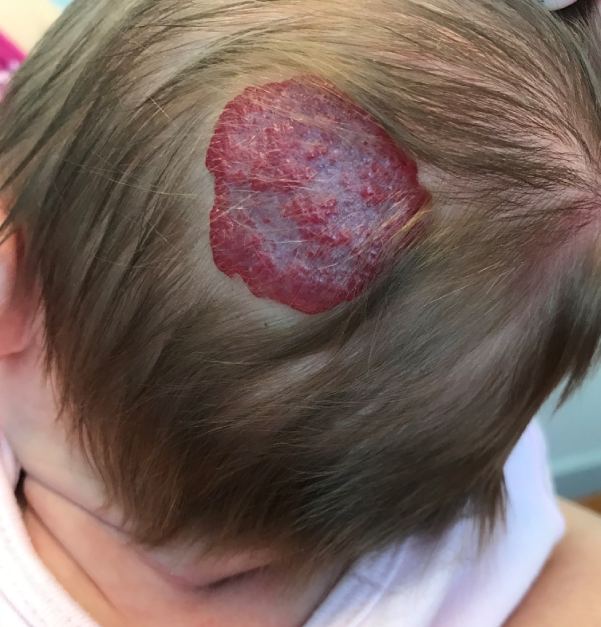 Examination shows no other abnormalities. This child's lesion is most likely primarily composed of which of the following?
 (Multiple Choice)
4.9/5  (81)
(81) A 63-year-old man comes to the office due to several months of dysphagia, fatigue, occasional chest discomfort, and indigestion. He has a history of hypertension and takes amlodipine. The patient smokes 1 or 2 cigars daily. His blood pressure is 140/80 mm Hg. Physical examination is normal. An endoscopic evaluation with esophageal biopsy is performed. The histopathology of the specimen is shown in the image below. 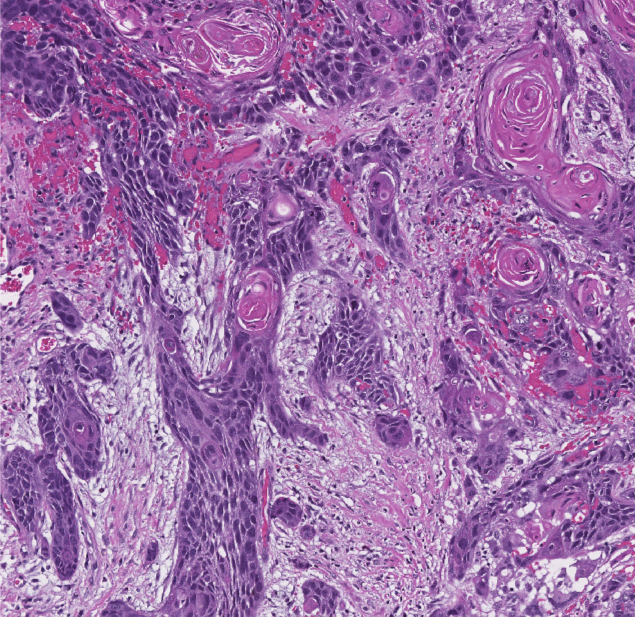 Which of the following is the most likely cause of this patient's dysphagia?
 (Multiple Choice)
4.9/5 (66)
(66) A 20-year-old student collapses suddenly in class and dies, despite resuscitation efforts. Review of the medical chart is conducted-including symptoms, review of systems, medical history, and substance use-and is unremarkable except for a family history of sudden cardiac death. Autopsy is performed and myocardial histology is shown in the image. Complete genotyping is most likely to reveal a pathologic mutation that affects a protein belonging to which of the following structures? 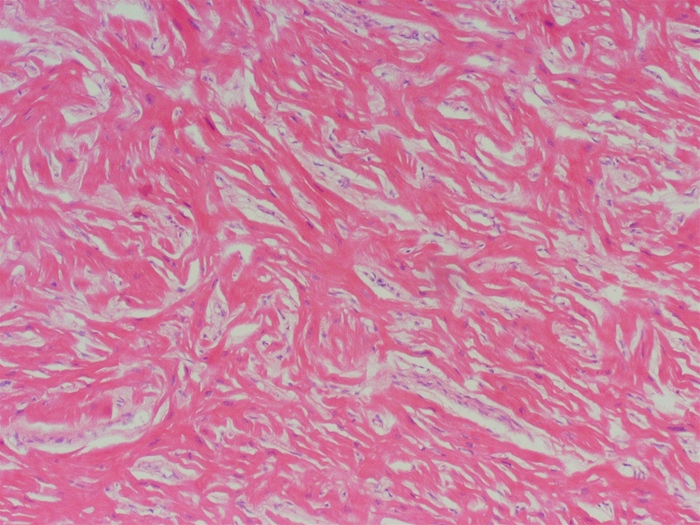
(Multiple Choice)
4.8/5 (75)
(75) A 24-year-old man comes to the urgent care clinic due to painful swelling in his left groin. The patient noticed the swelling 2 days ago, and it has progressively become more tender and painful. He has no chronic medical conditions, but he recently sustained a puncture wound to the sole of his left foot. Physical examination shows an enlarged, tender, and nonfluctuant left inguinal lymph node with erythematous overlying skin. There is a small puncture wound on the sole of the left foot, which expresses pus upon mild pressure. Which of the following histologic findings is most likely responsible for this patient's groin mass?
(Multiple Choice)
4.8/5 (63)
(63) A 58-year-old man comes to the office for evaluation of a foot wound. The patient noticed a small ulcer on the bottom of his right foot a week ago but recalls no significant foot injury. He has been applying antiseptics, but the wound has failed to heal. The patient has a 15-year history of type 2 diabetes mellitus and is nonadherent to medical therapy. He has smoked a pack of cigarettes daily for 20 years. Temperature is 37.1 C (98.8 F), blood pressure is 140/80 mm Hg, and pulse is 72/min. Right lower extremity examination shows a 1-cm (0.39-in) plantar ulcer under the first metatarsal head. There are no other lesions, and the tibial and dorsalis pedis pulses are normal. Which of the following is the major inciting factor responsible for this patient's foot ulcer?
(Multiple Choice)
4.8/5 (80)
(80) A 35-year-old man with a history of alcohol use disorder is brought to the ER with hematemesis. Prior to this, he has had three episodes of vomiting. His BP is 110/80 mmHg and pulse is 98/min. He has no jaundice. Lungs are clear to auscultation. Abdomen is soft, non tender, and non-distended. There is no hepatomegaly. Endoscopy shows longitudinal mucosal tears at the gastroesophageal junction. This patient's condition is most likely related to which of the following?
(Multiple Choice)
5.0/5 (74)
(74) Four children and 2 adults are currently being followed in a nephrology clinic for poststreptococcal glomerulonephritis. Three patients initially had gross hematuria and edema requiring diuretic administration. The remaining 3 patients had microscopic hematuria and hypertension. C3 levels were decreased in all patients, and antistreptolysin O titer was elevated in 4 of them. None of the patients have preexisting renal disease. Which of the following patient characteristics is most likely to indicate a poor long-term prognosis?
(Multiple Choice)
4.9/5 (87)
(87) A 54-year-old previously healthy man comes to the office due to several weeks of leg swelling. He has had no fever, chest pain, or dyspnea. The patient has a 40-pack-year smoking history but does not use alcohol or illicit drugs. He is afebrile and vital signs are within normal limits. On physical examination, there is symmetric pitting edema of the lower extremities bilaterally. The abdomen is soft and nondistended. A mobile left flank mass can be palpated. There are several vertically oriented tortuous veins on the lower abdominal wall. Which of the following structures is most likely obstructed in this patient?
(Multiple Choice)
4.9/5 (88)
(88) A 50-year-old man with polycystic kidney disease comes to the office due to constant, deep pain in his shoulders, arms, and legs. Medical history includes long-standing hypertension treated with ramipril. Blood pressure is 150/85 mm Hg and pulse is 78/min. Cardiopulmonary examination is normal. Abdominal examination shows large, palpable renal masses. Trace bilateral lower-extremity edema is present. Laboratory results from 2 years ago showed a blood urea nitrogen level of 25 mg/dL and a creatinine level of 2.3 mg/dL. Current laboratory results are as follows: 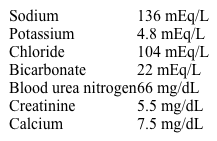 Which of the following metabolic states is most likely present in this patient?
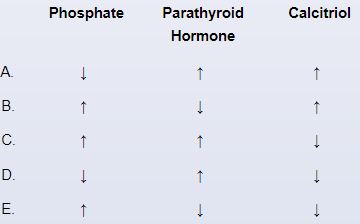
Which of the following metabolic states is most likely present in this patient?
(Multiple Choice)
4.9/5 (77)
(77) A 65-year-old man comes to the emergency department due to abdominal pain and diarrhea. Three weeks ago, he drove from Texas to Mexico for a family vacation. Temperature is 38.3 C (101 F), blood pressure is 115/70 mm Hg, and pulse is 98/min. Abdominal examination shows mild, generalized tenderness with no rebound tenderness or guarding. Leukocyte count is 14,000/mm3. Sigmoidoscopy demonstrates white-yellow plaques on the colonic mucosa, and biopsy shows that the plaques are composed of fibrin and inflammatory cells. Further questioning regarding this patient's trip to Mexico is most likely to reveal which of the following events?
(Multiple Choice)
4.9/5 (83)
(83) An 18-year-old man comes to the office due to a mass in his left scrotum. He has no other symptoms. The patient plays basketball regularly but does not recall any recent trauma to the testicle. He is sexually active with 2 partners and does not use condoms. Vital signs are within normal limits. Physical examination shows a left intrascrotal nodule that is difficult to distinguish from the left testis. The mass is nontender, does not change in size upon supine positioning, and does not transilluminate. There is no inguinal lymphadenopathy. Which of the following is the most likely diagnosis?
(Multiple Choice)
4.9/5 (79)
(79) A 38-year-old woman comes to the office due to jaundice, nausea, and abdominal discomfort. Vital signs are within normal limits. Scleral icterus and hepatomegaly are present. Laboratory results are as follows: 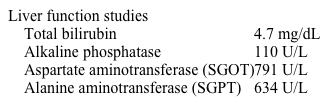 Anti-smooth muscle antibody titers are elevated. Which of the following histologic findings is most likely to be seen on biopsy of this patient's liver?
 (Multiple Choice)
4.8/5 (92)
(92) A 34-year-old woman comes to the emergency department because of sharp chest pain that radiates to the left shoulder. The pain increases with inspiration and is partially relieved by sitting up and leaning forward. Review of her outpatient medical records shows that she was seen for a facial rash 6 months ago. She is also being evaluated for proteinuria that was identified during her last clinic appointment. Which of the following is the most likely cause of this patient's chest pain?
(Multiple Choice)
4.9/5 (95)
(95) A 71-year-old woman is brought to the physician by her daughter. She says that her mother went shopping yesterday and could not find her way back home. Two years ago, her mother "started forgetting things like where she put her keys" and "began to have problems remembering the right words." Now she has trouble keeping up with her activities of daily living and refuses to pay her bills because "it's a waste of money." The patient's past medical history is unremarkable. Brain magnetic resonance imaging (MRI) is most likely to show atrophy of which of the following structures? 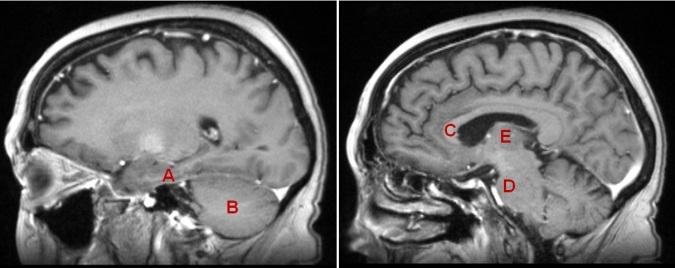
(Multiple Choice)
4.7/5 (72)
(72) A 22-year-old woman comes to the emergency department due to a nosebleed. She had a similar episode yesterday, but the bleeding stopped with prolonged local pressure. On review of systems, the patient has also had easy bruising for the past several months. She has no significant past medical history and takes no medications. On physical examination, her heart and lungs appear normal. The liver span is 8 cm and the spleen is not palpable. There are scattered ecchymoses over her arms and legs. Laboratory results are as follows: 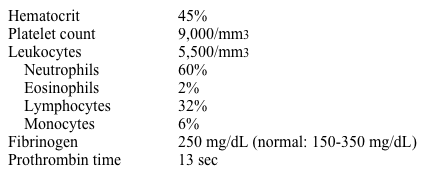 HIV and hepatitis C tests are negative. Which of the following is the most likely primary mechanism causing this patient's condition?
 (Multiple Choice)
4.9/5 (84)
(84) A 17-year-old boy comes to the office for evaluation of a rash. For the past 2 years, the patient has had recurrent skin bumps that are frequently red and painful. He has no other medical conditions and takes no medications. Vital signs are within normal limits. Skin examination findings are shown below. 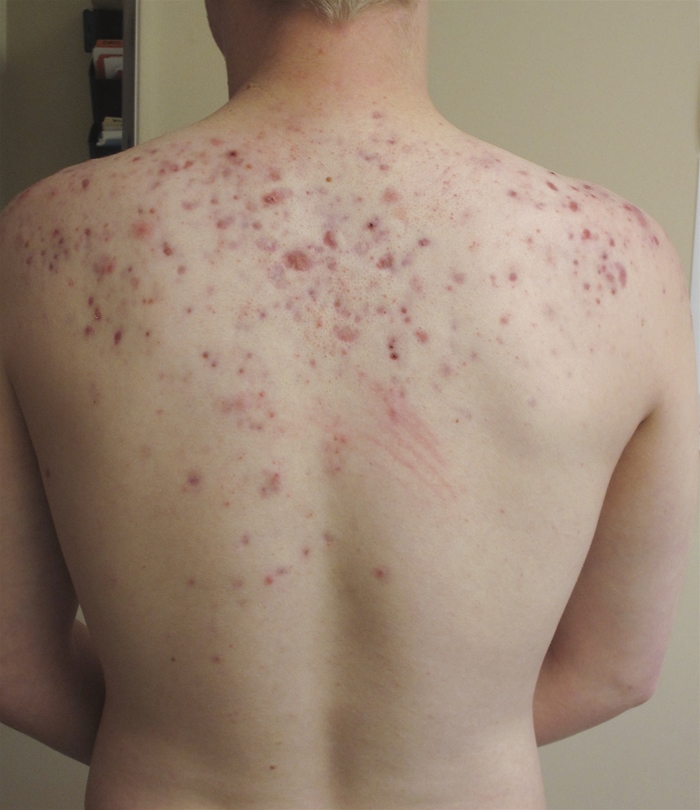 This patient's skin condition primarily affects which of the following structures?
 (Multiple Choice)
4.9/5 (67)
(67) 
Filters
- Essay(0)
- Multiple Choice(0)
- Short Answer(0)
- True False(0)
- Matching(0)