



 Chat with AI
Exam 10: Pathology

Exam 1: Anatomy291 Questions
Exam 2: Behavioral science240 Questions
Exam 3: Biochemistry156 Questions
Exam 4: Biostatistics117 Questions
Exam 5: Embryology52 Questions
Exam 6: Genetics103 Questions
Exam 7: Histology24 Questions
Exam 8: Immunology129 Questions
Exam 9: Microbiology336 Questions
Exam 10: Pathology816 Questions
Exam 11: Pathophysiology464 Questions
Exam 12: Pharmacology538 Questions
Exam 13: Physiology272 Questions
Select questions type


An 8-year-old boy is being evaluated due to drug-resistant epilepsy. The patient has had recurrent seizures since age 2, which have remained uncontrolled despite multiple antiepileptic medications. He has no history of head trauma, meningitis, or encephalitis. There is no family history of seizure disorder. Electroencephalography reveals epileptic foci originating from the left temporal lobe, and neuroimaging reveals an abnormality of the left hippocampus. Surgical resection of the cortical region from which the seizure originates is performed. Histopathological examination of the removed brain tissue is most likely to reveal which of the following findings?
(Multiple Choice)
4.9/5  (74)
(74) A 21-year-old woman, gravida 0, comes to the office due to postcoital bleeding. She has been sexually active with her male partner for 6 months. The patient has been taking birth control pills since age 15, when she first became sexually active. The patient and her partner do not use condoms and have never been diagnosed with a sexually transmitted infection. The patient smokes a pack of cigarettes per day. Bimanual examination reveals a small mobile uterus and no cervical motion tenderness. Speculum examination shows a well-estrogenized vagina without lesions. The cervix has an area of erythema surrounding the external os and scant clear discharge. She has her first Papanicolaou smear, and the cytological finding is shown in the image below. 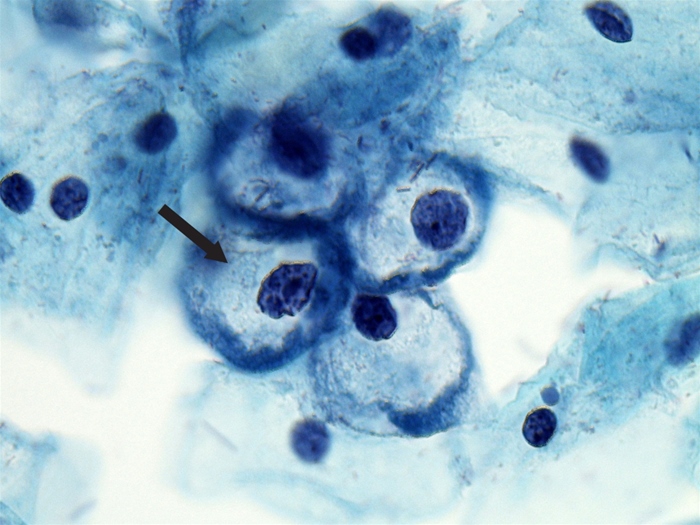 Which of the following best describes the finding shown on this patient's slide?
 (Multiple Choice)
4.9/5 (75)
(75) A 75-year-old man is brought to the office for evaluation due to memory loss and increasing confusion for 6 months. The patient is unable to manage his finances and occasionally gets lost in his neighborhood, needing to ask for directions. On examination, he can recall only 1 of 3 objects after 5 minutes. The patient performs poorly on cognitive assessment testing. Cranial nerves and gait are normal. T2-weighted MRI reveals multiple white matter abnormalities (hyperintensities) within the left frontal, bilateral parietal, and occipital white matter. Also noted are subcortical gray matter hyperintensities in the bilateral thalamus. Which of the following is the most likely diagnosis?
(Multiple Choice)
4.7/5 (76)
(76) A 42-year-old woman comes to the physician for a routine check-up. She has no current complaints and no significant past medical history. On physical examination, the physician notes lesions on her eyelids that are pictured below. 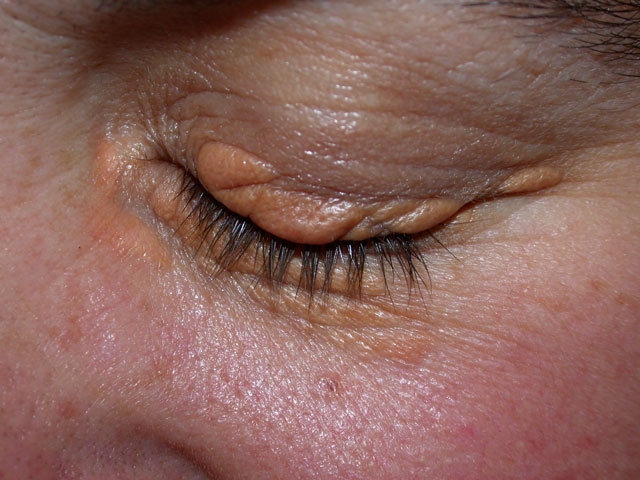 Which of the following is the best next step in the management of this patient?
 (Multiple Choice)
4.8/5 (62)
(62) A 40-year-old man comes to the office with pain on defecation. The pain is sharp and severe but subsides within minutes of passing the bowel movement. He often sees spots of bright red blood on the toilet paper. The patient has chronic constipation and has not taken laxatives or increased his fluid intake to compensate. He has no fever, night sweats, diarrhea, or unexpected weight loss. Past medical history is notable for chronic low back pain following a motor vehicle accident, for which he takes a scheduled dose of pain relievers. The patient has smoked a pack of cigarettes daily for the last 20 years but does not use alcohol or illicit drugs. He is married and has no outside sexual contacts. Vital signs are normal. The abdomen is soft and nontender with no hepatosplenomegaly. Rectal examination is likely to show a tear at which of the following locations?
(Multiple Choice)
4.8/5 (79)
(79) A 34-year-old man comes to the office due to 2 days of anorexia, nausea, and dark-colored urine. He travels frequently for business and recently returned from a trip to Mexico. The patient has a history of asthma and occasionally uses inhaled albuterol for symptom management. His temperature is 37.8 C (100.2 F), blood pressure is 125/70 mm Hg, and pulse is 94/min. Cardiopulmonary examination is normal. There is mild right upper quadrant abdominal tenderness with no guarding or rebound. Serologic testing for Entamoeba histolytica is negative. Which of the following findings is most likely to be seen on liver biopsy in this patient?
(Multiple Choice)
4.9/5 (79)
(79) A 67-year-old man comes to the office due to slowly worsening pain in both legs. He has had no trauma, fever, or chills. The pain is deep and aching, is present throughout the day, and increases with weight bearing. Vital signs are normal. Examination shows bilateral bowing of the legs with palpable warmth over the anterior shins but no redness. The remainder of the examination shows no abnormalities. Imaging studies reveal bone expansion, with cortical and trabecular thickening affecting both the tibia and fibula. Which of the following patterns of serum laboratory values is most likely in this patient?
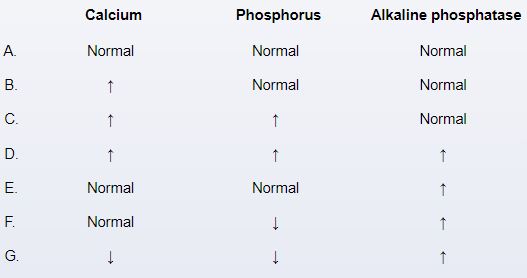
(Multiple Choice)
4.8/5 (89)
(89) A 44-year-old man who was recently diagnosed with idiopathic membranous nephropathy after developing edema comes to the office due to a sudden onset of left flank pain and gross hematuria. The patient has no other medical problems. He is taking furosemide and ramipril. Blood pressure is 135/85 mm Hg and pulse is 88/min. On examination, there is left flank tenderness. The patient's edema has improved from the previous visit. There is a left-sided varicocele that the patient has not noticed before. Urinalysis shows increased proteinuria and new hematuria. Serum lactate dehydrogenase is elevated. Urinary loss of which of the following substances most likely predisposed this patient to his acute condition?
(Multiple Choice)
4.9/5 (60)
(60) A 22-year-old woman comes to the office due to worsening dyspnea. The patient has also experienced low-grade fevers, a 6.8-kg (15-lb) weight loss, and syncopal episodes over the last 3 months. Her shortness of breath worsens when sitting and improves when lying down. Medical history is insignificant. The patient does not use tobacco, alcohol, or illicit drugs. Temperature is 37.4 C (99.3 F), blood pressure is 115/72 mm Hg, pulse is 75/min and regular, and respirations are 12/min. The lungs are clear. Cardiac auscultation reveals a low-pitched, mid-diastolic rumble at the cardiac apex. The remainder of the physical examination is normal. ECG reveals left atrial enlargement, and echocardiography shows a large, pedunculated mass in the left atrium. Histologic analysis of this mass will most likely reveal which of the following?
(Multiple Choice)
4.9/5 (79)
(79) A 46-year-old man comes to the physician complaining of intermittent, bloody diarrhea and abdominal pain for the past month. He has lost 12 lbs (5.5 kg) during this period. He was diagnosed with HIV five years ago, but has been noncompliant with his antiretroviral medications. Laboratory results show a CD4 count of 50 cells/µL and viral load of 650,000 copies/mL. Colonoscopy reveals multiple hemorrhagic polypoidal lesions. Biopsy of these lesions reveals spindle cells with surrounding blood vessel proliferation. Which of the following is the most likely cause of this patient's diarrhea?
(Multiple Choice)
4.8/5 (80)
(80) A 62-year-old woman comes to the office due to a 3-month history of progressive muscle weakness. The patient has been having difficulty with activities such as getting out of the car and carrying groceries from the store. She has also developed a rash on her face and hands. The patient has a history of well-controlled hypertension and does not use tobacco, alcohol, or illicit drugs. Vital signs are within normal limits. Physical examination shows weakness of shoulder abduction and hip flexion. Strength of the distal limb muscles and deep tendon reflexes are normal. Skin examination findings are shown in the exhibit.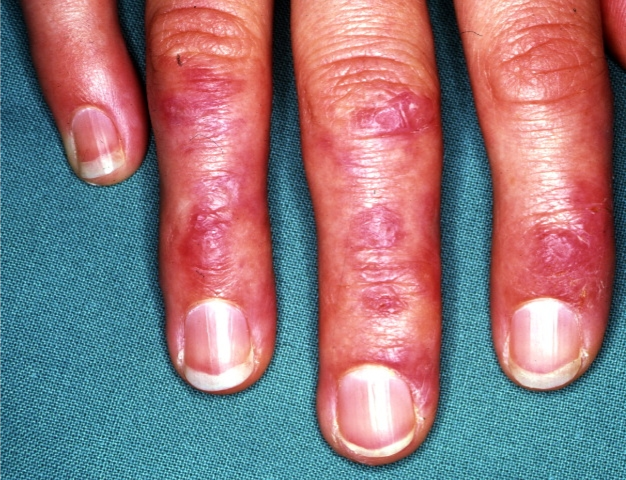 Which of the following is the most appropriate initial treatment for this patient's current condition?
 (Multiple Choice)
4.8/5 (82)
(82) A 25-year-old woman comes to the office due to significant fatigue. Several weeks ago, the patient had a weeklong episode of intermittent fever and severe body aches. Over the last 2 weeks, she has been too tired to complete her normal jogging routine in the mornings and has had to take naps after returning home from work. The patient has no chronic medical conditions and takes no medications. Temperature is 37.2 C (99 F), pulse is 110/min, and respirations are 20/min. Examination shows pale lips and conjunctivae. The abdomen is soft and there is no hepatosplenomegaly. Examination of the extremities is unremarkable, and no lymphadenopathy is present. Laboratory results are as follows: 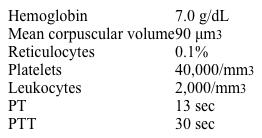 Peripheral blood smear reveals normocytic, normochromic red blood cells, and other cell types appear morphologically normal. This patient's bone marrow biopsy would most likely show which of the following patterns?
 (Multiple Choice)
4.8/5 (93)
(93) A 66-year-old man comes to the emergency department due to dizziness, dysarthria, and bilateral limb ataxia. His symptoms have been steadily worsening over the last 2 weeks. He has no other medical problems and takes no medications. He has a 50-pack-year smoking history and does not use alcohol or illicit drugs. Chest x-ray shows a mass in his right lung. He is admitted to the hospital for evaluation, but his neurologic symptoms continue to progress. He dies several months later despite receiving appropriate treatment. Autopsy shows extensive cerebellar Purkinje cell degeneration. Which of the following best describes the etiology of this patient's neurologic condition?
(Multiple Choice)
4.9/5 (81)
(81) A 15-year-old girl comes to the office for follow-up. The patient was diagnosed with Wilson disease a year ago, at which time she began penicillamine therapy. Her dysarthria and academic performance have since improved. Vital signs are normal. Laboratory results are as follows:  Which of the following is the most likely explanation for this patient's laboratory findings?
 (Multiple Choice)
4.8/5 (92)
(92) A 55-year-old woman comes to the physician due to a 4-month history of progressive hearing loss in her right ear. Vital signs are within normal limits. Inspection of the external ear canals and tympanic membranes shows no abnormalities. Neurologic examination shows decreased hearing in the right ear; hearing in the left ear is normal. MRI of the head with contrast is shown in the image below: 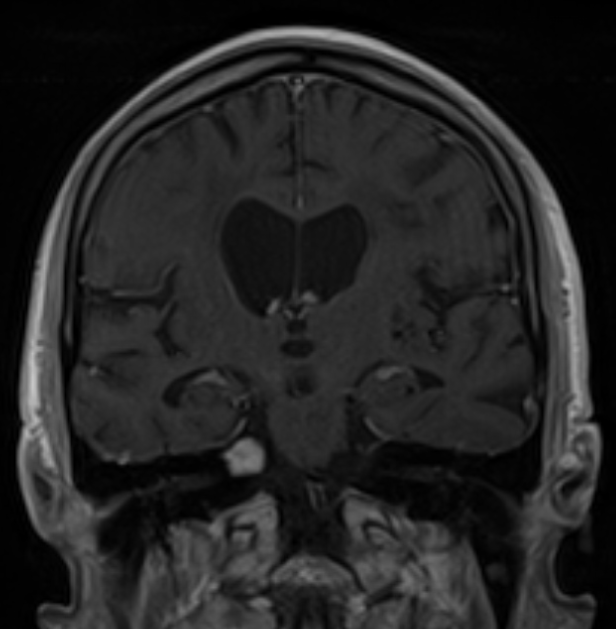 Which of the following is the most likely diagnosis?
 (Multiple Choice)
4.9/5 (81)
(81) A 45-year-old woman comes to the office for progressive itchiness and fatigue. She also notes yellowing of the eyes and skin. Physical examination shows scleral icterus, multiple excoriations on both the upper and the lower extremities, and hepatomegaly. Laboratory results are as follows: 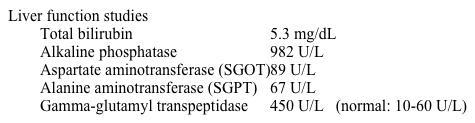 Liver biopsy reveals dense lymphocytic infiltration of the portal triads, as well as granulomatous destruction of interlobular bile ducts. Which of the following is the most likely diagnosis?
 (Multiple Choice)
4.9/5 (69)
(69) A 40-year-old man comes to the office due to lesions over his thigh that he first noticed 2 weeks ago. The lesions are neither painful nor itchy. The patient has a history of HIV infection. He has not been compliant with HIV therapy. On physical examination, the patient appears mildly cachectic. Vital signs are normal. There are 2 elliptical, raised, nontender, violaceous lesions on his right thigh. No other skin or mucous membrane lesions are present. There is no lymphadenopathy. CD4 count is 100/mm3. The patient's skin condition most likely originated from which of the following cells?
(Multiple Choice)
4.9/5 (62)
(62) A 24-year-old man is evaluated due to an episode of syncope. He was jogging when he felt light-headed and passed out, but he did not sustain a head injury. The patient has had 2 similar episodes of light-headedness while jogging over the last year, but this was the first time he passed out. He considers himself in good health and has no other medical conditions. The patient does not use tobacco, alcohol, or recreational drugs. His father died suddenly at age 30. Vital signs are within normal limits. On physical examination, the patient has a harsh systolic murmur. The lungs are clear to auscultation. There is no peripheral edema. Transthoracic echocardiography shows asymmetric interventricular septal hypertrophy. This patient's symptoms are most likely explained by left ventricular outflow obstruction created by which of the following structures?
(Multiple Choice)
4.9/5 (80)
(80) A 36-year-old woman is brought to the emergency department with sudden-onset right side weakness and speech difficulty. During the last 3 weeks, the patient has experienced progressive fatigue, malaise, and low-grade fevers. Despite the symptoms, she did not seek medical attention and did not take any medications. She had a dental extraction 5 weeks ago, which was uncomplicated. The patient has never previously been significantly ill or hospitalized. She works as a receptionist at a legal firm and has never traveled outside the United States. She does not use tobacco, alcohol, or illicit drugs. The patient is admitted to the hospital, but despite adequate resuscitative measures, she dies 2 hours later. Gross autopsy shows large, friable irregular masses attached to the atrial surface of a valve. Which of the following underlying conditions most likely predisposed this patient to developing these cardiac changes?
(Multiple Choice)
4.8/5 (69)
(69) A 43-year-old man comes to the office due to yellowing of the skin over the past several days. He has had no fever or abdominal pain and has not traveled recently or received blood transfusions. The patient has also experienced increased shortness of breath with exercise over the past few months. He has no other medical conditions and takes no medications. The patient drinks 1 or 2 glasses of wine on social occasions and does not use tobacco or illicit drugs. His father died of liver cirrhosis attributed to alcohol use. On physical examination, expiration is prolonged and there are scattered bilateral wheezes. Laboratory results show total bilirubin of 4.1 mg/dL and alanine aminotransferase of 90 U/L. Viral hepatitis serology is negative. Chest x-ray shows hyperlucency of lung fields and flattening of the diaphragm. Abdominal ultrasound reveals increased liver span and echogenicity of the liver parenchyma but no masses. Which of the following is the most likely underlying cause of this patient's symptoms?
(Multiple Choice)
4.9/5 (86)
(86) 
Filters
- Essay(0)
- Multiple Choice(0)
- Short Answer(0)
- True False(0)
- Matching(0)