



 Chat with AI
Exam 10: Pathology

Exam 1: Anatomy291 Questions
Exam 2: Behavioral science240 Questions
Exam 3: Biochemistry156 Questions
Exam 4: Biostatistics117 Questions
Exam 5: Embryology52 Questions
Exam 6: Genetics103 Questions
Exam 7: Histology24 Questions
Exam 8: Immunology129 Questions
Exam 9: Microbiology336 Questions
Exam 10: Pathology816 Questions
Exam 11: Pathophysiology464 Questions
Exam 12: Pharmacology538 Questions
Exam 13: Physiology272 Questions
Select questions type


A 64-year-old man is evaluated for worsening cough and shortness of breath. The patient has a history of hypertension and type 2 diabetes mellitus. He smokes a pack of cigarettes daily and drinks alcohol occasionally. Temperature is 38 C (100.4 F), blood pressure is 140/82 mm Hg, and pulse is 92/min. Lung auscultation reveals abnormal breath sounds. Chest x-ray is shown below. 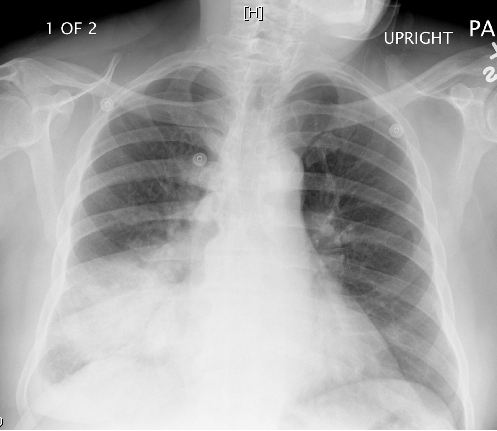 Which of the following is the most likely cause of the observed pulmonary findings in this patient?
 (Multiple Choice)
5.0/5  (91)
(91) A 27-year-old woman comes to the office for evaluation of infertility. The patient and her husband have been trying to conceive for the past 2 years but have been unsuccessful. Her husband recently underwent infertility evaluation and was found to have no abnormalities. The patient's menses began at age 13, and her menstrual cycles were regular until the last few years, when they began occurring at intervals of 3-4 months. She has occasional headaches but no other symptoms. The patient has no prior medical conditions and takes no medications. On physical examination, the patient appears normal and has well-developed secondary sexual characteristics. Cardiopulmonary and abdominal examinations are normal. Pelvic examination reveals no adnexal masses. Neurological examination shows diminished vision in the bilateral temporal visual fields. Examination of the other cranial nerves is normal and there is no focal weakness or sensory loss. An abnormality originating in which of the following is the most likely cause of this patient's current condition?
(Multiple Choice)
4.8/5 (63)
(63) A 25-year-old woman comes to the office due to a 4-week history of a pruritic skin rash. The patient has no chronic medical conditions and takes no medication. Vital signs are normal. On examination, there are pink papules distributed symmetrically over the anterior surfaces of the shins and ankles. Shave biopsy reveals prominent hyperkeratosis along with a thickened granular layer. In addition, there is a bandlike infiltrate of mononuclear cells (predominantly lymphocytes) in the subjacent superficial dermis that involves the overlying epidermis. The rete ridges have a sharpened, sawtooth appearance. The basal layer of the epidermis is degenerated, with scattered colloid bodies. Which of the following is the most likely diagnosis?
(Multiple Choice)
4.9/5 (79)
(79) A 54-year-old man is brought to the emergency department due to acute onset mental status change and double vision. On examination, he is disoriented to time and place and has a decreased attention span. Further questioning reveals memory impairment that appears to be most severe during the last several years. Neurologic examination shows horizontal nystagmus evoked on lateral gaze with bilateral weakness of the lateral rectus muscles. The patient is unable to stand without external support. Thiamine infusion is started immediately, and his condition improves significantly over the next several days. Which of the following neurologic findings is most likely to persist despite treatment?
(Multiple Choice)
4.9/5 (86)
(86) An 82-year-old man comes to the office due to progressive dyspnea and fatigue over the last year, which now limit his daily activities. He has also noticed bilateral swelling of his feet. The patient has hypertension, which is controlled with amlodipine. His blood pressure is 122/72 mm Hg and pulse is 55/min. Physical examination reveals elevated jugular venous pressure with rapid 'y' descent and a prominent S4. Abdominal examination shows moderate ascites. The patient has 3+ bilateral lower extremity pitting edema. Echocardiogram reveals left atrial enlargement with marked left ventricular hypertrophy and normal left ventricular ejection fraction. Complete blood count and basic metabolic panel are within normal limits. Endomyocardial biopsy findings are shown below. 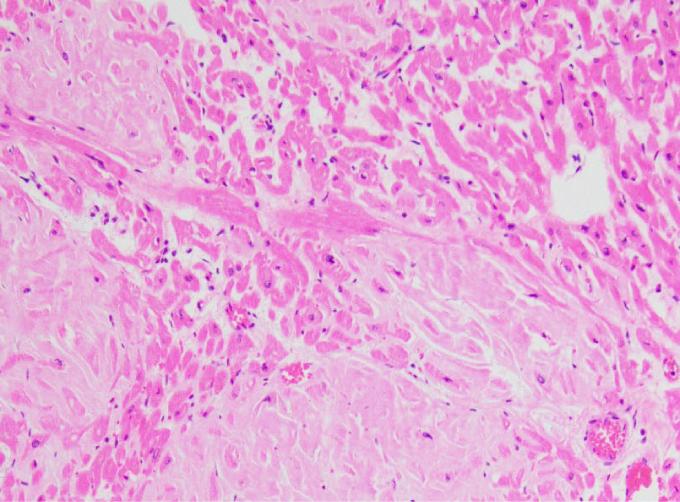 Which of the following is the most likely diagnosis?
 (Multiple Choice)
4.9/5 (92)
(92) A 65-year-old man comes to the office due to 2 months of itching, occasional ulceration, and crusting of a skin lesion on his upper chest. A year ago, the patient was diagnosed with squamous cell carcinoma with perineural invasion at the site of the lesion. Surgical resection with clear margins was achieved, followed by adjuvant radiotherapy to the site. He reports no other symptoms. The patient's lesion is shown in the exhibit. 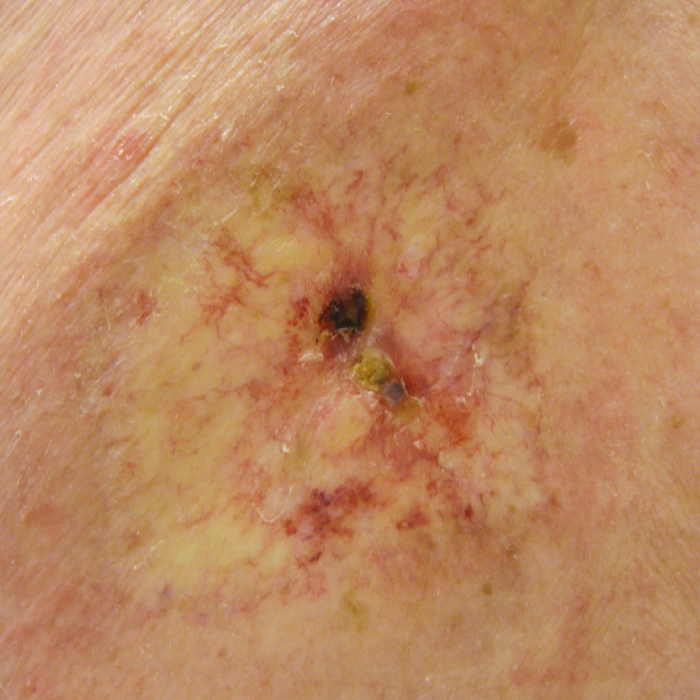 If a biopsy is performed at the periphery of the lesion, which of the following histologic changes is most likely to be seen?
 (Multiple Choice)
4.8/5 (90)
(90) A 75-year-old hospitalized man is evaluated for abdominal pain and fever. The patient was admitted 2 weeks ago due to necrotizing fasciitis of the gluteal region and severe sepsis. He has been treated with surgical debridements, intravenous antibiotics, and fluids. For the past 2 days, the patient has had right upper quadrant abdominal pain, nausea, and recurrent fever. He has a history of hypertension, type 2 diabetes mellitus, and chronic obstructive pulmonary disease. His temperature is 38.8 C (102 F). Physical examination shows marked tenderness over the right subcostal area. Leukocyte count is 18,000/mm3 compared to 9,600/mm3 2 days ago. Laparoscopic surgery is planned. Which of the following will most likely be found during this patient's surgery?
(Multiple Choice)
4.9/5 (79)
(79) A 66-year-old man comes to the office due to 2 episodes of hematuria over the past month. Digital rectal examination reveals an indurated prostate with no palpable nodules. An image from a transrectal prostate biopsy is shown in the exhibit. 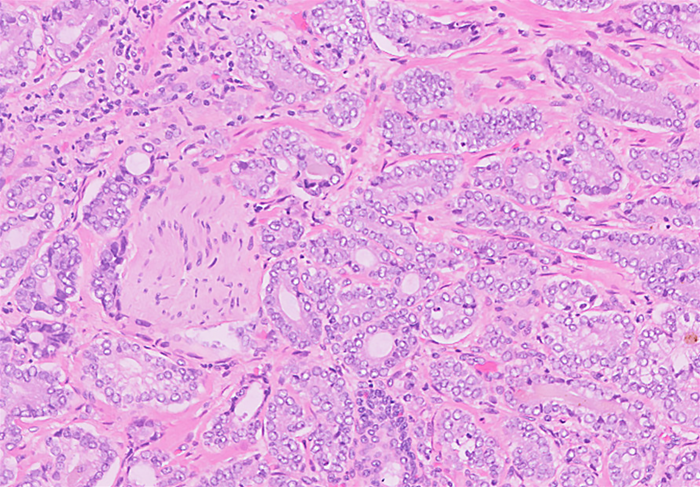 Which of the following is the most likely underlying cause of this patient's symptoms?
 (Multiple Choice)
4.8/5 (84)
(84) A 45-year-old woman is brought to the emergency department with severe abdominal pain, fever, and confusion. The patient's husband reports that, yesterday, she began to have worsening right-sided abdominal pain associated with nausea and several episodes of vomiting. This morning, she has been slow to respond and is confused about where she is. The patient has a history of depression and takes sertraline. Temperature is 39.5 C (103.1 F), blood pressure is 88/50 mm Hg, pulse is 104/min, and respirations are 26/min. She appears ill and confused, and the sclera are icteric. Abdominal examination demonstrates significant tenderness with guarding in the right upper quadrant. Which of the following is the most likely underlying cause of this patient's current condition?
(Multiple Choice)
4.8/5 (76)
(76) A 65-year-old man comes to the emergency department due to acute-onset, severe right flank pain; nausea; and vomiting for the past hour. His medical conditions include prostate cancer and membranous nephropathy. Blood pressure is 148/60 mm Hg and pulse is 95/min. On physical examination, the patient appears to be in moderate distress due to pain and is diaphoretic. There is right costovertebral angle tenderness. Urinalysis shows hematuria. Contrast-enhanced CT scan reveals a wedge-shaped perfusion defect in the right kidney. The affected renal tissue is most likely to develop which of the following histologic changes over the next several days?
(Multiple Choice)
4.8/5 (94)
(94) A 72-year-old woman comes to the office for a routine follow-up visit accompanied by her son. The patient has experienced progressive memory loss over the last 2 years. She now needs help with her daily activities, such as shopping and housekeeping. The patient's son says, "She used to be such an independent person, but now she needs help with most things. She even forgot my name the other day!" Medical history includes hypertension, hyperlipidemia, and type 2 diabetes mellitus. Family history includes major depressive disorder in her father. MRI reveals diffuse cortical and hippocampal atrophy. Which of the following biochemical changes is most likely contributing to this patient's condition?
(Multiple Choice)
4.9/5 (85)
(85) A 44-year-old man with a history of heavy alcohol consumption comes to the emergency department with a nosebleed after getting into a fight while intoxicated. Continuous local pressure is applied and his bleeding resolves within 30 minutes. A detailed physical examination is performed after the bleeding subsides and shows distended paraumbilical veins, ascites, and a flapping hand tremor on wrist extension. Which of the following laboratory findings would be most indicative of a poor prognosis for this patient?
(Multiple Choice)
4.7/5 (80)
(80) A 53-year-old man comes to the physician with progressively worsening anorexia and abdominal discomfort. He has lost 14 kg (31 lb) since the onset of his symptoms about 4 months ago. Physical examination demonstrates nontender hepatomegaly. Laboratory studies show an elevated serum alkaline phosphatase level and a marginally elevated alanine aminotransferase level. A CT scan of the abdomen with oral and intravenous contrast is shown below. 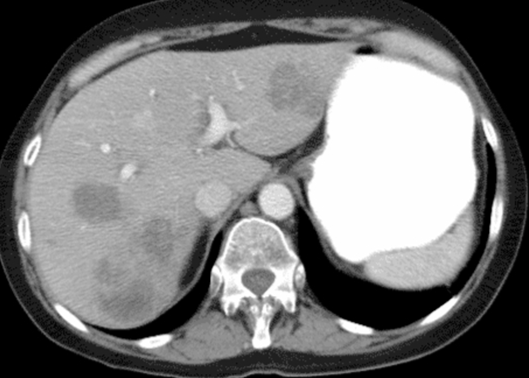 Which of the following is the most likely diagnosis?
 (Multiple Choice)
4.9/5 (76)
(76) A 59-year-old man comes to the office due to 3 months of progressive fatigue and back pain. The back pain occurs mainly with movement or positional changes. Physical examination reveals midline tenderness over the middle and lower back. Laboratory evaluation shows a hemoglobin level of 10.2 g/dL and serum calcium level of 12 mg/dL. A bone marrow aspirate is performed, and the histopathologic findings are shown below. 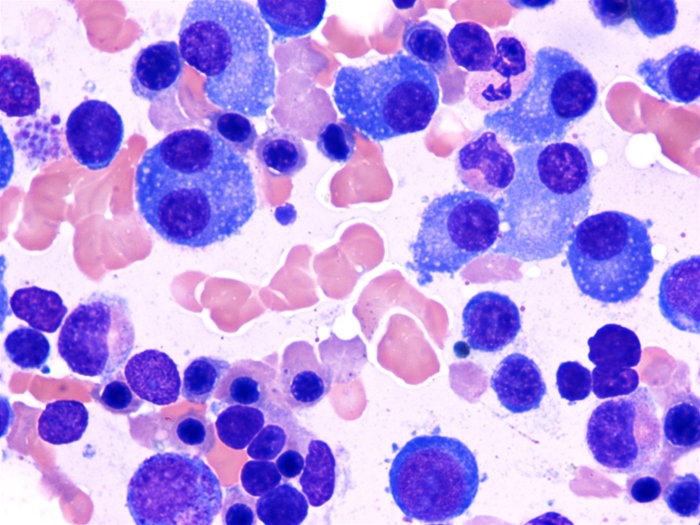 This patient is at greatest risk for developing which of the following conditions?
 (Multiple Choice)
4.9/5 (74)
(74) A 17-year-old boy comes to the office due to a skin rash that has been present for a day. One week ago, he had a sore throat that improved with oral penicillin therapy. Skin examination shows several violaceous, raised, nonblanchable lesions distributed over the bilateral lower extremities. Histologic findings of the biopsied rash are shown in the image below. 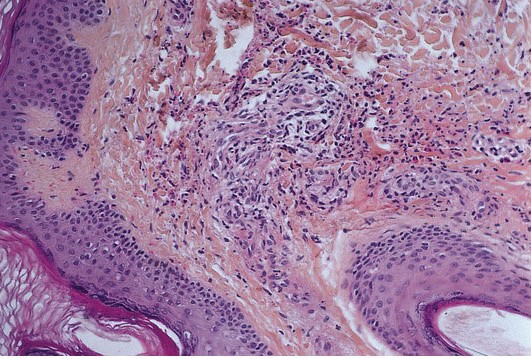 Which of the following is the most likely diagnosis in this patient?
 (Multiple Choice)
4.9/5 (78)
(78) A 23-year-old man comes to the emergency department due to 4 days of cramping abdominal pain. He has been feeling weak for the past 2 weeks. He tried over-the-counter antacids without relief. He is an industrial laborer with no significant medical history or known allergies. The patient's parents have hypertension, and his siblings are healthy. Temperature is 37.1 C (98.8 F). Physical examination is unremarkable. The patient's peripheral blood smear is shown on the image below. 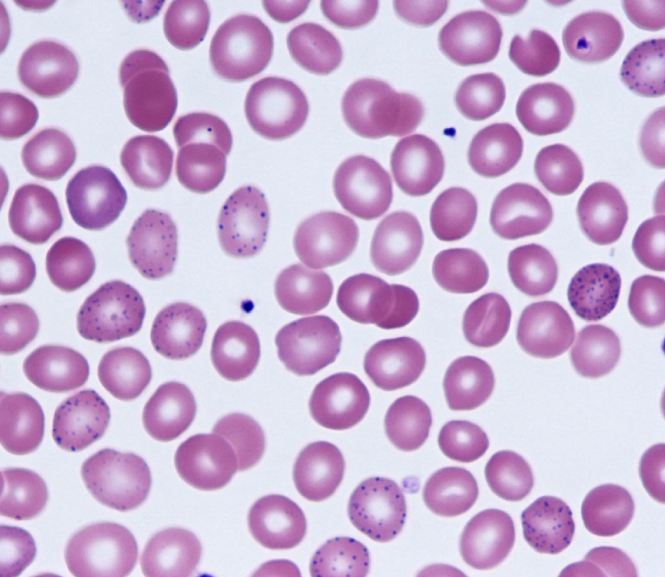 Which of the following is the most likely cause of this patient's symptoms?
 (Multiple Choice)
4.8/5 (68)
(68) A 56-year-old man is evaluated for dyspnea and chest discomfort. Medical history includes hypertension, type 2 diabetes mellitus, and chronic kidney disease. Temperature is 37.8 C (100 F), blood pressure is 160/90 mm Hg, pulse is 98/min, and respirations are 24/min. BMI is 31 kg/m2. The patient undergoes a 2-part nuclear medicine test. During the first part, he breathes in a radioactive tracer and a lung scan is performed. In the second part of the test, he is given an intravenous injection of a different radioactive material while breathing normal air, and the scan is repeated. When the images are compared, a large area of the lower right lung is not visualized in the second scan. Based on the observed findings, which of the following underlying disease processes is most likely present in this patient?
(Multiple Choice)
4.7/5 (89)
(89) A 66-year-old woman comes to the office due to 2 months of worsening fatigue and dyspnea with moderate exertion. The patient has a history of breast cancer treated with surgery and combination chemotherapy 6 years ago. She has no other medical conditions. Vital signs are within normal limits. Physical examination reveals normal jugular venous pressure, clear lungs, and normal heart sounds; there is no hepatosplenomegaly, lymphadenopathy, or extremity edema. Laboratory results are as follows: 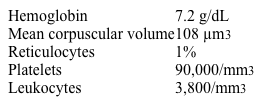 Peripheral blood smear shows oval macrocytic red cells and hyposegmented neutrophils. Bone marrow biopsy of this patient is most likely to reveal which of the following?
 (Multiple Choice)
4.8/5 (86)
(86) A 3-year-old boy is brought to the office by his parents. They say that the child cannot keep up with his cousin, who is the same age. The boy climbs up from a squat by using his hands to push off the ground and his lower extremities. His calves appear enlarged on physical examination. This patient's condition is most likely associated with which of the following?
(Multiple Choice)
4.8/5 (93)
(93) A 67-year-old man is admitted to the hospital due to acute right-sided weakness. Medical history includes hypertension, hyperlipidemia, and coronary artery disease, for which the patient underwent placement of 2 stents in the left anterior descending artery. He also has intermittent claudication that limits exercise capacity. The patient's antihypertensive regimen includes chlorthalidone, amlodipine, and lisinopril, which he takes as prescribed. He is an ex-smoker with a 35-pack-year history. Blood pressure is 180/110 mm Hg and pulse is 80/min. Serum creatinine is 1.6 mg/dL. CT scan of the head reveals hemorrhage of the left basal ganglia, and renal ultrasound shows that the right kidney is 7 cm long and the left kidney is 11 cm long. Which of the following mechanisms most likely explains the renal morphology in this patient?
(Multiple Choice)
4.8/5 (83)
(83) 
Filters
- Essay(0)
- Multiple Choice(0)
- Short Answer(0)
- True False(0)
- Matching(0)