



 Chat with AI
Exam 10: Pathology

Exam 1: Anatomy265 Questions
Exam 2: Behavioral Sciences178 Questions
Exam 3: Biochemistry102 Questions
Exam 4: Embryology59 Questions
Exam 5: Epidemiology, Biostatistics, and Medical Informatics94 Questions
Exam 6: Genetics88 Questions
Exam 7: Histology46 Questions
Exam 8: Immunology147 Questions
Exam 9: Microbiology and Virology330 Questions
Exam 10: Pathology817 Questions
Exam 11: Pharmacology and Toxicology509 Questions
Exam 12: Physiology339 Questions
Exam 13: Psychiatry and Psychotherapy23 Questions
Select questions type


A 19-year-old man with a history of chronic lung problems dies after a progressive hemoptysis and severe respiratory distress. He has a history of recurrent respiratory tract infections and chronic nasal congestion since childhood. An autopsy is performed and a gross lung specimen is shown in the image below: 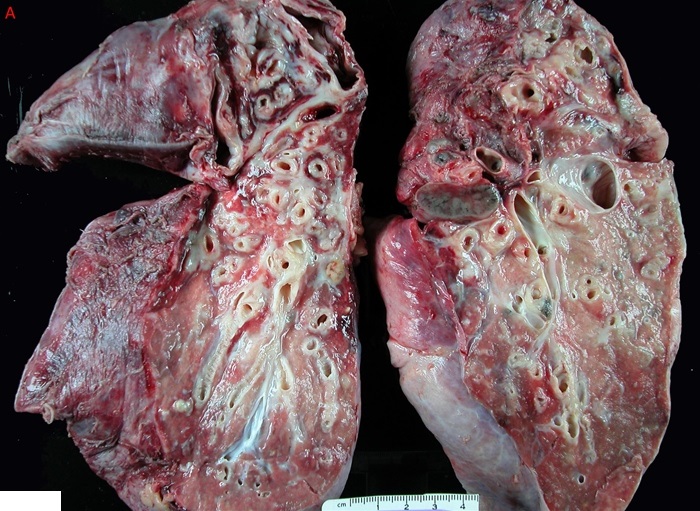 Which of the following is the most likely etiology of this patient's hemoptysis?
 (Multiple Choice)
4.9/5  (81)
(81) A prenatal appointment for a 31-year-old woman who is gravida 3 para 2 and 28 weeks pregnant takes place in the office. During this pregnancy, her persistent hypertension has been under good control. Her blood pressure during the patient's previous prenatal appointments ranged from 120/70 to 130/80 mm Hg. Her blood pressure is 150/100 mm Hg right now, and it was previously 152/98 mm Hg. 24 cm is the fundal height. Protein levels in urine are 2+. A fetus with growth limitation and oligohydramnios are seen on a transabdominal ultrasonography. Compared to normal placental parameters, this patient most likely has which of the following hemodynamic changes? 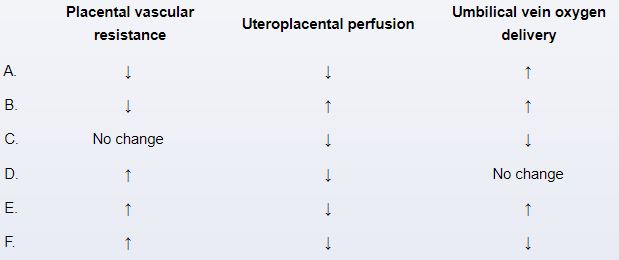
(Multiple Choice)
4.9/5 (84)
(84) A 45-year-old woman presented to the office due to excessive menstrual bleeding for the past 5 months. The patient has 6 days of heavy bleeding soaking the sanitary pads, which is associated with pain. The menstrual cycle length is around 30-32 days. The patient has no significant past medical or surgical history. The patient was referred for hysterectomy, gross examination of the uterus is shown below. 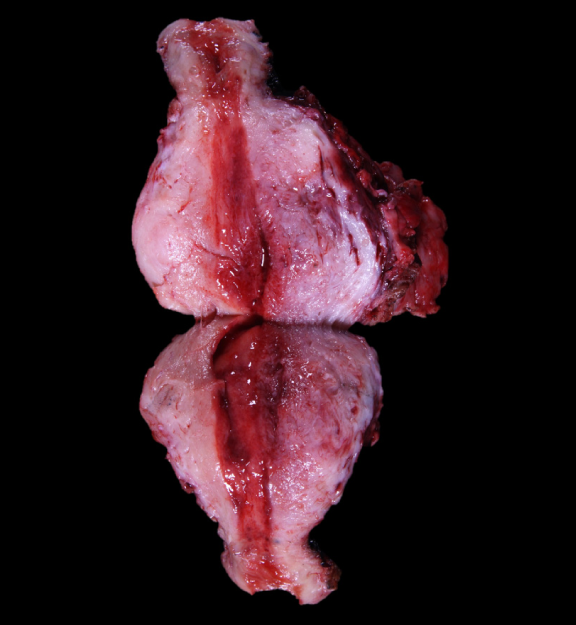 Which of the following is the most likely diagnosis?
 (Multiple Choice)
4.9/5 (95)
(95) A previously healthy 20-year-old man is brought to the emergency department because of a 36-hour history of fever and profuse, watery diarrhea. He appears lethargic. His temperature is 38.1°C (100.6°F), pulse is 115/min, respirations are 25/min, and blood pressure is 90/58 mm Hg. Examination shows sunken eyes and dry mucous membranes. Capillary refill time is 3 seconds. Abdominal examination shows no abnormalities. Which of the following physiologic changes in kidney function would be most likely in this patient?
(Multiple Choice)
4.7/5 (72)
(72) A 48-year-old woman comes to the emergency room with chest pain. She describes the pain as a squeezing sensation in her chest with radiation to the left shoulder. The episode began about 15 minutes ago when she was sitting reading a book. She has had this pain before, typically in the evenings, though prior episodes usually resolved after a couple of minutes. Her pulse is 112/min, blood pressure is 121/87 mm Hg, and respiratory rate is 21/min. An ECG shows ST-segment elevations in the inferior leads. The patient is given nitroglycerin, which improves her symptoms. Percutaneous coronary angiography is performed, and no obstructive lesions are observed. Which of the following is most likely to be involved in the pathogenesis of this patient's chest pain?
(Multiple Choice)
4.8/5 (80)
(80) A 71-year-old woman comes to the physician because of sudden loss of vision in her right eye for 15 minutes that morning, which subsided spontaneously. Over the past 4 months, she has had fatigue, a 4-kg (8.8-lb) weight loss, and has woken up on several occasions at night covered in sweat. She has had frequent headaches and pain in her jaw while chewing for the past 2 months. This patient's condition is most likely caused by:
(Multiple Choice)
4.9/5 (90)
(90) Question: A 49-year-old woman is brought for the evaluation of a neck mass. The mass is attached to the surrounding tissues and feels stony hard on palpation. The patient is prescribed a chemotherapy combination based on the initial evaluation. A few months later, the mass size decreased significantly. Additionally, the biopsy shows shrunken eosinophilic cells within the tumor. The noticed cellular changes are caused by which of the cellular components?
(Multiple Choice)
4.9/5 (79)
(79) A 45-year-old man visits the clinic because he has had recurring, painful skin lesions in his right axilla for the previous 6 months. The patient has no other medical history and is not currently taking any medications. Every day, he smokes a pack of cigarettes and works as a roofer. Vital indicators are typical. Tender, subcutaneous nodules in the right axilla are discovered during the examination, as seen in the illustration.  The remainder of the examination is normal. Which of the following is the most likely cause of the condition?
 (Multiple Choice)
4.8/5 (76)
(76) A 50-year-old woman visits the clinic for her yearly checkup. She is in good health and just takes calcium and vitamin D pills. The patient doesn't smoke, drink, or use illegal substances. Her BP is 118/69 millimeters of mercury. The physical exam reveals nothing extraordinary. Recent mammography results were normal. Two polyps were removed after a colonoscopy revealed them. One polyp is small and displays early adenoma traits on histological inspection, whereas the other is larger and displays late adenoma features. A mutation in which of the following genes would most likely cause this patient's small early adenoma to grow and develop late adenoma features?
(Multiple Choice)
4.8/5 (78)
(78) A 19-year-old man arrives at the office with difficulty seeing and blurred vision that has gradually worsened over the past year. He is a second-year college student studying biochemistry. His grades are excellent, but he is worried about how his poor vision has affected his classes this semester. The patient enjoys swimming as well. He is 195 cm (6 ft 5 in) tall and weighs 71 kg (156.5 lb). Physical examination demonstrates the findings depicted in the exhibits. 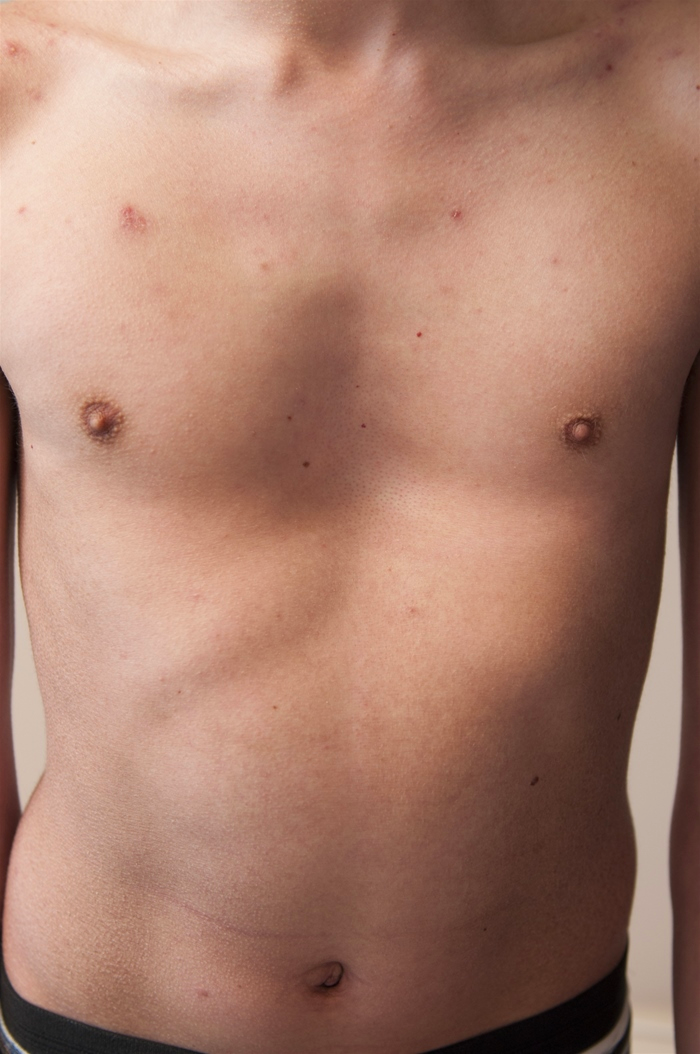
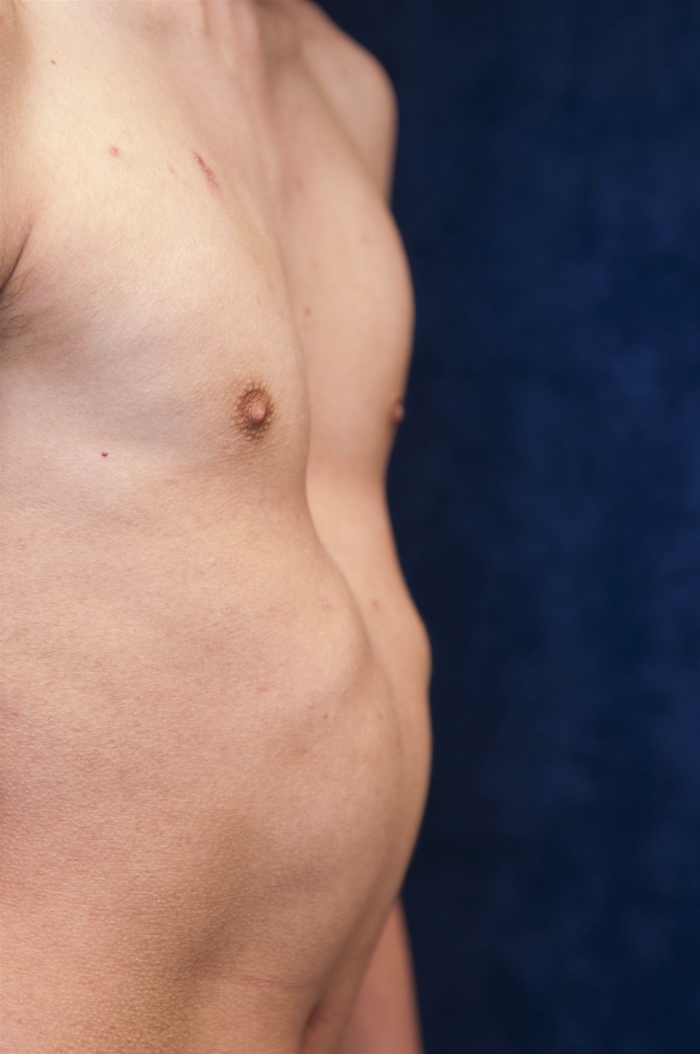 This patient is most likely to die from which of the following conditions?
 (Multiple Choice)
4.9/5 (87)
(87) A 10-old boy is brought to the physician for a health examination. He is at the 60th percentile for length and weight. Vital signs are within normal limits. The abdomen is soft and nontender. The external genitalia appear normal. Examination shows a single palpable testicle in the right hemiscrotum. The scrotum is nontender and not enlarged. There is a palpable mass in the left inguinal canal. Biopsy of the mass shows marked fibrotic changes with prominent Leydig cells and hypoplastic Sertoli cells. The patient's parents are advised that the mass should be removed. Which of the following is the most likely explanation for the need for surgery in this patient?
(Multiple Choice)
4.8/5 (68)
(68) A 2-month-old child is taken to the office for a check-up. The parents are concerned about a red lump on her head that formed at the age of three weeks. Since then, the lesion has expanded dramatically in size. The child's growth and development are age-appropriate. The exhibit includes an image of the lesion. 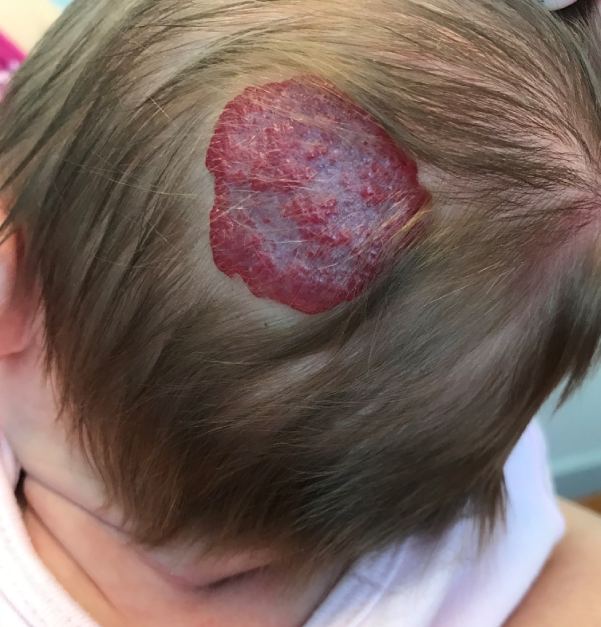 There are no further abnormalities discovered throughout the examination. This child's lesion is most likely primarily composed of which of the following?
 (Multiple Choice)
4.9/5 (77)
(77) A 25-year-old man is brought to the physician because of fatigue, lethargy, and lower leg swelling for 2 weeks. He also noticed that his urine appeared darker than usual and for the last 2 days he has passed only small amounts of urine. His temperature is 37.5°C (98.6°F), pulse is 88/min, respirations are 15/min, and blood pressure is 154/98 mm Hg. Examination shows 2+ pretibial edema bilaterally. A kidney biopsy is performed. Light microscopy reveals cellular proliferation, focal necrosis, and crescent formation of most of the glomeruli. On immunofluorescent microscopy, there are no immunoglobulin or complement deposits. Which of the following additional findings is most likely to be present in this patient?
(Multiple Choice)
4.7/5 (91)
(91) A 56-year-old man comes to the physician because of a 1-day history of sudden severe pain in his right great toe. He has never had such symptoms before. Four months ago, He has a history of nephrolithiasis and hypertension treated with hydrochlorothiazide. Examination shows erythema, swelling, warmth, and tenderness of the right metatarsophalangeal joint; range of movement is limited by pain. His serum uric acid is 12 mg/dL. Needle aspiration of the joint is performed. Which of the following is the most likely finding on analysis of this patient's synovial fluid?
(Multiple Choice)
4.9/5 (71)
(71) An evaluation is conducted on a 54-year-old Sudanese immigrant who has intermittent dysuria and extensive hematuria for several months. The patient reports that he has no discomfort but passes blood at the conclusion of urine. Erythematous patches can be seen in the bladder mucosa during cystoscopy. The slide below shows the histopathology results of many biopsies collected from the afflicted locations. 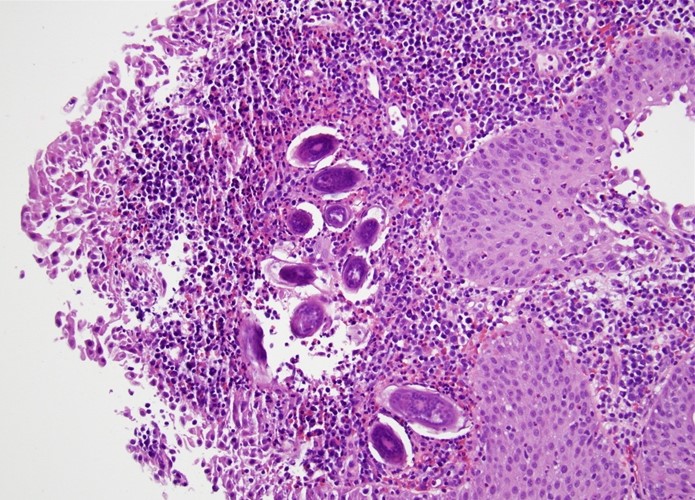 Which of the following most likely predisposed this patient to his current condition?
 (Multiple Choice)
4.8/5 (75)
(75) A 70-year-old woman presented to the office complaining of exertional dyspnea of 3 months duration. The patient is complaining of fatigue and generalized edema. She is a known case of systematic lupus erythematosus for 15 years. Temperature is 36.9 C (98.4 F), blood pressure is 118/77 mm Hg, and pulse is 90/min. On examination, there are no enlarged lymph nodes. Cardiopulmonary examination shows decreased breath sounds over the lung bases. An oral ulcer and facial rash are observed during examination. Both legs have pitting edema up to the knees. Urine analysis shows 4+ protein but is otherwise normal. Which of the following would appear on the histological examination of this patient's kidney?
(Multiple Choice)
4.8/5 (83)
(83) A 26-year-old woman is evaluated for joint pain affecting the elbows, knees, and ankles for the past month. For the past 4 weeks, the patient has had fatigue and malaise. She has also had a 4-kg (9-lb) weight loss during this time period despite having normal appetite. She also has a 1-year history of dry, nonproductive cough and mild exertional dyspnea. There is mild swelling and tenderness of the elbows, knees, and ankles. The lower extremities are tender to palpation and have scattered erythematous nodules. Chest x-ray reveals lung nodules and hilar fullness. Transbronchial biopsy shows large epithelioid cells, occasional giant cells, and no areas of necrosis. Which of the following pharmacotherapies is most appropriate for the initial treatment of this patient?
(Multiple Choice)
4.8/5 (74)
(74) A 65-year-old man comes to the office for evaluation of blood in the urine. The patient has no abdominal pain, urinary frequency, or urgency. He has hypertension, type 2 diabetes mellitus, and stage II chronic kidney disease. He quit smoking 10 years ago and had smoked a pack of cigarettes daily for 30 years. Laboratory evaluation shows a hematocrit of 56%. Chest imaging shows multiple round lesions in both lungs. Biopsy of one of the lesions reveals the microscopic findings shown below. 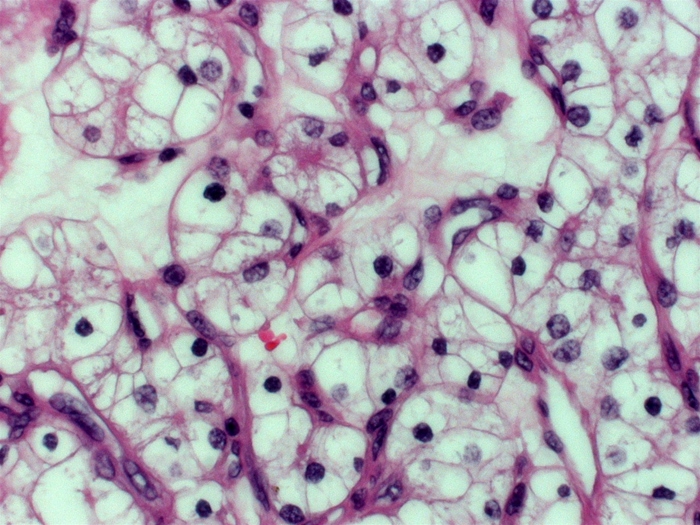 This patient's metastatic disease most likely originated from which of the following organs?
 (Multiple Choice)
4.7/5 (84)
(84) A 11-year-old girl is being evaluated for recurrent episodes of self-limited colicky abdominal pain and nausea lasting several days. She was also recently hospitalized for an episode of difficulty breathing. The patient has no significant past medical history, but her mother has a history of attacks of severe abdominal pain and diarrhea. Physical examination is unremarkable. Laboratory evaluation reveals decreased serum complement C4 and C1 esterase inhibitor levels. Which of the following drugs is contraindicated in this patient?
(Multiple Choice)
4.8/5 (92)
(92) A 24-year-old man is brought to the emergency department after his head was hit with a bat during a baseball game. His teammates state that he was unresponsive after the incident but regained consciousness after 15 minutes. The patient initially refused to go to the hospital and sat on the bench for the remainder of the game. He initially appeared fine but became increasingly confused. He appears lethargic but opens his eyes to loud verbal commands. He is oriented to person and place. His temperature is 37.1°C (98.8°F), pulse is 78/min, respiratory rate is 16/min, and blood pressure is 148/87 mm Hg. Examination shows an area of soft-tissue swelling over the left temporal region. The left pupil is mildly dilated. Brain imaging would most likely reveal blood accumulating between which of the following tissues?
(Multiple Choice)
4.8/5 (76)
(76) 
Filters
- Essay(0)
- Multiple Choice(0)
- Short Answer(0)
- True False(0)
- Matching(0)