



 Chat with AI
Exam 10: Pathology

Exam 1: Anatomy265 Questions
Exam 2: Behavioral Sciences178 Questions
Exam 3: Biochemistry102 Questions
Exam 4: Embryology59 Questions
Exam 5: Epidemiology, Biostatistics, and Medical Informatics94 Questions
Exam 6: Genetics88 Questions
Exam 7: Histology46 Questions
Exam 8: Immunology147 Questions
Exam 9: Microbiology and Virology330 Questions
Exam 10: Pathology817 Questions
Exam 11: Pharmacology and Toxicology509 Questions
Exam 12: Physiology339 Questions
Exam 13: Psychiatry and Psychotherapy23 Questions
Select questions type


A 34-year-old man comes to the physician because of increasing lower back and neck pain for the past 7 months. The pain is worse in the morning and improves when he plays basketball. He has noticed shortness of breath while playing for the past 2 months. He is sexually active with two female partners and uses condoms inconsistently. He appears lethargic. His vital signs are within normal limits. Examination of the back shows tenderness over the sacroiliac joints. Range of motion is limited by pain. The lungs are clear to auscultation. Chest expansion is decreased on full inspiration. Erythrocyte sedimentation rate is 75 mm/hr. Which of the following pathologic findings is most likely causing this patient's symptoms?
(Multiple Choice)
4.9/5  (80)
(80) A 5-year-old girl is brought to the physician because of generalized fatigue and dark urine for 3 days. Four weeks ago, she was treated with topical mupirocin for a skin infection. Medical history is otherwise unremarkable and she takes no routine medications. Blood pressure is 140/90 mm Hg. Urinalysis reveals hematuria, mild proteinuria, and occasional red blood cell casts. Which of the following changes would most likely be present on this patient's renal biopsy?
(Multiple Choice)
4.9/5 (86)
(86) A 7-year-old boy is brought to the physician by his mother because he does not "listen to her" anymore. She reports that since he started preschool 10 months ago, he has not been able to concentrate on any tasks lasting longer than a few minutes. He is more active compared to other brothers, frequently interrupts or bothers other siblings, and is very forgetful. He was born at term via vaginal delivery and has been healthy except for 3 episodes of acute otitis media at the age of 2 years. He has met all developmental milestones. We thought he would grow out of it as he got older, but it seems to be getting worse." Physical examination is unremarkable. Which of the following would be most helpful in establishing the diagnosis?
(Multiple Choice)
4.9/5 (75)
(75) A 55-year-old man comes to the cardiology clinic because of a new ECG findings during last visit. An ECG shows left ventricular hypertrophy. The patient feels well and has had no shortness of breath, fatigue, or leg swelling. He has no other medical conditions, takes no medications, and does not use tobacco, alcohol, or illicit drugs. Blood pressure is 155/90 mm Hg and pulse is 80/min. BMI is 35 kg/m2. Physical examination shows normal jugular venous pressure. There are no lung crackles, heart gallops, or lower extremity edema. Echocardiography reveals a left ventricular ejection fraction of 30%. Which of the following patterns of chemical mediators is most likely present in this patient? 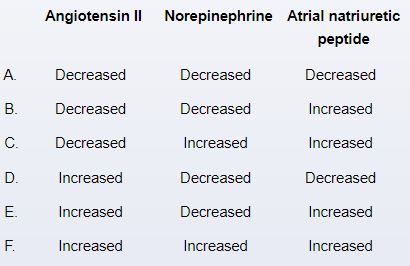
(Multiple Choice)
4.8/5 (82)
(82) An 8-year-old boy is brought to the physician by his parents because of repeated episodes of epilepsy over the past 2 months. The mother reports that during these episodes, the boy abruptly stops what he is doing and just stares into space. She says that he sometimes also smacks his lips. The episodes typically last 1-2 minutes and occur 2-3 times per week. After the episode, he was confused for 10 minutes and too tired to play. Electroencephalography reveals epileptic foci originating from the left temporal lobe, and neuroimaging reveals an abnormality of the left hippocampus. Surgical resection of the cortical region from which the seizure originates is performed. Histopathological examination of the removed brain tissue is most likely to reveal which of the following findings?
(Multiple Choice)
4.9/5 (87)
(87) Cardiac catheterization is performed on a 7-year-old boy. The image below shows the pattern of oxygen saturation in the patient's cardiac chambers and outflow tracts (structural abnormalities are not shown). 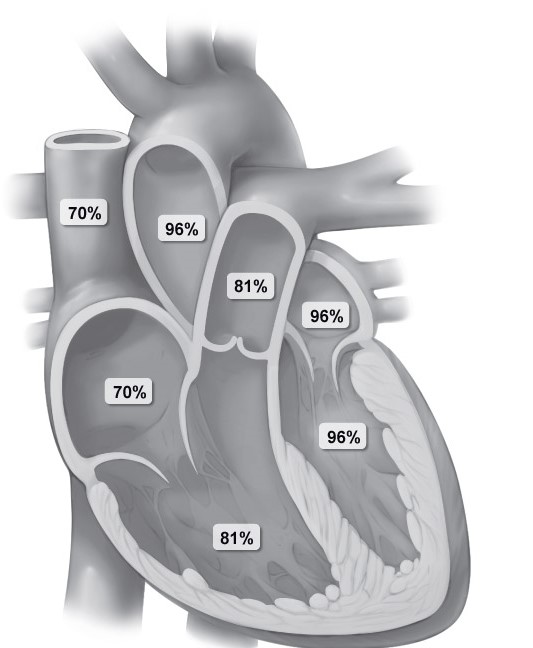 This patient most likely has which of the following findings on physical examination?
 (Multiple Choice)
4.8/5 (89)
(89) A 68-year-old man comes to the office due to a weak urinary stream, hesitancy, and straining on micturition. These symptoms have been present for the past 2 years but have gradually become more severe and are beginning to affect his quality of life. The patient recently started noticing continuous urine leakage, nocturia, frequent urination, and urgency. Rectal examination reveals a smooth, enlarged prostate with no tenderness to palpation. Prostate-specific antigen is within the normal range. Urinalysis reveals 20-30 red blood cells per high power field and no urinary casts. Cystoscopy is performed and shows increased bladder wall trabeculations with normal appearing mucosa. Which of the following is the most likely cause of this patient's hematuria?
(Multiple Choice)
4.7/5 (85)
(85) A 15-year-old girl comes to the physician with her father for evaluation of her tall stature. She is concerned because she is taller than all of her friends. Her birth weight and height were within normal limits. Her father is 174 cm (5 ft 7 in) tall; her mother is 162 cm (5 ft 3 in) tall. She is at the 99th percentile for height and at the 90th percentile for weight. She has not had her menstrual period yet. . The patient says that she feels well except for excessive sweating. Her mother has Graves disease. Vital signs are within normal limits. On physical examination, she has long extremities with large hands and feet; the lower jaw is protruding. Heart sounds are normal. Sexual development is Tanner stage 4. Which of the following is the most likely underlying cause of this patient's condition?
(Multiple Choice)
4.8/5 (68)
(68) A 52-year-old man comes to the physician because of increasing fatigue over the last 2 weeks. He has also been experiencing exertional dyspnea and occasional headaches. He has no chest pain or lower extremity swelling or significant medical history. The patient was healthy as a child and received all his childhood vaccinations. Blood pressure is 145/90 mm Hg and pulse is 80/min and regular. Physical examination reveals a holosystolic murmur best heard at the apex of the heart that radiates to the axilla. The lungs are clear on auscultation and abdominal examination is unremarkable. Which of the following is the best indicator of the severity of this patient's valve disease?
(Multiple Choice)
4.9/5 (73)
(73) The patient was suspected to have an aortic dissection, a transesophageal echocardiogram was done. It showed aortic dissection involving the descending aorta only. What is the origin of the dissected flap?
(Multiple Choice)
4.9/5 (67)
(67) A 36-year-old woman comes to the office due to painful, "reddish bumps" on her shins. She has a history of hypertension and type 2 diabetes mellitus. . A representative skin rash is shown in the image below. The lesions are tender and present predominantly on the anterior surface of the lower extremities. 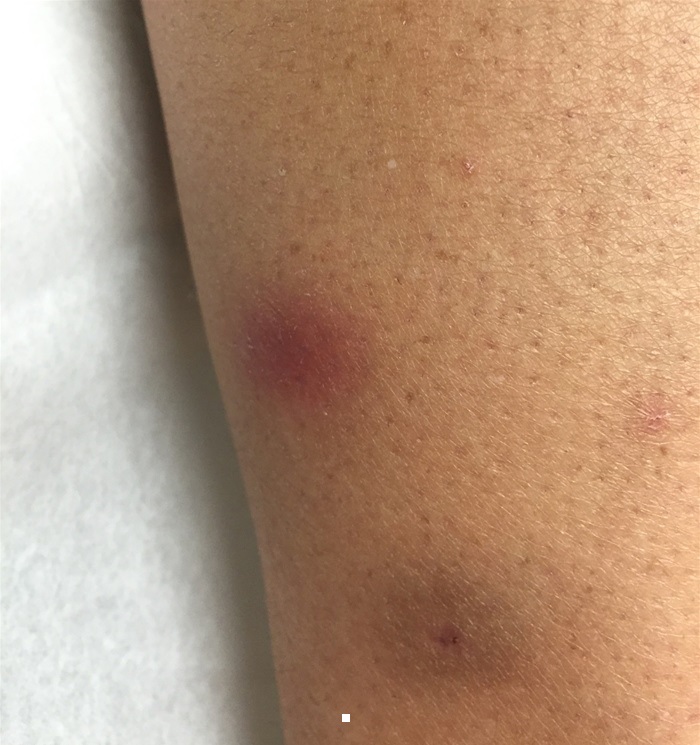 Chest x-ray demonstrates enlarged hilar lymph nodes, and laboratory testing reveals an elevated ACE level. Which of the following would most likely be found on liver biopsy in this patient?
 (Multiple Choice)
4.7/5 (78)
(78) A 49-year-old woman is brought to the emergency department for a severe, sudden-onset generalized headache while she was preparing her meal, she lost consciousness. She was unconscious for a period of one minute. When she regained consciousness, she had neck stiffness, nausea, and two episodes of vomiting. She has hypertension. Her current medications include chlorthalidone and a multivitamin. She is in severe distress. Her temperature is 37.3°C (99.1F°), pulse is 88/min, respirations are 18/min, and blood pressure is 169/102 mm Hg. Brain imaging would most likely reveal which of the following?
(Multiple Choice)
4.8/5 (83)
(83) A 35-year-old man comes to the clinic due to progressive nausea and vomiting over the past several months. He has a long time type I diabetes mellitus since childhood. He reports an abdominal discomfort daily especially after eating despite eating small meals. He also notices that his vomiting contains undigested food particles. His medications include a basal-bolus insulin regimen and lisinopril. He does not use tobacco, alcohol, or illicit drugs. Vital signs are within normal limits. The abdomen is soft and nontender with no organomegaly. Bowel sounds are normal. Testing of stool for occult blood is negative. An upper gastrointestinal endoscopy is unremarkable. Which of the following mechanisms is most likely responsible for this patient's current symptoms?
(Multiple Choice)
4.8/5 (71)
(71) A 26-year-old woman arrives at the clinic with a skin issue. The patient has had dry, flaky skin since infancy, but it has recently deteriorated. Symptoms usually worsen in the winter and ease when the temperature warms up in the spring. The patient comes from an asthmatic background, and both parents have persistently dry skin. As seen in the exhibit, examination reveals widespread scaling of the skin, particularly on the extremities. 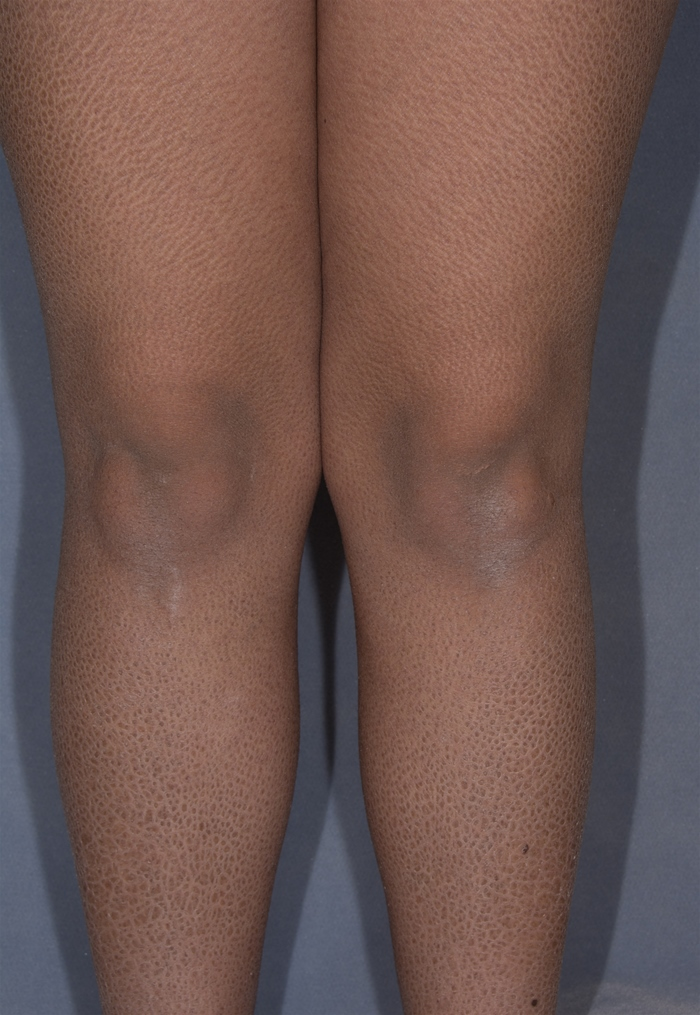 Which of the following is the most likely cause of this patient's condition?
 (Multiple Choice)
4.9/5 (71)
(71) A 43-year-old woman comes to the physician because of a 3-week history of progressive weakness. She has had increased difficulty combing her hair and climbing stairs. She has hypertension. She has smoked one pack of cigarettes daily for 25 years. She does not drink alcohol. Her mother had coronary artery disease and systemic lupus erythematosus. Her current medications include chlorthalidone and vitamin supplements. Her temperature is 37.8°C (100.0°F), pulse is 71/min, and blood pressure is 132/84 mm Hg. Cardiopulmonary examination shows no abnormalities. Skin examination findings are shown in the exhibit.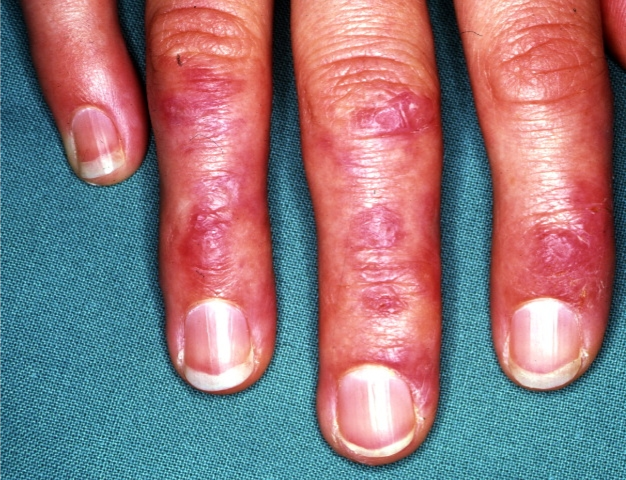 Which of the following is the most appropriate initial treatment for this patient's current condition?
 (Multiple Choice)
4.9/5 (81)
(81) A 17-year-old boy is brought to the emergency department by a friend after he briefly lost consciousness during a workout. He has been spending 3-4 hours of running to prepare for a marathone. He is oriented to person and place, but not time; he appears irritable. His temperature is 40.5°C (104.9°F), pulse is 118/min, respirations are 24/min, and blood pressure is 95/70 mm Hg. The patient is profusely sweating and is confused. His pupils are equal and reactive to light. Neurologic examination shows no focal findings. Laboratory results are as follows: 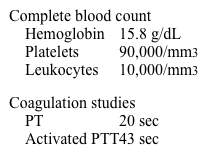 Which of the following sets of hematologic findings is most likely to be present in this patient?
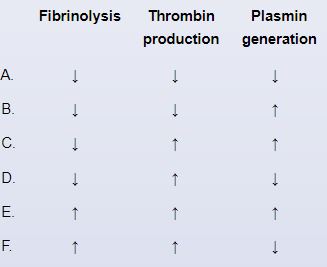
Which of the following sets of hematologic findings is most likely to be present in this patient? (Multiple Choice)
4.9/5 (91)
(91) A 45-year-old woman comes to the physician with a lump on her throat that has steadily increased in size over the past 5 months. She does not have difficulties swallowing, dyspnea, or changes in voice. Examination shows a 3-cm, hard swelling on the left side of her neck that moves with swallowing. There is no cervical or axillary lymphadenopathy. The remainder of the examination shows no abnormalities. Thyroid functions tests are within the reference range. Ultrasound of the neck shows an irregular, hypoechogenic mass in the left lobe of the thyroid. Fine-needle aspiration biopsy shows a large number of follicular cells dispersed in clusters and microfollicles. The patient undergoes right thyroid lobectomy. Which of the following histologic findings would confirm a diagnosis of follicular thyroid carcinoma in this patient?
(Multiple Choice)
5.0/5 (80)
(80) A 46-year-old woman's upper eyelid skin lesion is biopsied. The picture below depicts light microscopy of a tissue specimen. 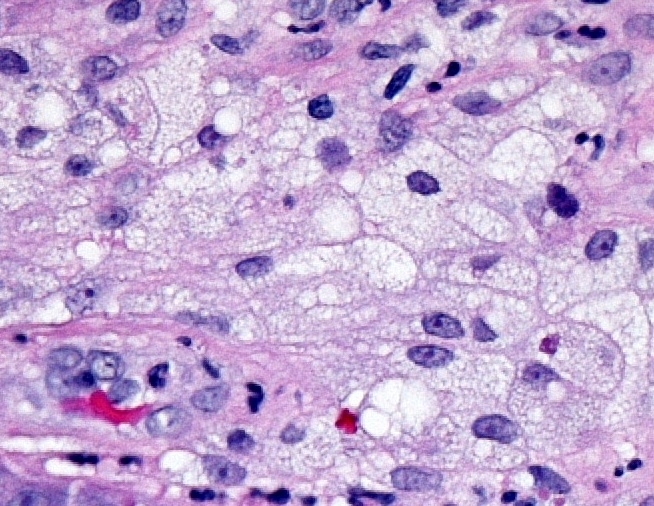 Which of the following conditions is most likely to be linked with this lesion?
 (Multiple Choice)
4.8/5 (75)
(75) A 12-year-old boy's mother brings him to the clinic because he has headaches and unsteady walk. His symptoms started a few months ago, and they have gotten progressively worse. 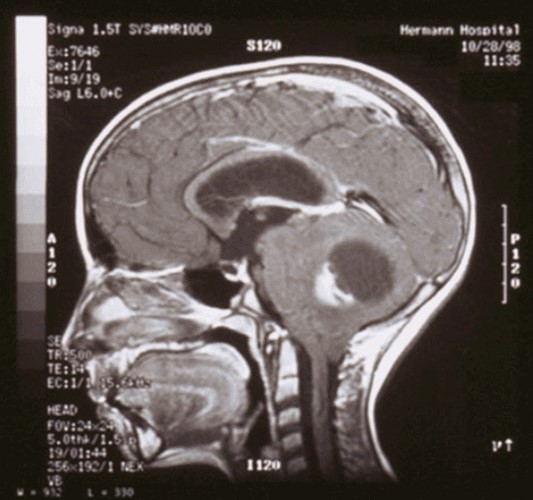 Which of the following is the most likely diagnosis?
 (Multiple Choice)
4.9/5 (68)
(68) A 72-year-old man is admitted to the hospital due to fatigue, orthopnea, and exertional dyspnea. The patient is not on any medications and has not seen a doctor in many years. He has never smoked in his life. His blood pressure is 110/60 mm Hg, and his pulse rate is 64 beats per minute. Bibasilar crackles, elevated jugular venous pressure, and bilateral lower extremity pitting edema are discovered during the examination. The graph below depicts his left ventricular end-diastolic pressure-volume (purple curve). 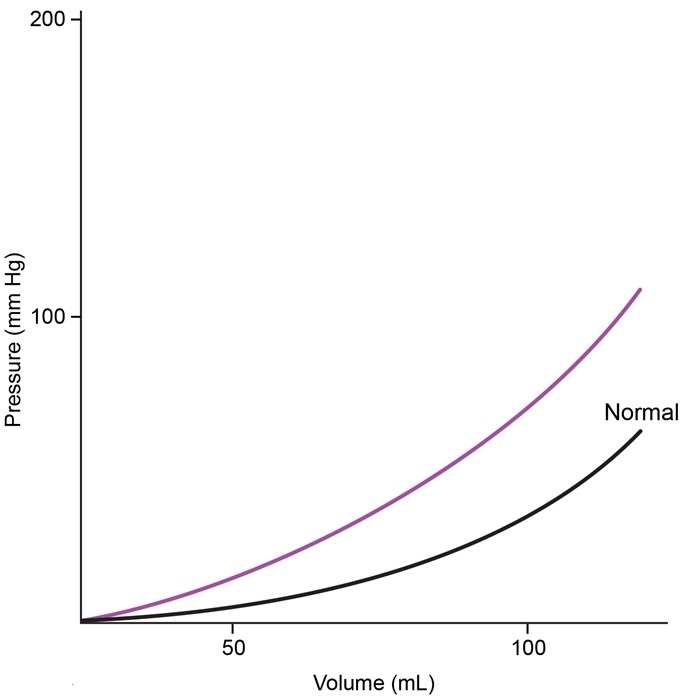 Which of the following is the most likely cause of this patient's condition?
 (Multiple Choice)
4.9/5 (80)
(80) 
Filters
- Essay(0)
- Multiple Choice(0)
- Short Answer(0)
- True False(0)
- Matching(0)